
The word "roll" hides a whole family of maki sushi - sushi that is rolled. In Japanese tradition, the size and method of serving vary as much as the filling. We collected and drew ten options: from three basic shapes to thin maki with different fillings and modern restaurant “dragons”.
1. Hosomaki: line of one filling
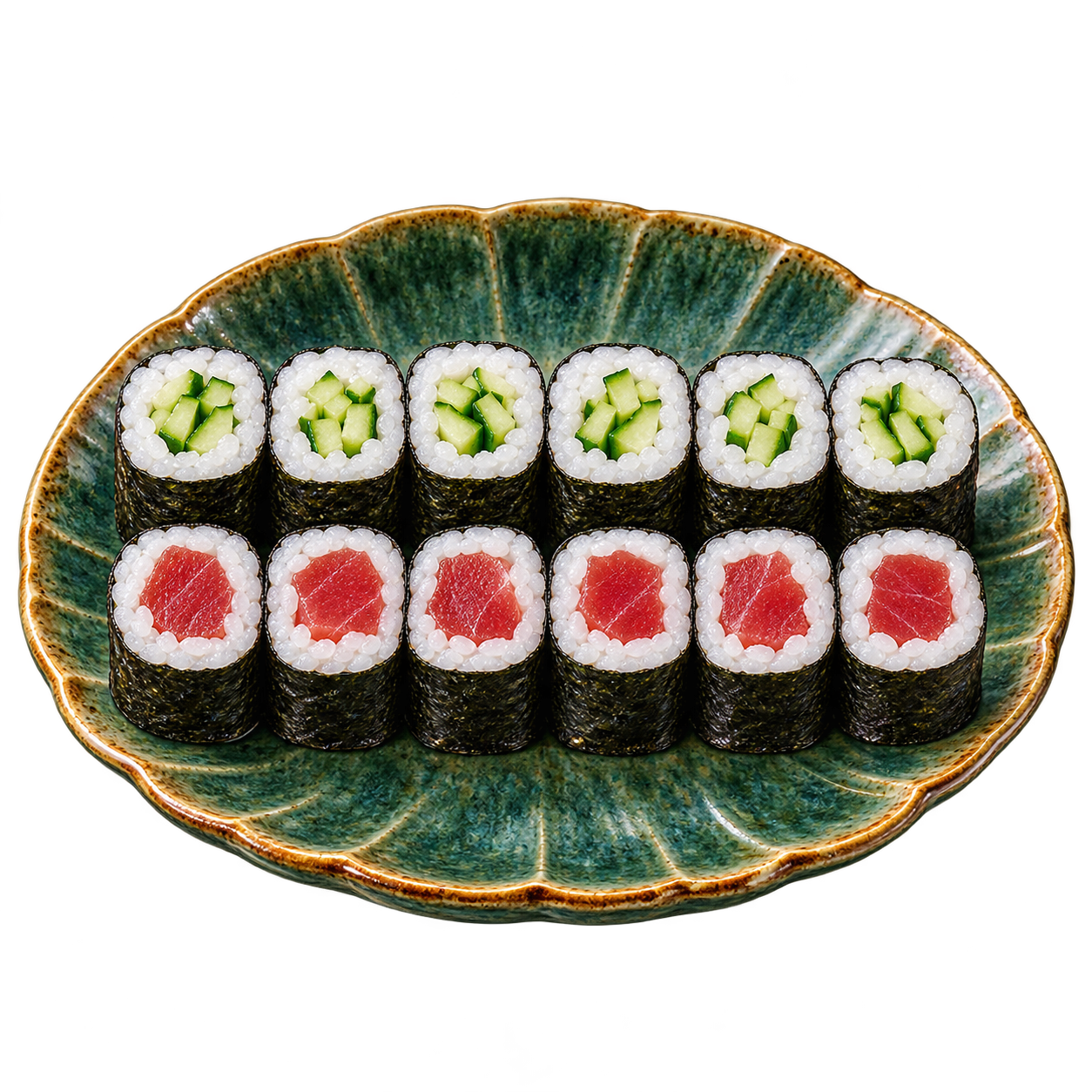
Hosomaki · thinly sliced roll.
There is a dark strip of nori on the outside, rice on the inside and usually one main flavor: for example, cucumber or tuna. The circles are almost graphic - a white ring of rice frames a smooth core. The simple form hides the requirement for neat folding.
One type of filling does not mean that all hosomaki are the same: cucumber gives crunch, tuna gives a completely different texture. It is the limitation in the number of ingredients that allows them to be compared.
Remember. Hosomaki is a thin maki roll with a small number of fillings, usually just one.
2. Futomaki: everything is inside
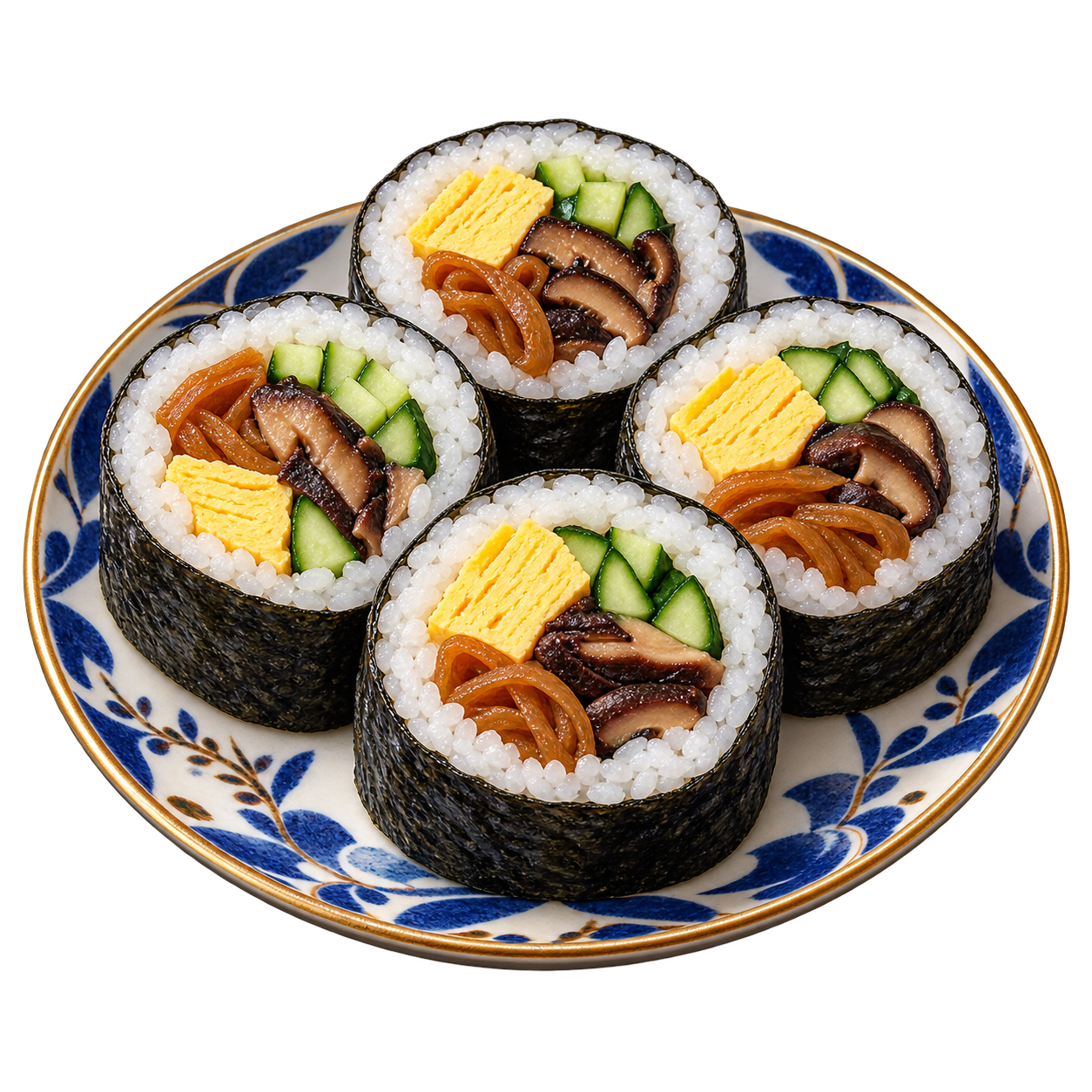
Futomaki · wide sliced roll.
Here the cross section already looks like a mosaic window. Nearby you might find scrambled eggs, cucumber, mushrooms and a sweet strip of dried kanpyo bottle gourd. In the illustration we show exactly the combination of prepared fillings - there may not be any raw fish in futomaki.
The thick, wide roll looks festive, and the filling varies from house to house and region to region. The cut shows what would simply not fit in a thin hosomaki.
Remember. Futomaki is wider than hosomaki and usually contains several different fillings.
3. Temaki: cone without knife
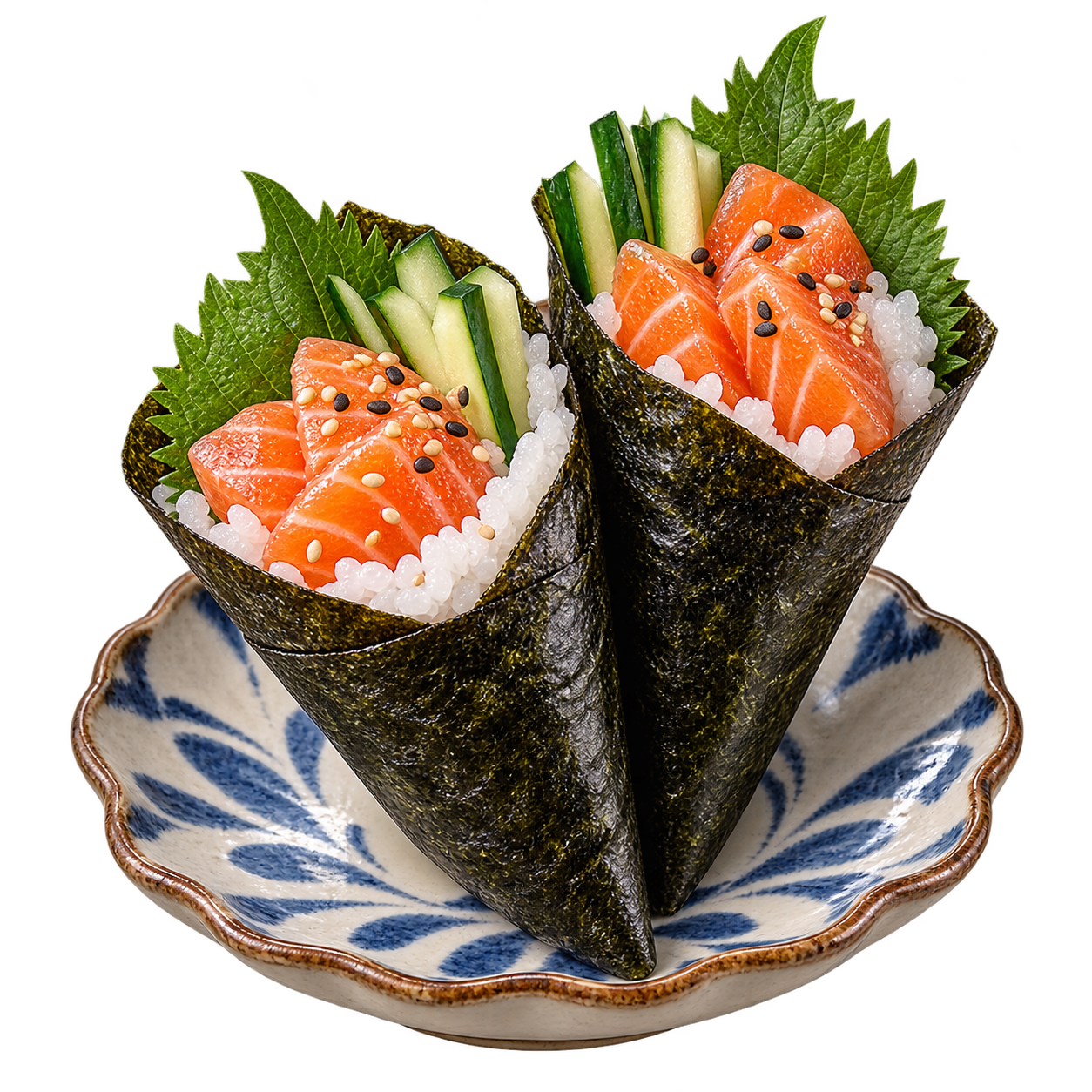
Temaki · roll, rolled by hand.
The nori sheet is rolled into a cone, with the rice and filling visible from the wide end. Temaki does not need to be cut into circles: it is taken in the hand and eaten whole. Therefore, in the picture there are not washers or cylinders, but two recognizable “tubes” with an open top.
Freshly rolled nori retains its crunch. If you leave the cone too long, the wet rice will soften the seaweed—the dish has its own timer, although it's not painted on the table.
Remember. Temaki is rolled by hand into a cone and not cut into pieces.
Source:Official source. Gift “Hand Cone” →
4. Kappamaki: hosomaki with cucumber
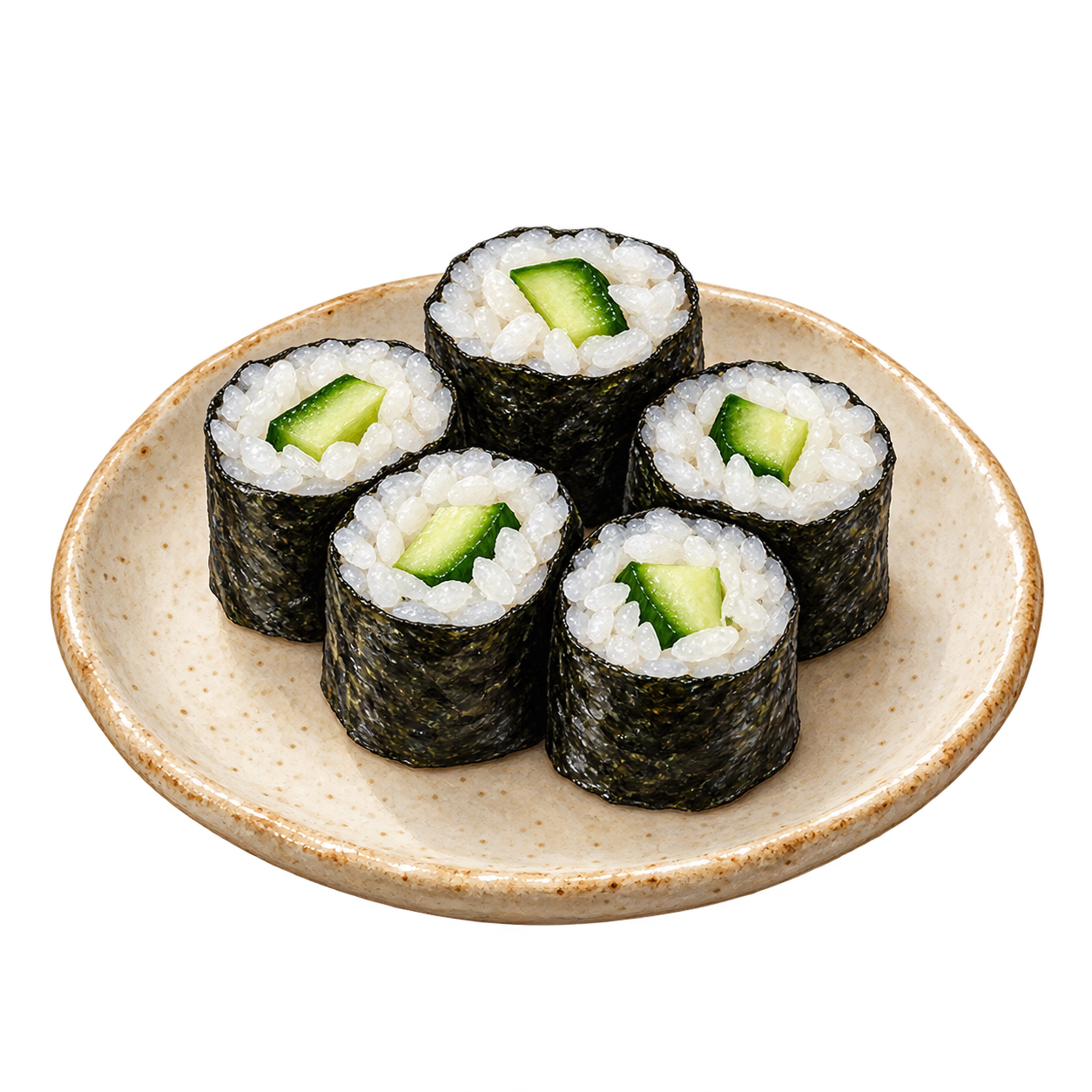
Thin maki rolls with cucumber.
One filling, clean crunch and thin shape. This is a convenient starting point for comparison: Hosomaki can change the product internally without changing the design.
Remember. Thin maki rolls with cucumber.
5. Tekkamaki: Hosomaki with tuna
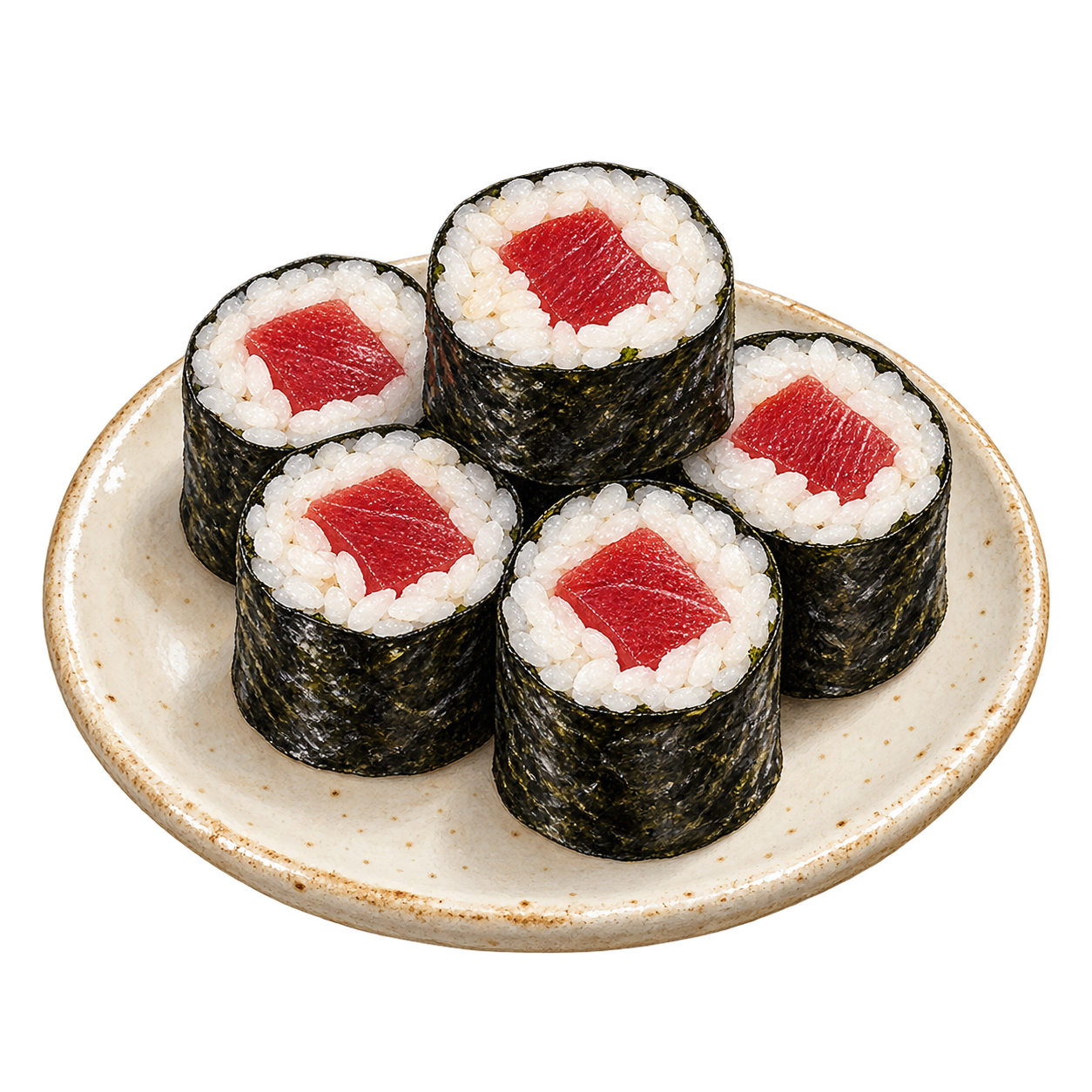
Thin maki with tuna.
Instead of a green center - red tuna. The same thin roll shows how much the filling makes a difference.
Remember. Thin maki with tuna.
6. Kanpyo-maki: sweet stripe
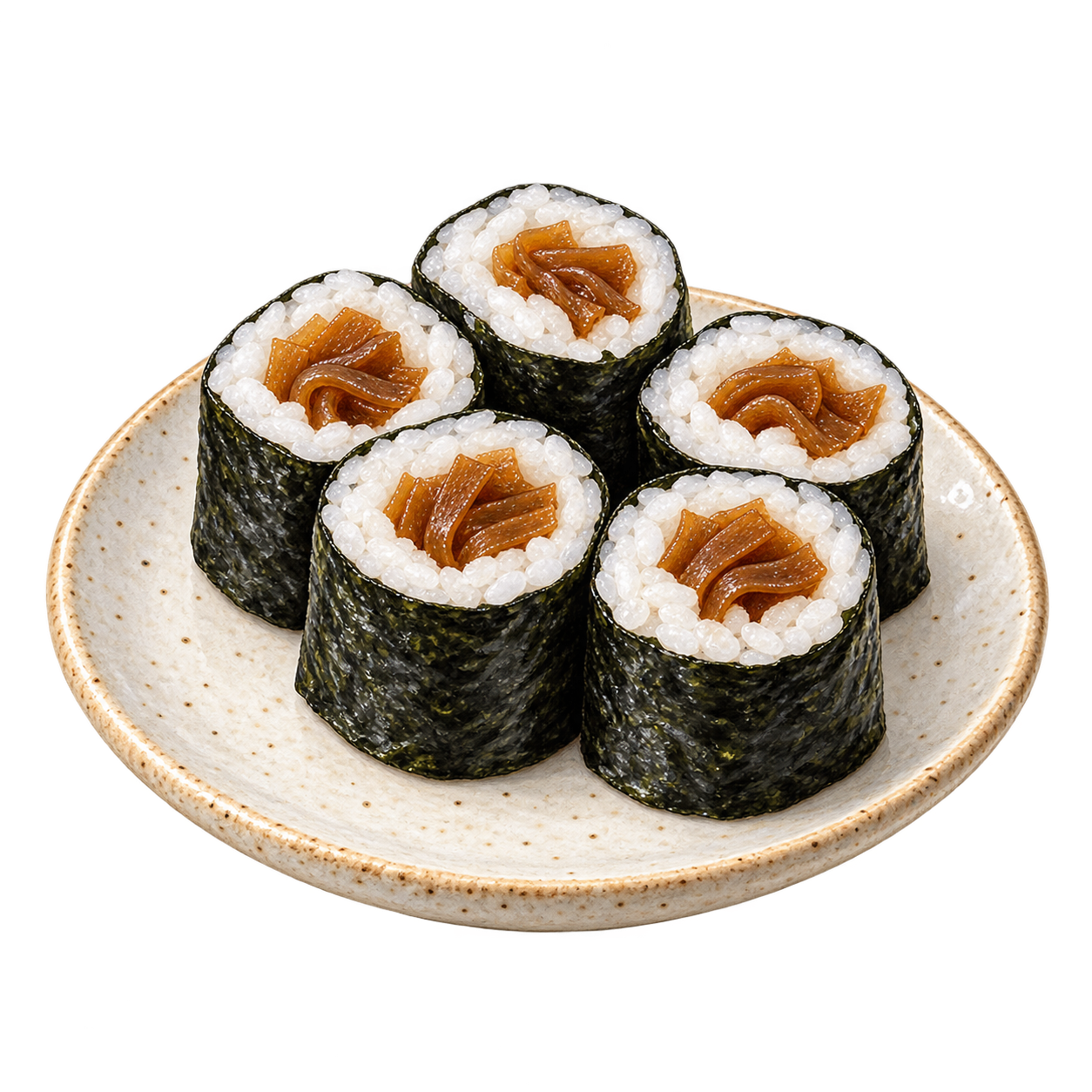
Thin maki with stewed dried kanpyo bottle gourd.
The dried flesh of bottle gourd is soaked and simmered with a sweet and salty seasoning, then rolled with rice and nori. This is an old part of Edomae sushi.
Remember. Thin maki with stewed dried kanpyo bottle gourd.
7. Ehomaki: festive whole roll
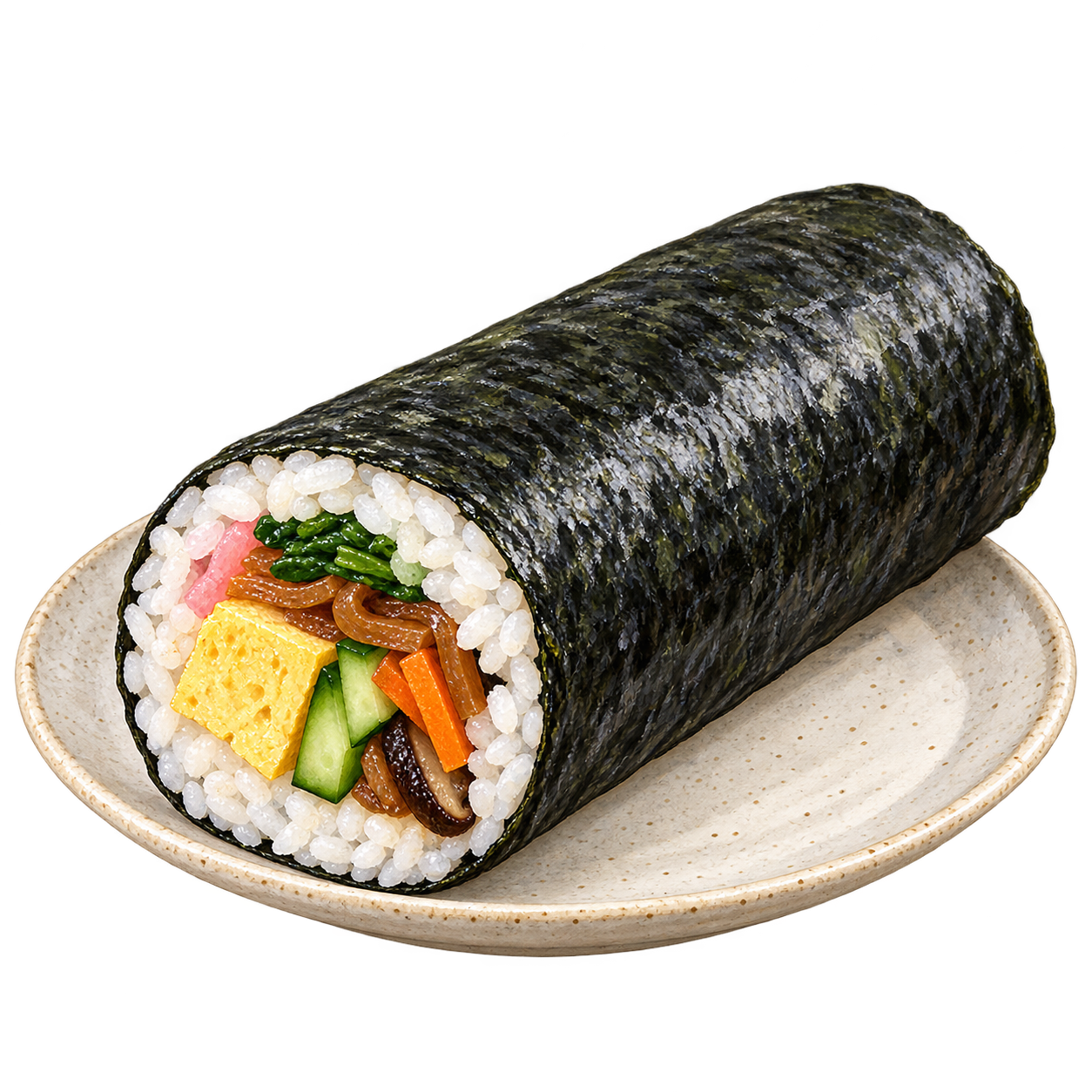
Festive whole thick maki with several fillings.
On Setsubun, thick maki is eaten whole, facing the “lucky” side. Here the difference is not only in the composition, but also in the festive method of presentation.
Remember. Festive whole thick maki with several fillings.
8. Uramaki: rice out
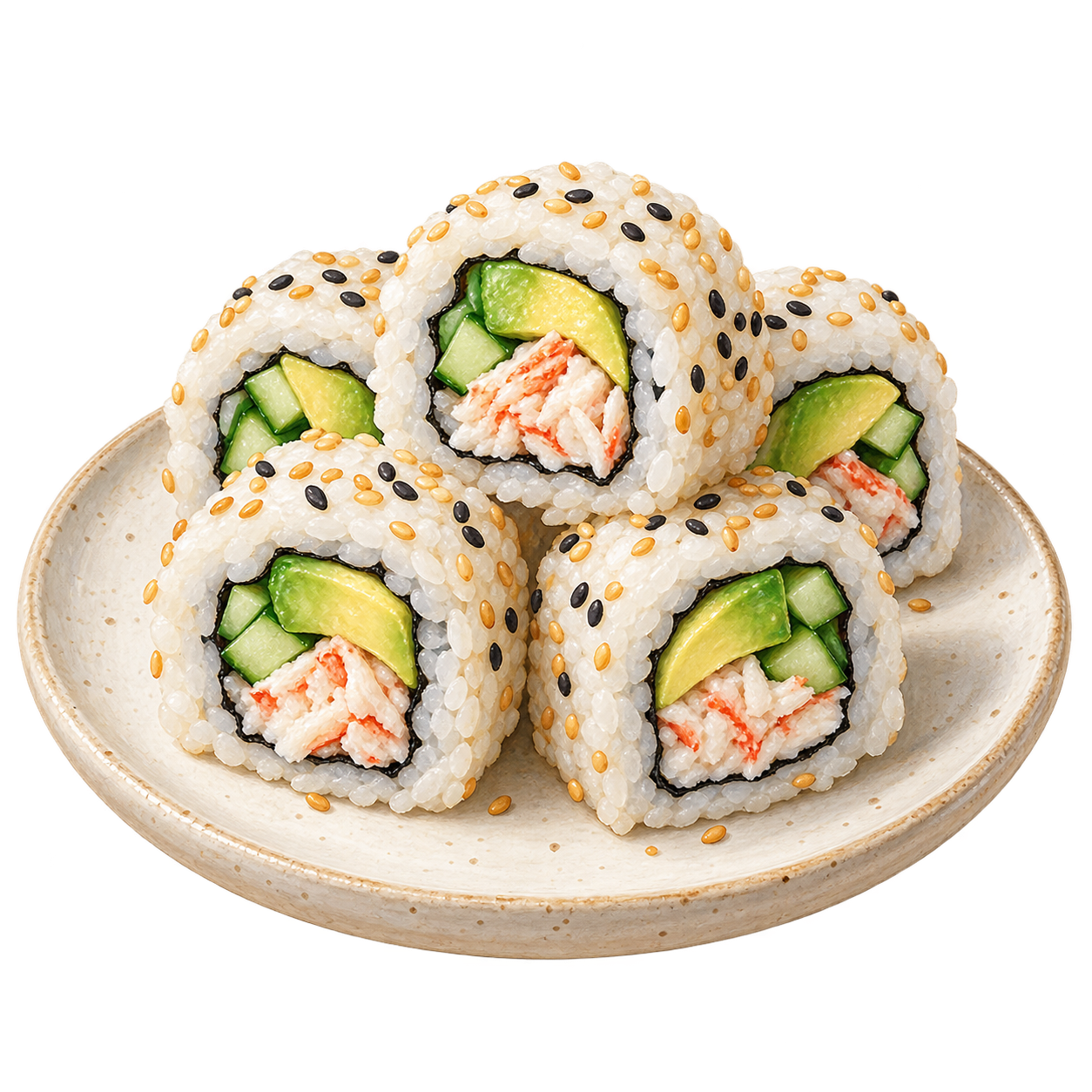
Inside-out rolls with rice on the outside.
The nori ends up inside the rice layer. The California roll is a variant of this “reverse” design known outside of Japan.
Remember. Inside-out rolls with rice on the outside.
9. Green Dragon: Avocado Like Scales
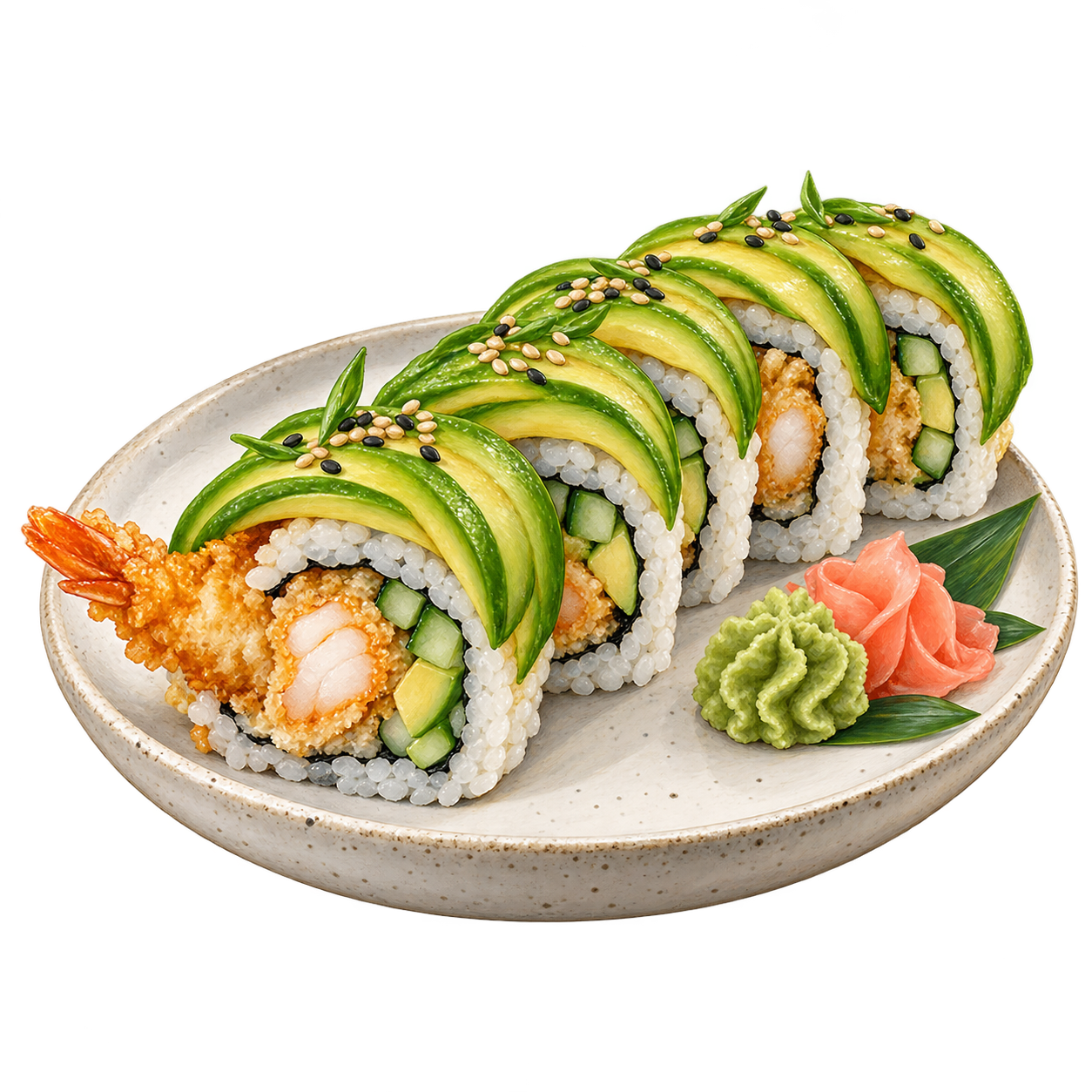
Restaurant roll with avocado on top.
This is a modern restaurant name, not a uniform Japanese standard. One published menu has tempura shrimp, cucumber and avocado on the inside, with avocado on top; In other establishments the recipe is different.
Remember. Restaurant roll with avocado on top.
10. Golden Dragon: golden accent
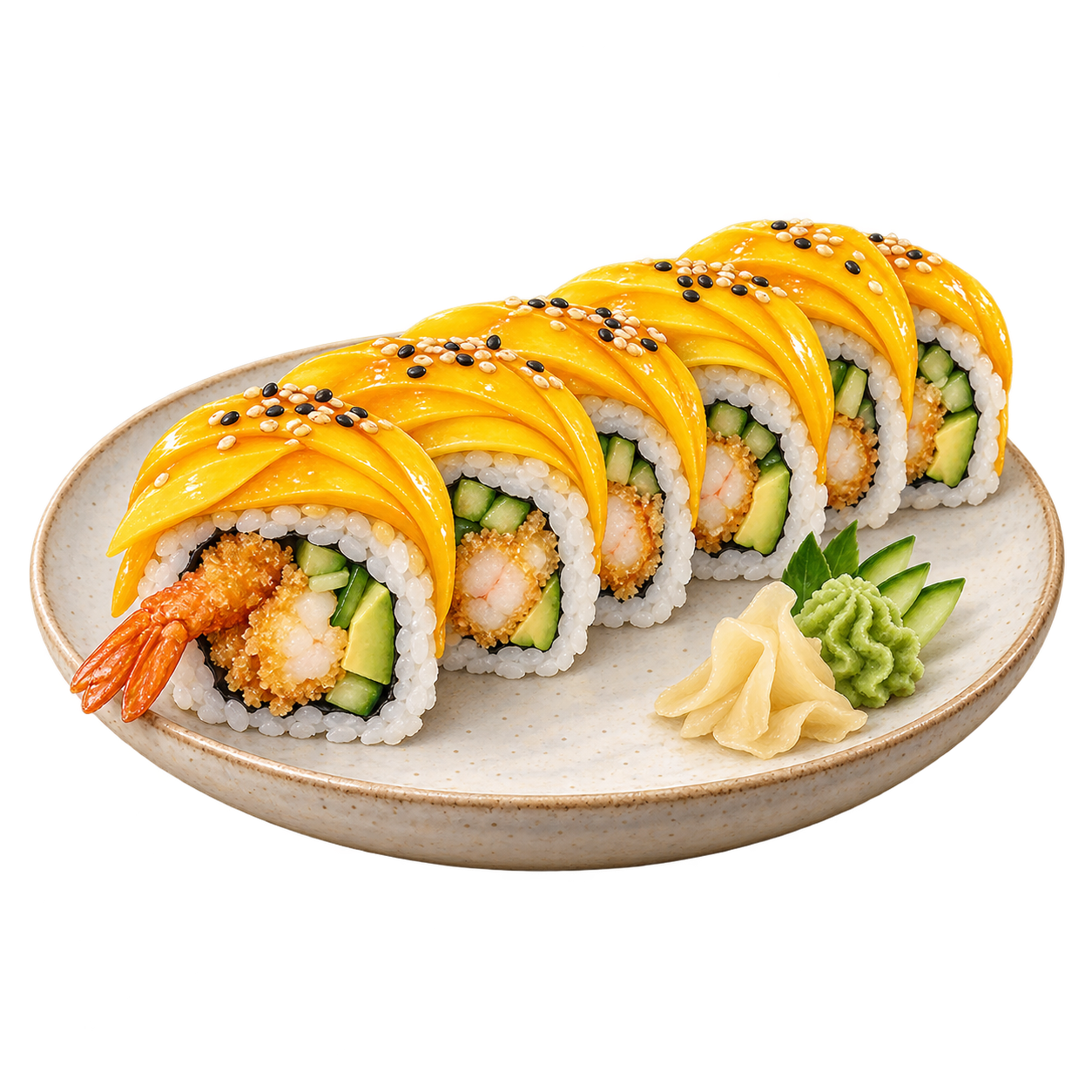
Restaurant roll with mango on top.
Also a restaurant line, and not the old canon. In the same menu, a common base with tempura shrimp is complemented by mango on top: green and gold “dragons” show diversity within the same series.
Remember. Restaurant roll with mango on top.
Separately, there are uramaki - rolls with rice facing out. They are often presented as a symbol of all Japanese rolls, but this is only one form. Oshizushi, which are pressed in a box, are not rolls. The border between types is based on the design of the dish, and not on the high cost of the filling.
Read next: View other forms of sushi · What is sashimi.