
Sushi rice is not added to sashimi. The main subject here is the product itself, its freshness, texture and cut thickness. The name is often associated with raw fish, although other seafood is also found. Below are ten illustrated examples, from tuna to shrimp.
1. Maguro: red stroke
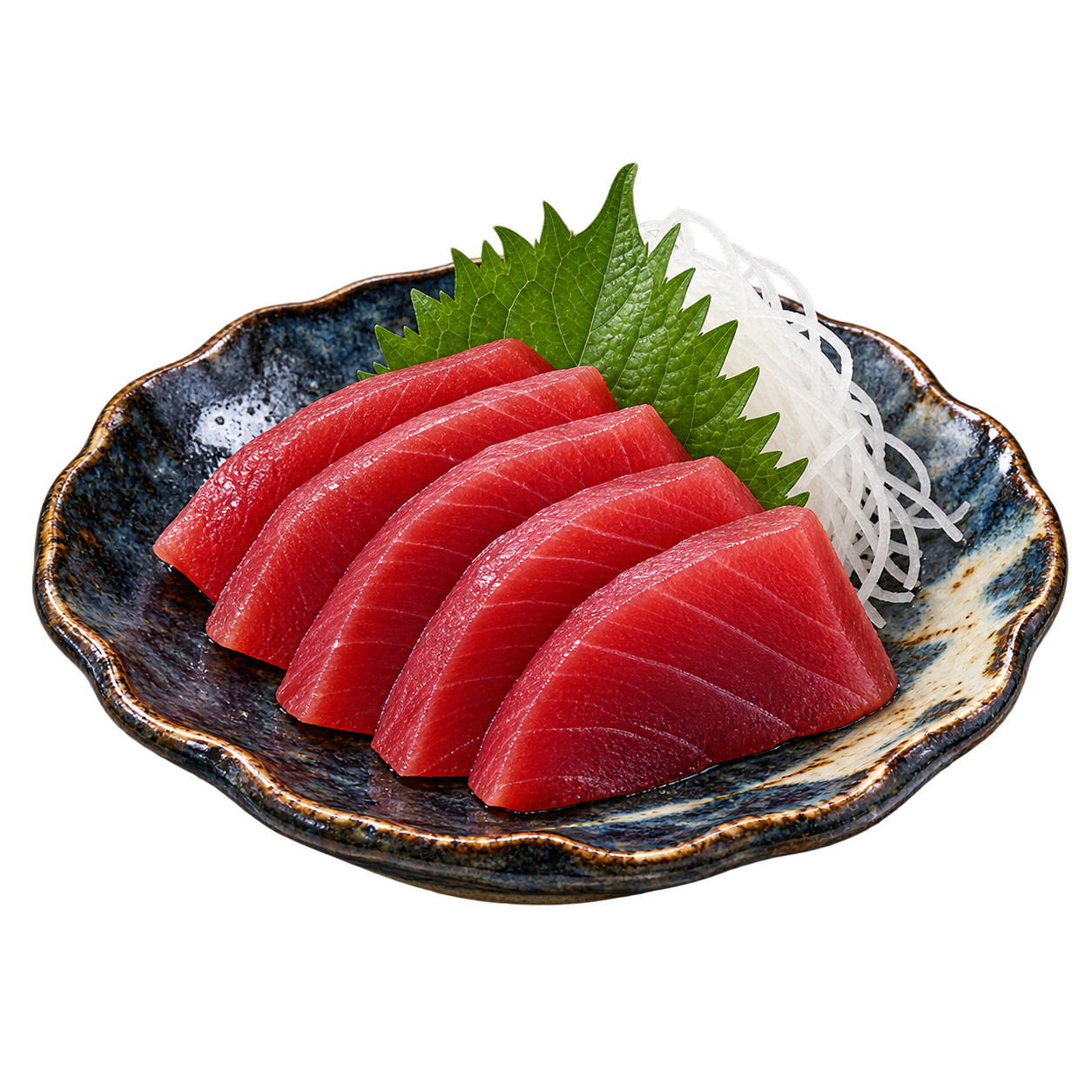
Maguro · tuna sashimi.
There are only a few slices on the plate. There is nothing hidden in the rice or nori, so the color, even cut and elastic structure of the fish are noticeable. A garnish of daikon and shiso leaf supports the composition, but does not turn the dish into a salad.
The word “maguro” can mean different parts of tuna with different fat content. Comparing a few slices can be more interesting than a mountain of sauce: tenderness and taste depend on both the chosen part and the processing.
Remember. Tuna sashimi is served without rice; The quality of the product and a neat cut are in the foreground here.
Source:Official source. Gift “Red Touch” →
2. Tai: white wave
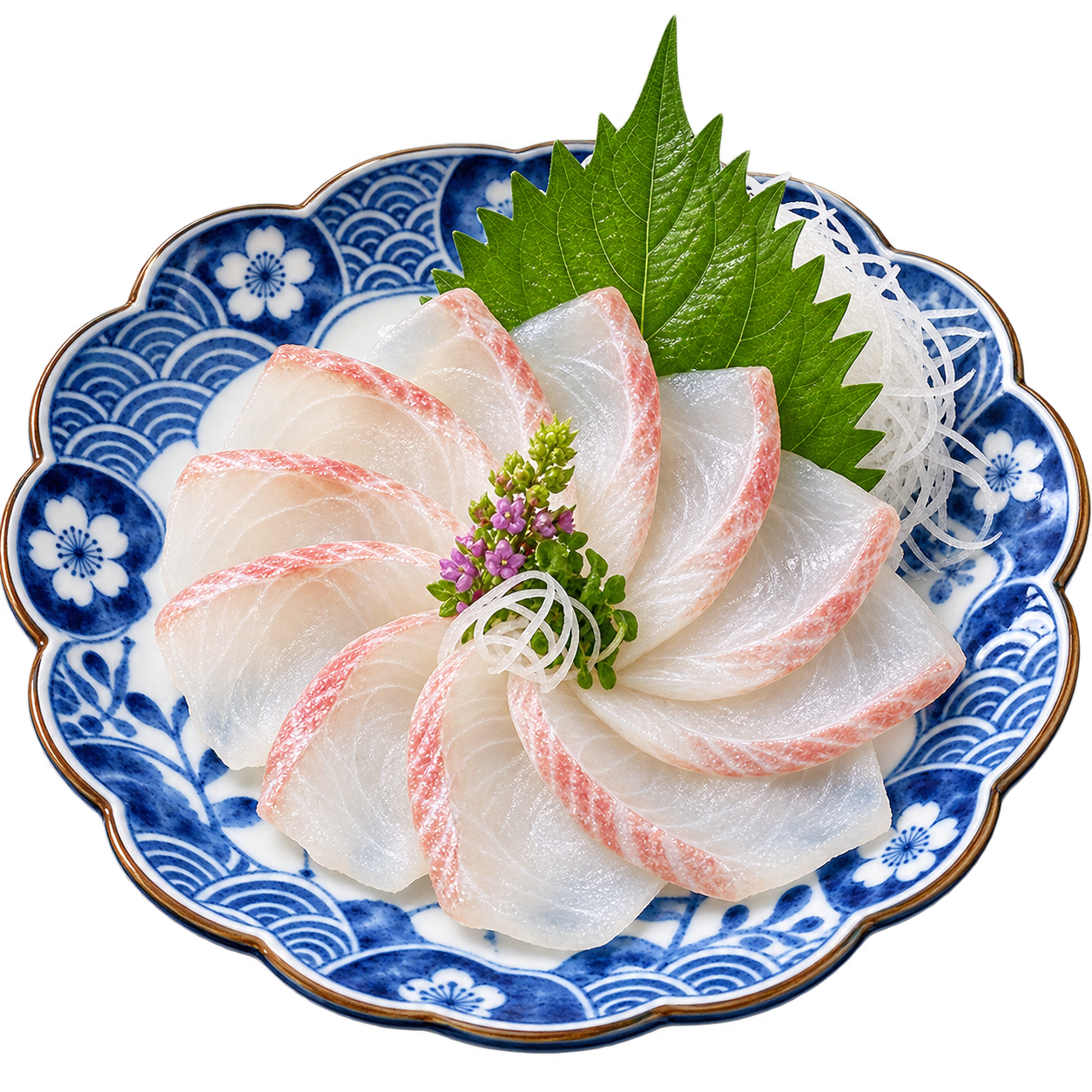
Tai · sea bream sashimi.
If the tuna draws a dense red line on the dish, the sea bream produces translucent light petals. In a thin slice it is easier to notice the difference in texture. It is important not to claim that one universal angle and one cutting thickness is suitable for any fish: the master chooses a method for a specific product.
The sharp long edge of a Japanese knife helps to make an even cut without rough cutting. But the name of the knife itself does not make the dish safe: storing and preparing raw fish is more important than a beautiful tool.
Remember. Tai is an example of white fish for sashimi; no need for rice here.
Source:Official source. Gift “White Wave” →
3. Salmon: orange ribbons
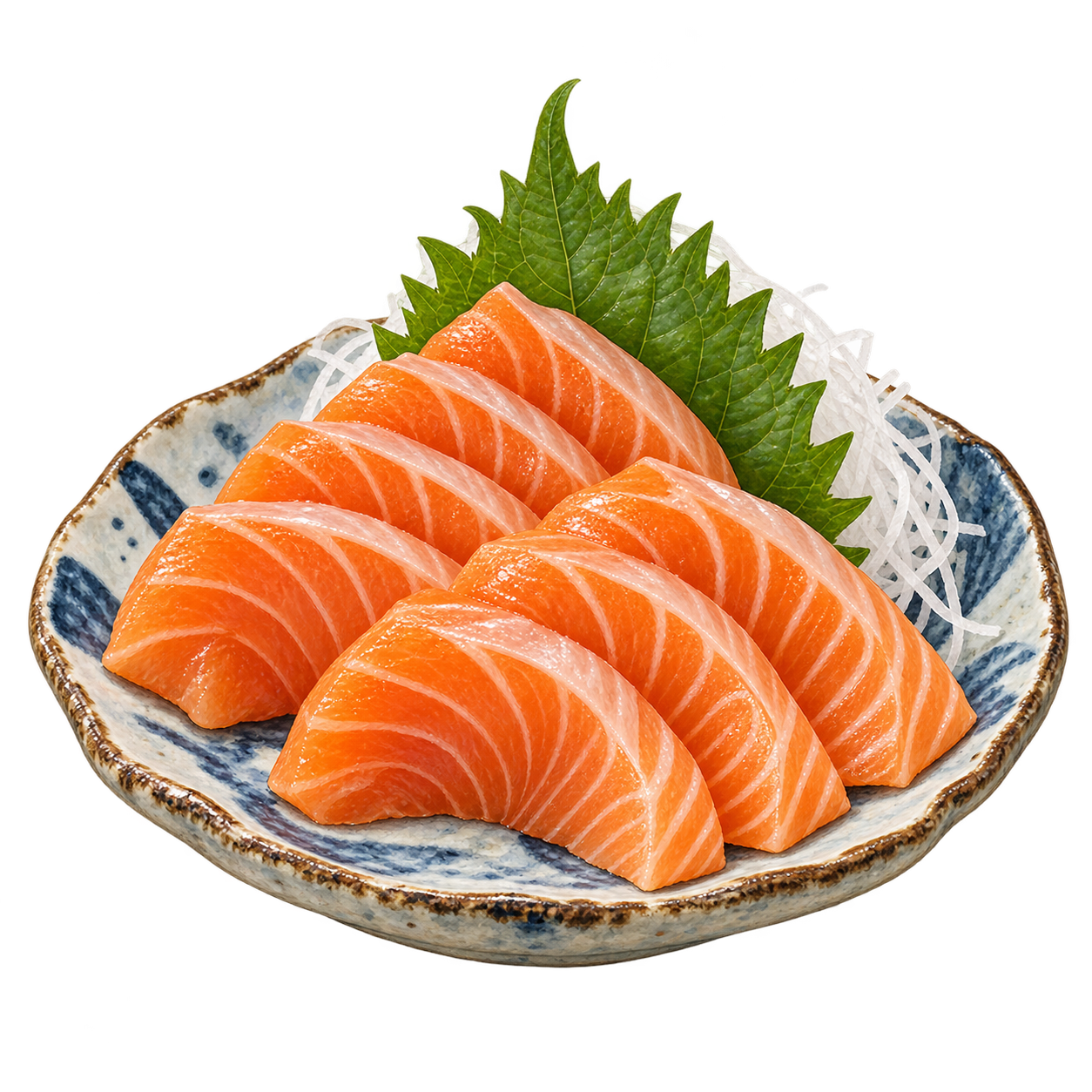
Orange salmon slices without rice.
Salmon slices are recognizable by their orange color and light streaks of fat. For raw serving, a specially prepared product is important, and not just a beautiful piece of fish.
Remember. Orange salmon slices without rice.
4. Hamachi: light texture
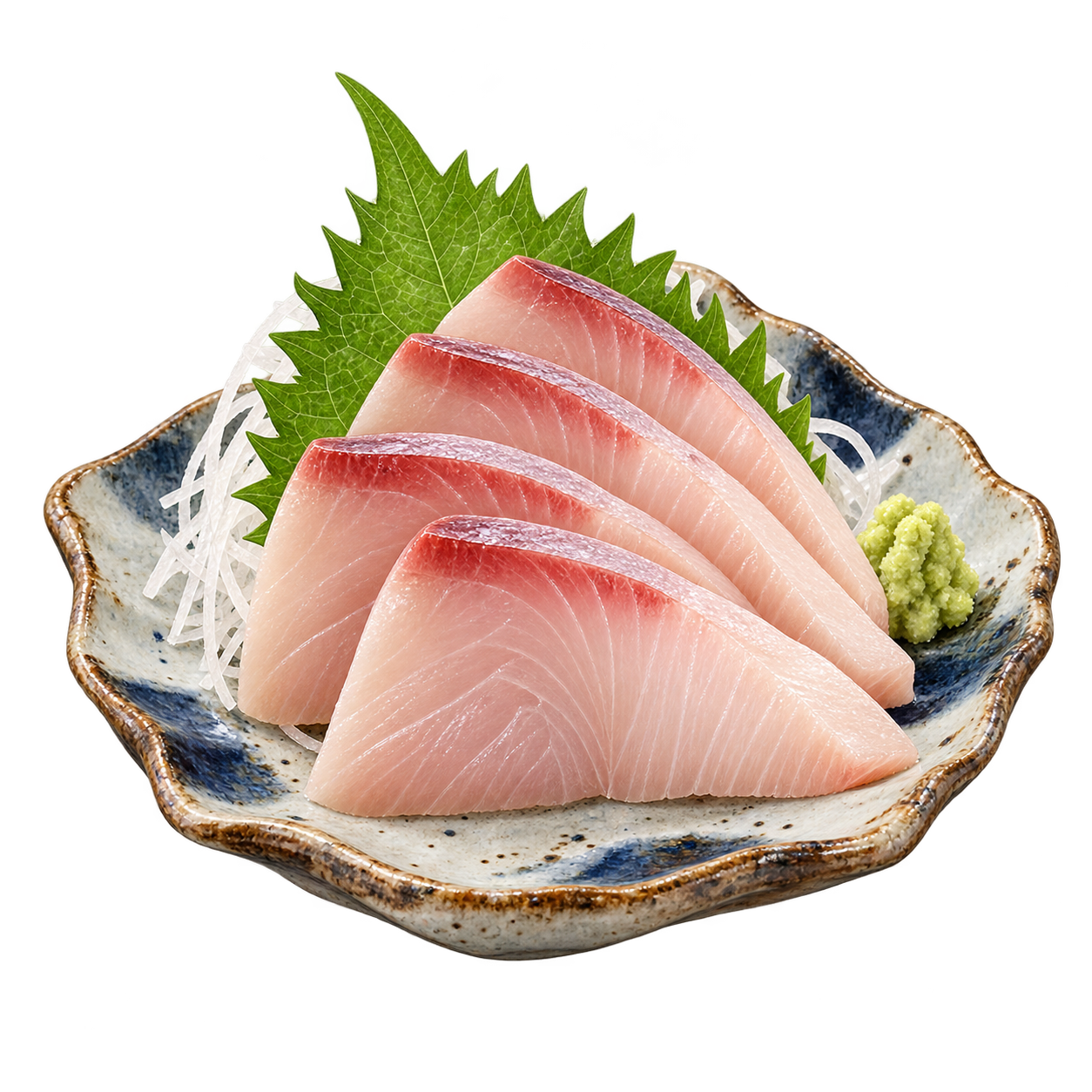
Light colored Japanese yellowtail slices without rice.
Japanese yellowtail produces lighter, denser slices. The name of the fish and the age stage on the menu may change, but there is still no rice in the sashimi portion.
Remember. Light colored Japanese yellowtail slices without rice.
5. Ika: almost transparent squid
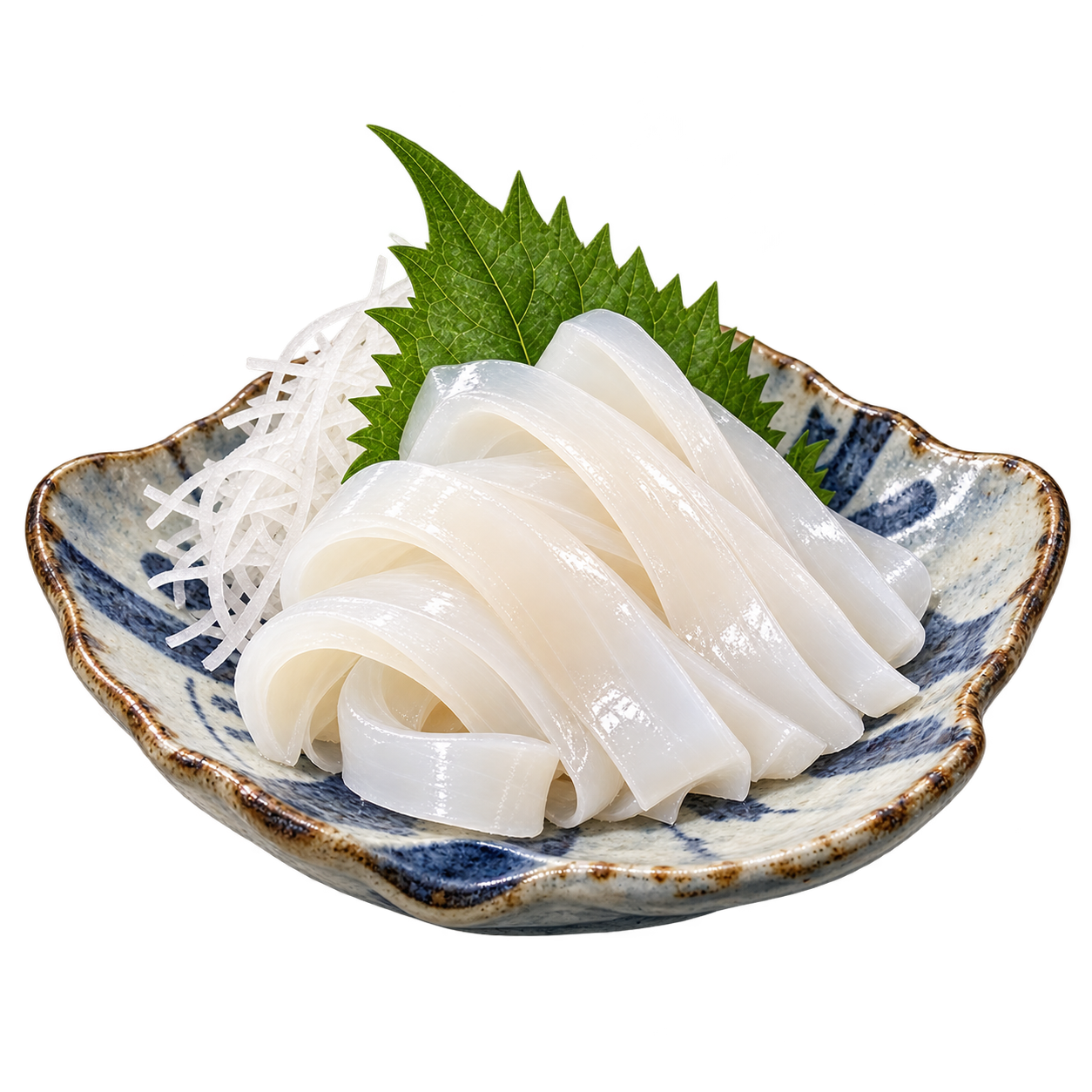
Almost transparent squid strips without rice.
Squid shows that sashimi is not limited to fish. Its thin cut plays with texture and shine rather than bright color.
Remember. Almost transparent squid strips without rice.
6. Hotate: scallop
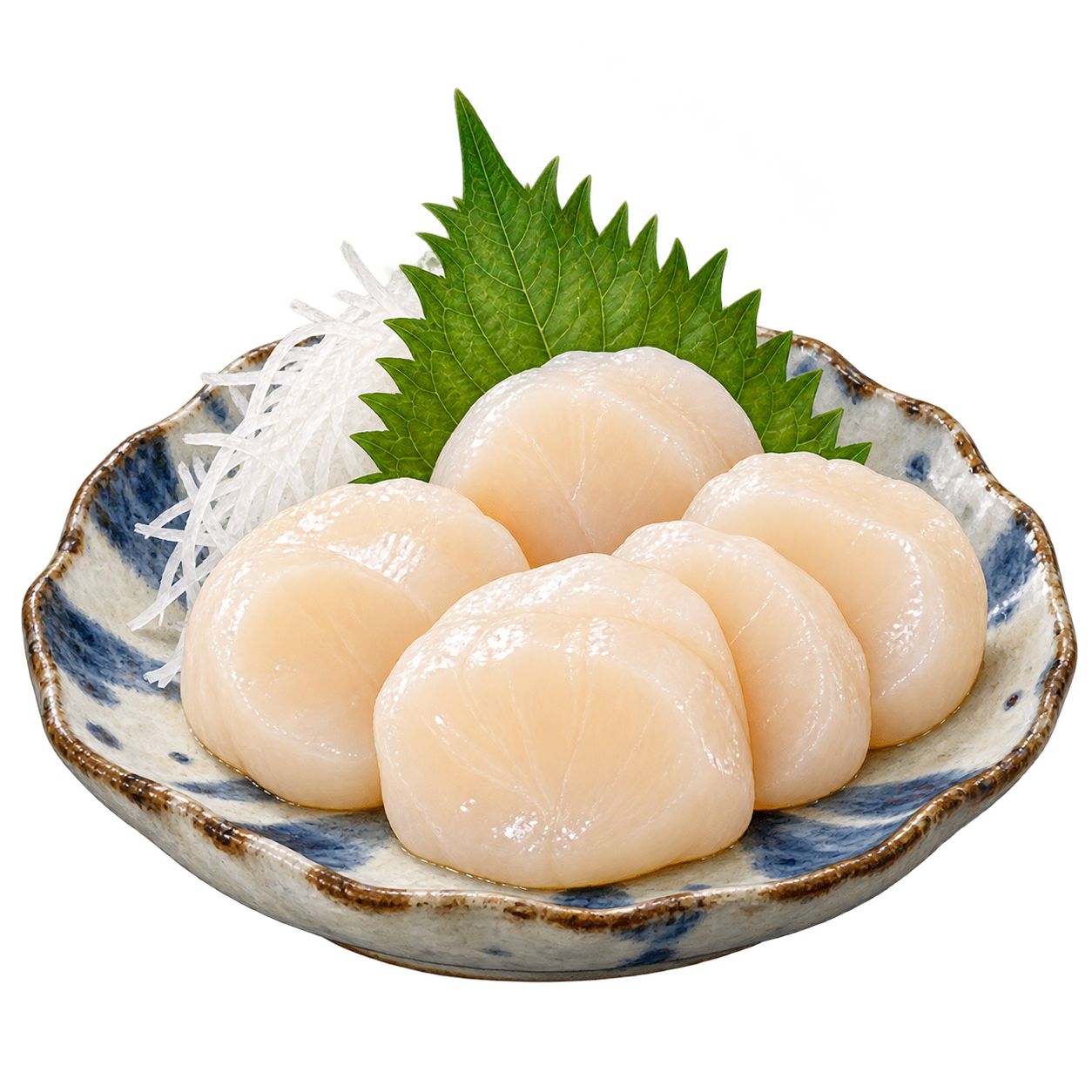
Light scallop medallions without rice.
The scallop is served in soft light slices. It refers to shellfish: ten examples expand beyond the fish display.
Remember. Light scallop medallions without rice.
7. Saba: mackerel
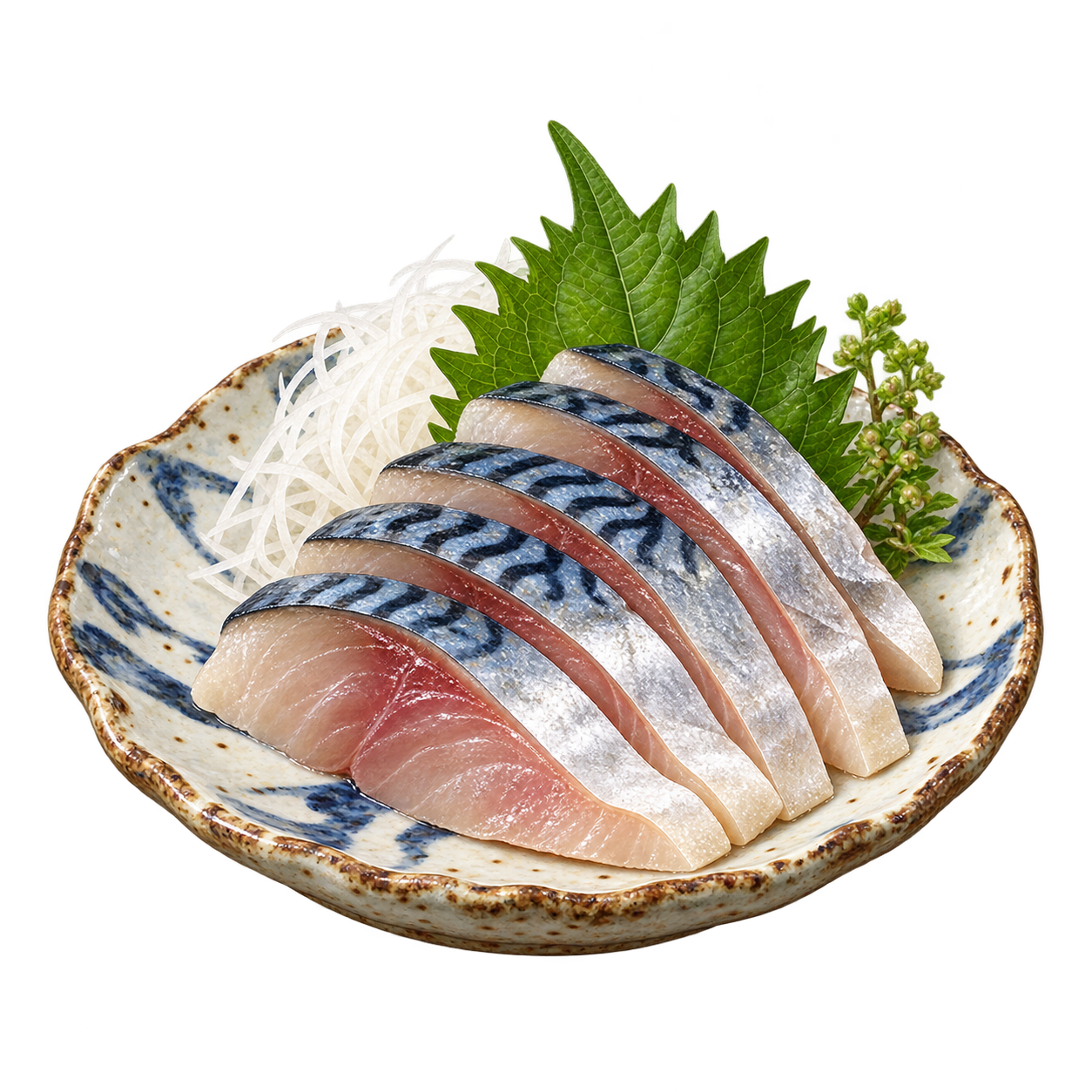
Slices of processed mackerel with silver skin.
Mackerel has a distinctive silvery skin and a stronger flavor. It is often pre-salted and treated with vinegar; the specific method is determined by the kitchen and safety requirements.
Remember. Slices of processed mackerel with silver skin.
8. Katsuo: bonito
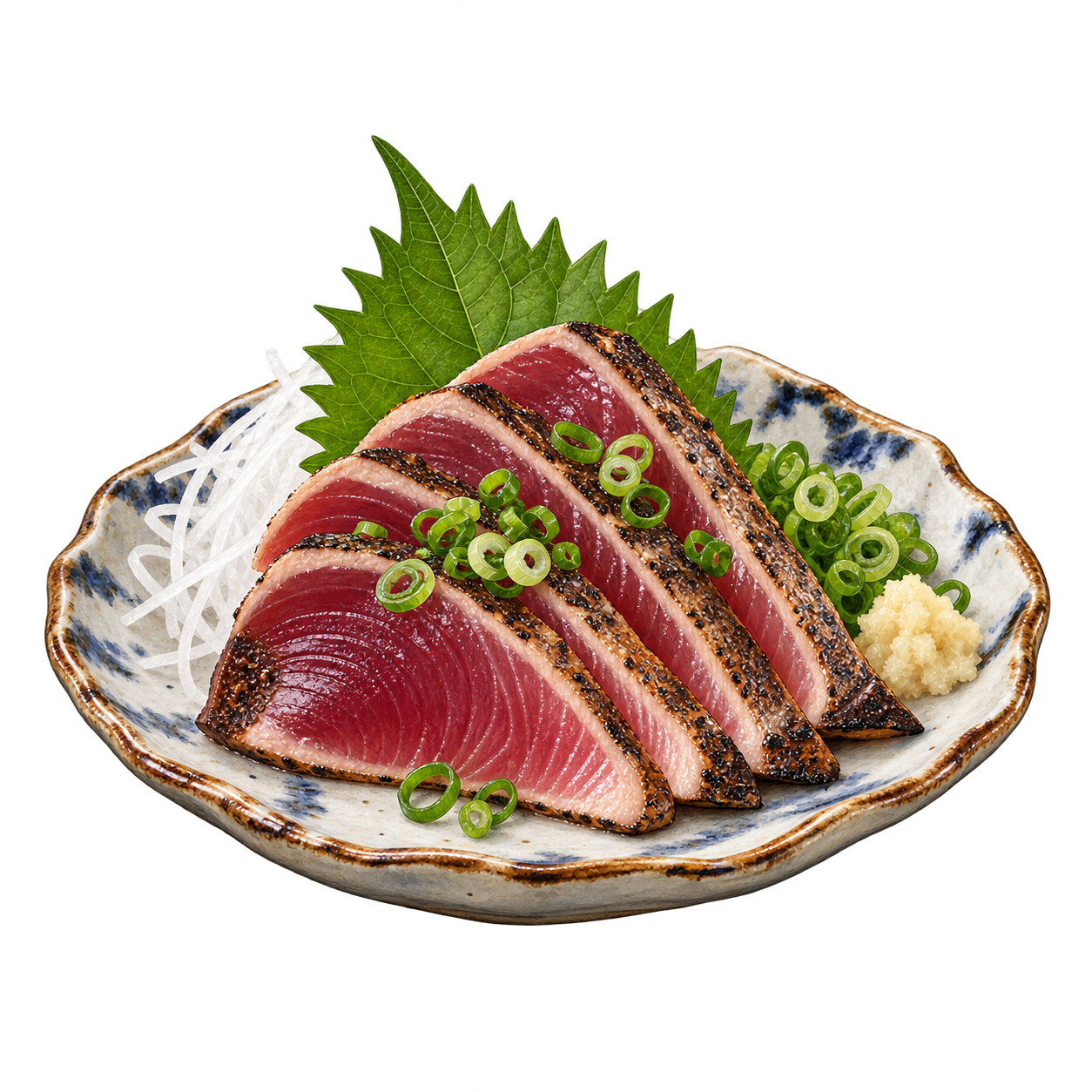
Bonito slices, lightly charred on the outside.
Bonito slices can be served lightly charred on the outside, a technique especially known as tataki. This is a close tradition of sliced fish, but it should not be considered always raw to the very edge.
Remember. Bonito slices, lightly charred on the outside.
9. Tako: Octopus
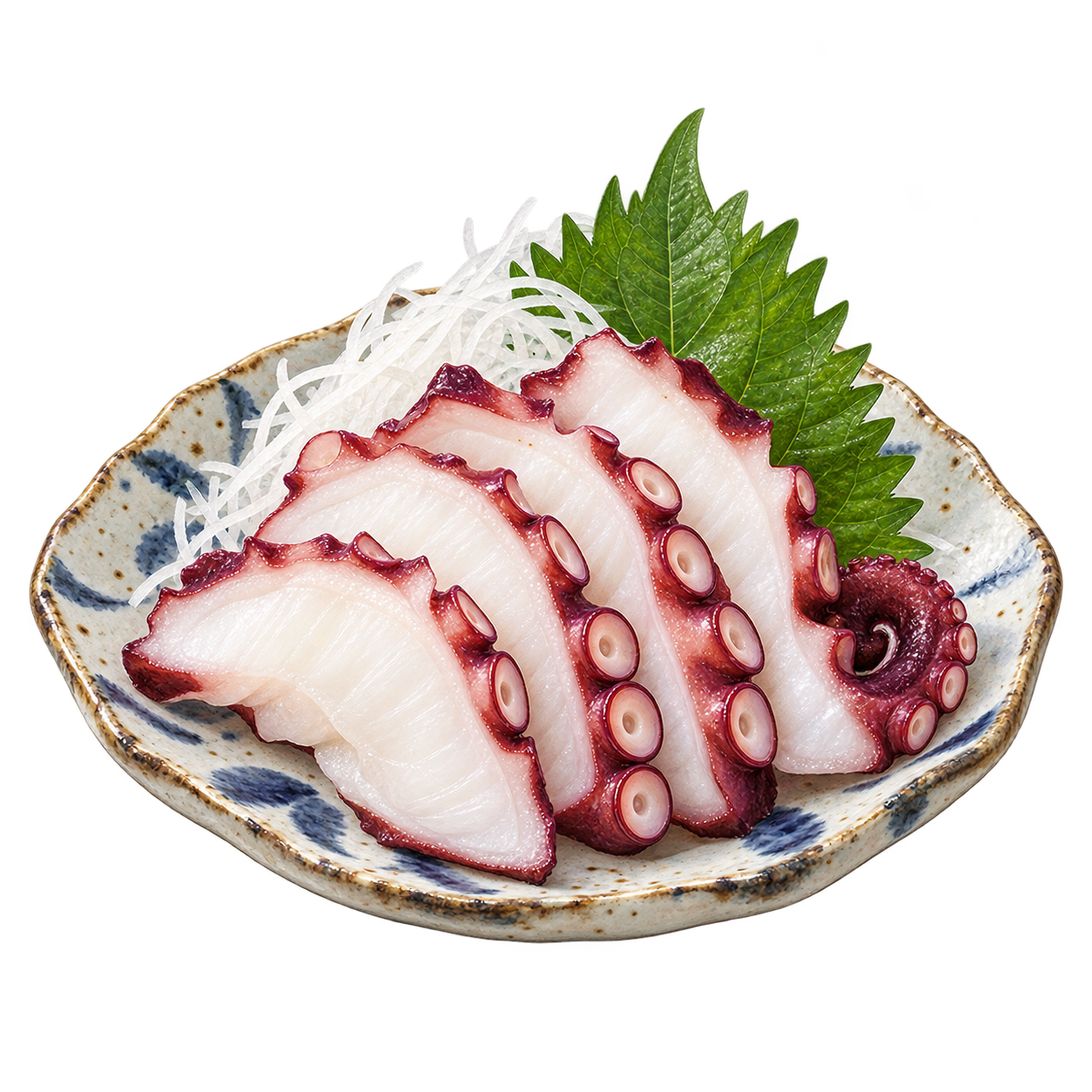
Cooked octopus with visible suckers, thinly sliced.
Octopus cut this way is often pre-cooked. On a plate, an even cut and elastic texture are important; the word “sashimi” does not guarantee that the product is completely raw.
Remember. Cooked octopus with visible suckers, thinly sliced.
10. Amaebi: Sweet Shrimp
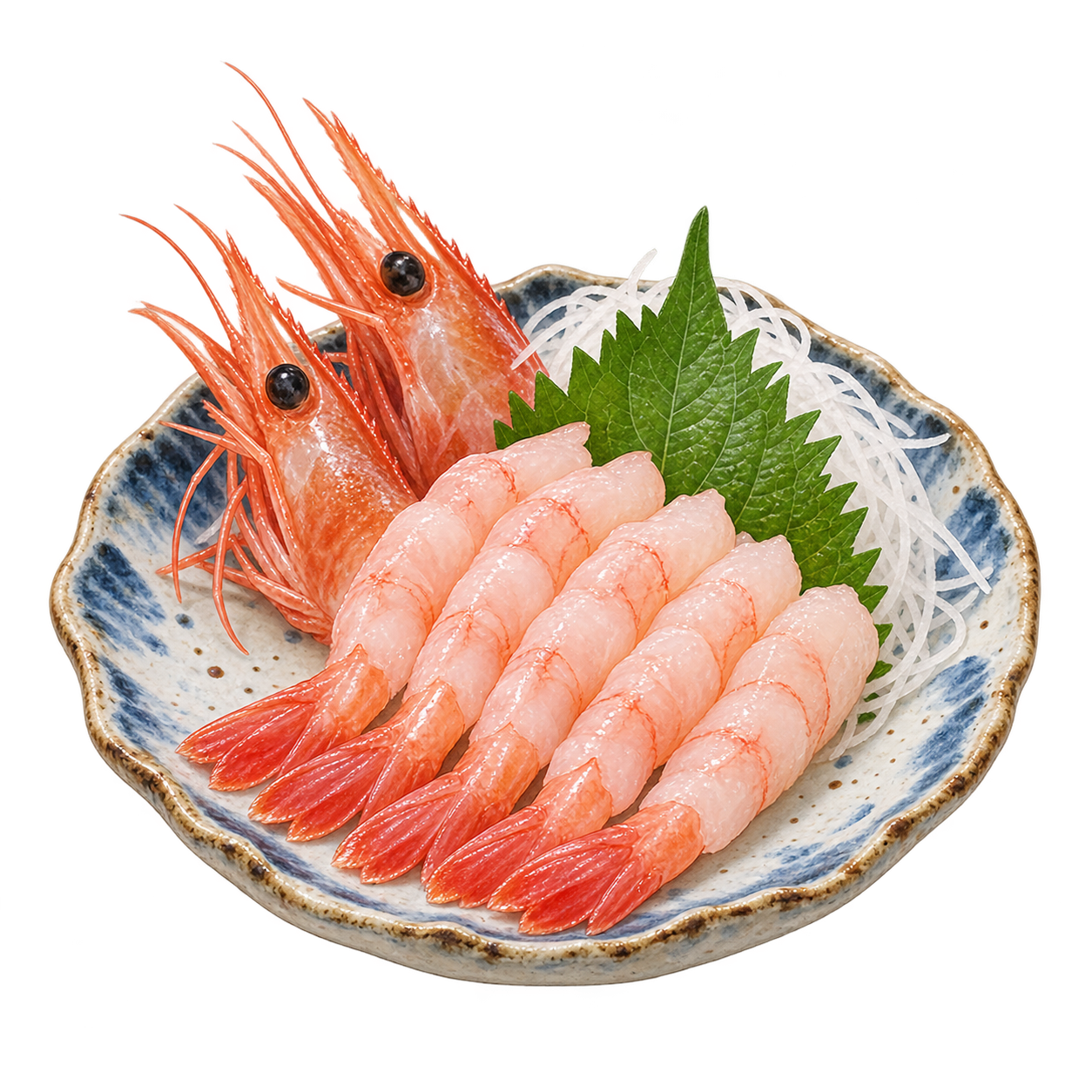
Small sweet shrimp without rice.
Small shrimp provide another seafood sashimi option. They are served without sushi rice; Correct handling of raw materials remains the responsibility of the professional kitchen.
Remember. Small sweet shrimp without rice.
The main difference from sushi is easy to remember: sushi is defined by seasoned rice, and sashimi is a separate serving of chopped product without it. A raw fish dish is prepared from raw materials intended for such serving, in compliance with sanitary rules; At home, you cannot consider any fish from the store suitable for sashimi.
Read next: Return to sushi forms.