
“You can’t eat flowers!” - we say confidently, and then we put cloves in the compote, capers in the sauce and pour in the hibiscus. The kitchen has long been friends with the flowerbed. It just sometimes invites petals, sometimes buds, and sometimes it waits patiently until the seeds of a beautiful plant ripen.
Here are ten short stories about flowering plants that have found their way to the table. We came up with conversations with flowers, and checked the edible parts and how to use them. For each story we drew a separate bouquet - it can be found inMozg.ru collections.
A small reservation before a big bouquet. Food requires precisely defined food species and raw materials grown for consumption. Flowers from a florist shop may be treated with inappropriate preparations. Just because one part is edible does not mean the whole plant is edible. Our bouquets are artistic illustrations, not a guide to collecting wild plants.RHS recommendations.
1. Blue fenugreek: The Flower Who Had a Plan

Trigonella caerulea - Blue fenugreek.
- You can't eat flowers! - you say.
—Have you tried cooking them? - Georgian cuisine could answer.
And she would introduce us to the blue fenugreek: a delicate-looking plant with very serious intentions. It was dried, crushed, turned into utskho-suneli, invited to khmeli-suneli - and the flower story became spicy. While some were choosing a vase, others were already stirring the sauce.
What exactly goes into food. In traditional Georgian spice, dried seeds and the walls of the small pods are primarily used; they are ground. This is not a powder made from blue petals alone, and certainly not a ground plant with roots. The composition of raw materials varies among manufacturers: leaves, stems and other above-ground parts can also be processed, including for mixtures.
What they call and use. Utskho-suneli - a spice made from blue fenugreek; khmeli-suneli - a mixture of different spices, which it can include. The powder is added to sauces and stews. Regular fenugreekTrigonella foenum-graecum, is another species with a different aromatic character.
Check the details:Gernot Katzer's spice guide, ALCP field report on fenugreek processing in Georgia, example of the composition of khmeli-suneli from a Georgian manufacturer. Bouquet “Blue Spice” →
2. Nasturtium: the salad ordered itself as a decoration
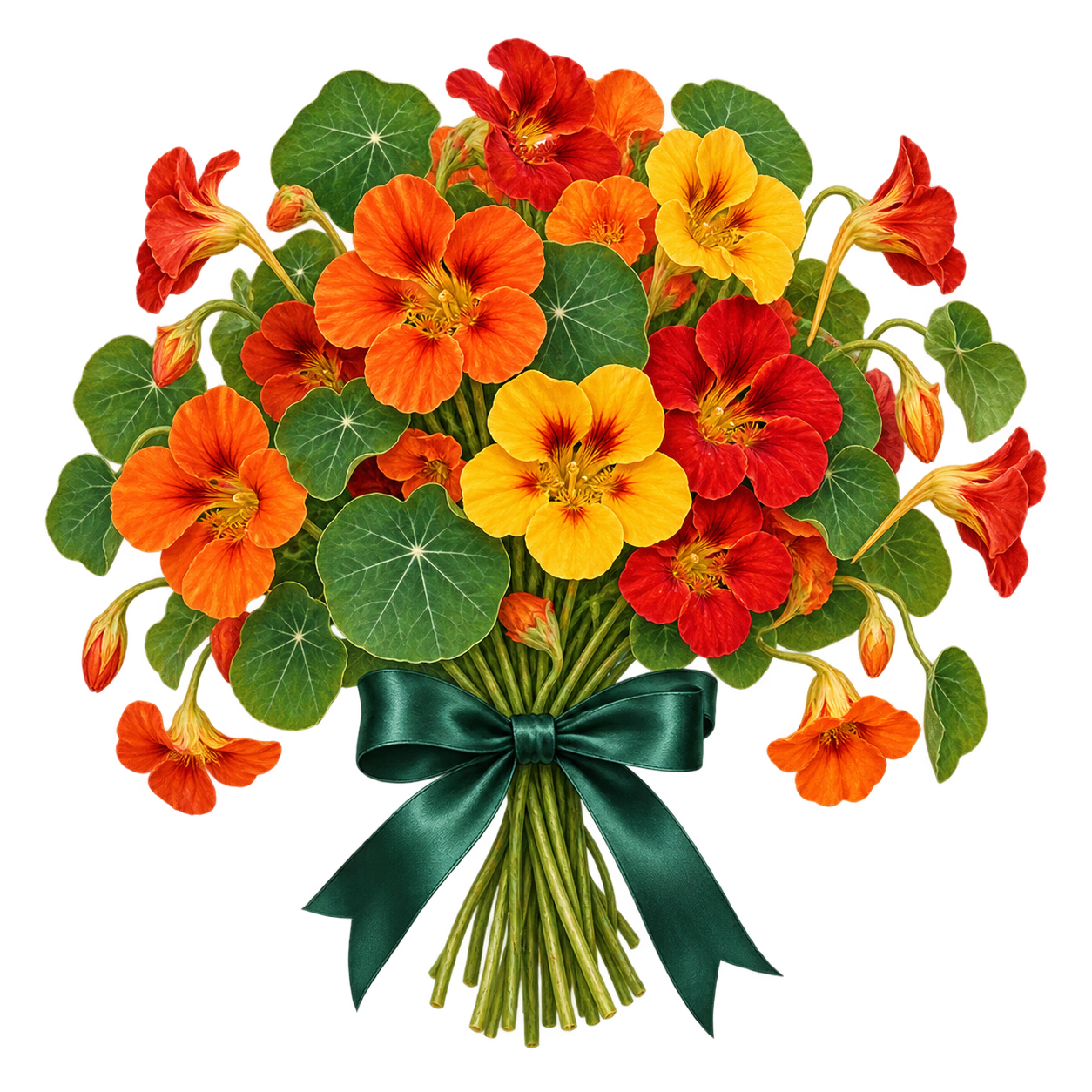
Tropaeolum majus - large nasturtium.
The salad lived modestly: a green leaf, another green leaf, a cucumber. Then came nasturtium in an orange dress. “Finally, decoration,” the salad was delighted. But the guest turned out to have a character: peppery, slightly hot. Beauty sat down at the table and demanded to be considered a full-fledged ingredient.
What is eaten and how it is prepared. For food nasturtium, flowers, young leaves and buds are used. The flowers are carefully washed, dried and added fresh to salads or prepared pasta; the leaves also give a peppery taste. You can take only the petals: their taste is usually milder than that of the whole flower. For this use, neither drying nor grinding is necessary.
Sources:University of Minnesota Extension, RHS on edible parts. Bouquet “Sunshine in your Palm” →
3. Calendula: a little sun has settled in the kitchen

Calendula officinalis - calendula officinalis, also known as marigold.
Rice looked in the mirror and sighed, “Pale again.” Calendula did not discuss self-esteem. She came with an armful of orange petals - and lunch became noticeably brighter. It was even nicknamed “the poor man’s saffron.” Not a bad career for a flower that many are accustomed to seeing exclusively near the fence.
What is eaten and how it is prepared. Usually they take the colored ray florets of the flower head - the parts usually called petals - separating them from the green base. Sprinkle fresh on salads and add to soups and rice. The petals are also dried and used to color food; crumble if necessary. The color and light spicy taste are its own: this does not make calendula real saffron.
Sources:RHS about calendula, University of Minnesota Extension about dried petals. Bouquet “Golden Afternoon” →
4. Rose: Romance Spread on Toast
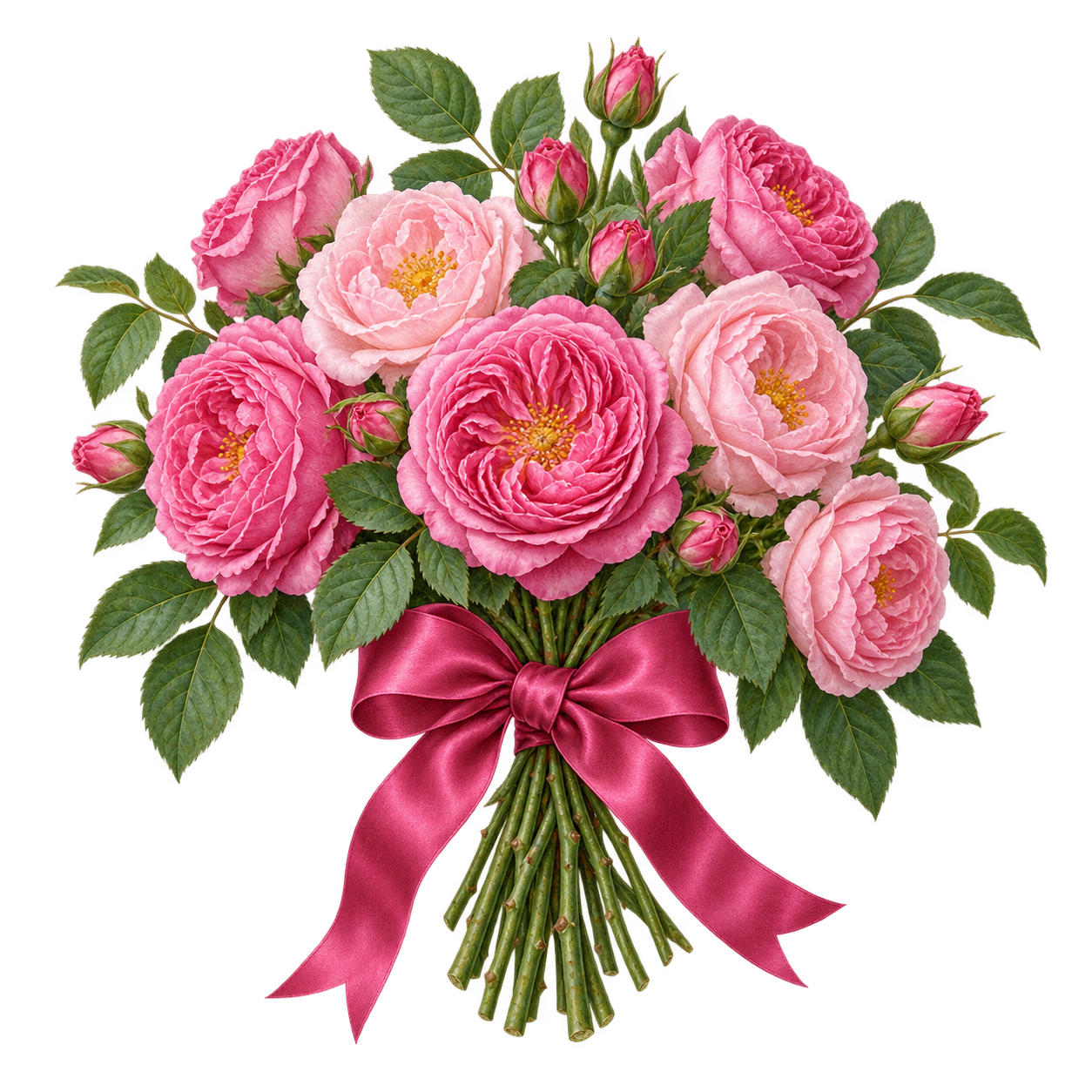
Rosa × damascena - Damask rose; Other fragrant edible roses are also used in cooking.
Rose was counting on a declaration of love. They prepared beautiful dishes for her, admired the aroma, and even invited her to breakfast. Then it turned out that the dishes were a jar, and breakfast was filled with jam. However, the opportunity to improve someone’s morning every day is also quite romantic.
What is eaten and how it is prepared. For flower jam and syrup, take food-grade fragrant rose petals, wash and sort them. The bitter white base of the petal is cut off if necessary. The petals are boiled with sugar according to the chosen recipe, infused in syrup or candied to decorate desserts. They are also dried for aromatic mixtures. Rose hips in a jar are a different story: they use the fruits, but here we are talking about the petals.
Sources:RHS about flower syrups and preserves, preparing the petals. Bouquet “Rose Jam” →
5. Lavender: from the cupboard to cookies
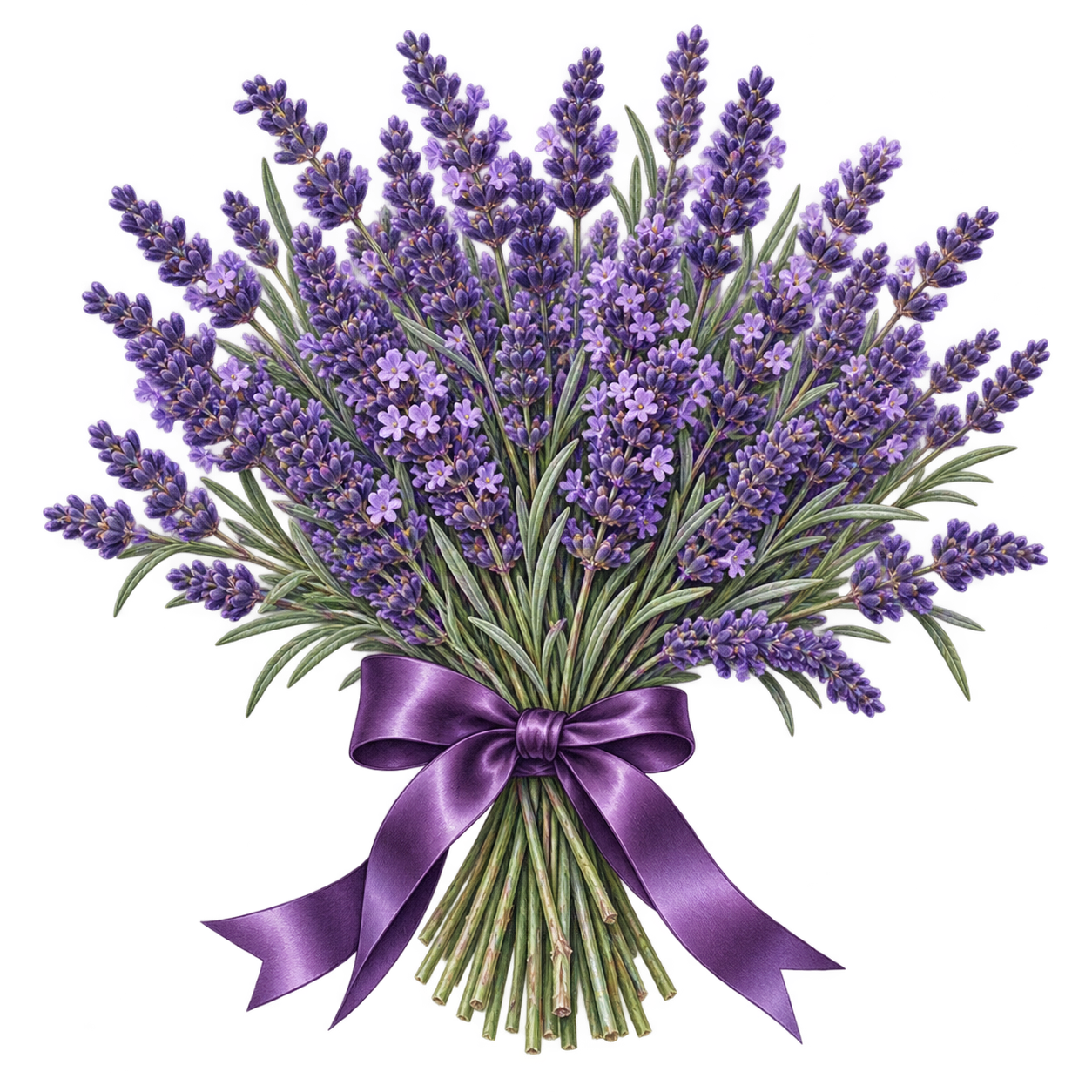
Lavandula angustifolia - narrow-leaved lavender.
“My specialty is making it smell good,” Lavender explained. “Great, we have a vacancy in cookies,” the pastry chef replied. So the flower expanded its scope of activity. True, the new employee’s scent turned out to be so proactive that he had to manage it literally with pinches.
What is eaten and how it is prepared. Use small quantities of culinary lavender flowers and flower buds, fresh or dried, without the rough stems. Dried flowers can be crushed with sugar for baking; For the drink, they are infused in hot water or syrup, then filtered. The result may be lavender sugar, syrup, flavoured biscuits or lemonade. Edible flowers and perfume essential oil are not interchangeable ingredients.
Sources:Purdue Extension: Lavender Lemonade, University of California on dried flowers and sugar. Bouquet “Lavender Sugar” →
6. Saffron: three strings with big ambitions
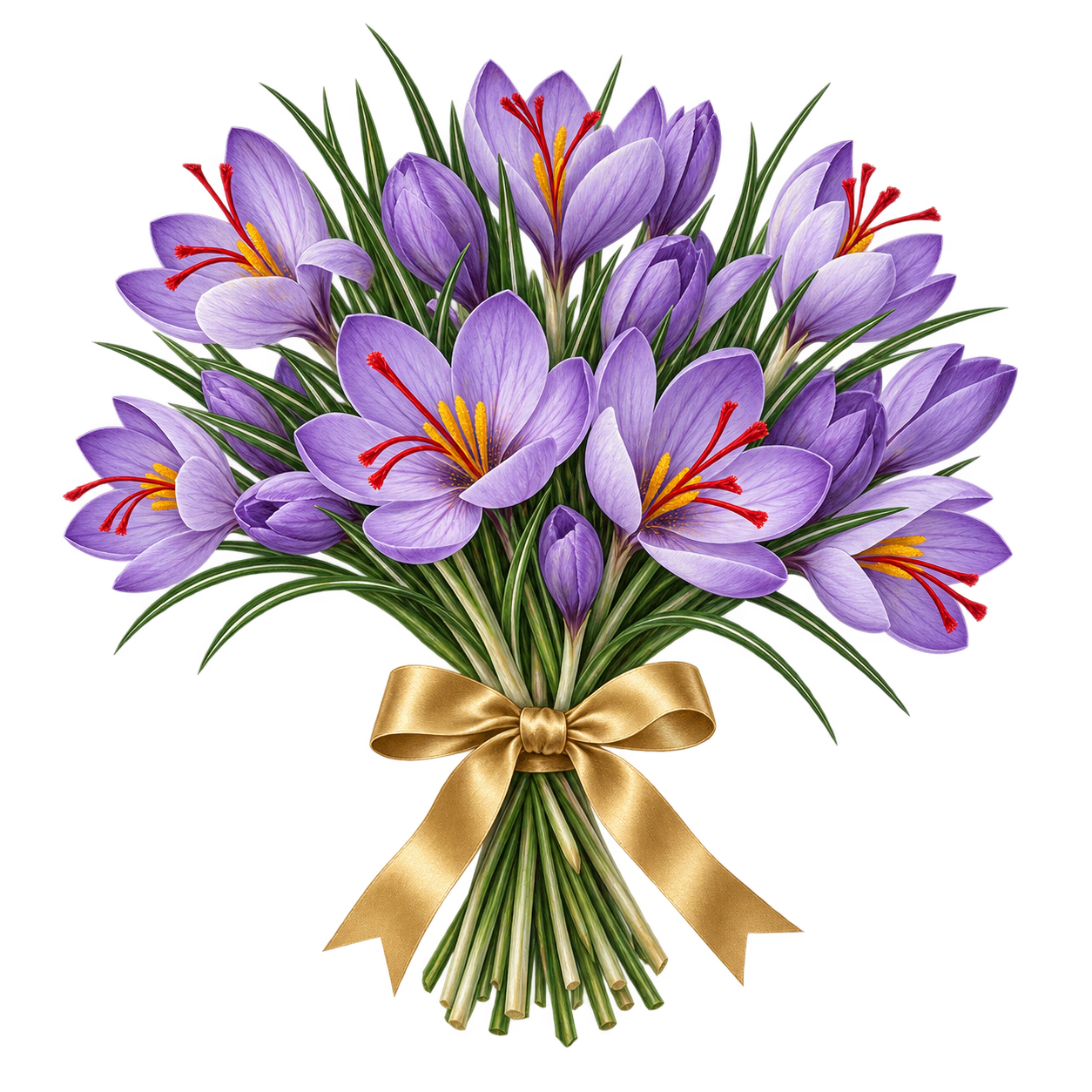
Crocus sativus - saffron crocus.
The flower opened and revealed three red strings. “Is that all?” - asked the kitchen. The saffron waited quietly until it was hand picked, dried and weighed. After that, the kitchen looked at the price tag and switched to a respectful “you.”
What goes into spice. Those same threads are the three red stigma branches of each flower. They are carefully separated and dried. Not yellow anthers, not lilac petals, not a bulbous corm.
How it is prepared. Dried stigmas are used whole or ground; For dishes, they are often pre-infused in a small amount of warm liquid and added along with the infusion. This is how the color and flavor are distributed in the rice, sauce or dough. Any garden crocus does not replace food saffron; the similar colchicum is poisonous.
Sources:RHS: Harvesting, drying and using saffron, University of Cambridge about saffron. Bouquet “Saffron Silk” →
7. Roselle: red tea with a botanical secret
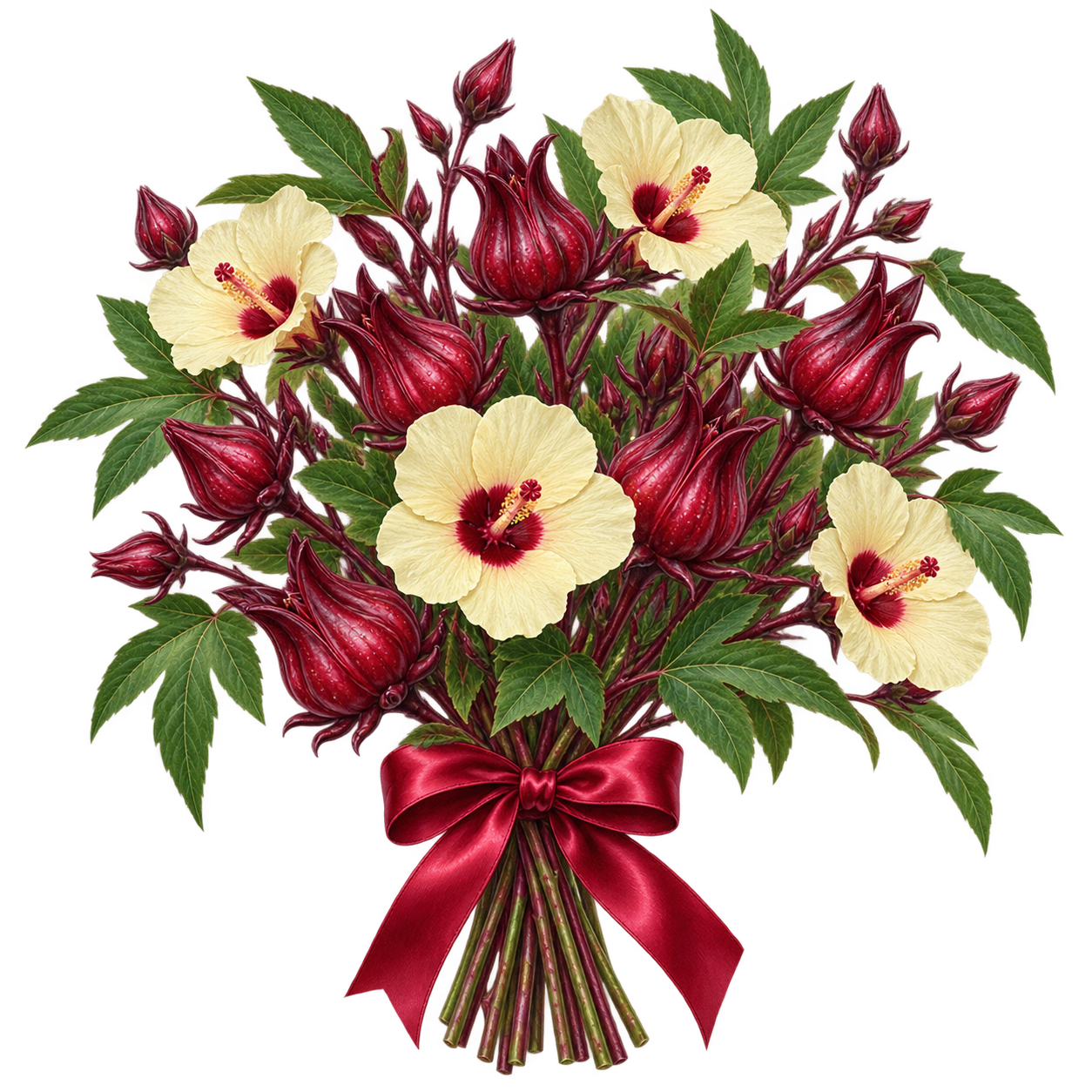
Hibiscus sabdariffa - roselle, or Sudanese rose.
A flower was drawn on the packet, the drink turned out red - the case was solved, the petals were brewed! But then a botanist came along and ruined the beautiful, simple version. The petals played their role and fell. The main character of the hibiscus remained lower - in a red dress that used to hold a flower.
What they brew. From food-grade roselle, the overgrown fleshy calyxes and the associated parts of the epicalyx around the fruit are collected. For the usual red hibiscus, red plant forms are needed. The seed pod is removed; The cups are used fresh or dried.
How it is prepared. Dried calyxes are infused in water, then filtered: a sour ruby drink is obtained. Fresh calyxes are also used in jams and jellies. This is not black tea from the tea bush and not permission to brew any decorative hibiscus from the windowsill.
Sources:University of Florida: structure of roselle, NParks: using calyxes in drinks and jams. Bouquet “Ruby hibiscus” →
8. Cloves: a spice that hasn't had time to bloom
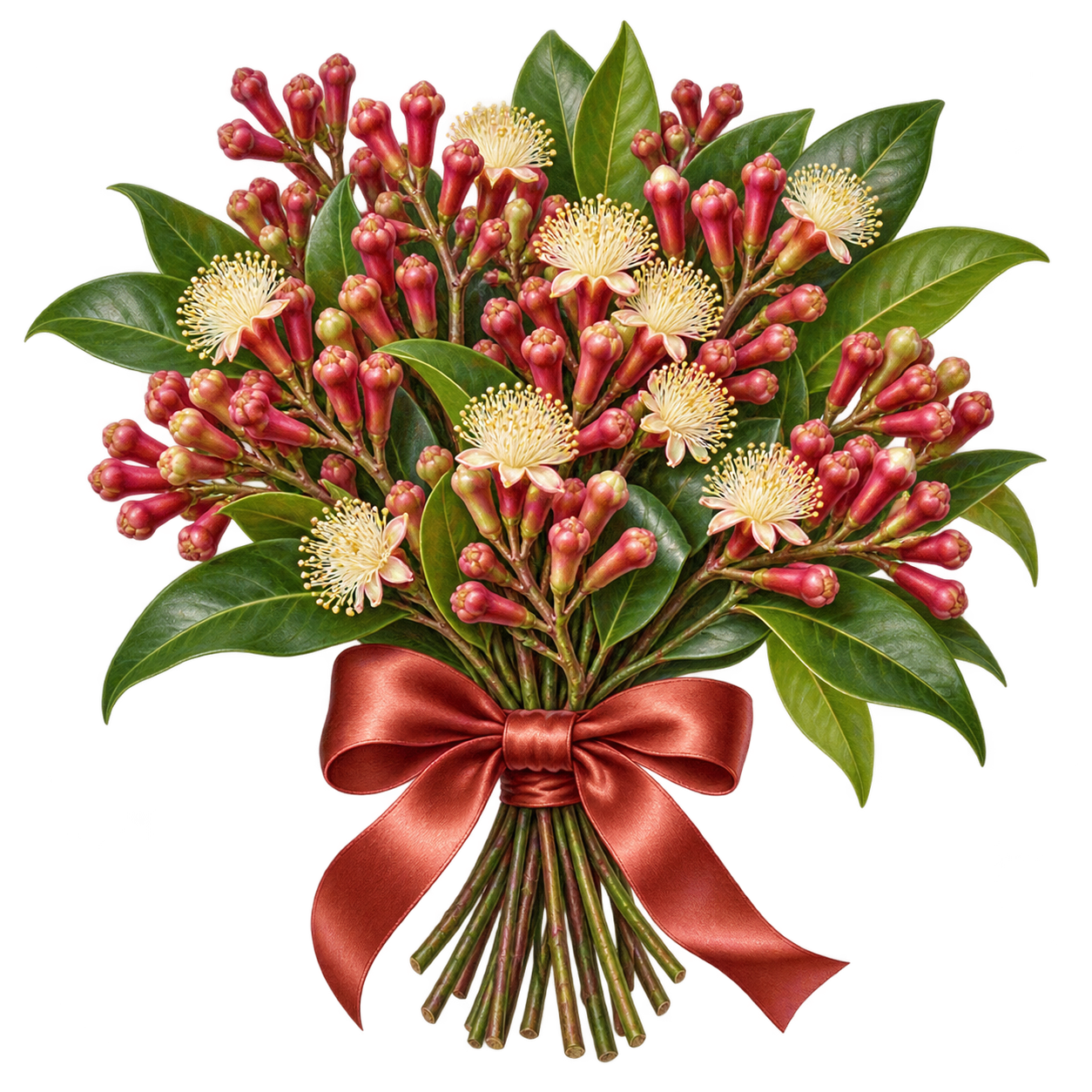
Syzygium aromaticum - clove tree.
The bud was about to become a flower on a tropical tree. It was already blushing, getting ready to open up - and suddenly it turned out to be a spice. Next came drying, a bag and a career in compote. And the garden carnation of the same name stood in a vase all this time and wondered why it was being recorded in the spice department.
What they use. The clove spice are the dried, unopened buds of the clove tree, native to the Moluccas Islands. They are collected before opening and dried: the familiar brown “clove” retains the shape of the bud.
How it is prepared. Whole buds are used to flavor drinks, marinades and sauces, after which they are usually removed; For dough and spicy mixtures, the buds are ground. The opened flower has a noticeable cluster of light stamens - these are the flowers along with the buds that are in our bouquet. But the usual spice comes from the buds, and not from this brush.
Source:Royal Botanic Gardens, Kew: clove tree. Bouquet “Spicy Islands” →
9. Capers: the flower chose a salty career
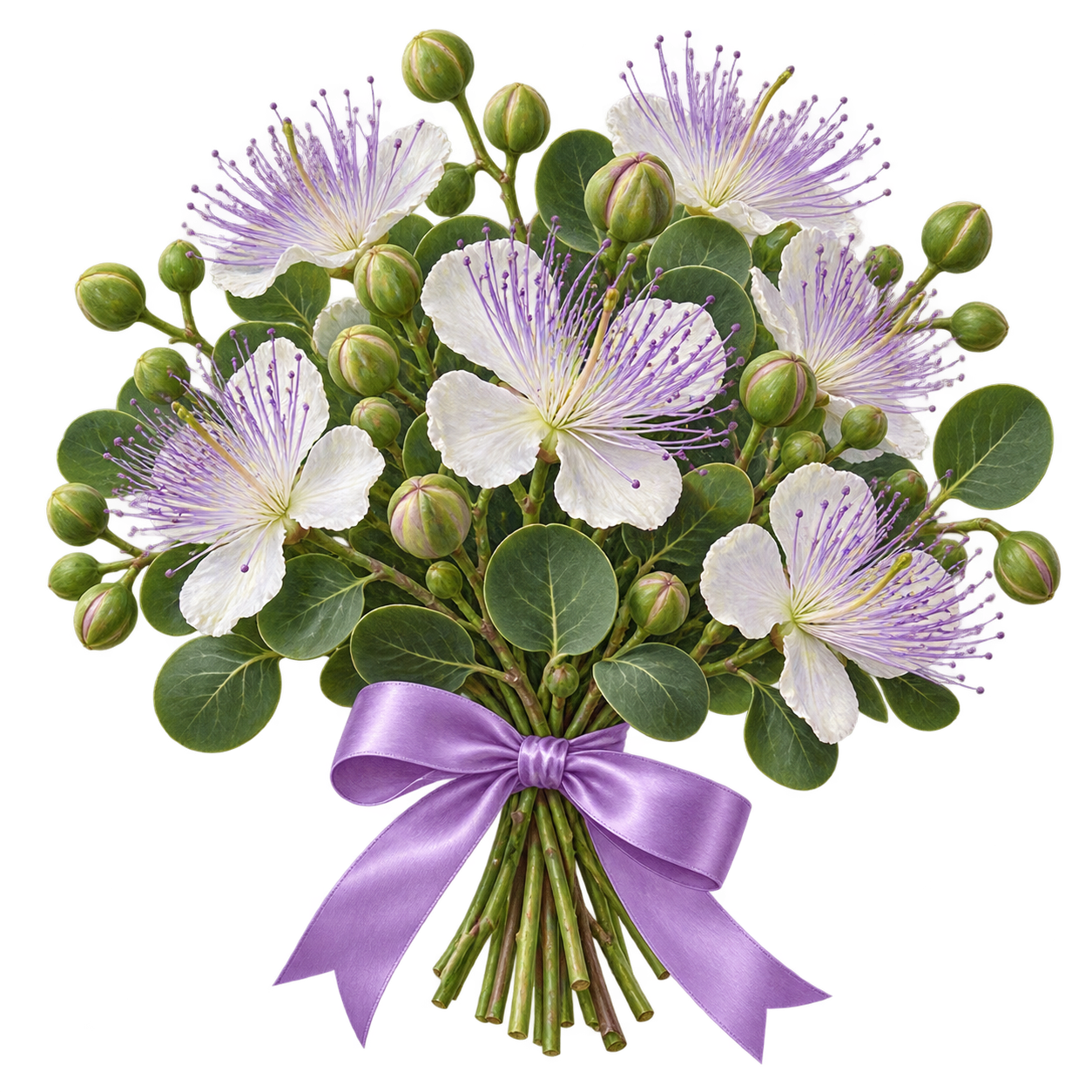
Capparis spinosa - caper bush.
The caper had two scenarios. The first is to open the white petals and release a firework of purple stamens. The second is to get into the jar, salt it and command the taste of the sauce. The second one is more common in the kitchen. Therefore, many people have been eating capers for years and do not even suspect what flower premiere they missed.
What is eaten and how it is prepared. Small capers are unopened flower buds. They are collected by hand, then treated with salt, kept in brine or pickled; in some technologies it is dried beforehand. It is the processing that creates the familiar taste. Before adding to the dish, ready-salted capers can be rinsed to remove excess salt.
Large oblong “capers” with a tail are already the fruits of the same plant, caper berries; they are also pickled. Bud and fruit are different stages of life, not just small and large sizes of one product.
Source:University of Wisconsin–Madison Extension. Bouquet “Caper Dawn” →
10. Artichoke: a vegetable that changed its mind and bloomed
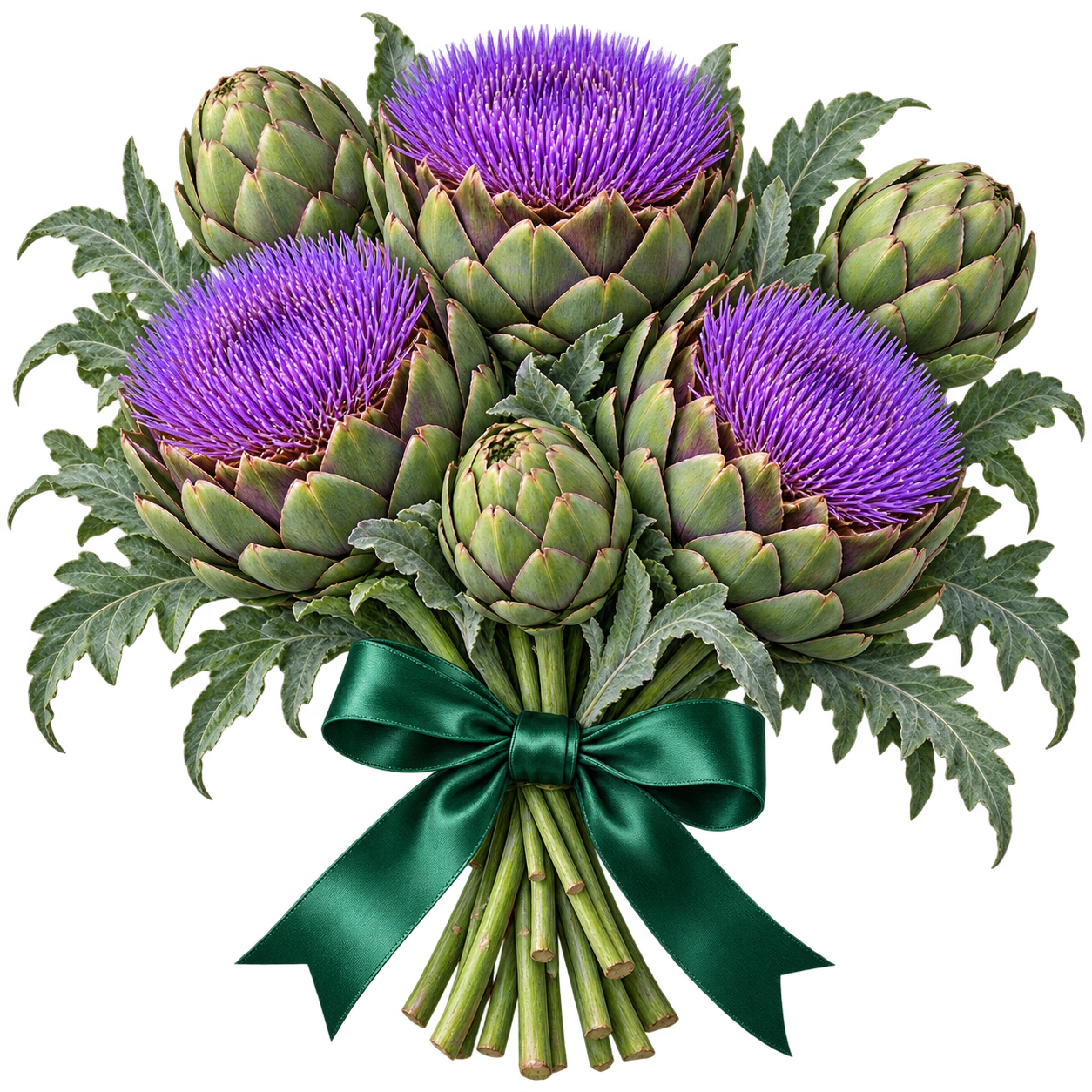
Cynara cardunculus, Scolymus group, is a cultivated artichoke also known as Cynara scolymus.
The artichoke looked like it would have to be opened with a can opener by lunchtime. The kitchen was patient and found the tender core. And they forgot to collect the neighboring artichoke: it released a huge purple cap and went to work on the bouquet. It turns out that sometimes being late with dinner means getting flowers on time.
What do they eat? The young, not yet opened head of the inflorescence is collected. The main edible parts are the fleshy base, which is called the heart or receptacle, and the fleshy bases of the bracts surrounding it. These are not ordinary leaves from a stem.
How it is prepared. The head is cleaned of hard outer parts and cooked until soft - for example, boiled or steamed. For large heads, the internal hard fibrous “beard” from immature flowers is removed. The soft pulp is removed from the cooked bracts; the hard part is not eaten. The purple blooming artichoke in our picture is beautiful, but the regular vegetable harvest is harvested earlier.
Sources:RHS: what they eat and how they cook it, artichoke botanical card. Bouquet “Artichoke Amethyst” →
The vase and plate agreed. Flowering plants have indeed lived in the kitchen for a long time, but each comes there according to its own rules. The petals are taken from the rose, the stigmas from the saffron, the buds from the capers, and blue fenugreek is allowed to ripen. So the correct question to a flower sounds something like this: “You are beautiful, we already understand that. And what part of you is written down in the recipe?”
All ten illustrations were created for Mozg.ru and added tocollection of bouquets. They can be viewed completely without culinary preparation.