
Sausages for slicing and spreading: compare their mosaics, casings and consistency. Frankfurters, sardelki and hot-serving sausages now have a separate article.
The editorial team created these illustrations with AI. They explain the subjects rather than photograph specific products. Each card links to a source.
1. Chorizo
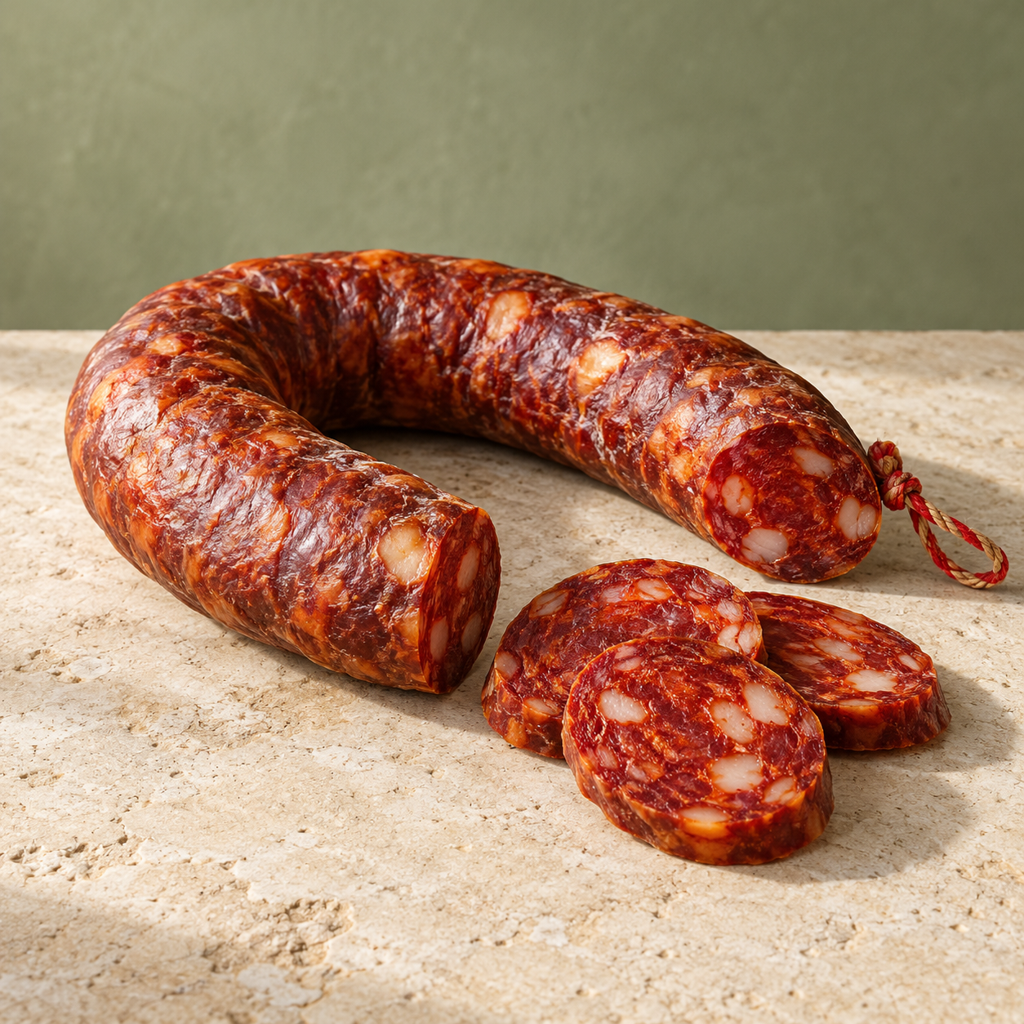
Spain
The red cut surface is recognizable before the name. In cured Spanish chorizo, paprika colors the meat mosaic and white fat flecks sharpen the contrast.
Checked fact. Paprika is characteristic of Spanish chorizo; a red color does not necessarily mean intense heat.
Source: Source — Chorizo
2. Salami
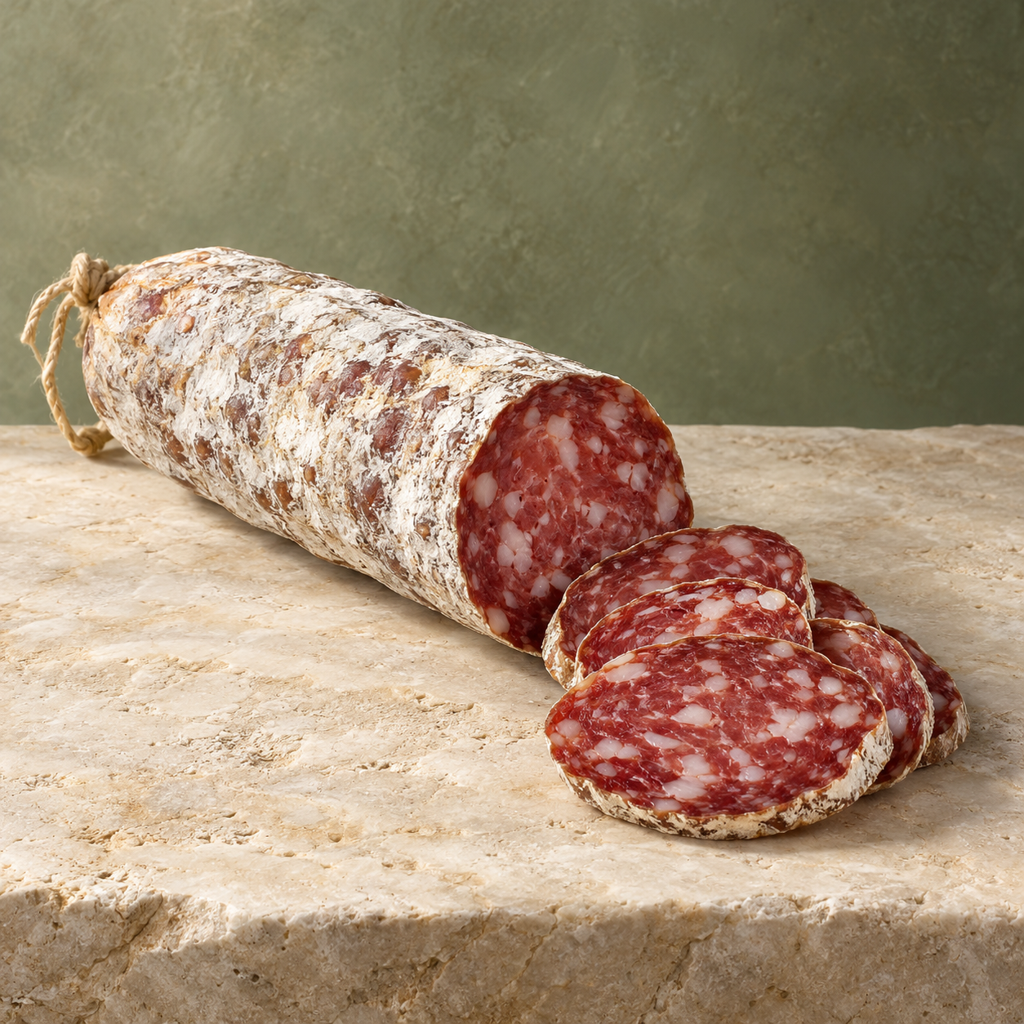
Italy · a family of cured sausages
A ruby cut surface with white flecks resembles a dense mosaic. Ageing and moisture loss distinguish this family from soft cooked sausage.
Checked fact. Salamini Italiani alla Cacciatora PDO is one raw aged sausage within the broad salami family.
Source: Source — Salami
3. Mortadella
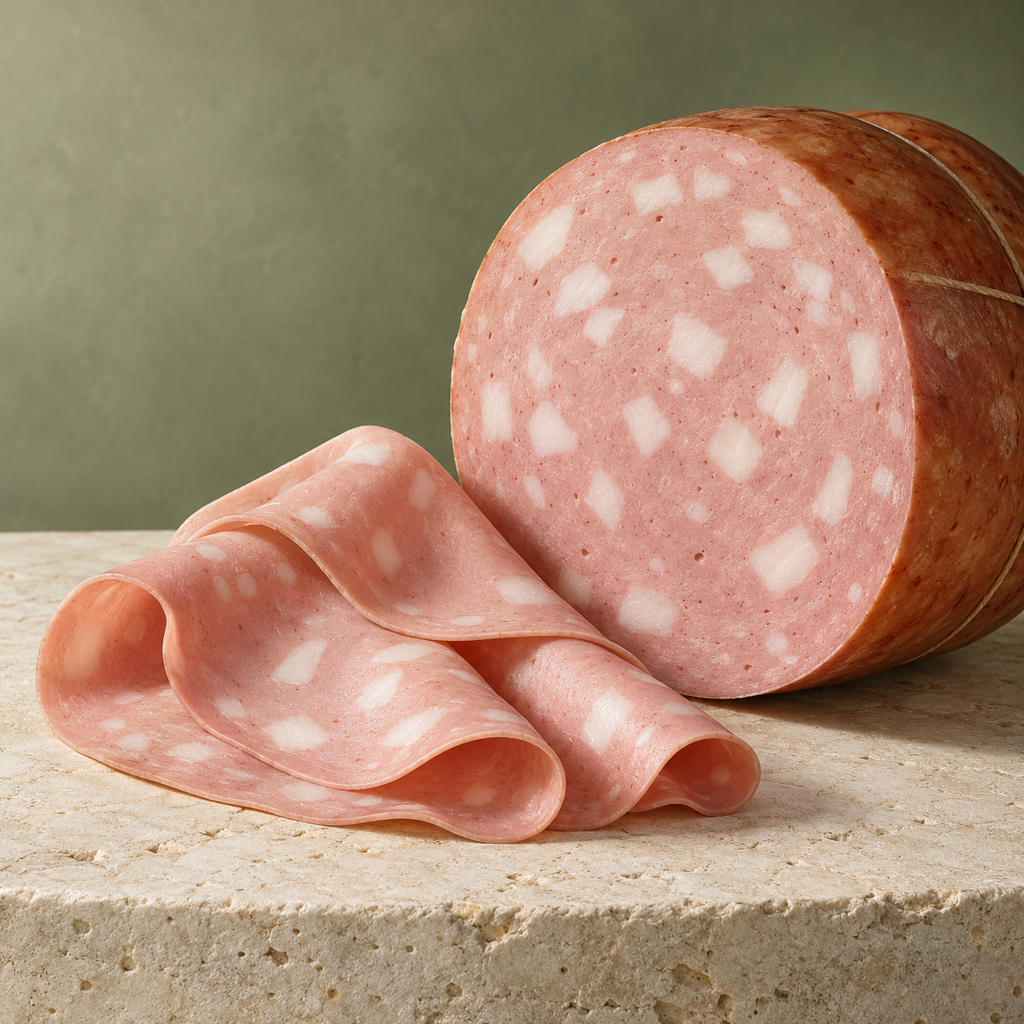
Bologna · Italy
A large pink circle with white cubes is almost a graphic pattern. A thin slice folds softly, unlike a firm piece of dry salami.
Checked fact. The white inclusions in mortadella are pieces of fat; not every version contains pistachios.
Source: Source — Mortadella
4. Krakowska sausage
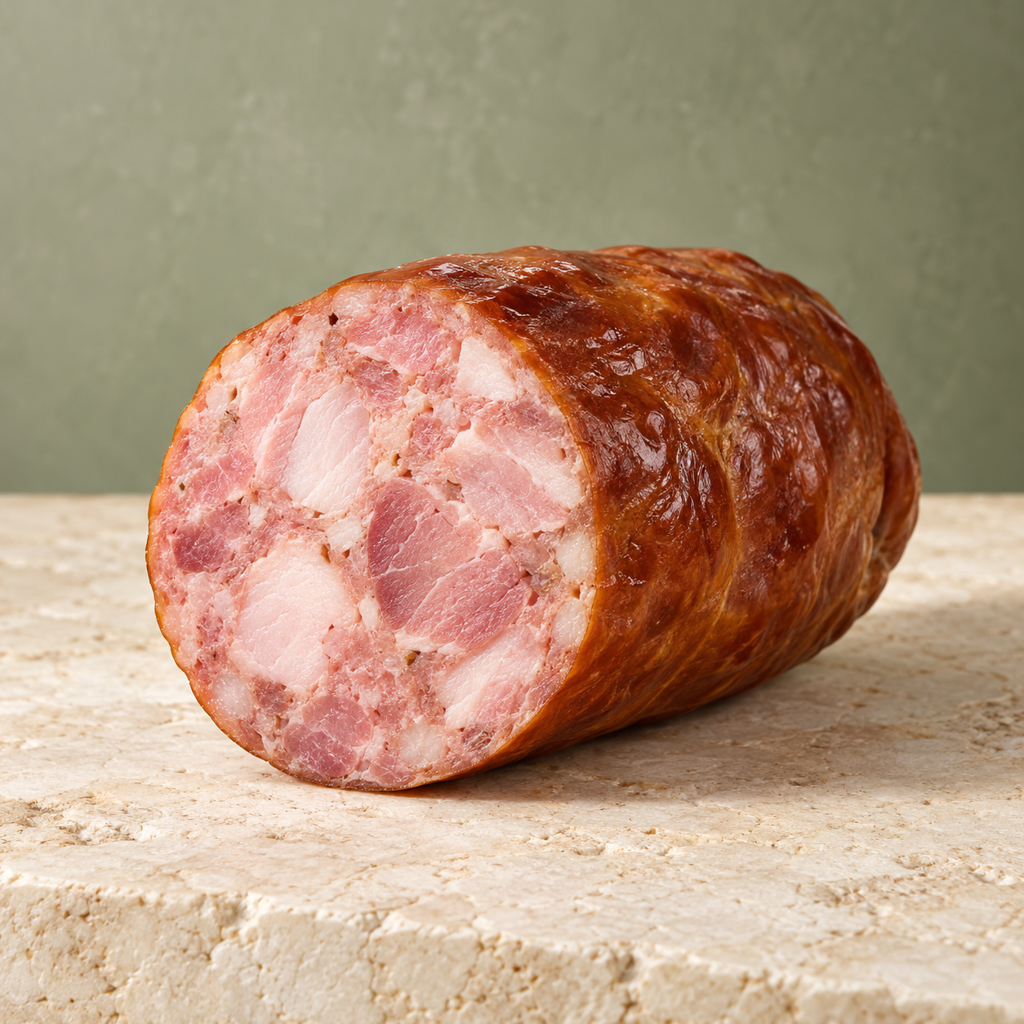
Poland
Large meat pieces make each slice resemble a stone mosaic. The difference between coarse chopping and a uniform sausage emulsion becomes visible.
Checked fact. The protected kiełbasa krakowska sucha staropolska follows the tradition of coarsely chopped Krakowska sausages.
Source: Source — Krakowska sausage
5. Fuet
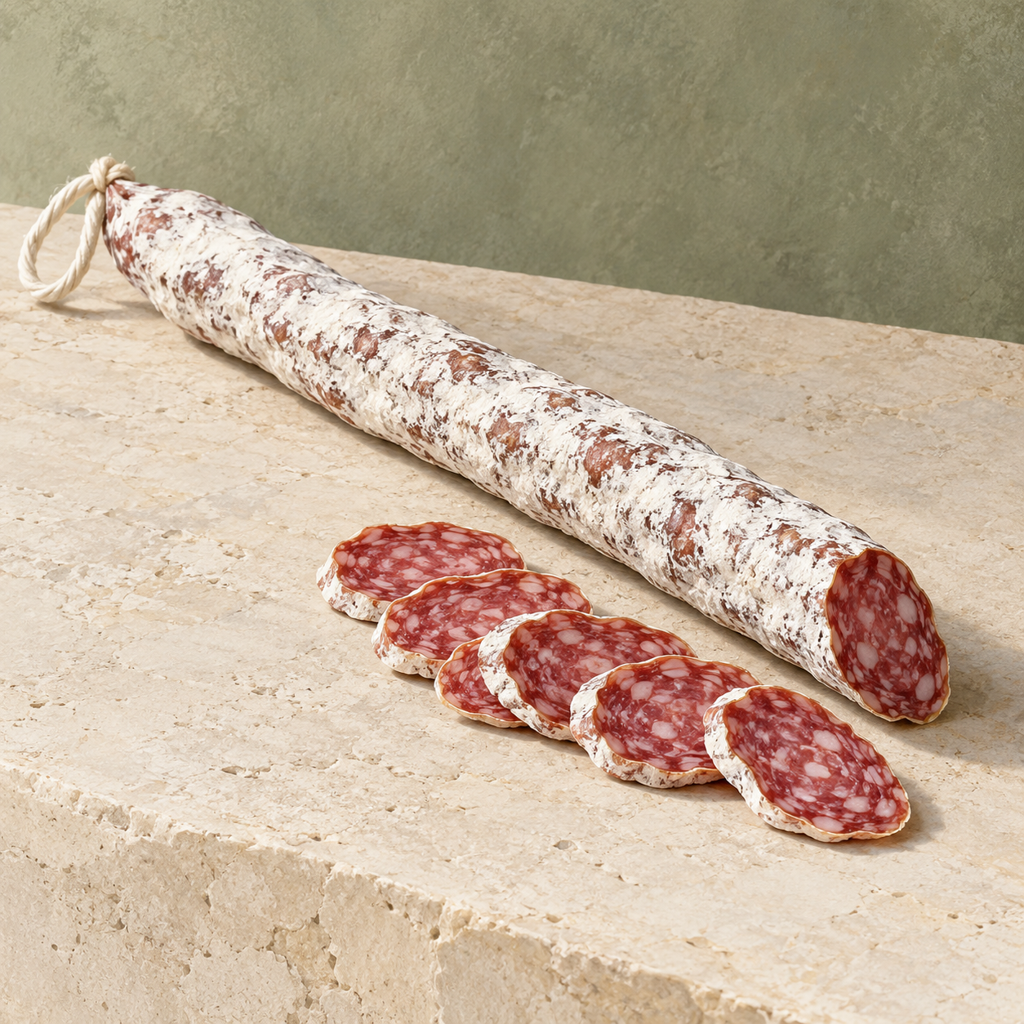
Shape, texture and tradition
A slim long sausage and small cut rounds make fuet resemble miniature salami. Its whitish surface contrasts with the pink meat mosaic.
Checked fact. Fuet is a cured pork sausage, with a texture unlike cooked frankfurters.
Source: Source — Fuet
6. Salchichón
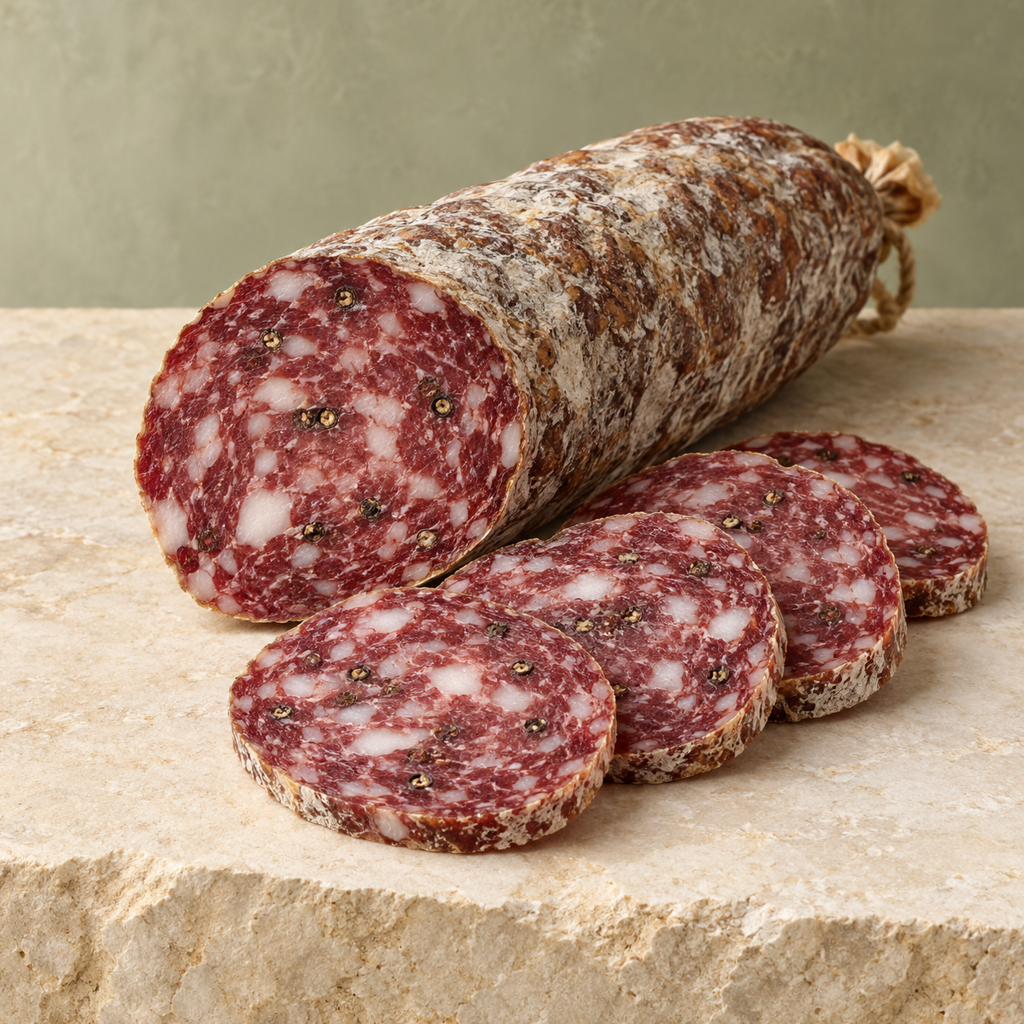
Shape, texture and tradition
Beside chorizo, this sausage looks quieter: a meat mosaic and dark seasoning flecks replace the strong red tone. Compare their cut surfaces.
Checked fact. Black pepper is characteristic of salchichón; producers’ recipes vary.
Source: Source — Salchichón
7. Soppressata
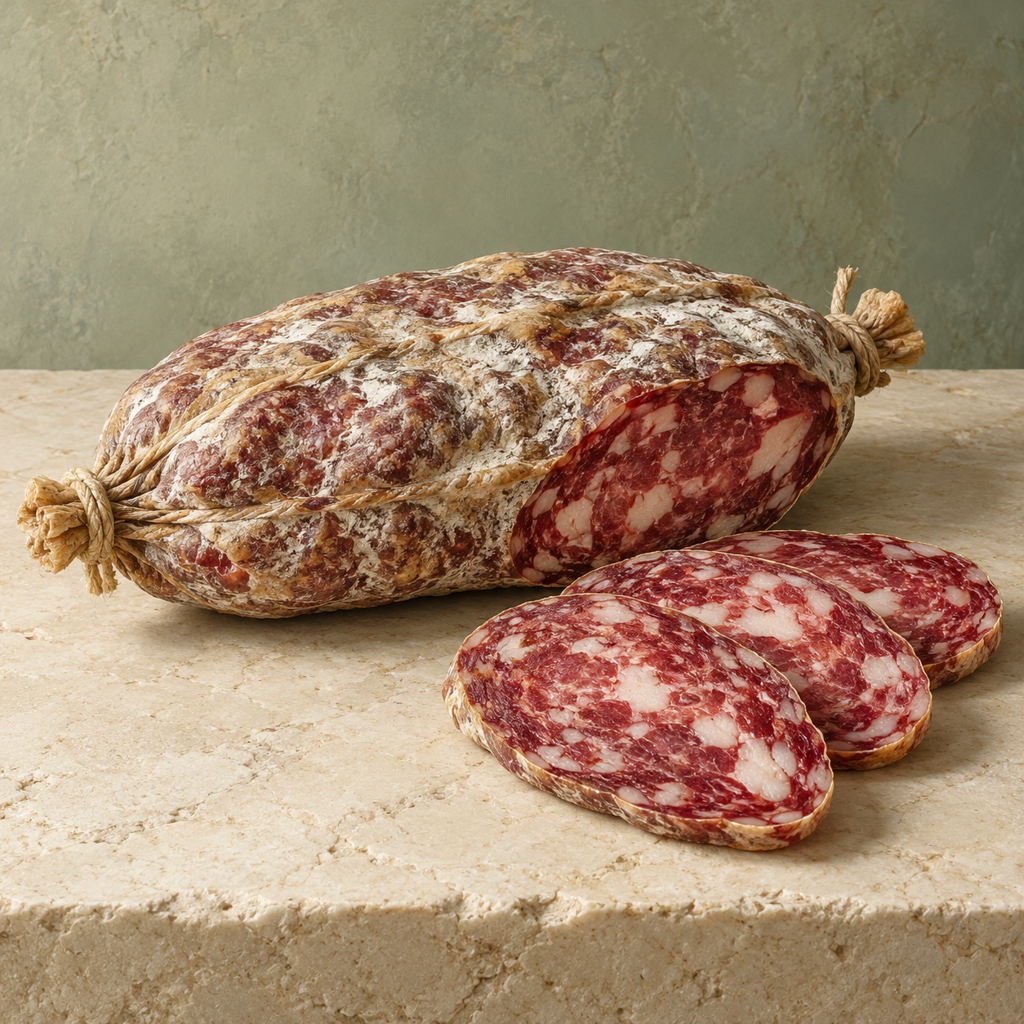
Shape, texture and tradition
An oval cross-section and coarse meat pieces resemble a stone print. Regional versions can differ in shape and seasoning.
Checked fact. Soppressata di Calabria PDO is a protected regional sausage made from chopped pork.
Source: Source — Soppressata
8. ’Nduja
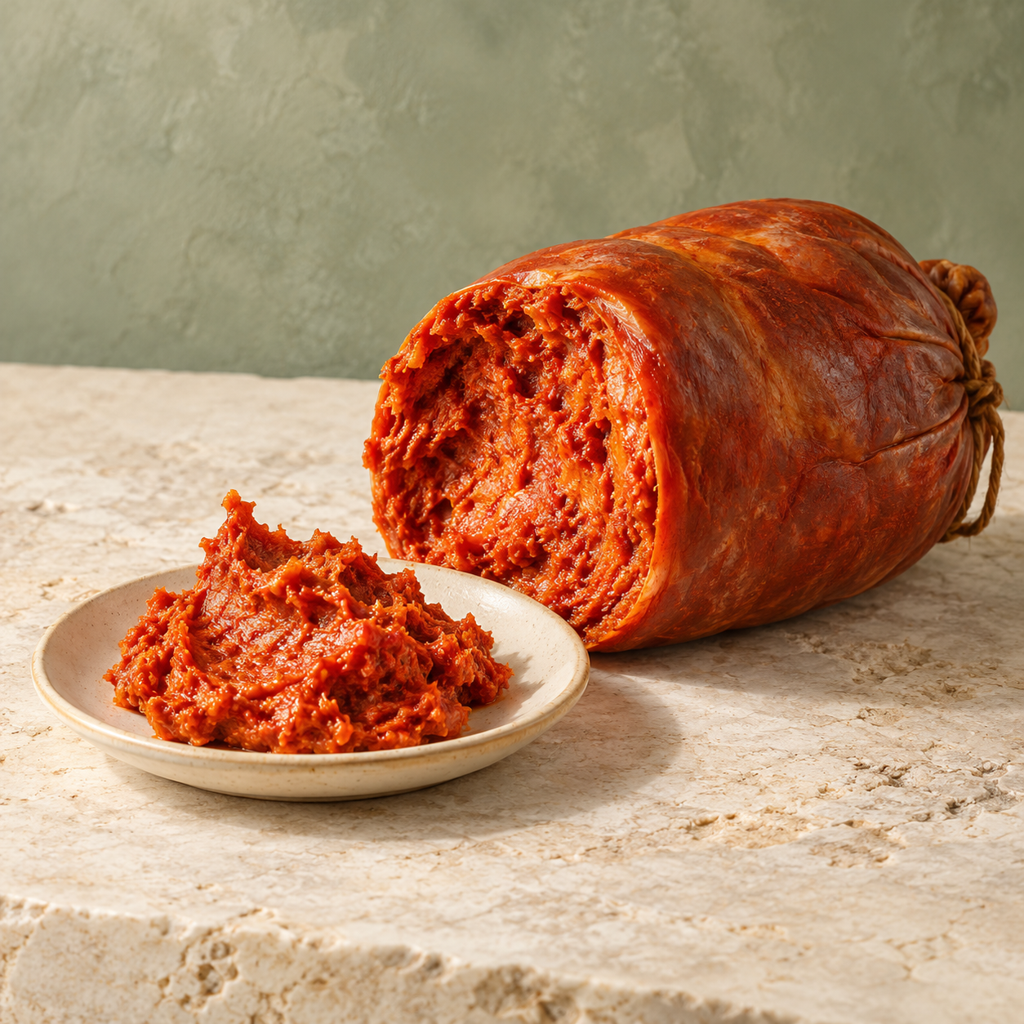
Shape, texture and tradition
Not every sausage must hold a slice. Soft red ’nduja is closer to a thick paste: its character appears with the first movement of a knife.
Checked fact. ’Nduja has a soft spreadable consistency.
Source: Source — ’Nduja
9. Finocchiona
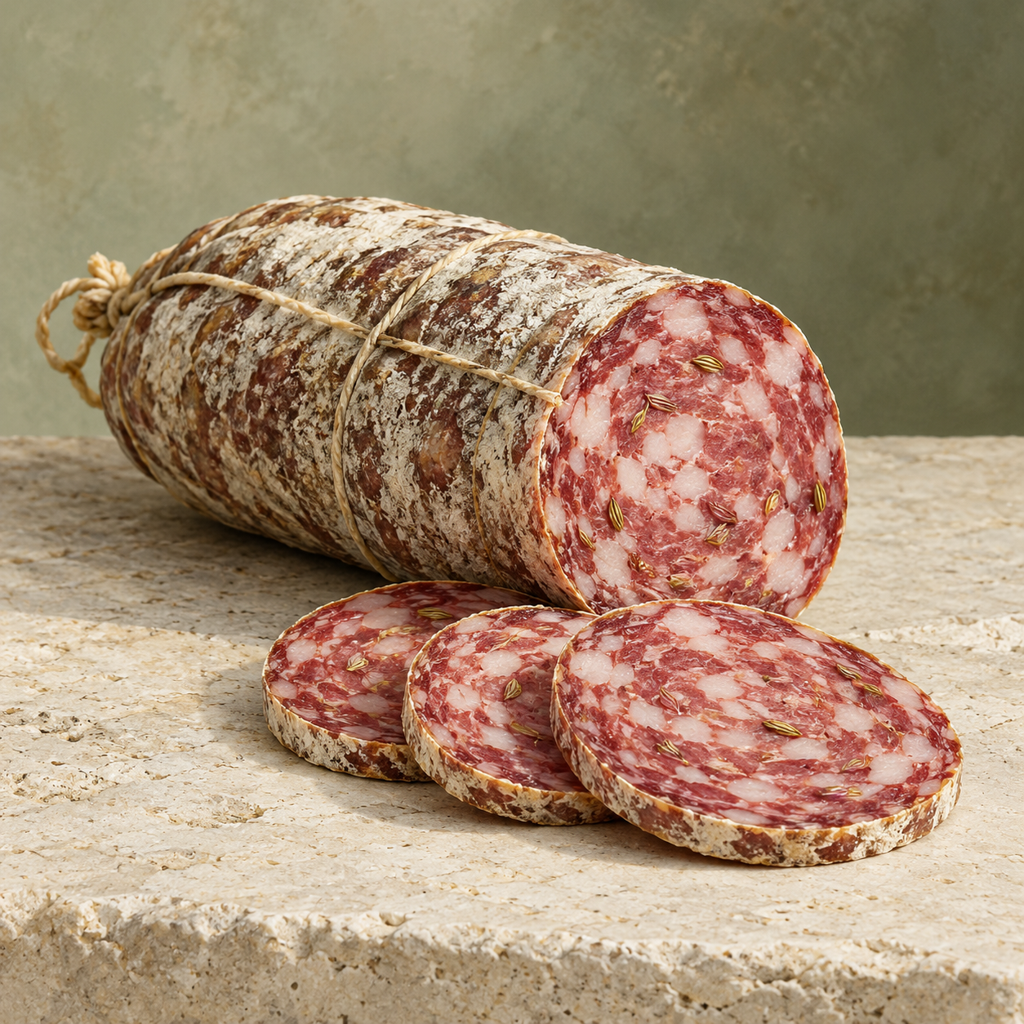
Shape, texture and tradition
A thick slice with white flecks resembles other Italian salamis. Tiny seeds in the mosaic offer a clue to its distinctive aroma.
Checked fact. Finocchiona PGI gets its characteristic aroma from fennel seeds and/or flowers.
Source: Source — Finocchiona
10. Saucisson sec
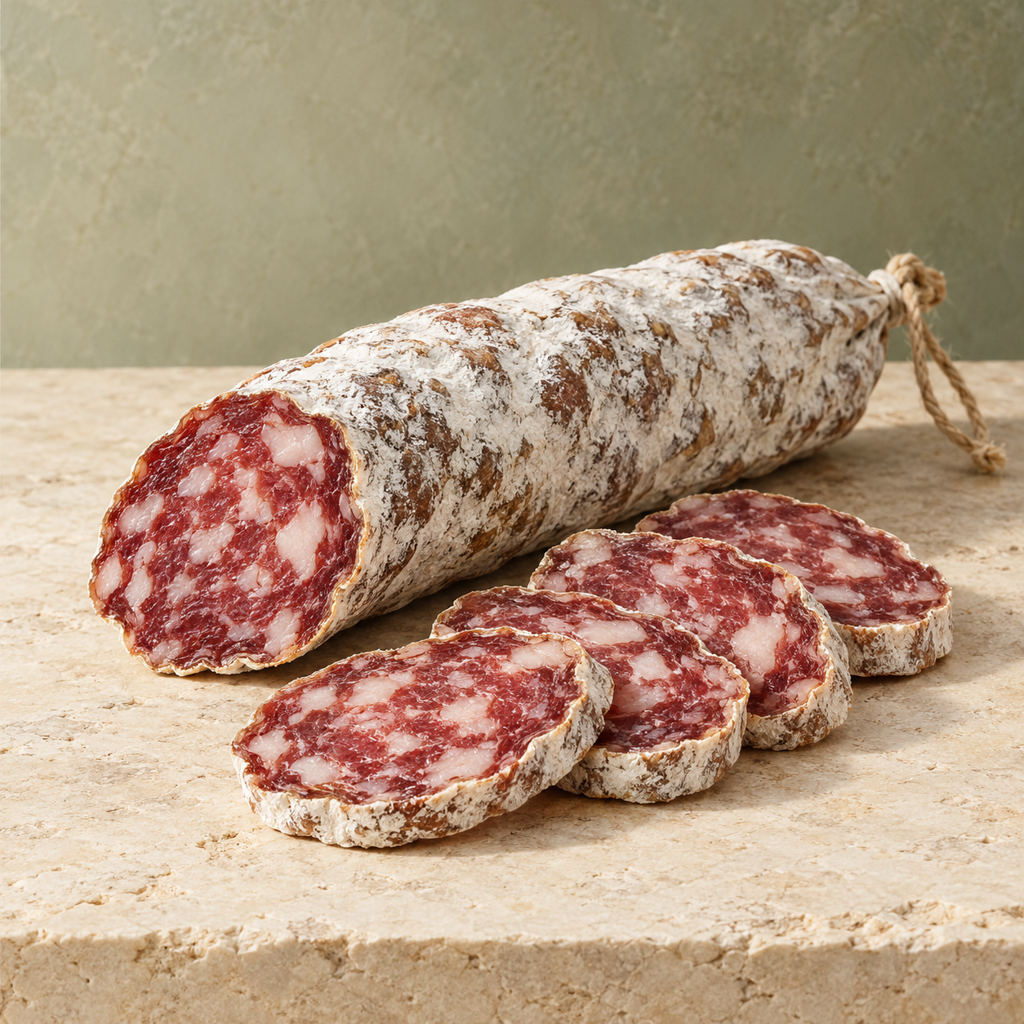
Shape, texture and tradition
Its French name can mislead: this is a firm sausage for thin slicing, not a frankfurter for hot water. A pale casing frames a red-and-white cross-section.
Checked fact. Sec means dry in French; saucisson sec belongs to the dry-sausage family.
Source: Source — Saucisson sec
Another collection: Frankfurters and plump sausages: ten varieties around the world