
A mask can conceal a face while revealing a character. Explore ten traditions without reducing different cultures to one carnival costume.
Drawings interpret named traditions; they are neither photographs nor exact museum replicas. Fictional vignettes are separate from sourced facts; ritual beliefs are described as cultural practices.
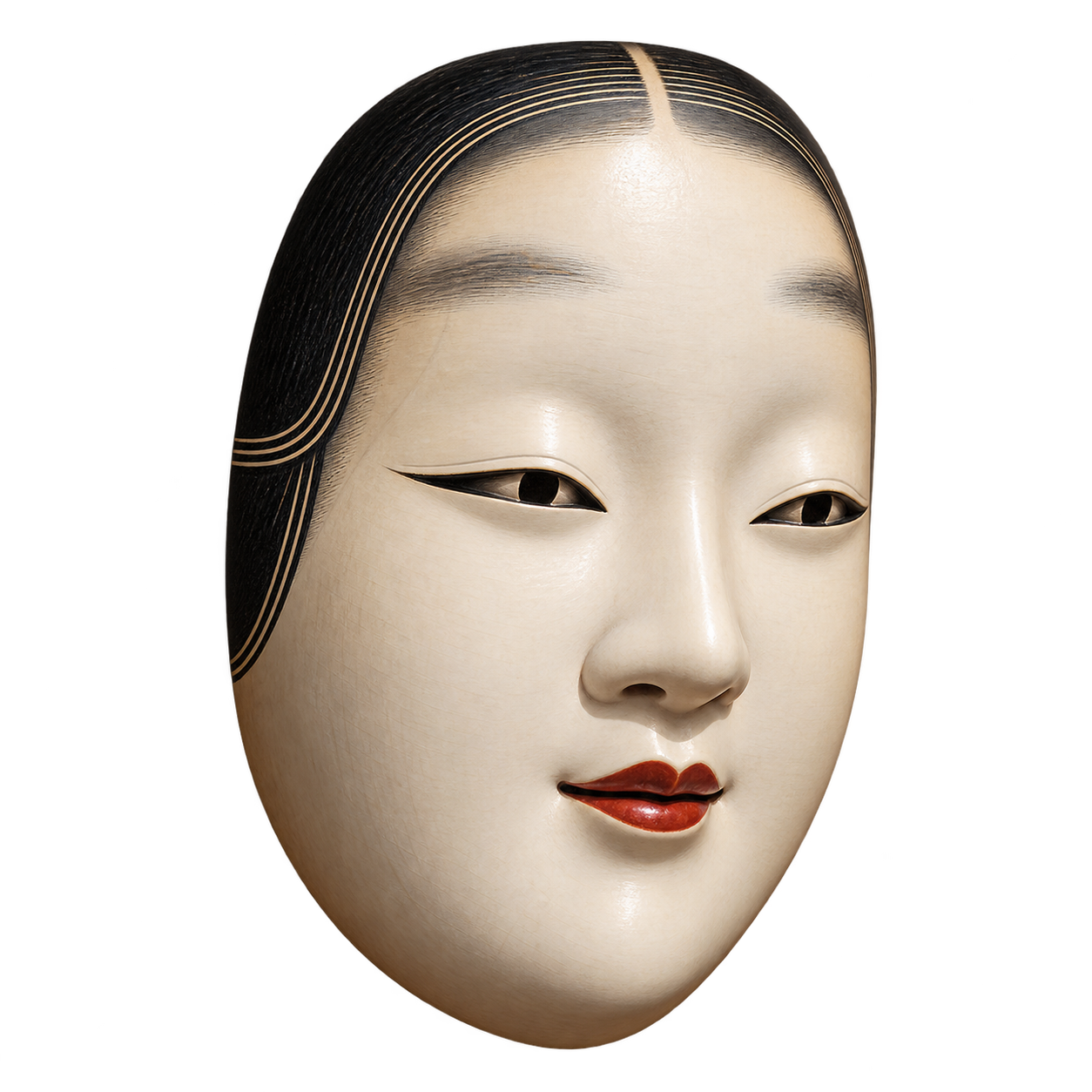
1. Ko-omote: a quiet face of Noh
Ko-omote: a quiet face of Noh
The mask barely changed, yet a turn altered its meeting with light. A still face had something to say.
Checked fact. Ko-omote is a Japanese Noh mask type representing a young woman.
It represents a role type, not an actress’s portrait or every Japanese mask.
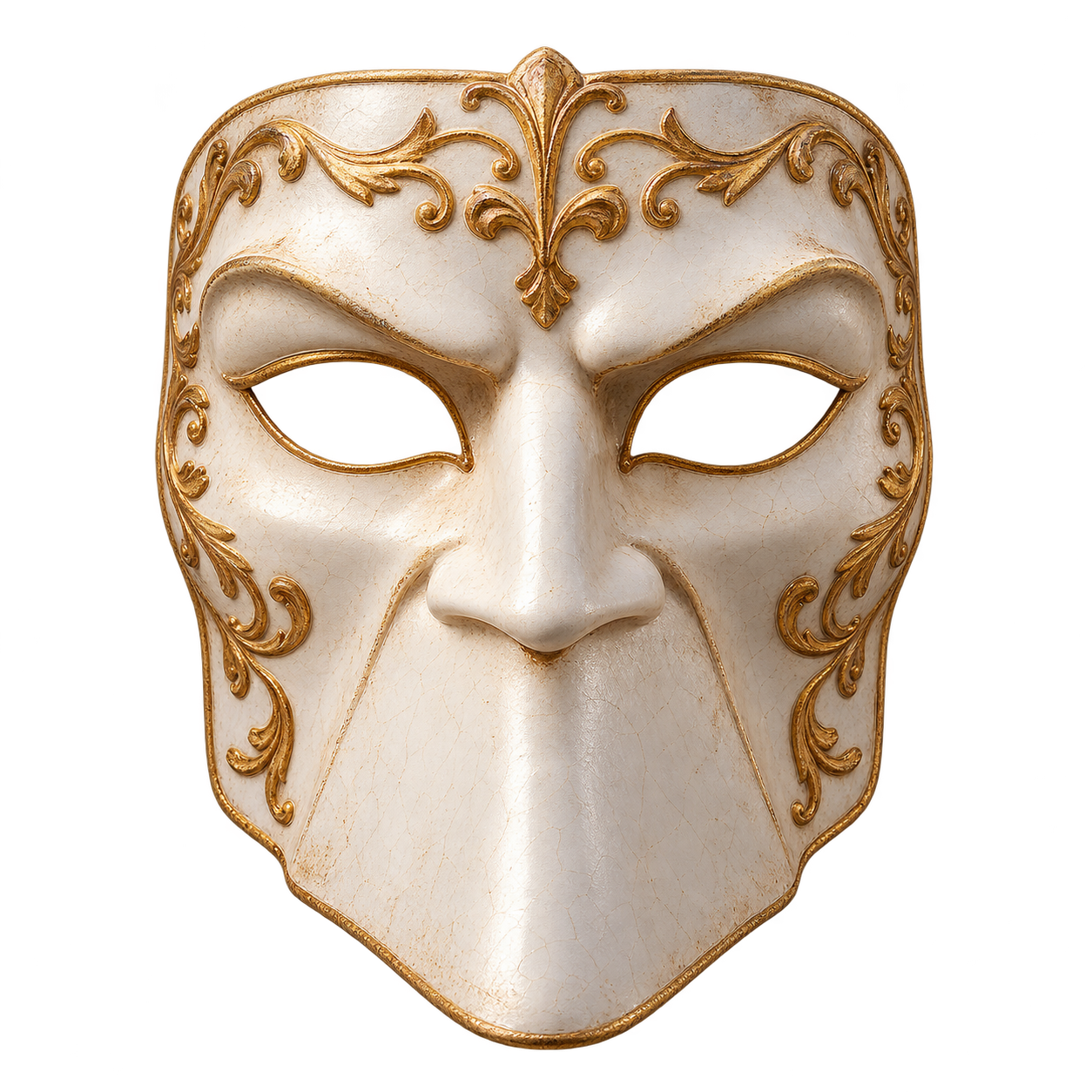
2. Bauta: a face leaves room for a voice
Bauta: a face leaves room for a voice
The white mask projected its angular lower face. It wanted to conceal a face, not the entire conversation.
Checked fact. Venetian bauta has a projecting lower face; historically the term also refers to a wider disguise ensemble.
We show the mask alone, without cloak or tricorn.
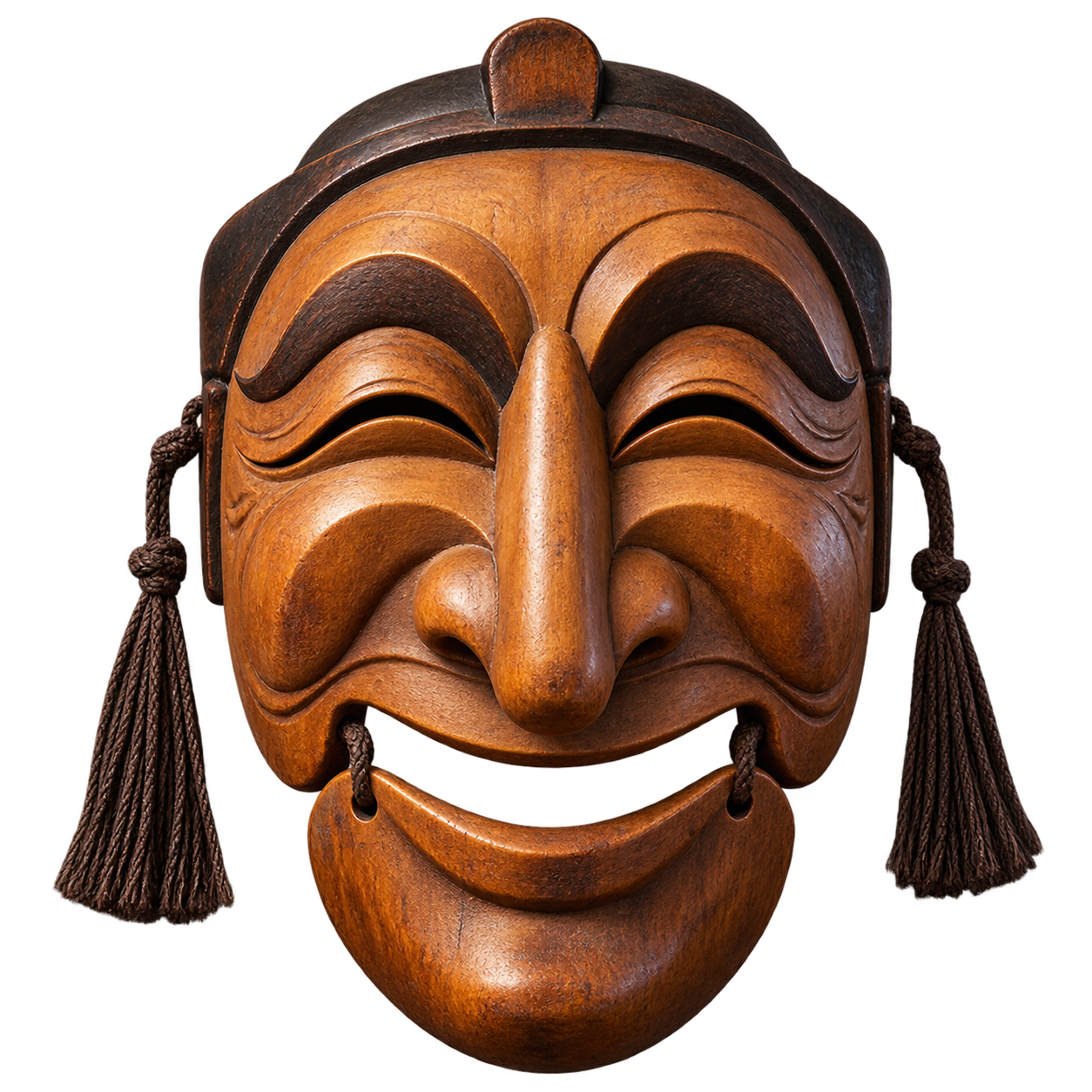
3. Yangban: a smile takes the stage
Yangban: a smile takes the stage
The wooden face smiled before the scene began, as though it already knew who would hear the joke.
Checked fact. Yangban is a nobleman character in Korea’s Hahoe mask-performance tradition.
The mask belongs to theatrical satire, not a generic portrait of Koreans.
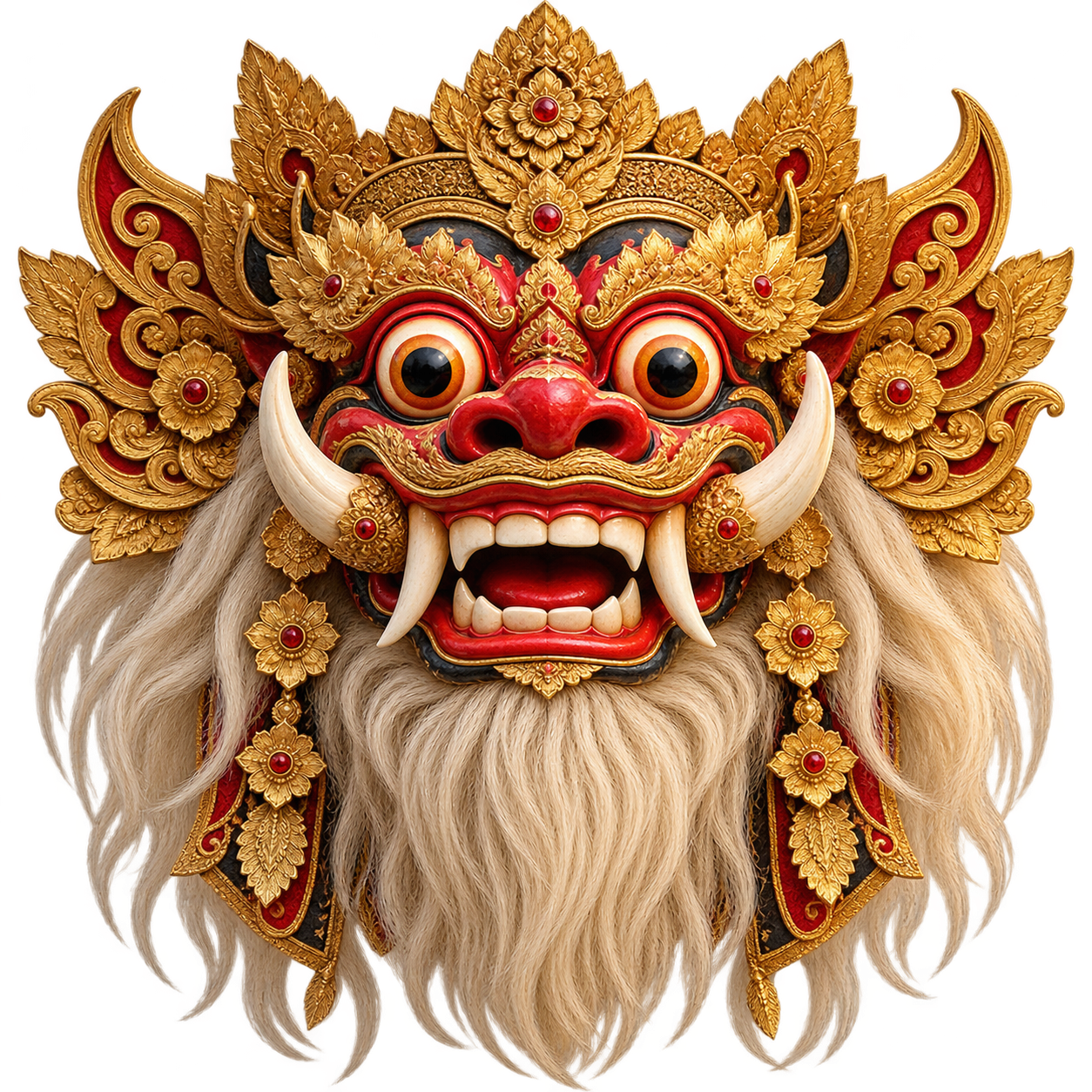
4. Barong: fierce looks do not explain the role
Barong: fierce looks do not explain the role
Eyes widened and carving grew elaborate. Calling the character a villain had to wait for the performance’s story.
Checked fact. Balinese Barong Ket is associated with a protective character; its mask belongs to a larger costume and performance.
A head illustration cannot replace the dance and its cultural context.
5. Sanni: a mask within a ritual story
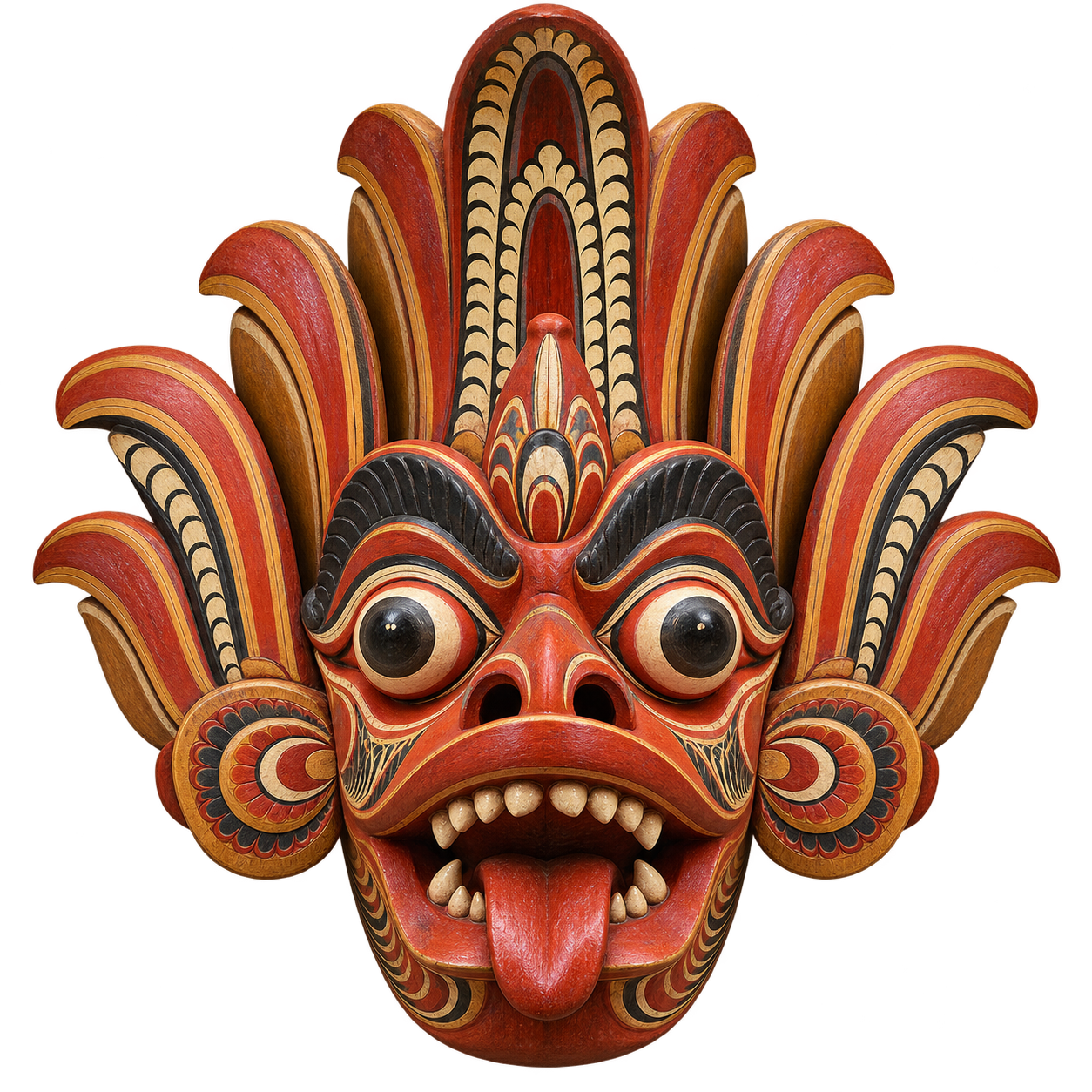
Sanni: a mask within a ritual story
The carver emphasised eyes and mouth. This face prepared for its place in a sequence of ritual scenes.
Checked fact. Sri Lankan sanni masks feature in Sanni Yakuma, a ritual linked to traditional understandings of illness.
This describes a cultural practice, not medical efficacy.
6. Cham deer: antlers extend movement
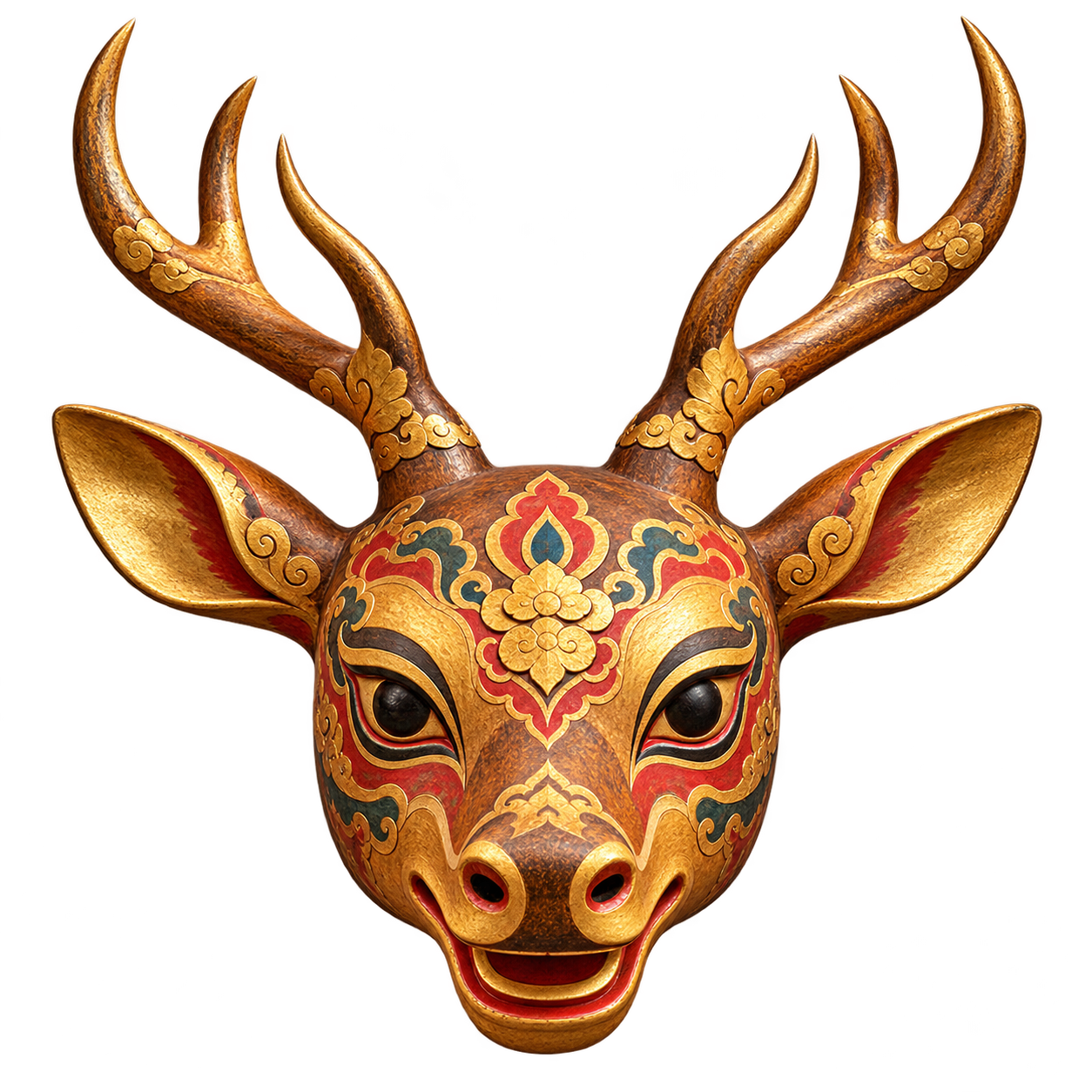
Cham deer: antlers extend movement
The deer brought a branching silhouette. Each turn continued along the lines of its antlers.
Checked fact. Deer masks occur in Himalayan cham dances, including Bhutanese traditions.
A character’s meaning depends on the dance; not all antlered masks are interchangeable.
7. Guerrero jaguar: spots become a design
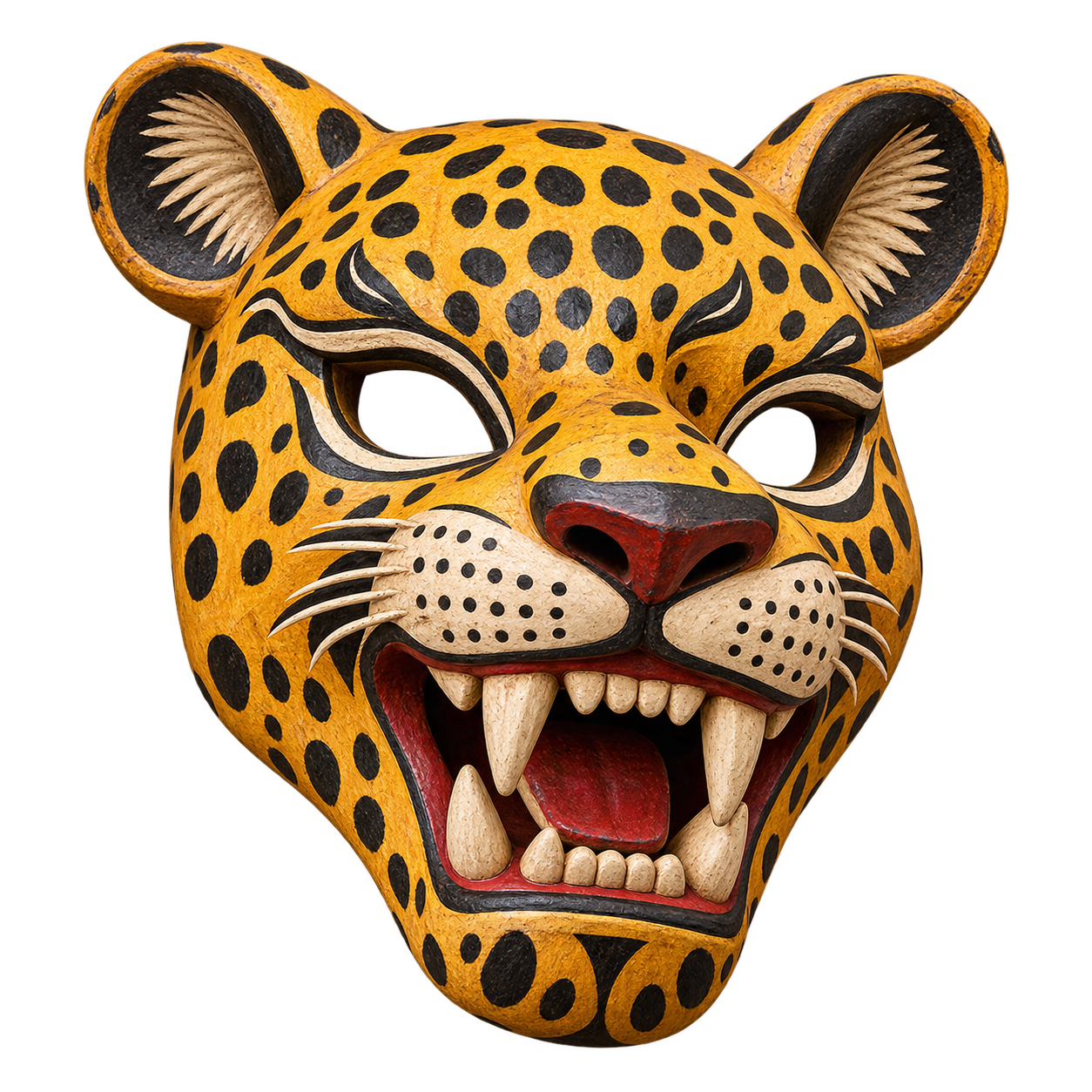
Guerrero jaguar: spots become a design
A brush scattered black spots over ochre. The animal appeared through wood and paint, without a real hide.
Checked fact. Mexico’s Guerrero has jaguar dance masks that may be called tigre.
Here tigre does not imply wild tigers living in the Americas.
8. Tschäggättä: wood need not be smooth
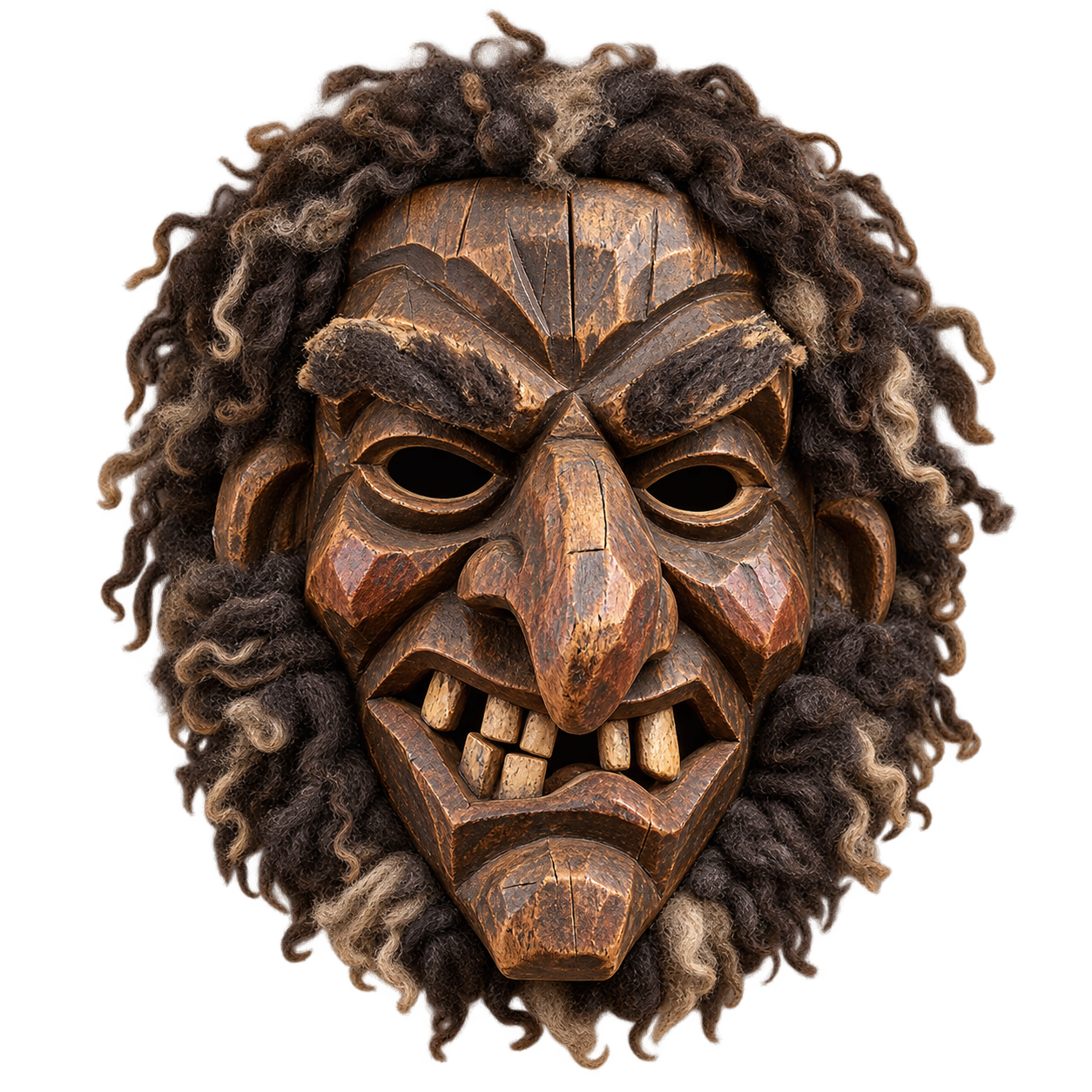
Tschäggättä: wood need not be smooth
The chisel left deep folds and an uneven grin. The mask chose expression over porcelain politeness.
Checked fact. Tschäggättä are carnival figures from Switzerland’s Lötschental, wearing carved wooden masks and fur costumes.
Carving changes over time; the tradition has no single unchanging face.
9. Panji: a white mask keeps its calm
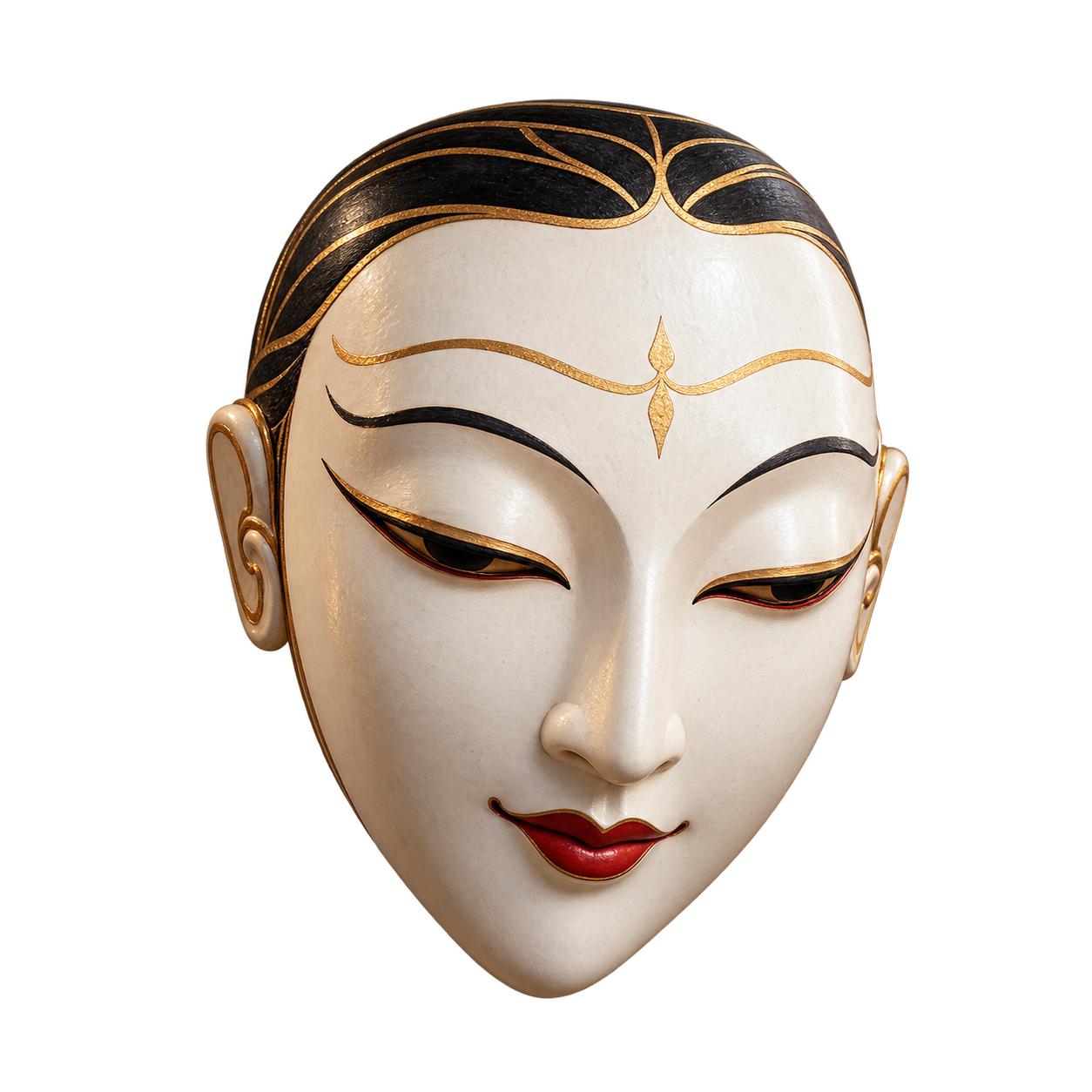
Panji: a white mask keeps its calm
The mask declined a broad grin. Narrow eyes and a small mouth kept its character restrained.
Checked fact. In Indonesian topeng, Prince Panji’s mask commonly has a white face and elongated narrow eyes.
White paint does not make it a Noh mask; its role and tradition differ.
10. Arlecchino: half a mask, a whole character
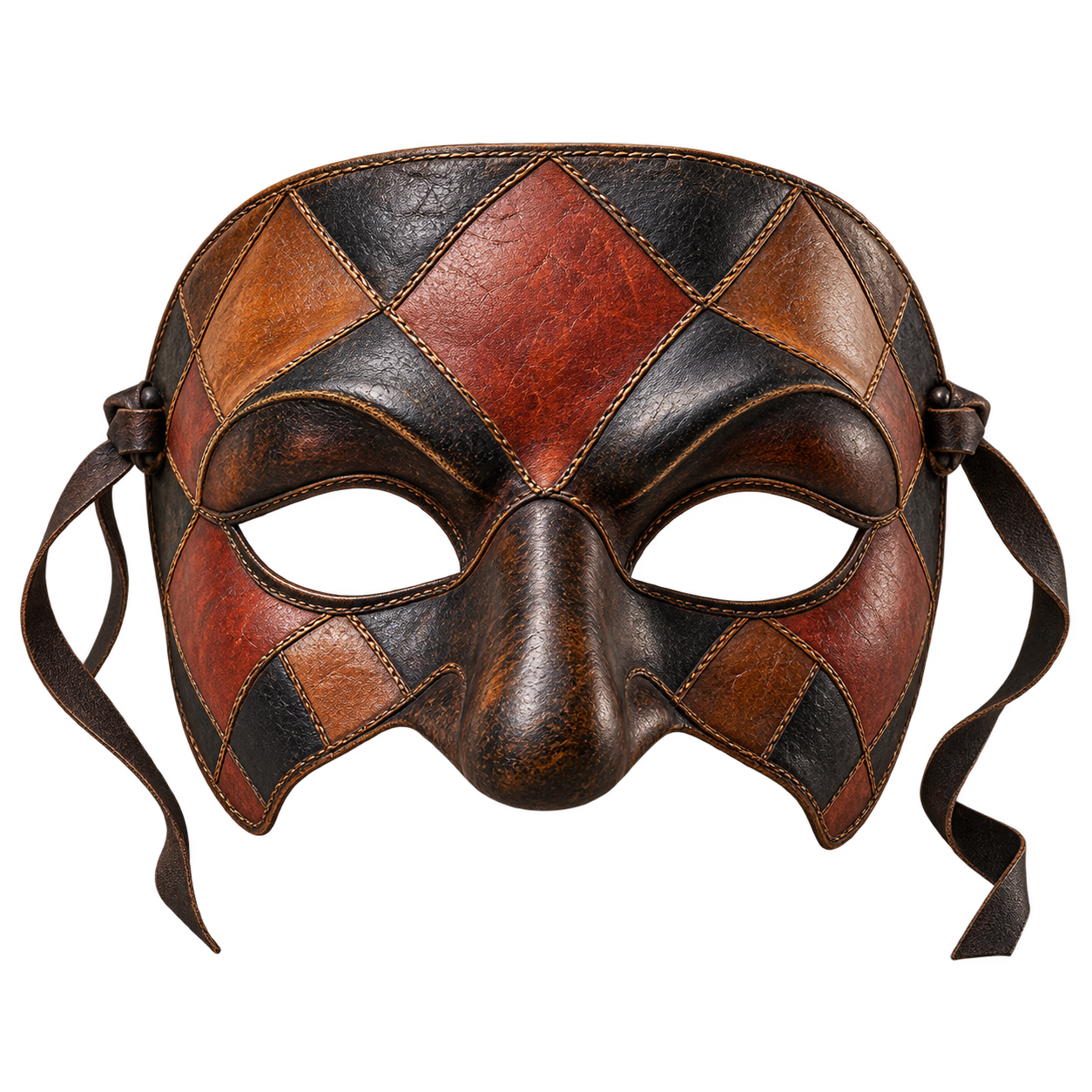
Arlecchino: half a mask, a whole character
The mask covered the upper face and stopped. Mouth and body still had plenty of comedy to perform.
Checked fact. Arlecchino is an Italian commedia dell’arte character associated with a dark half-mask and physical performance.
We show a leather half-mask separately from the patchwork costume.
Each has its own character
Every mask has movement, history and people who know its role. A silhouette is an introduction, not the whole tradition.