
A bud, bark, fruit or underground stem? Look closely at ten familiar spices and learn to recognize them before they become powder.
The editorial team created these illustrations with AI. They explain the subjects rather than photograph specific products. Each card links to a source.
1. Saffron
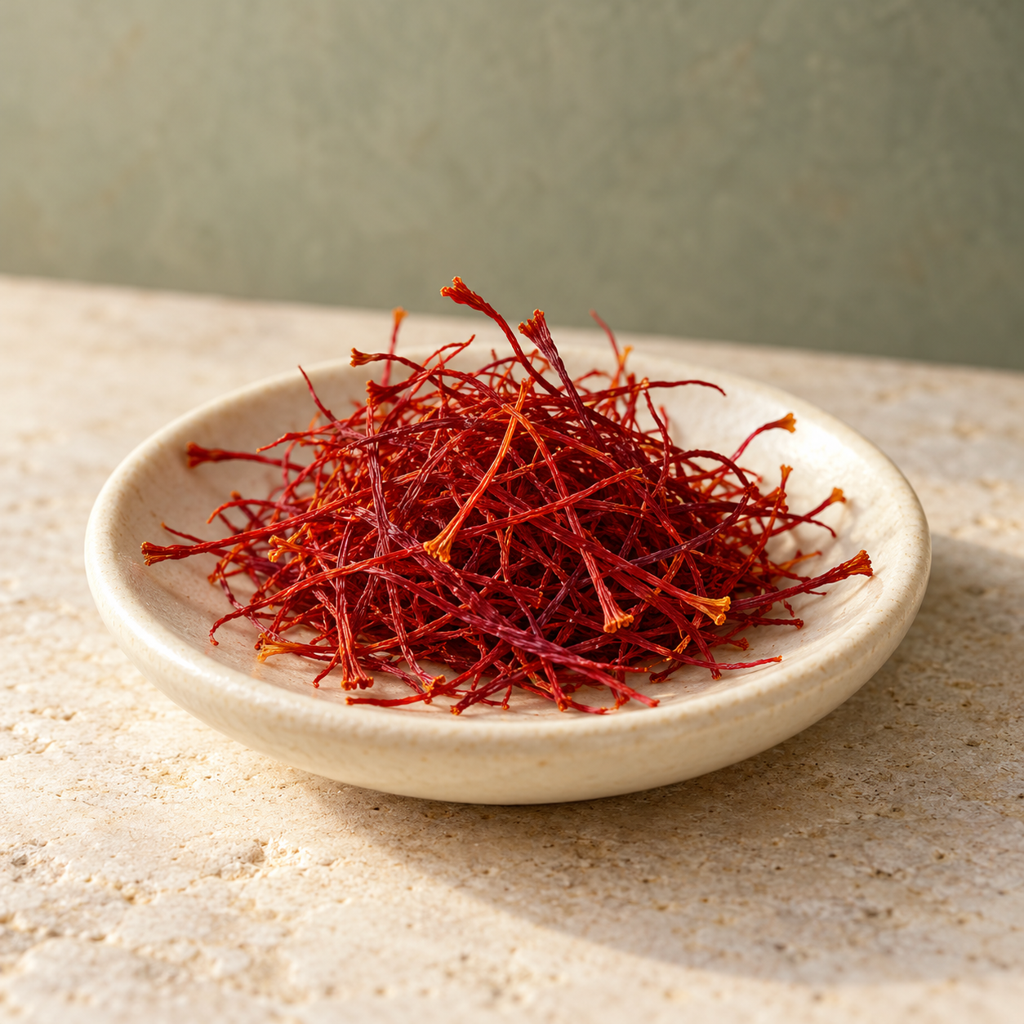
Flower stigmas
The red threads resemble a miniature tangle, each widening at its tip. Close up, a familiar spice becomes almost jewel-like. These are neither petals nor powder made from the entire flower.
Checked fact. Saffron consists of dried flower stigmas of Crocus sativus.
Source: Source — Saffron
2. Star anise
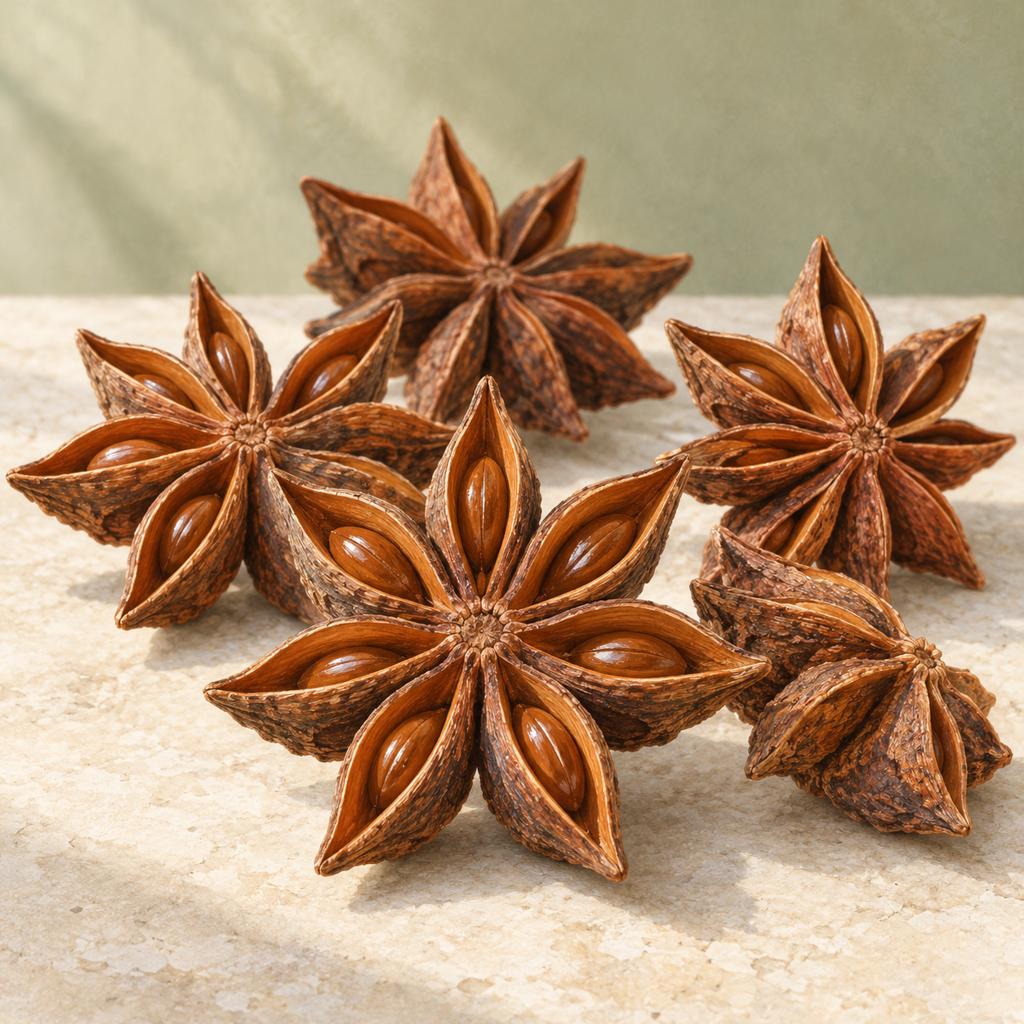
Star-shaped fruit
Its architecture needs no magnifying glass: the points resemble little boats holding glossy seeds. The uneven brown casing looks woody. This star is a fruit shape, not a dried flower.
Checked fact. Culinary star anise is the dried fruit of Illicium verum, usually with six to eight points.
Source: Source — Star anise
3. Cloves
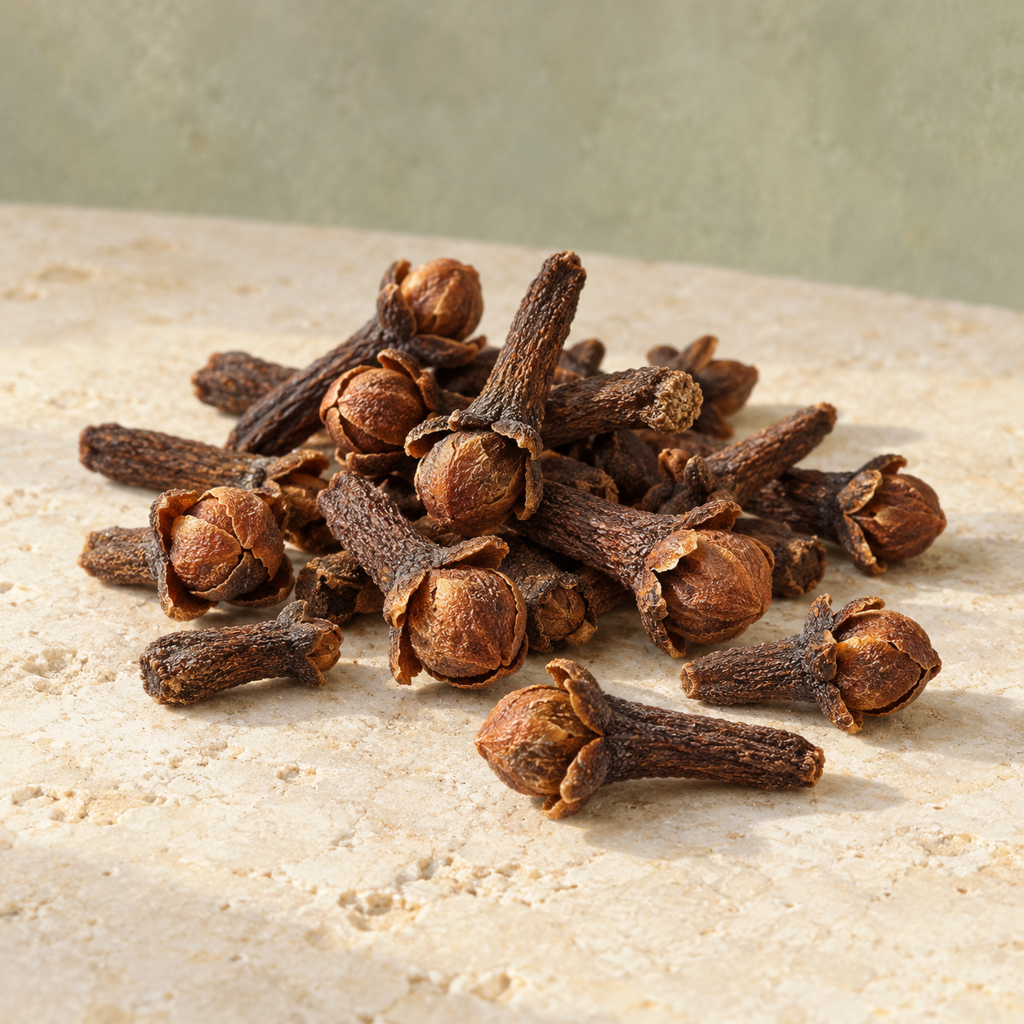
Unopened flower bud
A slender stalk and rounded head really do resemble a tiny nail. Against smooth crockery, the dried bud’s creases and irregularities stand out. Ground spice hides this recognizable shape.
Checked fact. Cloves are dried unopened flower buds of Syzygium aromaticum.
Source: Source — Cloves
4. Ceylon cinnamon
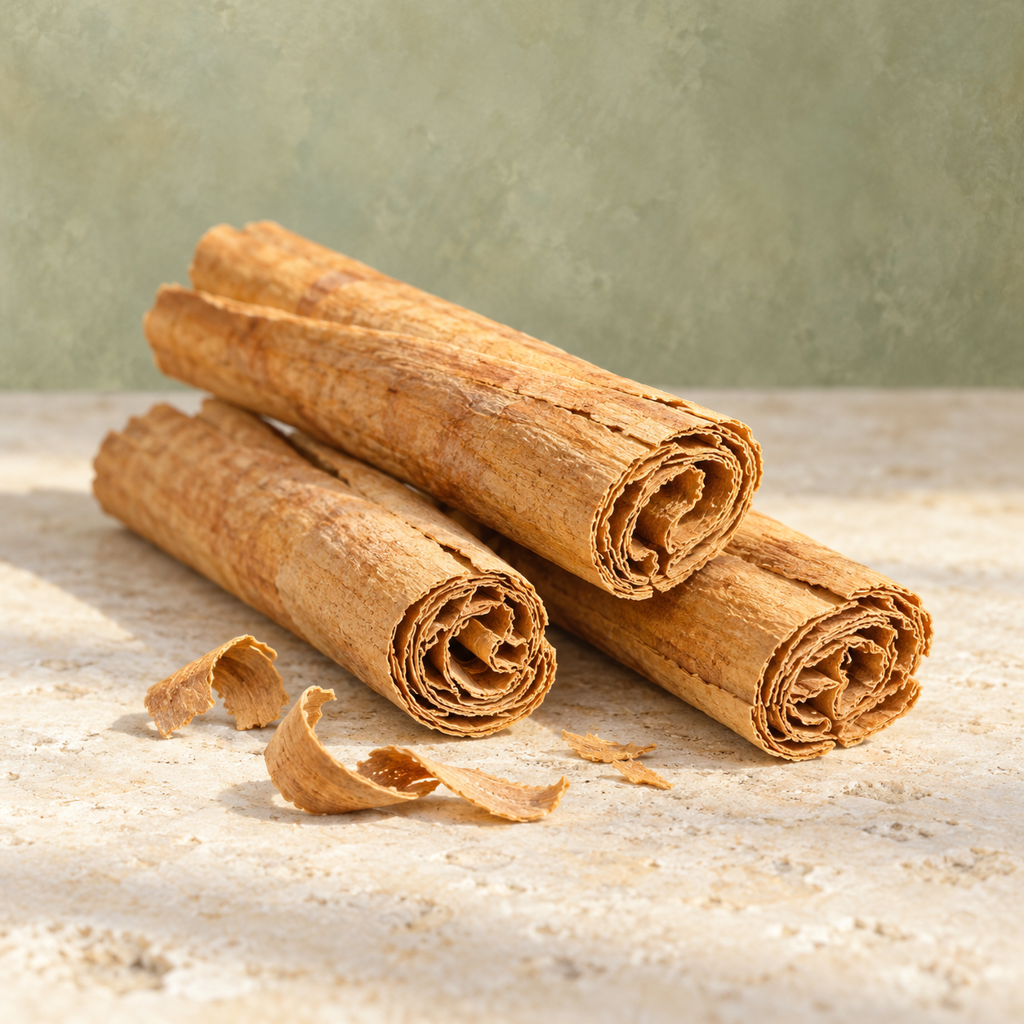
Inner bark
The cut end resembles a roll of thin paper, with many delicate layers inside. This is the revealing angle for cinnamon. Ceylon cinnamon is shown here; other cinnamon types can look coarser.
Checked fact. Ceylon cinnamon comes from the dried inner bark of Cinnamomum verum.
Source: Source — Ceylon cinnamon
5. Green cardamom
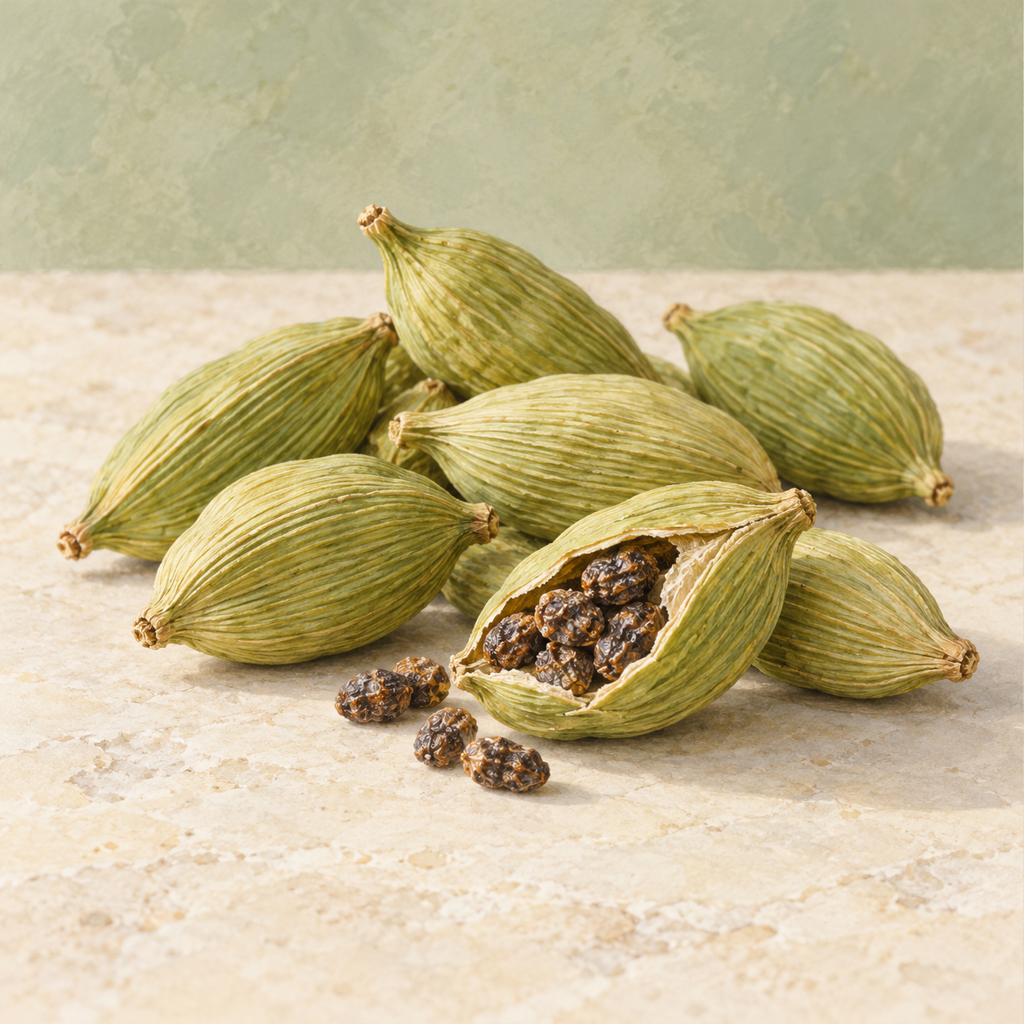
Capsule containing seeds
The pale ridged casing looks modest until one capsule opens. Inside are dark seeds quite unlike their green package. Comparing a whole and opened pod makes the structure immediately clear.
Checked fact. Green cardamom is traded as dried fruit capsules of Elettaria cardamomum.
Source: Source — Green cardamom
6. Black pepper
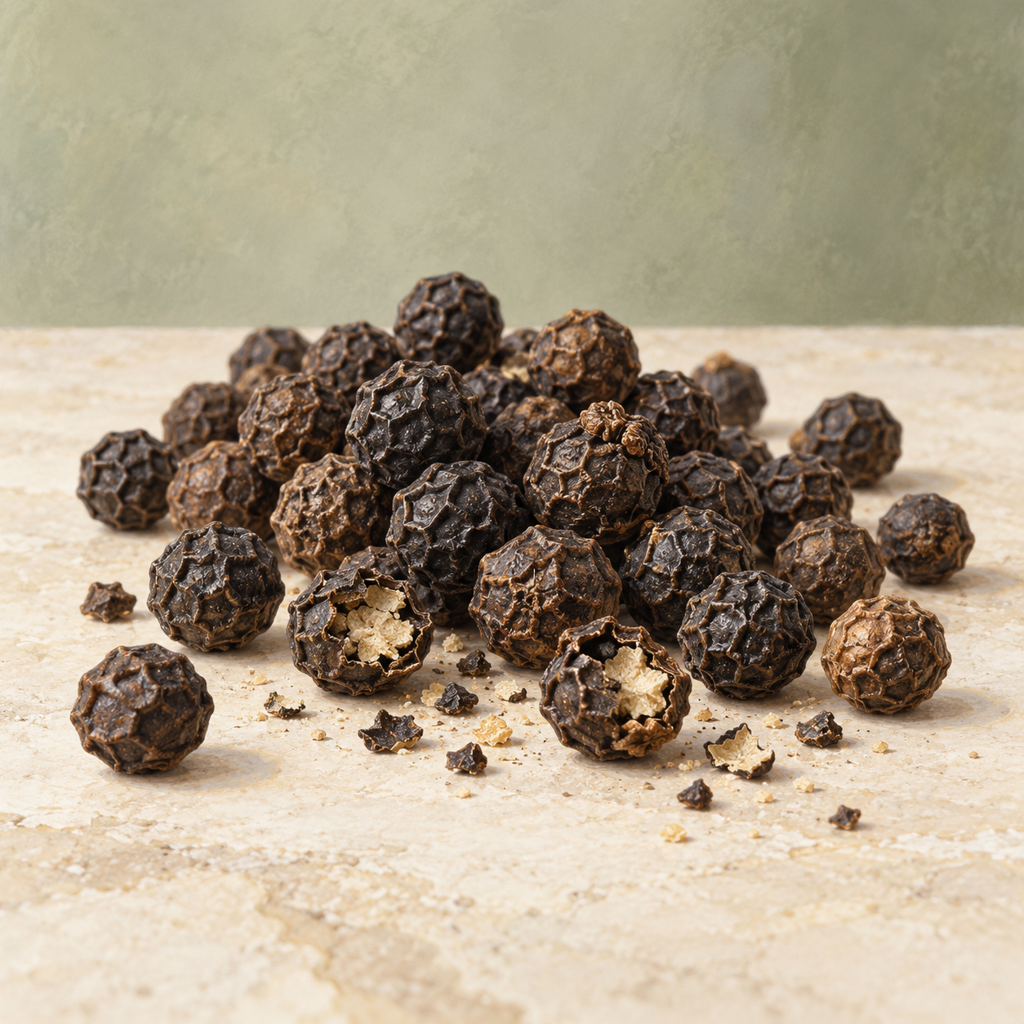
Dried fruit
A familiar peppercorn resembles a tiny wrinkled planet when enlarged. Its pale interior contrasts with the dark surface when cracked. Even an everyday seasoning rewards a moment’s attention before the grinder.
Checked fact. Black pepper is the dried fruit of Piper nigrum.
Source: Source — Black pepper
7. Nutmeg
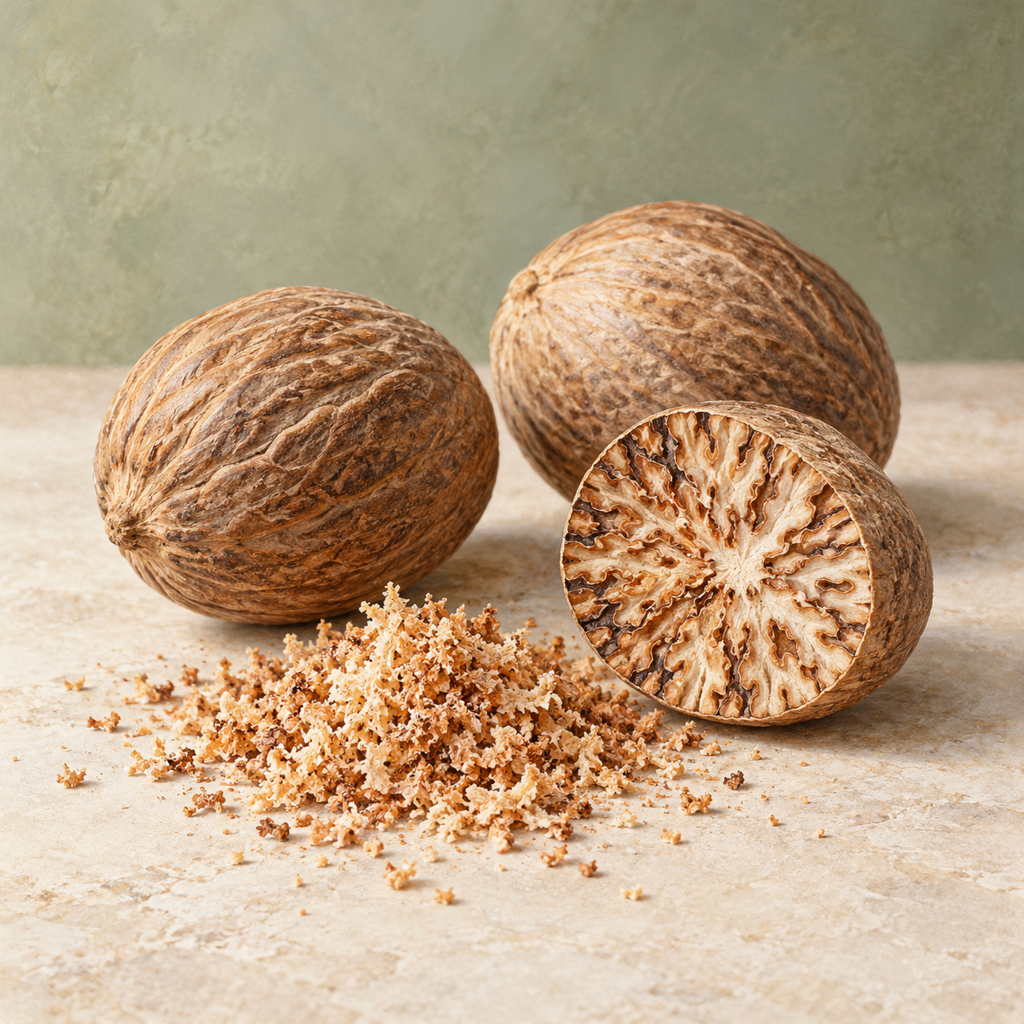
Seed kernel
An understated brown exterior hides a marble-like pattern of light and dark lines. Cutting it changes the impression more than magnification does. The ground spice gives little hint of this intricate pattern.
Checked fact. Nutmeg and mace come from one fruit: the seed kernel and its aril, respectively.
Source: Source — Nutmeg
8. Turmeric
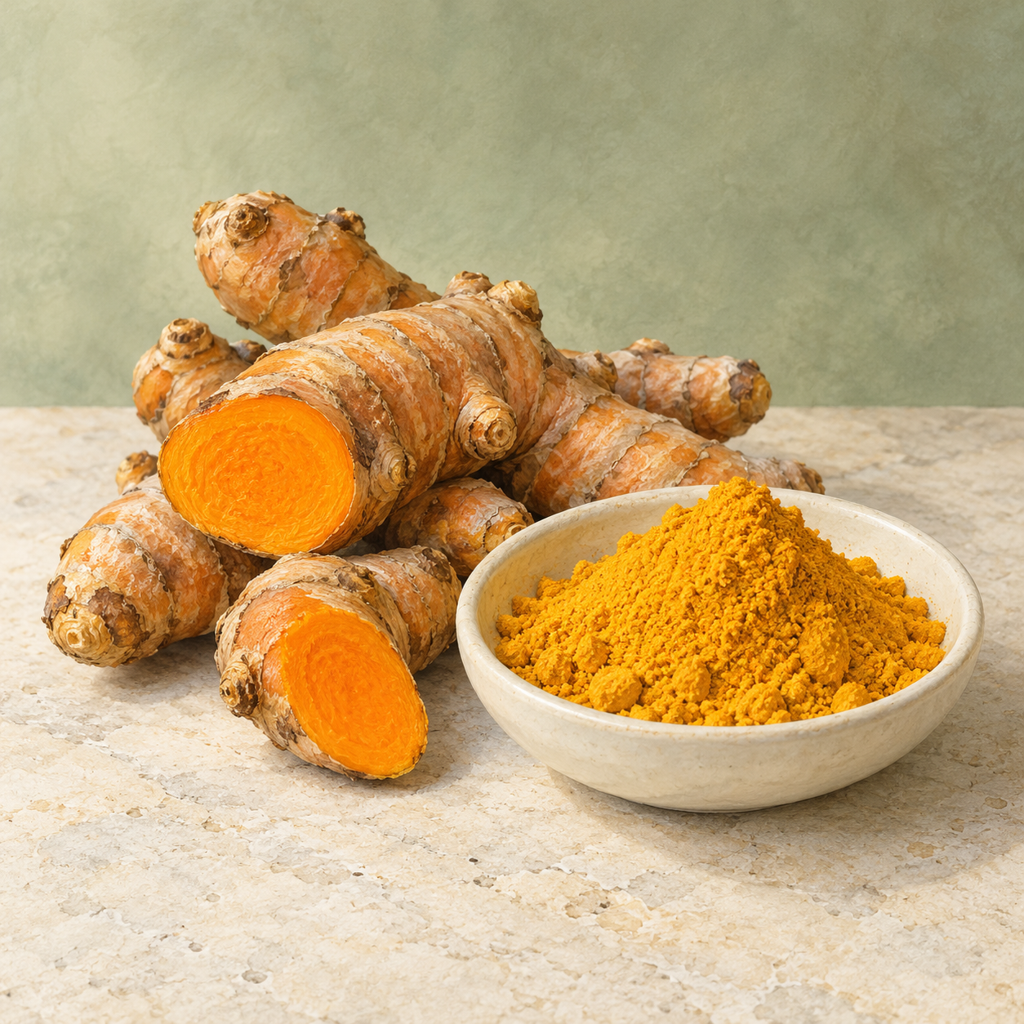
Rhizome
Uneven skin conceals a vivid orange cut surface. Beside yellow powder, the transition from plant form to familiar seasoning becomes clear. Calling it a root is convenient in the kitchen but botanically imprecise.
Checked fact. Turmeric comes from the rhizome of Curcuma longa: an underground stem.
Source: Source — Turmeric
9. Vanilla
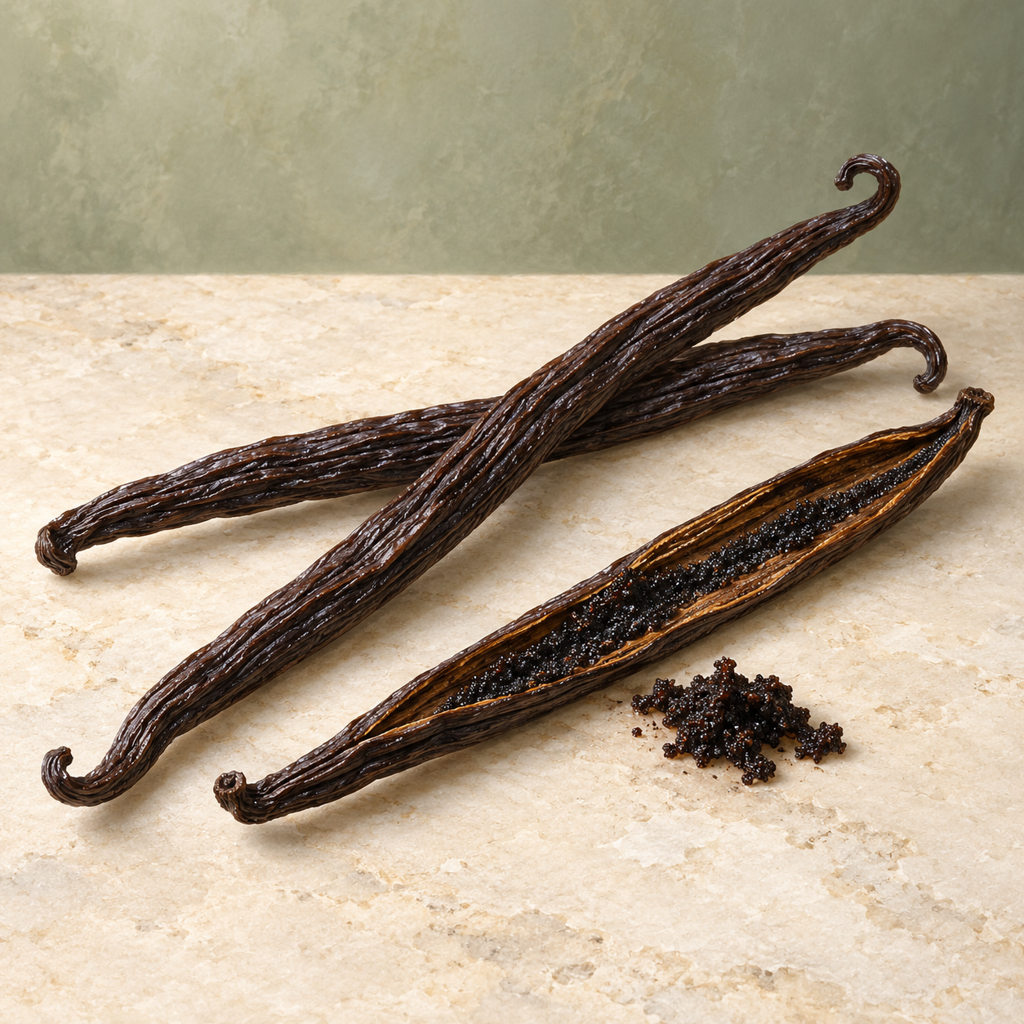
Orchid fruit
The long dark pod looks nothing like the white ice cream memory associates with it. Splitting it lengthwise reveals a dark moist interior with tiny seeds. This kitchen pod belongs to an unexpected plant family.
Checked fact. Vanilla comes from fruits of orchids in the genus Vanilla, including Vanilla planifolia.
Source: Source — Vanilla
10. Coriander
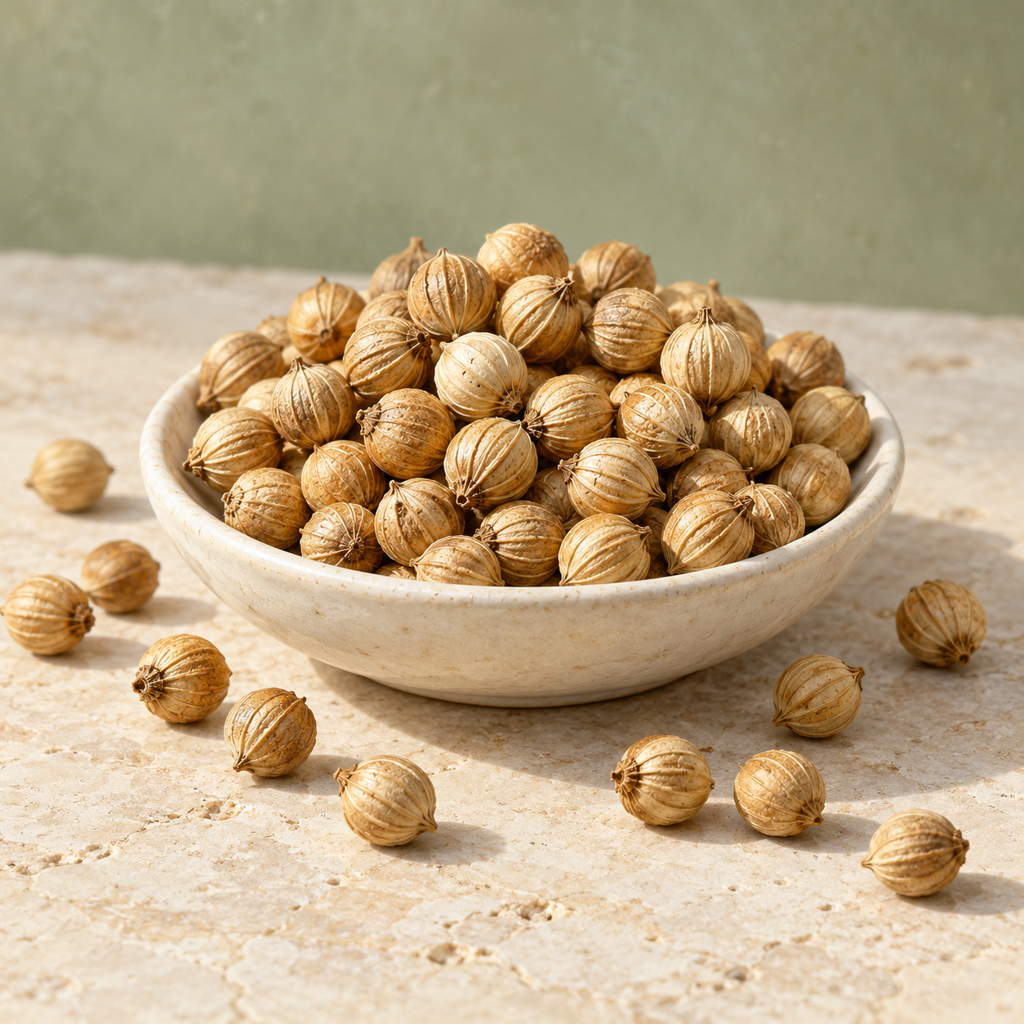
Fruits commonly called seeds
Sandy-colored spheres with fine ribs resemble miniature lanterns. They are easy to imagine as smooth seeds until a closer look reveals their patterned casing. Fresh coriander leaves offer a very different visual identity.
Checked fact. Coriander “seeds” are fruits of Coriandrum sativum; the leafy herb and spice come from one plant.
Source: Source — Coriander