
Shadows, water, fire and stars: ten ways to measure or display time, from ancient instruments to later clocks with dials and an ambitious botanical idea.
The editorial team created these illustrations with AI. They explain the subjects rather than photograph specific museum objects or dishes. Each card links to a source.
1. Sundial
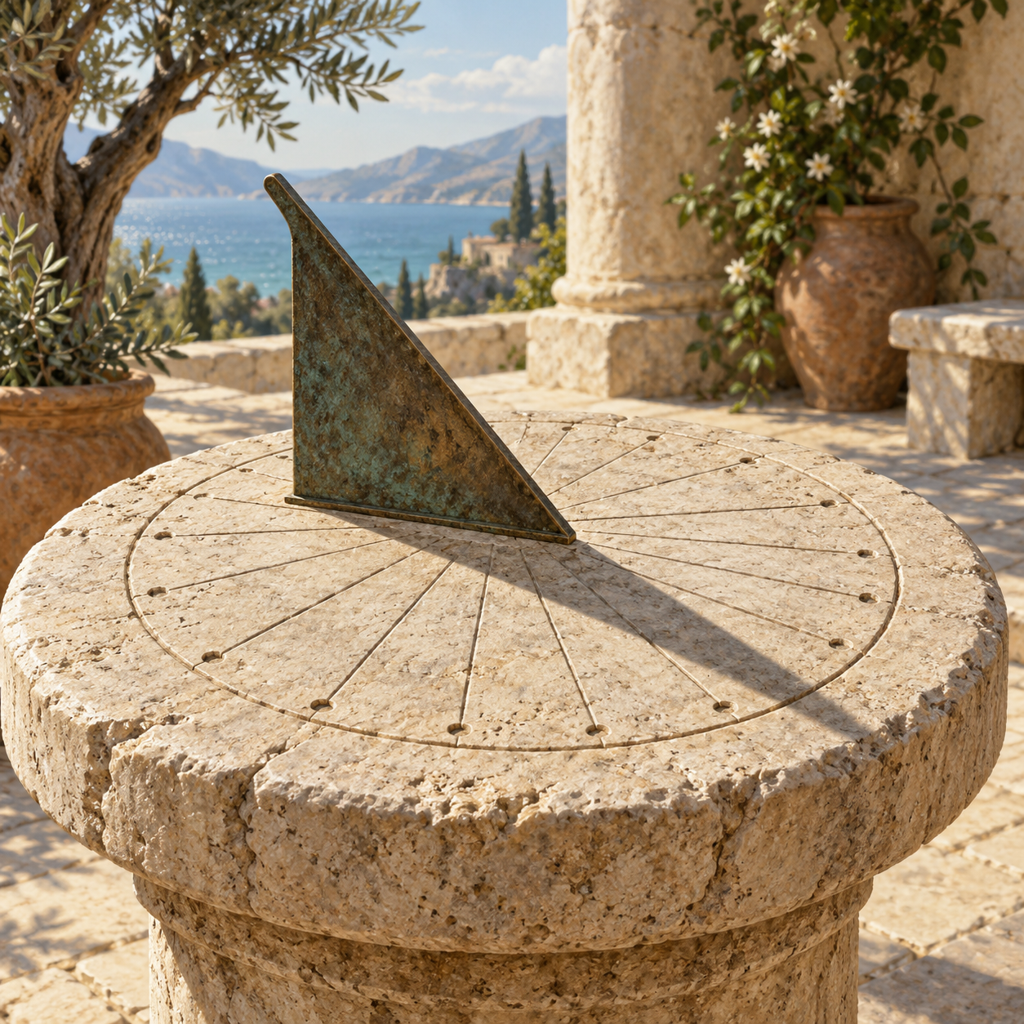
Time from a moving shadow
A pointer’s shadow moves across the markings as the Sun crosses the sky. A courtyard becomes a small observatory, although clouds can make its hand disappear.
Checked fact. A sundial shows local solar time, which differs from civil clock time.
Source: Source — Sundial
2. Water clock: the clepsydra
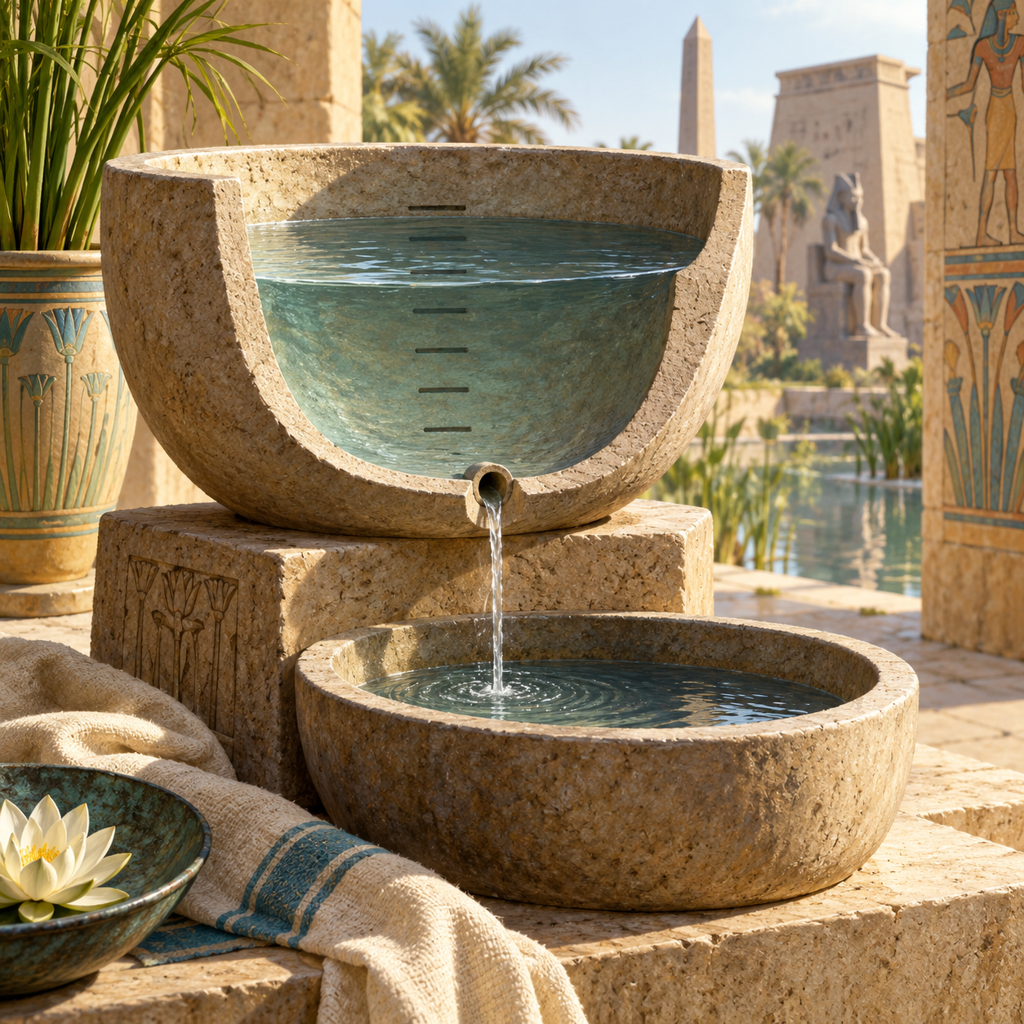
Ancient Egypt
As the water level gradually changes, its position becomes a measure of time. Unlike a shadow, water can mark an interval at night: the vessel does the work.
Checked fact. The Metropolitan Museum holds a baboon-shaped object considered an ancient Egyptian water-clock model.
3. Candle clock
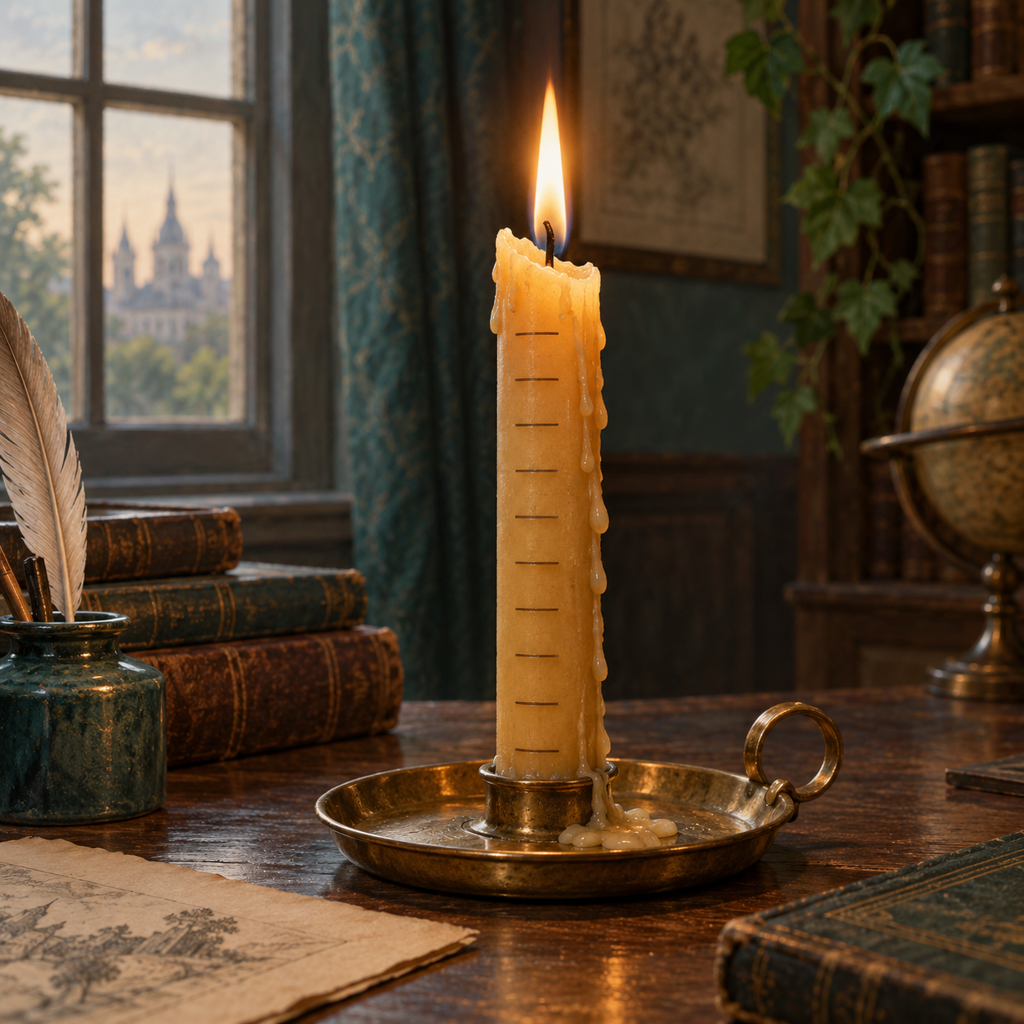
Time that burns away
Marks on a candle make passing time visible. As it burns, the candle grows shorter: instead of watching a moving hand, the observer follows the retreating wax.
Checked fact. Candle timekeeping depends on a reasonably consistent burning rate.
Source: Source — Candle clock
4. Oil-lamp clock
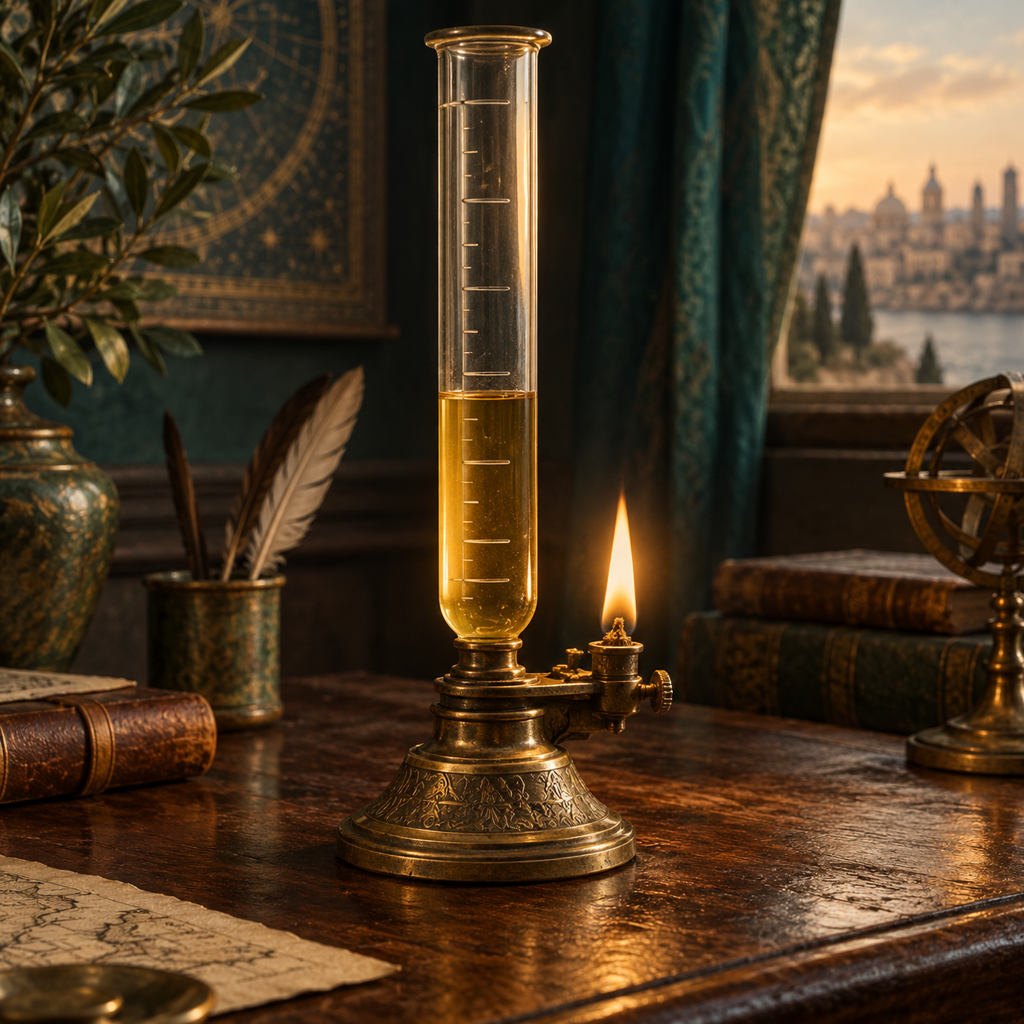
A lamp with a measuring scale
Time diminishes with the fuel supply. The flame lights the room while marks on the reservoir reveal how much oil has been used, providing a way to judge an interval.
Checked fact. The falling oil level measures the interval, rather than the flame’s position.
Source: Source — Oil-lamp clock
5. Incense clock
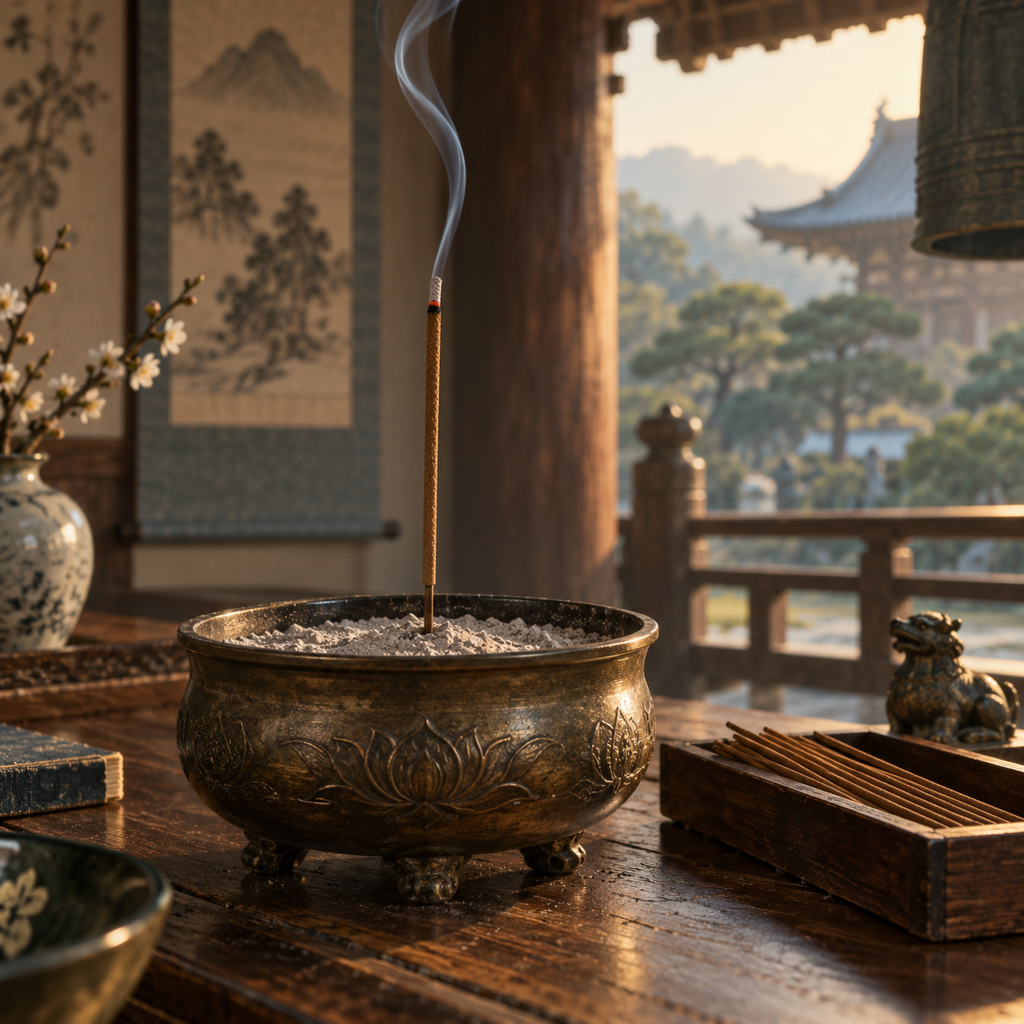
Japan: time through smouldering
A slender stick turns to ash, leaving fragrance behind. When its burning behaviour is sufficiently predictable, the consumed length becomes a useful guide to elapsed time.
Checked fact. The Seiko Museum displays a Japanese timekeeper using incense sticks.
Source: Source — Incense clock
6. Hourglass
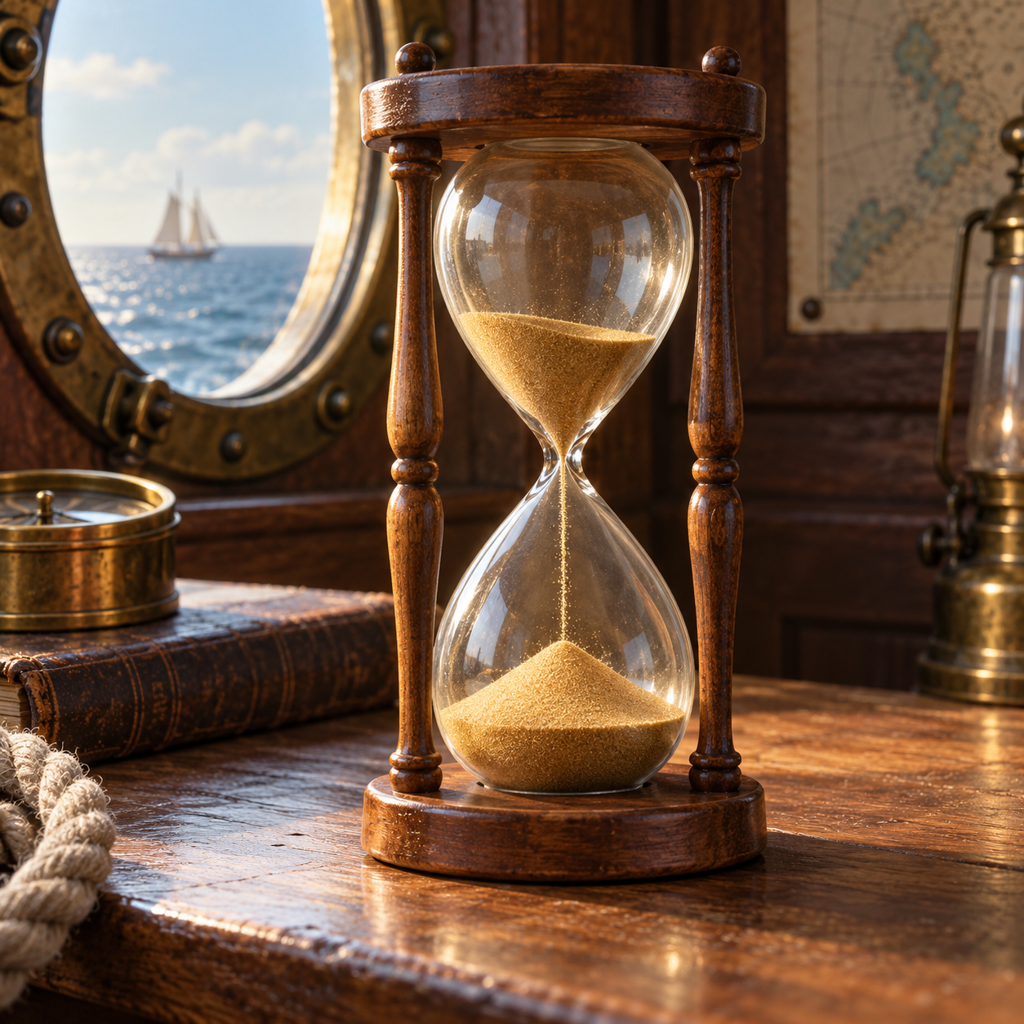
An interval between two turns
A fine stream connects two bulbs: the upper one empties while the lower one fills. Turning it over starts again, a remarkably simple reset without clockwork.
Checked fact. An hourglass measures an interval; it does not independently show the time of day.
Source: Source — Hourglass
7. Nocturnal: a star clock
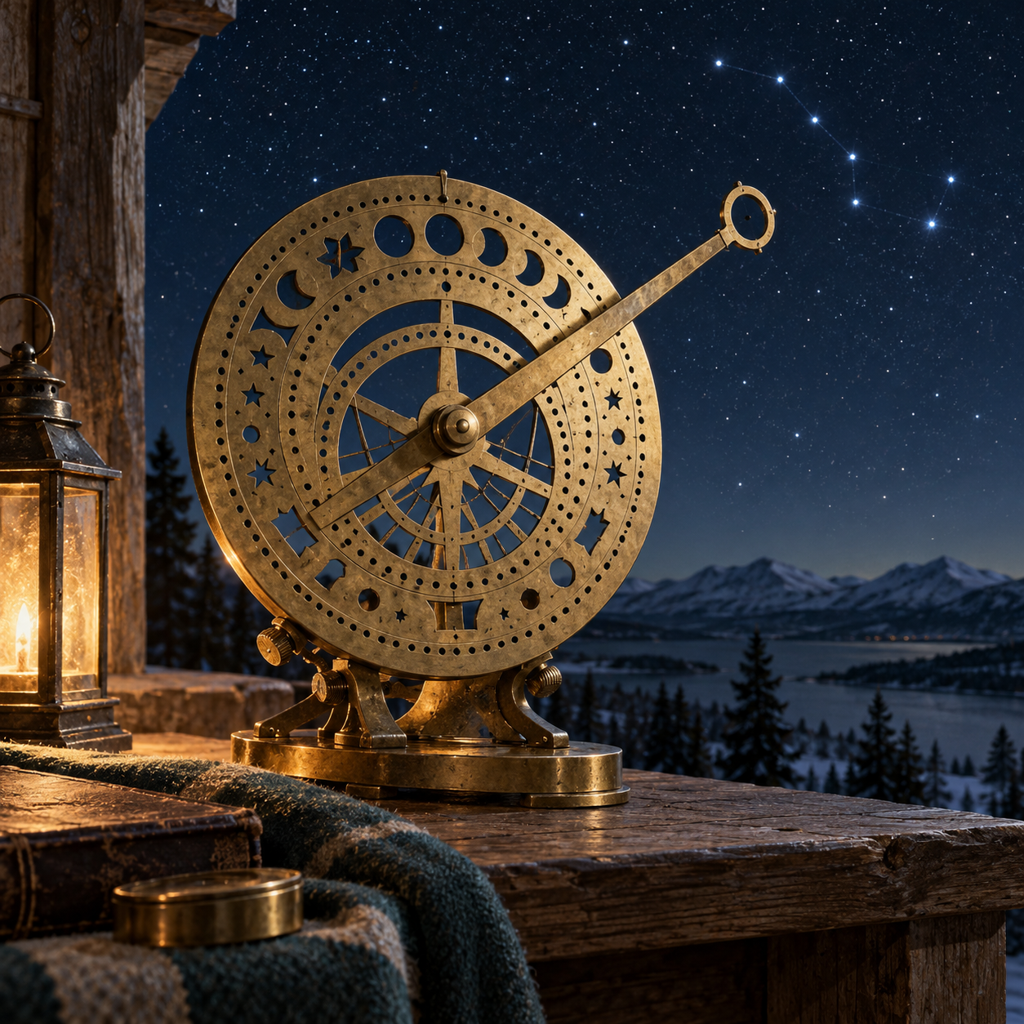
The night sky as a dial
The observer sights Polaris and compares other stars with the scale. A clear sky and the date are needed: the night itself becomes part of the instrument.
Checked fact. A nocturnal requires star observations; its pointer does not move automatically.
Source: Source — Nocturnal: a star clock
8. Astrolabe
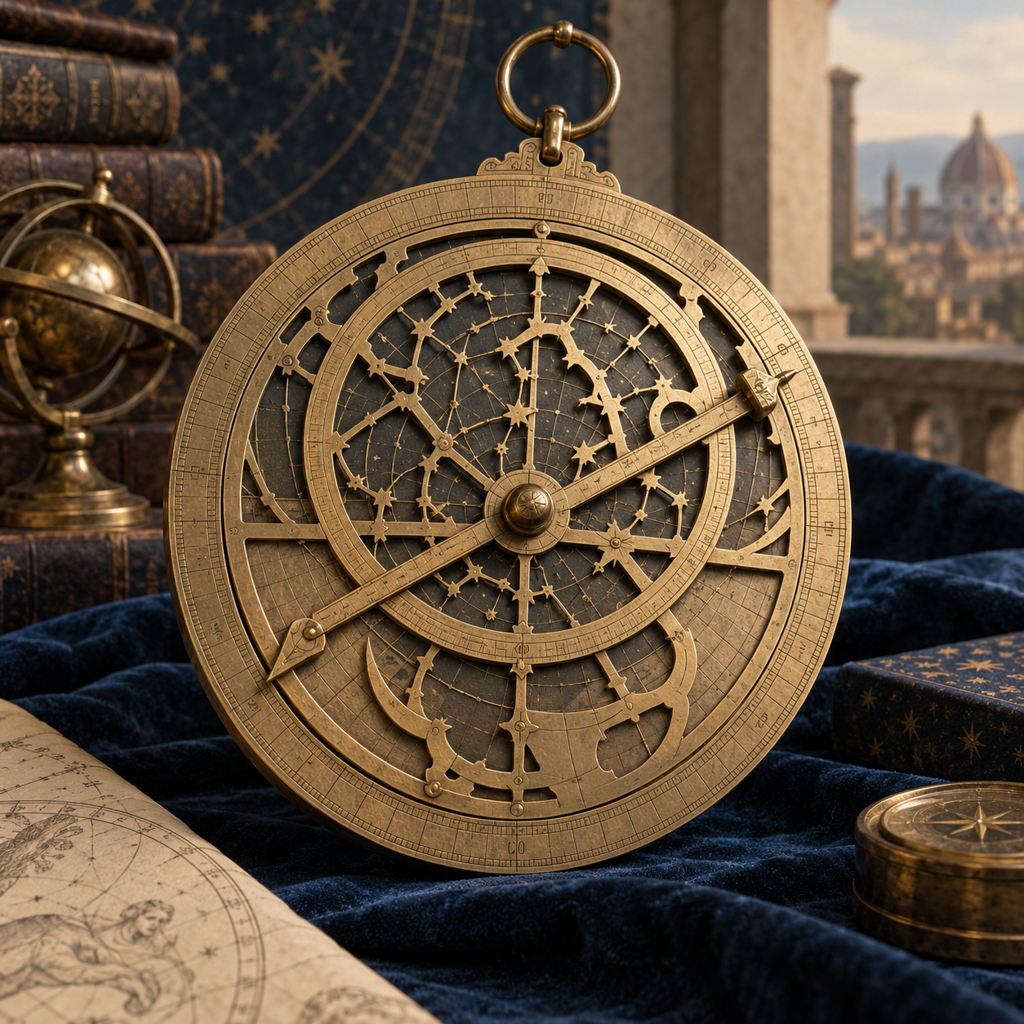
The sky on a brass disc
An openwork star map rotates over a network of lines. This portable calculating instrument connects observations of a celestial body’s altitude with time and the observer’s location.
Checked fact. Astrolabes could determine time, but they were not self-running clocks.
Source: Source — Astrolabe
9. Astronomical clock
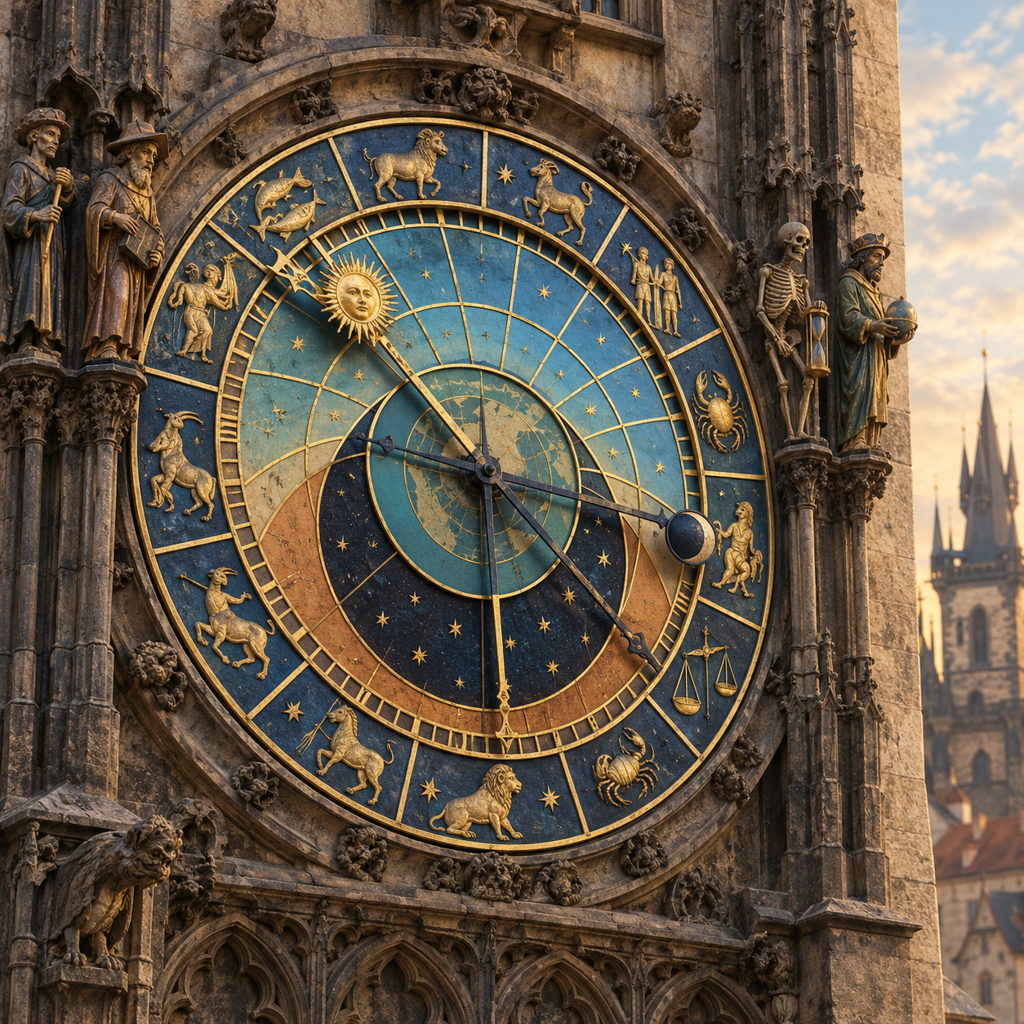
Prague: a mechanical sky
Here, one hand cannot tell the whole story. Rings and celestial symbols turn a façade into a model of the cosmos; our illustration evokes Prague without reproducing its mechanism.
Checked fact. Prague’s Orloj dates to 1410; astronomical clocks already use a dial.
Source: Source — Astronomical clock
10. Linnaeus’s floral clock
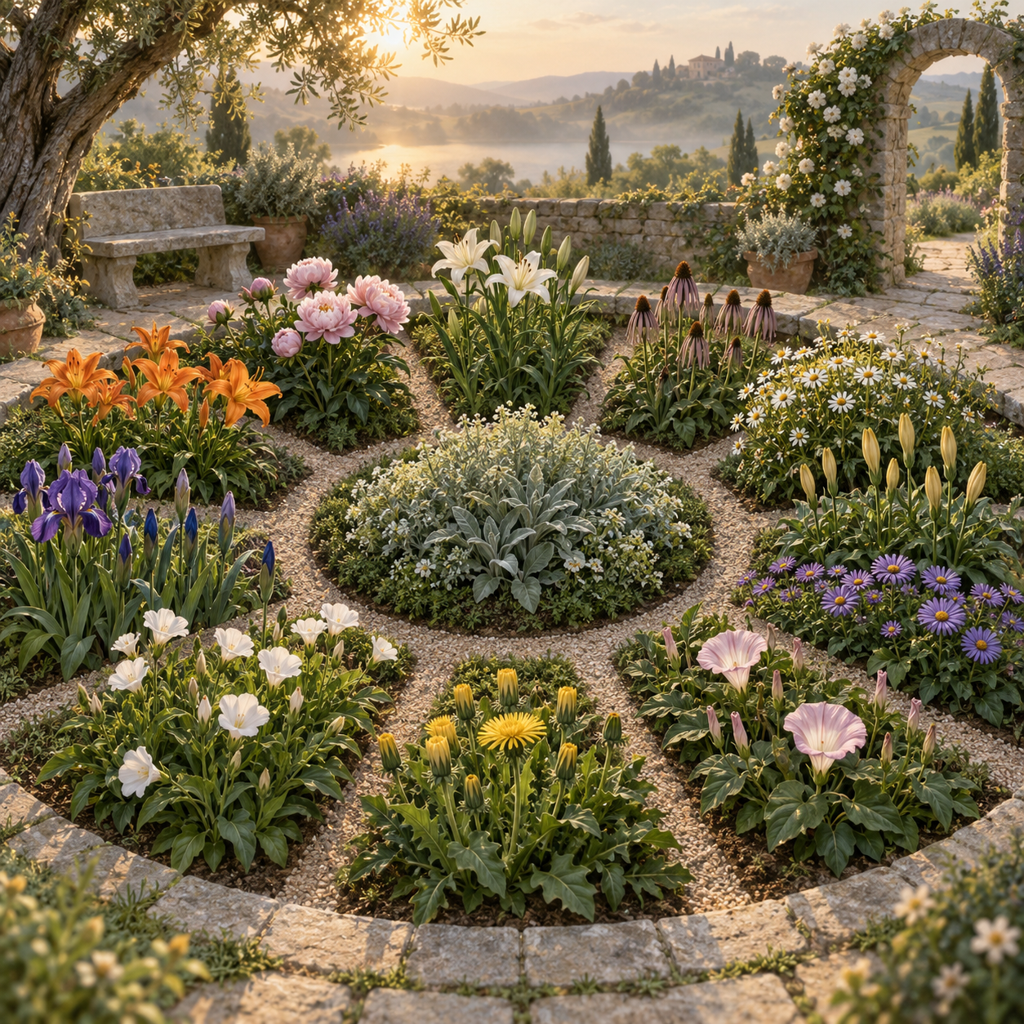
An eighteenth-century botanical idea
Imagine a garden whose opening and closing flowers suggest the time. Linnaeus proposed choosing plants by these rhythms. Our illustration presents the idea, rather than a precise working device.
Checked fact. Flower rhythms depend on conditions, so the garden is no dependable clock replacement.
Source: Source — Linnaeus’s floral clock