
Angles, time, pressure and area: ten instruments show how observations became numbers.
The editorial team created these illustrations with AI. They are explanatory images, not photographs of particular specimens, homes or events. Each card includes a checked fact and a source.
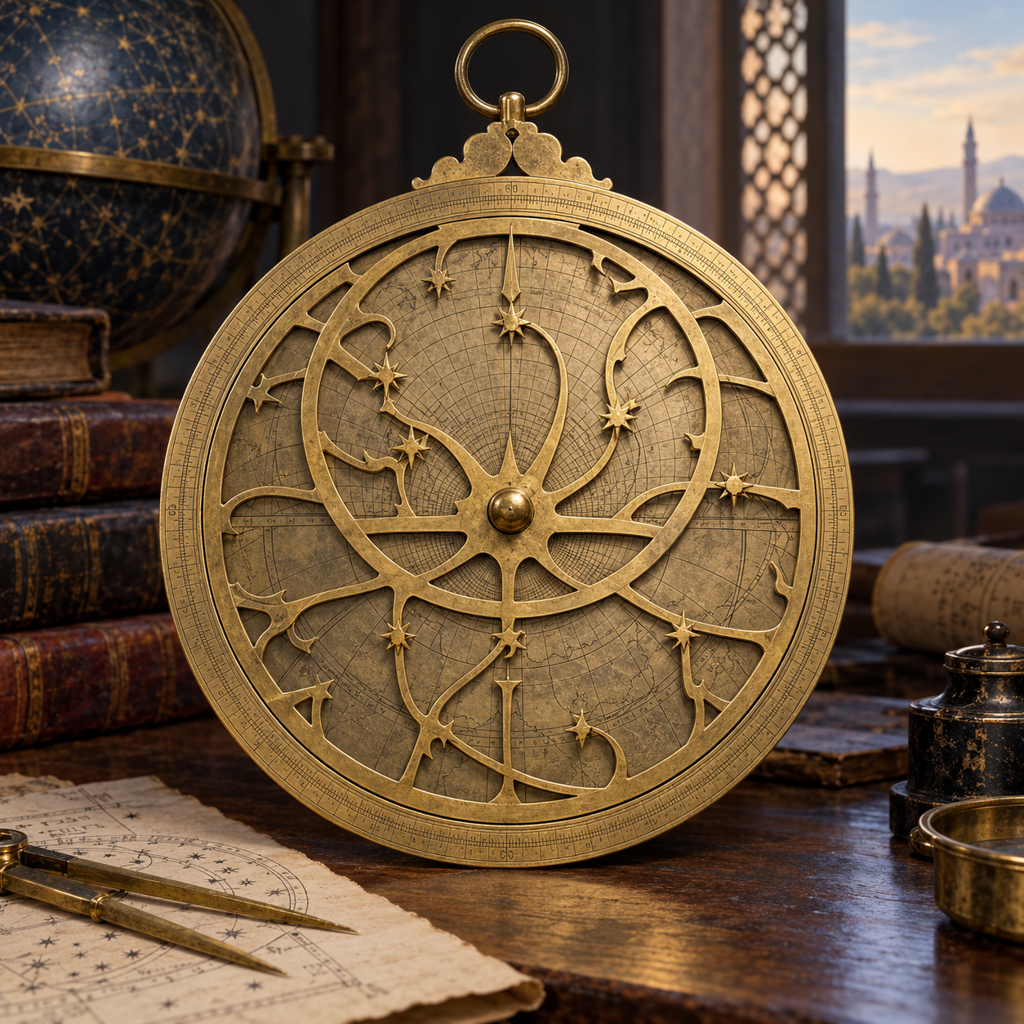
1. Planispheric astrolabe
History of measurement
A projection fits the sky onto a flat disc.
Checked fact. A rotating star-bearing rete moves above a plate for a particular latitude, relating celestial positions to time.
Source: Source — Planispheric astrolabe
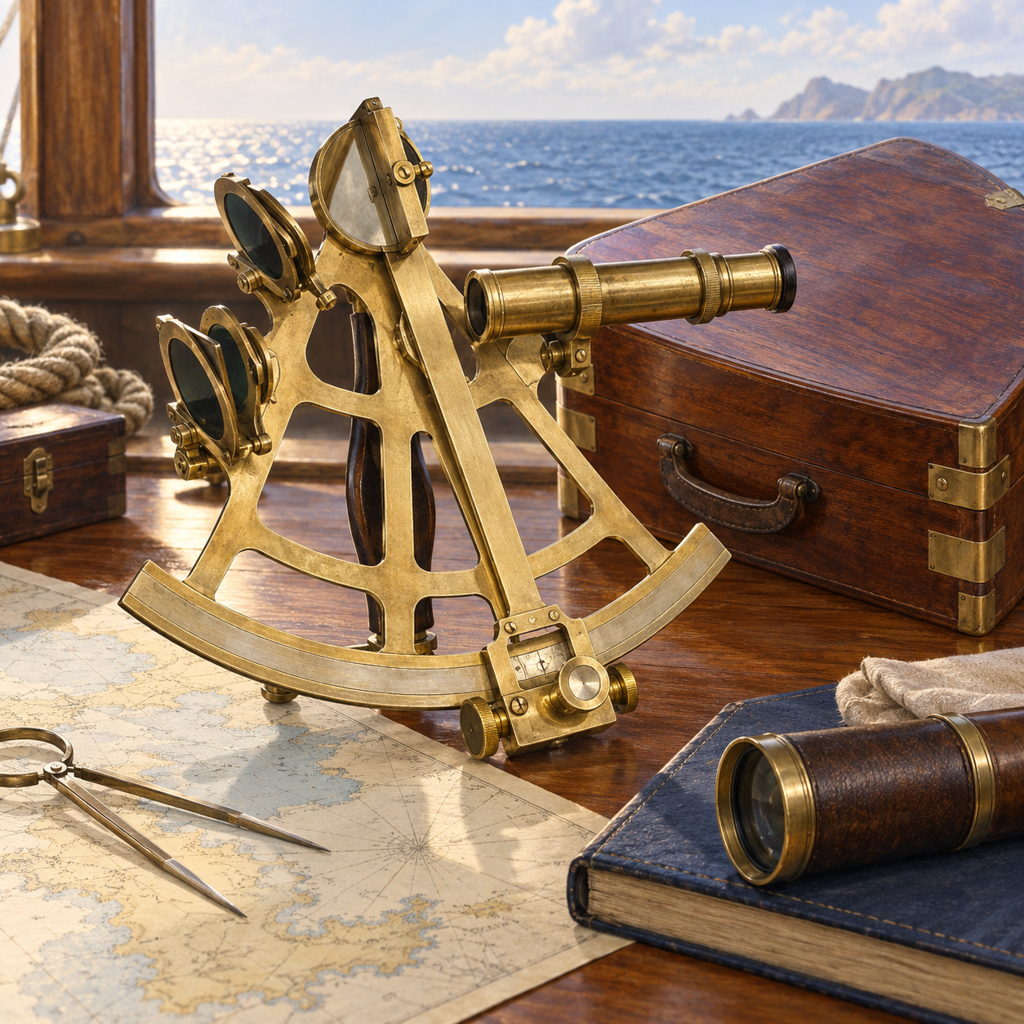
2. Sextant
History of measurement
Mirrors bring the horizon and a celestial body together in the field of view.
Checked fact. The instrument measures their angle; finding a ship’s position also needs observation time and calculation.
Source: Source — Sextant
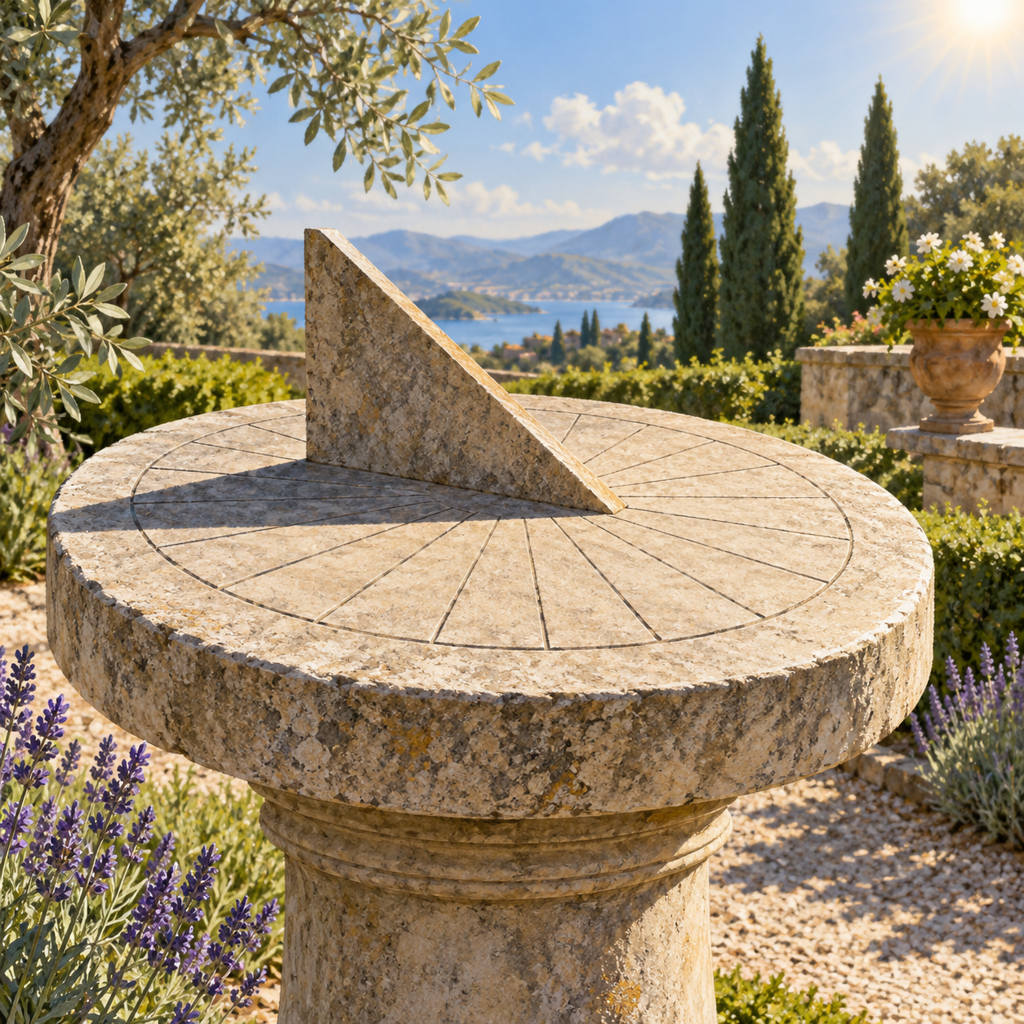
3. Sundial
History of measurement
A gnomon casts a shadow on a marked surface.
Checked fact. The dial shows solar time, which need not match a phone using a time zone and seasonal clock changes.
Source: Source — Sundial
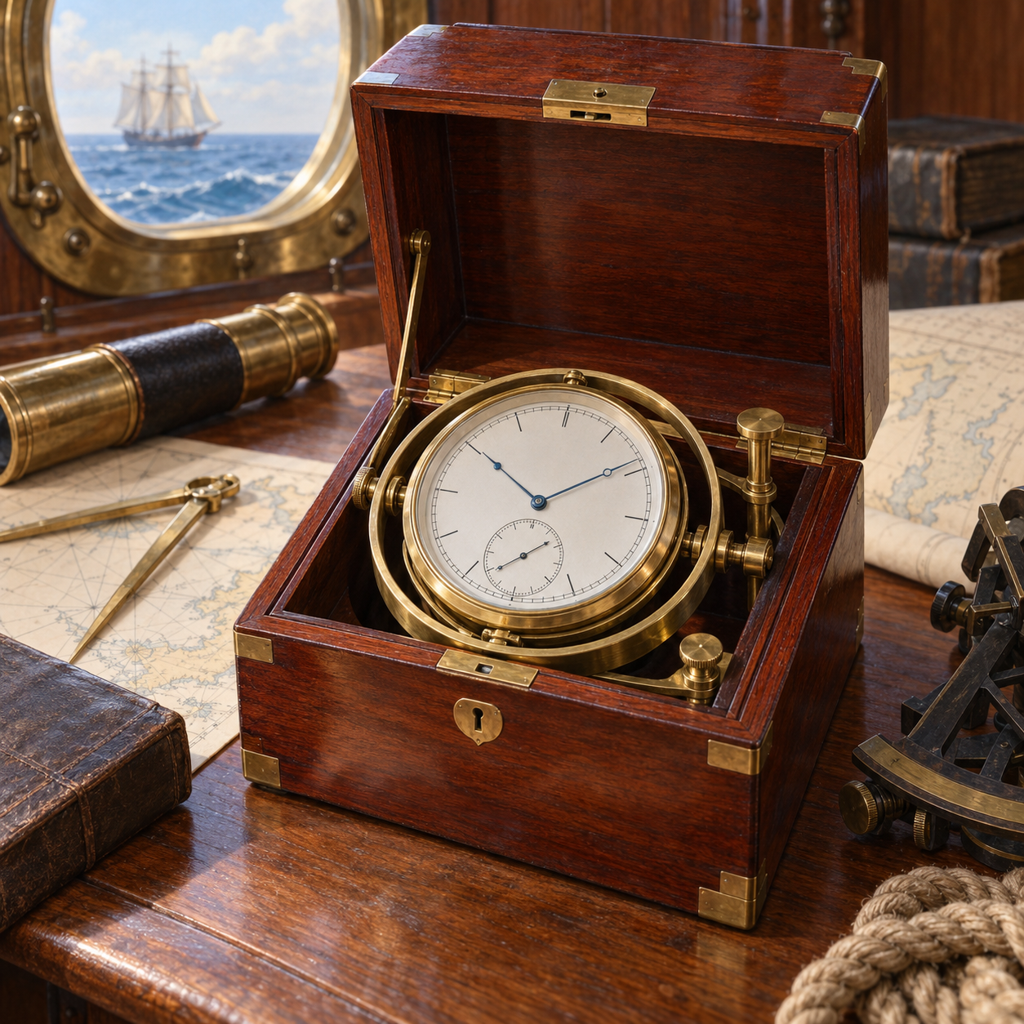
4. Marine chronometer
History of measurement
Accurate clocks preserve a reference meridian’s time at sea.
Checked fact. Comparing it with local solar time allows longitude to be calculated, making mechanical reliability a navigation problem.
Source: Source — Marine chronometer
5. Armillary sphere
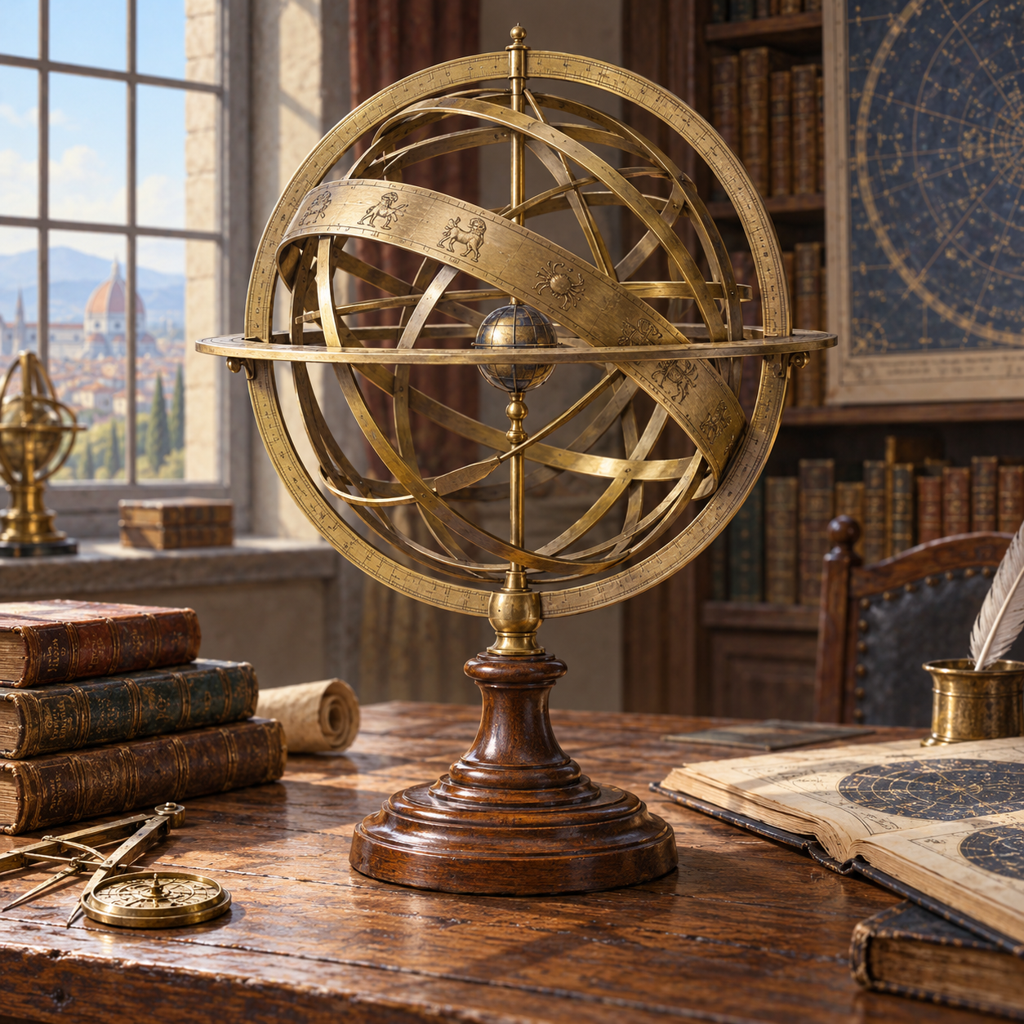
History of measurement
The rings represent important circles of the celestial sphere.
Checked fact. This is a spatial model explaining astronomical relationships, not a miniature cage containing actual planetary orbits.
Source: Source — Armillary sphere
6. Quadrant
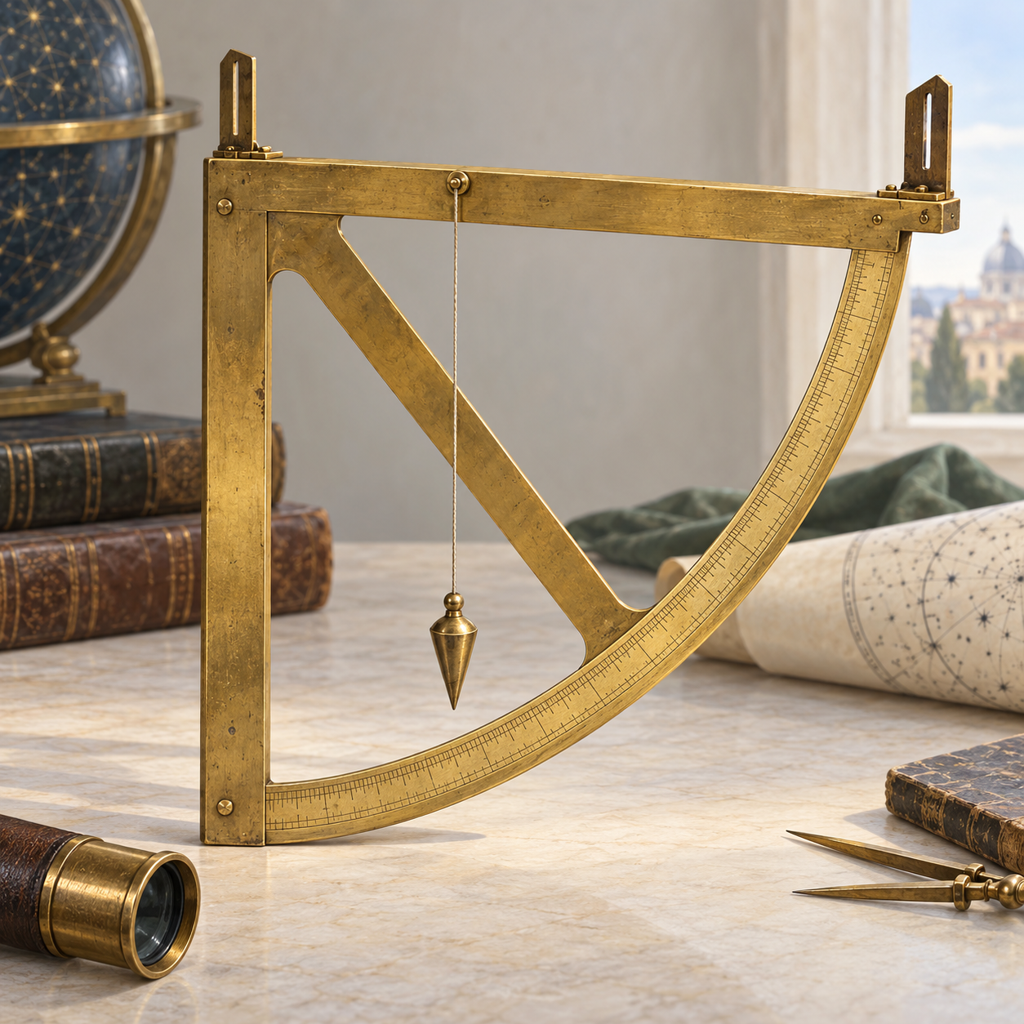
History of measurement
A quarter-circle provides a scale up to ninety degrees.
Checked fact. In a plumb-line version, the string supplies a vertical reference for determining an observed object’s elevation.
Source: Source — Quadrant
7. Cross staff
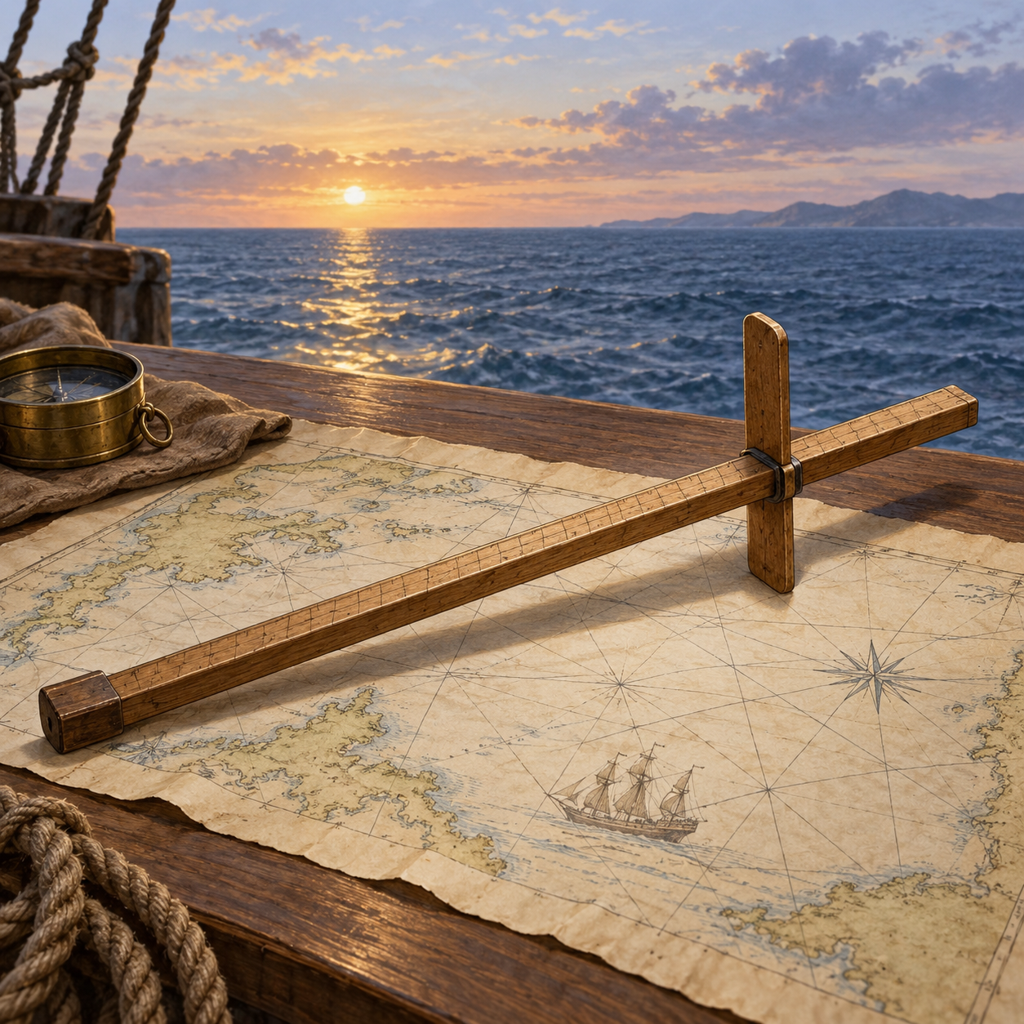
History of measurement
A sliding crosspiece helps measure an angle between two directions.
Checked fact. Mariners could determine the Sun’s height above the horizon; this picture is not advice to view the Sun unprotected.
Source: Source — Cross staff
8. Theodolite
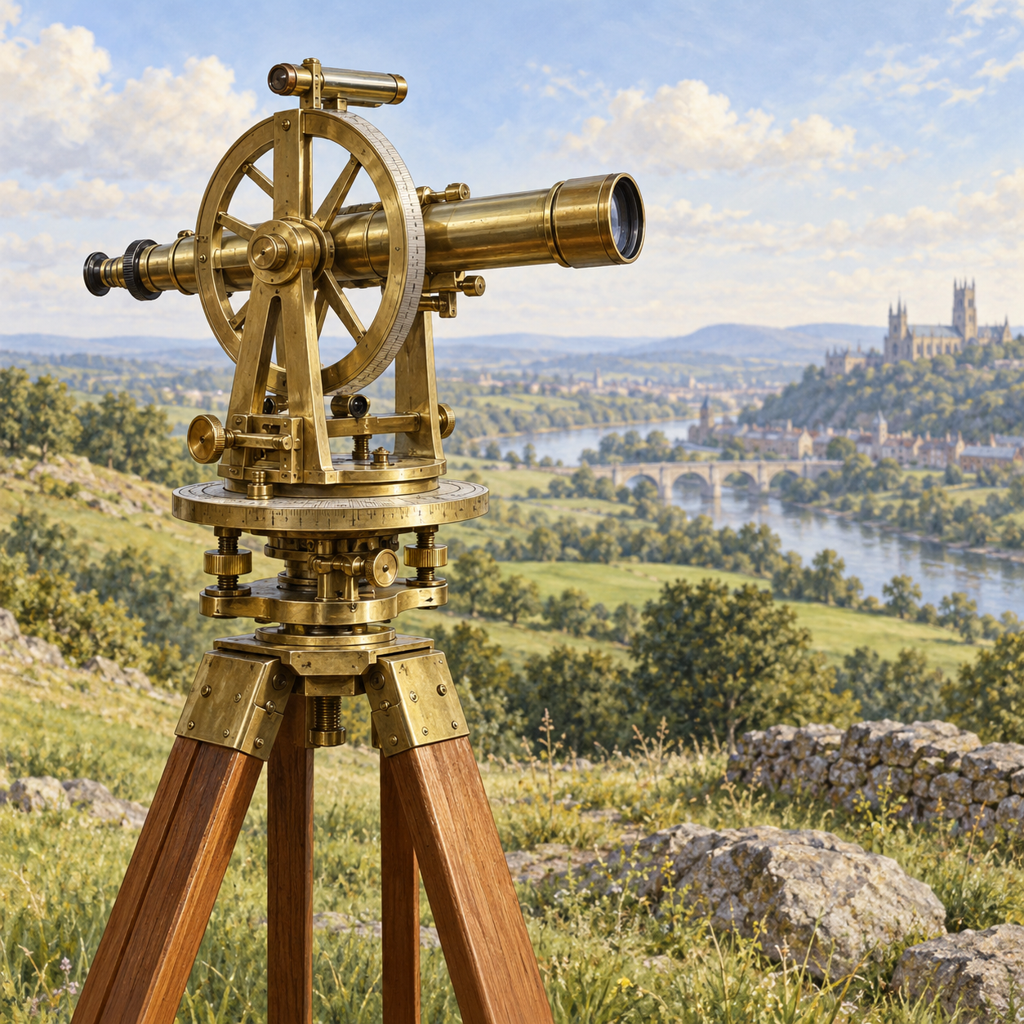
History of measurement
The telescope establishes a direction; horizontal and vertical circles measure angles.
Checked fact. It helps a surveyor build a measurement network rather than simply enjoy a distant view.
Source: Source — Theodolite
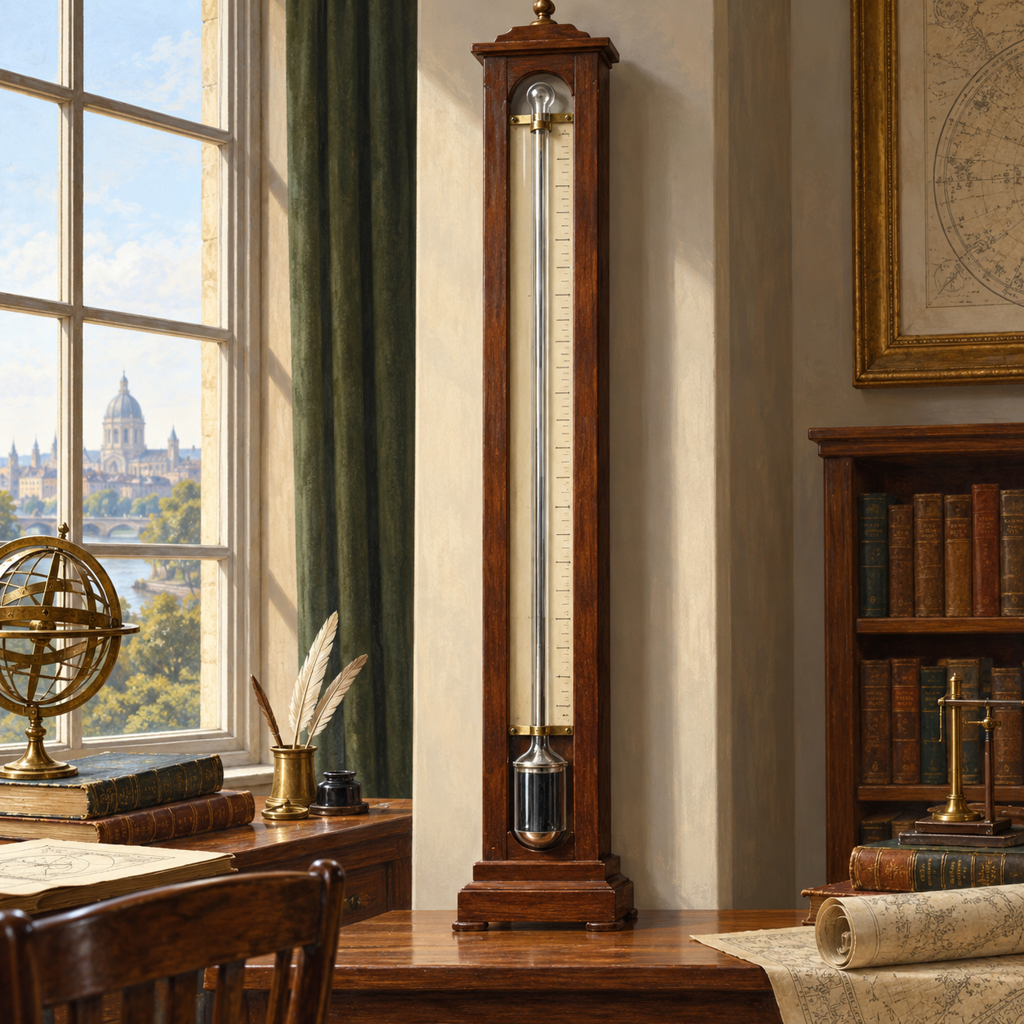
9. Mercury barometer
History of measurement
A mercury column in a tube responds to surrounding air pressure.
Checked fact. A barometer measures pressure rather than temperature; mercury instruments here are historical museum objects.
Source: Source — Mercury barometer
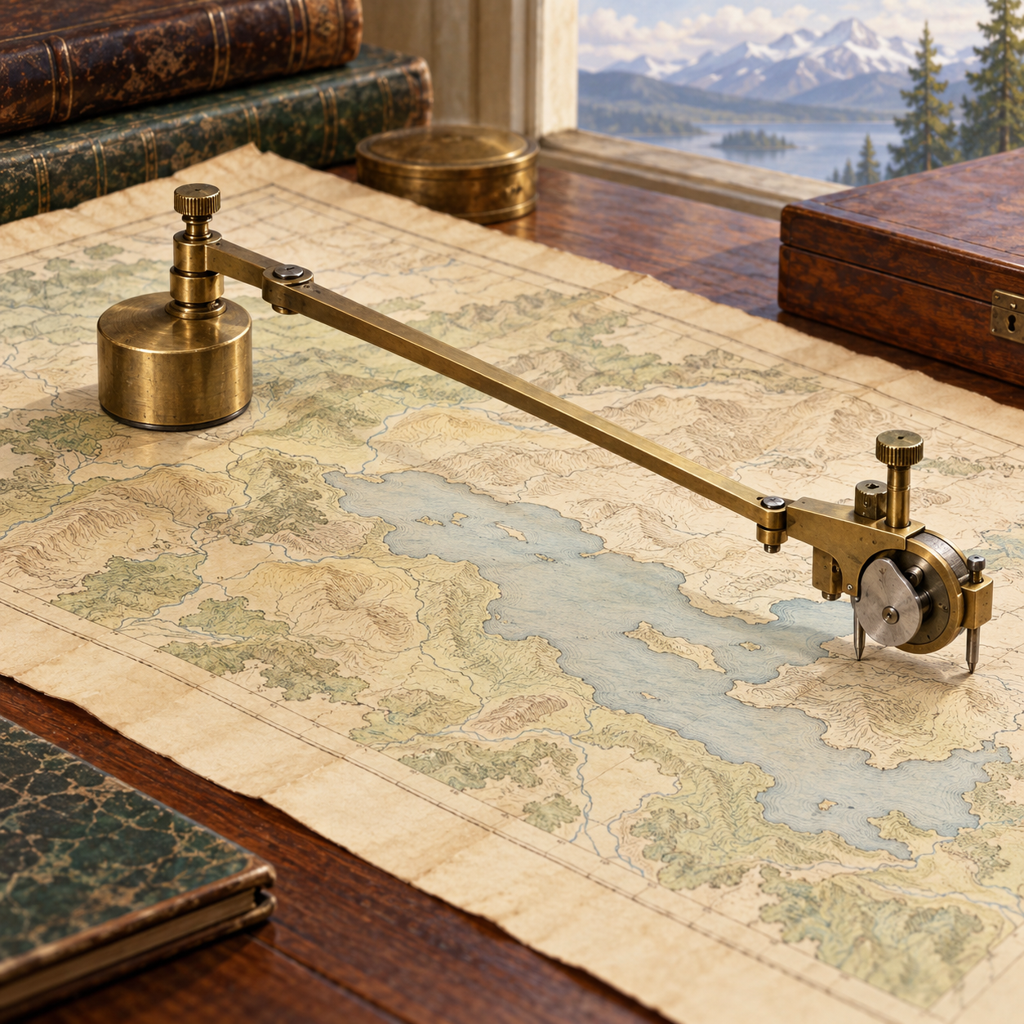
10. Planimeter
History of measurement
A tracer follows the boundary of a shape on a map or drawing.
Checked fact. The mechanism combines its movement to determine area without splitting an irregular outline into countless rectangles.
Source: Source — Planimeter