
Icy rings, glowing ripples and rain that never reaches the ground: ten sky scenes and the physics behind their beauty.
The editorial team created these illustrations with AI. They are explanatory images, not photographs of particular specimens, homes or events. Each card includes a checked fact and a source.
1. Lenticular clouds
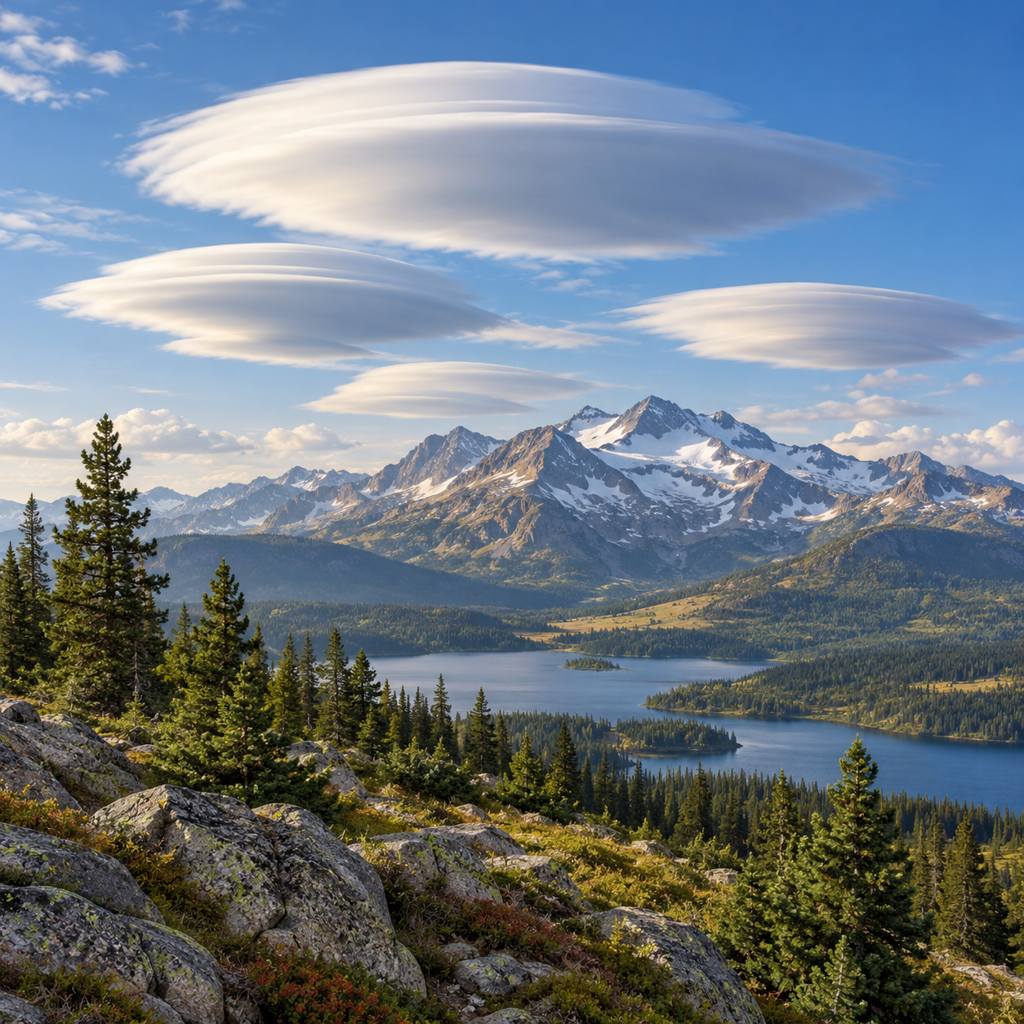
Air waves over mountains
A stack of smooth plates seems to pause above the ridge. The cloud can retain its outline while air flows through it. Its rounded layers contrast with the sharp rocks in our illustration.
Checked fact. These clouds can form in standing waves downwind of mountains, where rising air cools and water vapour condenses.
Source: Source — Lenticular clouds
2. Noctilucent clouds
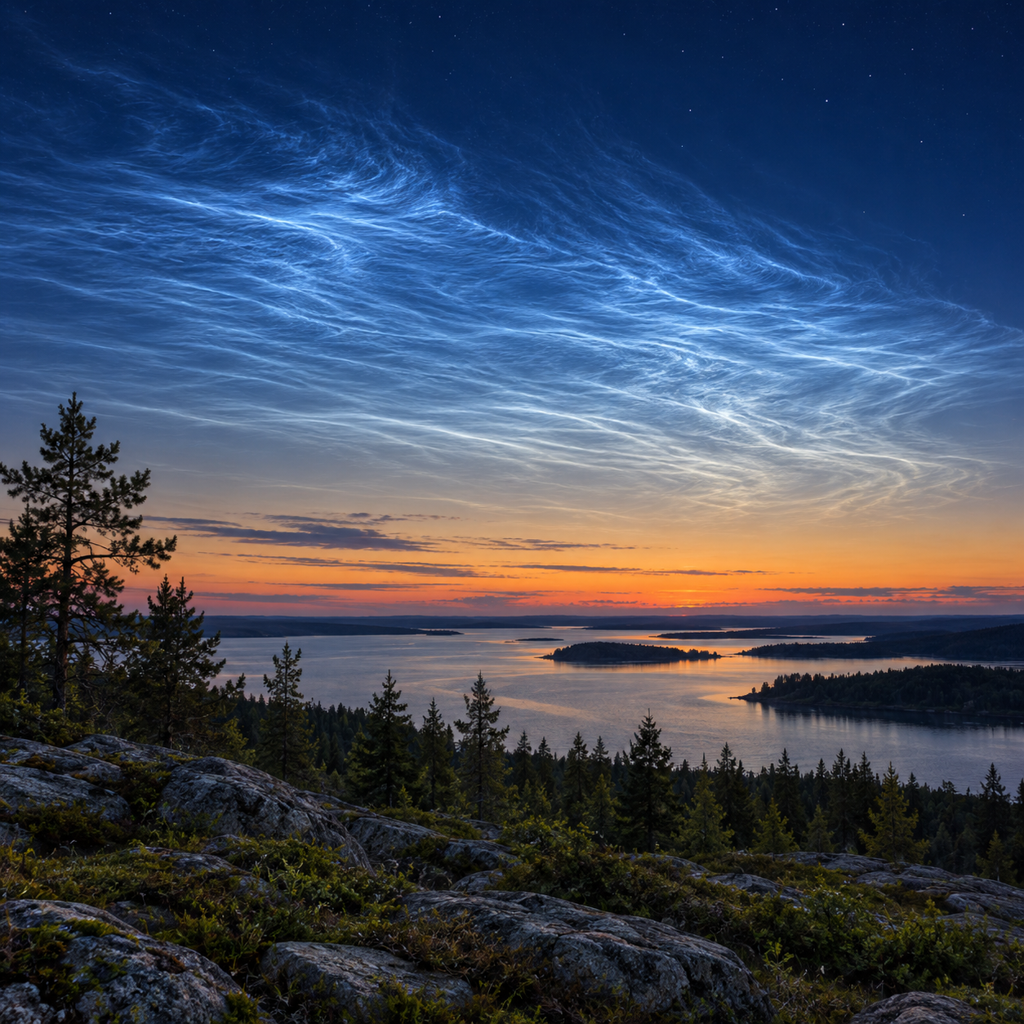
High ice at twilight
The ground is darkening, but delicate blue ripples still shine above it. The cloud is not generating its own light: the high veil continues to catch sunlight. A dark horizon makes its silvery pattern visible.
Checked fact. Noctilucent clouds contain ice crystals around 83 kilometres high and can remain sunlit after sunset for the observer.
Source: Source — Noctilucent clouds
3. Mammatus clouds
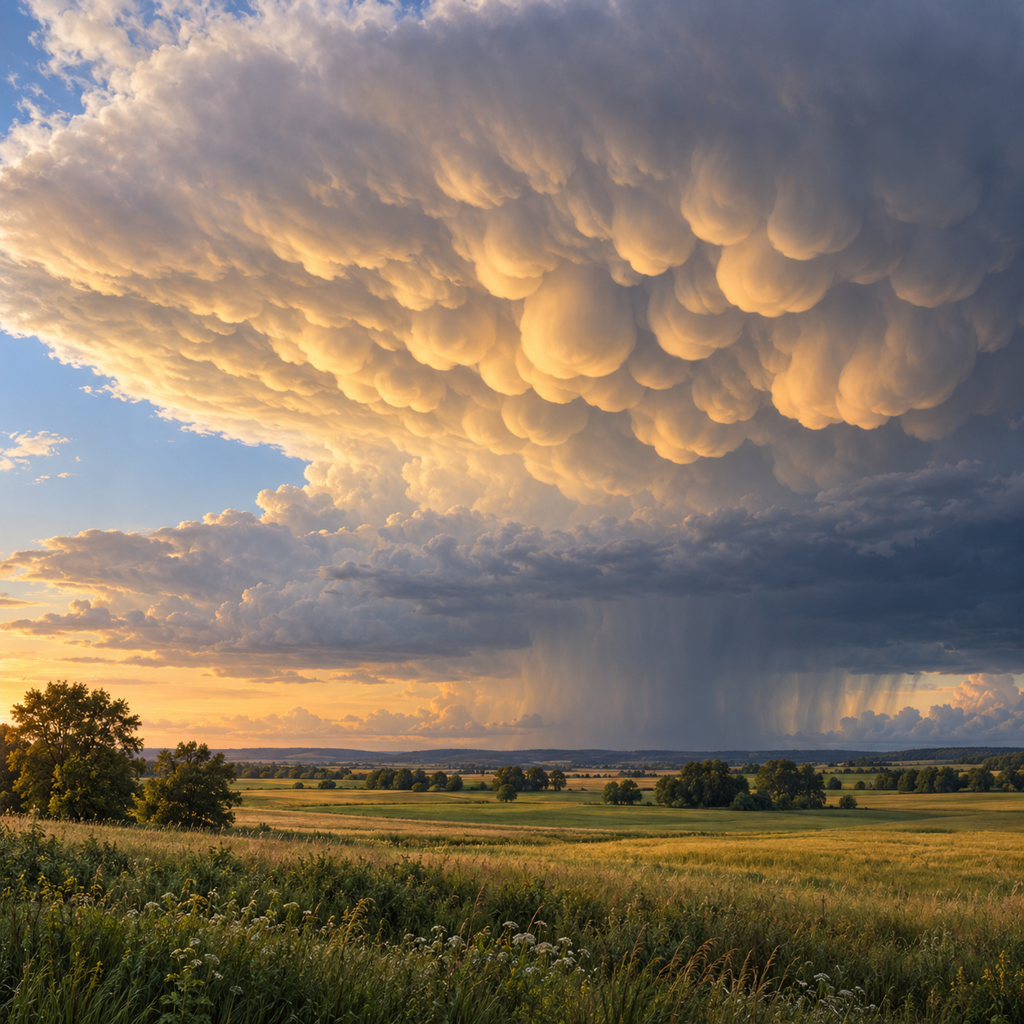
Rounded pockets beneath a cloud
The cloud’s underside becomes a soft-looking landscape. Rounded pockets hang together, with light revealing their depth. The scene is dramatic, but one striking pattern alone cannot reliably predict a dangerous event.
Checked fact. Mammatus are rounded downward projections on a cloud’s underside, often beneath a thunderstorm anvil; they do not mean a tornado is inevitable.
Source: Source — Mammatus clouds
4. A solar halo
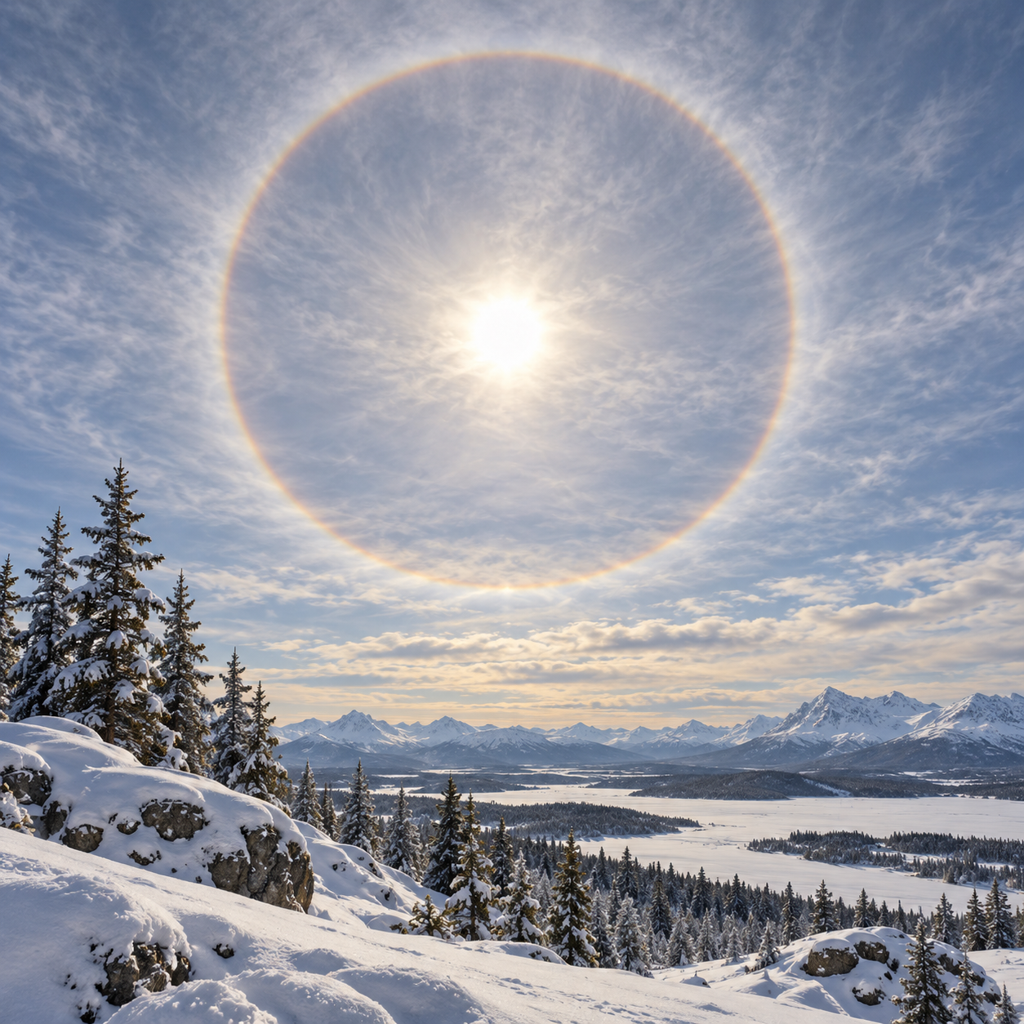
A ring in icy clouds
A pale circle seems to frame the Sun. Our illustration gives it a delicate reddish inner edge. The ring is not part of the Sun: particles between the Sun and the observer create it.
Checked fact. A common halo with a radius of about 22° forms when sunlight is refracted through atmospheric ice crystals.
Source: Source — A solar halo
5. Sundogs
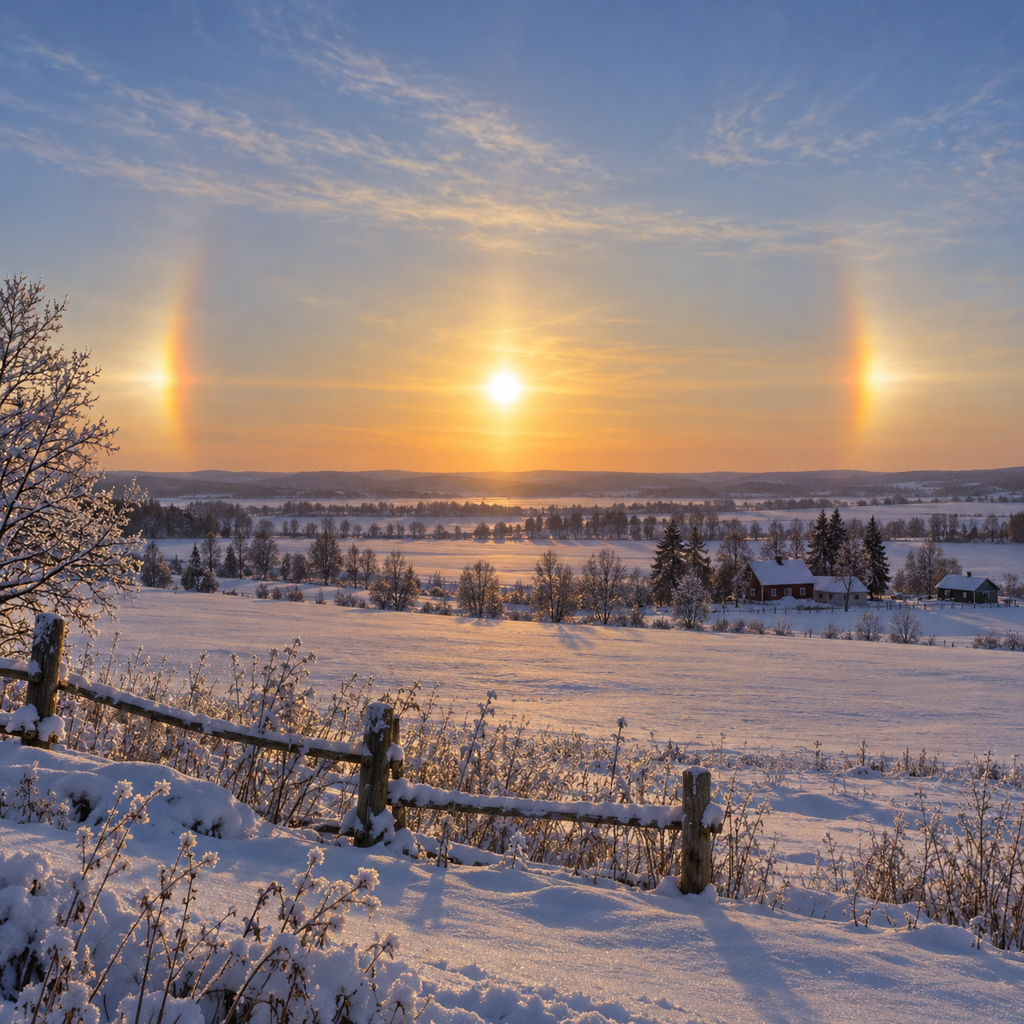
Bright spots beside the Sun
The low Sun gains two bright companions. They sit at roughly its height and may show coloured edges. Our illustration preserves that horizontal relationship instead of placing the spots arbitrarily.
Checked fact. Sundogs form through refraction in oriented plate-shaped ice crystals and often appear on either side of the Sun.
Source: Source — Sundogs
6. A Sun pillar
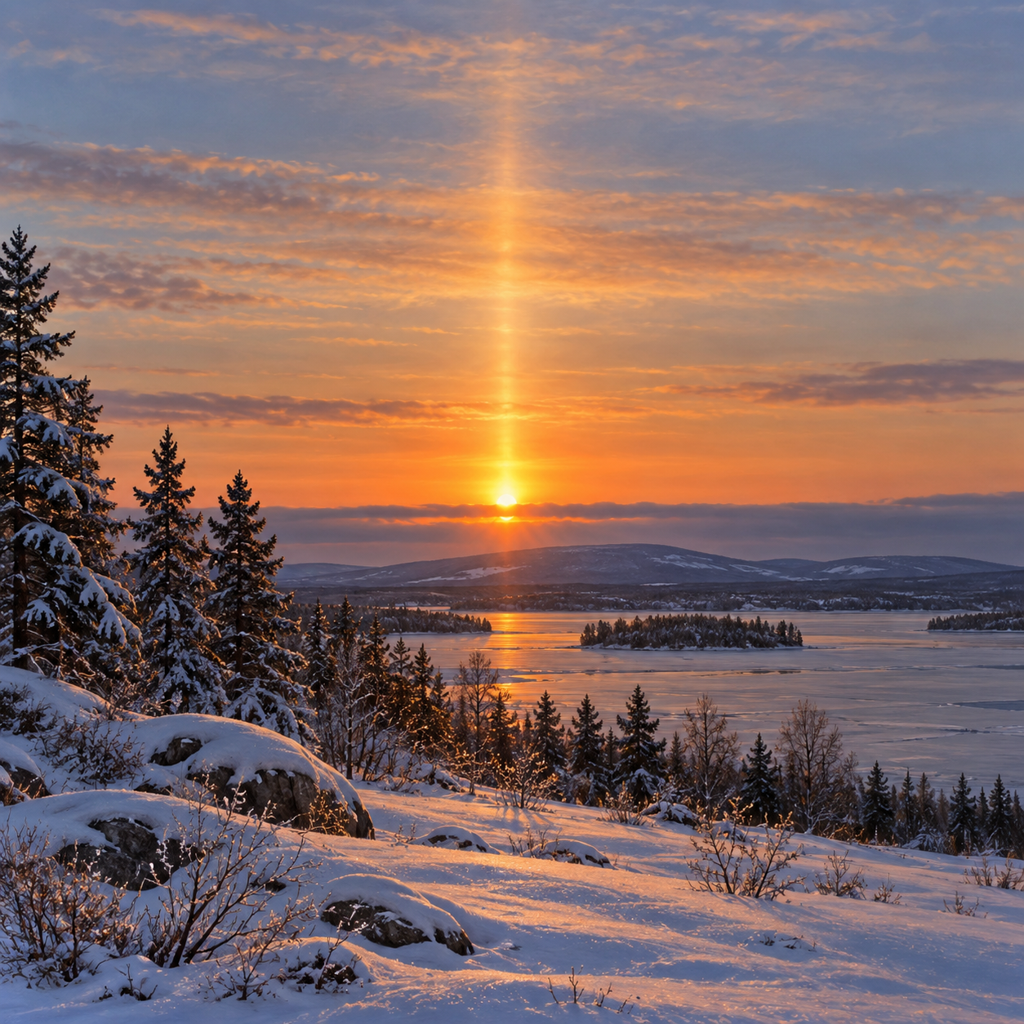
A vertical trail of light
A narrow strip of light rises above the cold horizon. It resembles a searchlight beam, yet there is no searchlight. Our quiet winter landscape shows a pillar whose appearance depends on the observer’s view.
Checked fact. Light pillars involve reflection from flat ice-crystal faces, rather than a real vertical beam through the air.
Source: Source — A Sun pillar
7. Iridescent clouds
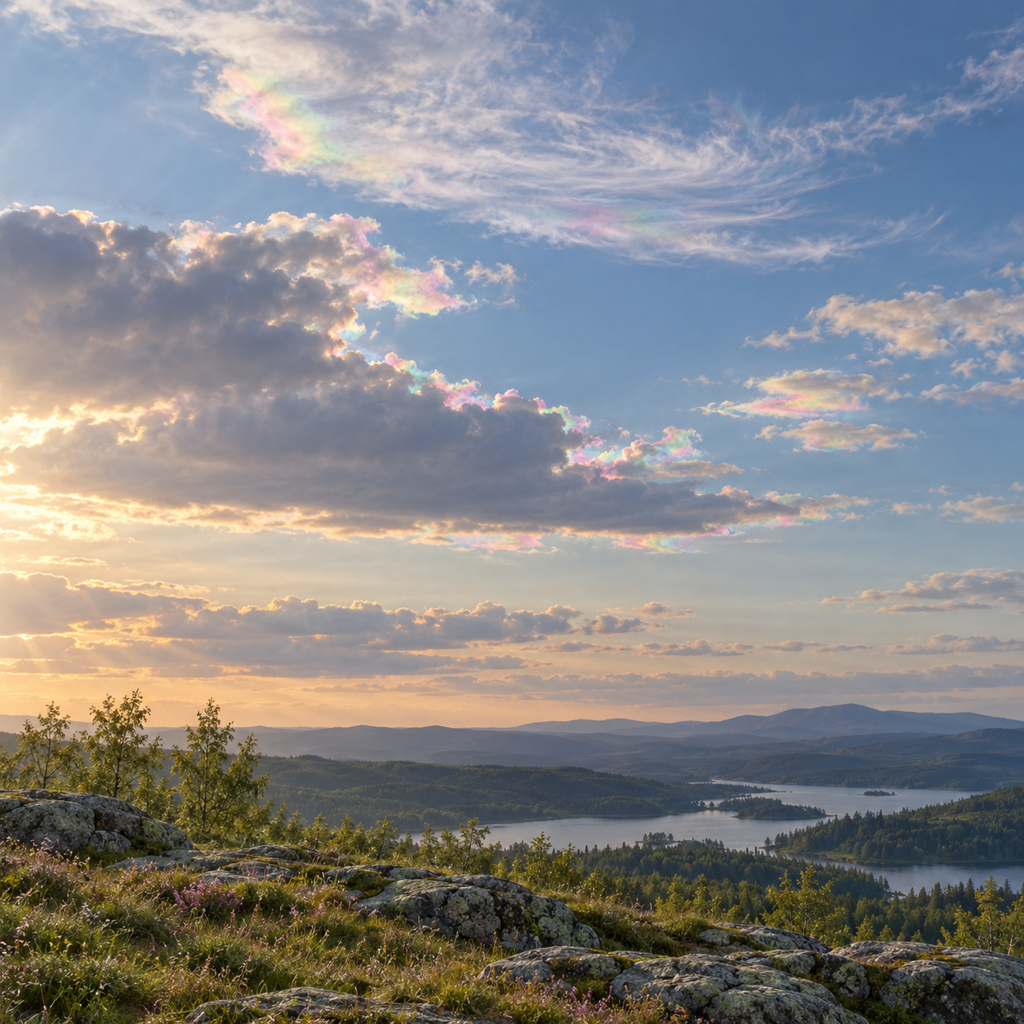
Pastel edges of thin clouds
Pink, green and blue shades rest on a thin cloud edge like delicate mother-of-pearl. We keep the colours subtle rather than painting a solid neon rainbow. The Sun itself stays outside the frame.
Checked fact. Cloud iridescence is associated with light diffraction by small water droplets or ice crystals of similar sizes.
Source: Source — Iridescent clouds
8. Virga
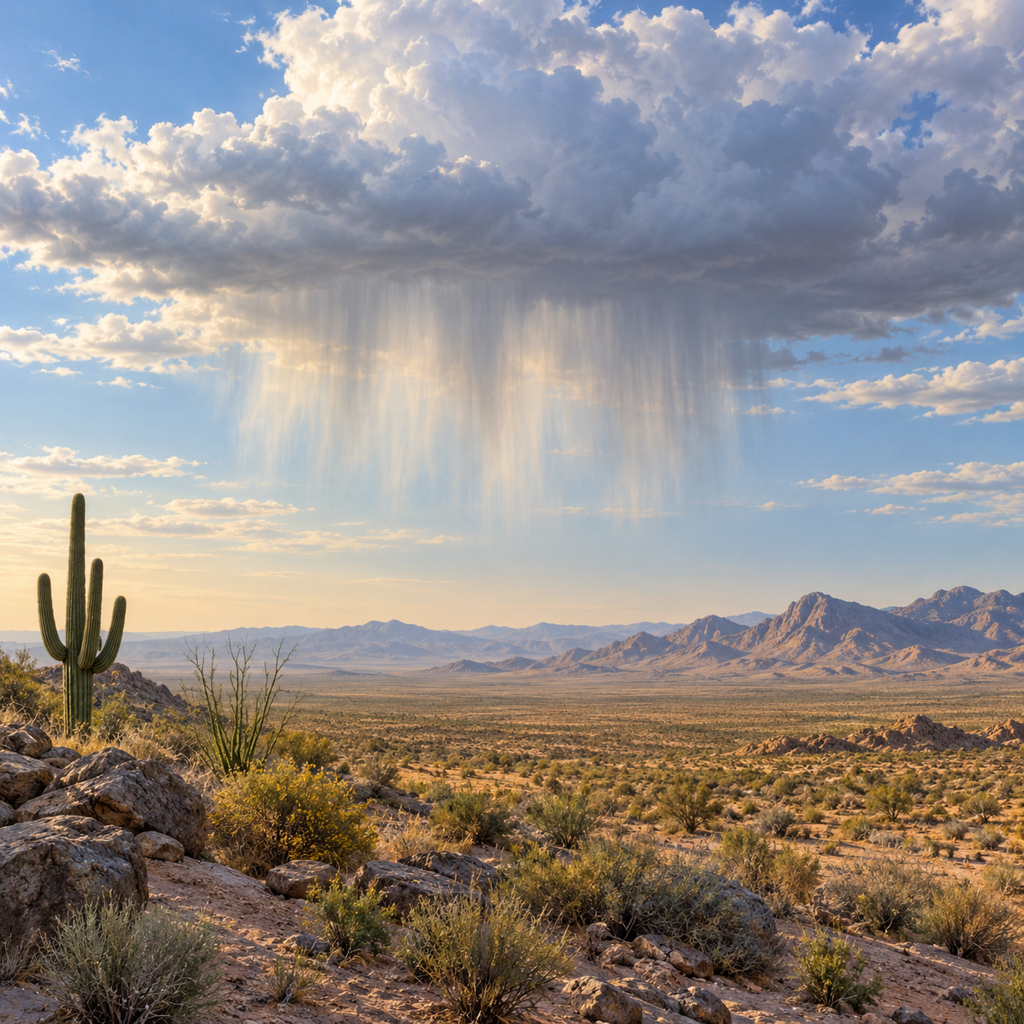
Rain that never reaches the ground
Streaks of precipitation descend from a cloud but disappear before the ground. They form an uneven curtain suspended in the air. Our landscape below stays dry: the rain ended during its journey.
Checked fact. Virga consists of visible precipitation streaks that evaporate or sublimate before reaching the surface.
Source: Source — Virga
9. Aurora
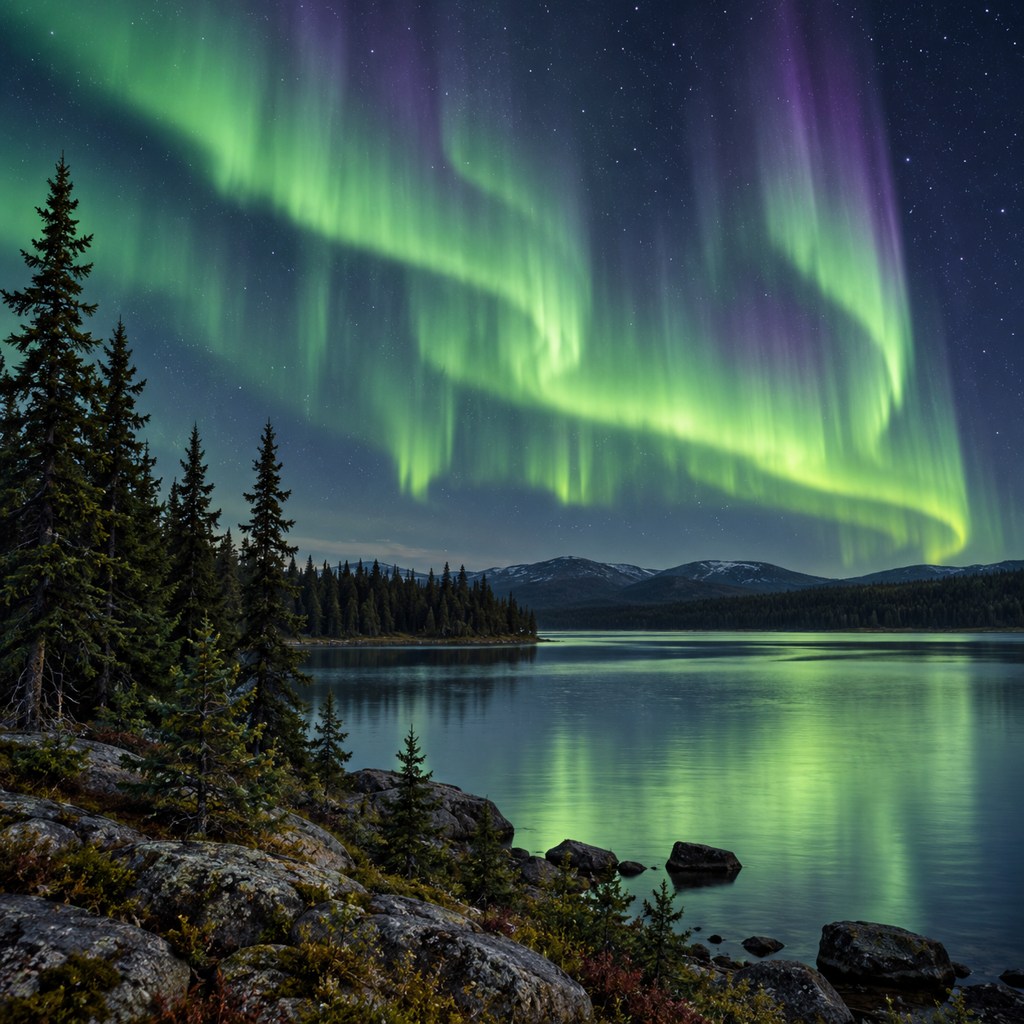
Light from the upper atmosphere
Green folds hang above the lake like a vast translucent curtain. Unlike a solar halo, the atmosphere is actually emitting light here. Water reflects the pattern, while the aurora itself lies far above the landscape.
Checked fact. Auroras arise when energetic particles interact with gases in the upper atmosphere; Earth’s magnetic field influences the particles’ motion.
Source: Source — Aurora
10. A double rainbow
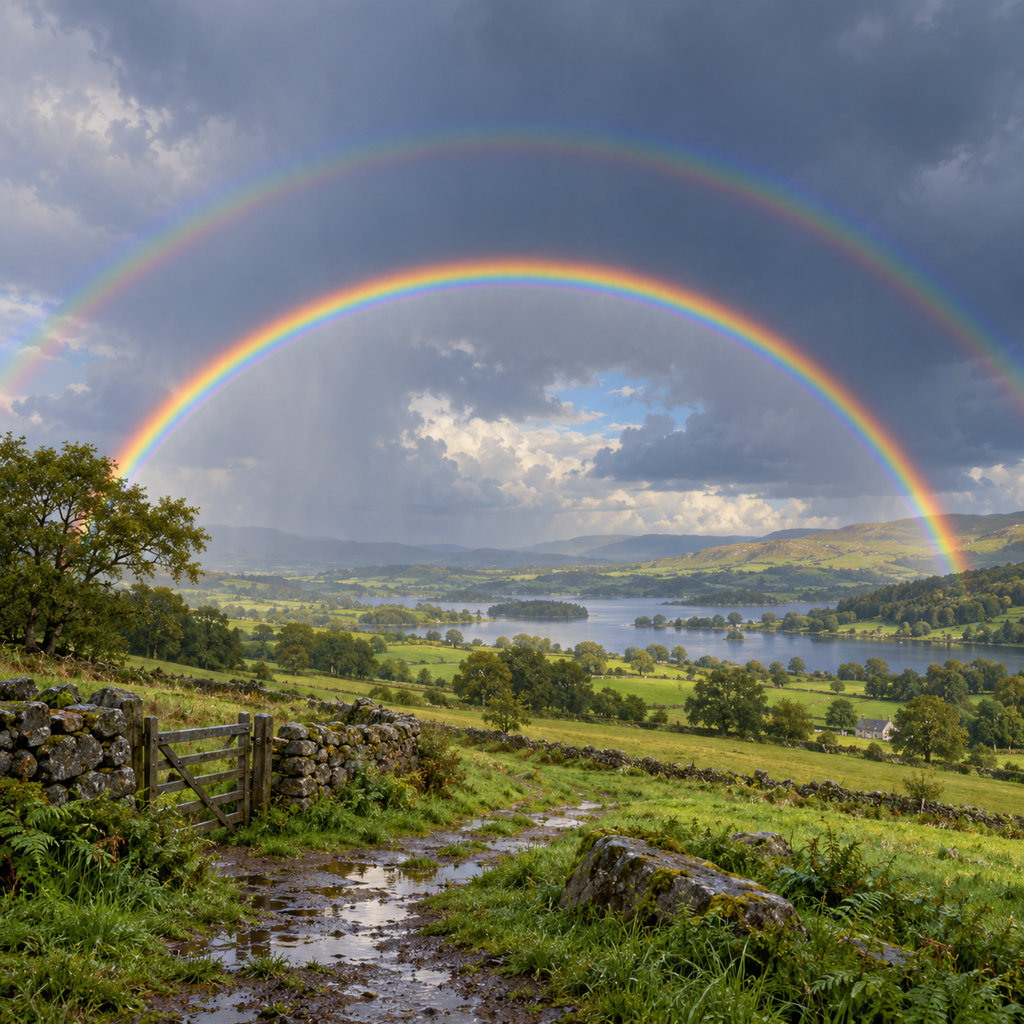
Two colour sequences
The second bow is fainter and lies outside the first. Look closely and its colour order is reversed. The sky between the bows is darker: we preserve that detail so the illustration explains rather than merely decorates.
Checked fact. In a secondary rainbow, light reflects twice inside the droplet, reversing the colour order relative to the primary bow.
Source: Source — A double rainbow