
Fold a butterfly's wings and a different picture appears. One species owes its blue to the structure of its scales; another has transparent windows that barely reflect light; a third becomes a dry leaf. Here are ten famous, beautiful species, from familiar garden visitors to tropical stars of museum collections.
These are artistic portraits, not photographs or a butterfly identification guide. The names and characteristics follow the museum and research sources linked below.
1. Monarch: an orange traveller
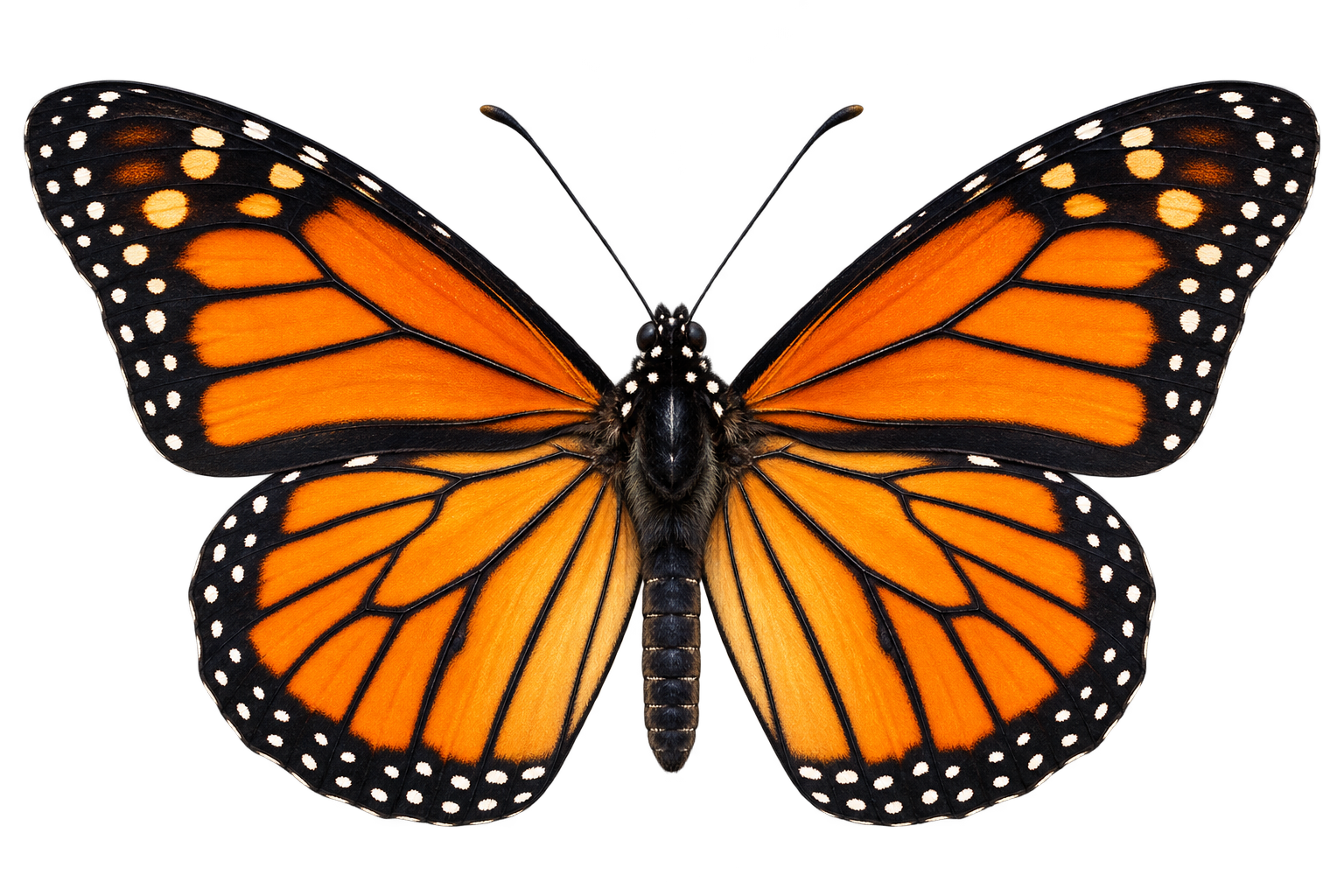
Danaus plexippus. North and Central America.
The monarch is so recognisable that its wings could almost be a ready-made emblem: orange panels, black veins, and a scattering of white dots around the edges. Its fame, however, is about more than appearances. Eastern North American populations fly to their wintering grounds in Mexico in autumn. In spring, later generations continue the journey back. This is a family expedition, rather than the return ticket of one immortal passenger.
A detail to remember. Monarch caterpillars feed on milkweeds. Without suitable host plants, there can be no famous migration. The butterfly's story starts long before its orange wings appear.
Sources: Source 1
2. Blue morpho: a blue invented by light
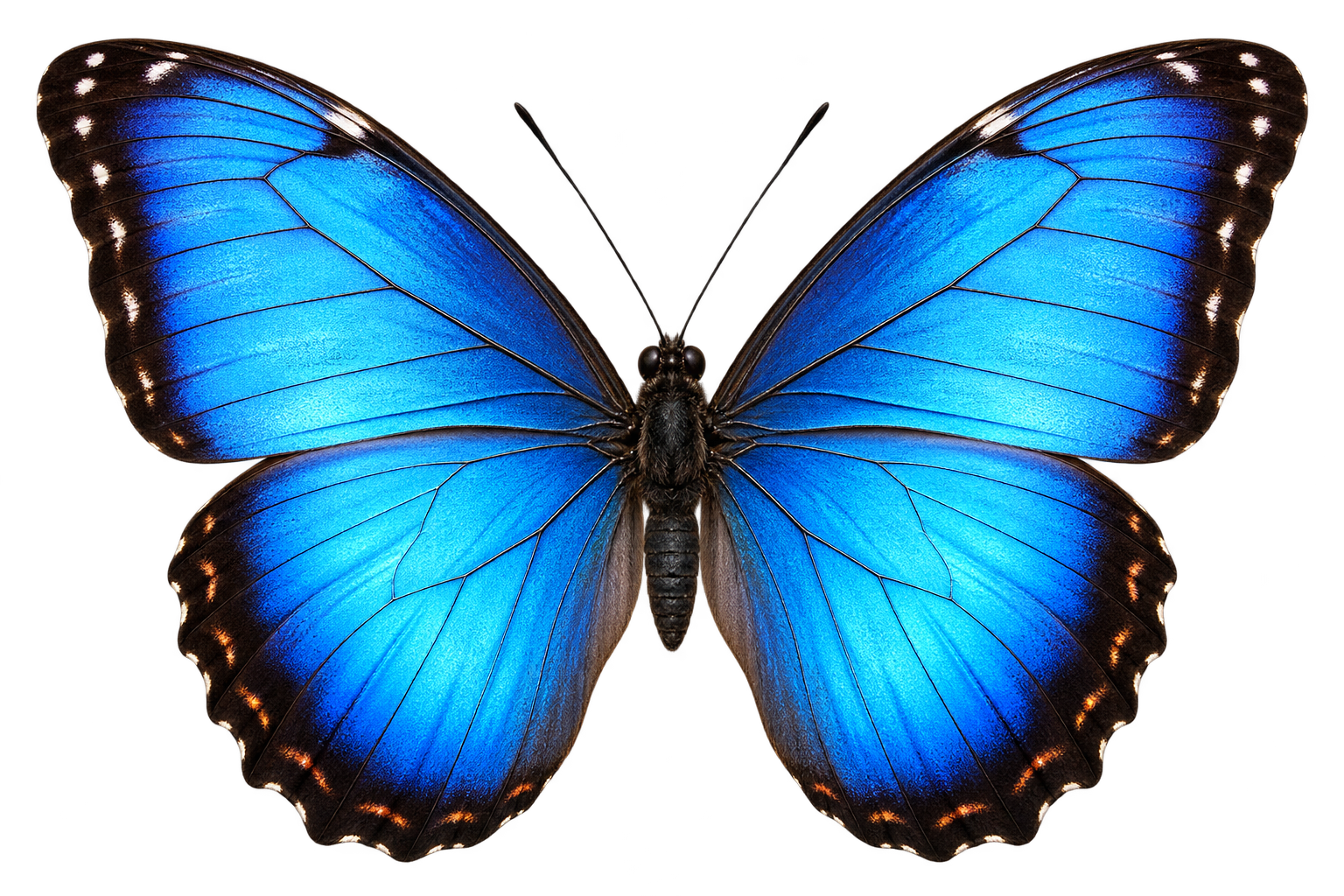
Morpho peleides. Tropical forests of the Americas.
When a morpho opens its wings, the forest seems to reveal a little piece of bright sky. Then the butterfly changes position, and the shimmer changes with the viewing angle. This is not simply blue paint. Microscopic layers in the wing scales reflect and reinforce particular wavelengths of light, producing structural colour.
A surprise on the other side. The underside is brown and much less festive. Males of this species display particularly vivid, broad blue areas; females are coloured differently. One butterfly seems to keep two outfits: one for flying and another for resting.
Sources: Source 1
3. Peacock: wings that look back
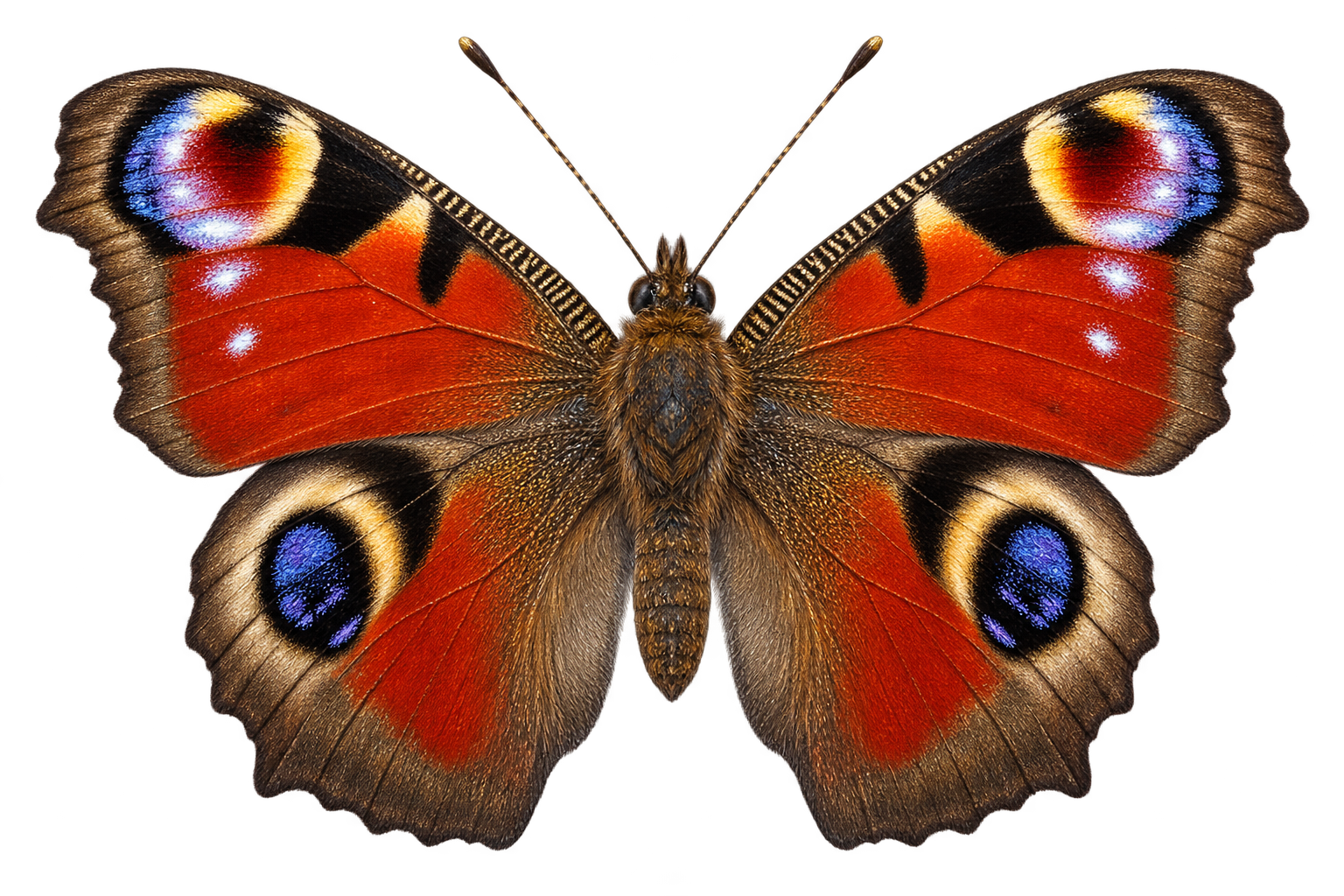
Aglais io. Europe and parts of Asia.
The peacock butterfly gets its name from the splendid eyespots on its four wings, rather than any family connection with the bird. At rest, with its wings closed, it looks much more modest. Disturb it, and the bright upper surfaces suddenly appear. For a bird expecting an easy lunch, this can be an unpleasant surprise.
The interesting part. The eyespots are part of its defence, rather than decoration alone. Its caterpillars favour nettles: a reminder that a beautiful butterfly need not begin life on a beautiful flower.
4. Queen Alexandra's birdwing: a butterfly with reach
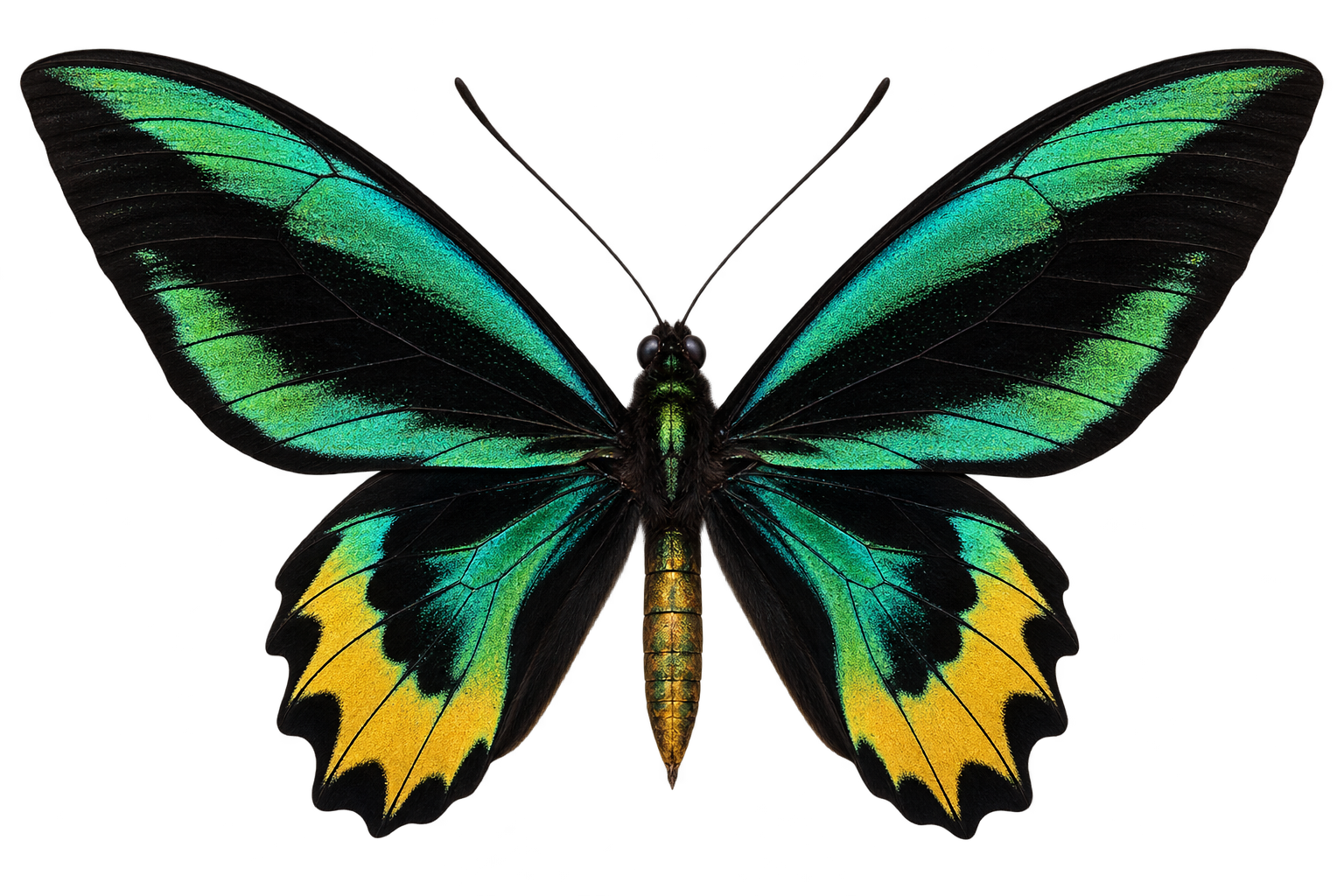
Ornithoptera alexandrae. Papua New Guinea.
Its name is almost royal, and its record is real: this is the largest living butterfly species. Females are especially large, with wingspans reaching approximately 27 centimetres. Our illustration shows a male instead. He is smaller, but his wings carry striking green and bluish patches.
Why a birdwing? A large butterfly in flight makes an unforgettable impression. Here, 'largest' refers to the species record, especially the females, rather than the size of every male you might see.
Sources: Source 1
5. Swallowtail: a yellow sail with two tails
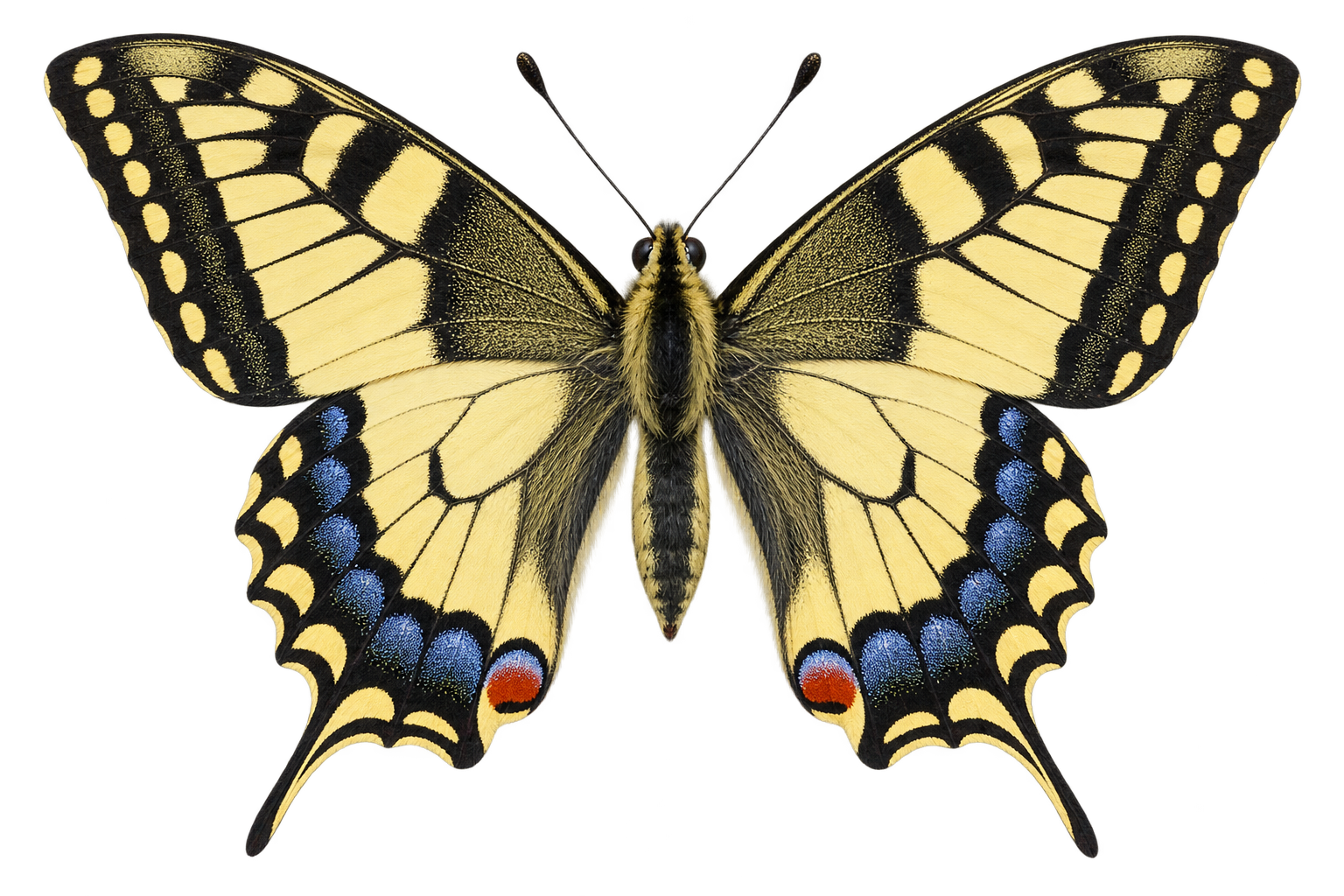
Papilio machaon. Widespread across Eurasia.
The swallowtail looks like a carefully painted sail: a pale yellow background, black lines, blue crescents, and a pair of red spots. Narrow extensions on the hindwings give it a distinctive outline. These tails also explain its English name.
Not all swallowtails live alike. Caterpillars of the British subspecies are closely associated with milk parsley, Peucedanum palustre. Other populations may use different host plants. Behind the beautiful adult wings lie the very specific needs of a tiny caterpillar.
6. Glasswing: a window instead of a wing
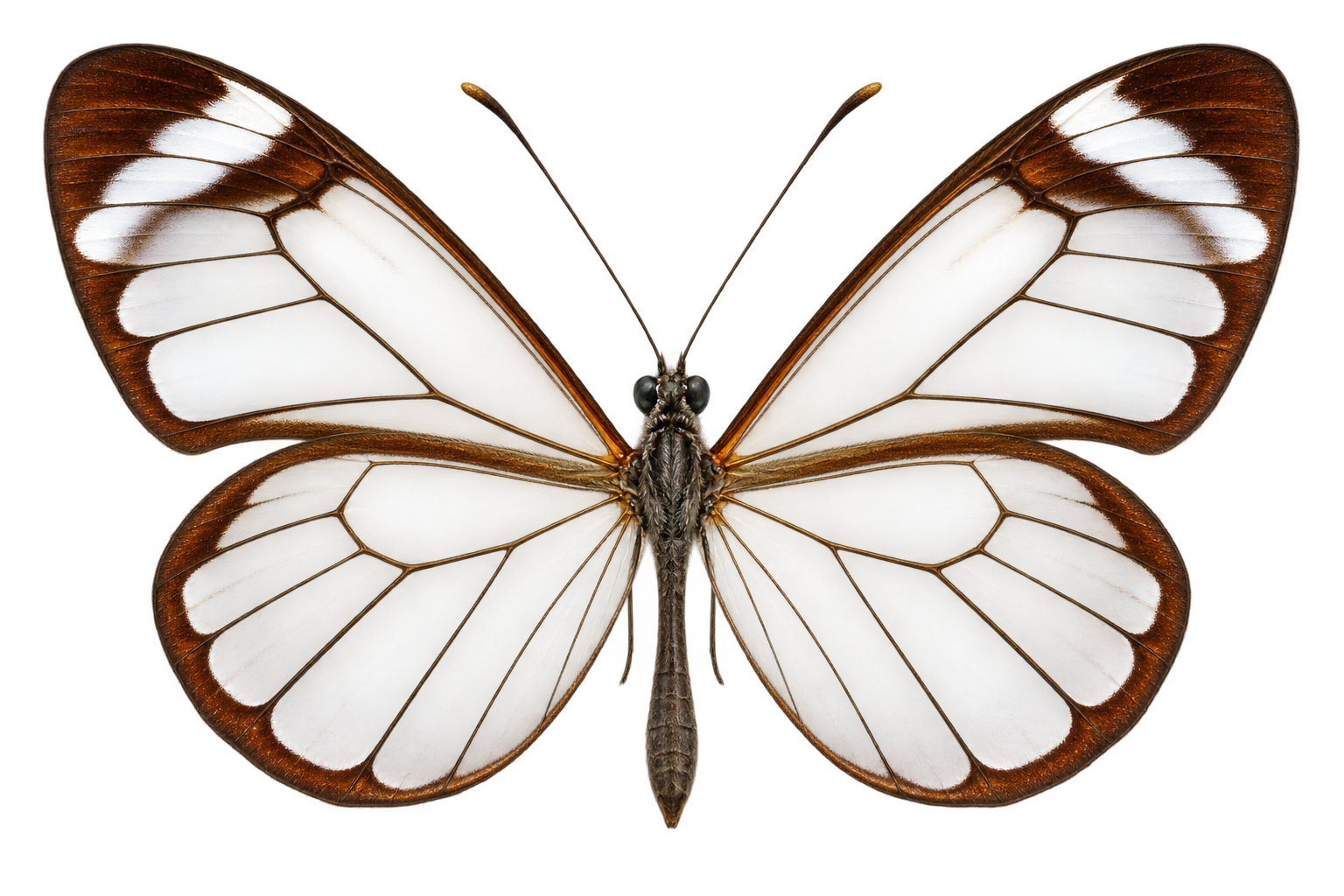
Greta oto. Central and South America.
You can see the background through the wings in our illustration. The artist has not forgotten to paint them: large areas of a glasswing's wings really are transparent. They have fewer coloured scales, and their surfaces reflect less light. Light passes through, as if the butterfly had left several windows open.
An optical detail. The entire wing does not disappear: its veins and contrasting borders remain visible. Researchers have described nanostructures on the transparent regions that reduce glare. This is camouflage created by the surface itself, rather than by a pattern.
7. Orange oakleaf: the butterfly that became a leaf
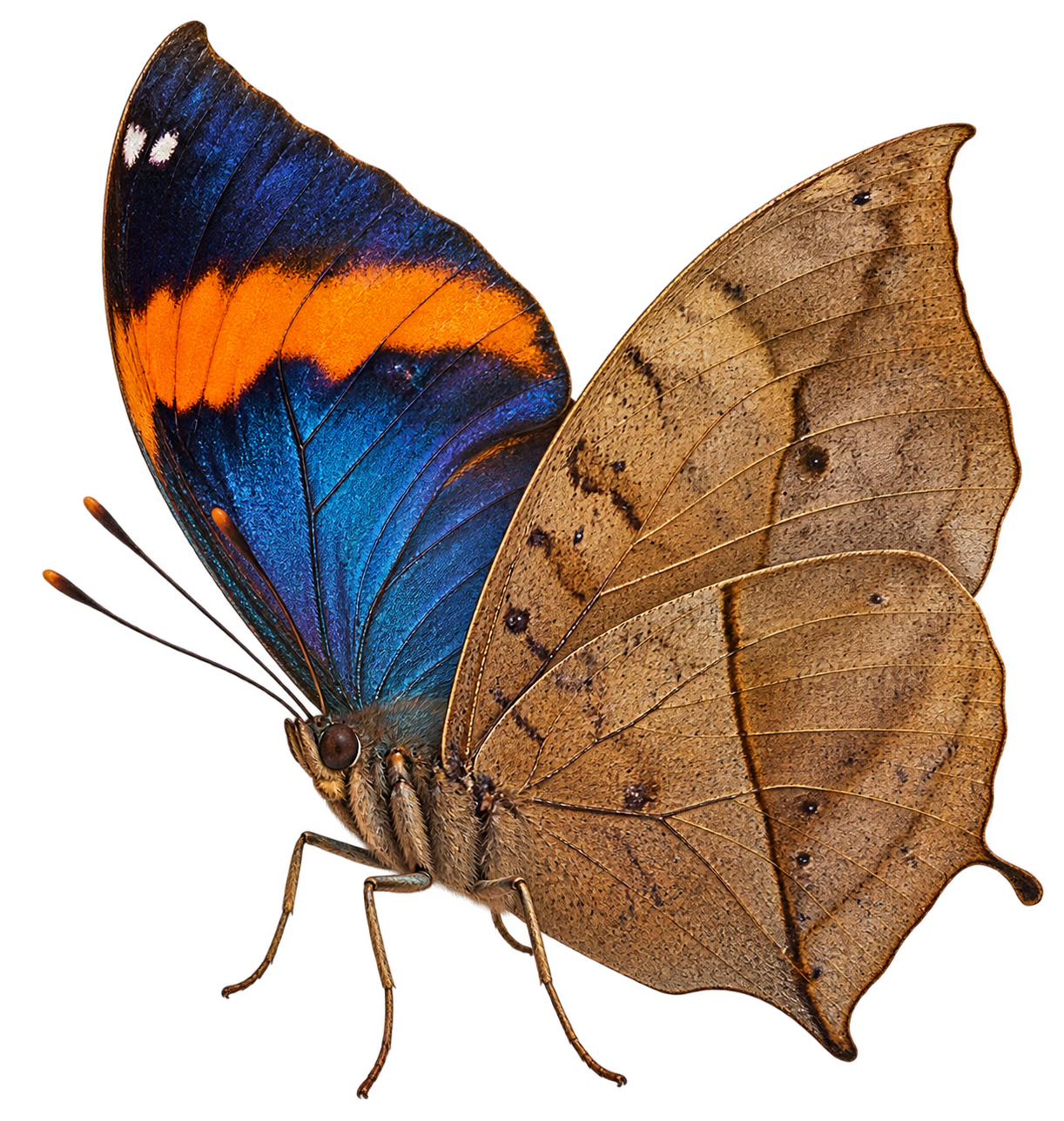
Kallima inachus. South and Southeast Asia.
With its wings open, the orange oakleaf shows blue and an orange band. Fold them, and a dry leaf seems to replace the bright butterfly: brown colouring, apparent veins, and a pointed tip. A predator has to find something that looks like an ordinary piece of forest litter.
About the illustration. We deliberately show both the bright upper surface and the leaf-like underside in one picture. On a living butterfly, you usually see this contrast at different moments: while it flies and while it rests with closed wings.
Sources: Source 1
8. Zebra longwing: stripes and an unusual lunch
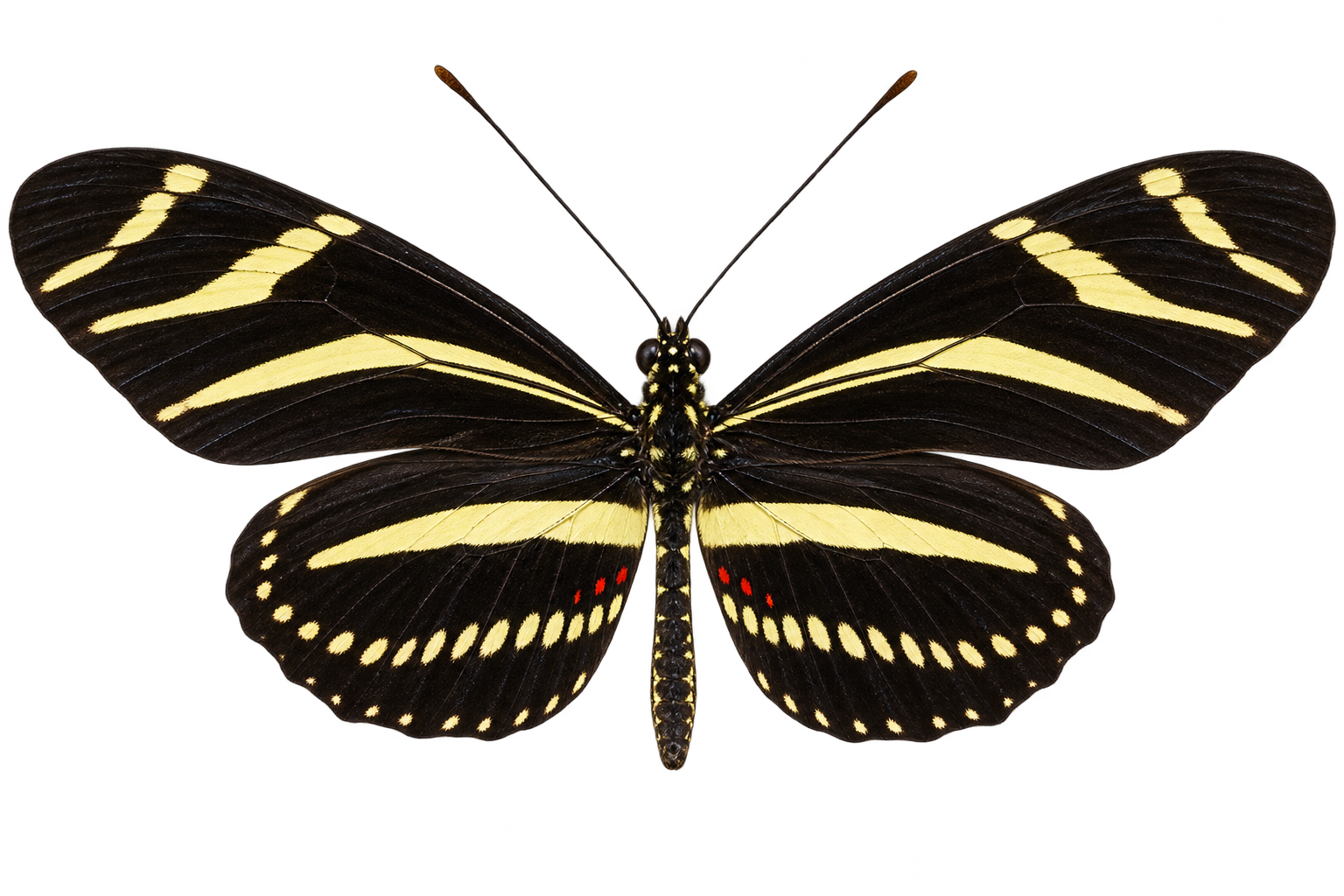
Heliconius charithonia. The Americas.
Its light stripes against black make the zebra longwing recognisable from a distance. The most unexpected fact is on its menu. Adults collect pollen as well as drinking nectar, obtaining nutrients that sweet nectar alone would not provide.
Why is that surprising? We tend to imagine butterflies visiting a flower bar for drinks only. The zebra longwing also takes the more substantial part of the menu. This diet is one reason its adult life can last longer than that of many other butterflies.
Sources: Source 1
9. Rajah Brooke's birdwing: black velvet and green arrows
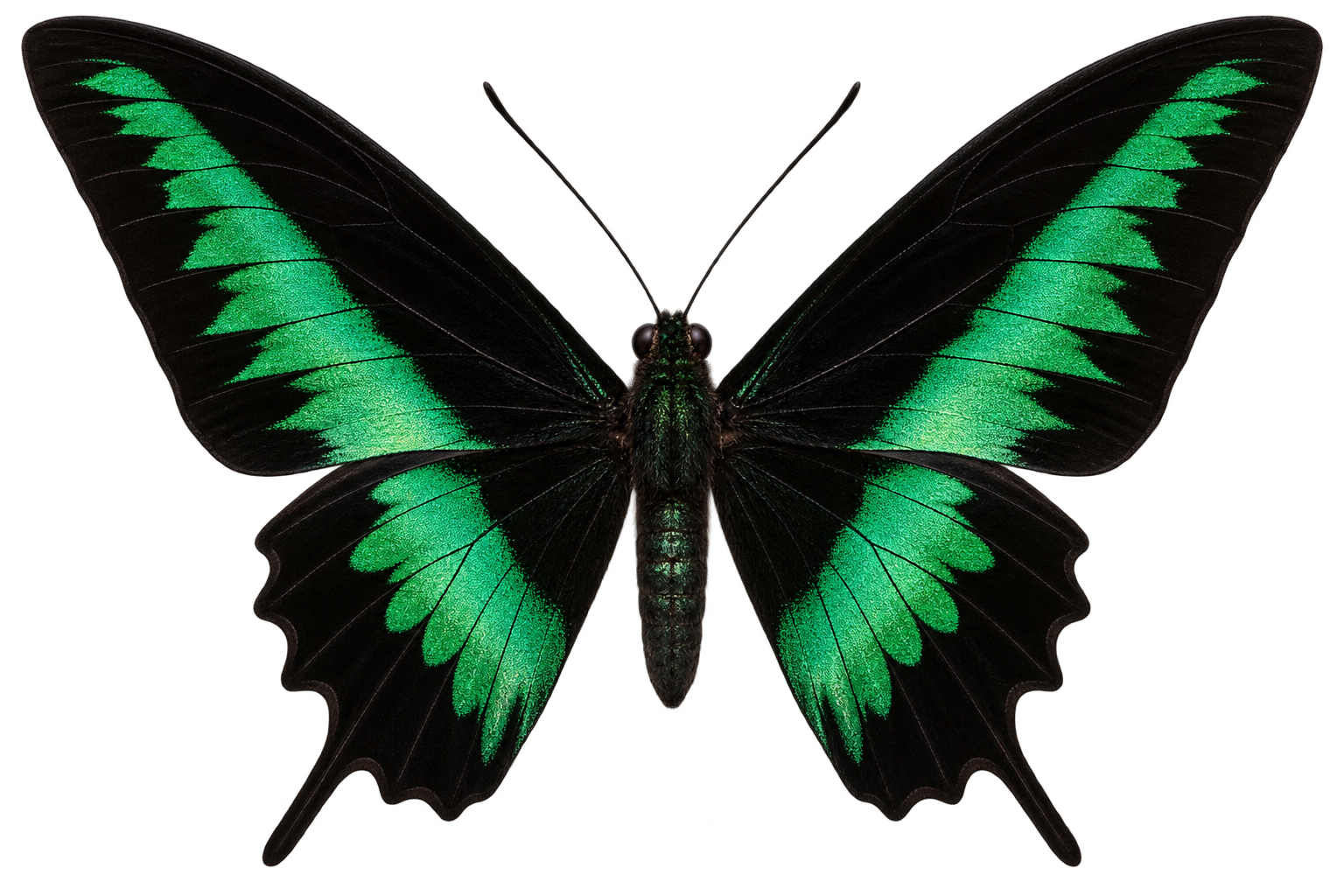
Trogonoptera brookiana. The Malay Peninsula and Borneo.
Green triangles line the male's black wings, like a row of glowing road signs. Females are more subdued. The name recalls James Brooke, the Rajah of Sarawak; Alfred Russel Wallace described the species in the nineteenth century.
A little forest scene. Males sometimes gather in groups around damp soil and stream banks. For an observer, this is a rare chance to see several black-and-green sails together, without trying to follow them through the canopy.
Sources: Source 1
10. Ulysses: an electric-blue finale
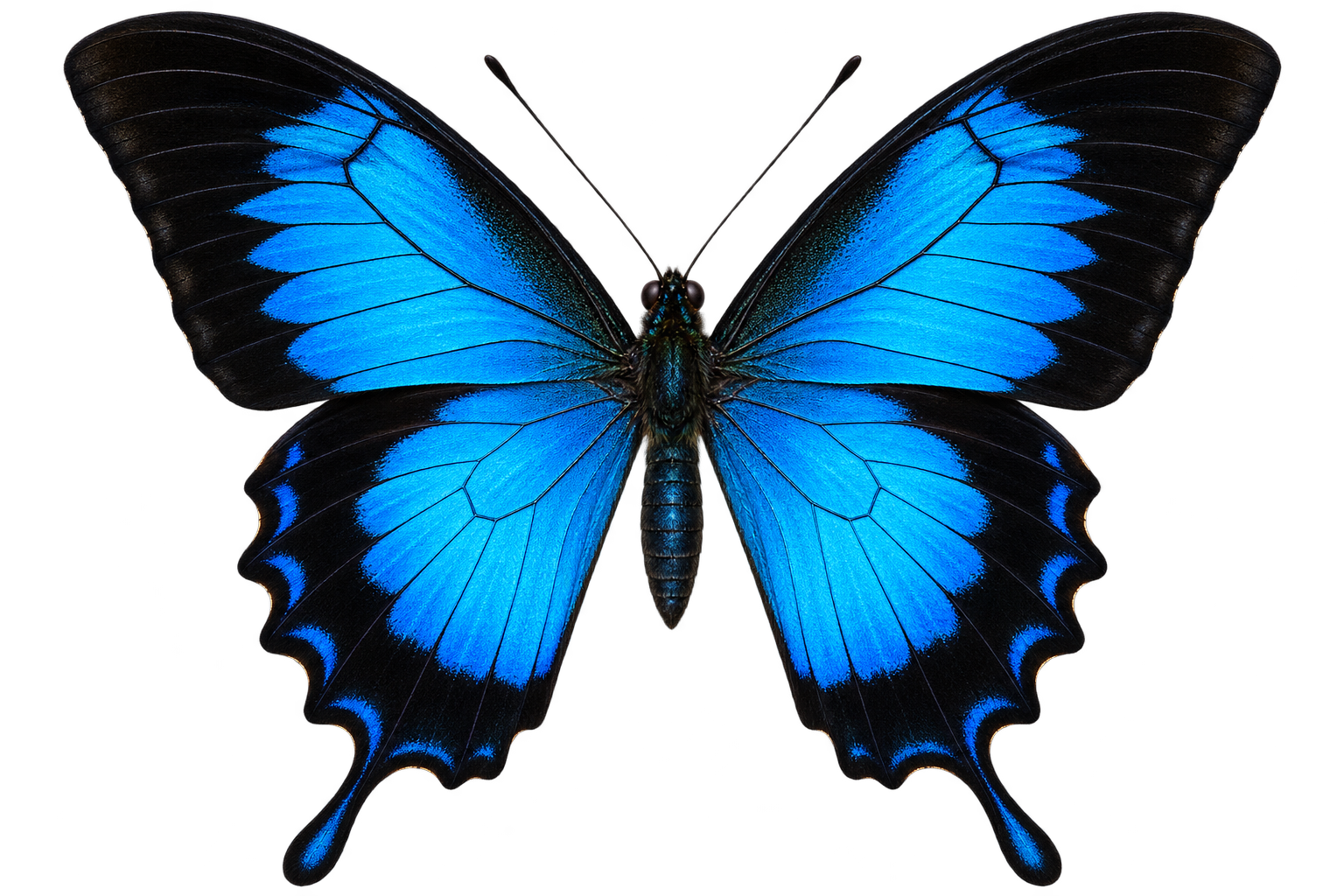
Papilio ulysses. Australia and neighbouring islands.
Ulysses closes our collection with broad flashes of brilliant blue surrounded by black. As with the morpho, the effect depends on light interacting with the fine structure of the wing surface. In flight, the butterfly seems to switch its colour on and off.
What do our two blue stars have in common? A blue wing does not necessarily mean blue pigment. Magnify the scales and you can find tiny structures that control reflected light. More than once in this gallery, physics creates the beauty.
Sources: Source 1
If you remember one thing, let it be more than a beauty ranking. Butterfly wings carry several of nature's ideas at once: warning, hiding, confusing predators, and making unexpected use of light.