
Pictures can use pebbles, glass, ceramic fragments or painted tiles. Compare ten examples and related techniques: similar appearances need not mean identical construction.
Images are new original examples inspired by traditions and techniques, not photographs or reconstructions of particular monuments. Mosaic, stone inlay and painted tilework are distinguished in the cards. Stories are fictional; facts have sources.
1. Roman tesserae: small stones, a larger picture
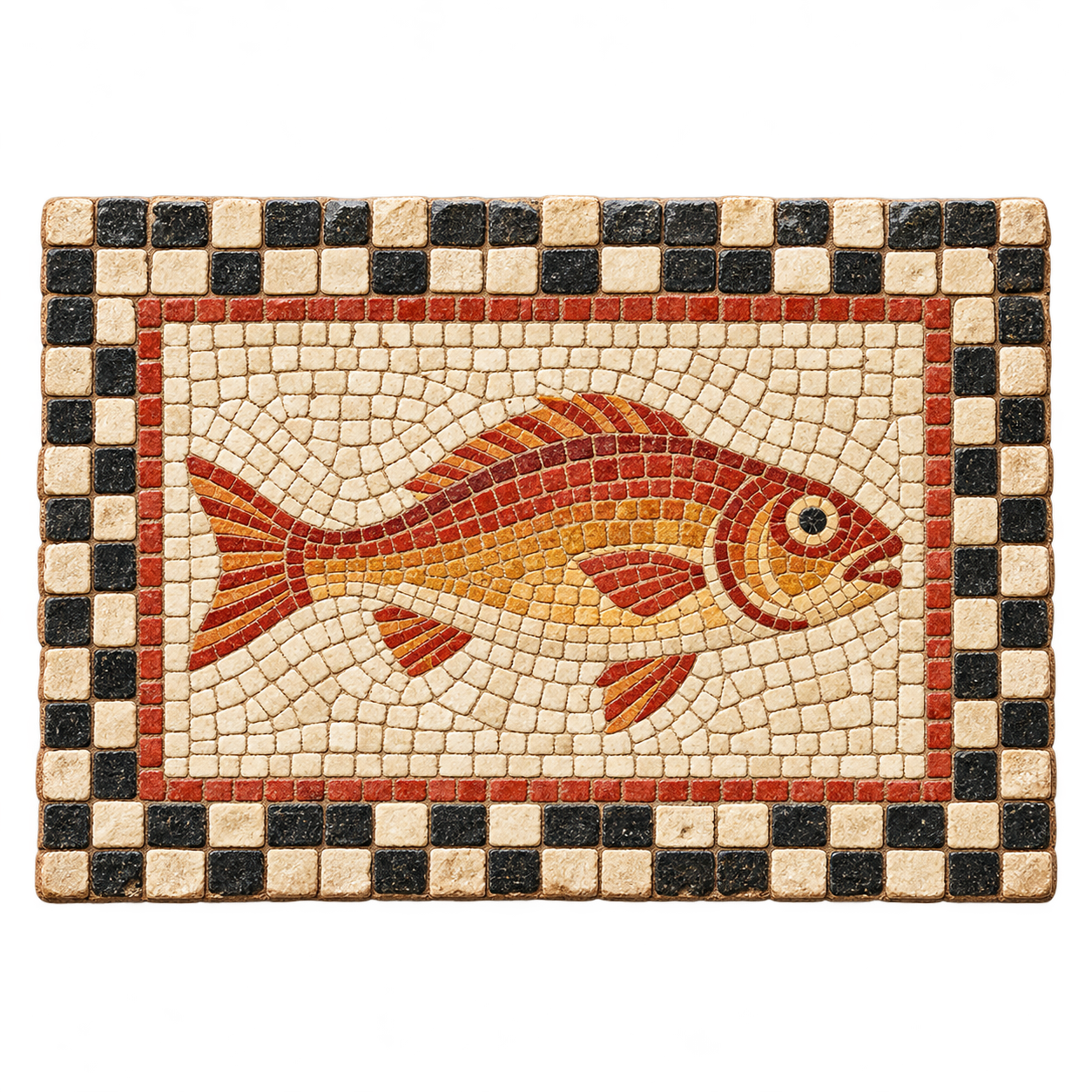
Roman tesserae: small stones, a larger picture
Each stone knew only its colour. Together they discovered a fish with scales and a tail.
Checked fact. Roman opus tessellatum assembles images from small tesserae, including stone pieces.
Rows guide the outline; our fish does not copy an archaeological find.
2. Pebble mosaic: roundness remains
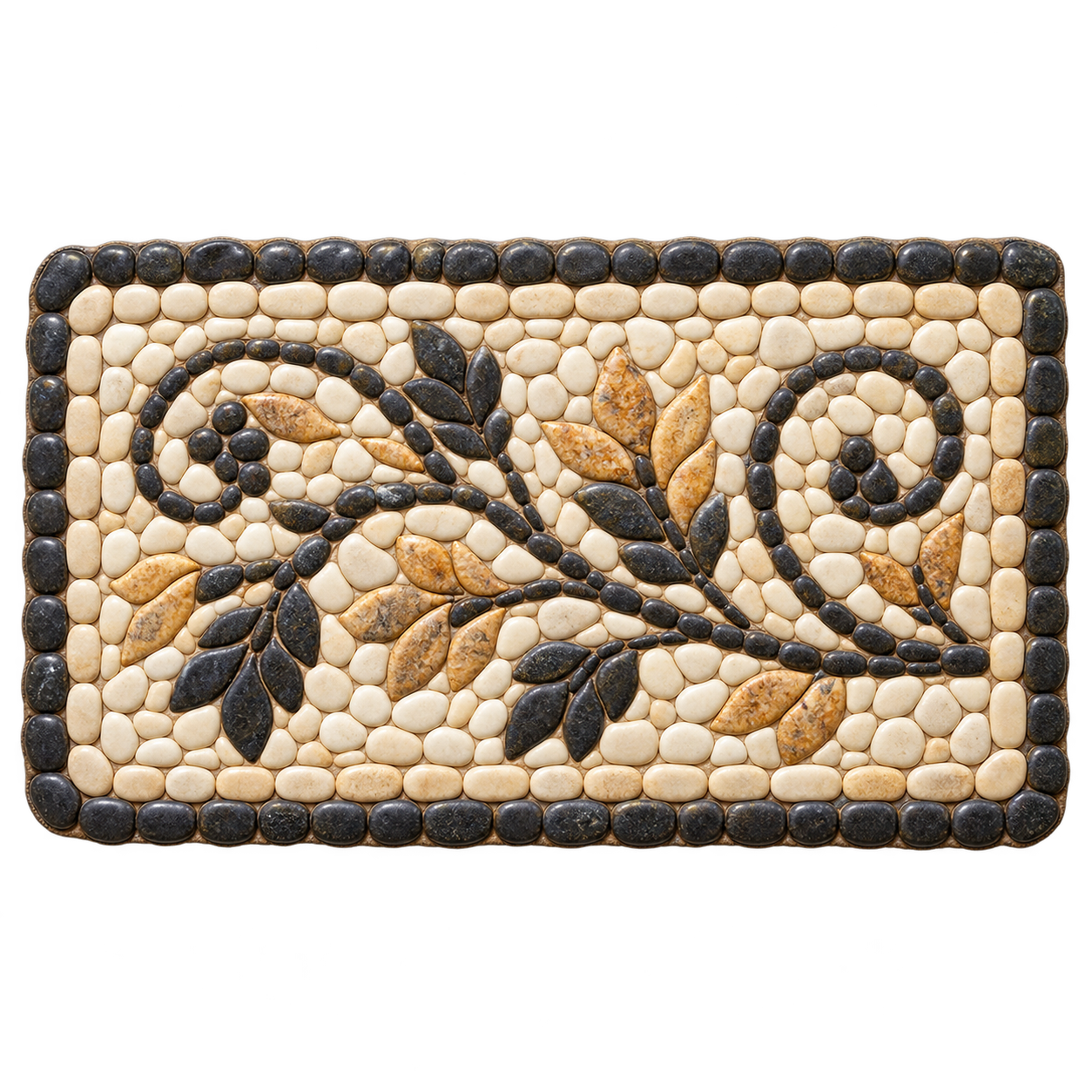
Pebble mosaic: roundness remains
Pebbles declined to become cubes. The maker found a pattern that welcomed rounded sides.
Checked fact. Greek pebble mosaics used stones embedded in mortar before cut-tessera mosaics became widespread.
Compare rounded elements with the square stones in the previous card.
3. Gold mosaic: a background catches light
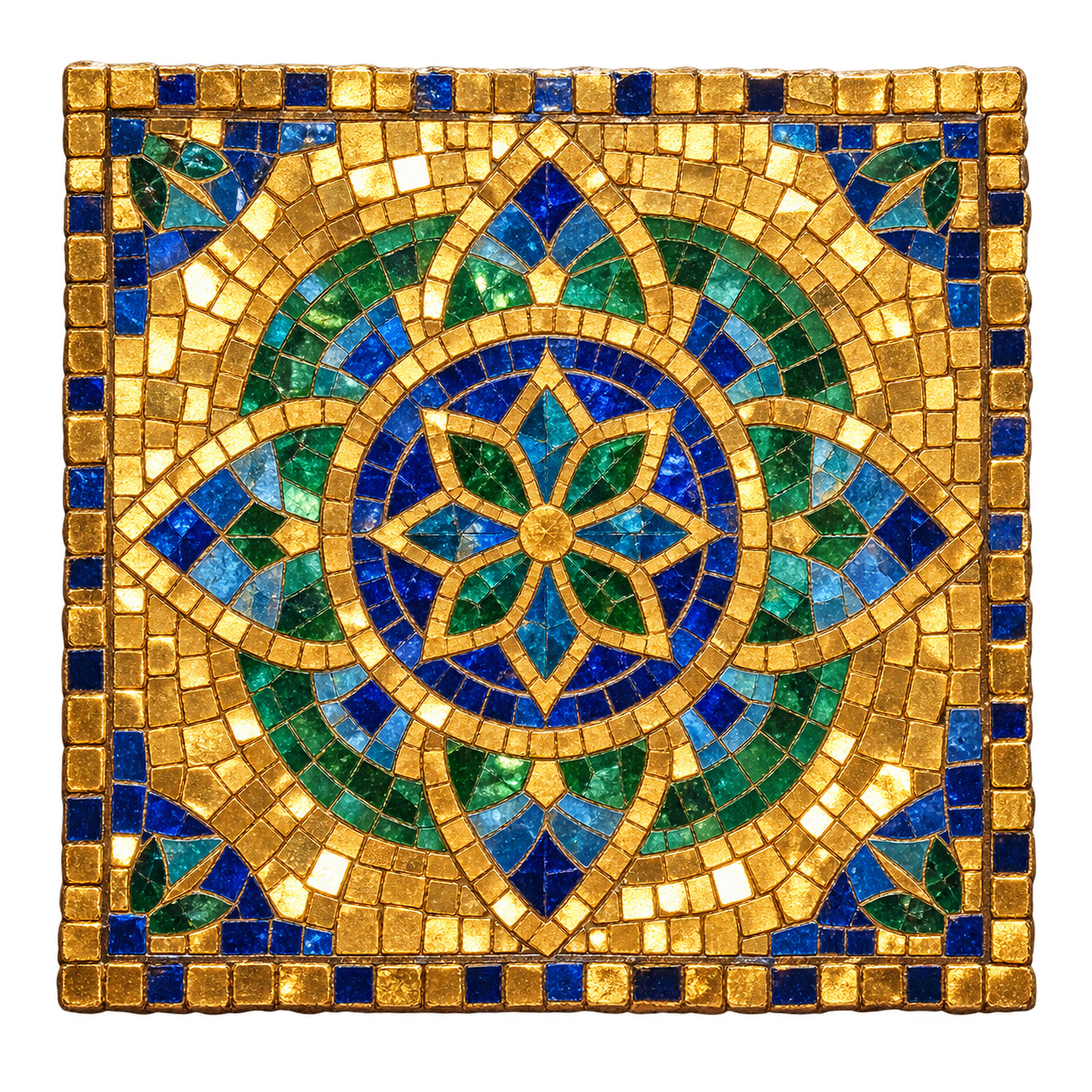
Gold mosaic: a background catches light
Gold refused to remain a flat colour. Small surfaces caught light at different angles.
Checked fact. Gold backgrounds feature in late-antique and Byzantine mosaics, including Ravenna’s monuments.
Our geometric medallion is new, not a fragment of a historical religious scene.
4. Zellige: stars assembled in pieces
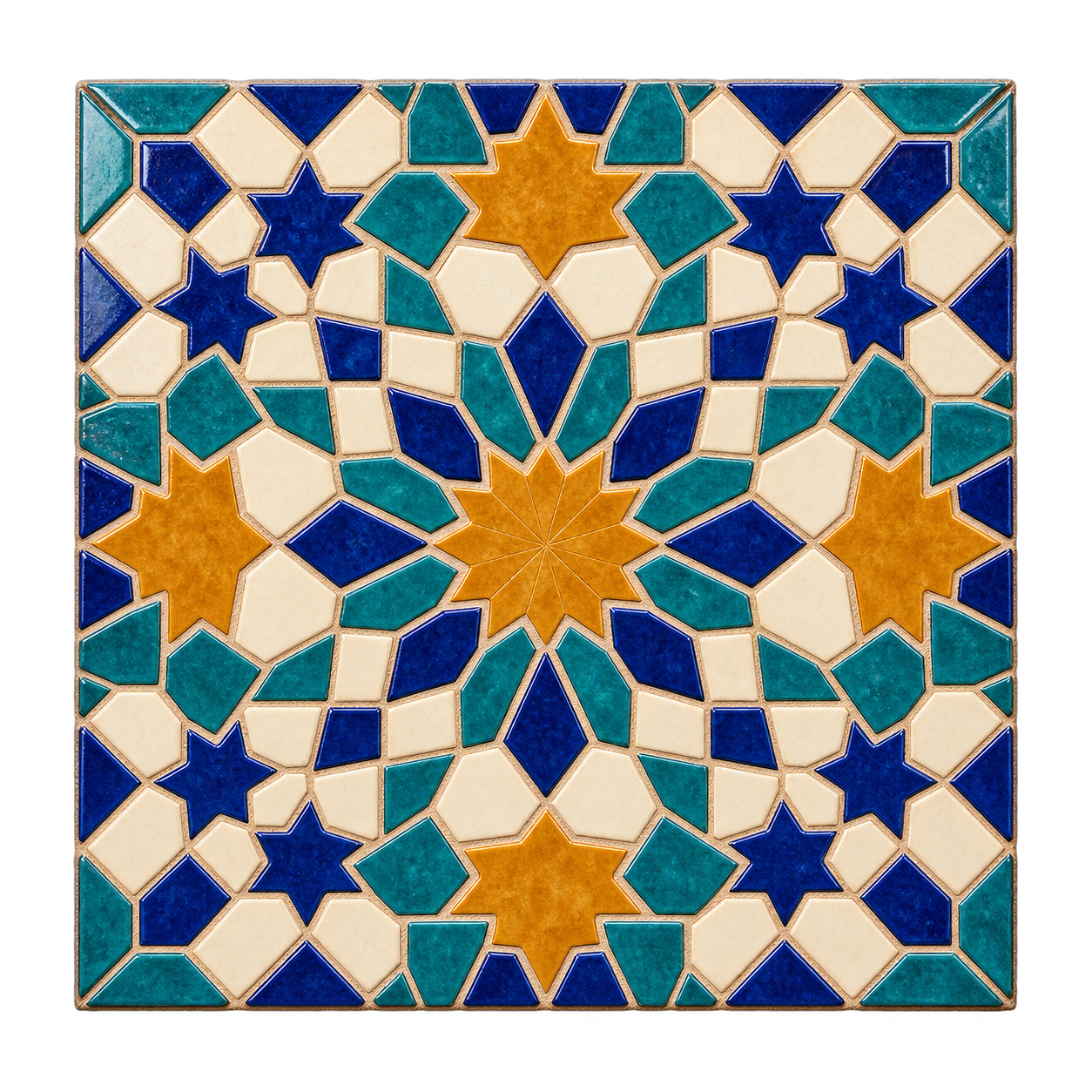
Zellige: stars assembled in pieces
A star invited polygons. Each found a place; joints made the geometry visible.
Checked fact. Zellige is mosaic decoration made from glazed ceramic pieces, particularly associated with Morocco.
It assembles shaped pieces rather than merely painting a whole square tile.
5. Azulejo: the drawing crosses a joint
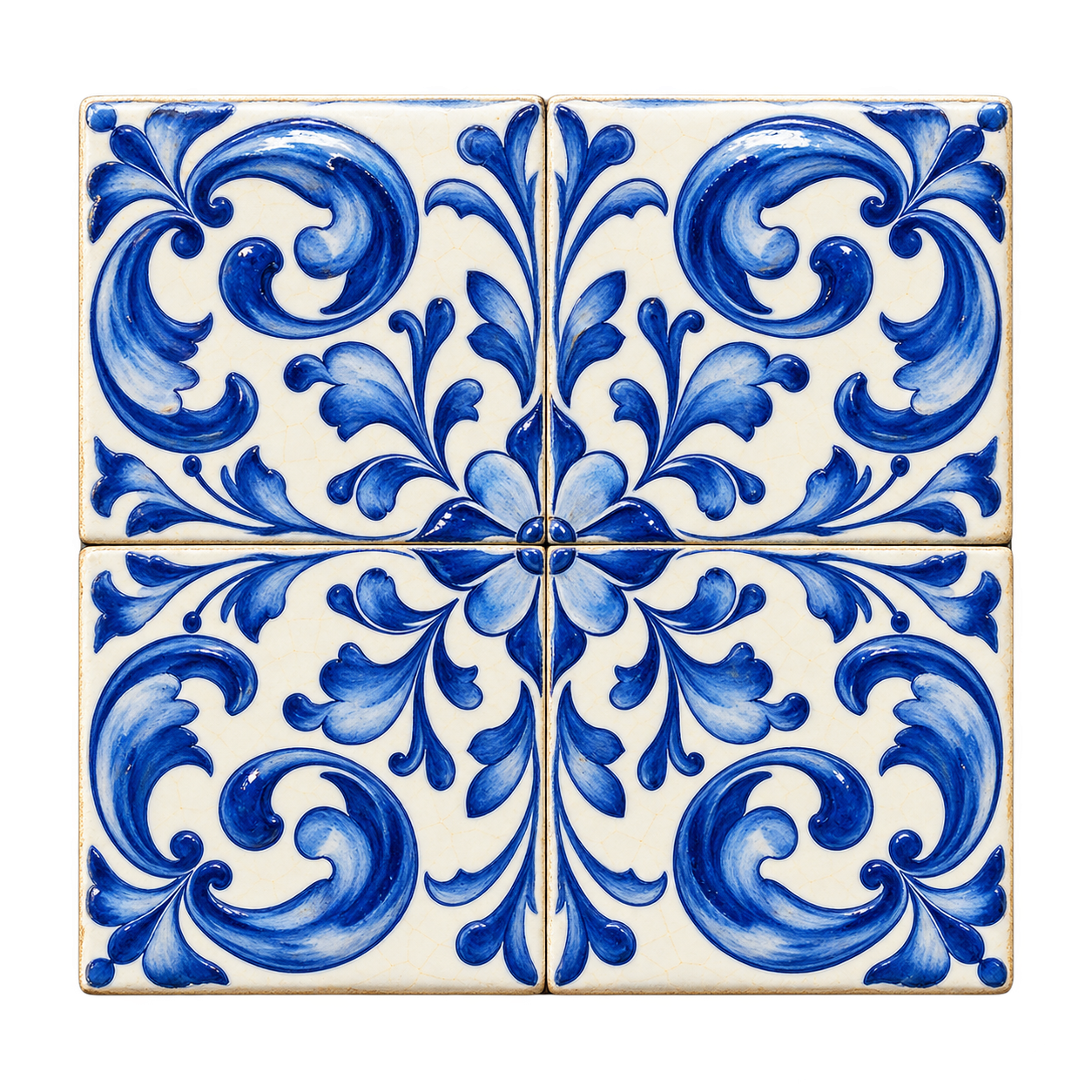
Azulejo: the drawing crosses a joint
Four tiles agreed on one drawing. The flower refused to stop at the first square’s edge.
Checked fact. Portuguese azulejos form coverings and panels; blue-and-white painting is familiar but not exclusive.
This is painted square tilework, distinct from small-tessera mosaic.
6. Trencadís: fragments find one wave
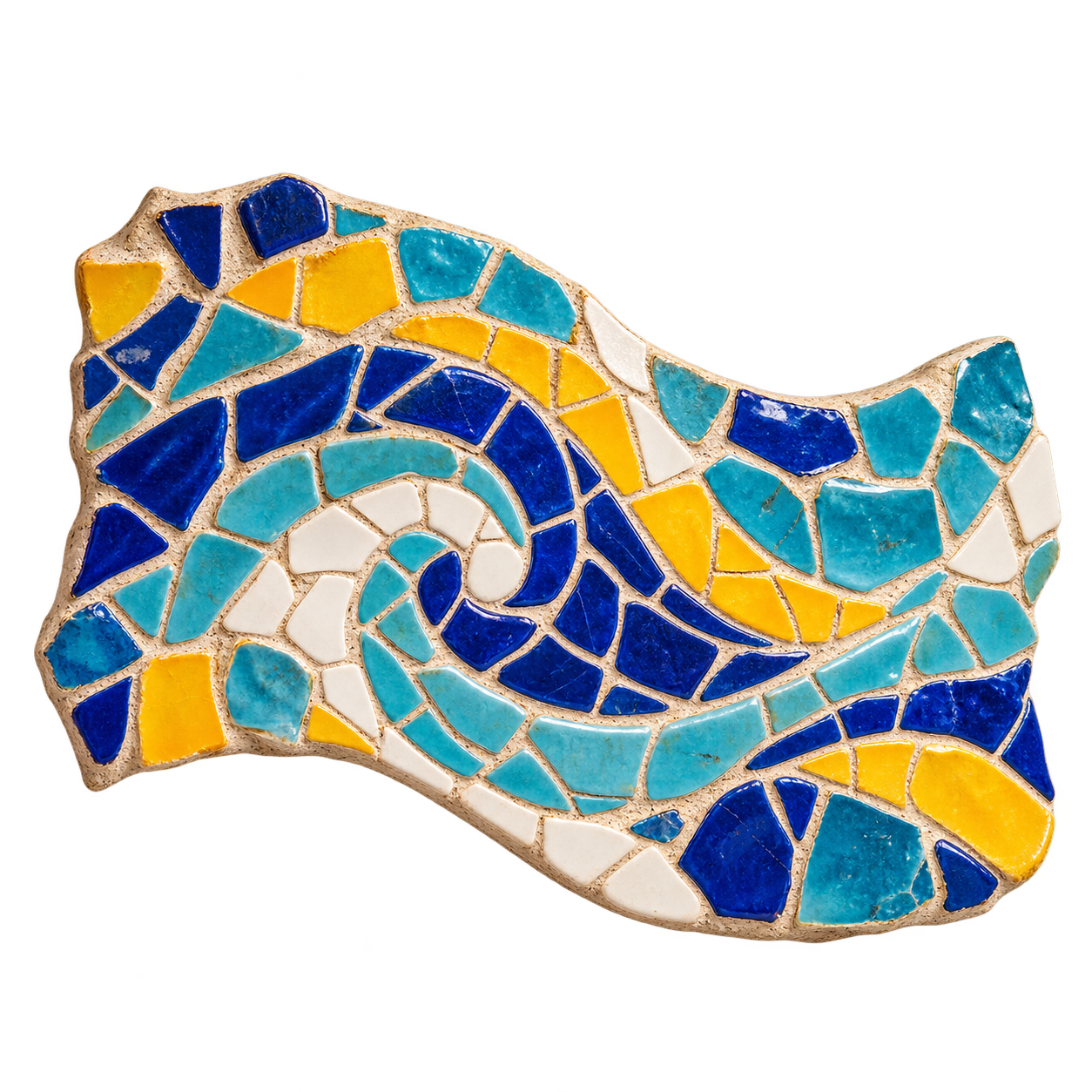
Trencadís: fragments find one wave
Irregular fragments decided shape was not lost. Together they followed a surface’s curve.
Checked fact. Trencadís uses ceramic fragments and is associated with Catalan Modernisme, including Gaudí’s architecture.
Our wave demonstrates assembly without reproducing a particular building surface.
7. Cosmatesque: stone draws circles
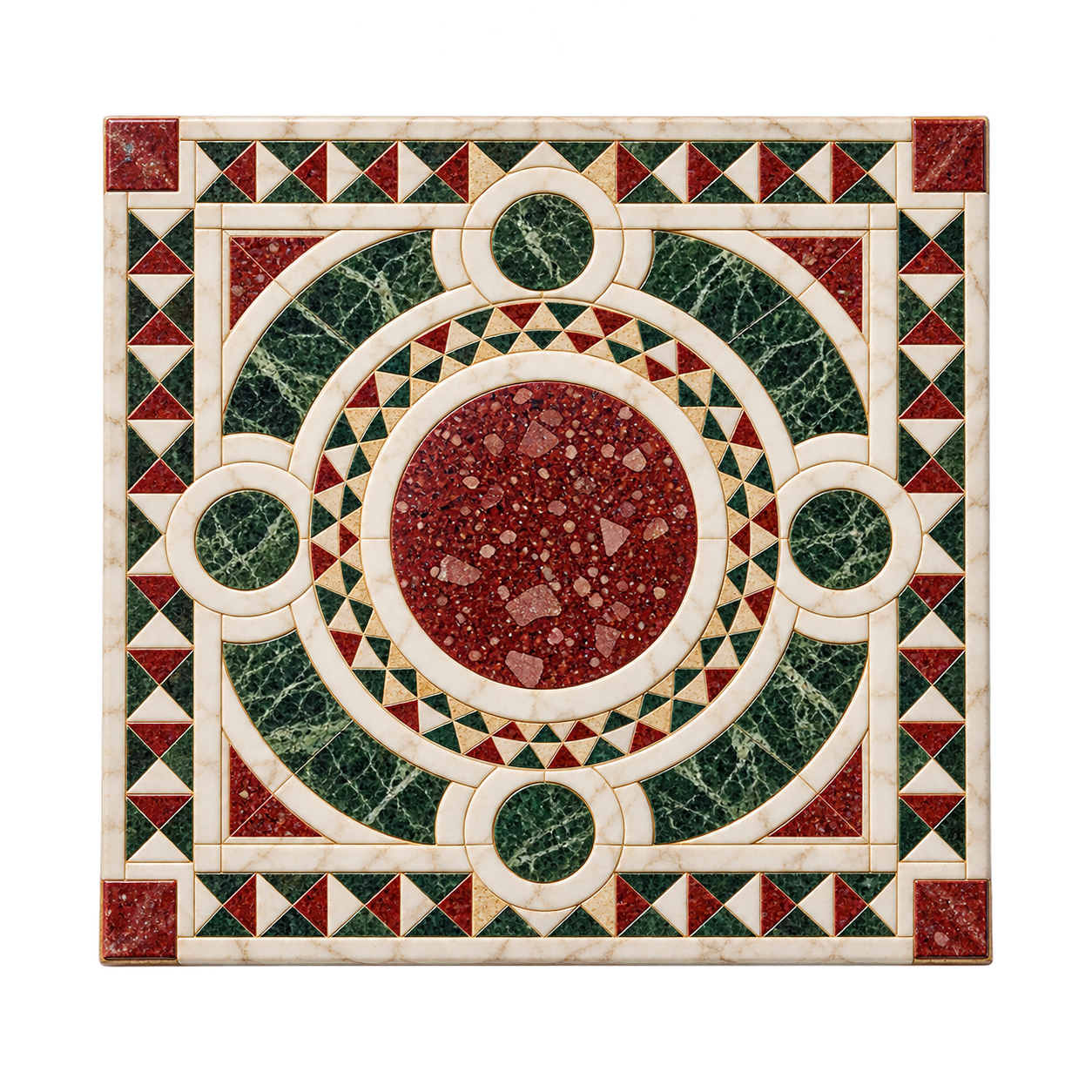
Cosmatesque: stone draws circles
Circles chose dark stone, ribbons pale marble. Tiny pieces accepted the most patient work.
Checked fact. Cosmatesque work combines coloured stone pieces geometrically; Westminster Abbey preserves a famous example.
We show a new sample inspired by the technique, not the Abbey’s floor.
8. Pietre dure: flowers in coloured stone
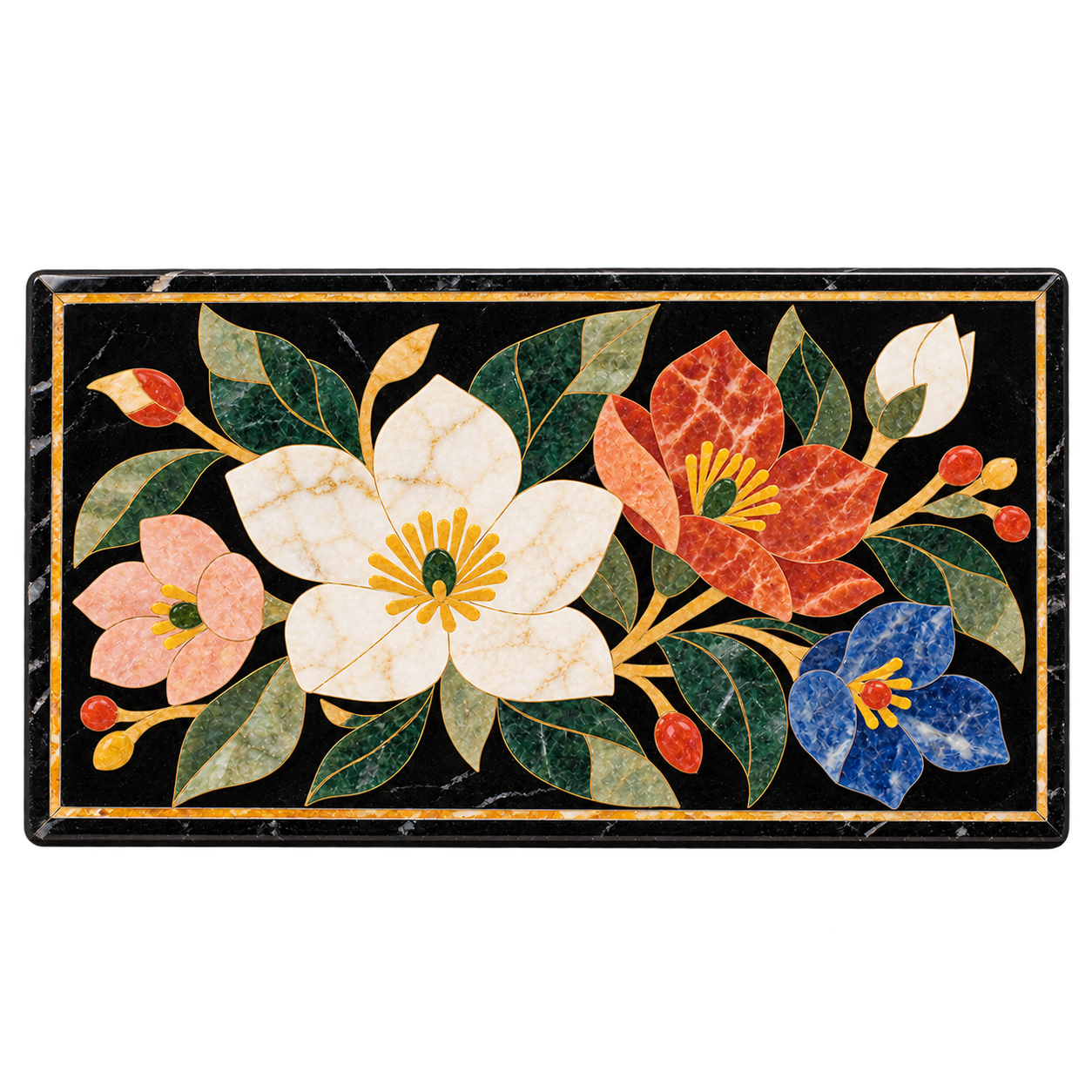
Pietre dure: flowers in coloured stone
Stone declined painted leaves. Cut to shape, its natural veins entered the image.
Checked fact. Pietre dure assembles precisely cut coloured stones into an image or pattern, then polishes the surface.
This is stone inlay, not stone painting or equal-sized cubes.
9. Opus sectile: larger pieces know the outline
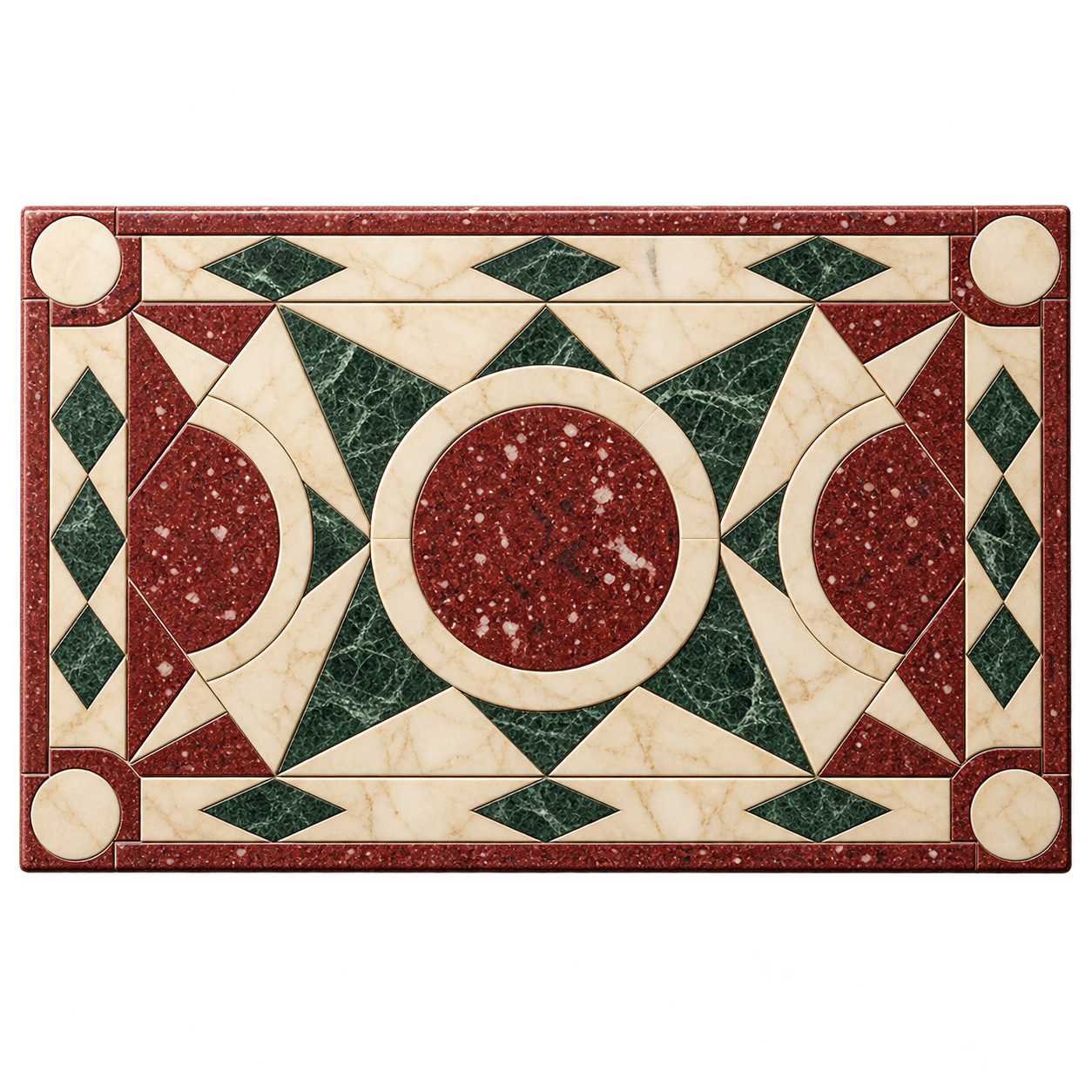
Opus sectile: larger pieces know the outline
Stone slabs asked to remain larger than cubes. Cut edges gave them whole sections of the design.
Checked fact. Opus sectile uses shaped cut pieces of stone or other materials, unlike small-tessera mosaic.
Cosmatesque work is related: these categories overlap rather than exclude each other.
10. Iznik: flowers cross the tile grid
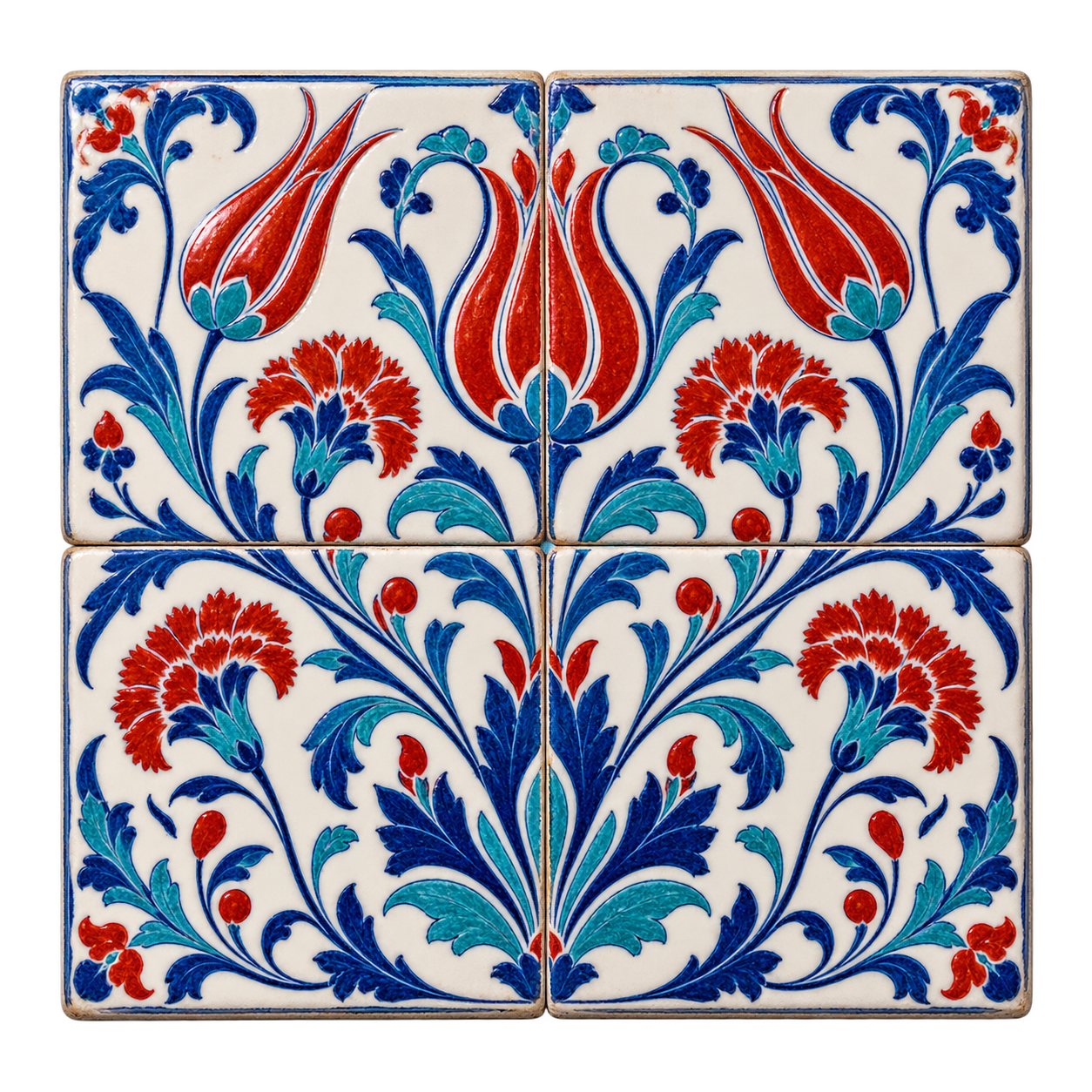
Iznik: flowers cross the tile grid
Tulips stretched their petals; carnations spread their fringes. Square joints could not divide the composition.
Checked fact. Ottoman Iznik ceramics include painted tiles with plant motifs, including tulips and carnations.
Like azulejo, it is painted tilework, included to compare with mosaic assembly.
Each has its own character
Look closely: where are the joints, what provides colour, and where does the shine come from? These questions reveal the material behind the pattern.