
A diamond is only the beginning. Hexagons, swallows, crescents, dragons and giant paper circles meet the wind in ten craft traditions.
These are original illustrations of kite types, not photographs of particular museum objects. Ornament is interpreted; facts have sources and vignettes are fictional. Illustrated scale is schematic.
1. Rokkaku: six corners for the wind
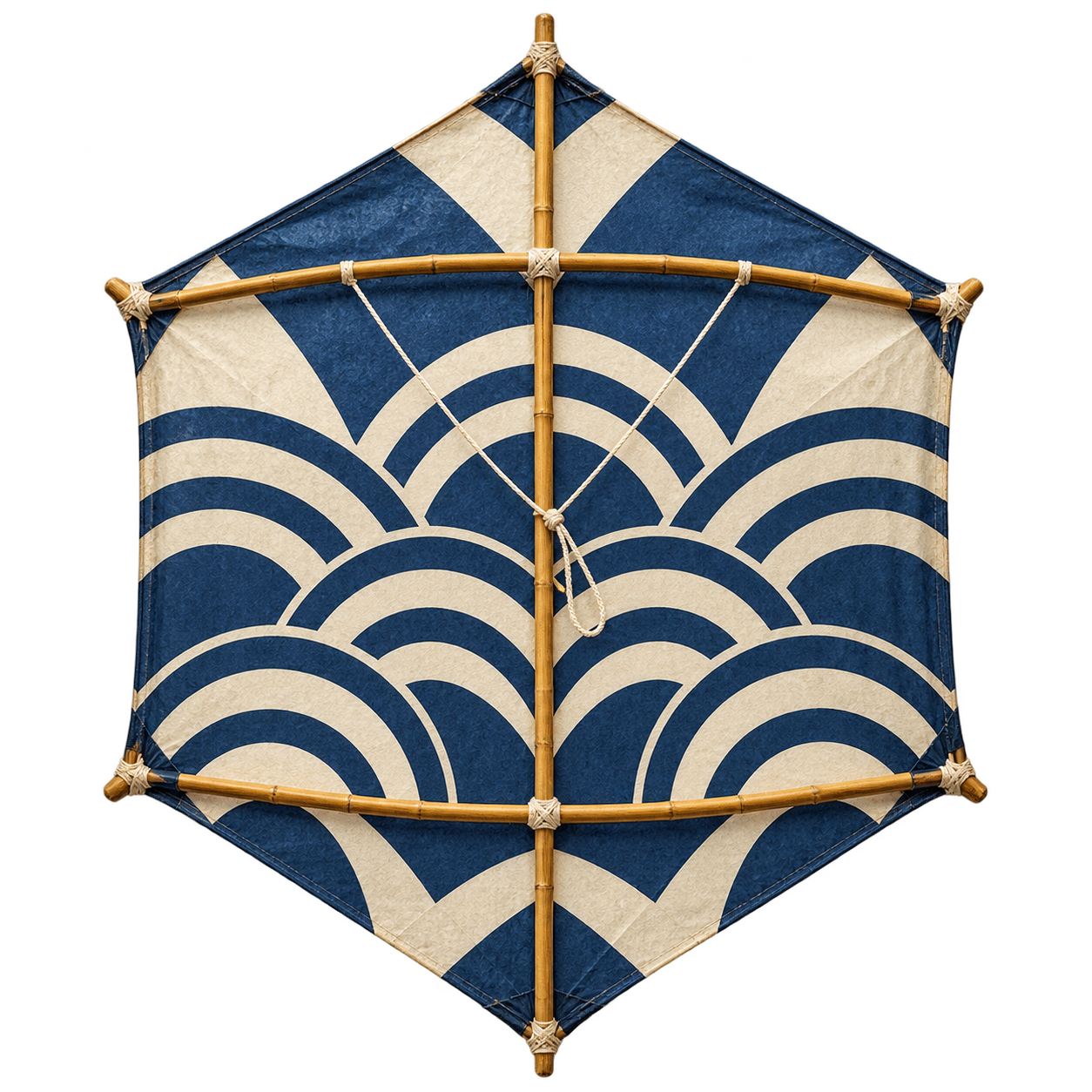
Rokkaku: six corners for the wind
The diamond was not the only option. Rokkaku added corners and introduced the wind to a hexagon.
Checked fact. Japanese rokkaku is a six-sided single-line kite with a bowed frame.
The ornament is ours; the six corners belong to the structure.
2. Edo-dako: a picture gets a frame
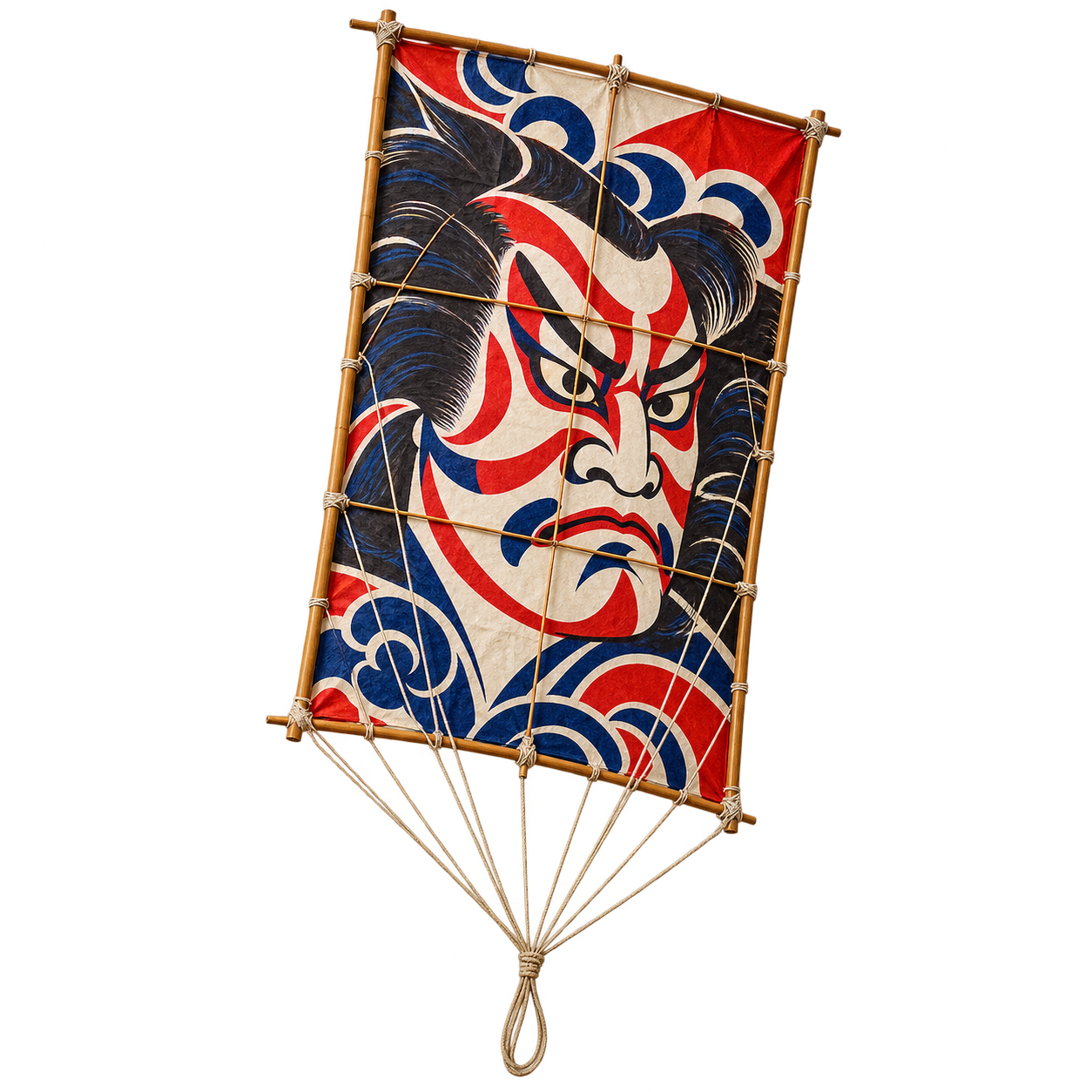
Edo-dako: a picture gets a frame
The rectangular picture chose the sky over a wall. Bamboo agreed to hold its shape.
Checked fact. Traditional Edo kites have rectangular bamboo frames covered with decorated washi paper.
Our face design is an interpretation, not a copy of a particular actor’s portrait.
3. Bangpae yeon: a hole becomes part of the form
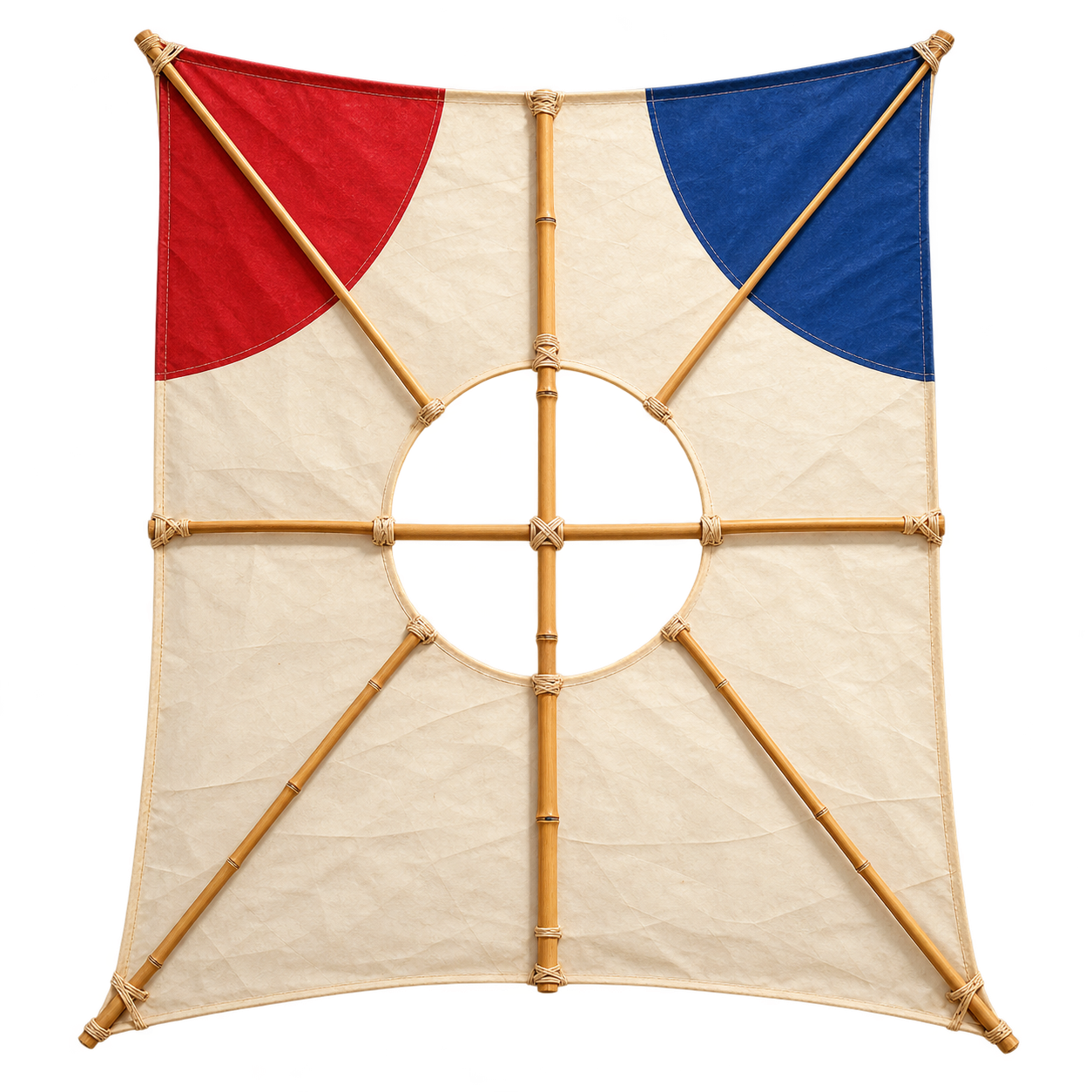
Bangpae yeon: a hole becomes part of the form
The paper arrived with a central hole. It was a design feature, not damage.
Checked fact. The Korean shield kite has a characteristic central hole, documented in museum collections.
Our drawing shows an actual opening rather than a painted black circle.
4. Chinese swallow: paper wings
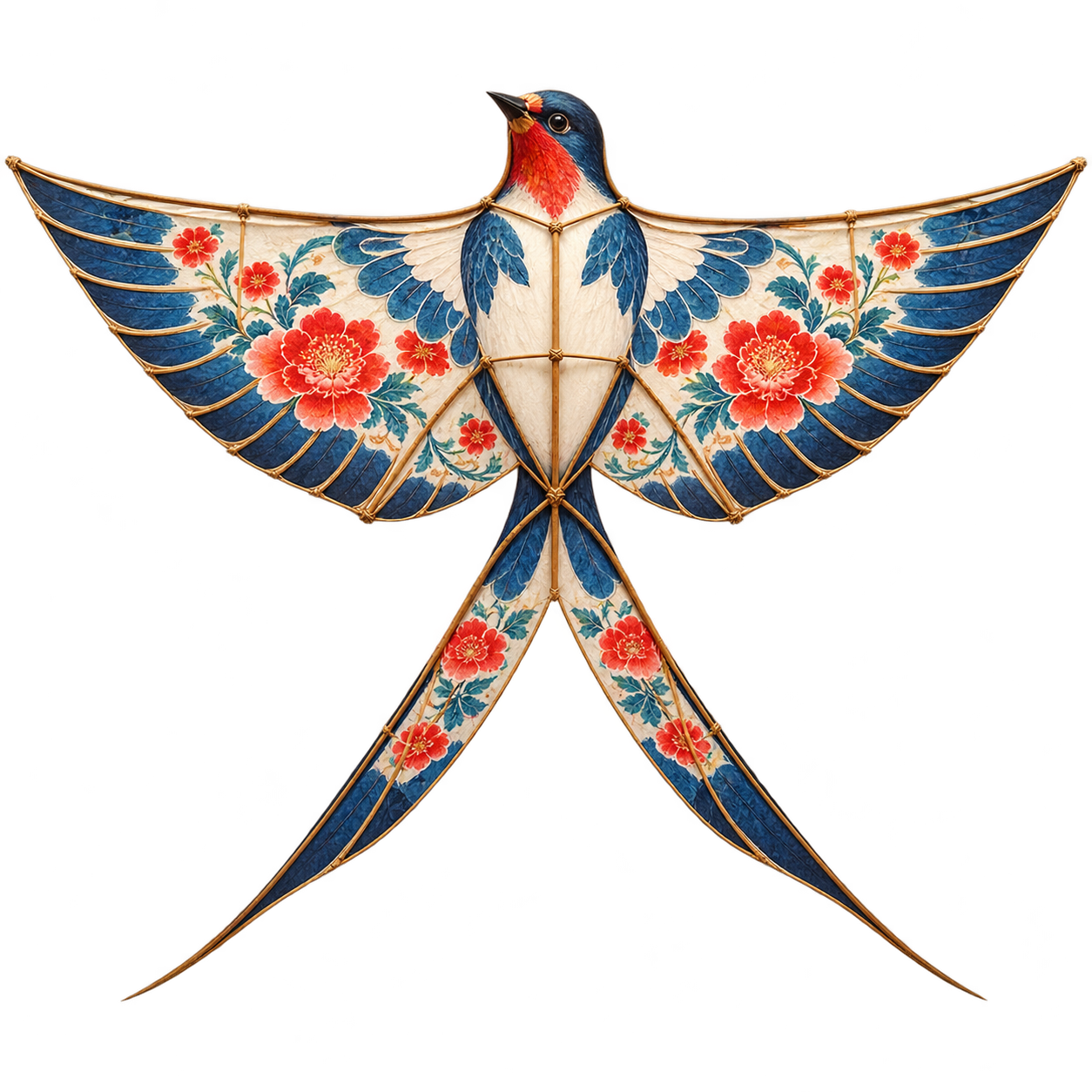
Chinese swallow: paper wings
The swallow left feathers to birds. It chose paper, bamboo and a forked tail.
Checked fact. The swallow is a familiar Weifang kite form, with decoration linked to local artistic traditions.
This is bird-shaped, not a rectangle bearing a bird picture.
5. Dragon-centipede: a body in sections
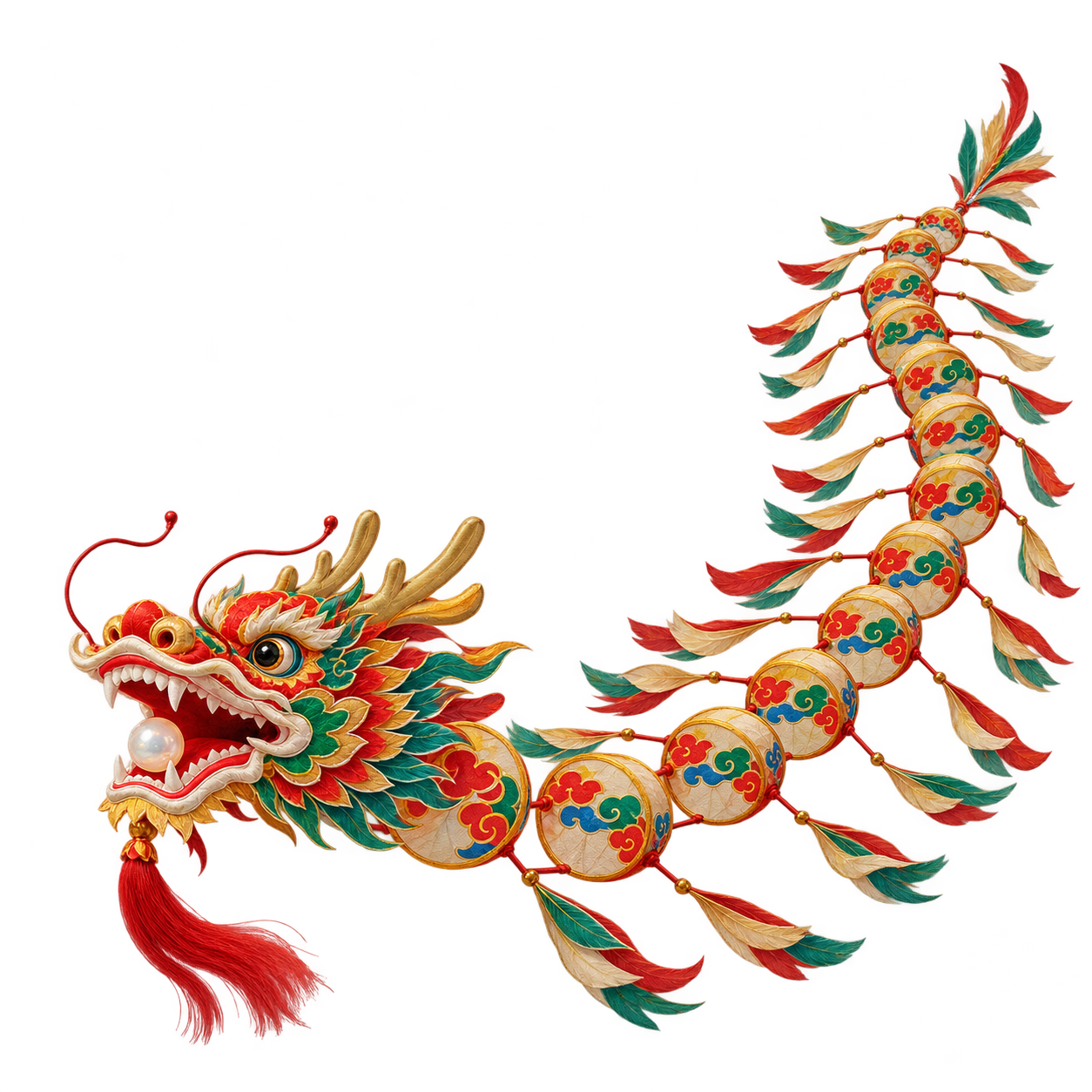
Dragon-centipede: a body in sections
The dragon head called a procession behind it. Each disc became a section of the long body.
Checked fact. Weifang dragon-centipede kites combine a dimensional head with a succession of body discs.
Lengths and disc counts vary; our illustration makes no size-record claim.
6. Wau bulan: a crescent holds the pattern
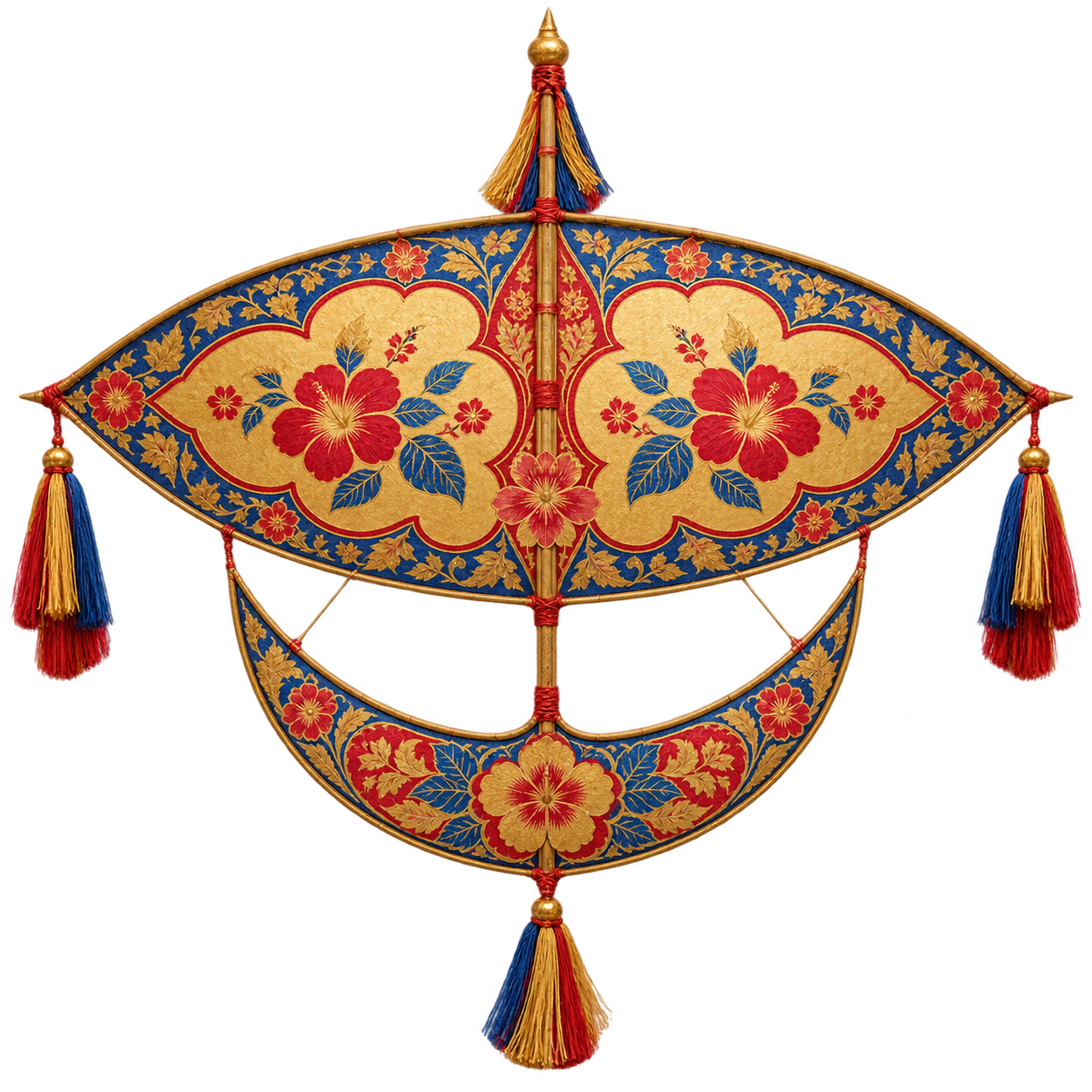
Wau bulan: a crescent holds the pattern
The kite tried broad wings and a crescent below. Floral ornament filled the shape without replacing it.
Checked fact. Malaysian wau bulan is associated with Kelantan and a crescent-shaped lower section.
Not every richly decorated Malaysian kite belongs to this particular type.
7. Janggan: the tail continues the story
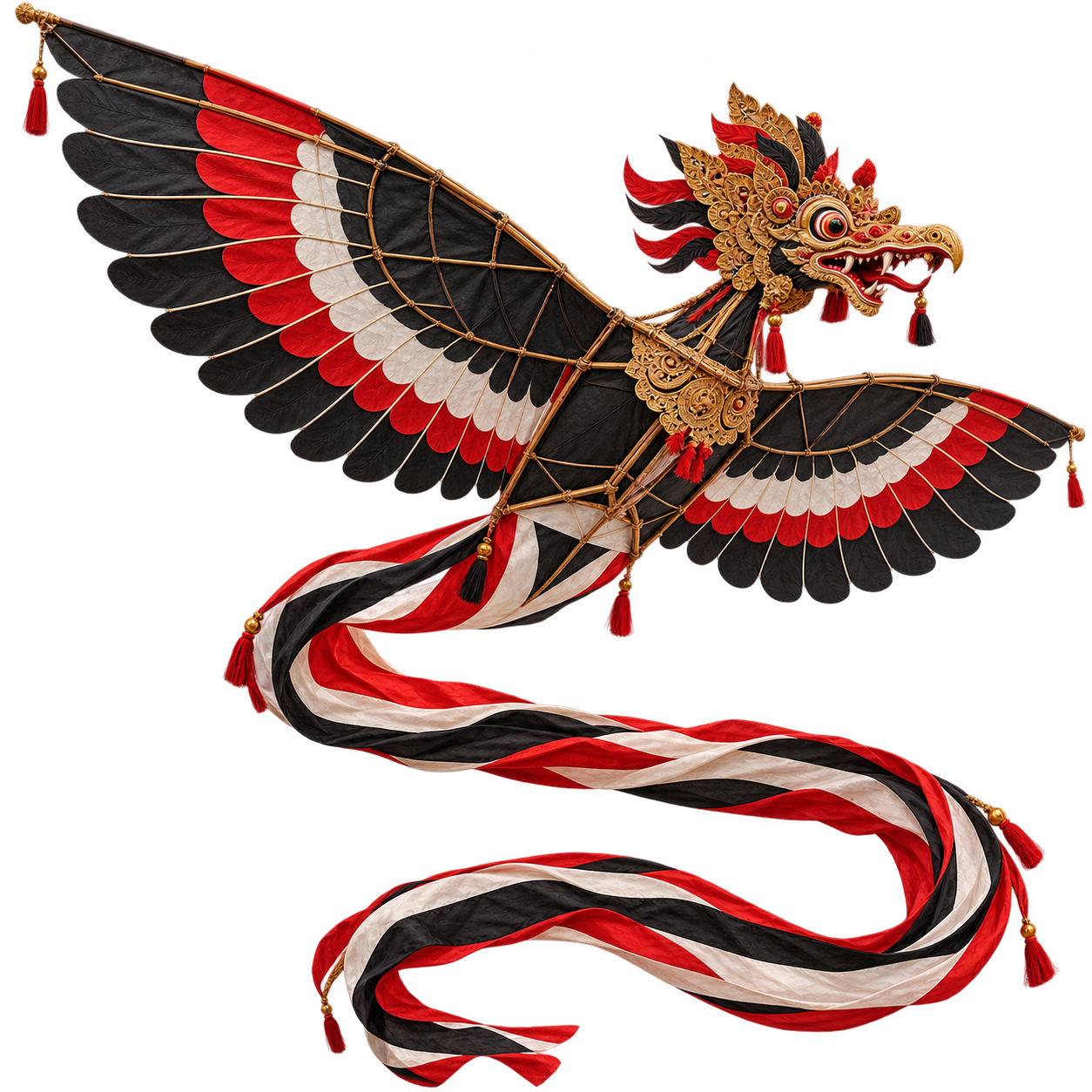
Janggan: the tail continues the story
The wings ended, but the tail kept unrolling its ribbon. This kite preferred long stories.
Checked fact. Balinese janggan is a traditional long-tailed kite with an expressive head, part of local kite-flying culture.
The tail is curved illustratively to fit the complete object in the card.
8. Patang: a light diamond with character
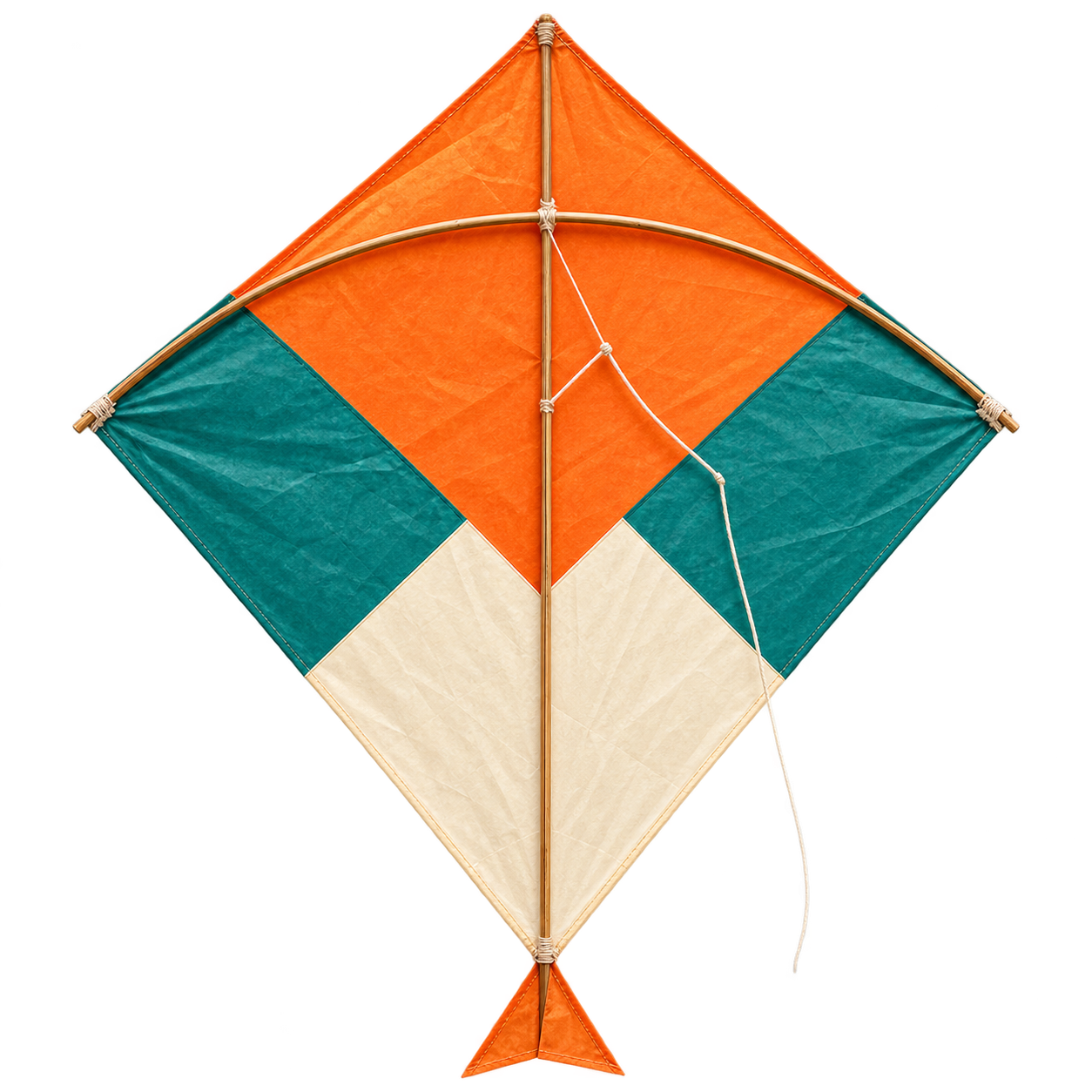
Patang: a light diamond with character
Thin paper stretched over a frame. A few simple lines prepared the kite to meet the wind.
Checked fact. Indian patang belongs to kite-flying traditions, prominently Gujarat’s Uttarayan celebrations.
We show a paper diamond, not instructions for kite fighting.
9. Barrilete: a paper circle gathers people
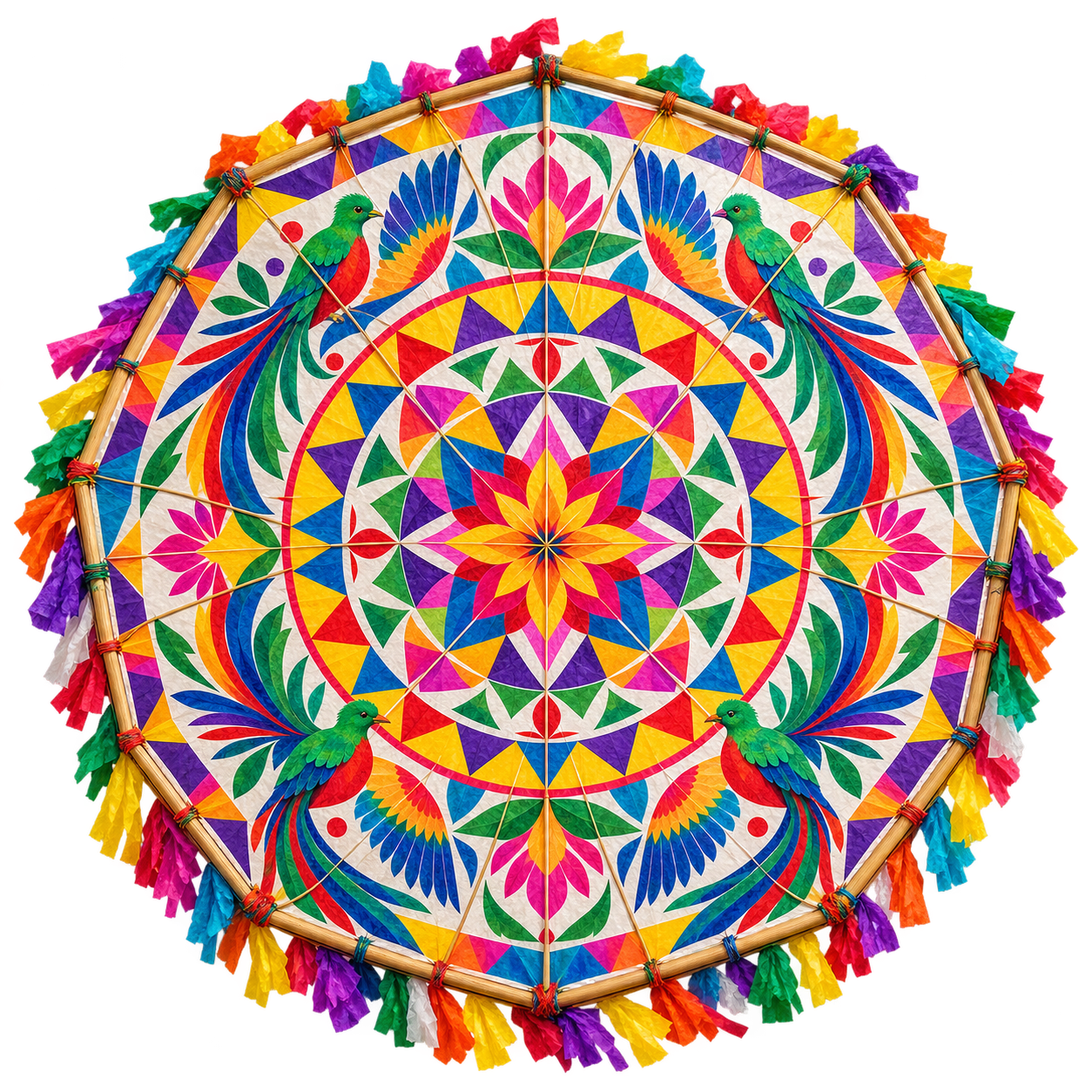
Barrilete: a paper circle gathers people
One person imagined a line; another added colour. The large circle became a story of working together.
Checked fact. Guatemala’s Santiago Sacatepéquez and Sumpango giant kites use multicoloured tissue paper and structural frames.
The small drawing interprets construction and ornament, not the actual festival scale.
10. Manu tukutuku: a bird of plant fibres
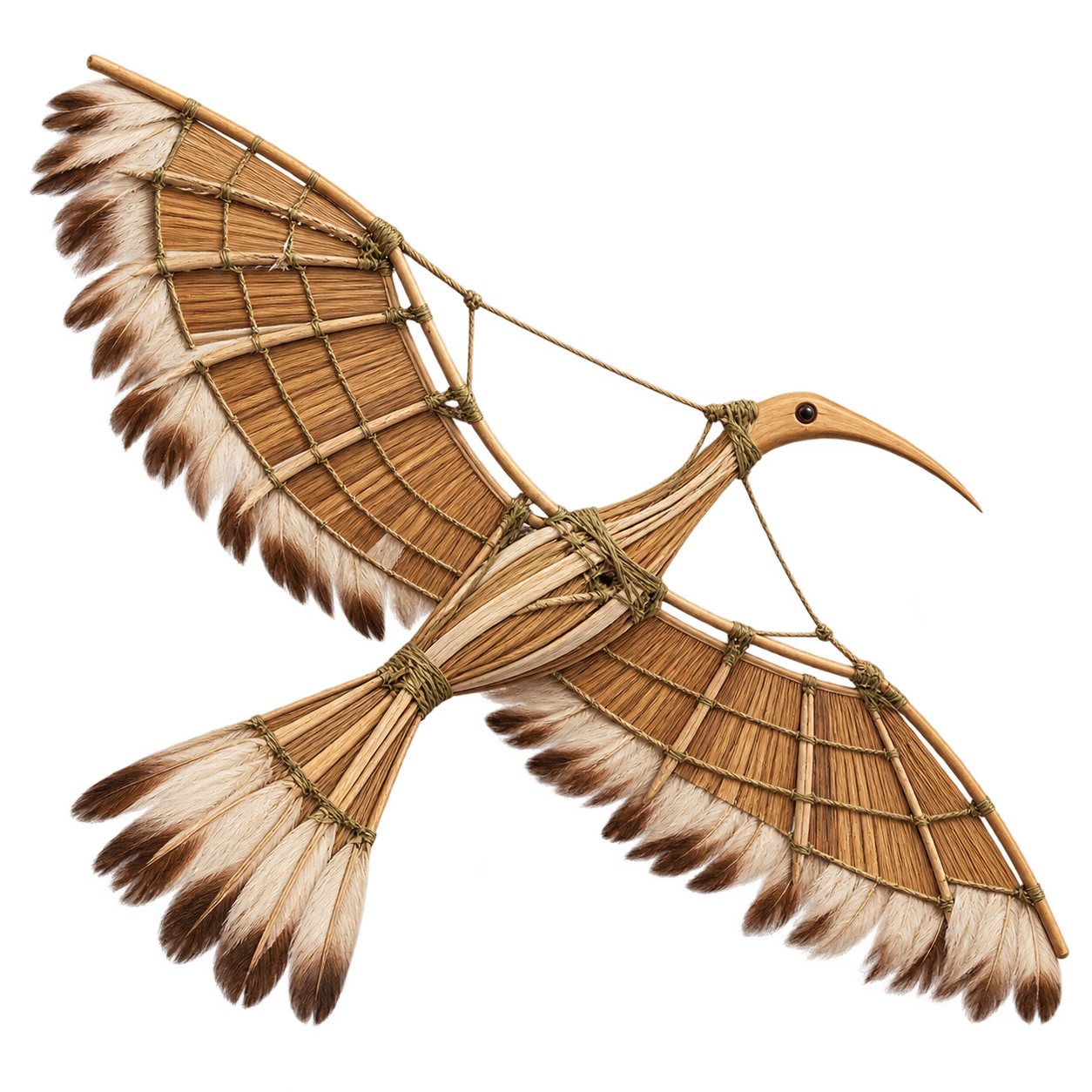
Manu tukutuku: a bird of plant fibres
Plant fibres met a light frame. The bird silhouette showed that a route skywards can be handmade.
Checked fact. Manu tukutuku are Māori kites; museum examples and reconstructions demonstrate local plant materials.
Our drawing interprets a bird form rather than copying a specific sacred object.
Each has its own character
A beautiful kite is also a structure. Frame, covering, bridle and tail work together beyond the decoration.