
The same beans can take very different paths to the cup. Explore immersion, filtration, pressure and equipment without crowning one correct method.
These are ten examples, not a ranking. Conversations between objects are editorial fiction; facts have sources. Illustrations show particular versions, which can differ from other examples.
1. Cezve: small pot, long handle
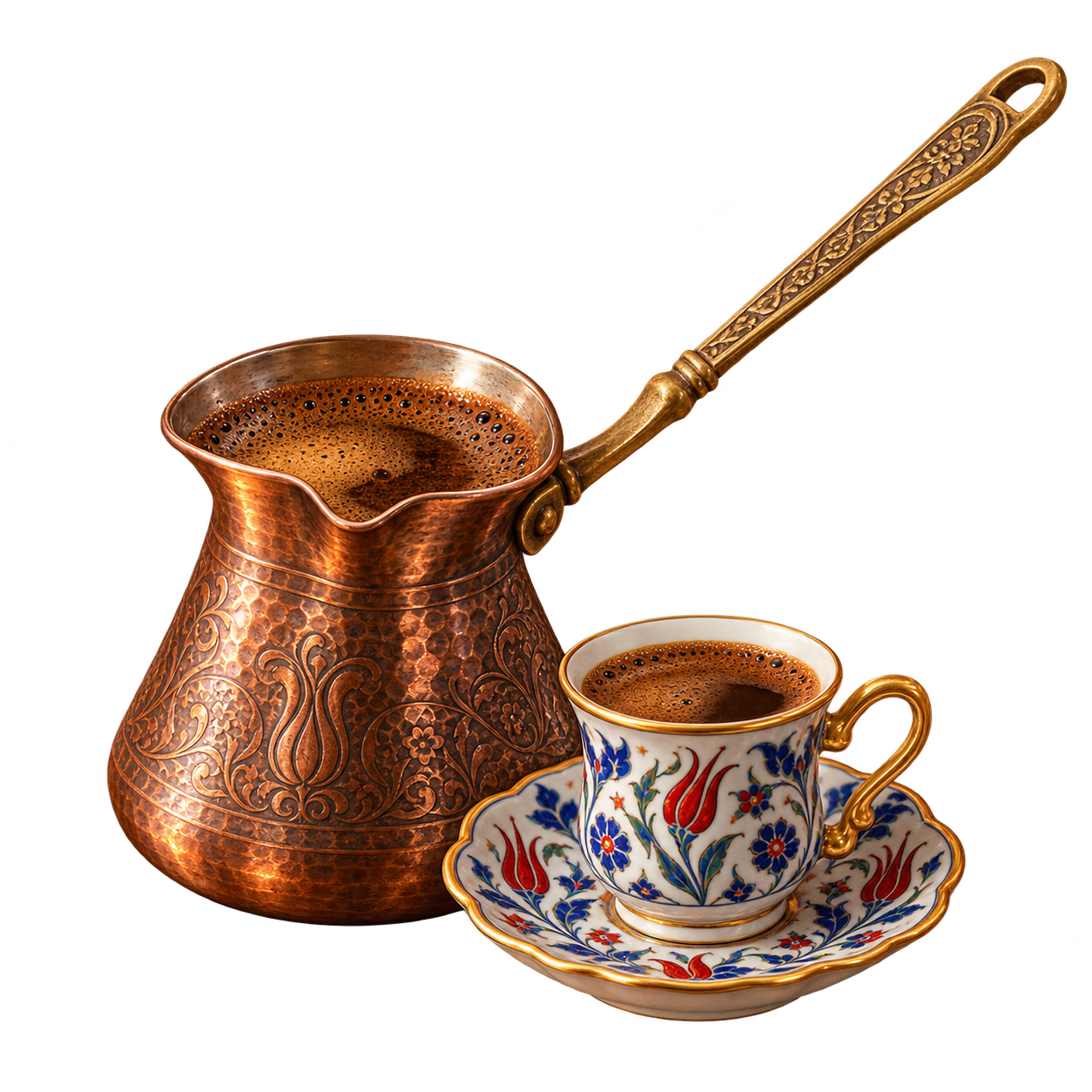
Cezve: small pot, long handle
Coffee settled directly in water. No paper filter was invited, leaving the cup a rich story.
Checked fact. Turkish-style coffee heats very finely ground coffee with water in a pot, without paper filtration.
Sediment distinguishes it from filtered coffee; this is no miniature espresso machine.
2. Moka pot: water travels upwards
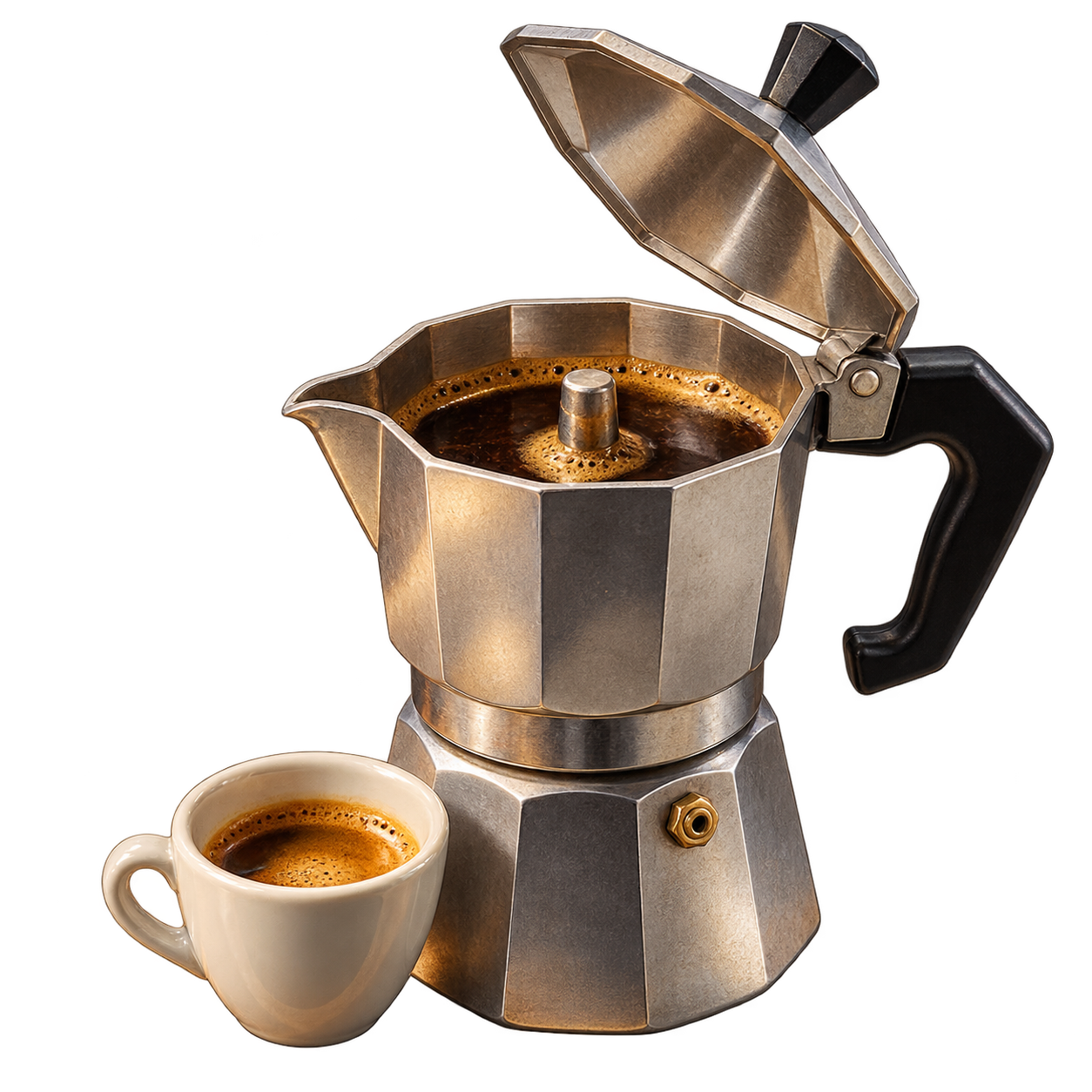
Moka pot: water travels upwards
Water started downstairs. Coffee met it halfway; the finished drink settled upstairs.
Checked fact. Heating a moka pot creates pressure that pushes water through grounds into its upper chamber.
It is a distinct brewing method, despite comparisons with espresso.
3. French press: meet first, separate later
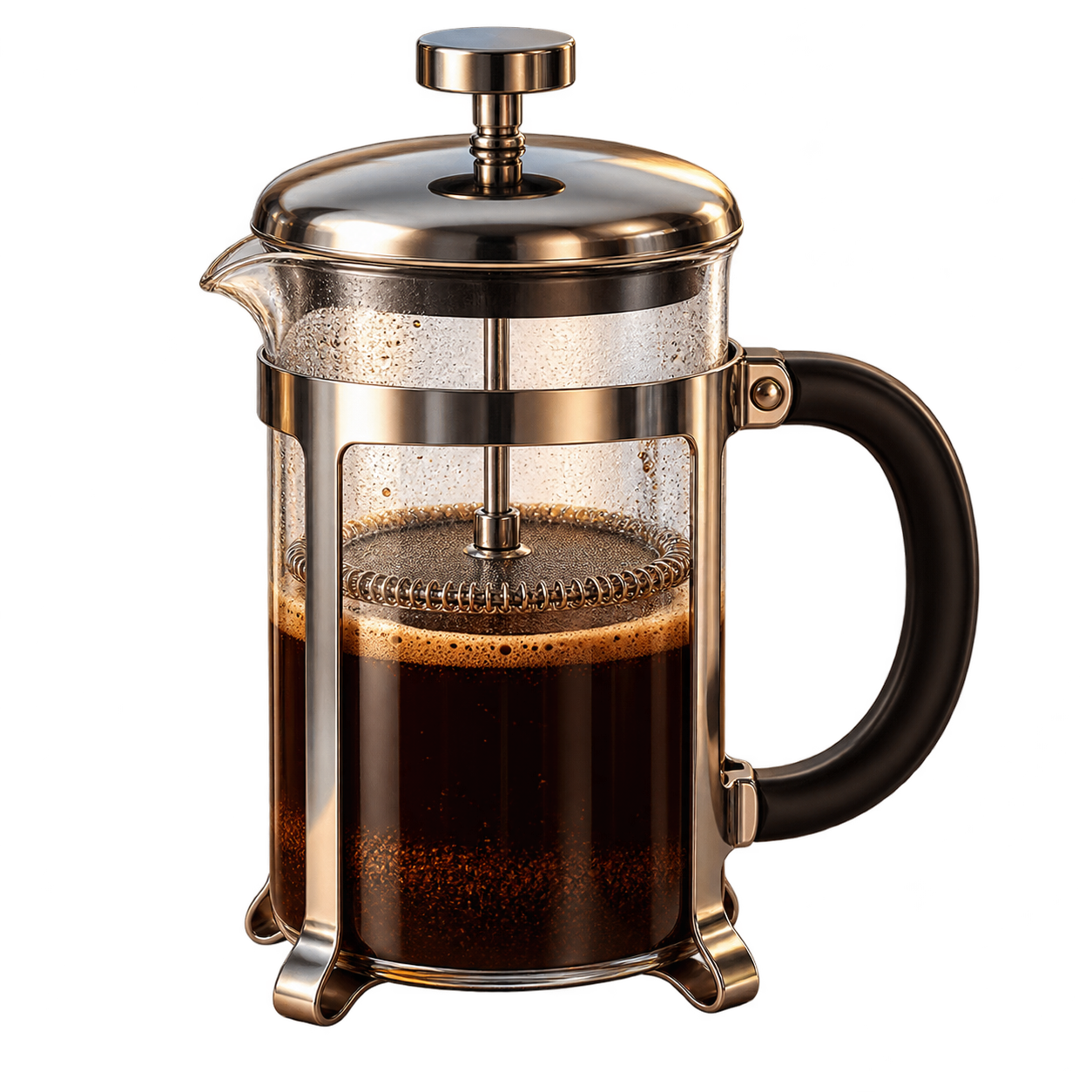
French press: meet first, separate later
Coffee spent time in water. The plunger arrived later to separate the drink from the grounds.
Checked fact. A French press uses immersion; its mesh plunger retains much of the grounds when pouring.
Metal mesh and paper filter differently, even with the same beans.
4. Chemex: a coffee hourglass
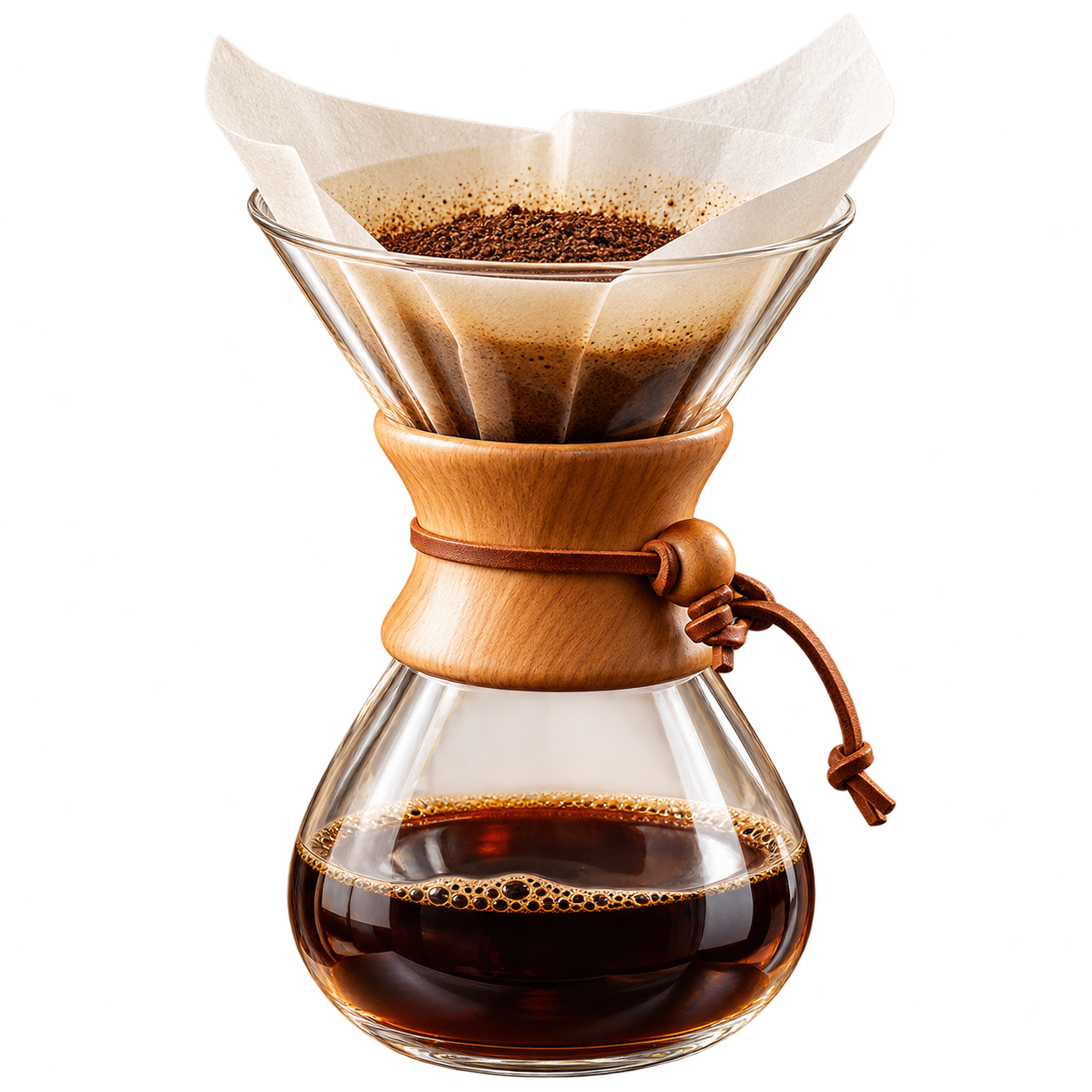
Chemex: a coffee hourglass
Glass dressed as an hourglass. Coffee travelled down instead of sand, leaving the grounds above.
Checked fact. Chemex combines vessel and funnel; coffee passes through a paper filter into the lower section.
The wooden collar helps hold the glass vessel and defines its familiar shape.
5. V60 pour-over: the stream matters
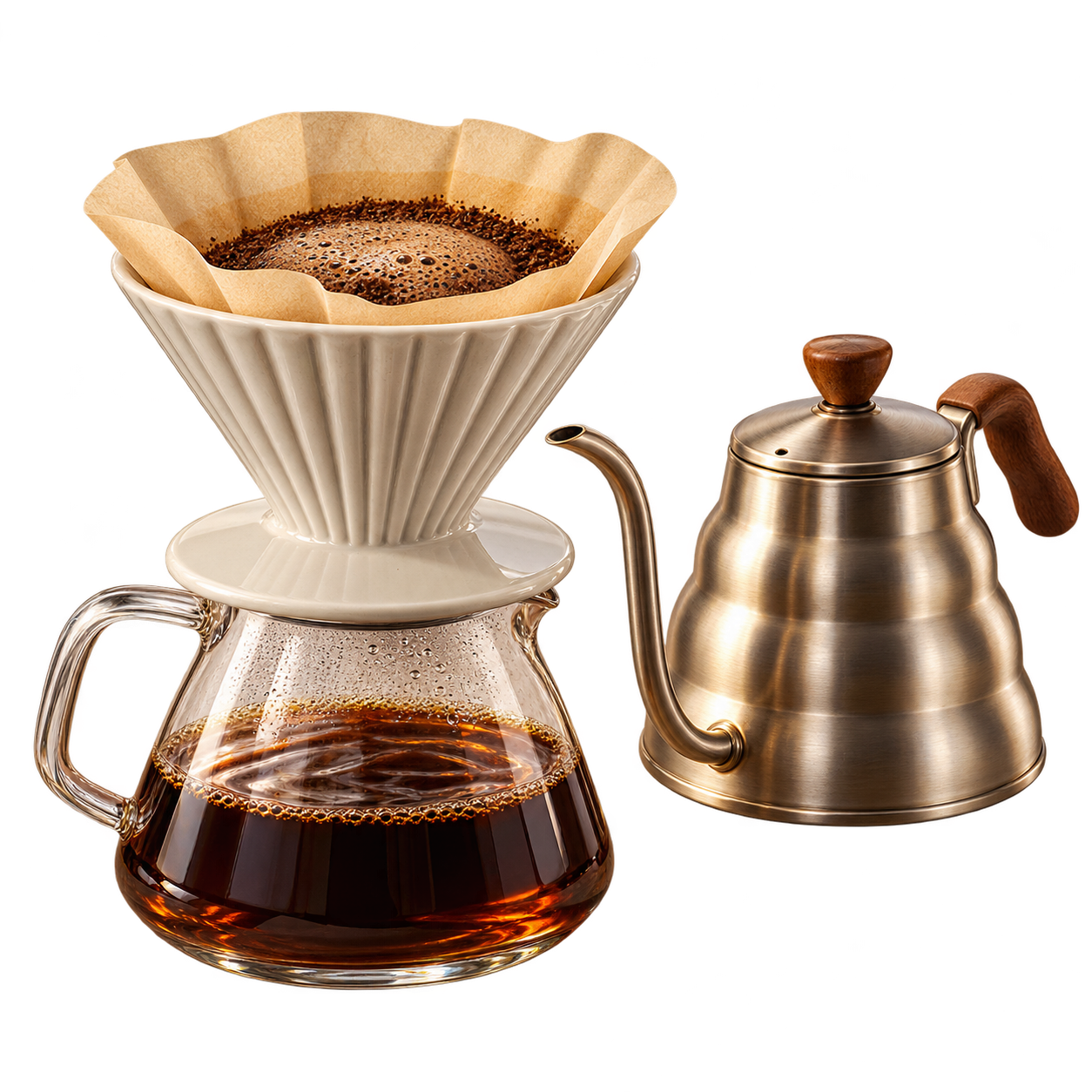
V60 pour-over: the stream matters
The cone chose spiral paths. Water entered above while the cup waited for the journey’s result.
Checked fact. V60 is a ribbed cone with a bottom opening; pouring rate helps determine flow.
We show manual pouring through paper, not a capsule machine.
6. AeroPress: the plunger takes over
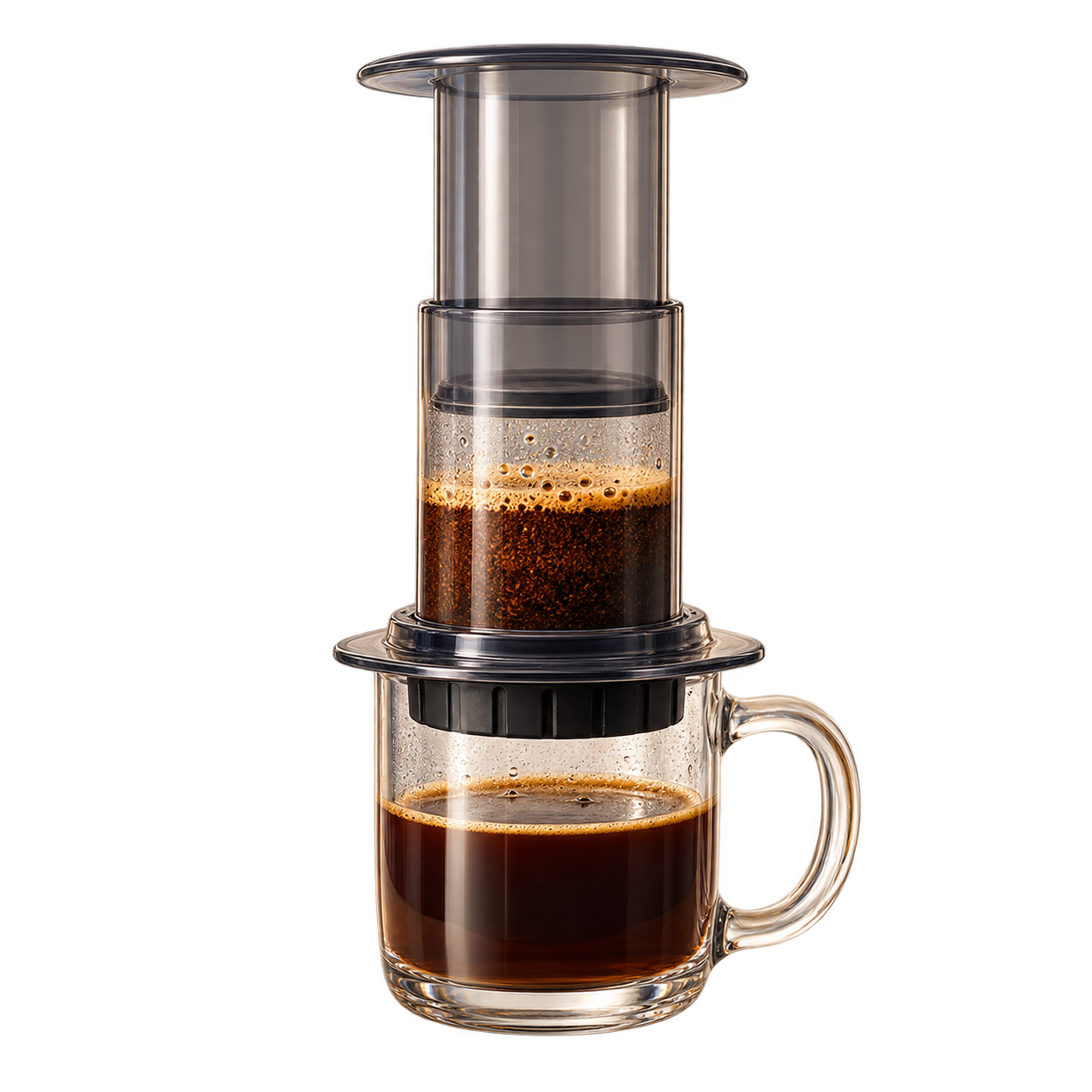
AeroPress: the plunger takes over
The cylinder was small but efficient. Its plunger helped coffee cross the filter into the cup.
Checked fact. AeroPress combines contact between water and coffee with manual plunging through a filter.
The illustration shows the regular upright position on a cup.
7. Siphon: a coffee laboratory
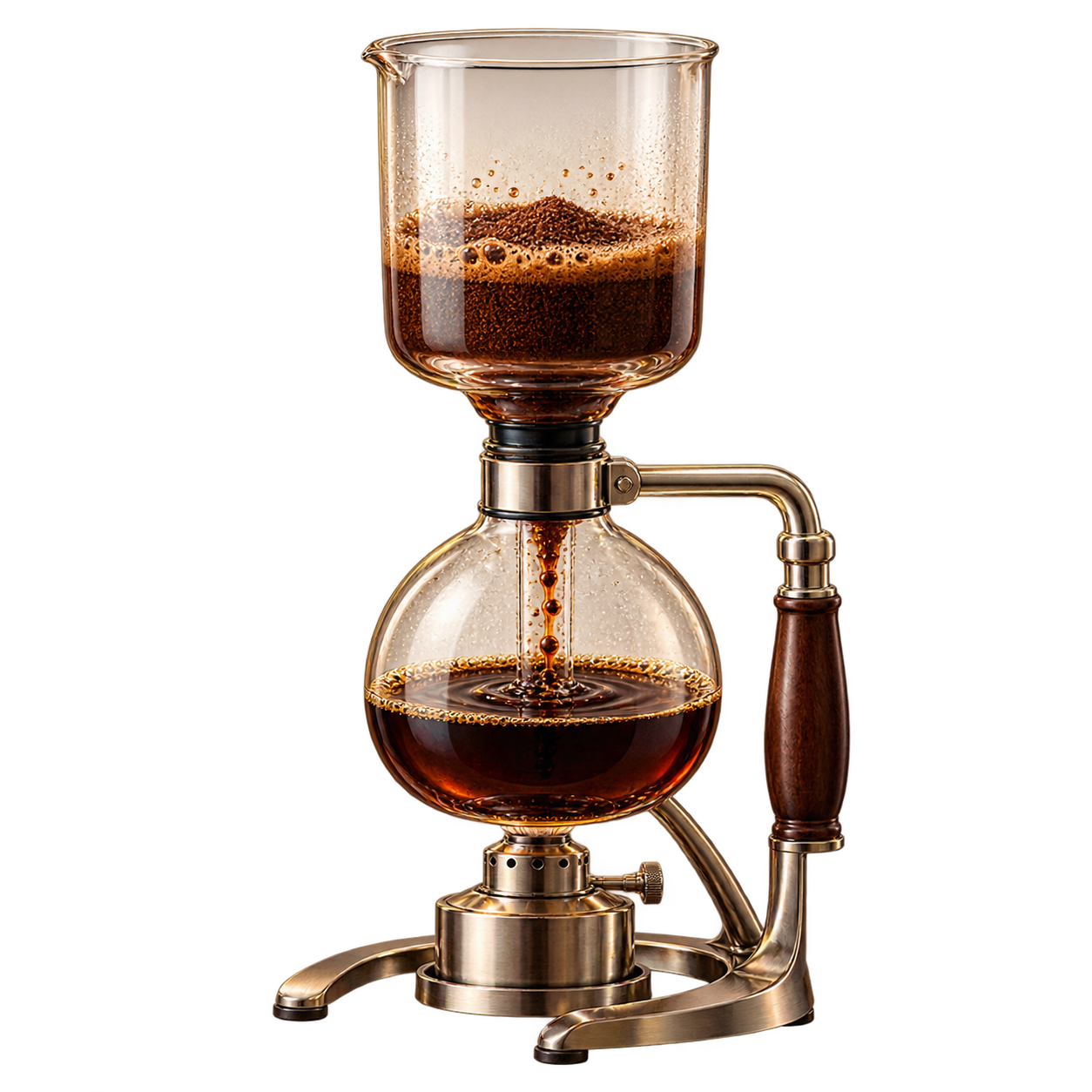
Siphon: a coffee laboratory
Two chambers exchanged floors. Water first rose to coffee, then the drink returned downstairs.
Checked fact. In a coffee siphon, heating and cooling change pressure, moving water and coffee between vessels.
A filter separates grounds as coffee returns; the glassware has a working purpose.
8. Espresso: a short meeting under pressure
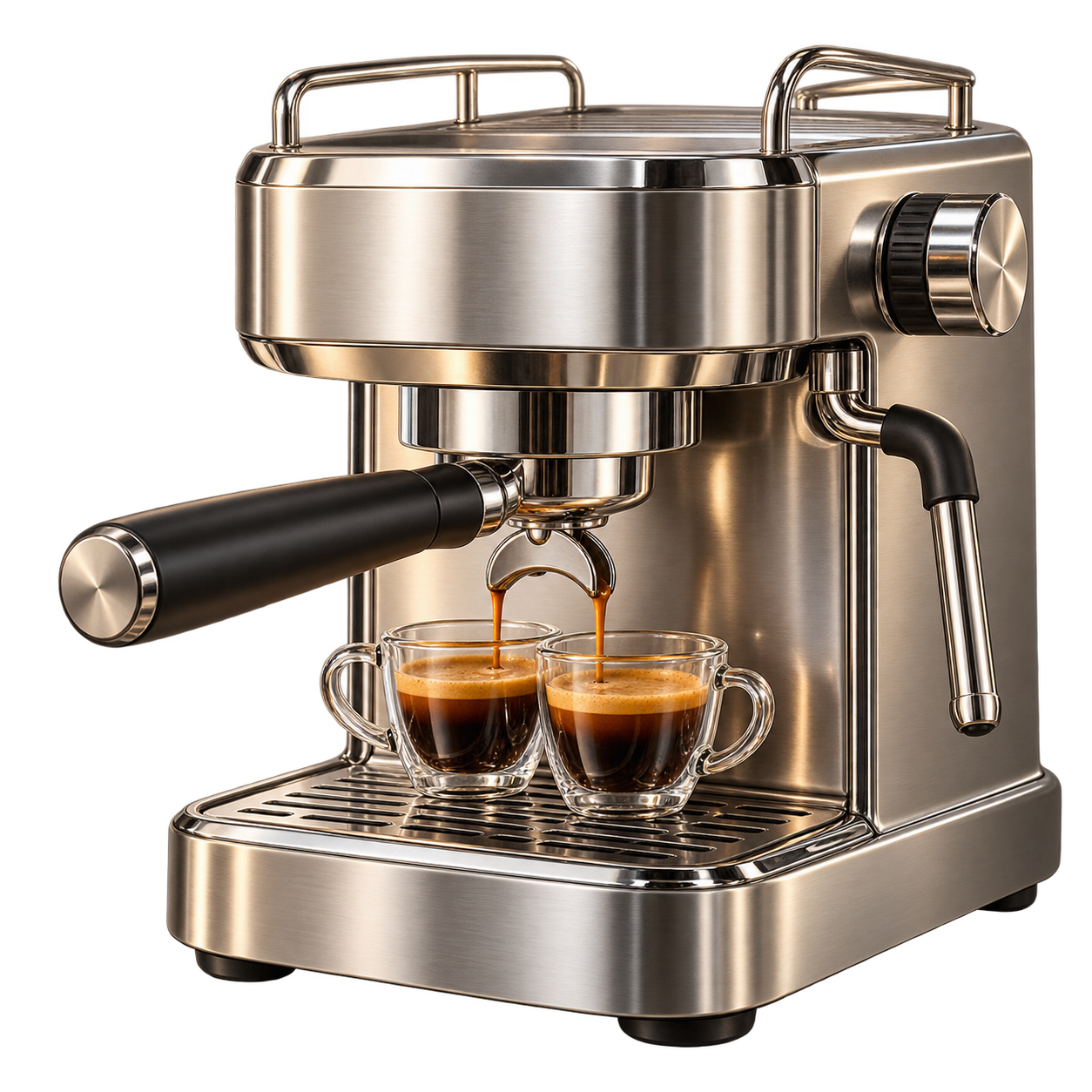
Espresso: a short meeting under pressure
Coffee formed a compact bed. Water passed under pressure; the cup needed only a small volume.
Checked fact. Espresso passes hot water under pressure through a bed of finely ground coffee.
Crema is distinctive but does not by itself rate the entire flavour.
9. Cold brew: time instead of heat
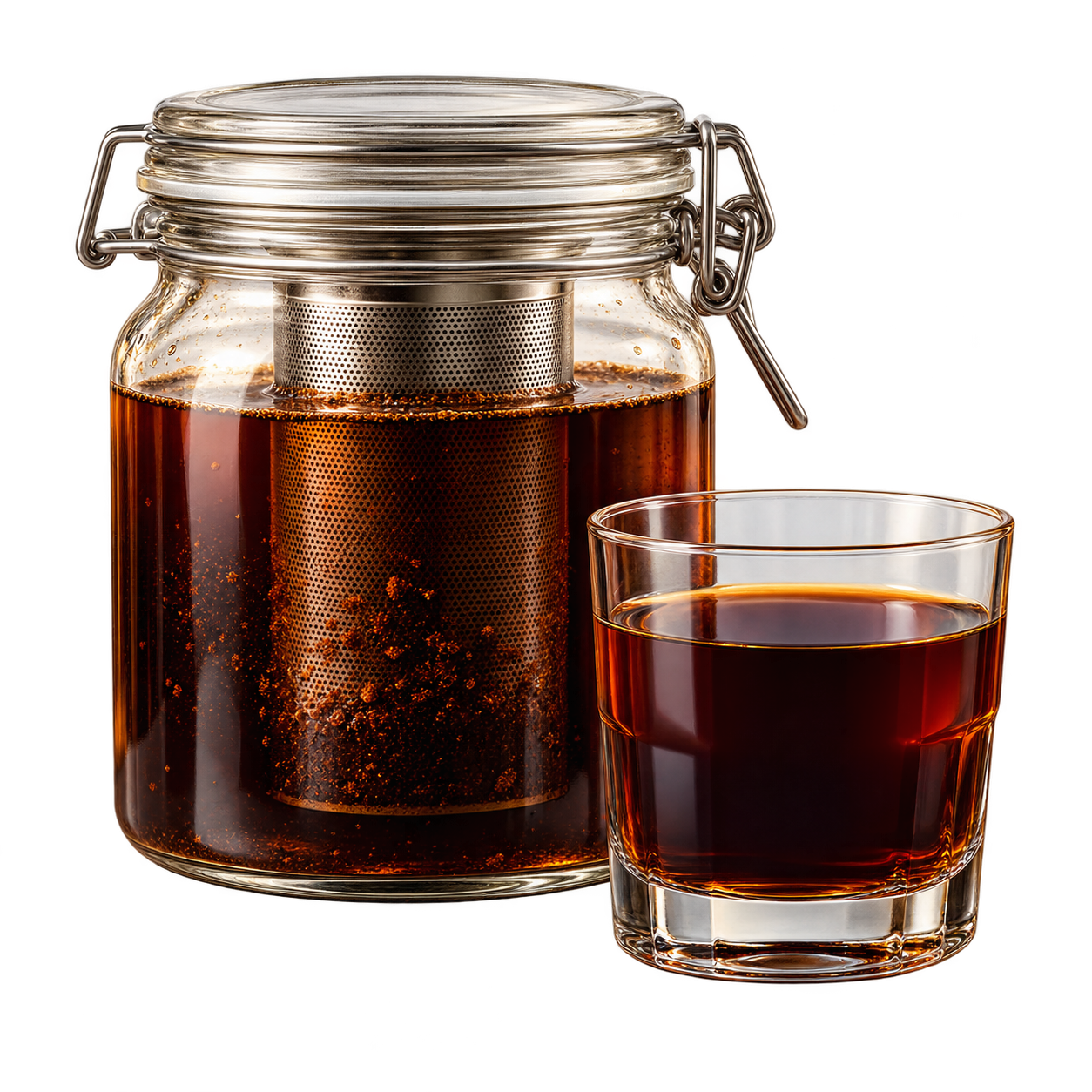
Cold brew: time instead of heat
The stove waited for an invitation that never came. Coffee chose unheated water and a long conversation.
Checked fact. Cold immersion contacts grounds with unheated water, followed by filtration.
Cooling hot-brewed coffee is a different process.
10. Phin: coffee drips into the glass
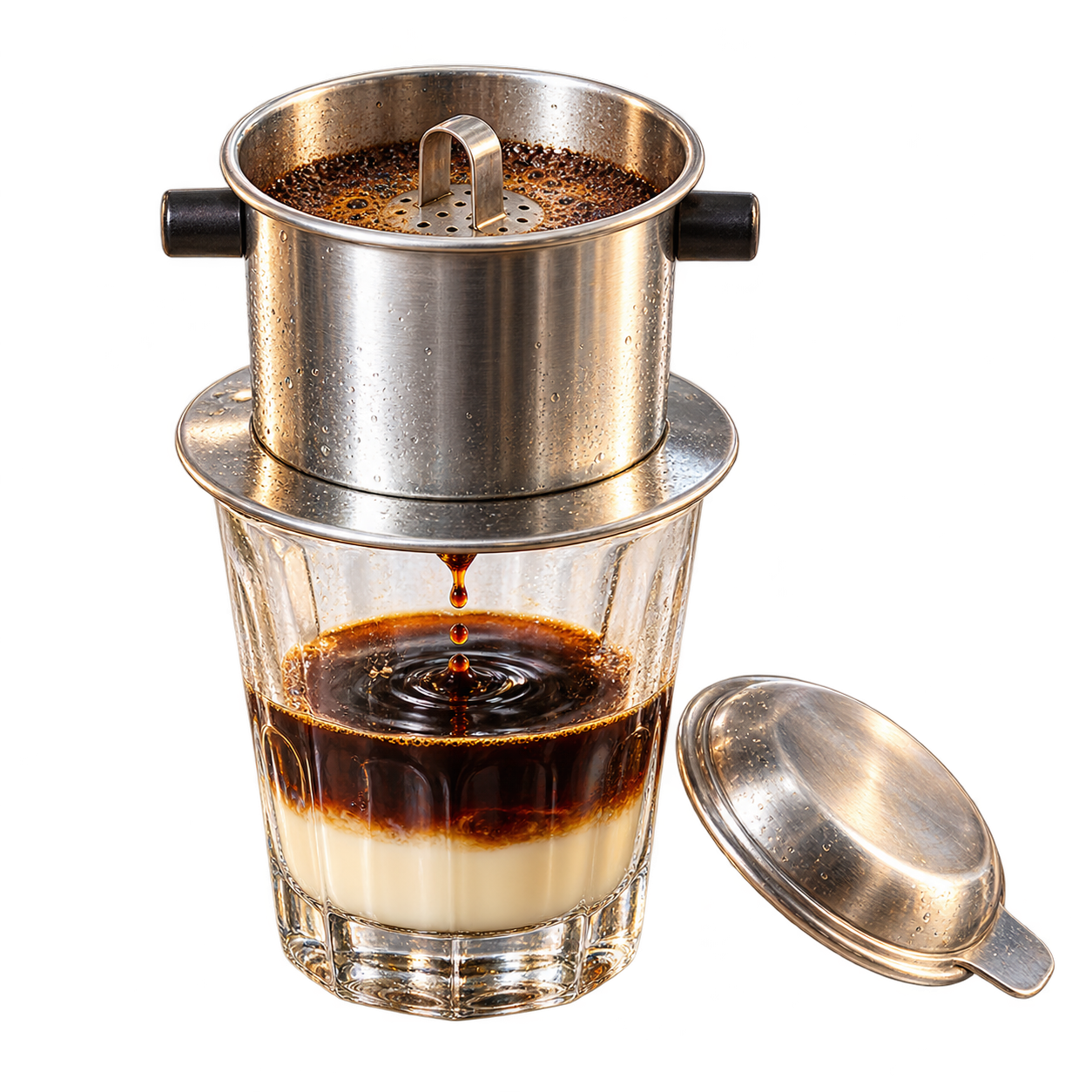
Phin: coffee drips into the glass
The metal filter sat above the glass. Condensed milk waited below without hurrying the drops.
Checked fact. A Vietnamese phin is a metal drip filter placed on a cup or glass.
We show condensed milk, but the filter also works without it.
Each has its own character
A brewer’s shape hints at what happens inside. Beans, grind, water and recipe also shape flavour.