
Not just cucumbers enter a pickle jar: buds, walnuts and watermelon rind find new roles too. Here are ten distinctive examples.
The food conversations are fictional. This is an introduction, not a canning guide: preparation requires tested recipes and storage instructions.
1. Walnuts: before the shell
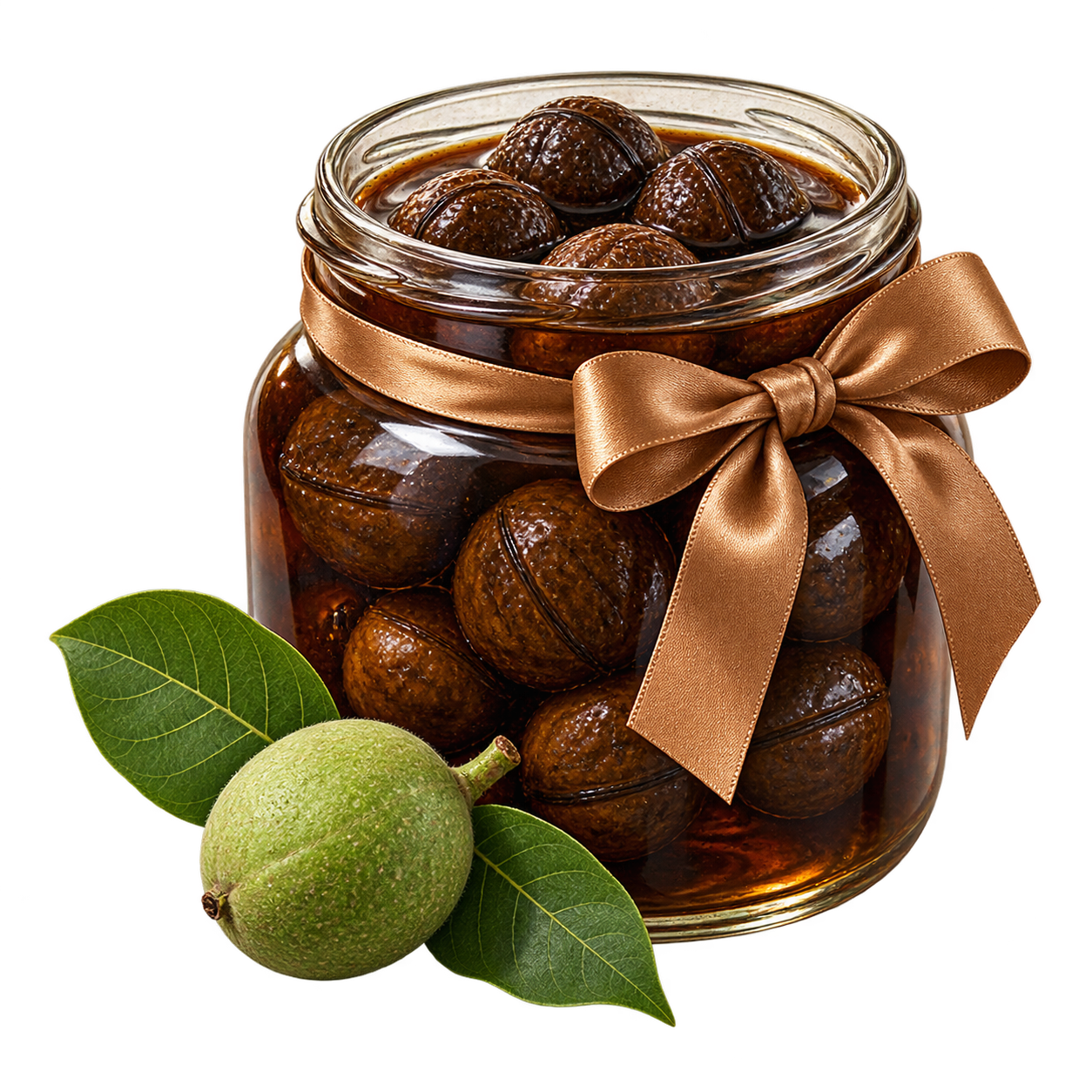
Walnuts: before the shell
The walnut skipped autumn and a career in pie. It went into pickle young and acquired a different biography.
Checked fact. These pickles use whole immature walnuts before hard shells form. The finished nuts can be sliced whole.
They are not dried walnut kernels soaked in vinegar.
2. Garlic: cloves in a new role
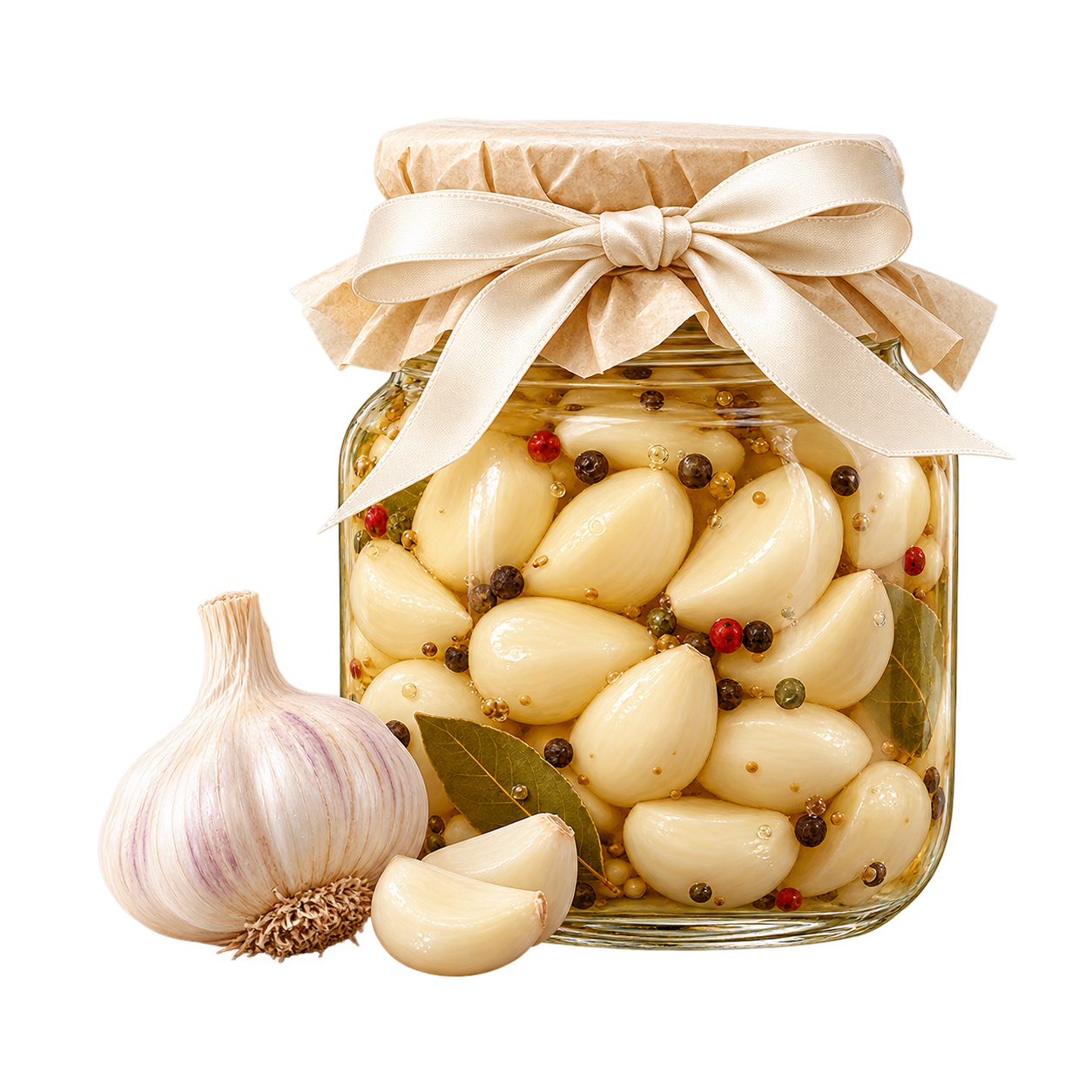
Garlic: cloves in a new role
Garlic was used to small supporting parts. In the jar it won a solo role and stopped hiding behind vegetables.
Checked fact. Pickled garlic cloves are a condiment in their own right. Vinegar pickling gives them a different character from raw garlic.
Cloves and garlic scapes are different ingredients.
3. Preserved lemons: citrus changes sides
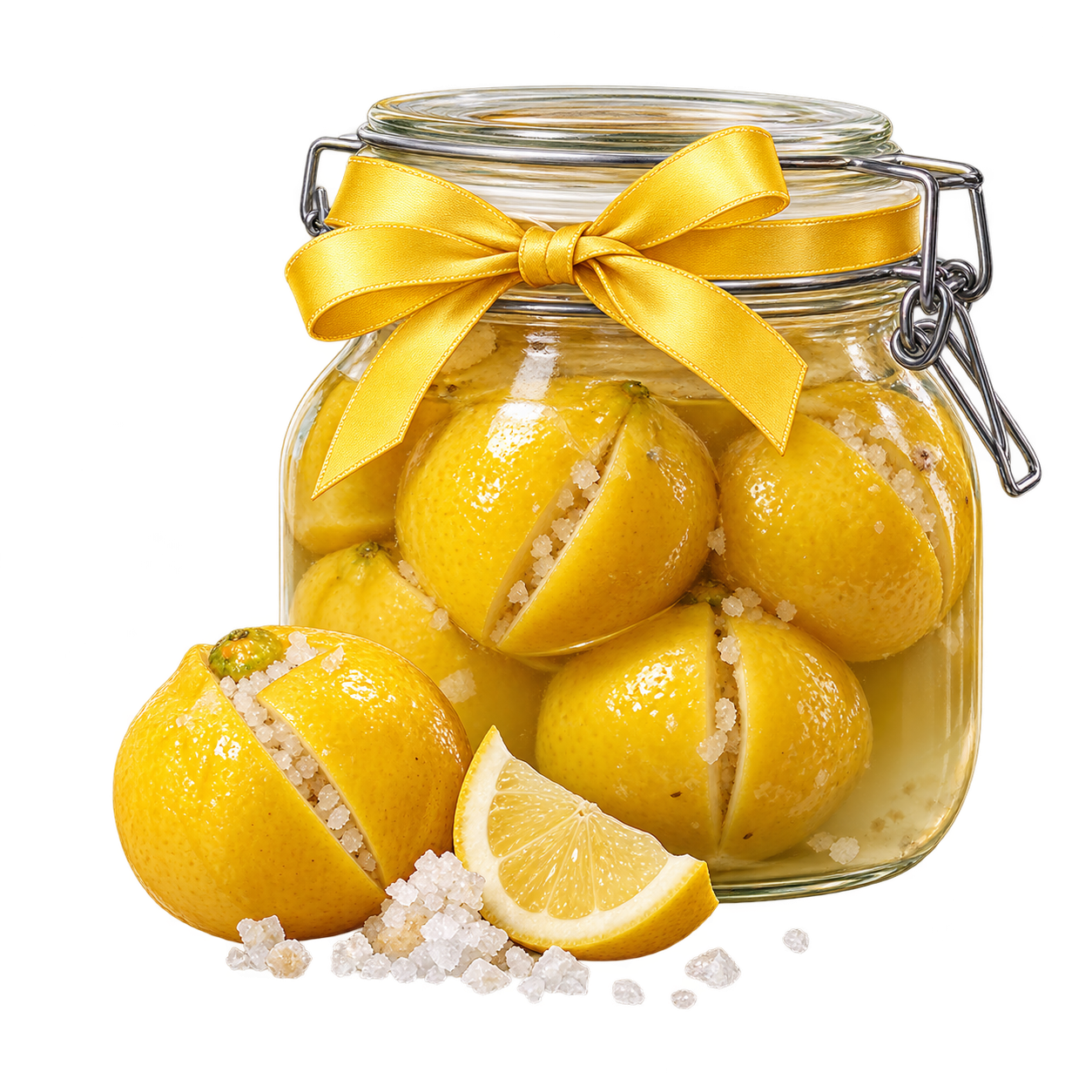
Preserved lemons: citrus changes sides
Lemon set off for tea but chose the wrong jar. Salt could reveal its character too, just on a different menu.
Checked fact. Lemons preserved in salty brine are an aromatic seasoning for dishes including tagines and salads.
They have a different role from a fresh drink garnish.
4. Watermelon rind: a second role
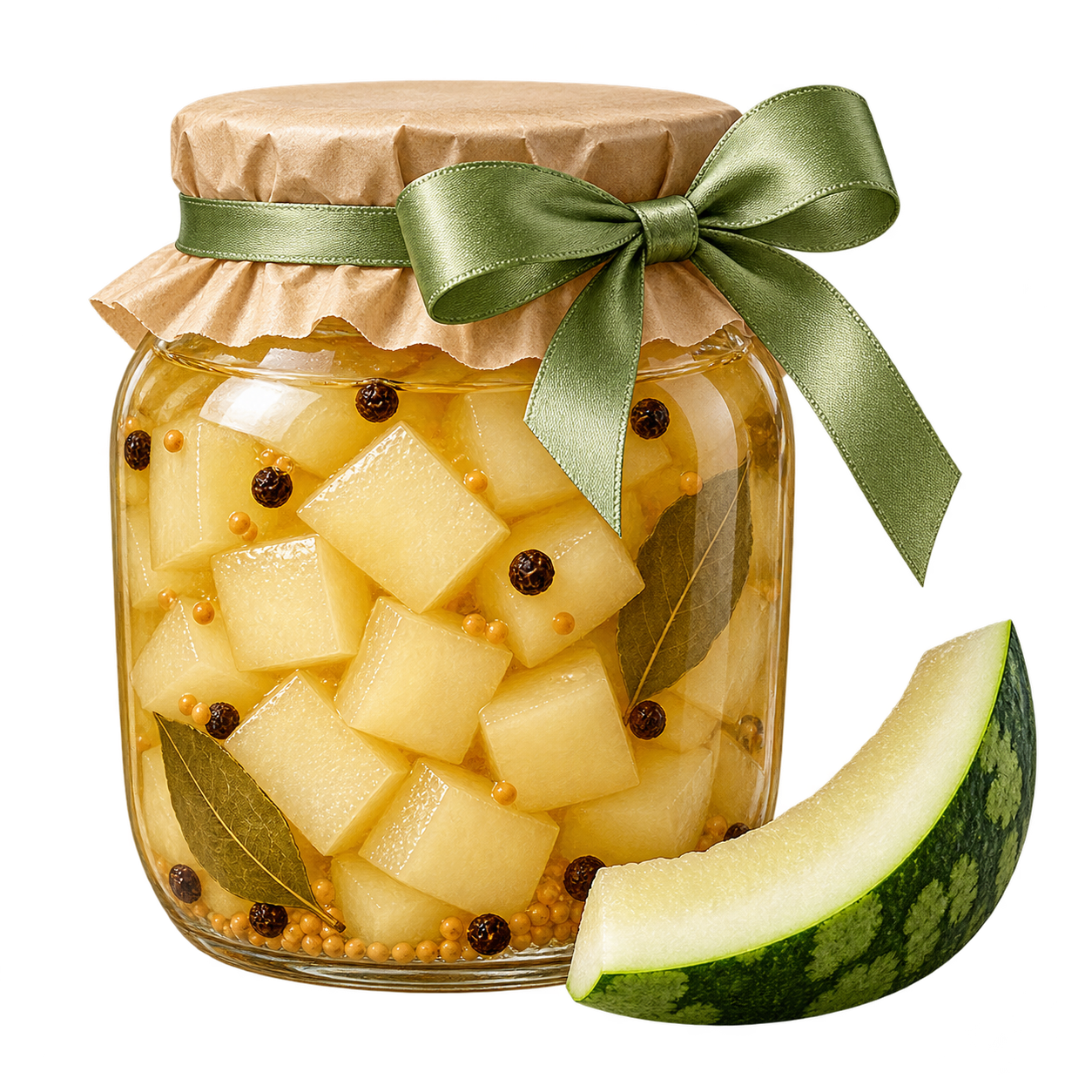
Watermelon rind: a second role
The red flesh had left for the guests. The pale rind stayed in the kitchen and unexpectedly received an invitation to a spiced jar.
Checked fact. An American-style pickle uses pale rind with the outer green skin removed. Sugar, vinegar and spices make it sweet and sour.
This differs from preserving whole small watermelons.
5. Capers: buds instead of bouquets
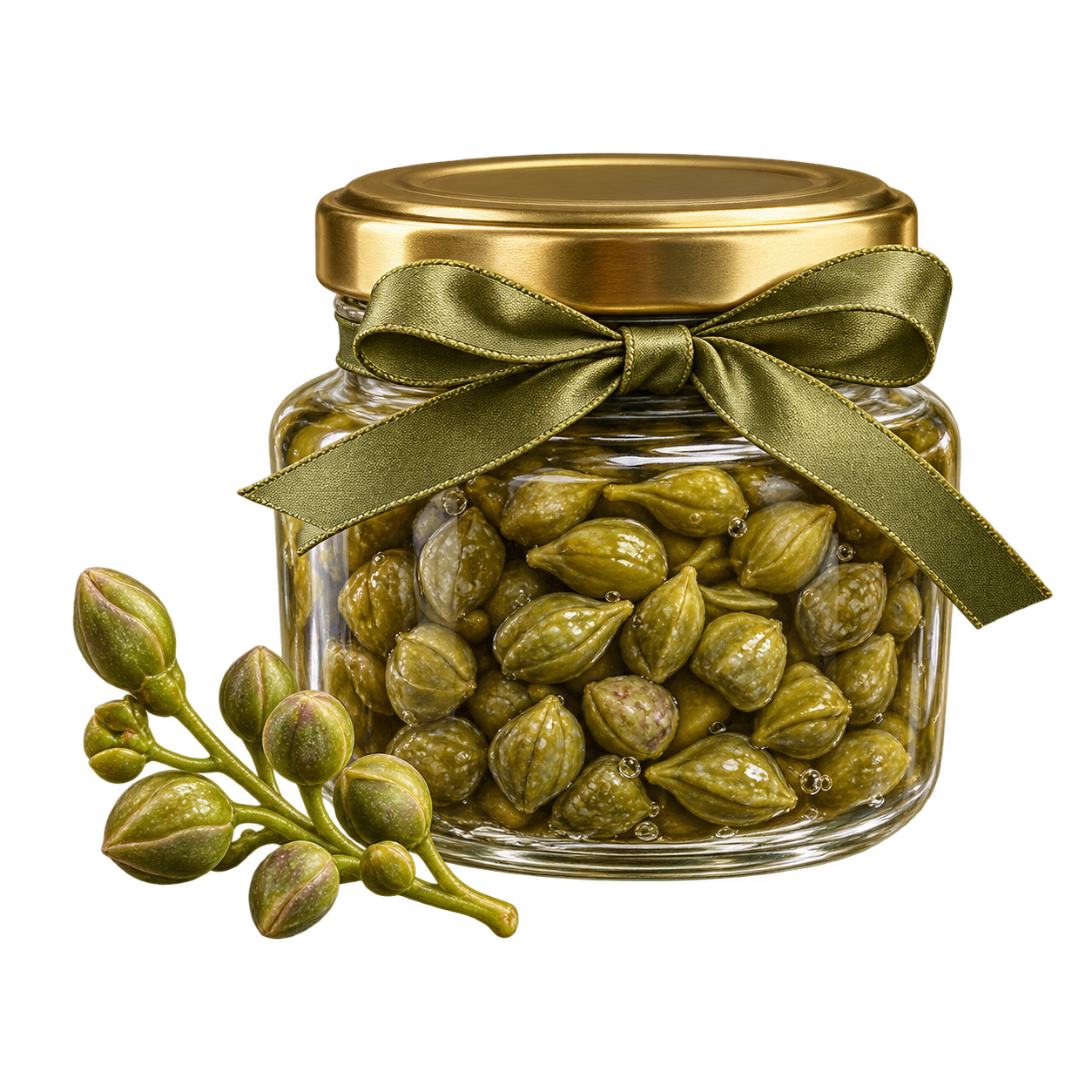
Capers: buds instead of bouquets
The buds were ready to bloom. A cook offered a smaller career: one little caper could make itself heard across a plate.
Checked fact. Capers are flower buds preserved in salt or vinegar. Larger caperberries are fruits instead.
A long stalk usually signals a caperberry.
6. Pearl onions: small but noticeable
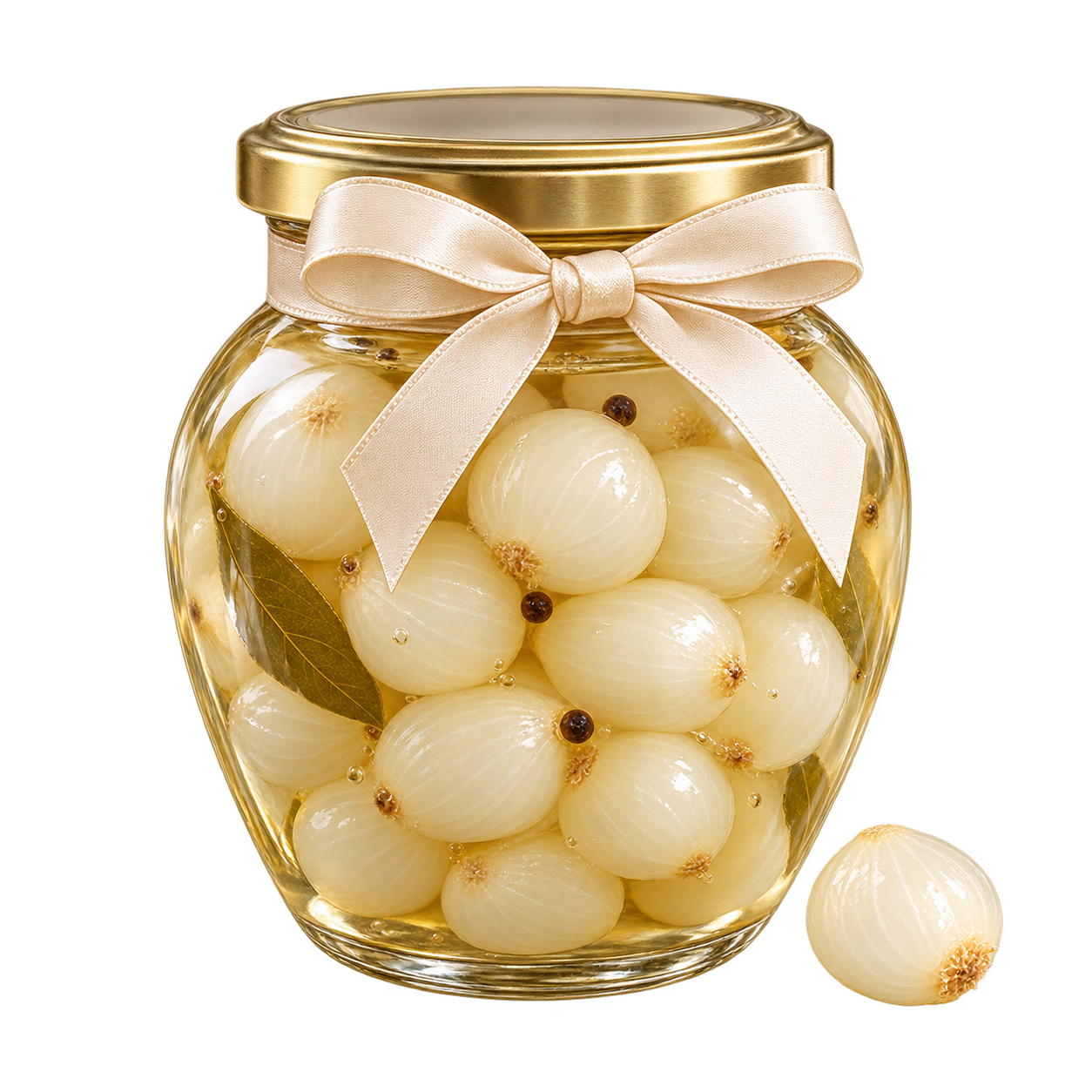
Pearl onions: small but noticeable
The onions lined up like beads. Vinegar ruled out a necklace, but thought the cheese plate deserved some jewellery.
Checked fact. Small onions can be pickled whole. Pale vinegar and dark balsamic versions look and taste different.
The illustration chooses a pale version.
7. Cucumbers: a familiar hero, two routes
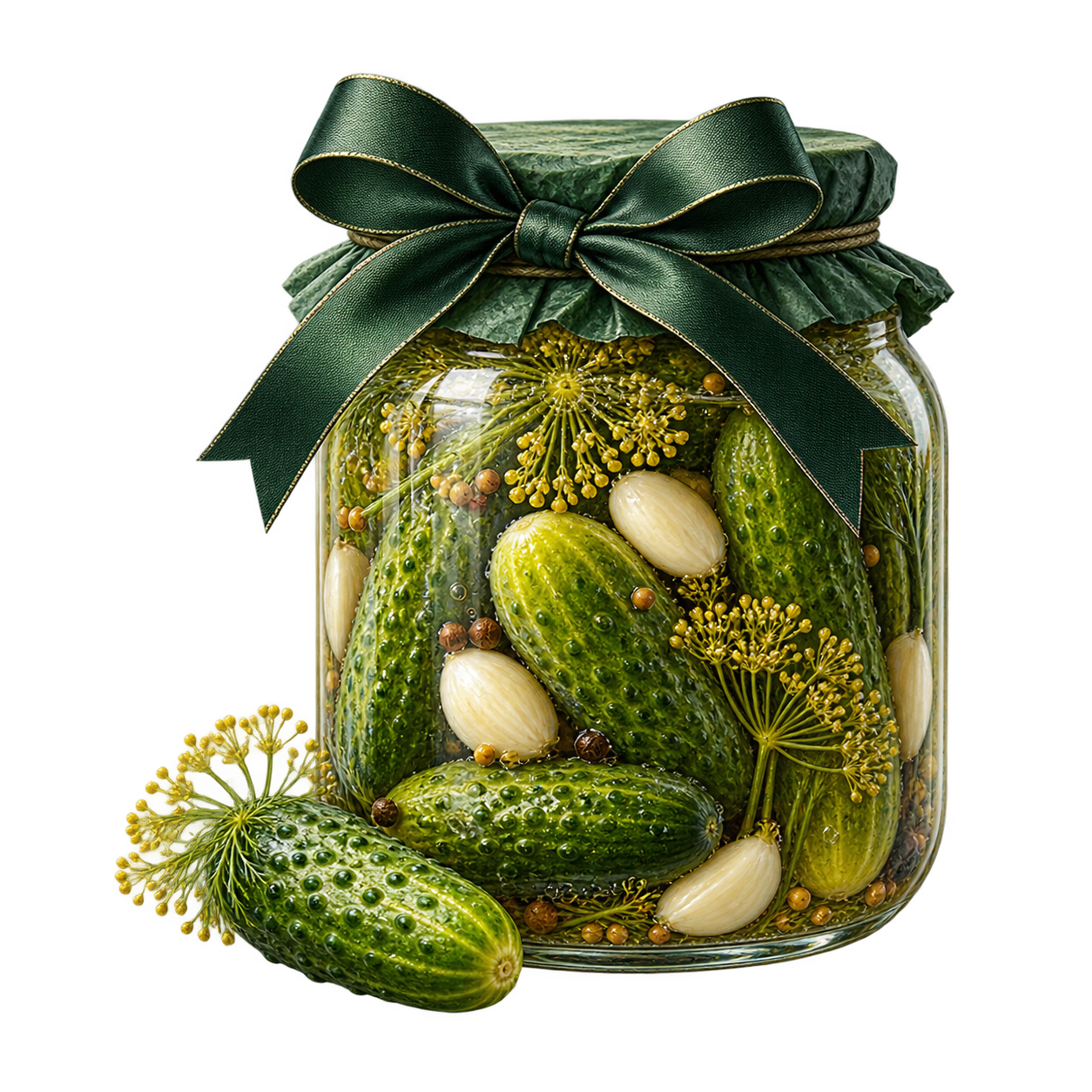
Cucumbers: a familiar hero, two routes
Cucumber thought everyone knew its story. Two jars disagreed: one preferred vinegar, the other trusted fermentation.
Checked fact. Vinegar pickling and lactic fermentation are different routes to sour cucumbers. Not all pickles are fermented.
Dill is an aromatic detail, not a preparation guide.
8. Cauliflower: miniature trees
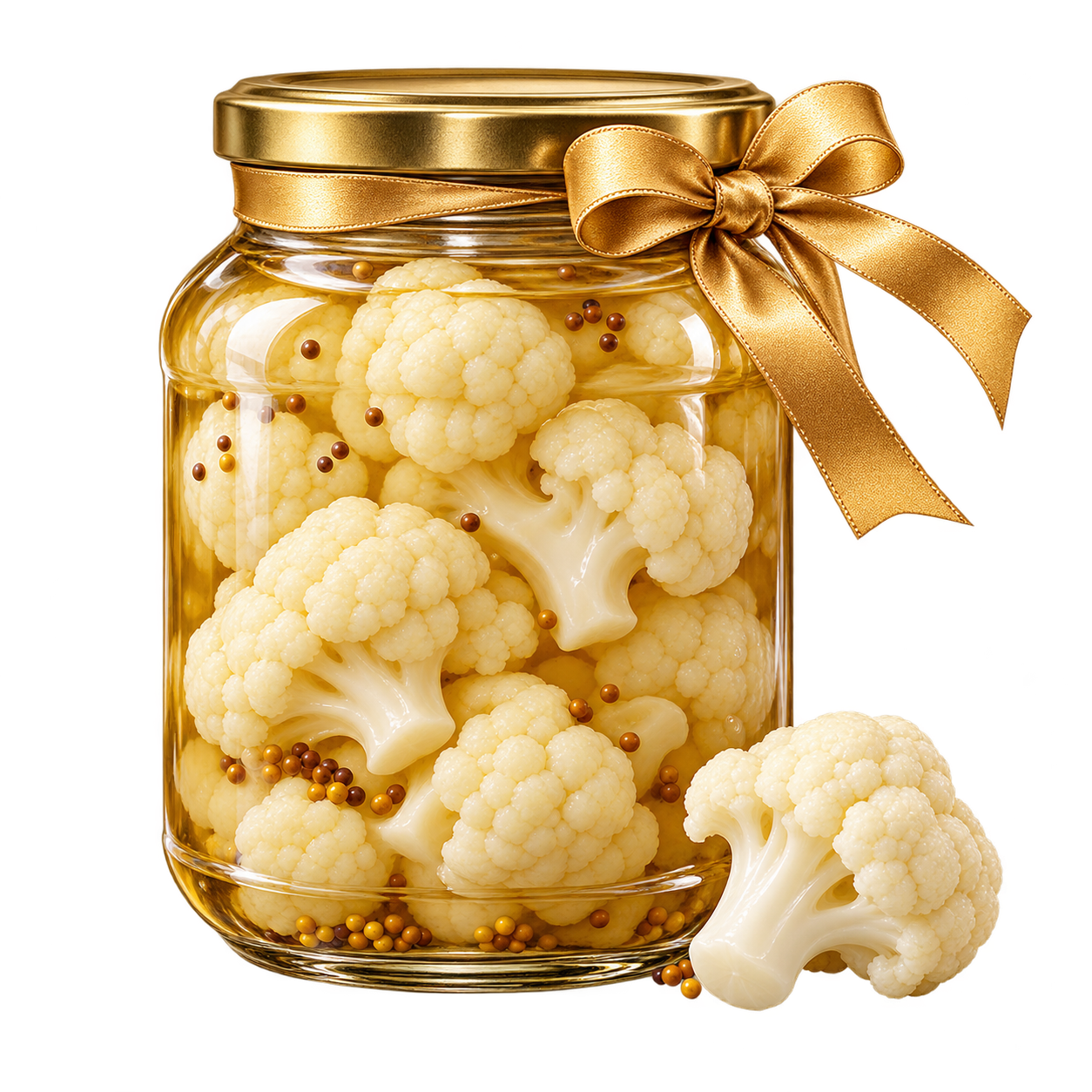
Cauliflower: miniature trees
The florets planned a miniature forest. The jar fitted every tree, while carrots supplied bright signs without words.
Checked fact. Cauliflower florets appear in mixed vegetable pickles and on their own. Spices and other vegetables can affect their colour.
The floret shape matters more than perfect whiteness.
9. Ginger: petals without a flower
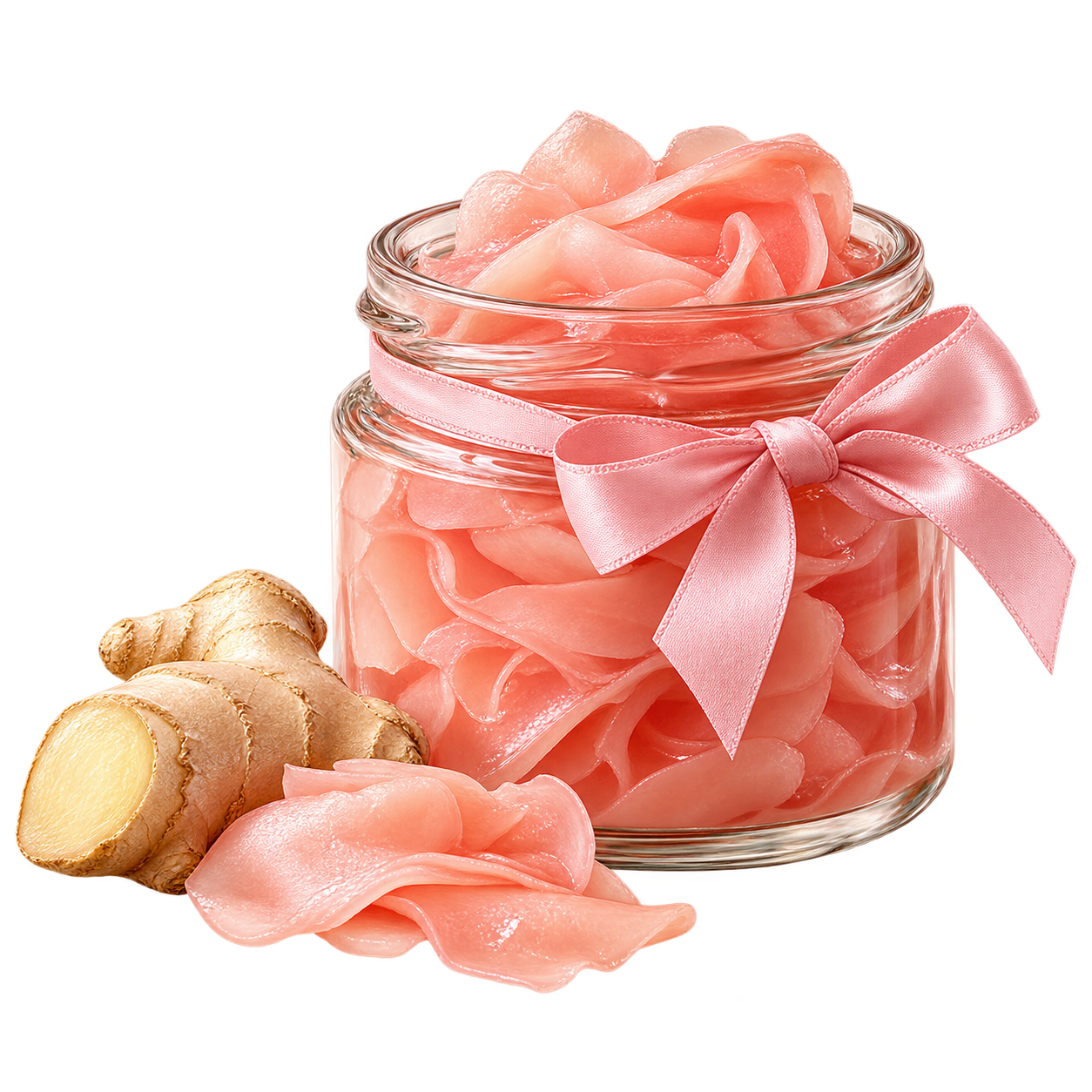
Ginger: petals without a flower
Ginger was sliced so thin it imagined itself a flower. Chopsticks politely reminded it that sushi was waiting.
Checked fact. Gari is thinly sliced pickled ginger served with sushi. It can be pale or pink; colour alone does not reveal the ingredients.
The illustration chooses a pink version.
10. Turnips: beetroot lends a colour
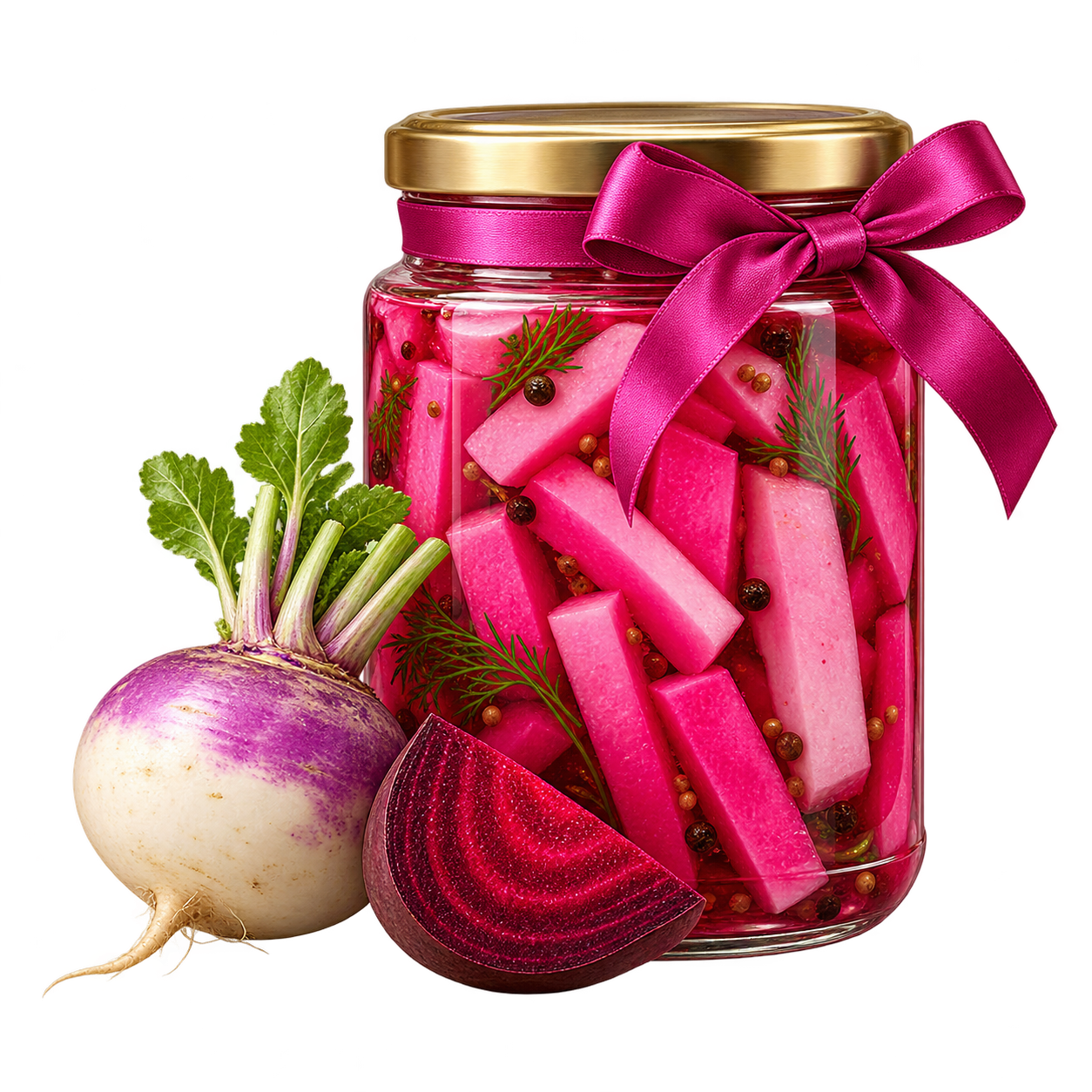
Turnips: beetroot lends a colour
Turnip arrived in white. Beetroot shared its colour, and soon everyone assumed the outfit had been planned.
Checked fact. Middle Eastern pickled turnips are often coloured with beetroot. Bright pink batons need not be beetroot themselves.
Crunch and acidity make them a distinctive side.
Each has its own character
A sour taste does not mean one process. Vinegar pickling, brining and fermentation differ, just like the characters on this shelf.