
Biscuits can be lace, sandwiches and even envelopes. Meet ten versions whose shapes are tied to what is inside.
The talking foods are editorial fiction; facts have sources. Illustrations show particular versions, and recipes can vary.
1. Florentines: crunchy lace
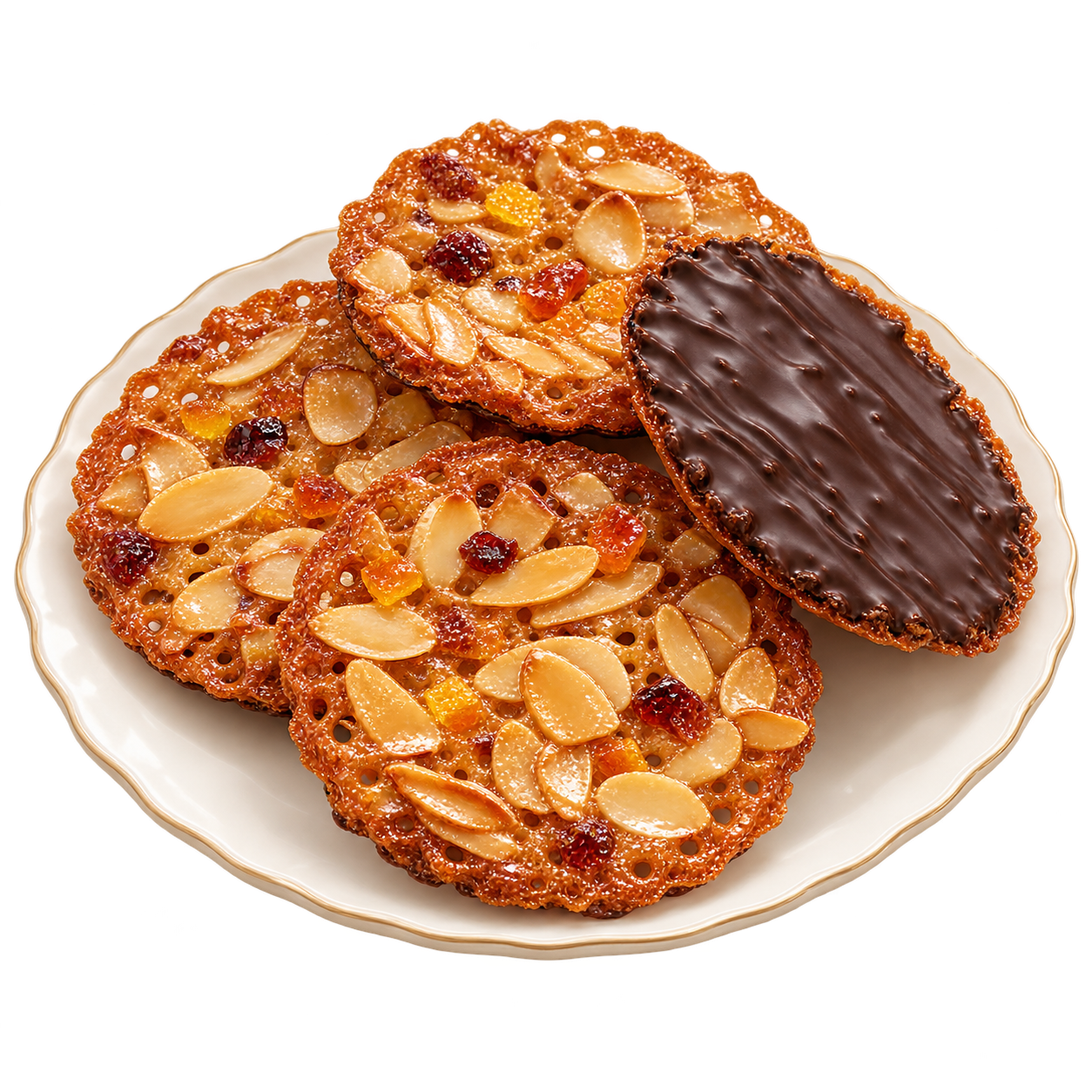
Florentines: crunchy lace
The almonds arranged themselves into lace, expecting to become a doily. Caramel explained that this lace was meant to be eaten.
Checked fact. Florentines are thin nut biscuits; chocolate undersides are common, but recipes vary.
One is turned chocolate-side up.
2. Cantucci: a biscuit with backbone
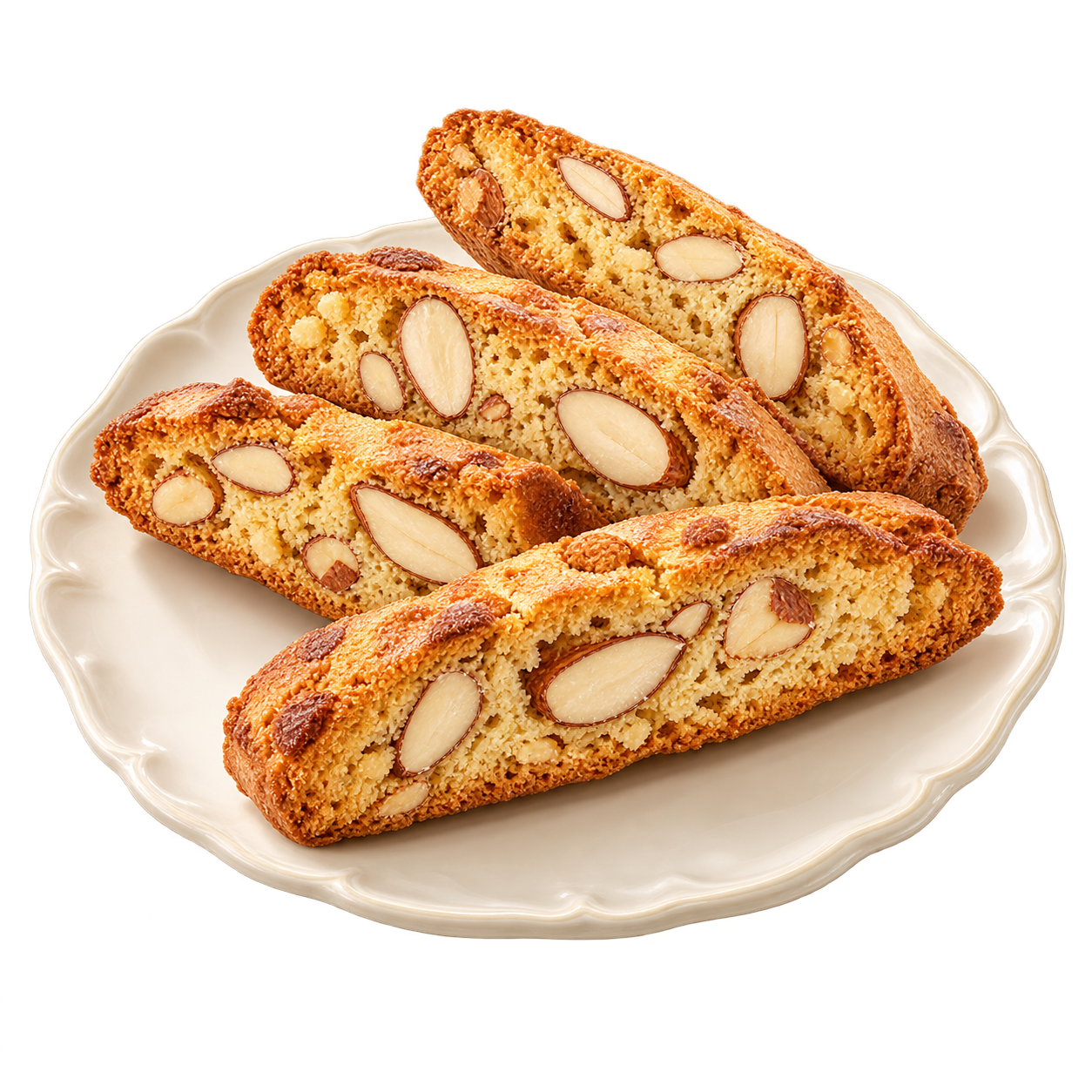
Cantucci: a biscuit with backbone
Cantucci promised no airy softness. They brought almonds and such a confident crunch that the cup prepared to help.
Checked fact. Cantucci are twice-baked biscuits: a baked log is sliced and the slices baked again.
Almond cross-sections are part of the look.
3. Speculoos: spices leave an impression
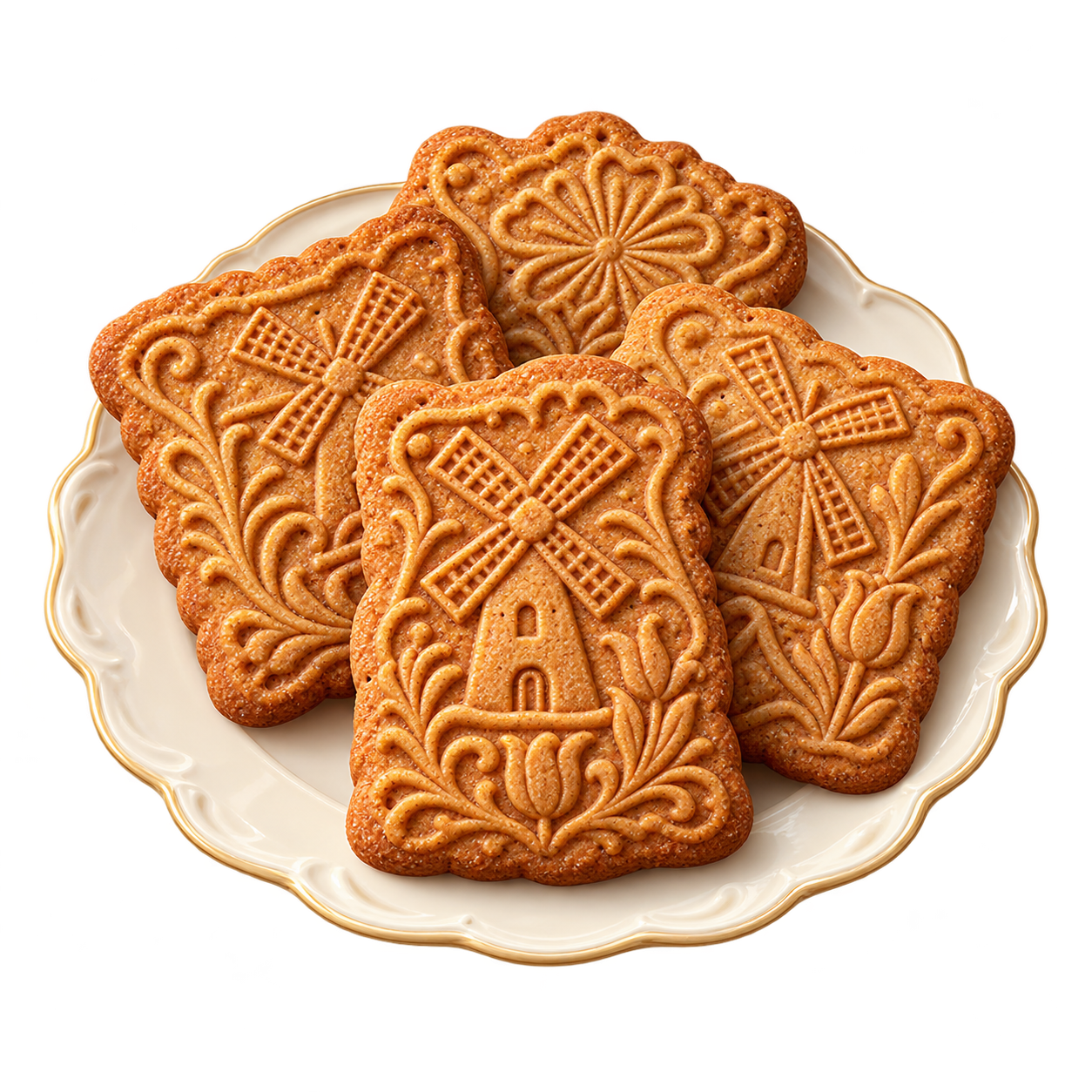
Speculoos: spices leave an impression
The biscuit arrived with an embossed pattern like a tiny seal. Spices supplied an invisible signature for the nose.
Checked fact. The speculaas/speculoos family includes different spiced versions. A moulded pattern does not specify one universal spice blend.
The illustration shows embossed caramel-brown biscuits.
4. Kurabye: a flower with a jam heart
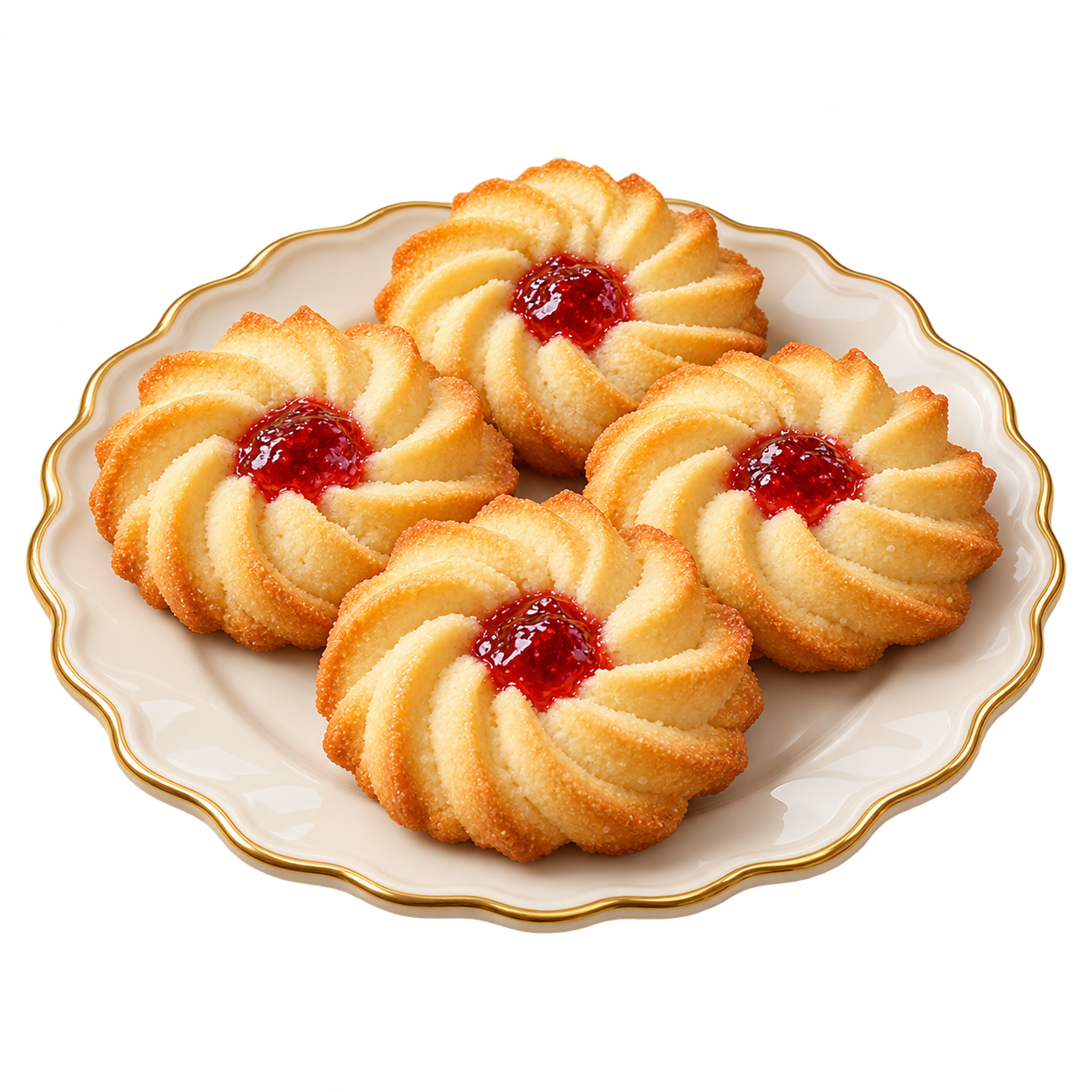
Kurabye: a flower with a jam heart
Kurabye opened its petals on the baking tray. Jam took the centre and appointed itself responsible for everyone’s mood.
Checked fact. Baku-style kurabye is a rich short biscuit; a flower shape with filling is familiar, but not its only form.
A piping nozzle creates the shape.
5. Amaretti: cracks by design
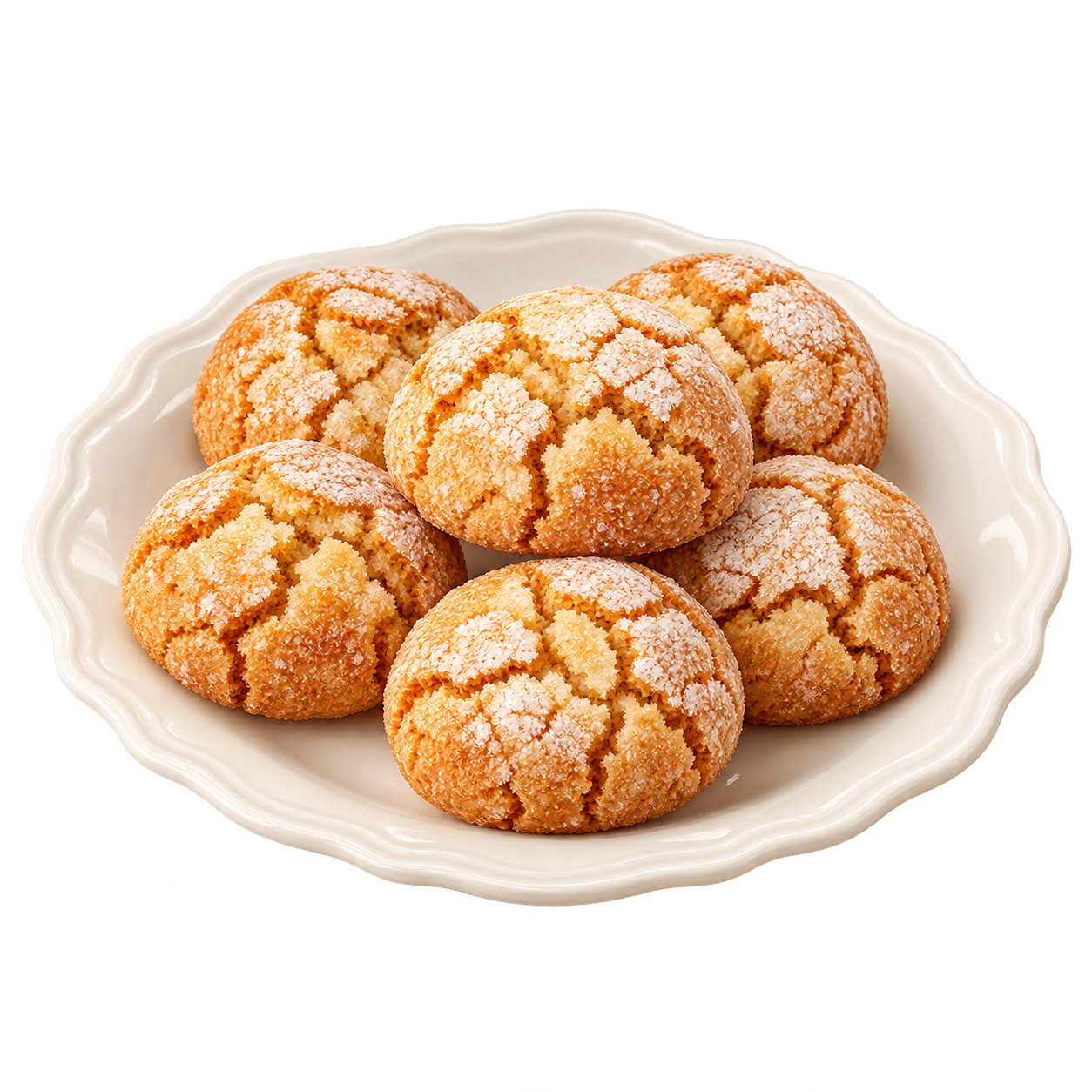
Amaretti: cracks by design
Amaretti refused to hide their cracks. They dusted them with sugar and made imperfection the main decoration.
Checked fact. Amaretti use almonds and egg whites. They can be softer or crisper and need no filling.
Almonds connect them to macarons, not their structure.
6. Shortbread: simplicity with a crumble
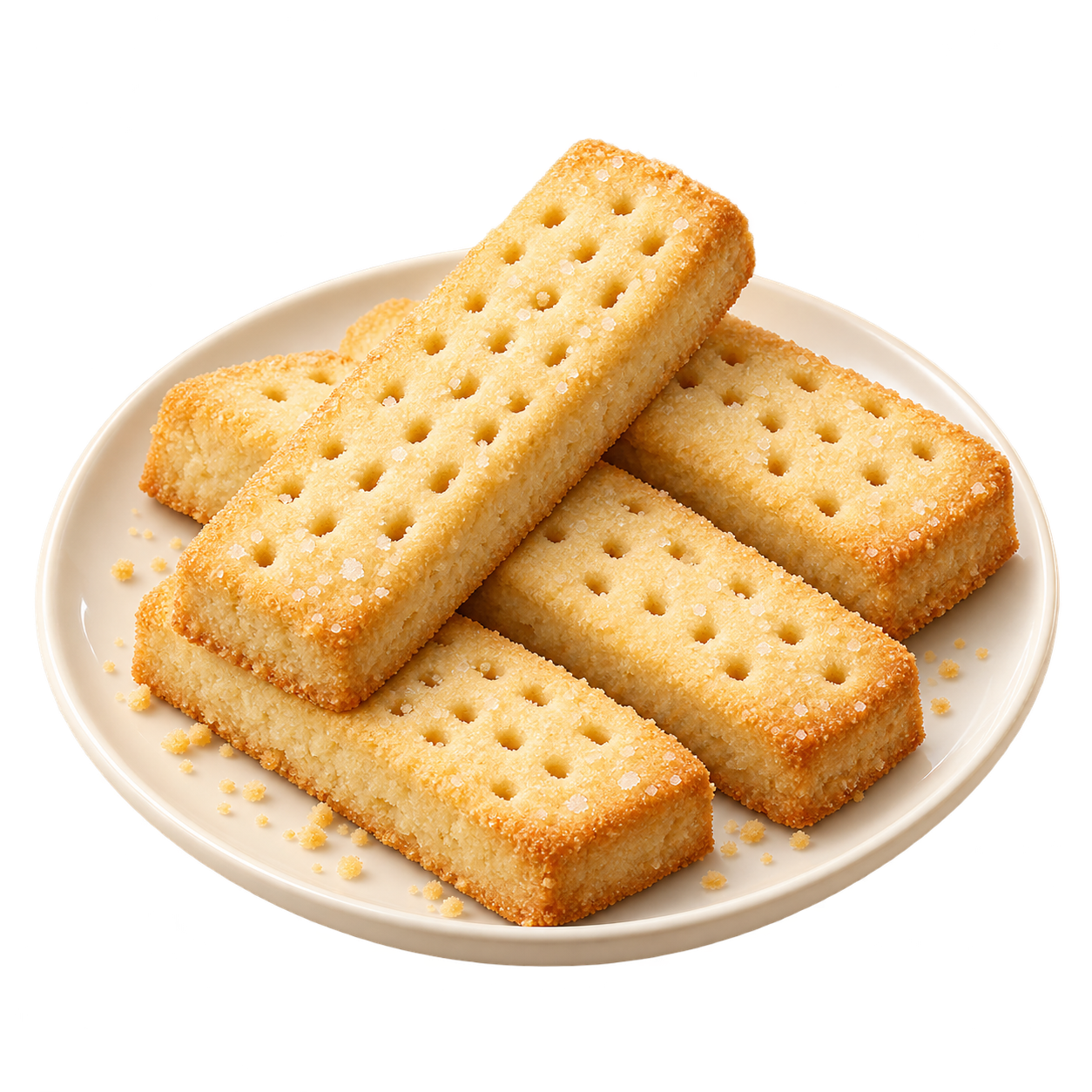
Shortbread: simplicity with a crumble
Shortbread declined cream, icing and loud decoration. Butter and a good crumble were enough to make it memorable.
Checked fact. Classic shortbread centres on flour, butter and sugar. Fat helps create its characteristic short texture.
Fingers are only one possible shape.
7. Alfajores: caramel between two promises
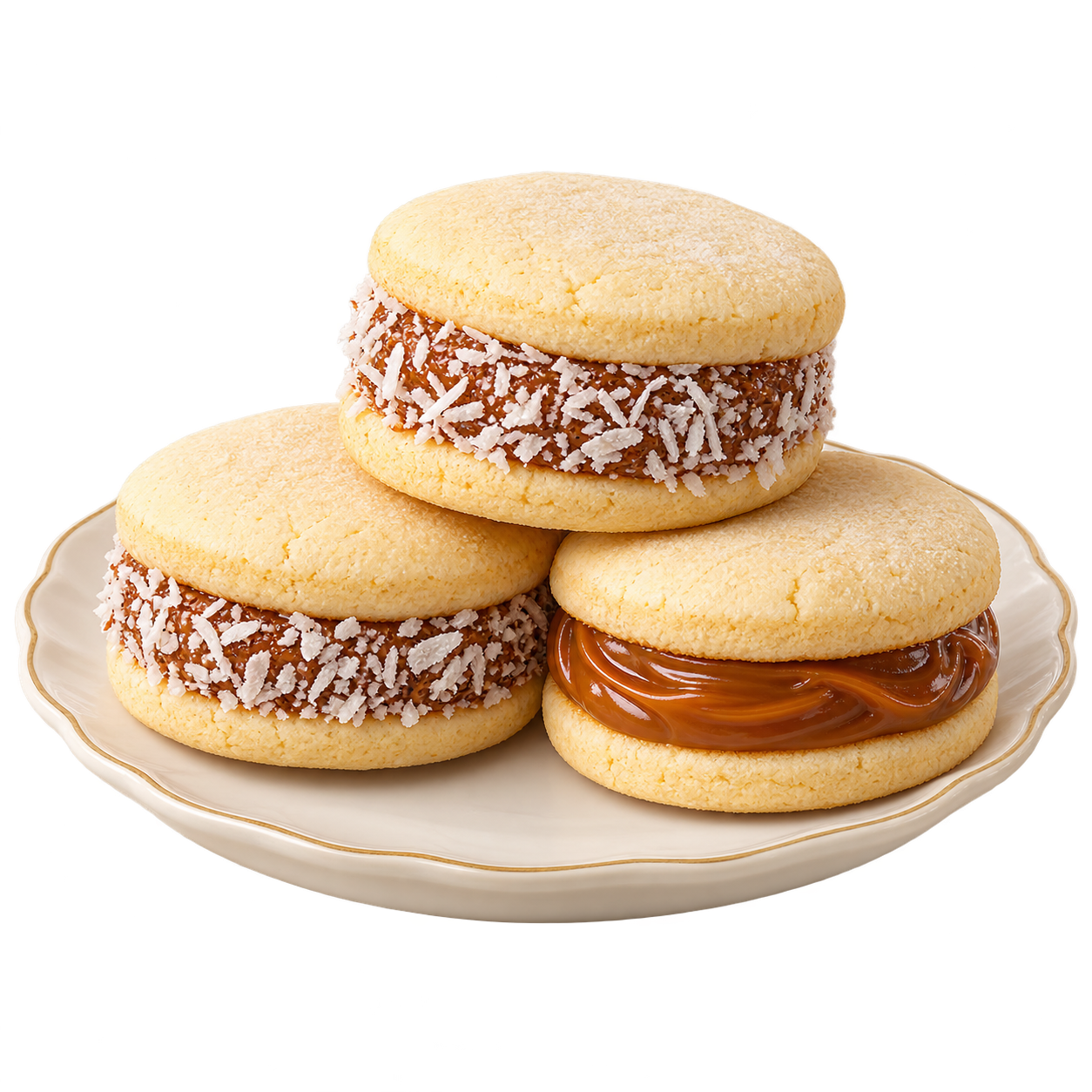
Alfajores: caramel between two promises
Two biscuits agreed not to argue over the leading role. Dulce de leche took the middle and united both sides.
Checked fact. South American alfajores often sandwich dulce de leche between biscuits. The name covers several regional traditions.
Not every version has a coconut edge.
8. Macaron: tiny cream architecture
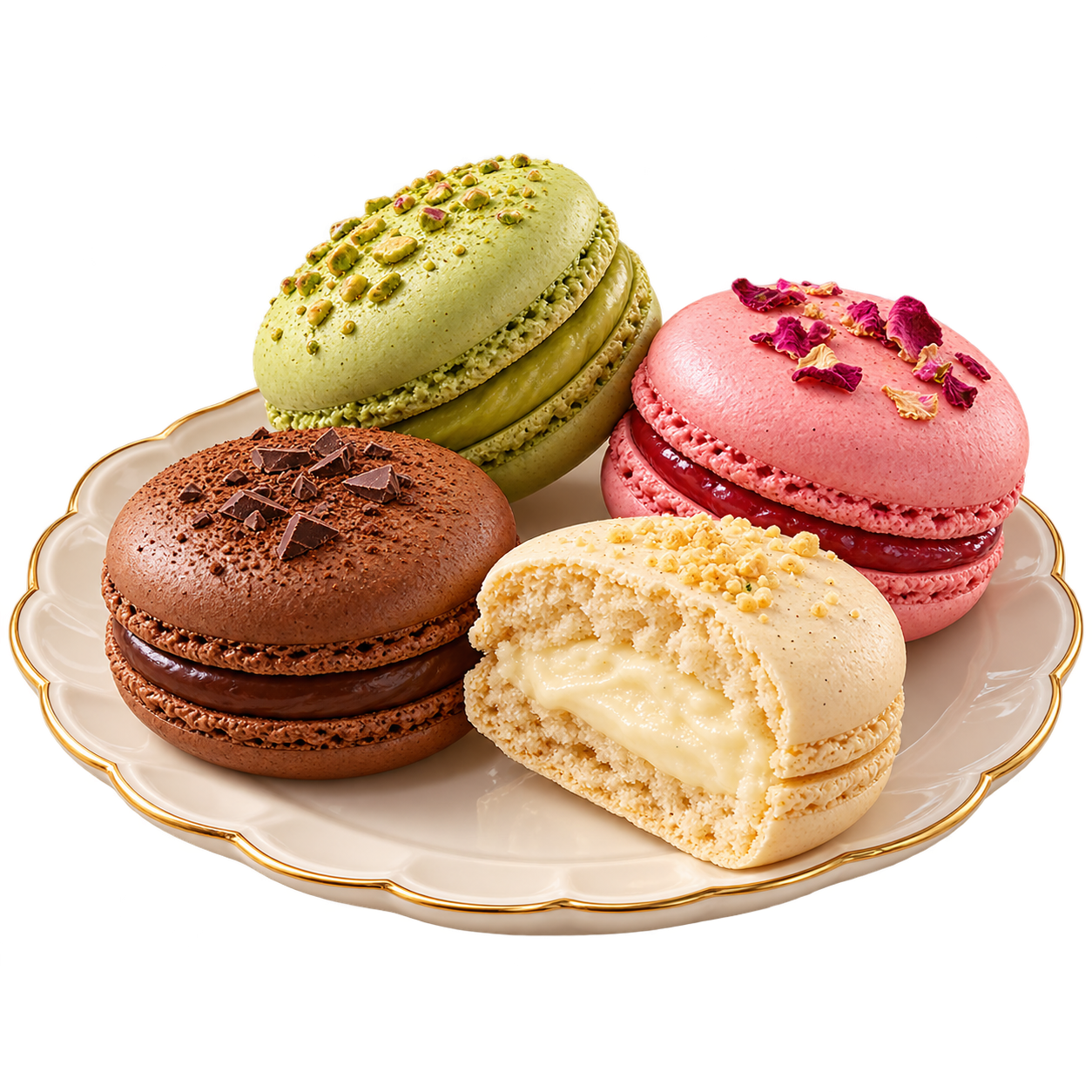
Macaron: tiny cream architecture
Two smooth shells kept exactly a filling’s distance apart. The dessert was small but meticulous about construction.
Checked fact. A French macaron sandwiches filling between almond-meringue shells with frilled feet. It is not a coconut macaroon.
Colour does not always identify flavour.
9. Stroopwafel: syrup behind a grid
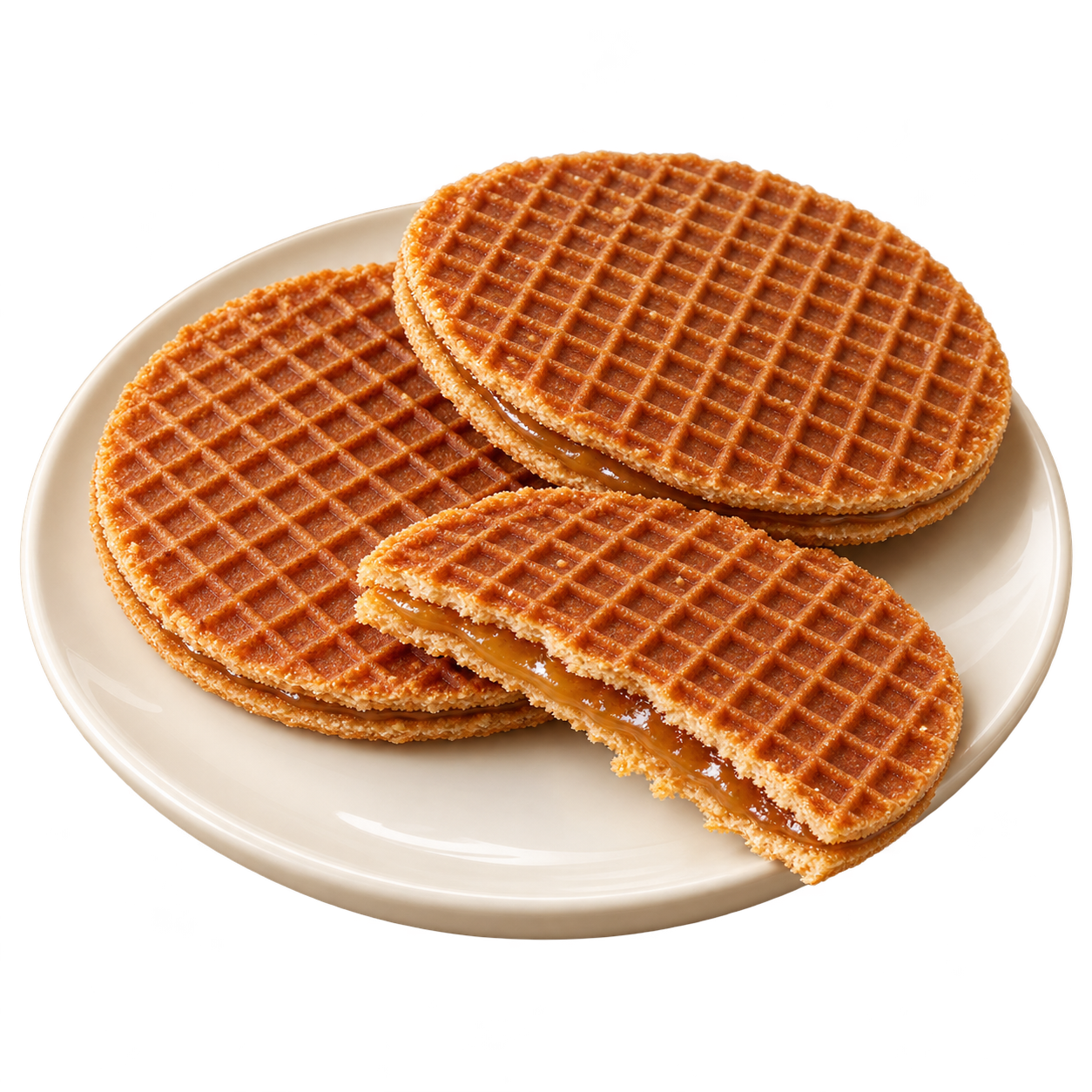
Stroopwafel: syrup behind a grid
The thin waffles looked strictly geometric. The syrup between them preferred softness to straight lines.
Checked fact. A stroopwafel joins thin waffle layers with syrup filling; it is not a thick Belgian waffle.
A break reveals the thin sweet seam.
10. Fortune cookie: a crunchy envelope
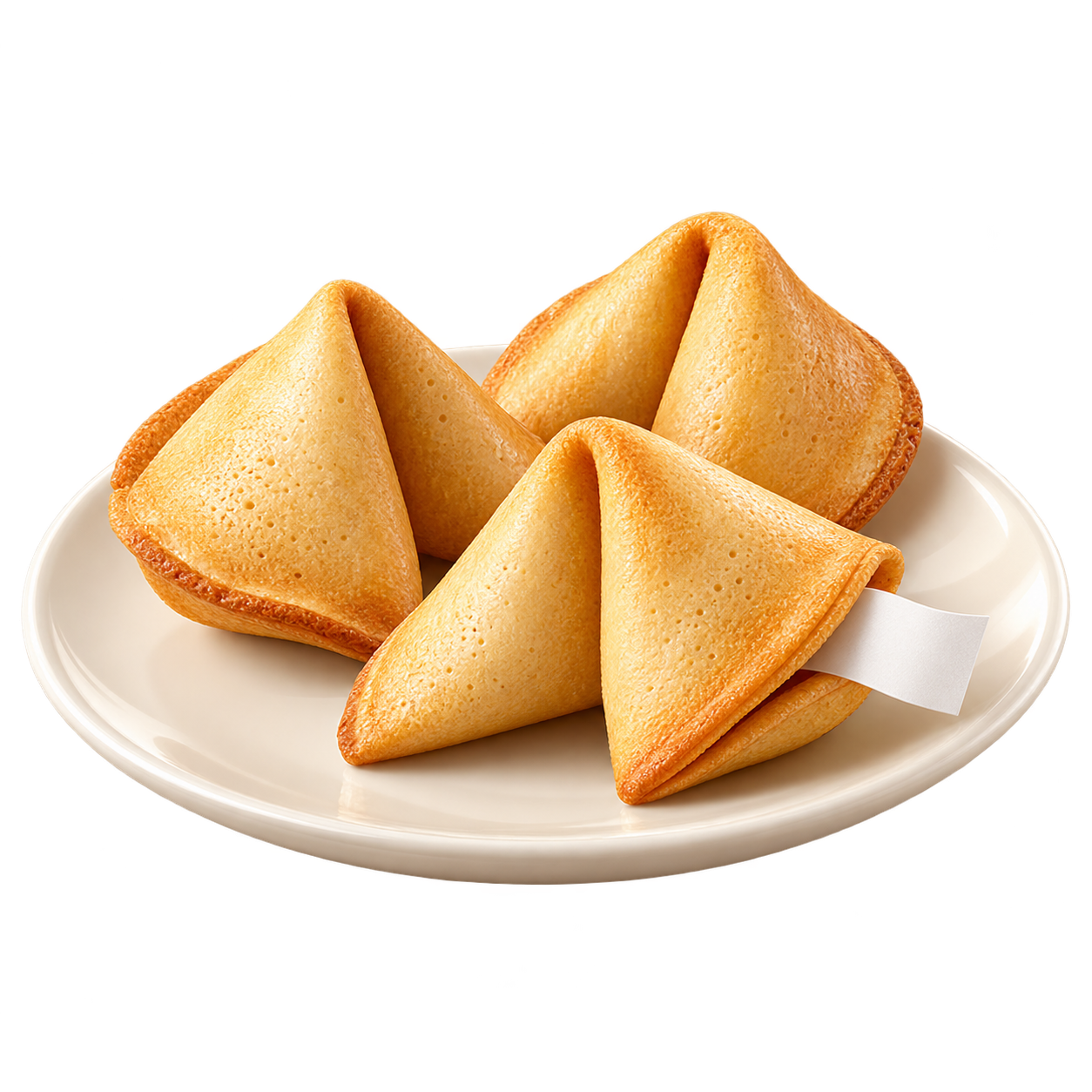
Fortune cookie: a crunchy envelope
The biscuit decided dessert should deliver mail. A note went inside, turning the first crunch into opening an envelope.
Checked fact. The distinctive fold is formed while the thin biscuit is still pliable. The paper note is not a filling.
The illustrated paper is deliberately blank.
Each has its own character
A good biscuit plate offers contrasting textures rather than a size competition.