
Honey is not one flavour in different jars. Travel from pale acacia to dark honeydew and discover what the names mean.
The talking foods are editorial fiction; facts have sources. Illustrations show particular versions, and recipes can vary.
1. Acacia: almost invisible gold
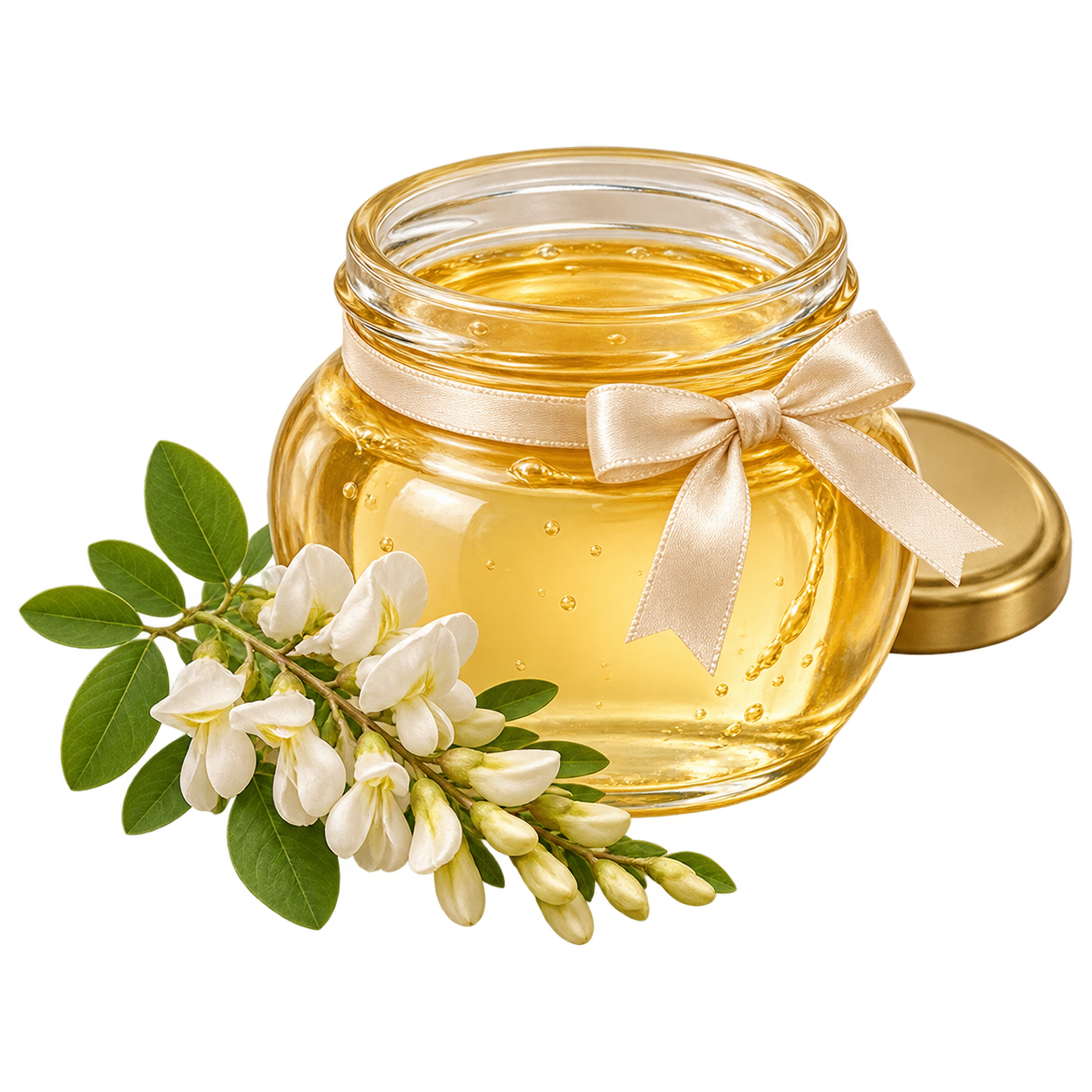
Acacia: almost invisible gold
This honey arrived quietly: pale, clear and unwilling to overpower breakfast. The bread appreciated a guest who could listen.
Checked fact. Acacia honey commonly comes from Robinia pseudoacacia. It is not honey with flowers added to the jar.
Compare it with dark honey on the same bread.
2. Buckwheat: dark does not mean chocolate
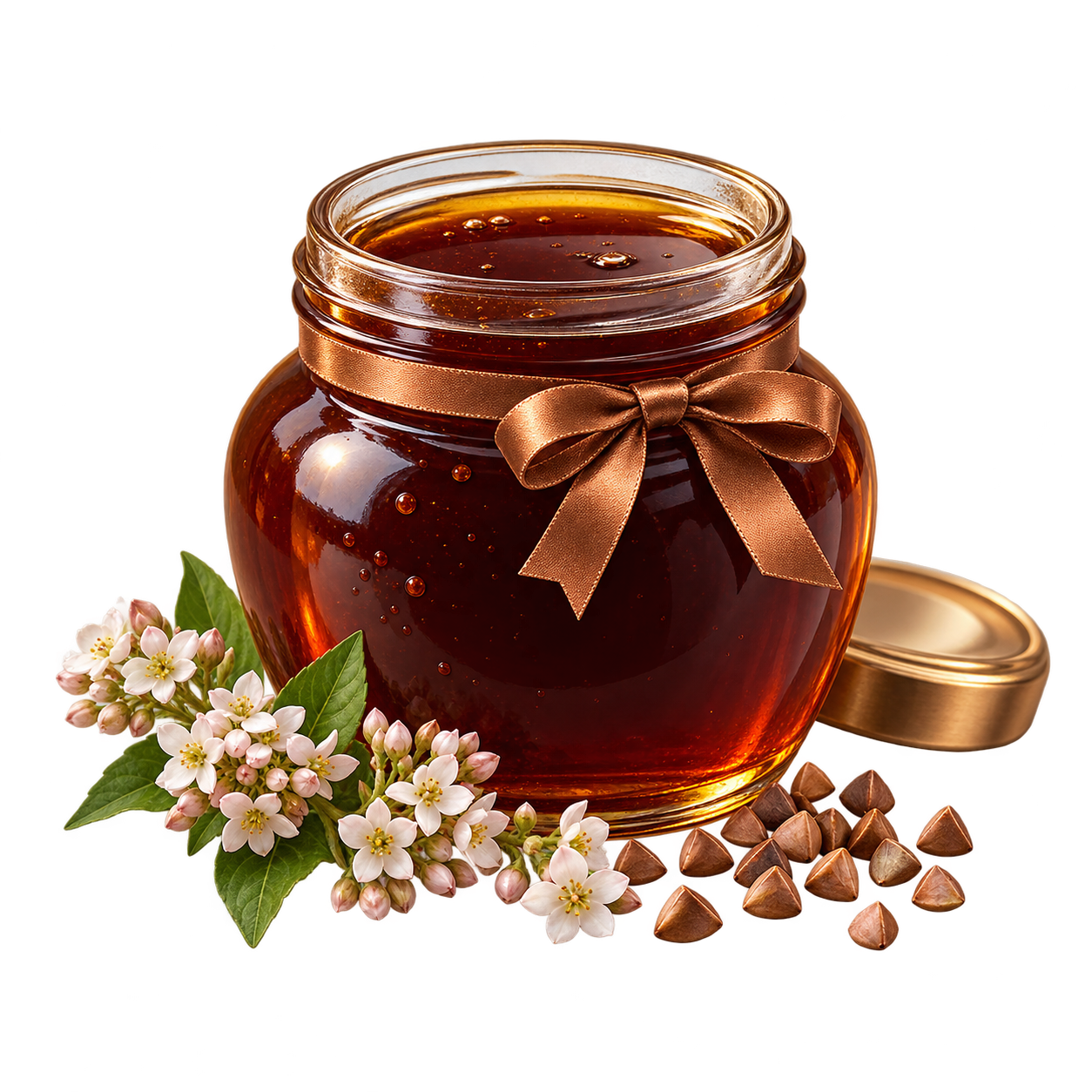
Buckwheat: dark does not mean chocolate
Buckwheat honey sat beside cocoa, then asserted its own character. Sharing a dark colour did not make them relatives.
Checked fact. Buckwheat honey can be very dark and strongly flavoured; its floral source is buckwheat.
A small taste is enough to notice the contrast.
3. Chestnut: sweetness with an objection
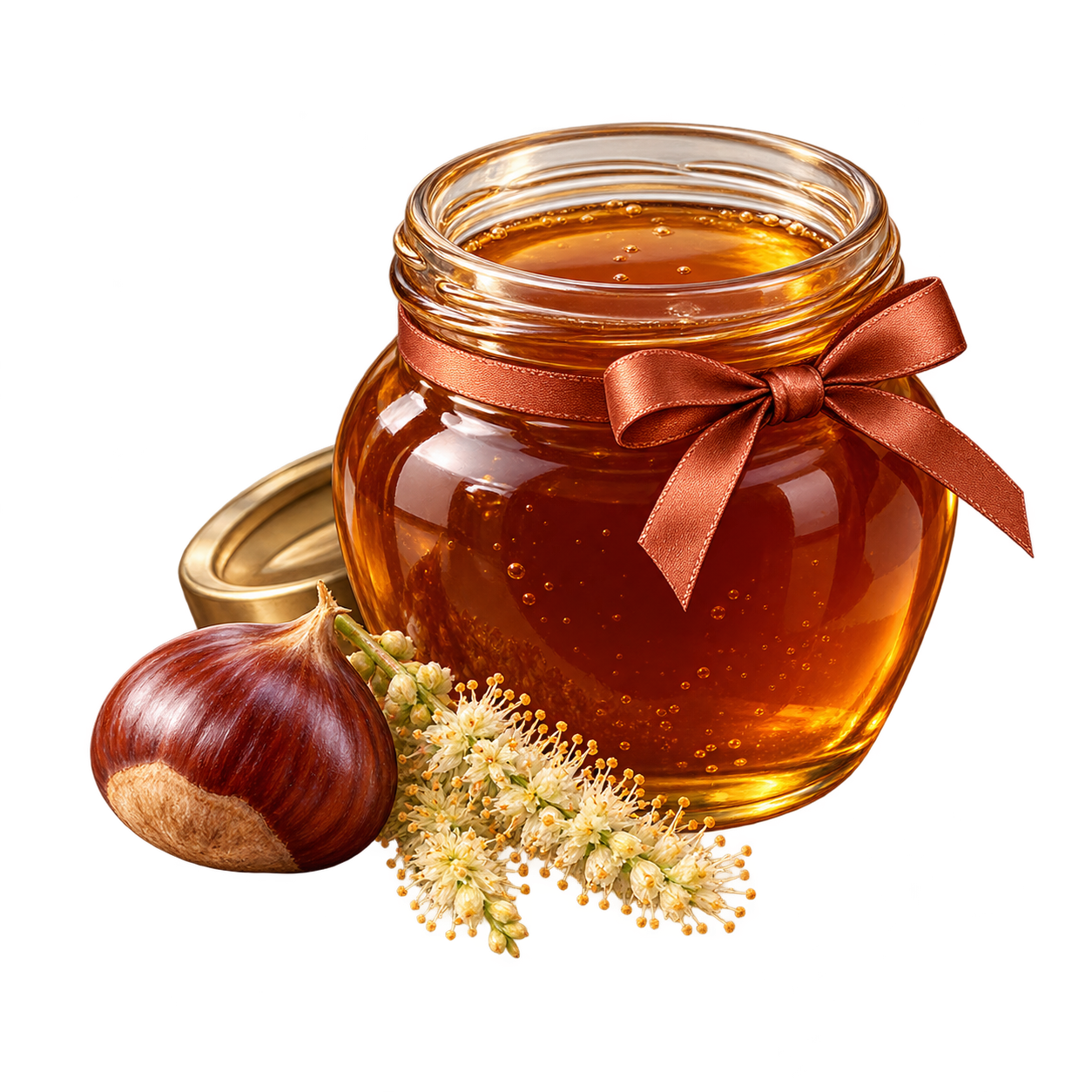
Chestnut: sweetness with an objection
The cheese expected another sweet compliment. Chestnut honey answered with a bitter edge, making the conversation more interesting.
Checked fact. Chestnut honey is known for a strong aroma and bitter finish. It is not chestnut cream.
Try it with a mature cheese.
4. Heather: honey in no hurry
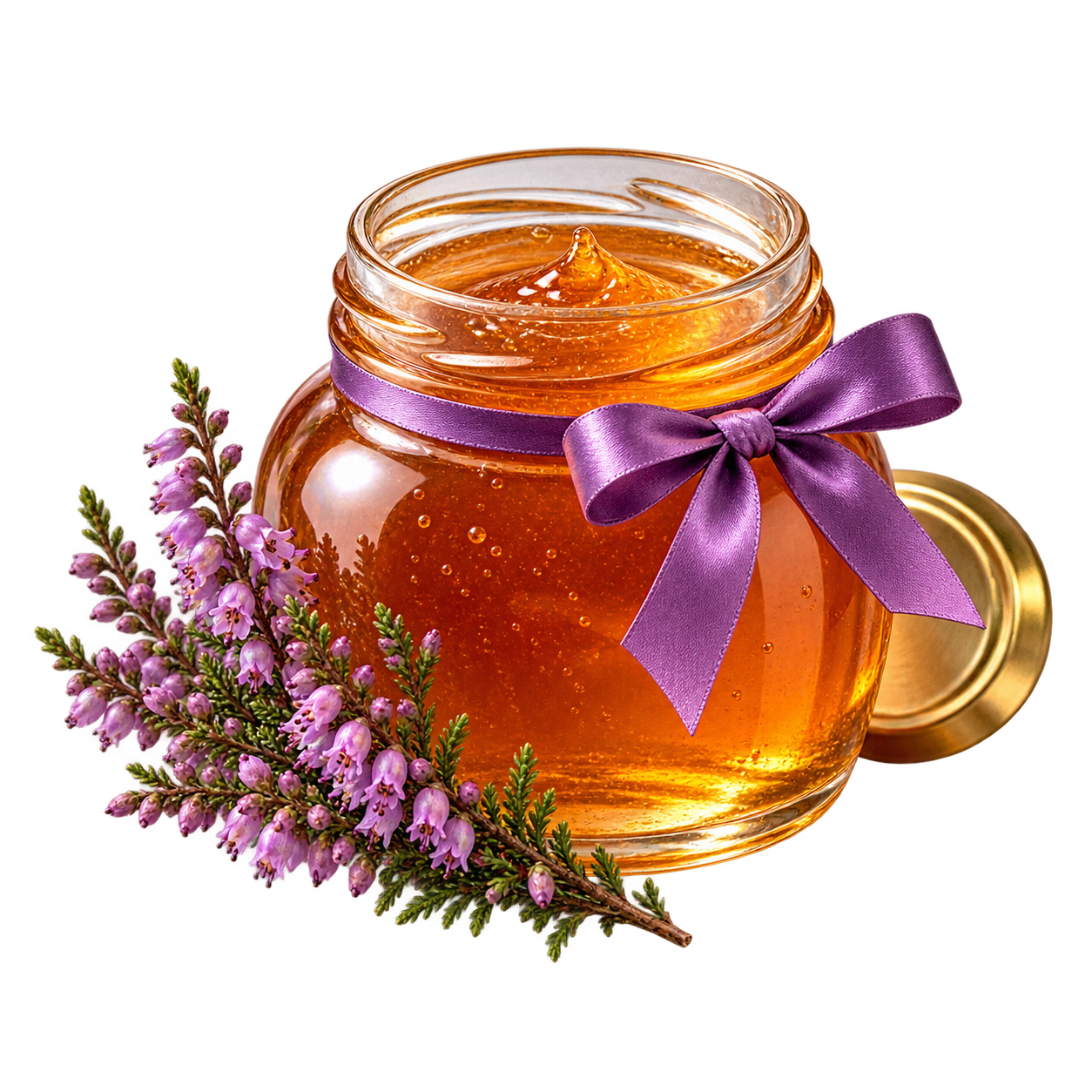
Heather: honey in no hurry
Heather honey carried itself with a thick, measured confidence. The spoon realised this breakfast called for attention rather than speed.
Checked fact. Scottish heather honey is a distinct varietal, not simply honey infused with herbs.
Texture is part of the introduction.
5. Strawberry tree: a misleading name
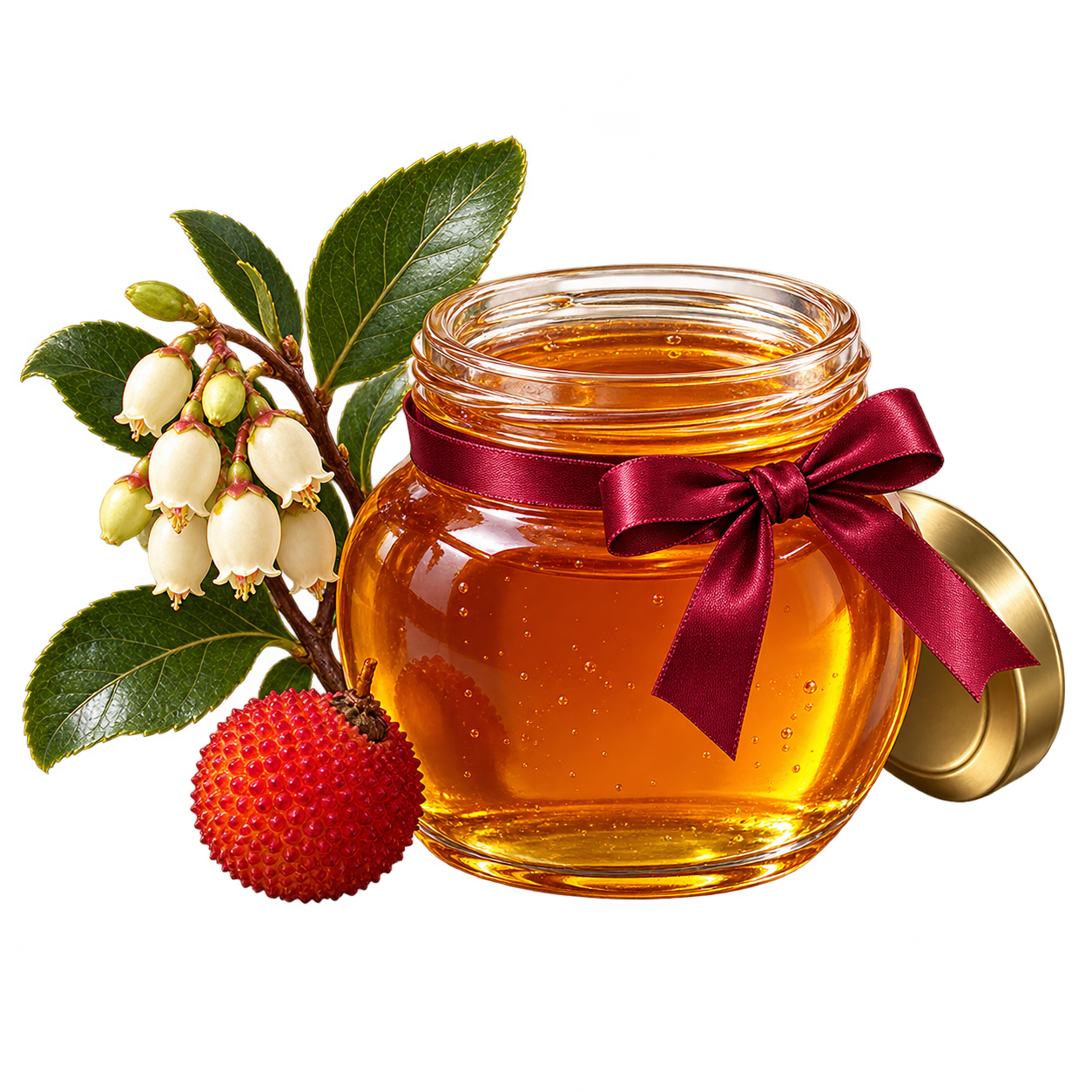
Strawberry tree: a misleading name
The toast prepared for strawberry dessert. The strawberry tree politely explained that a name was not a promise of berry jam.
Checked fact. Honey from Arbutus unedo is not strawberry-flavoured honey with purée; it is a Mediterranean varietal.
Check the botanical source on the label.
6. Linden: summer with a long finish
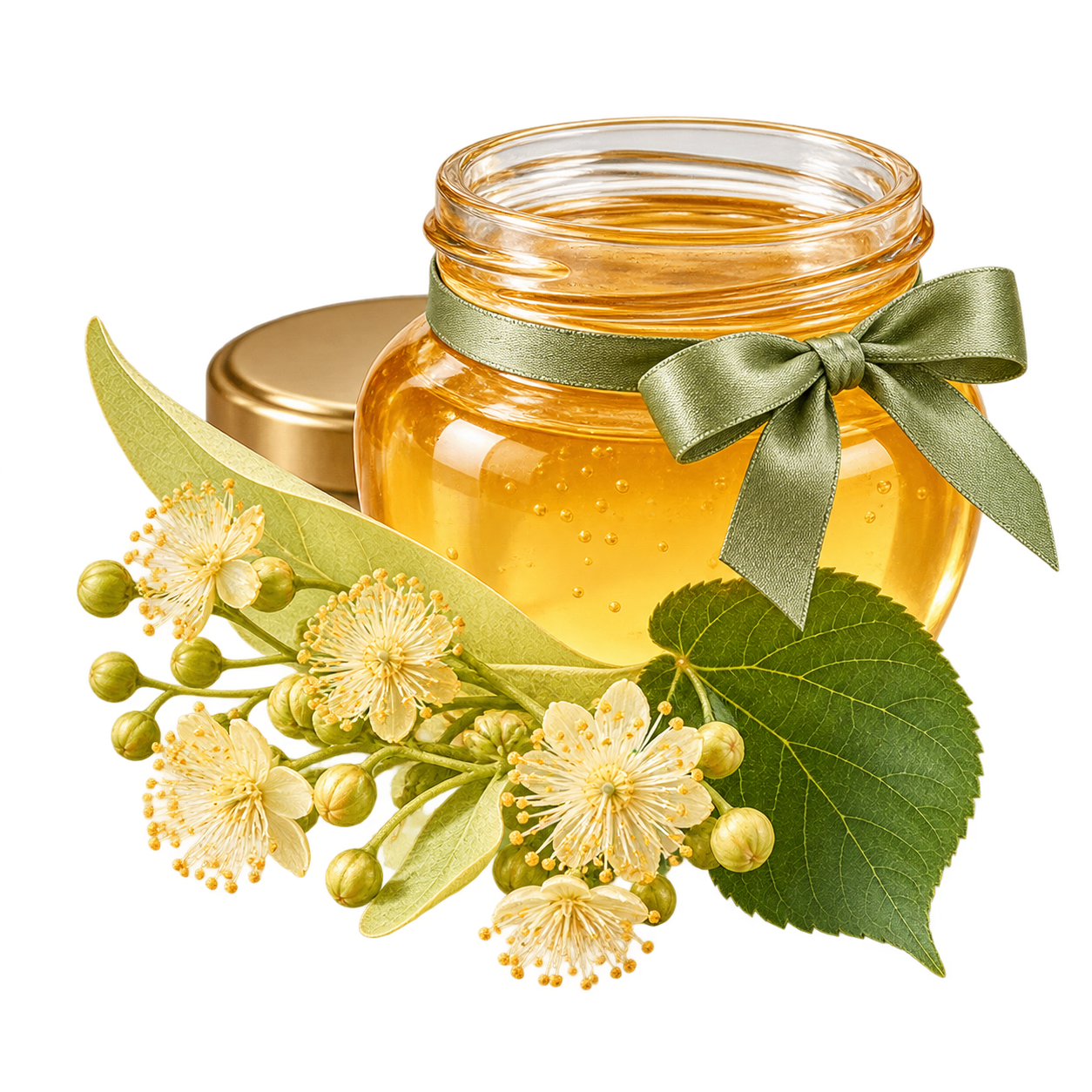
Linden: summer with a long finish
Linden honey brought no bouquet, yet its aroma introduced it first. Breakfast briefly remembered a summer avenue.
Checked fact. Tiglio means linden honey; the producer describes an intense, persistent character. It is not citrus lime honey.
Smell it before tasting.
7. Orange blossom: citrus without a segment
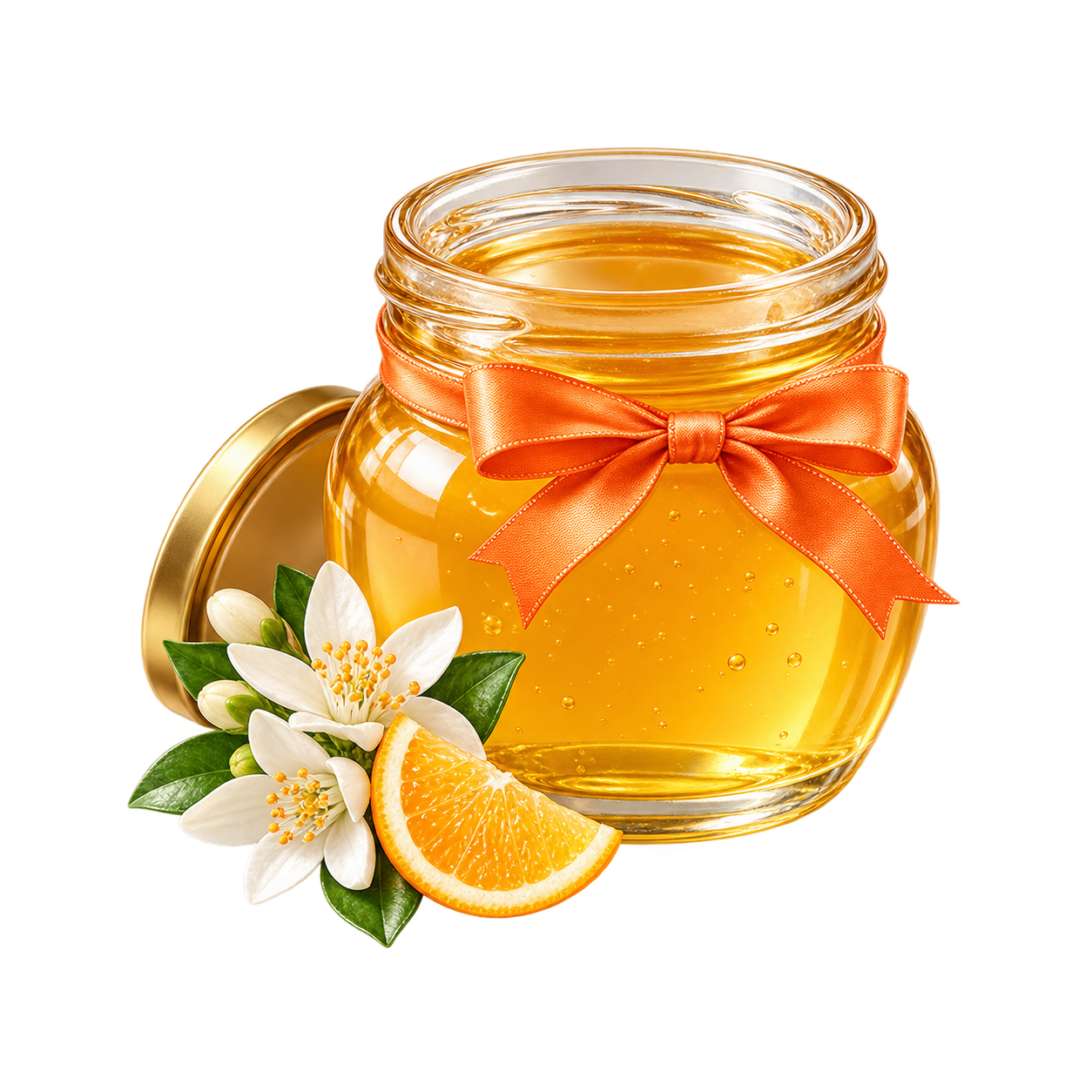
Orange blossom: citrus without a segment
The orange searched the jar for peel or juice and found neither. The bees had met it much earlier, in blossom.
Checked fact. Orange blossom names the honey’s floral source, not a required addition of orange juice.
Compare it with darker varieties.
8. Lavender: only the bouquet is purple
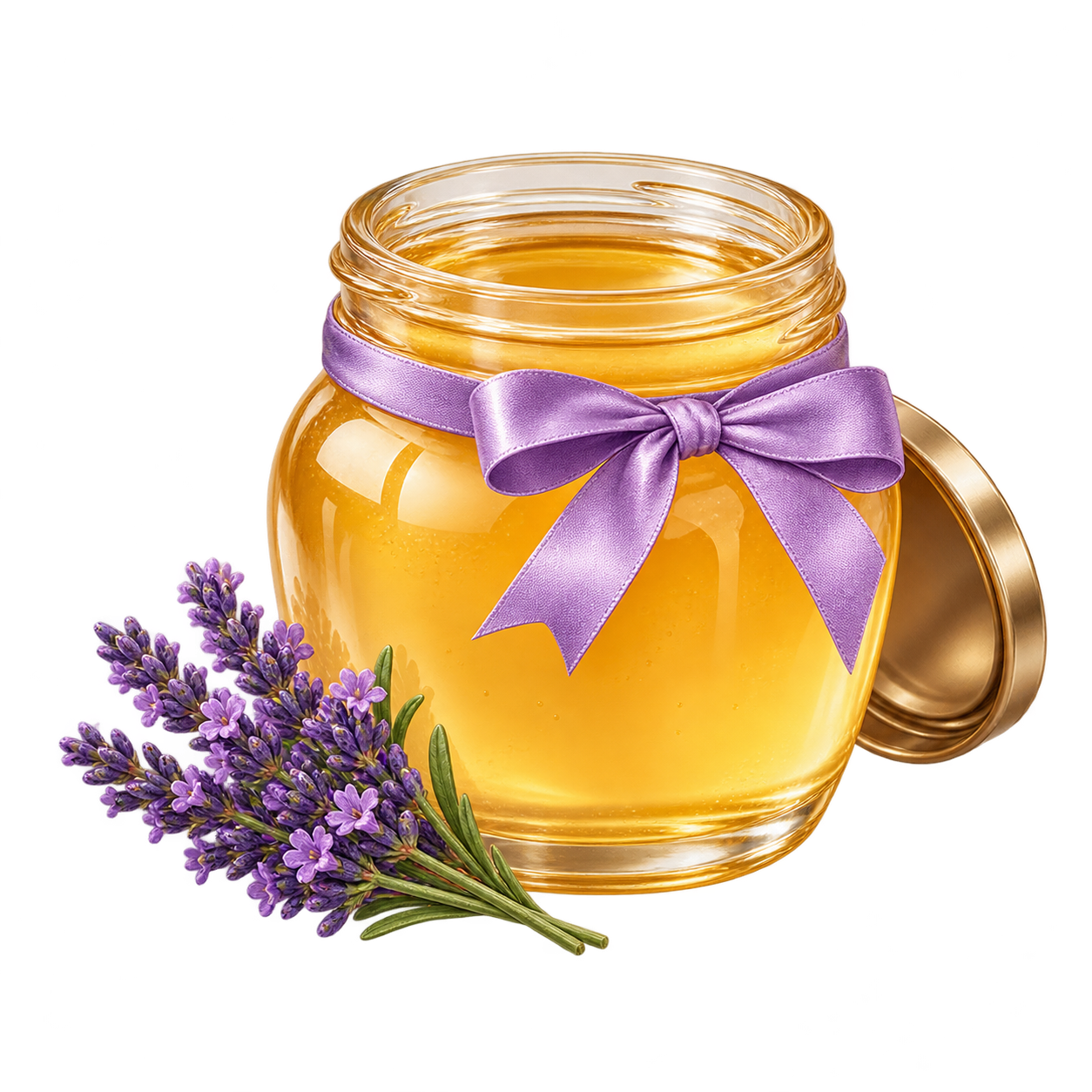
Lavender: only the bouquet is purple
Lavender wanted to choose the jar’s entire colour scheme. Honey kept its golden tones: an aromatic connection did not require repainting.
Checked fact. Honey from lavender nectar and honey infused with lavender are different products; catalogues distinguish infused honey.
Check which version you are tasting.
9. Mānuka: numbers do not replace taste
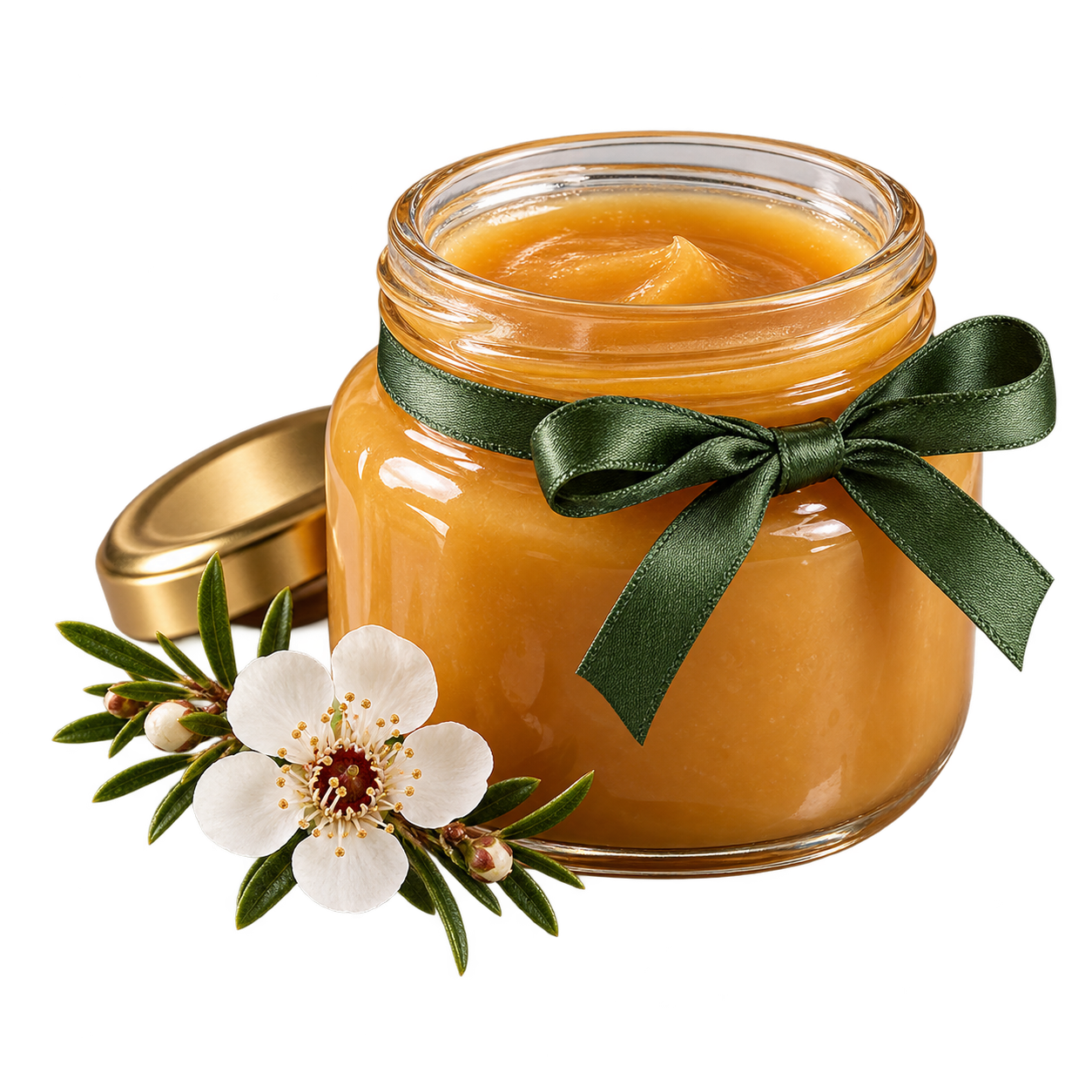
Mānuka: numbers do not replace taste
Mānuka arrived with a serious-looking label. The spoon asked to set the numbers aside: it was responsible for taste, not a marketing presentation.
Checked fact. MGO refers to methylglyoxal. It describes composition, not sweetness or a universal flavour score.
This is a food introduction, without medical promises.
10. Honeydew: the forest tells a different story
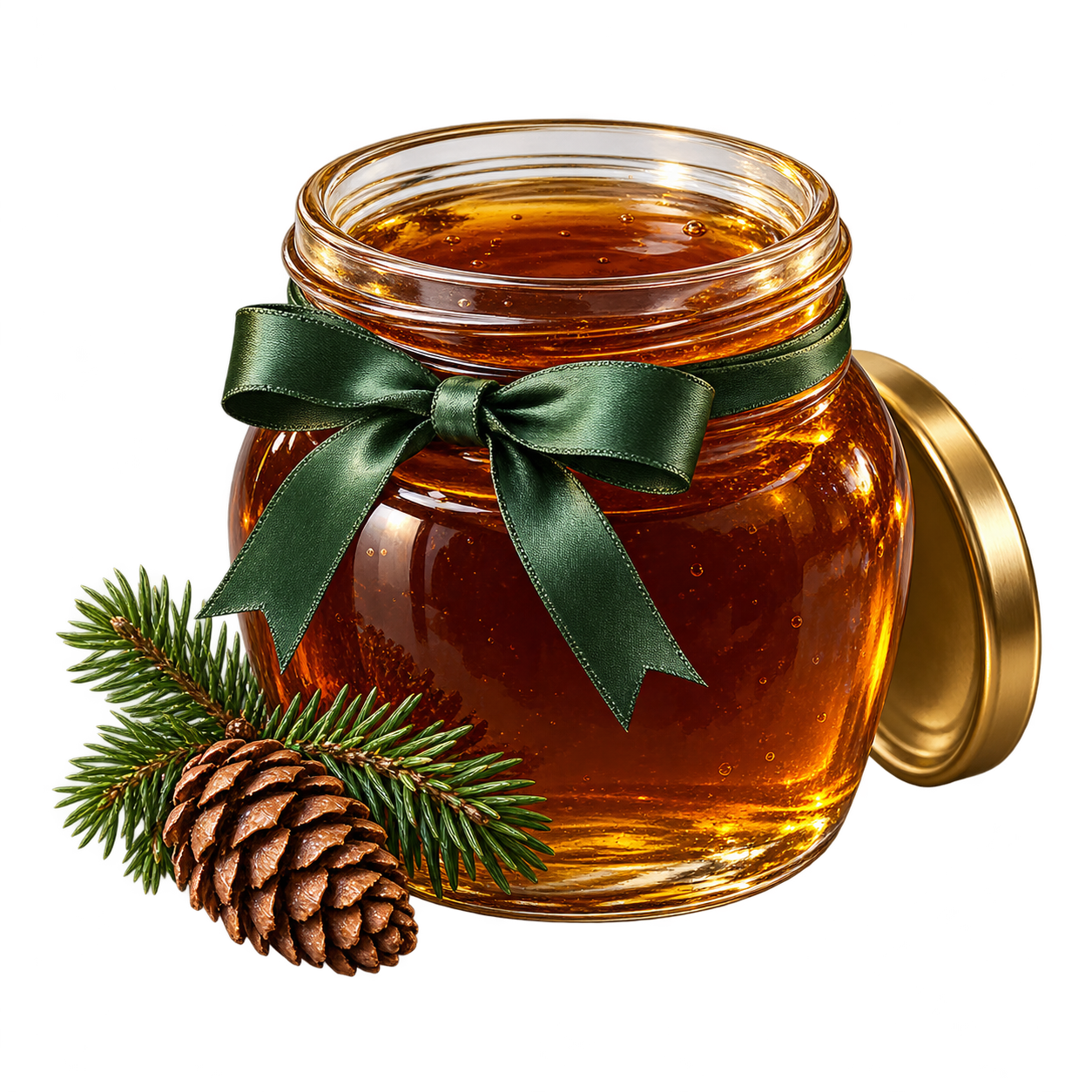
Honeydew: the forest tells a different story
The flowers prepared to take all the credit, but the forest requested a turn. A bee’s story does not always begin with floral nectar.
Checked fact. Honeydew honey comes from honeydew rather than directly from floral nectar. It is not pine-cone syrup.
The illustrated cone suggests the forest, not an ingredient.
Each has its own character
Begin with two contrasting varieties and the same bread: differences are easier to notice than in a very sweet dessert.