
Strawberries and raspberries can take a break: today the spoon visits green walnuts, rose petals, pumpkin and even tomatoes. Here are ten sweet preserves whose ingredients, textures or colours surprise, each with its own illustrated jar.
This is a tour of flavours, not canning instructions. Chunky preserves and smoother jams deliberately share the shelf. The talking ingredients are editorial fiction; facts and examples have sources.
1. Walnut: before the crunch
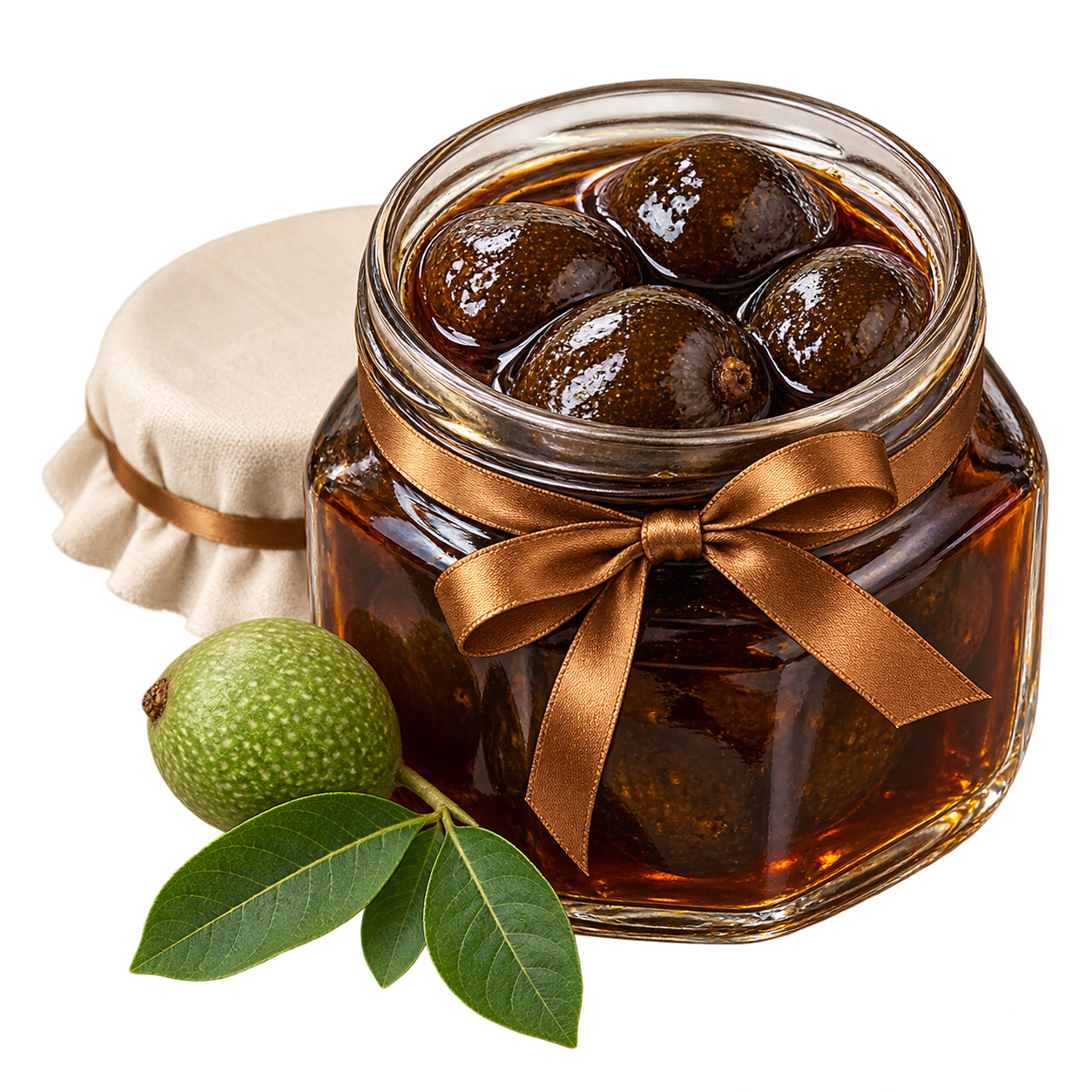
Whole young walnuts in dark syrup
The walnut planned to become crunchy and meet a nutcracker. The kitchen invited it earlier, still green and whole, to join sugar and spices. In the jar it became a dark, glossy little dessert whose identity is not obvious at first glance.
Checked fact. This preserve uses young green walnuts, not mature shelled kernels. Armenian producers explicitly list green walnuts among the ingredients.
This is not nut butter: the whole fruit and syrup are the attraction. Try a small serving with unsweetened tea; it remains a walnut allergen.
2. Rose: a bouquet at breakfast
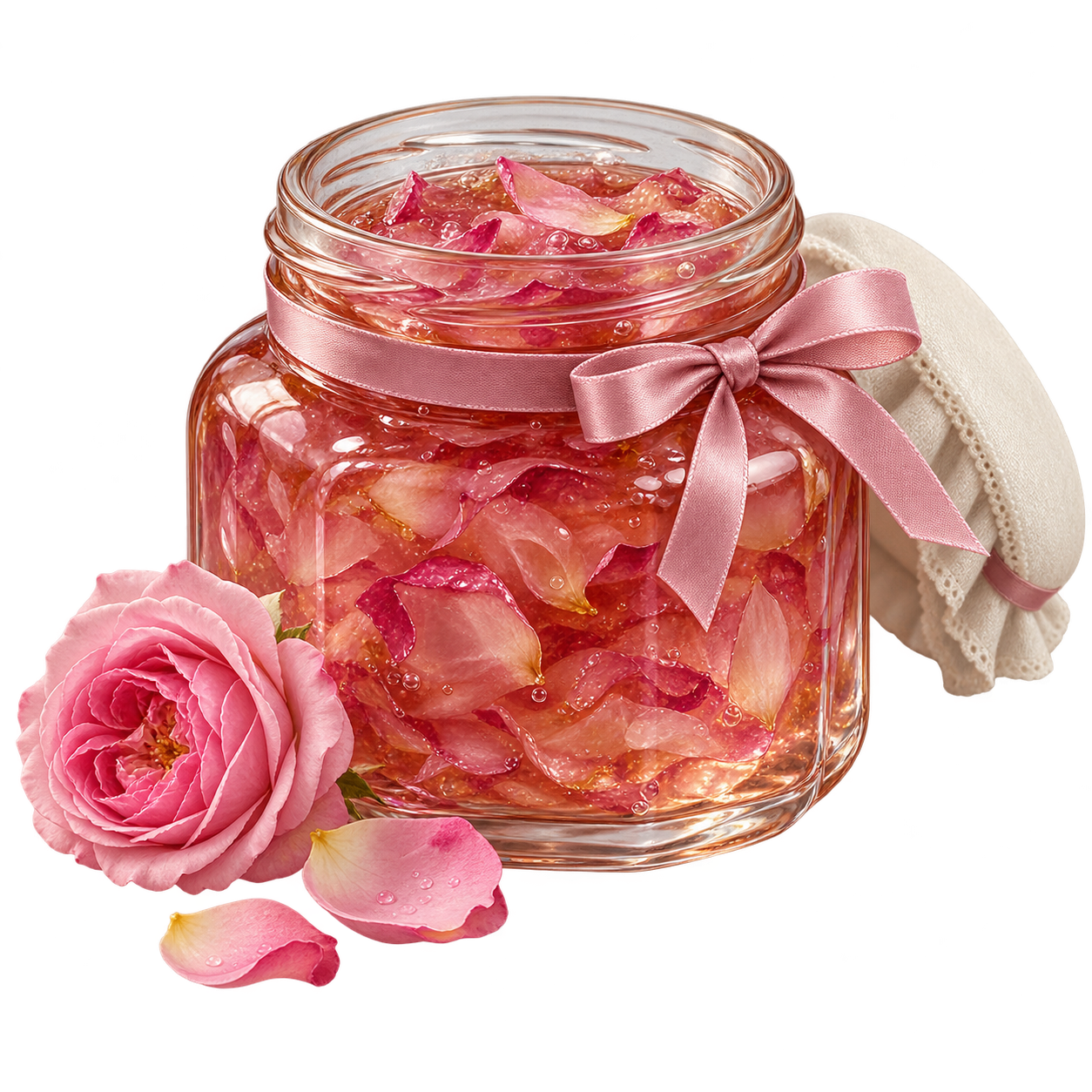
Petals instead of the usual berries
The rose arrived in the kitchen and looked for a vase. It was offered a jar instead. Once over the surprise, it appreciated the promotion: its fragrance could now attend breakfast rather than wait for special occasions.
Checked fact. Isparta’s official food guide highlights preserve made from its fragrant roses. Petals and fragrance distinguish it from an ordinary berry jam.
A small spoonful works alongside yogurt or soft cheese. Food-grade roses and florist bouquets are not interchangeable ingredients.
3. Watermelon rind: an encore after the picnic
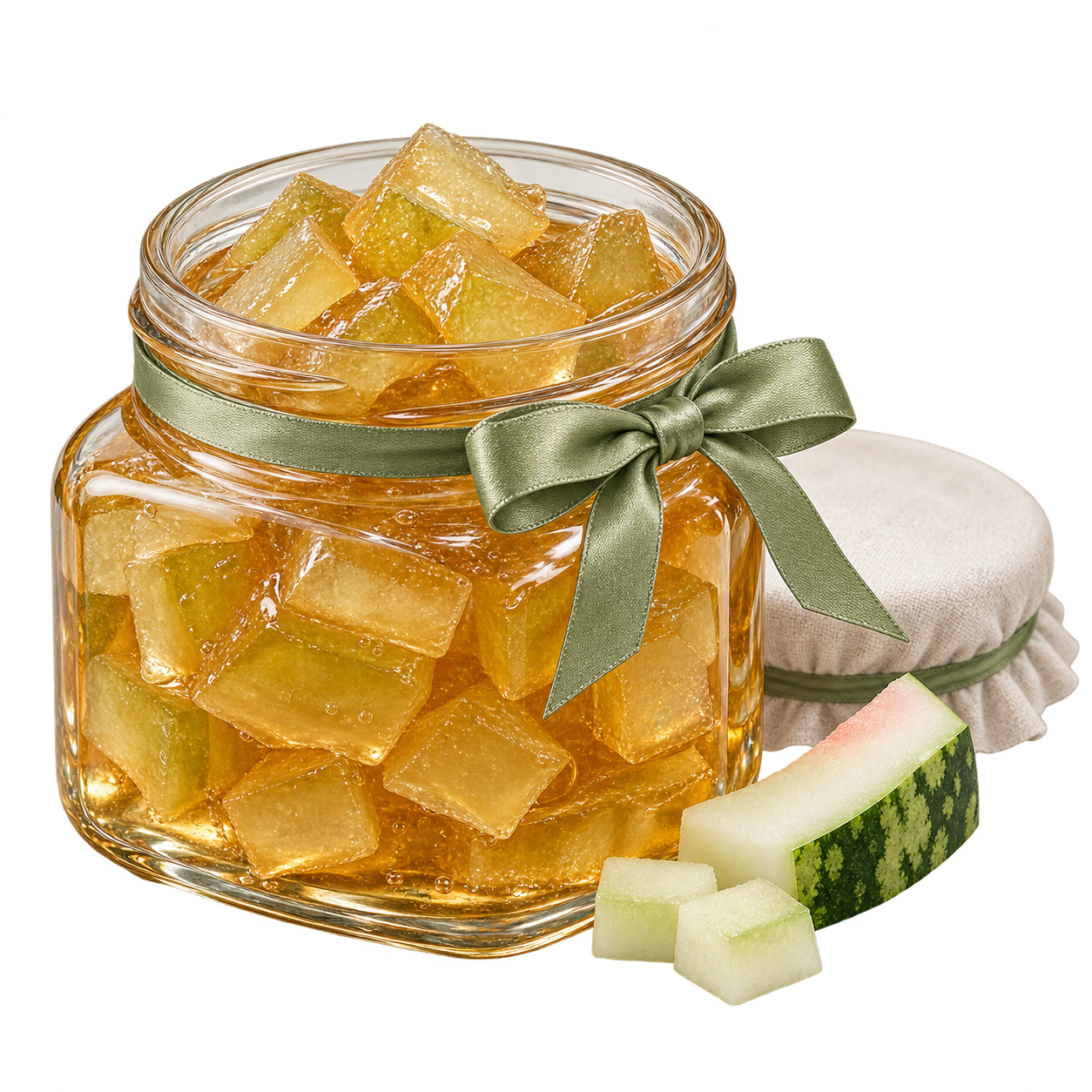
The pale inner rind
After the picnic, everyone praised the red flesh. The rind was headed for the bin until it requested an encore. In syrup its pale pieces turned translucent and returned to the table in an unexpectedly elegant costume.
Checked fact. The US National Center for Home Food Preservation removes the green skin and pink flesh, retaining the inner rind. Its sweet preserve is distinct from pickled watermelon rind.
Lemon or ginger can join the flavour; both appear in the source recipe. The illustrated jar contains pale cubes, not red watermelon flesh.
4. Pumpkin: soup is off the menu
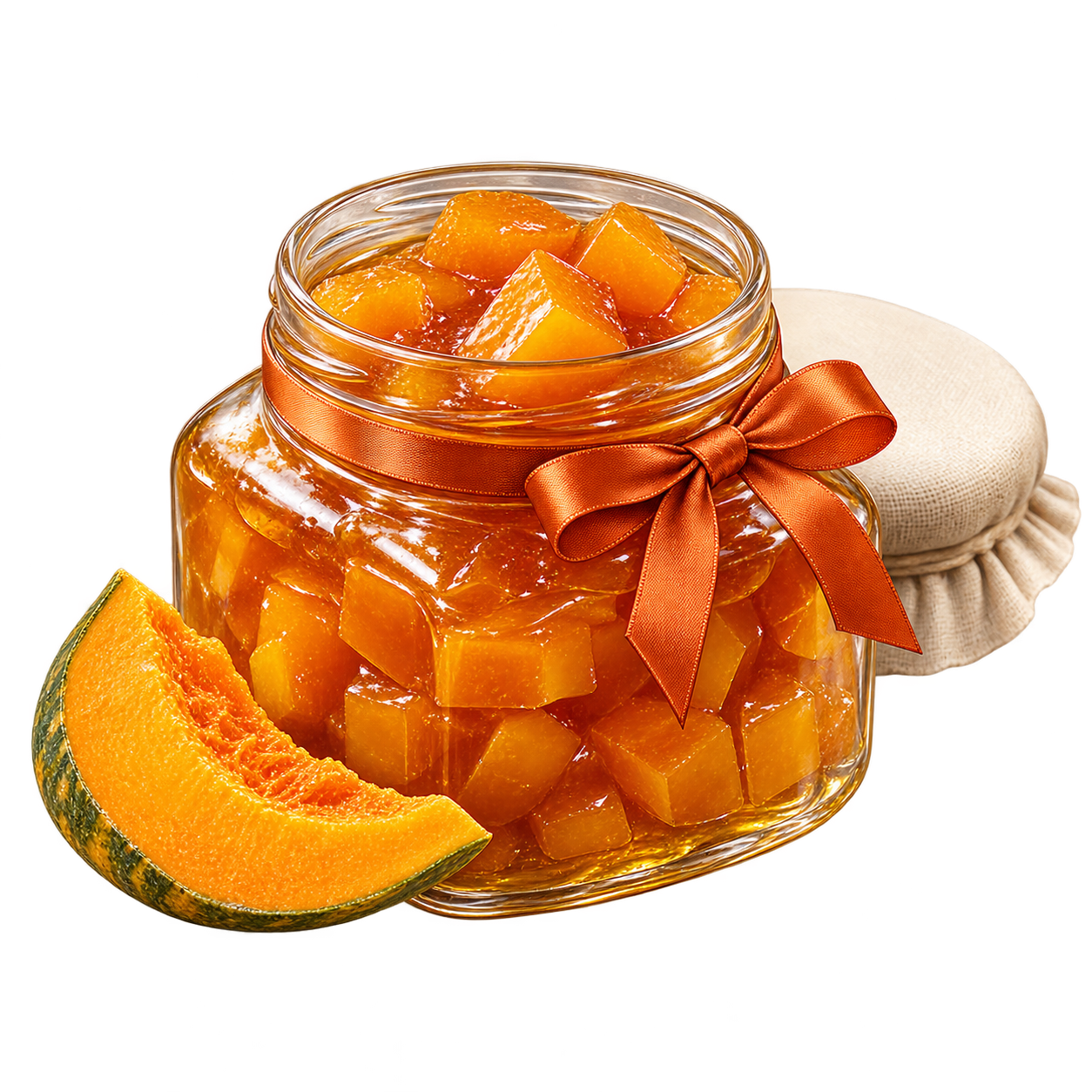
Pumpkin pieces in sweet syrup
The pumpkin expected soup and had mentally selected its croutons. Instead, it was cut into neat pieces and invited to dessert. Its orange colour proved useful again: the jar seemed to hold a little autumn light.
Checked fact. Pumpkin preserve is an established commercial product in Armenian producers’ ranges. A chunky version differs from a smooth pumpkin purée.
For a first taste, a version with visible pieces makes the transformation clear. A spoonful alongside fresh cheese contrasts a mild dairy base with sweet pumpkin.
5. White cherry: no ruby dress code
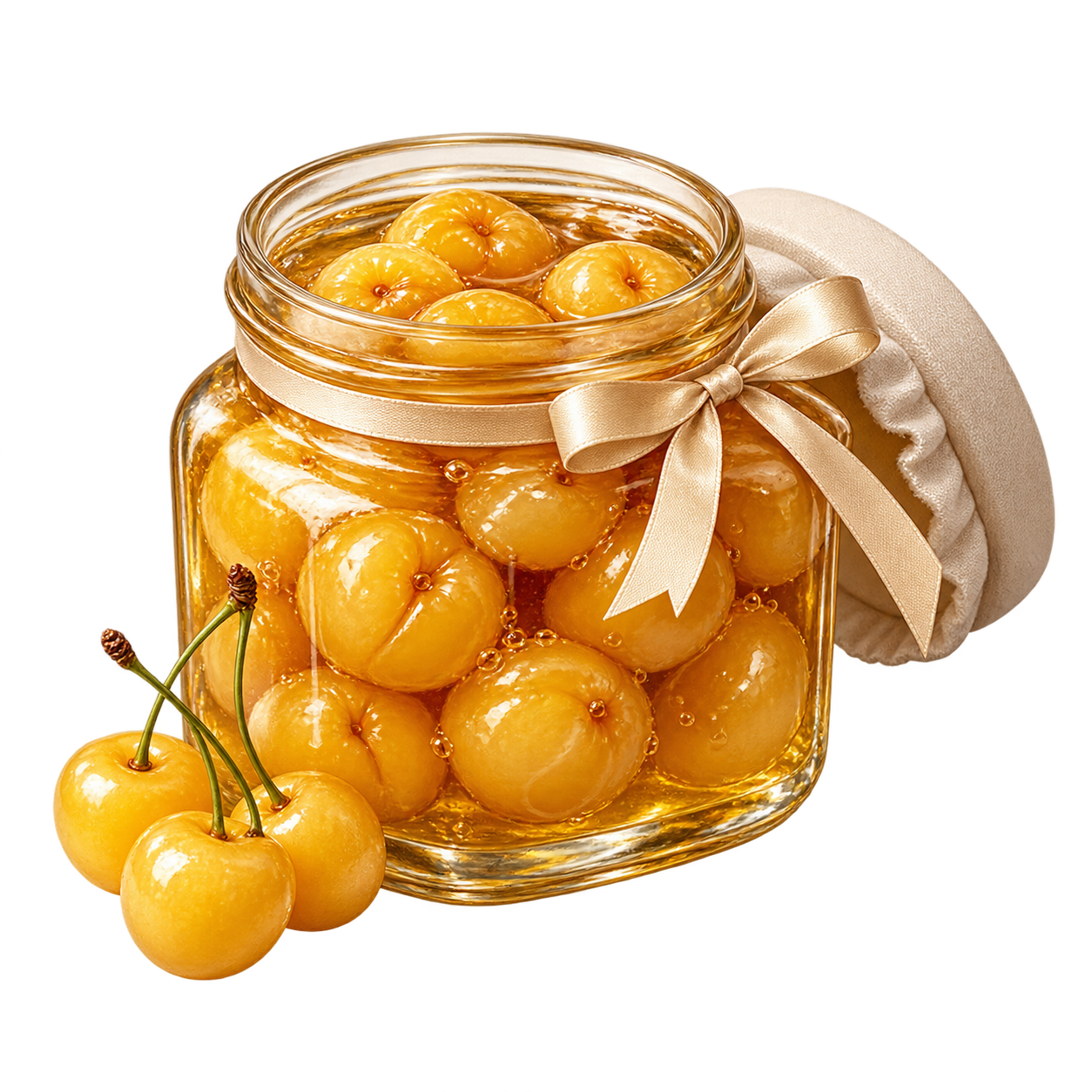
Pale cherries in golden syrup
On the shelf, the pale cherry noticed all the red jars and wondered whether it belonged. Its golden outfit was welcome too: a preserve does not need a dark colour to deserve a spoon of its own.
Checked fact. Artfood lists White bing cherry preserve as a separate product. Pale sweet cherries are a deliberate choice, not simply unripe substitutes for sour cherries.
A clear serving dish shows off the fruit and syrup. Check whether the cherries are pitted before serving; the jar’s colour cannot tell you.
6. Quince: a firm character with a tender ending
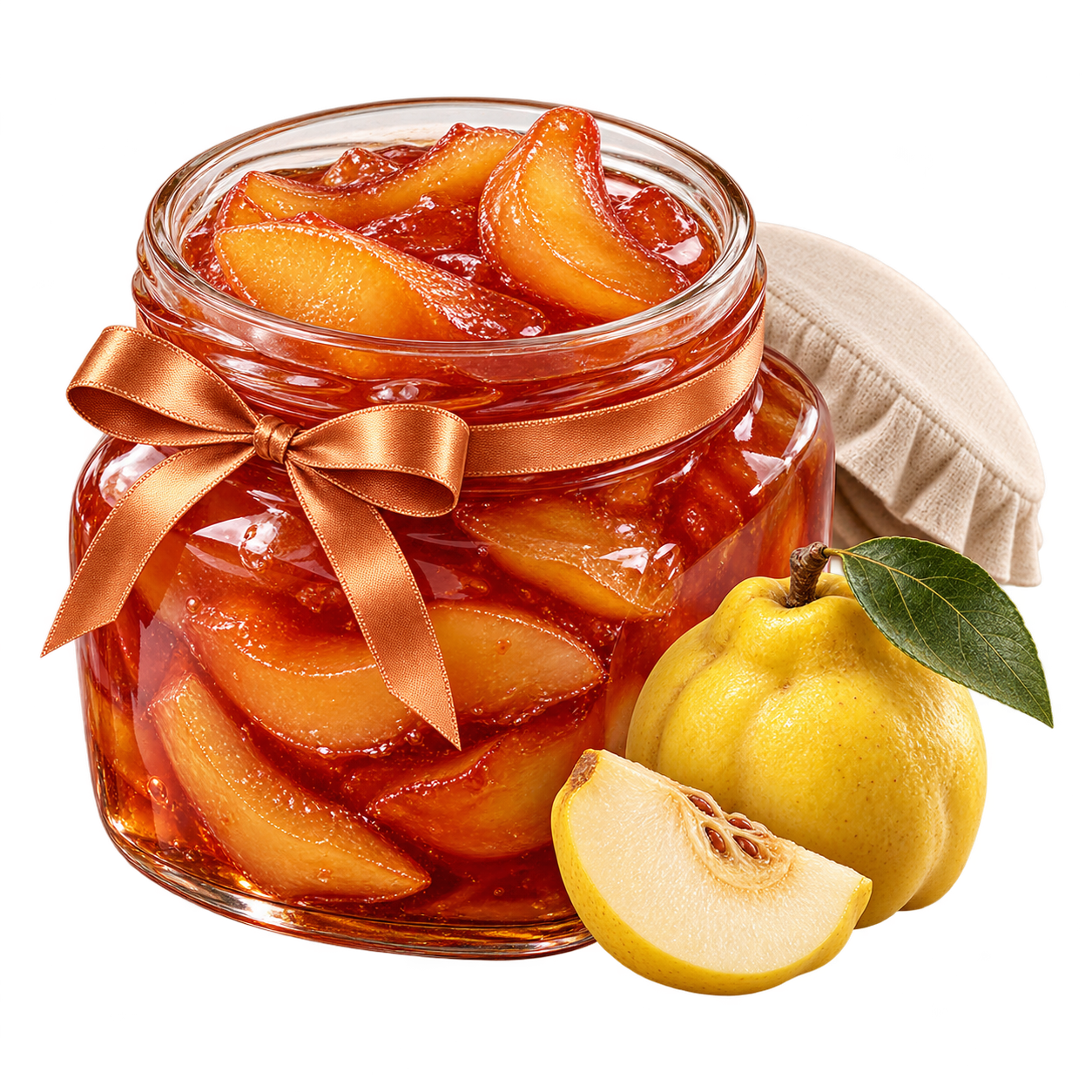
Fragrant slices rather than a firm paste
The quince looked like a pear determined to become a sculpture. The kitchen gave it time and syrup rather than an argument. The slices softened, with gold giving way to rosy amber, as though the fruit had changed both character and lighting.
Checked fact. Quince can become chunky preserves, clear jelly or firm paste. In Annabel Langbein’s recipe, cooking turns the syrup deep red; colour intensity depends on preparation.
Our jar shows the sliced version. It is not the same as sliceable membrillo: the ingredient is shared, the finished form is different.
7. Feijoa: green outside, surprising inside
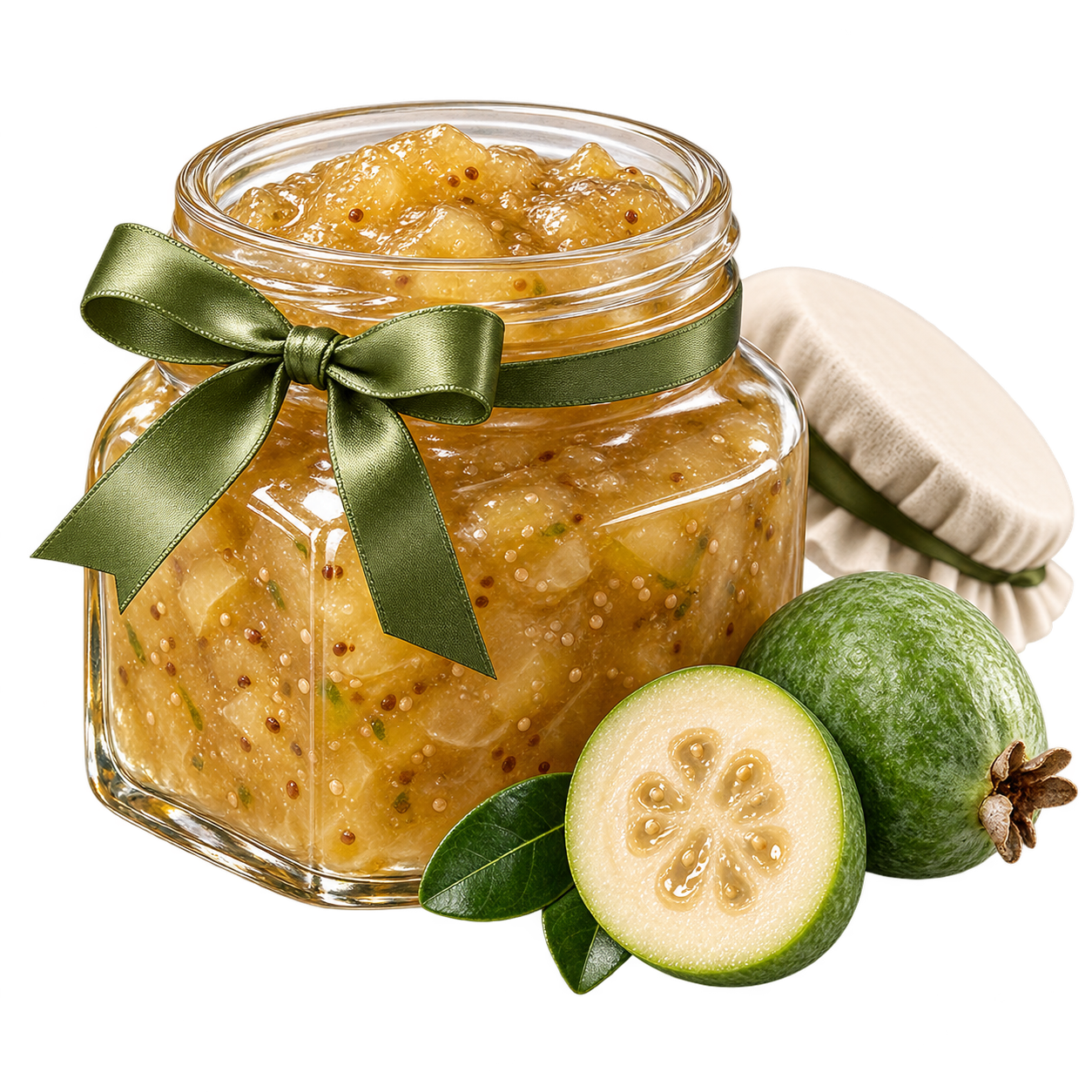
Fragrant flesh in a soft jam
The feijoa asked not to be judged by its green skin. Inside was a lively conversation of aromas; the jar let it continue beyond the season. The toast admitted this introduction was more surprising than another meeting with strawberry jam.
Checked fact. Chelsea Sugar’s jam recipe uses peeled, diced feijoas with lemon. Feijoa jam need not be bright green: skin colour does not dictate flesh colour.
Start with a spoonful on toast or plain yogurt. Cooked jam and raw feijoa mashed with sugar are different preparations, even when sold side by side.
8. Carrot: breakfast rather than soup duty
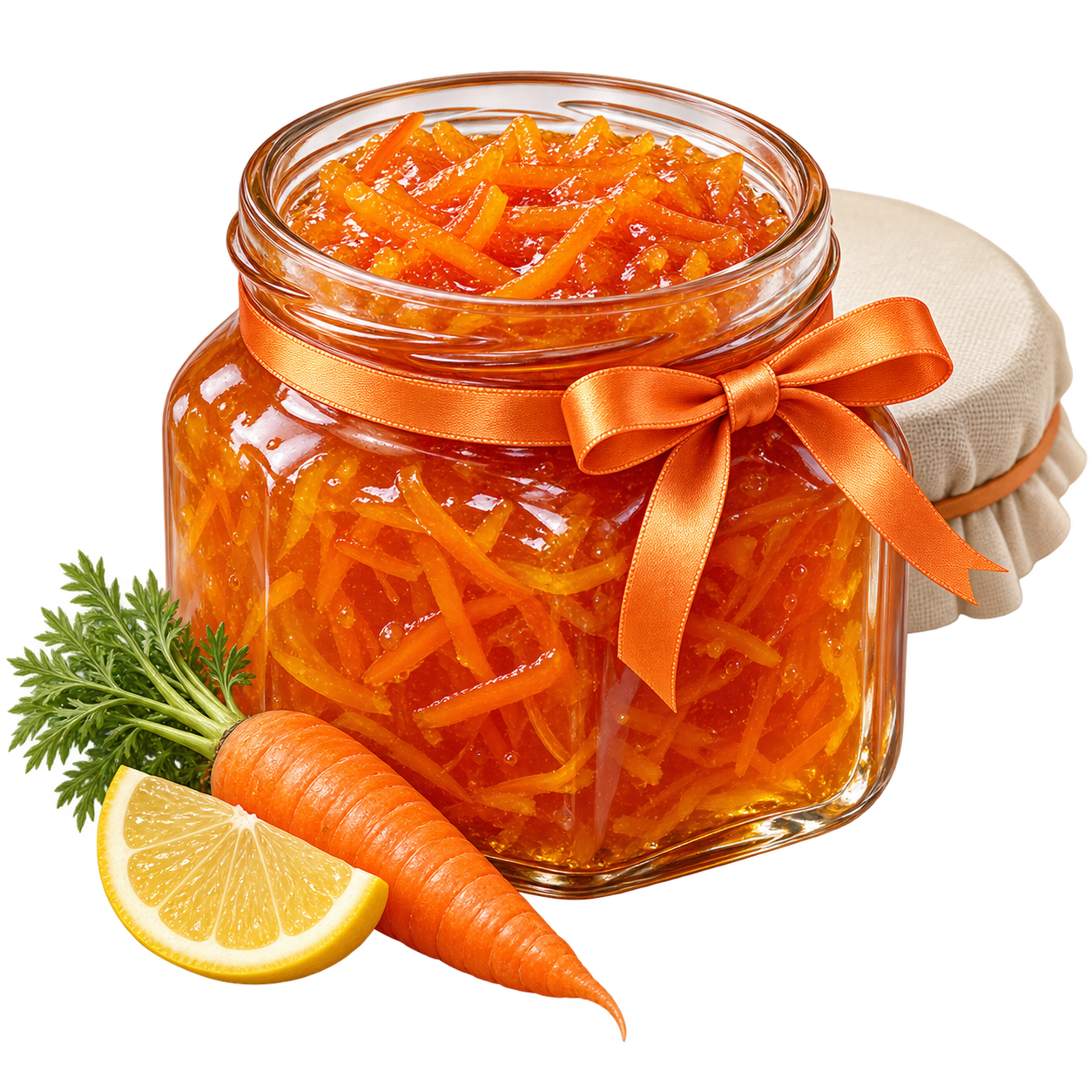
An orange vegetable in a sweet role
The carrot waited by the stove for an onion. Sugar arrived instead. At first it suspected a mix-up, then remembered carrot cake: the route from vegetable drawer to dessert had already been opened.
Checked fact. GoTürkiye’s official guide lists carrot jam among the products of Beypazarı near Ankara. It is a preserve in its own right, not necessarily carrot cake translated into a jar.
Our illustration shows a finely shredded version. Citrus and spices can change its character, so the particular jar’s ingredients matter more than a universal flavour promise.
9. Fig: a dessert with tiny dots
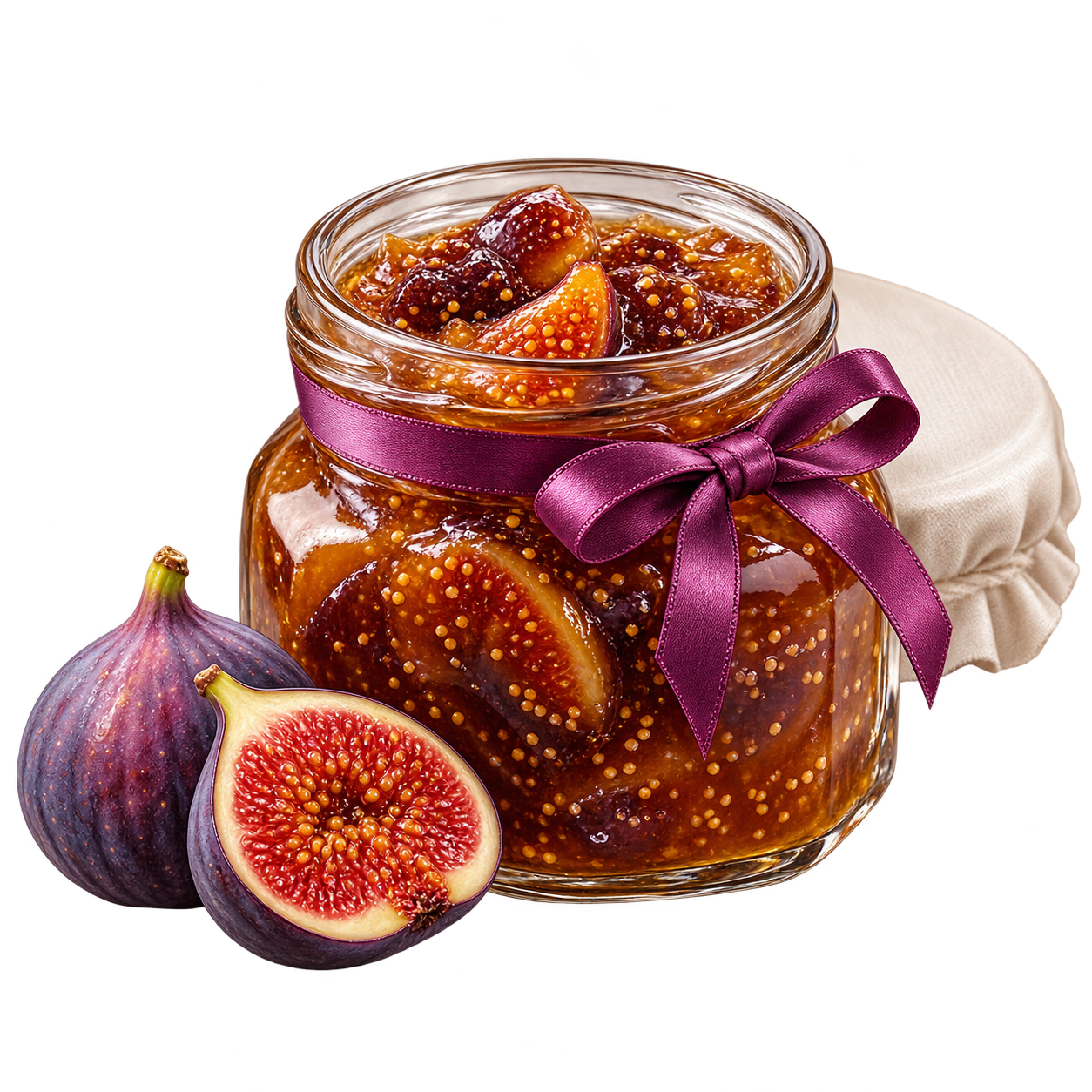
Soft fruit pieces and a distinctive seed texture
The fig opened to reveal its own festive decoration. The kitchen had little reason to argue with the design. In the jar, tiny pale dots preserved its personality even when the fruit’s original outline had softened away.
Checked fact. NCHFP distinguishes whole-fruit fig preserves from jam made with chopped figs. These are different textures, not merely different names.
The illustration shows a chunky version. Try it with cheese; home canning figs requires a tested formulation rather than relying on sweetness alone.
10. Tomato: ketchup need not apply
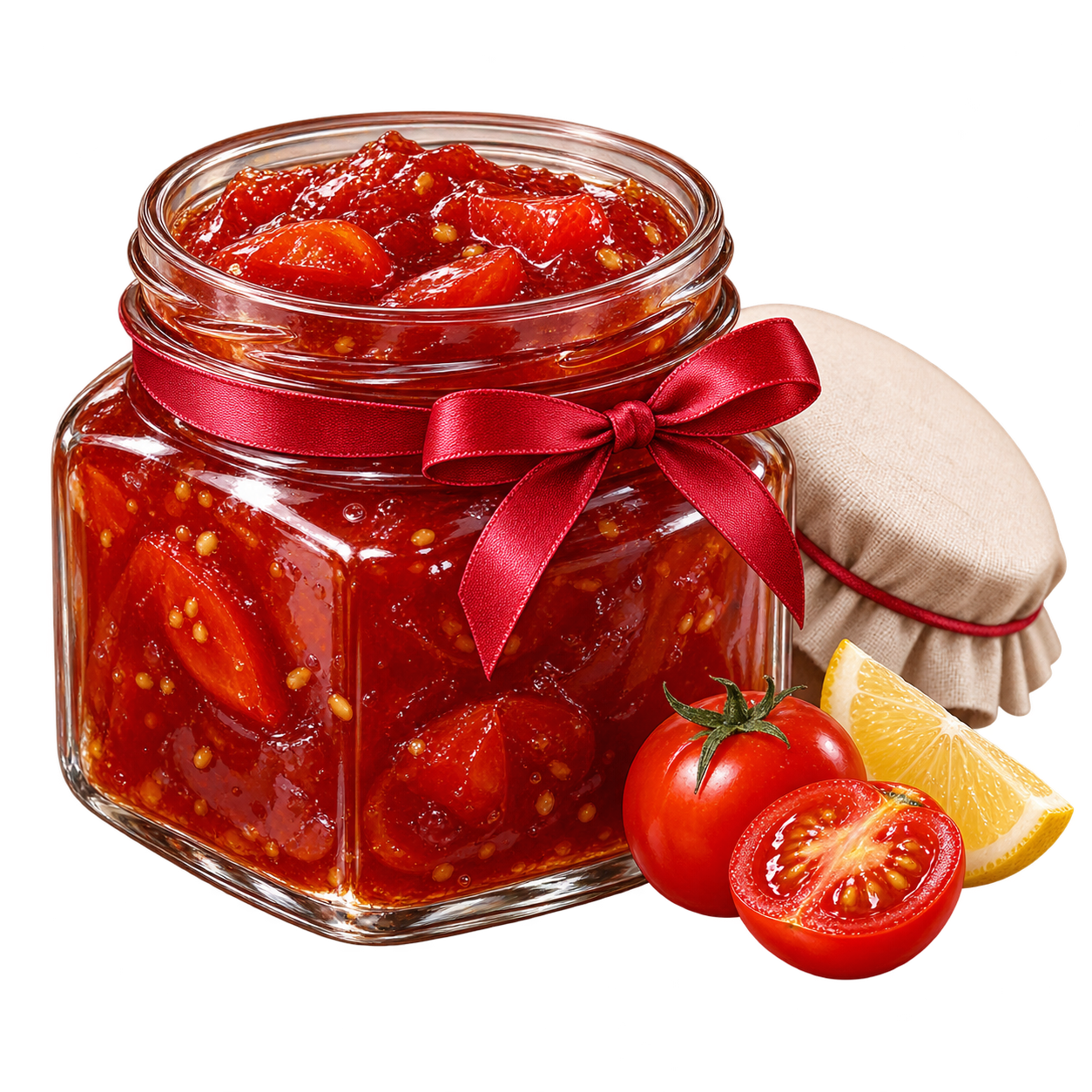
A sweet preserve from a familiar kitchen ingredient
The tomato confidently headed for the pasta, then was stopped beside the sugar jar. It demanded an explanation. The kitchen answered with lemon and spices: a shop’s produce aisle did not have to determine its entire career.
Checked fact. Bernardin’s Tomato Preserves recipe combines tomatoes, sugar, lemon, ginger and spices. It suggests serving the sweet preserve with cheese among other pairings, rather than treating it as another tomato sauce.
Try a small portion beside a salty cheese. The red jar looks familiar, but a spoonful quickly reveals a different story.
Each has its own character
A surprising preserve is not about collecting exotic names. Keeping a fruit whole, giving a vegetable a sweet role or noticing the watermelon rind can be enough. A good jar changes how a familiar ingredient looks, asking only for a small introductory spoonful.