
Pelmeni, varenyky, khinkali, gyoza and their relatives: compare shapes, folds and serving styles. A journey through filled dough dishes, without assuming a single history or recipe.
The editorial team created these illustrations with AI. They explain the subjects rather than photograph specific products. Each card links to a source.
1. Pelmeni
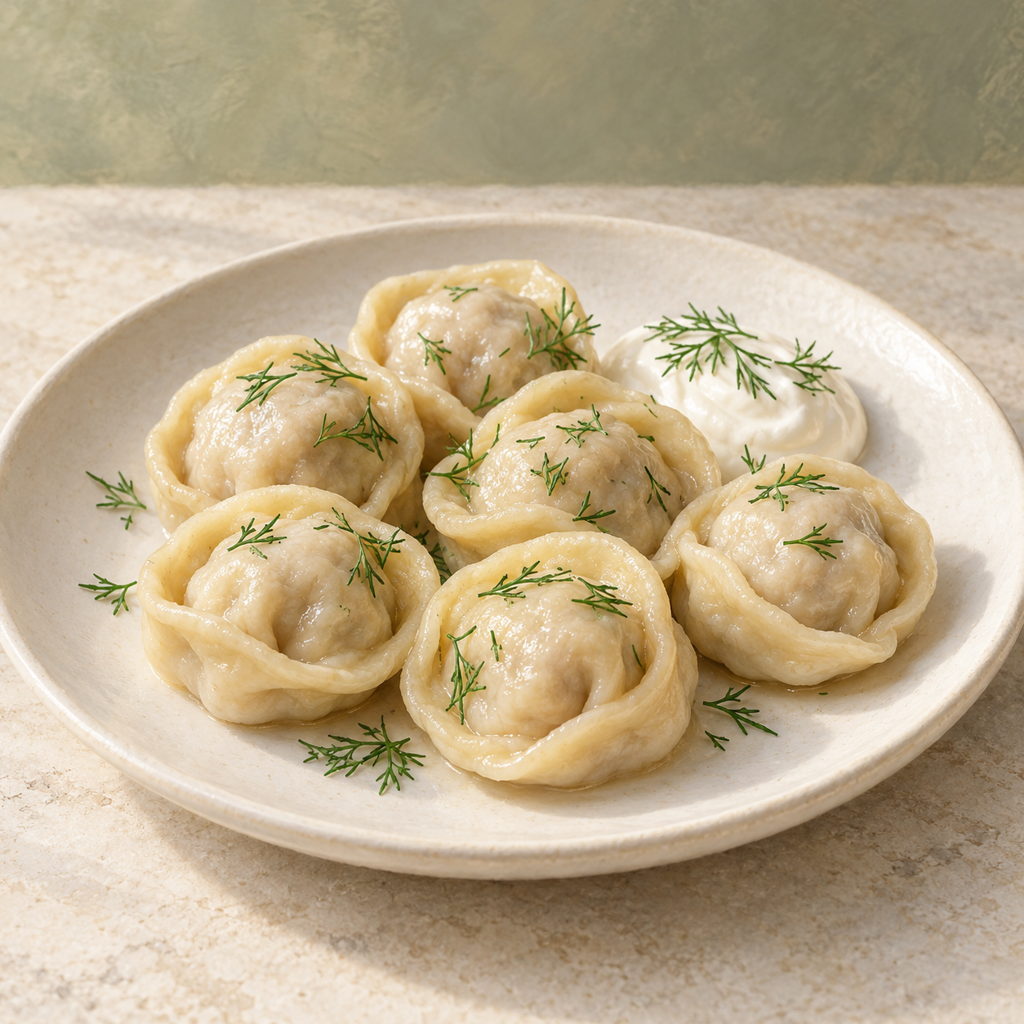
Russia · joined ends
Start with a familiar shape: a half circle folds until its ends meet. The compact little ear looks distinct from an elongated crescent. The illustration shows one serving option with sour cream and dill.
Checked fact. Pelmeni fillings extend beyond meat: regional Russian cooking also includes fish or squid versions.
Source: Source — Pelmeni
2. Cherry varenyky
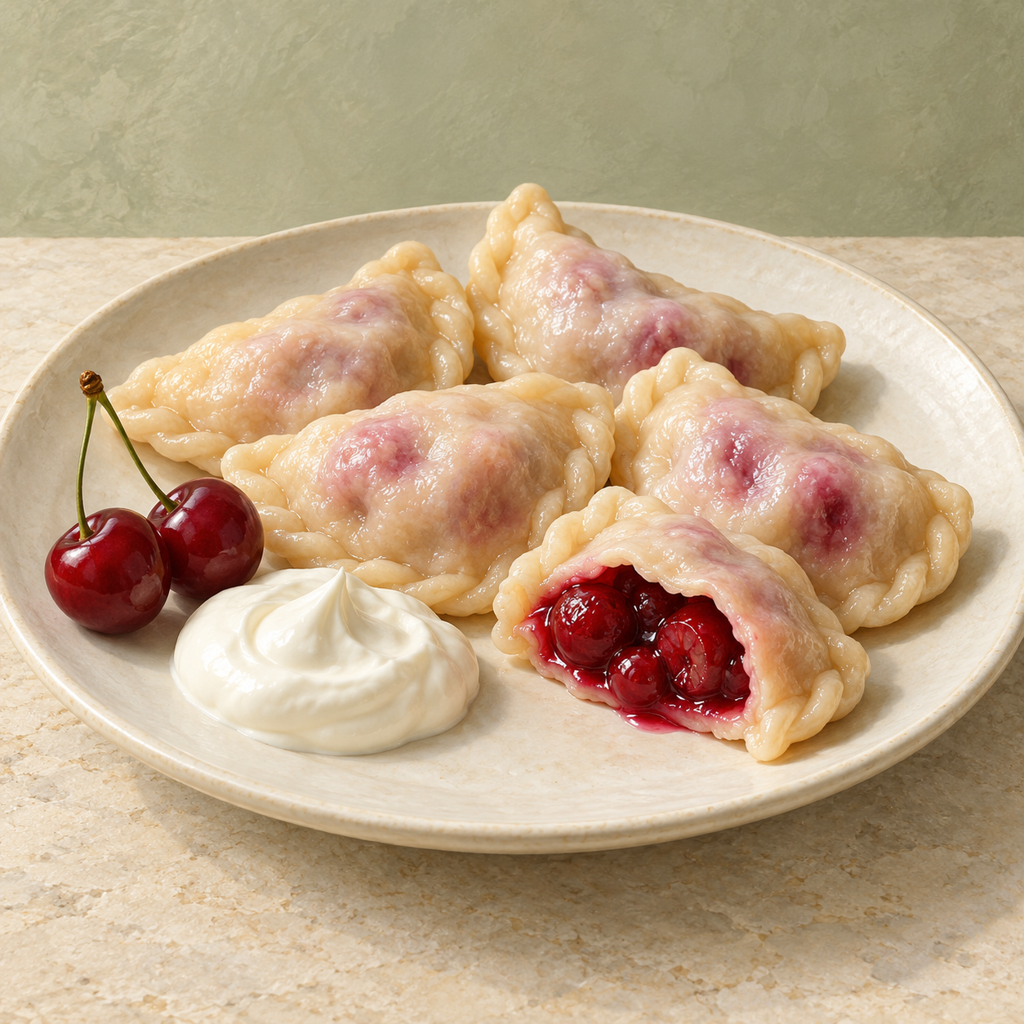
Ukraine · sweet filling
The same filling-inside-dough idea easily becomes dessert. Red cherries at the cut surface change the whole character. A broad curved seam remains, rather than joining the tips as in a compact pelmeni.
Checked fact. Cherry varenyky have even featured in a Ukrainian postage issue dedicated to the dish.
Source: Source — Cherry varenyky
3. Khinkali
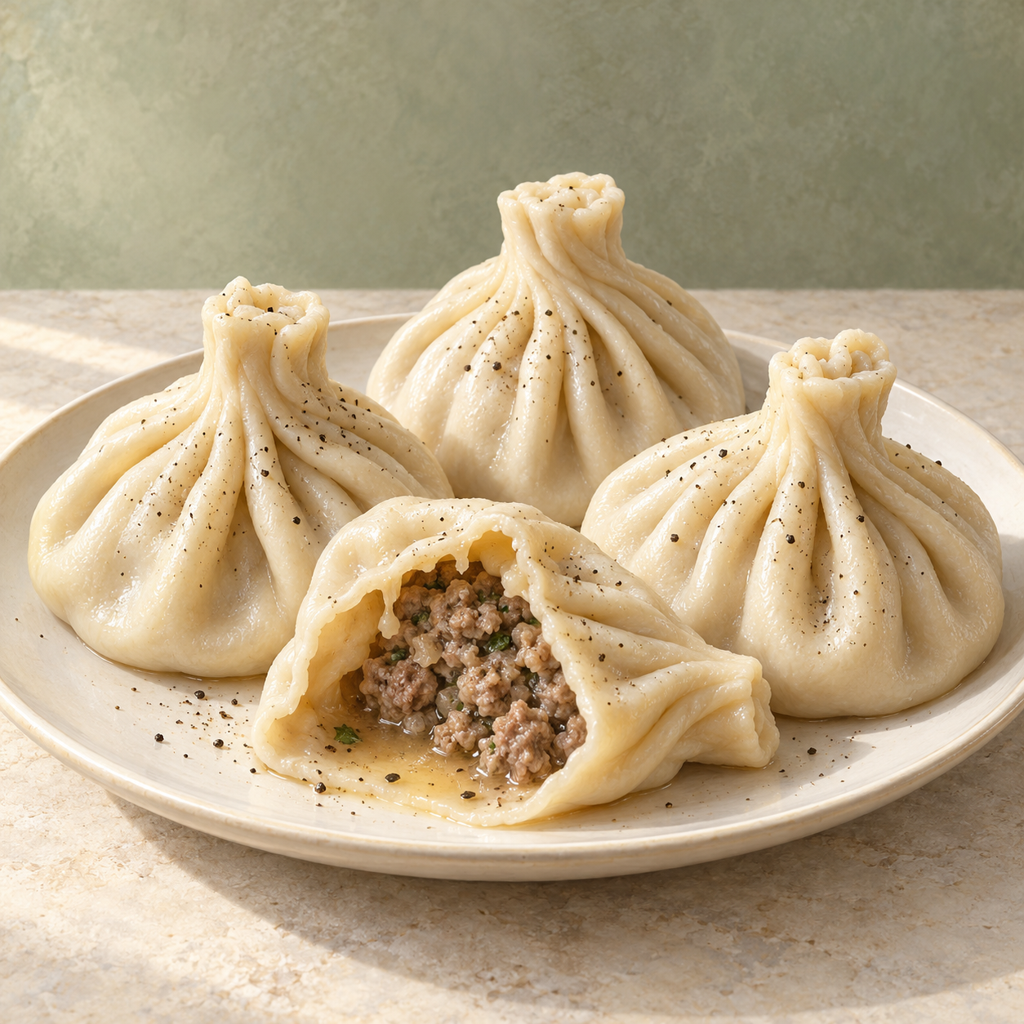
Georgia · pleats and broth
The wrapper gathers like a pouch, with pleats meeting in a thick top knot. Meat khinkali hold liquid as well as filling. A cutaway explains their structure; ordinary serving keeps the wrapper intact.
Checked fact. Meat khinkali contain broth inside the wrapper; meat-free fillings also exist.
Source: Source — Khinkali
4. Polish pierogi
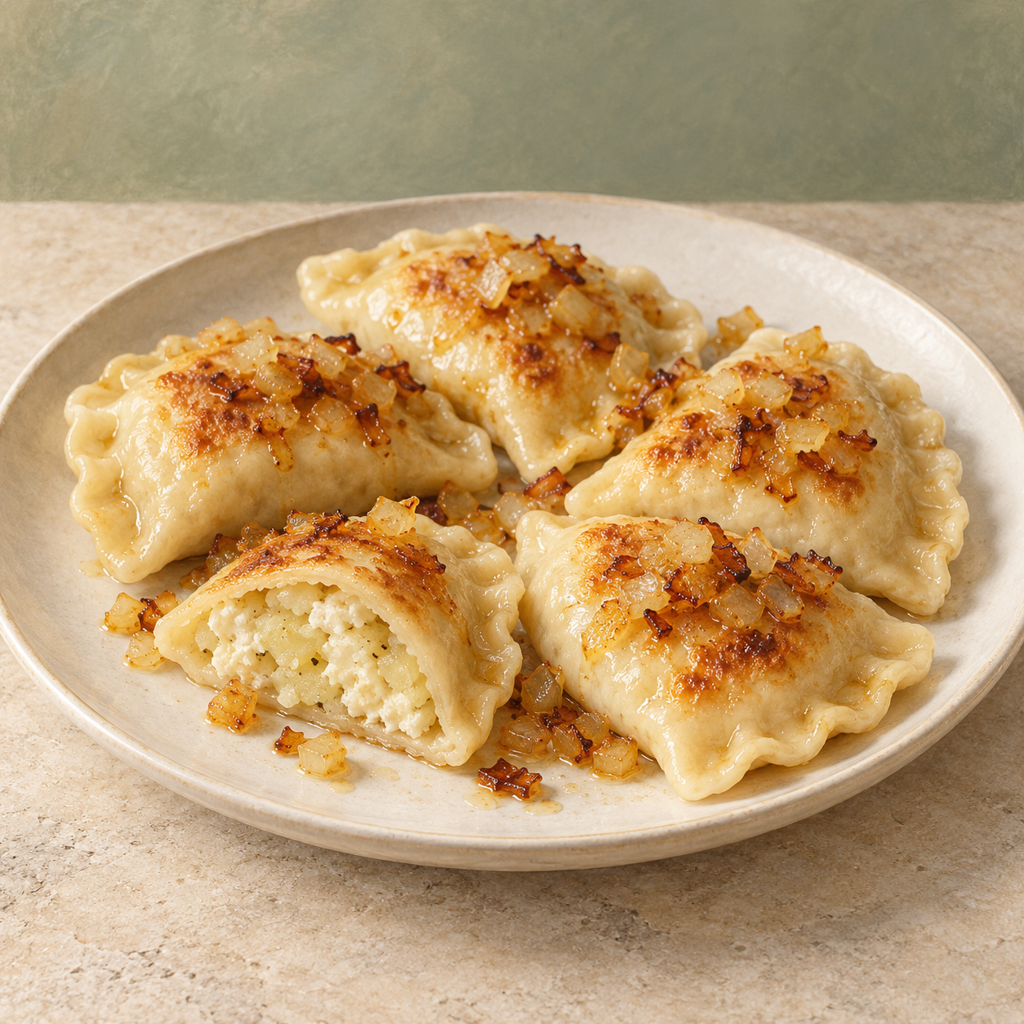
Poland · crescent-shaped relatives
The name may suggest something unfamiliar, but the plate holds recognizable filled crescents. This illustration chooses potato, cheese and onion. A browned surface represents one serving option, not a requirement for every pierogi.
Checked fact. Polish pierogi can contain meat, vegetables, cheese or fruit; there is no single universal filling.
Source: Source — Polish pierogi
5. Ravioli
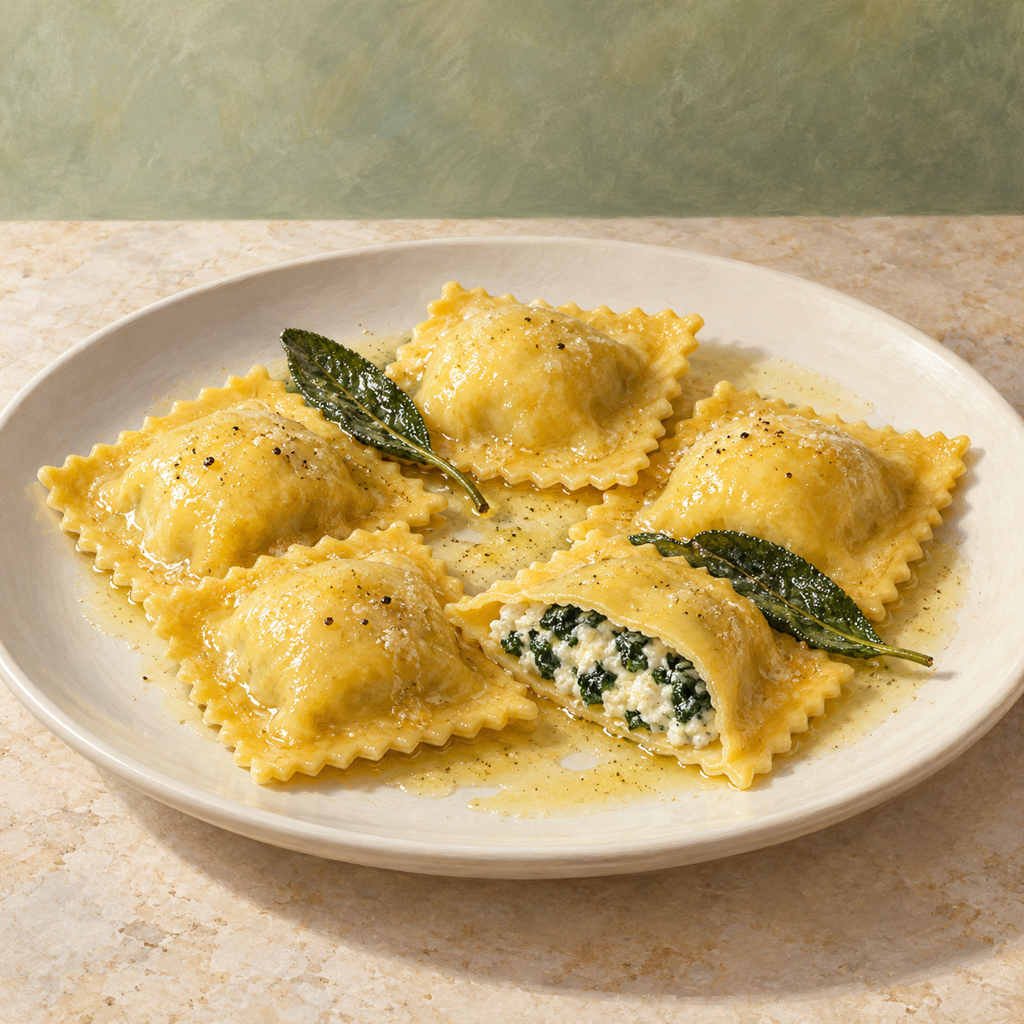
Italy · filling between pasta sheets
A square cushion with a serrated edge looks like a little envelope. Instead of gathering a pouch, pasta layers enclose the filling. Spinach and pale ricotta appear here; ravioli shapes and fillings vary widely.
Checked fact. Spinach and ricotta are an established ravioli filling, used for example by producer Giovanni Rana.
Source: Source — Ravioli
6. Gyoza
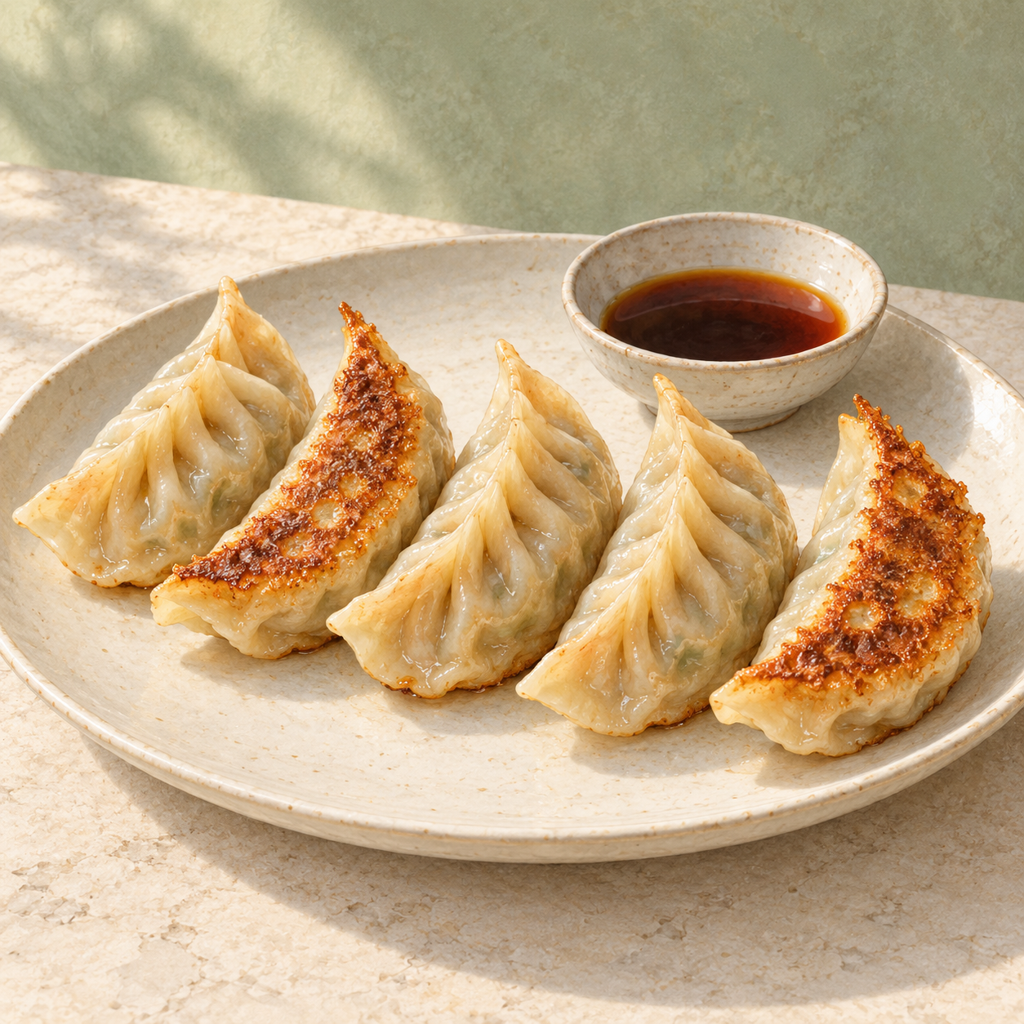
Japan · browned base
A neat row of pleated crescents becomes more revealing when one shows its base. In the pan-fried version, a soft upper wrapper contrasts with a golden underside. This angle reveals cooking method as well as shape.
Checked fact. Utsunomiya is known for gyoza; JNTO highlights the thin wrappers of its pan-fried version.
Source: Source — Gyoza
7. Jiaozi
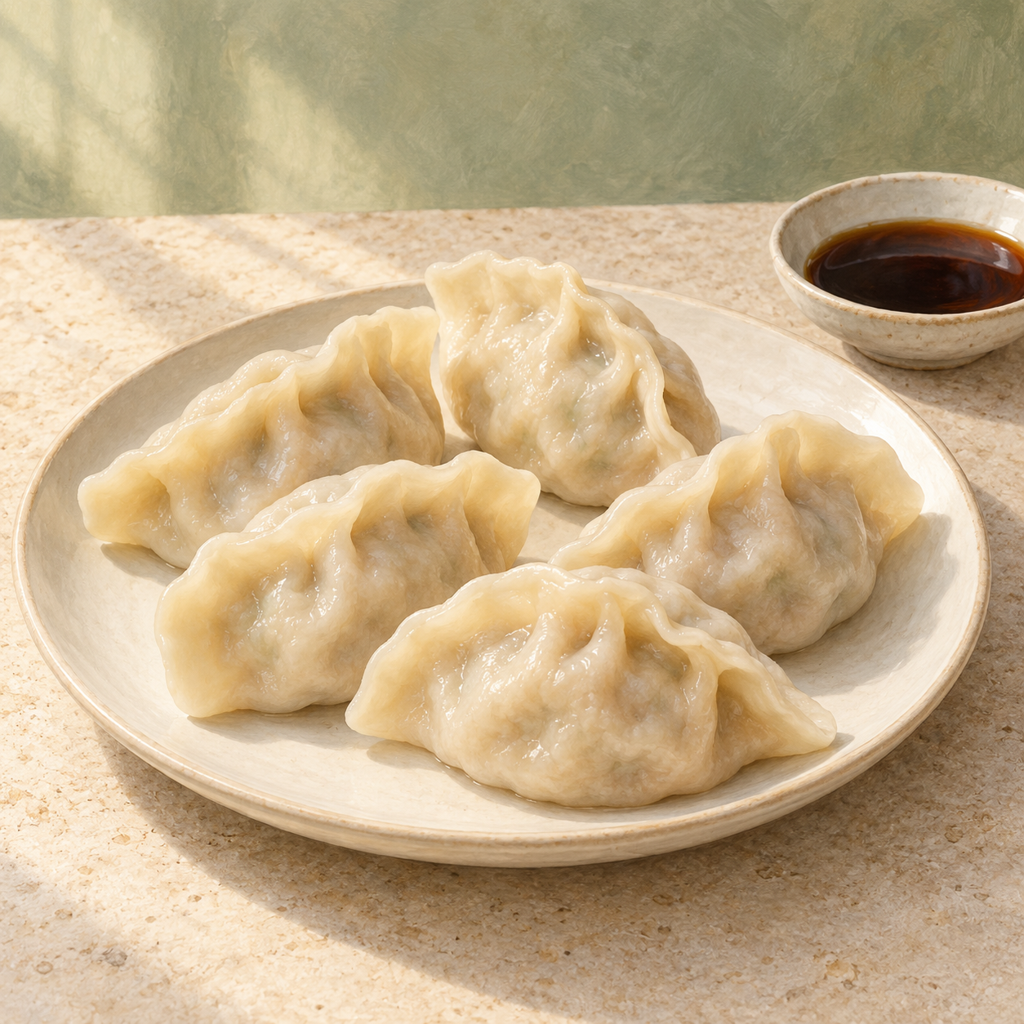
China · crescent with a seam
Beside gyoza, the family resemblance is clear, but this illustration shows boiled dumplings without a browned base. Uneven hand-pinched seams give each crescent character. Shapes vary between households; one drawing cannot represent every version.
Checked fact. Making jiaozi together remains part of Chinese New Year celebrations, including community events in Beijing.
Source: Source — Jiaozi
8. Momo
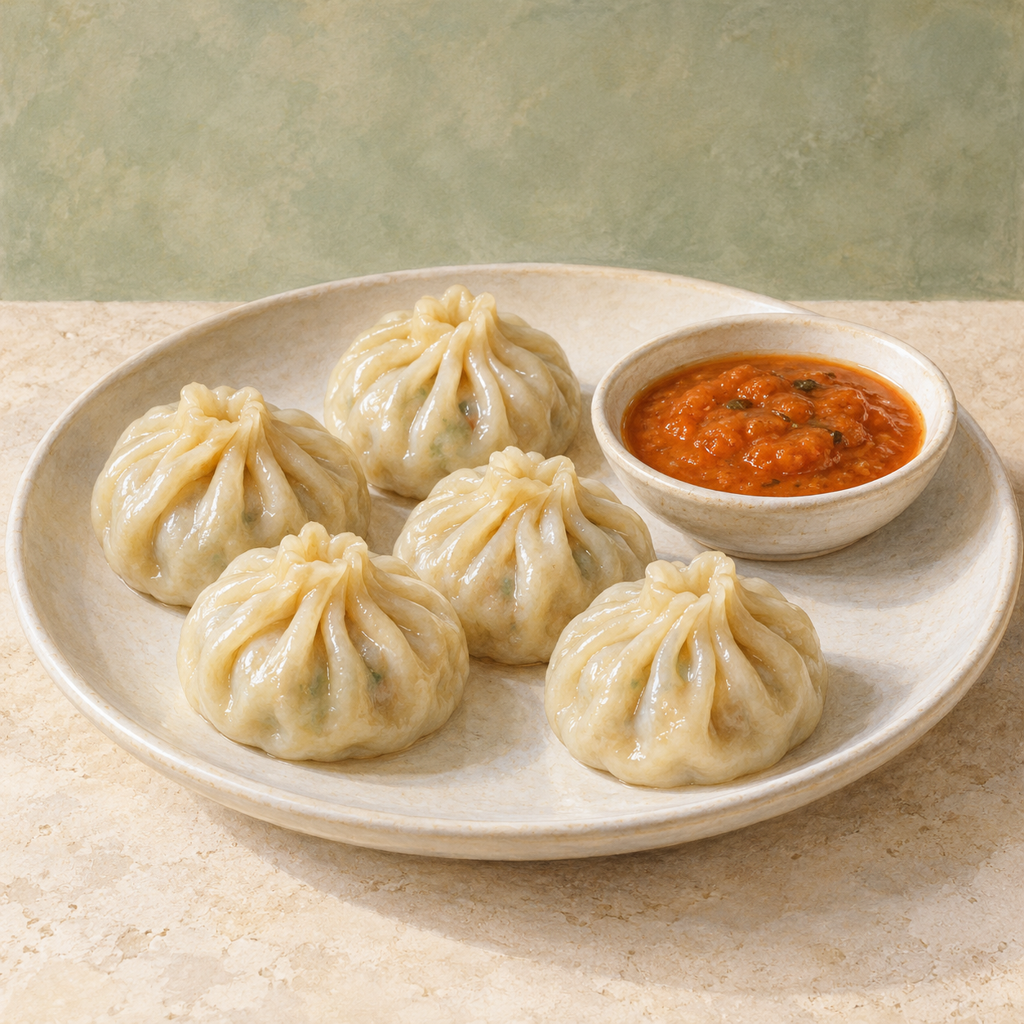
Nepal · small pleated pouch
The round form and pleats recall khinkali, but these illustrated momo are compact, without a large top knot. A bright sauce adds color beside the quiet dough surface. Momo also come in other shapes.
Checked fact. Nepal’s tourism board describes steamed or fried momo as a popular snack.
Source: Source — Momo
9. Turkish mantı
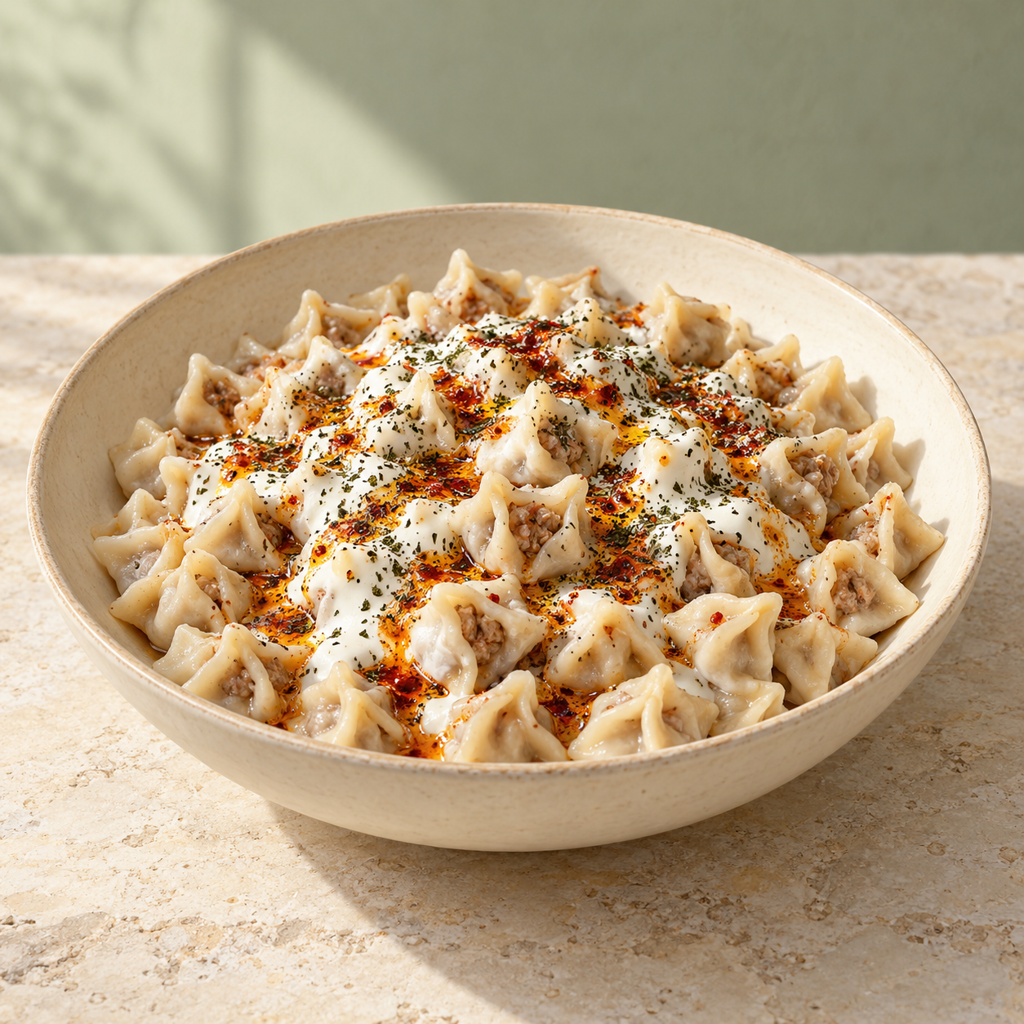
Türkiye · tiny parcels
After large khinkali, the scale changes sharply: tiny pinched parcels fill the plate. Yogurt and reddish butter show a Turkish serving style. The name resembles Central Asian manti, but size and presentation can differ greatly.
Checked fact. Kayseri is known for especially tiny mantı; yogurt, butter and spices characterize Turkish versions.
Source: Source — Turkish mantı
10. Maultaschen
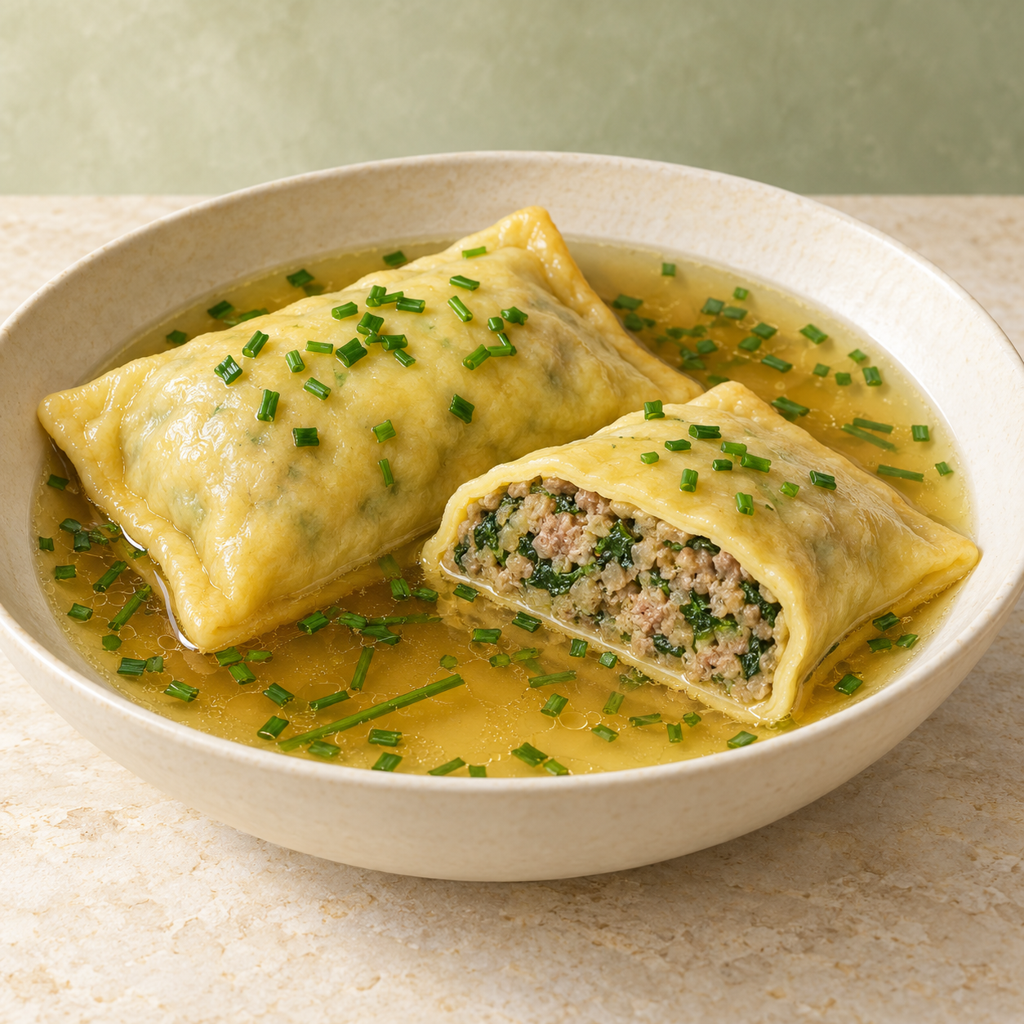
Swabia, Germany · large rectangle
The collection ends with large rectangular pockets that make no attempt to be miniature. A cross-section shows dense filling within a thin wrapper. Clear broth reveals their geometry differently from tiny ravioli.
Checked fact. Classic Swabian Maultaschen can contain meat, spinach, onions and herbs; vegetarian versions also exist.
Source: Source — Maultaschen