
White balls, blue veins, grainy fractures and huge eyes: compare ten cheeses through details visible before the first bite.
The editorial team created these illustrations with AI. They explain the subjects rather than photograph specific products. Each card links to a source.
1. Parmigiano Reggiano
Italy
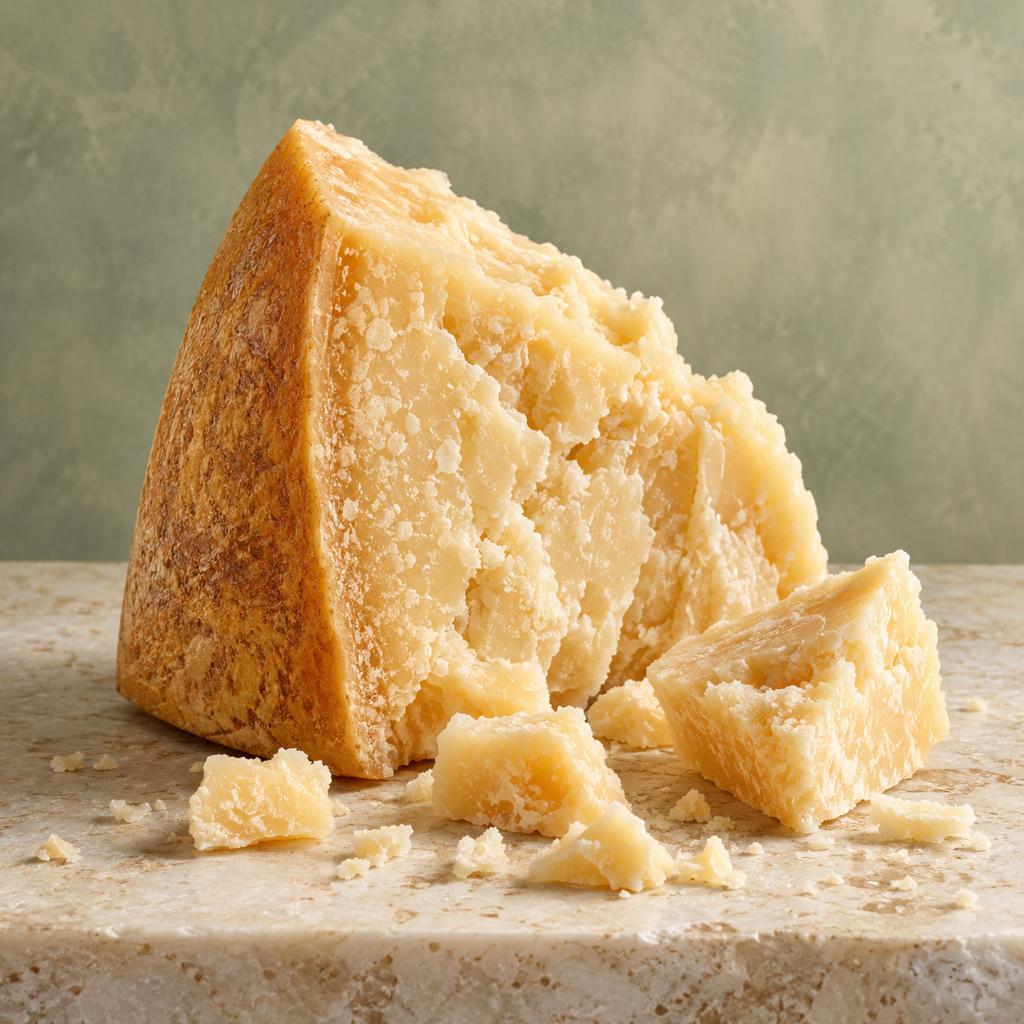
Its beauty lies in a broken edge rather than a smooth slice: the firm cheese splits into grainy shards that make ageing visible.
Checked fact. Parmigiano Reggiano has a minimum maturation of 12 months.
Source: Source — Parmigiano Reggiano
2. Buffalo mozzarella
Italy
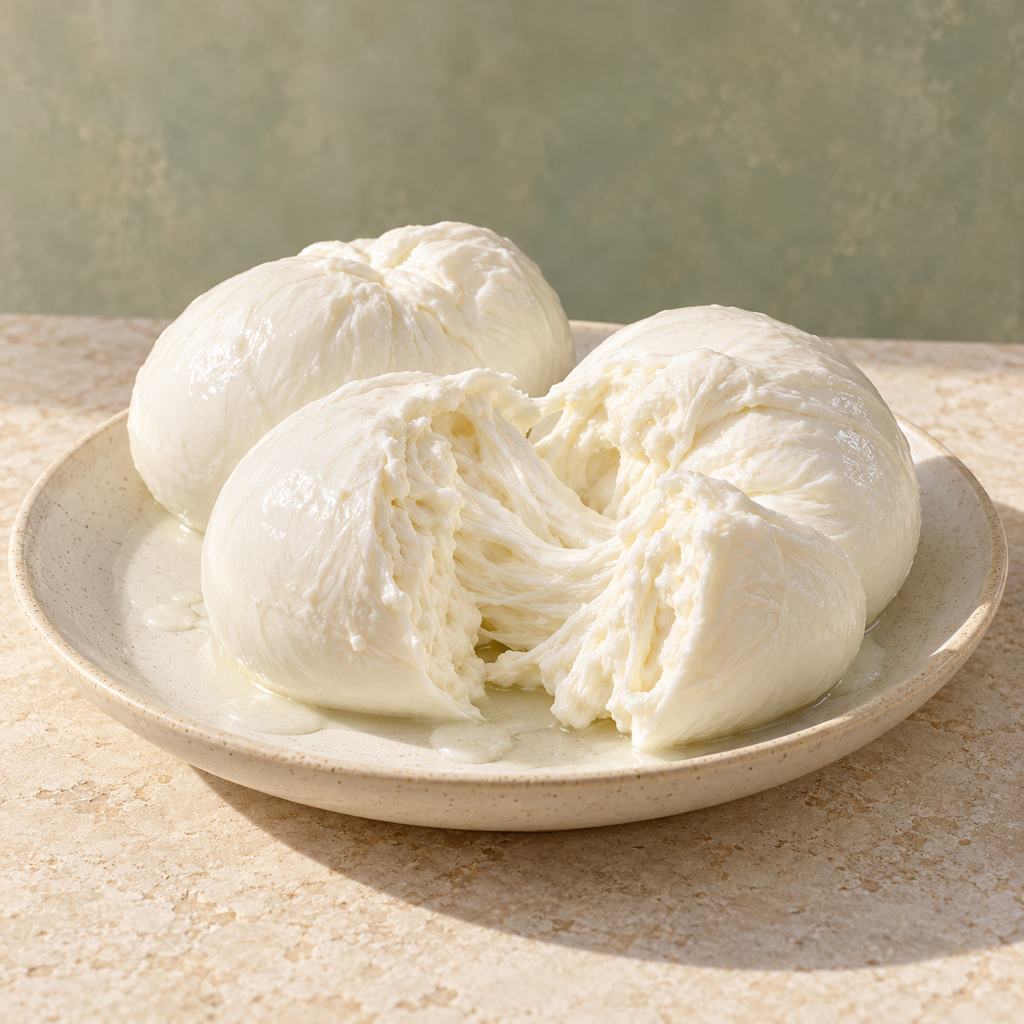
A white ball looks simple until it is torn open, revealing moist layers of stretched curd. Fresh flexibility matters more than long ageing here.
Checked fact. Mozzarella is shaped from hot stretched curd, known as pasta filata.
Source: Source — Buffalo mozzarella
3. Roquefort
France
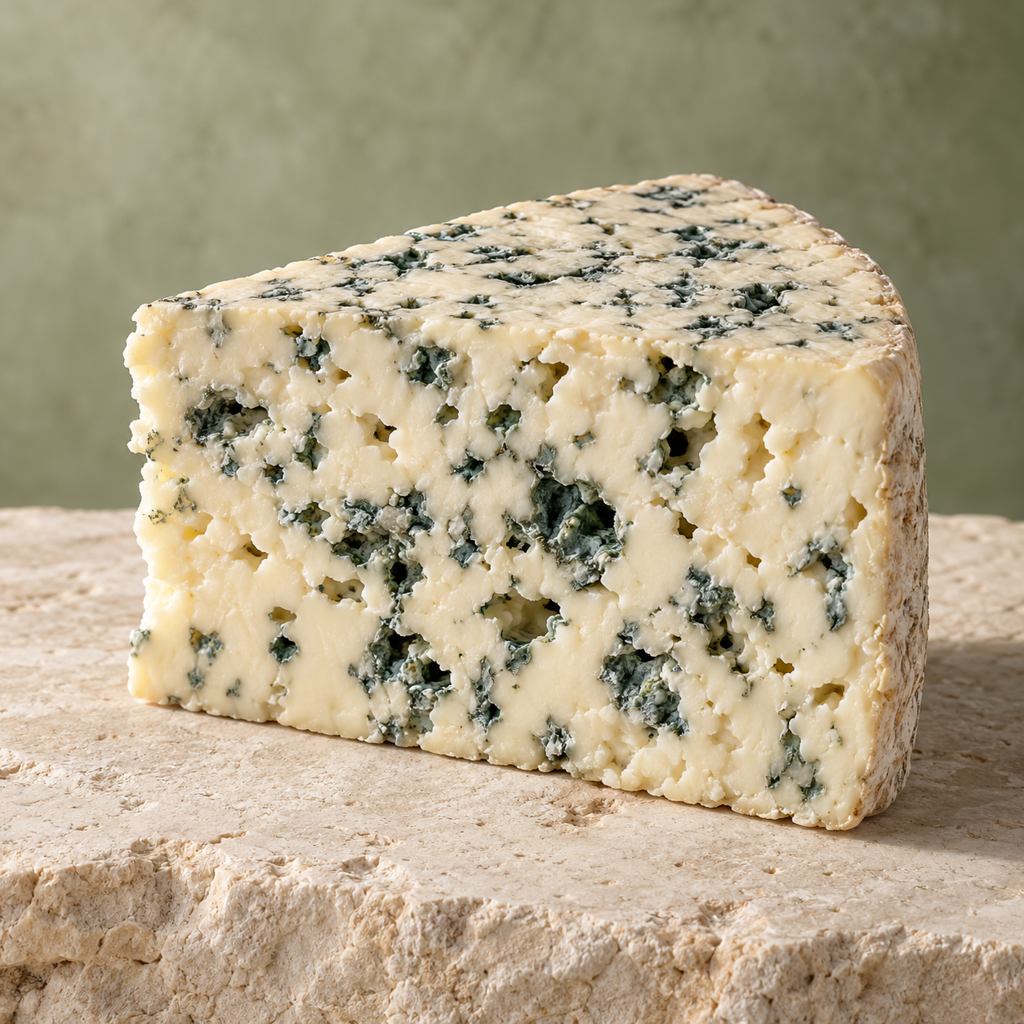
Blue-green veins resemble a map of underground rivers. Their irregular pattern gives every piece its own arrangement of white cheese and colored cavities.
Checked fact. Penicillium roqueforti creates the characteristic veining; maturation takes place in the caves of Roquefort-sur-Soulzon.
Source: Source — Roquefort
4. Gruyère
Switzerland
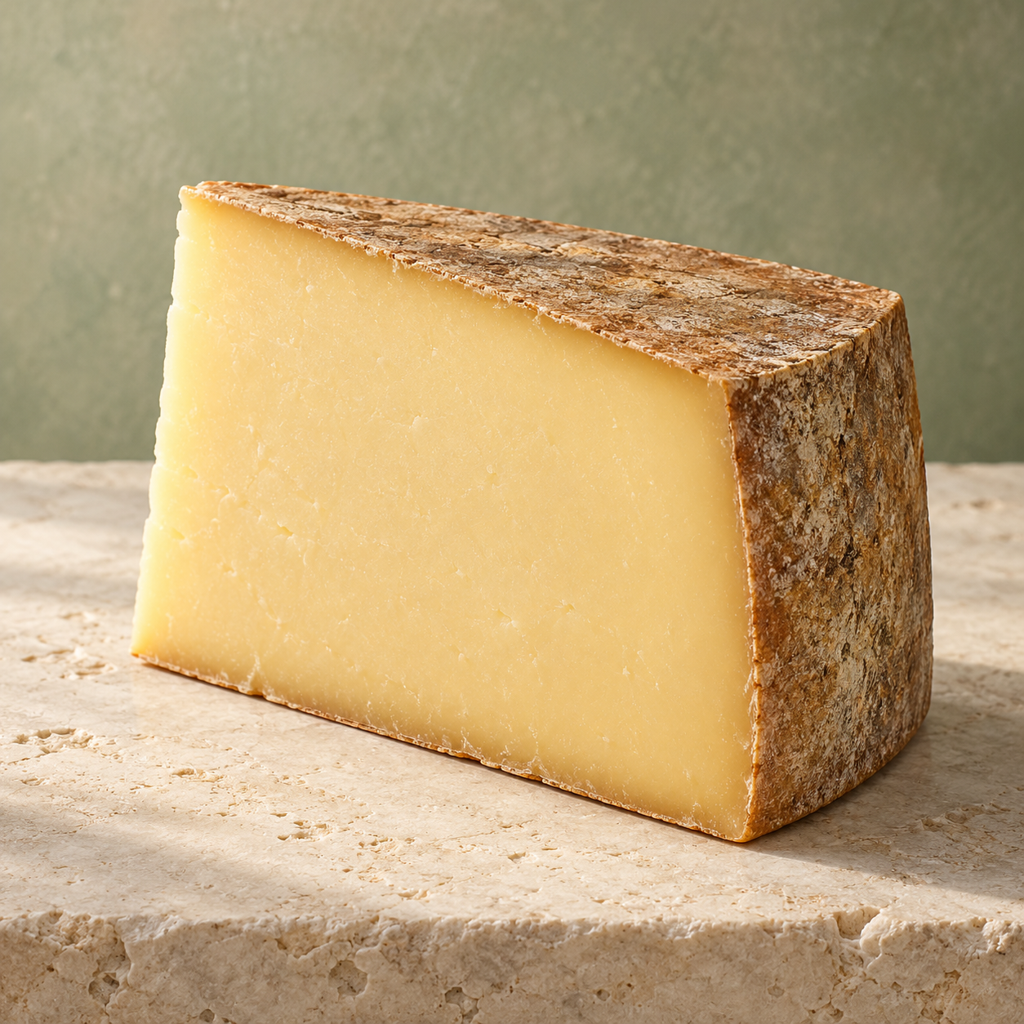
Swiss cheese need not resemble a sieve. Gruyère has a calm, firm cut surface and natural rind: texture matters more than enormous holes.
Checked fact. Small openings in Gruyère AOP are permitted but not required.
Source: Source — Gruyère
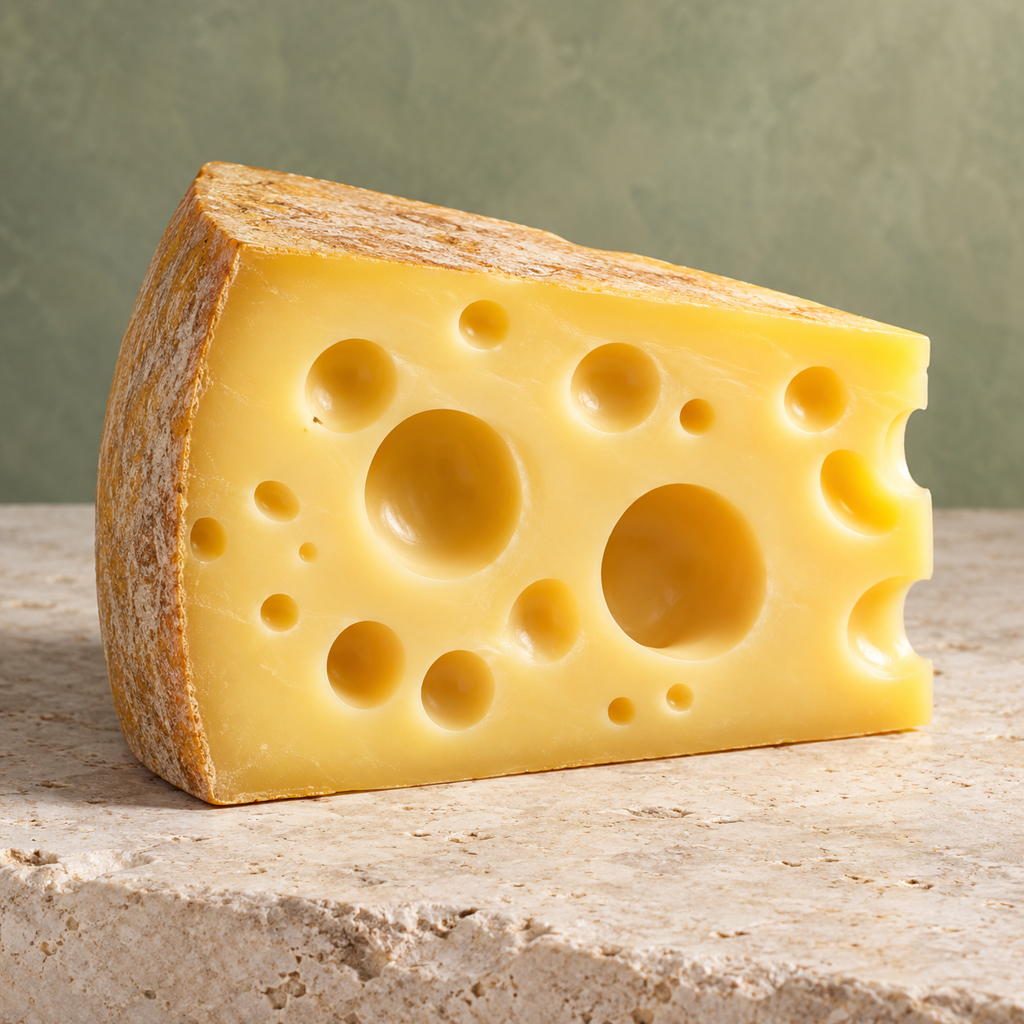
5. Emmentaler
Switzerland
This is the cheese with large rounded eyes. They look almost drawn onto the cut surface, but developed inside the wheel during maturation.
Checked fact. Emmentaler holes form during fermentation as gas develops inside the cheese.
Source: Source — Emmentaler
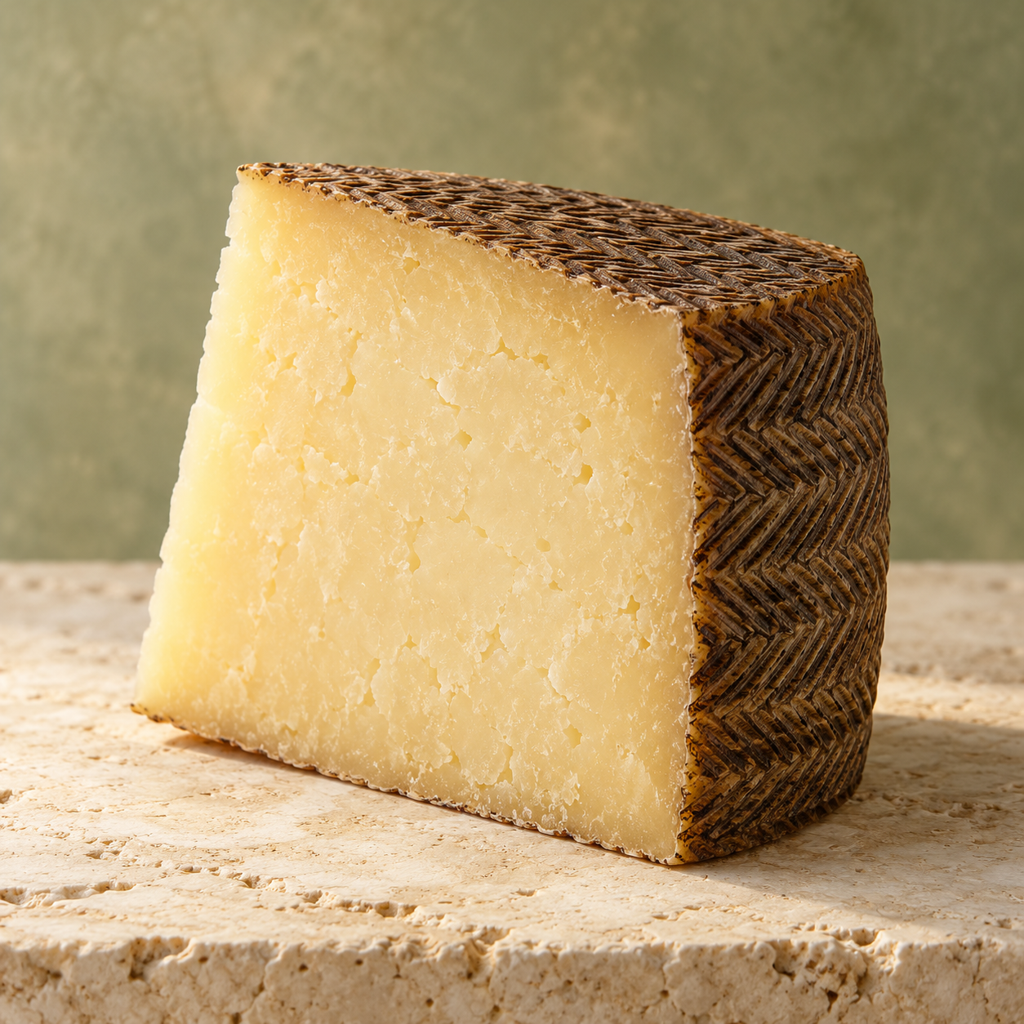
6. Manchego
Spain
Its patterned dark rind resembles an object lifted from a woven basket. A pale firm center contrasts with the decorated exterior.
Checked fact. Protected Manchego cheese is made from the milk of Manchega sheep.
Source: Source — Manchego
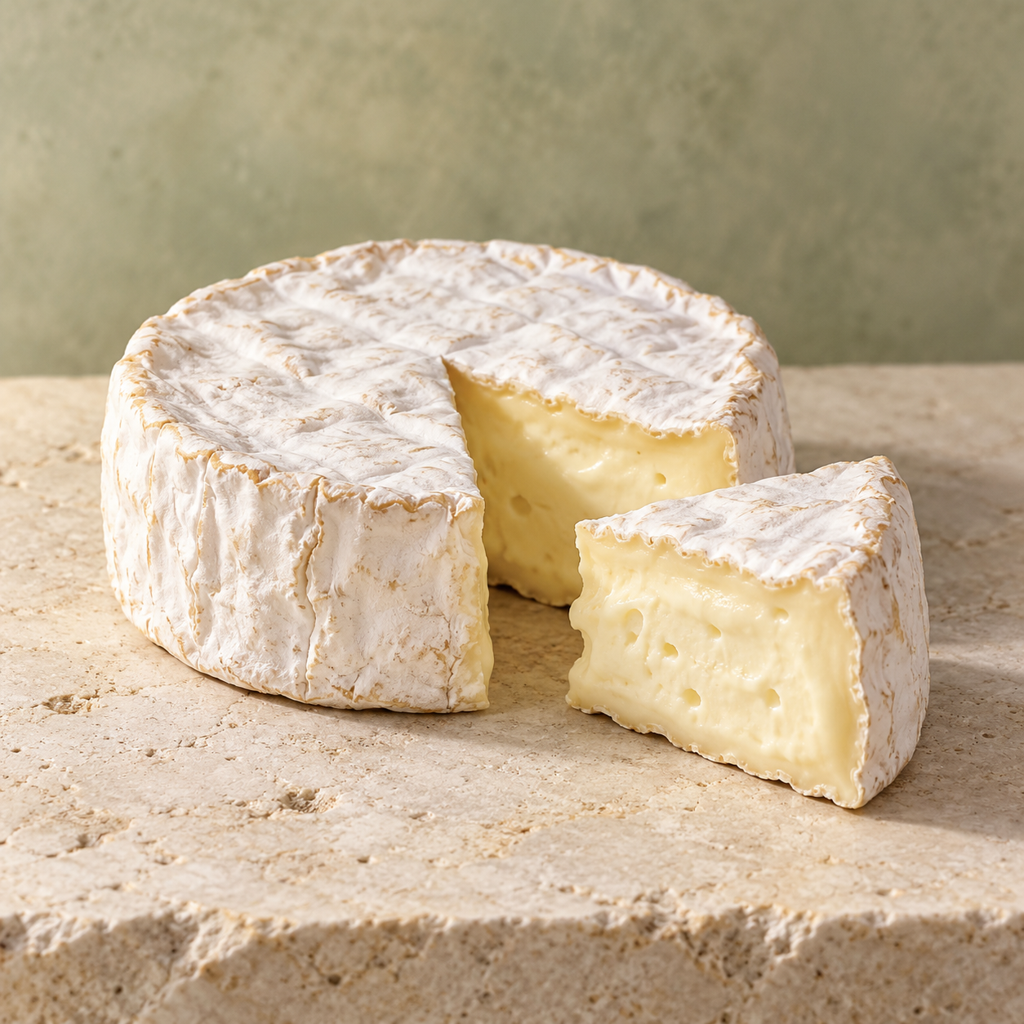
7. Camembert
France
The white surface looks soft and almost velvety. A cut exposes the creamy center, giving one small round two contrasting textures.
Checked fact. Camembert de Normandie AOP is a protected regional name; Camembert alone is a broader term.
Source: Source — Camembert
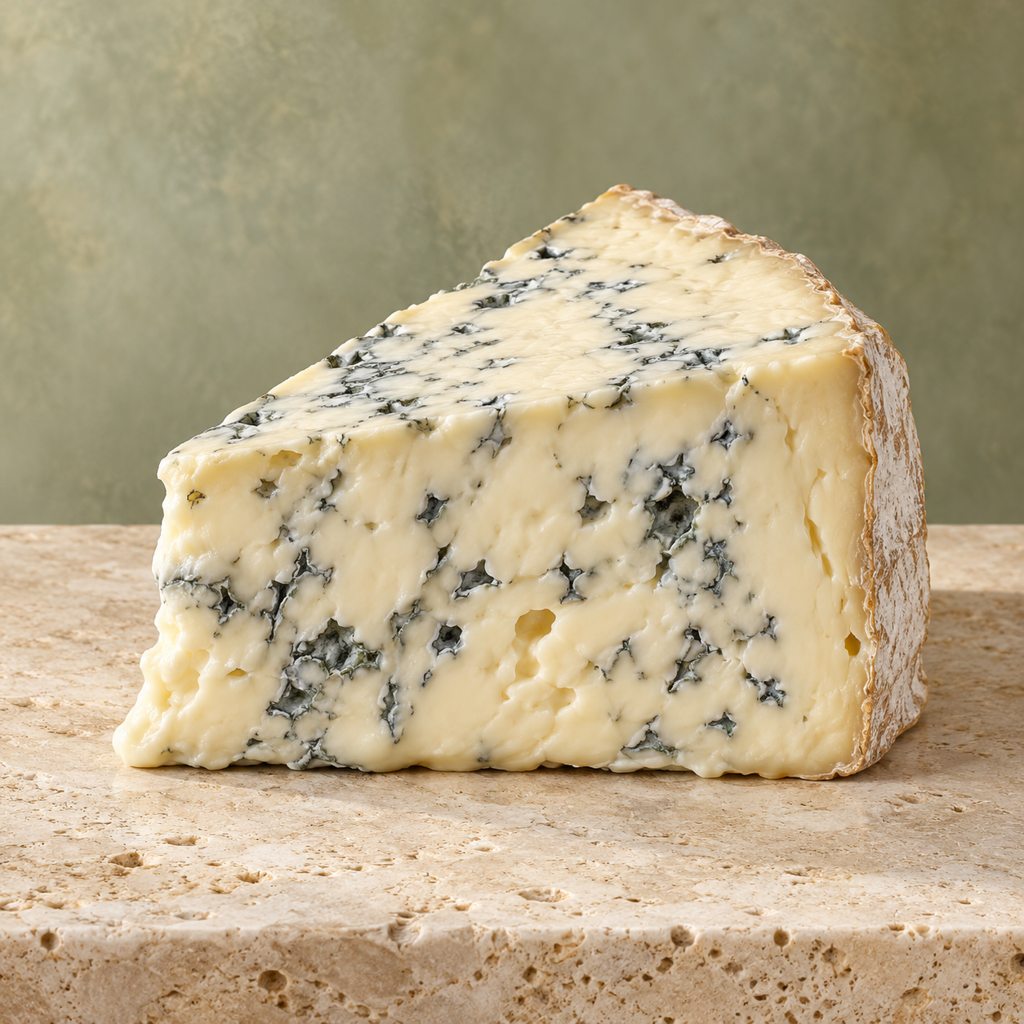
8. Gorgonzola
Italy
Blue cheese can be gentle as well as sharp and crumbly. In mild Gorgonzola, colored veins spread through a pale creamy body.
Checked fact. Gorgonzola comes as dolce and piccante: a mild version and a stronger, firmer variety.
Source: Source — Gorgonzola
9. Feta
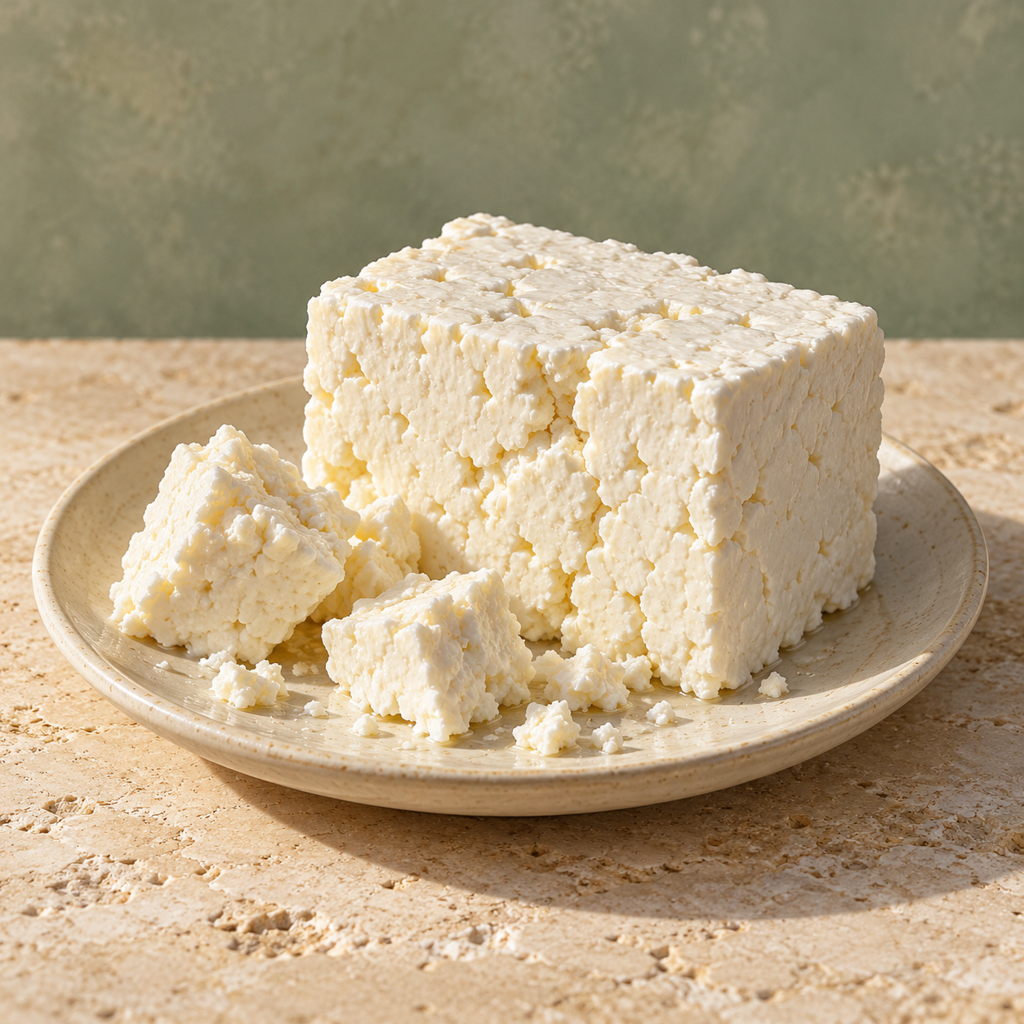
Greece
A white block breaks into irregular chunks. There is no elaborate rind: a moist surface, crumbly edge and simple geometry provide the interest.
Checked fact. Feta PDO uses sheep milk or a sheep-and-goat blend, not cow milk.
Source: Source — Feta
10. Halloumi
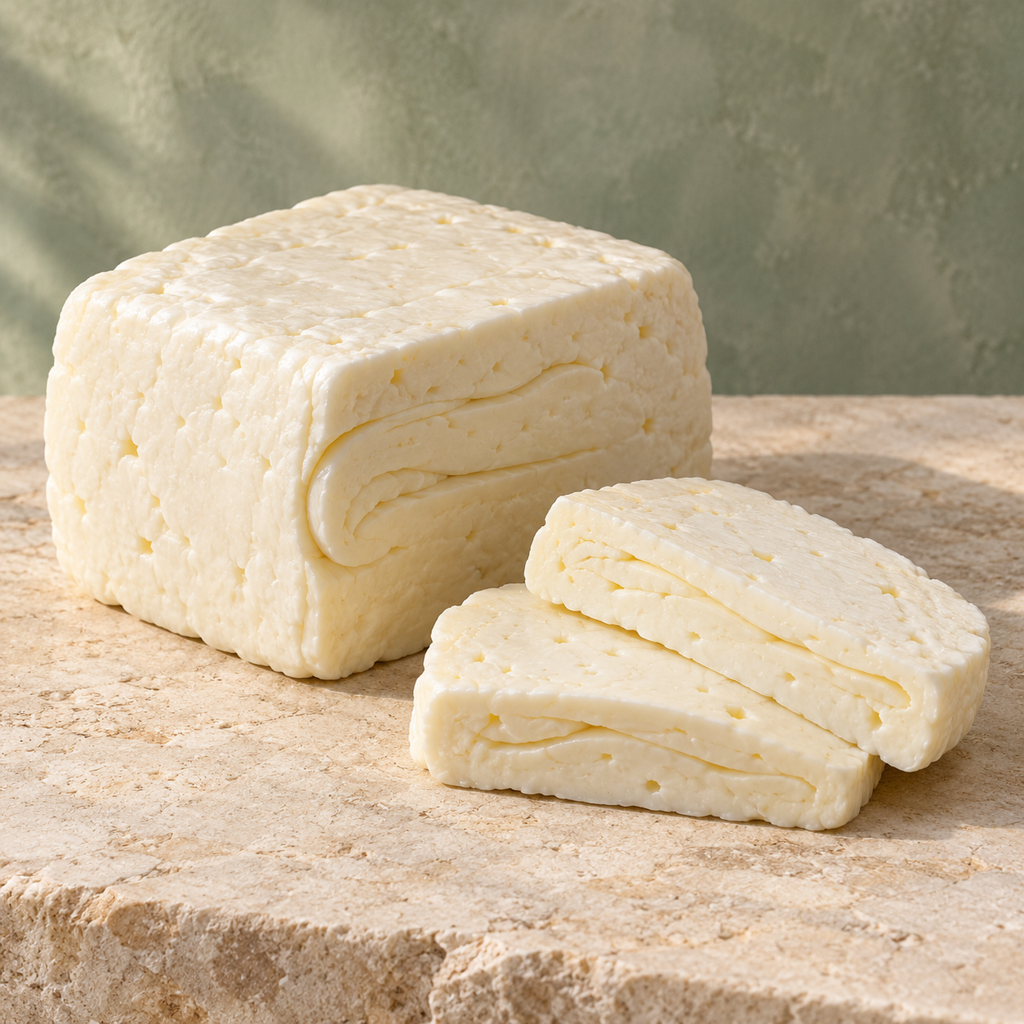
Cyprus
A fold in the curd can be visible inside this firm off-white block. Even uncooked, it looks different from crumbly feta or soft mozzarella.
Checked fact. Halloumi/Hellim is a protected cheese name associated with the island of Cyprus.
Source: Source — Halloumi