
Tubes, butterflies, shells and ribbons: one idea becomes ten shapes. A walk through pasta geometry rather than a ranking of correct recipes.
The editorial team created these illustrations with AI. They explain the subjects rather than photograph specific products. Each card links to a source.
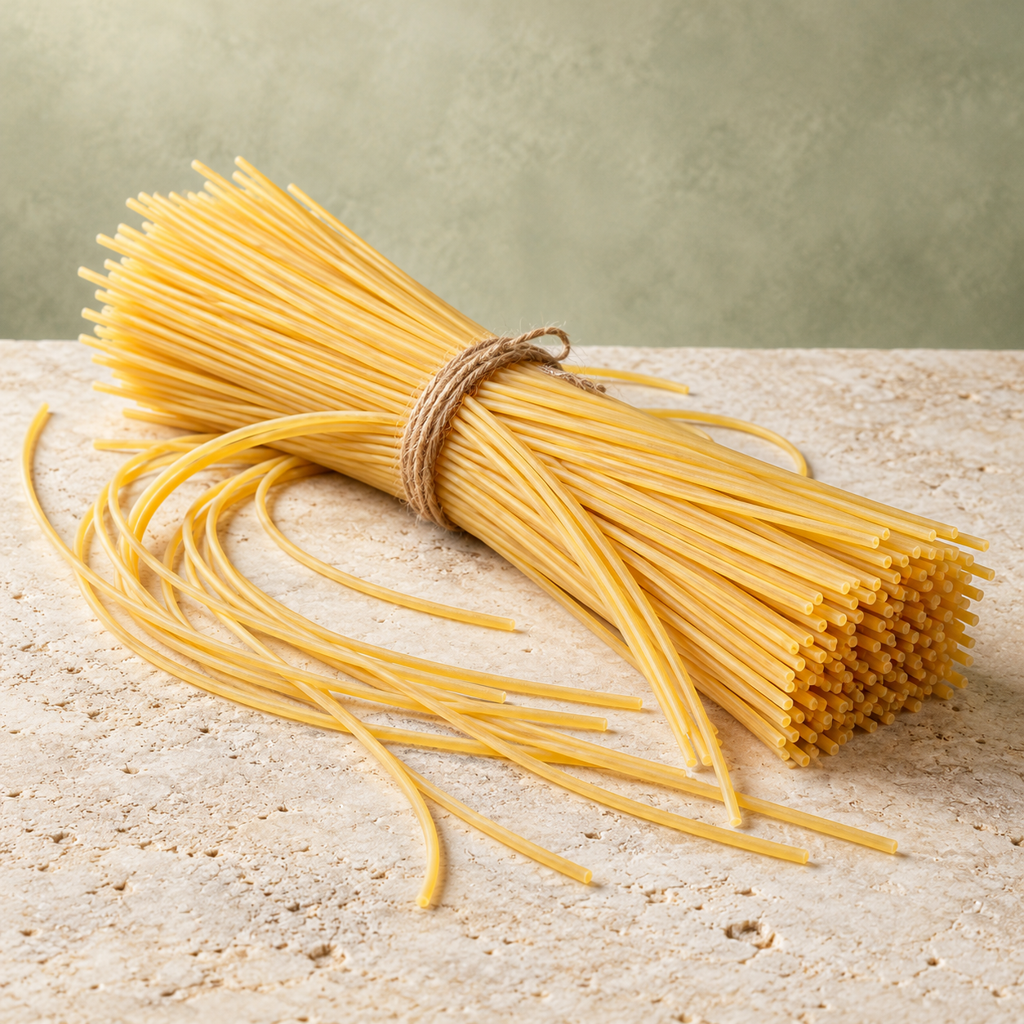
1. Spaghetti
Italy · pasta geometry
These golden strands look simple, yet their character appears in motion: a fork gathers them into a little bundle with the sauce.
Checked fact. Spaghetti have a round cross-section; long flat ribbons belong to other pasta shapes.
Source: Source — Spaghetti
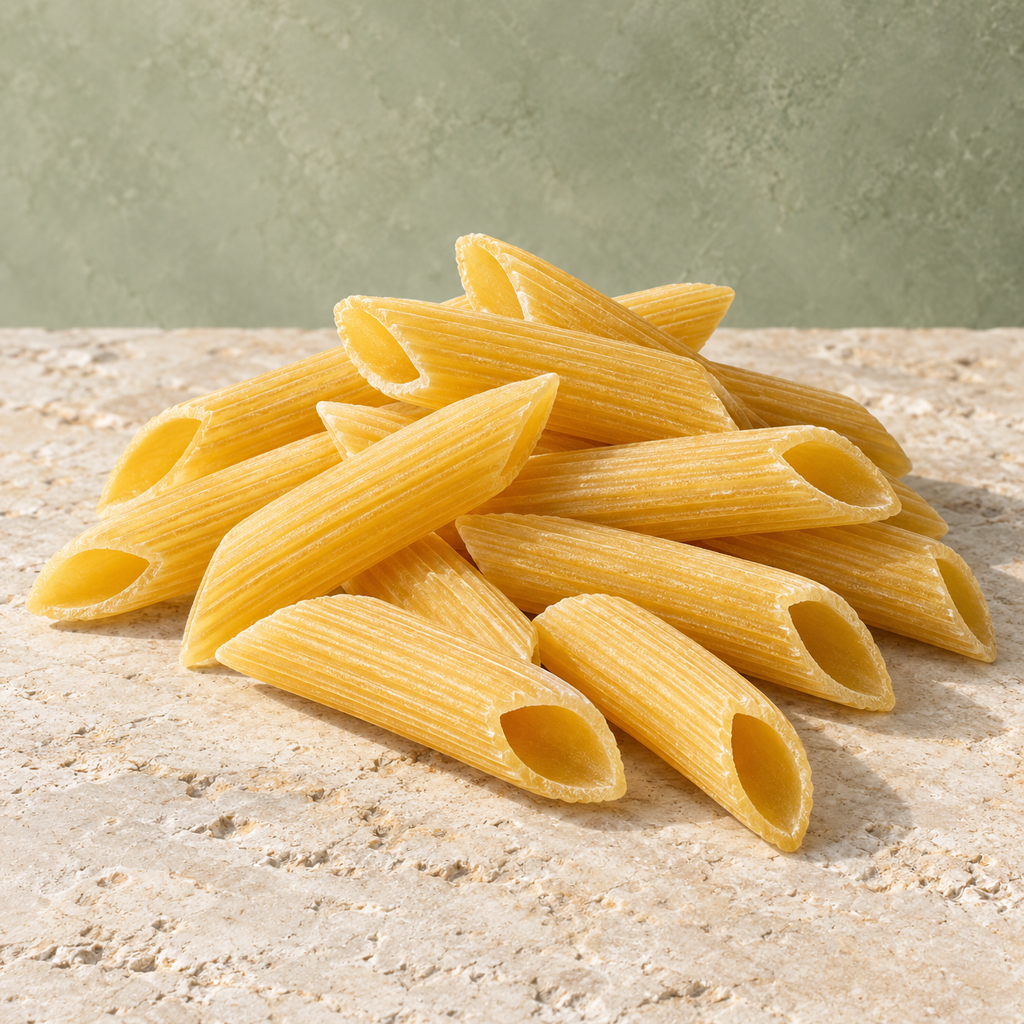
2. Penne
Italy · pasta geometry
A diagonal cut turns each short tube into a writing quill. The hollow center and outer ridges offer sauce several places to settle.
Checked fact. Penne rigate are ridged tubes with diagonally cut ends.
Source: Source — Penne
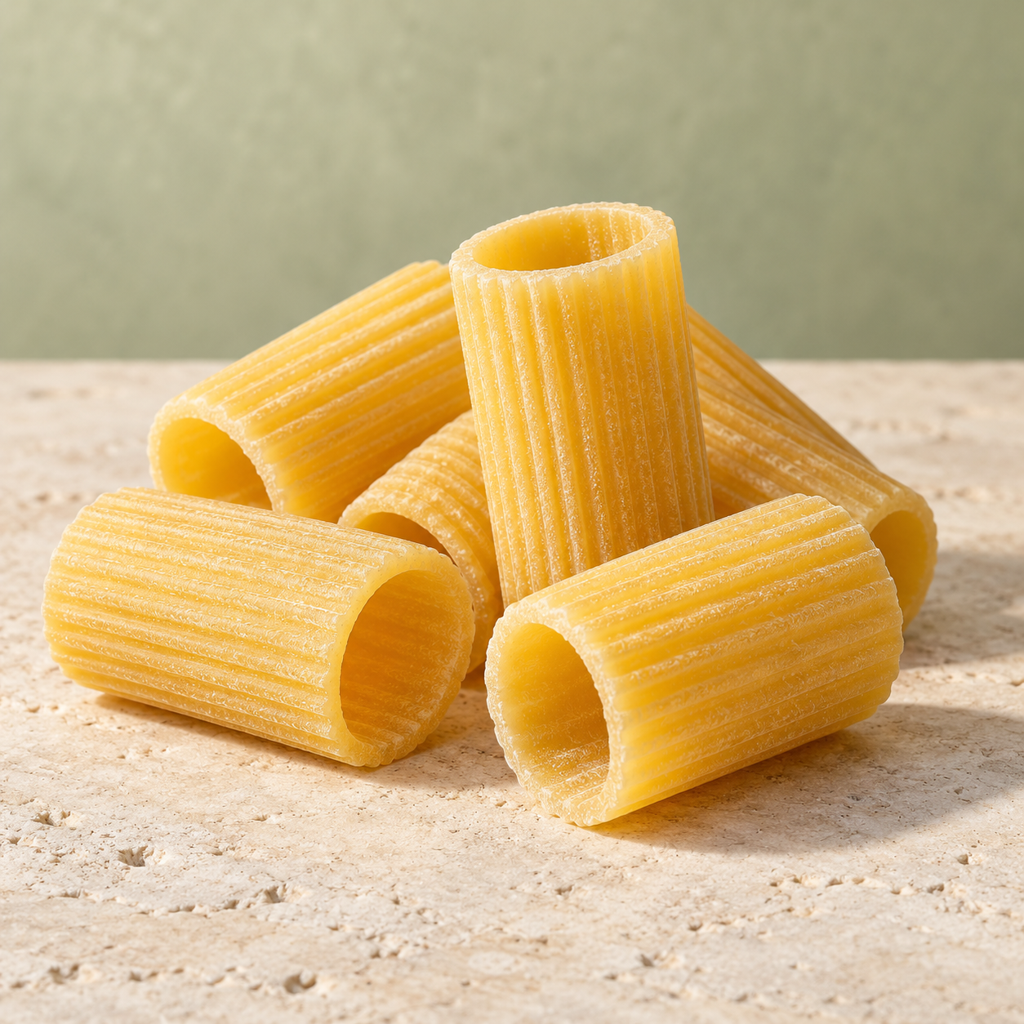
3. Rigatoni
Italy · pasta geometry
These tubes have architectural confidence: a broad opening, straight ends and prominent lengthwise ridges remain visible even in a thick sauce.
Checked fact. Unlike penne, rigatoni generally have straight rather than diagonal ends.
Source: Source — Rigatoni
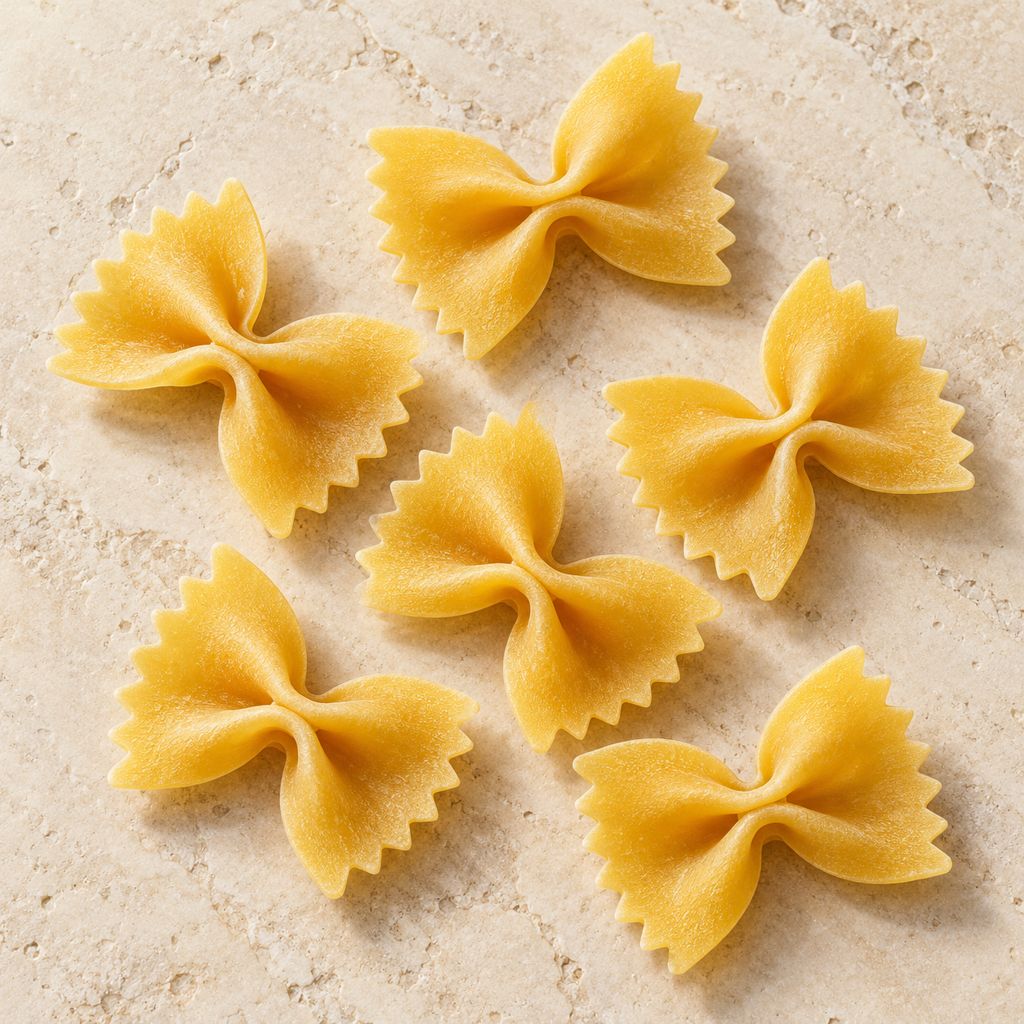
4. Farfalle
Italy · pasta geometry
Butterfly or bow tie? Pinching a rectangle of dough gives it two wings. Thin edges and a thicker central fold share one small shape.
Checked fact. The Italian word farfalle means butterflies.
Source: Source — Farfalle
5. Fusilli
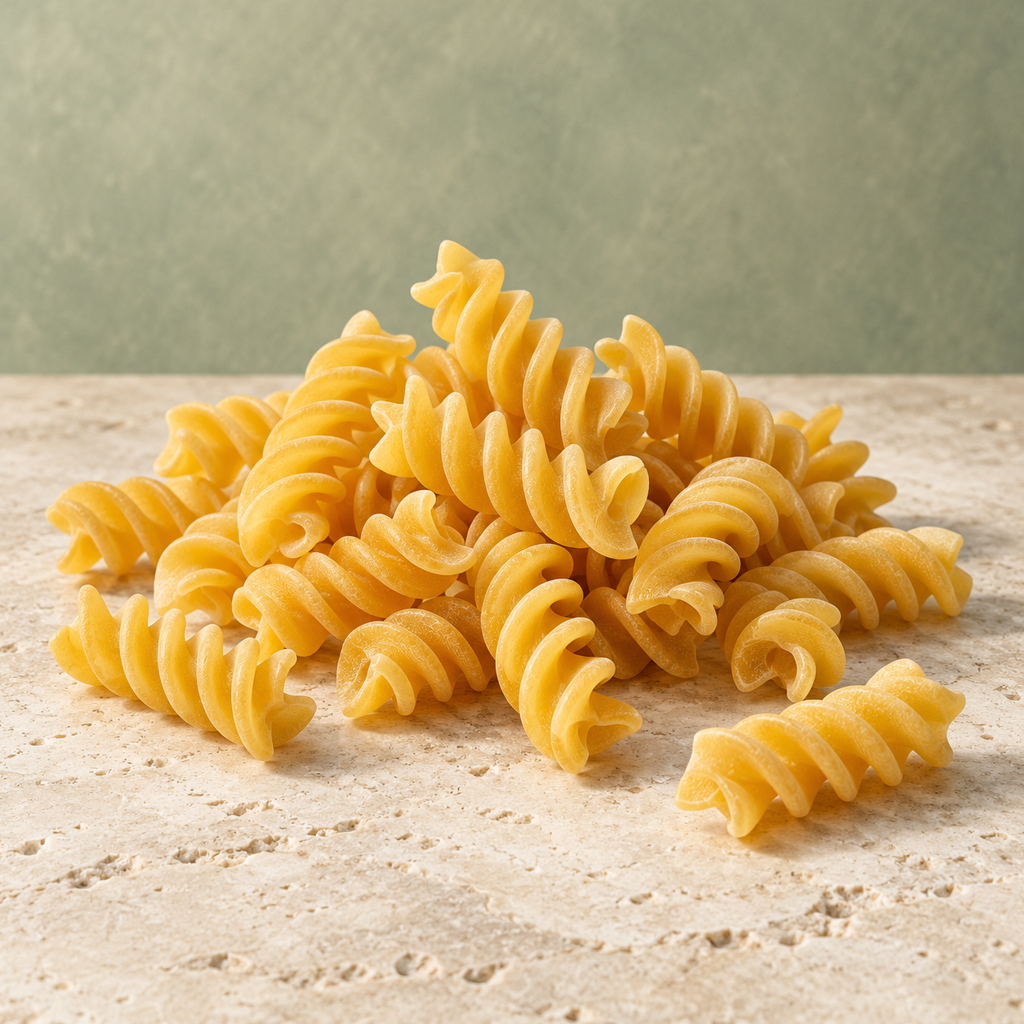
Italy · pasta geometry
These little springs resemble spiral staircases. Sauce settles between the turns, making even a simple dressing visible on every twist.
Checked fact. Fusilli are recognizable by their twisted spiral shape.
Source: Source — Fusilli
6. Conchiglie
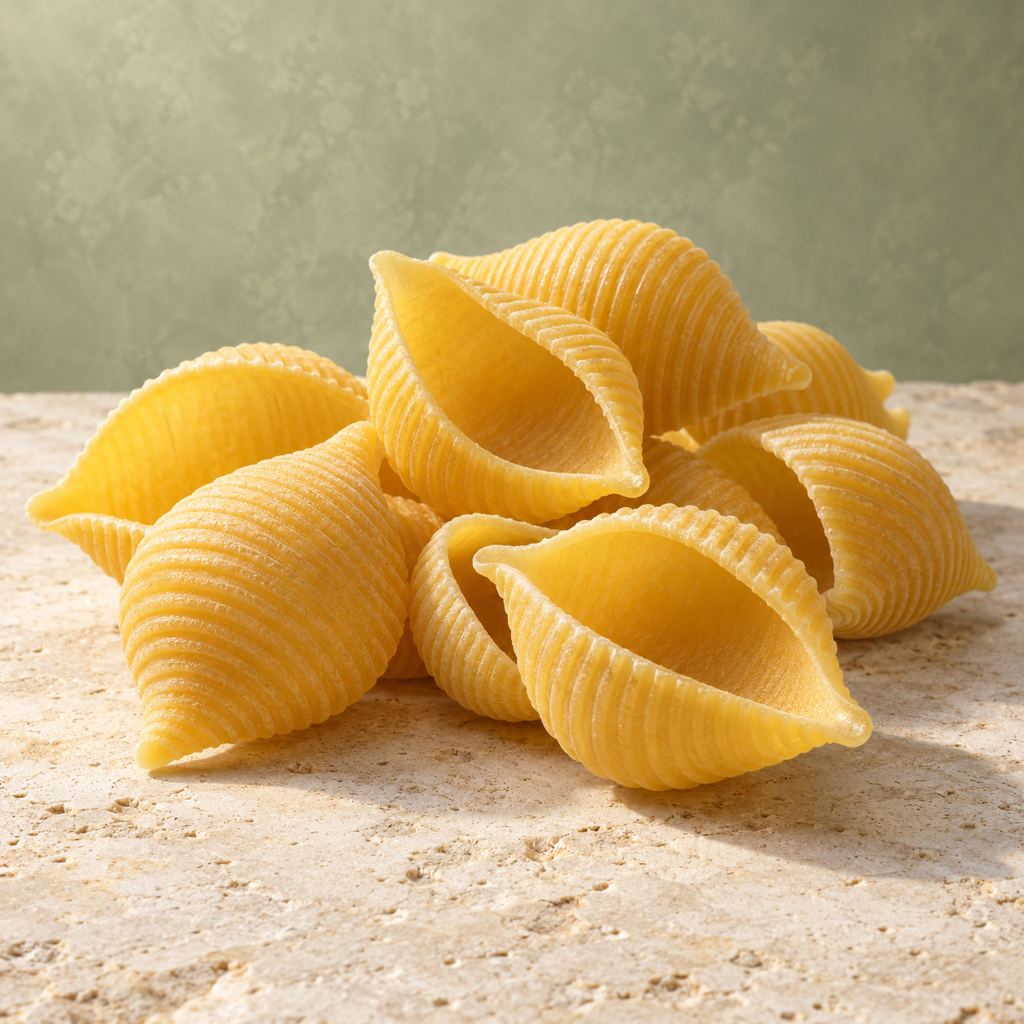
Italy · pasta geometry
A small shell brings seaside geometry to the plate: a rounded back outside and a pocket inside. Large and tiny versions look like relatives of different sizes.
Checked fact. Conchiglie are shell-shaped pasta; the ridged version adds rigate to its name.
Source: Source — Conchiglie
7. Orecchiette
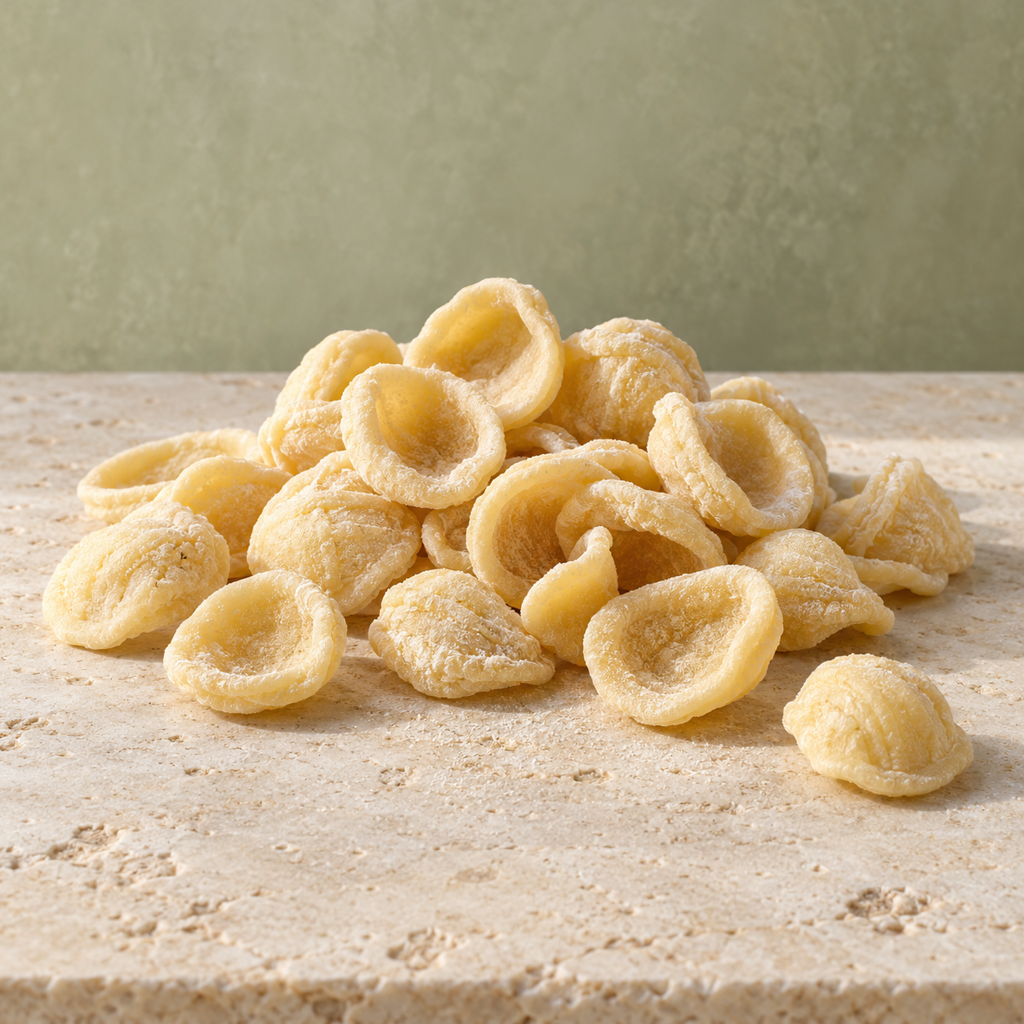
Italy · pasta geometry
Small concave rounds resemble ears or miniature cups. An irregular handmade rim makes each piece feel like a tiny sculpture.
Checked fact. Orecchiette translates as little ears.
Source: Source — Orecchiette
8. Bucatini
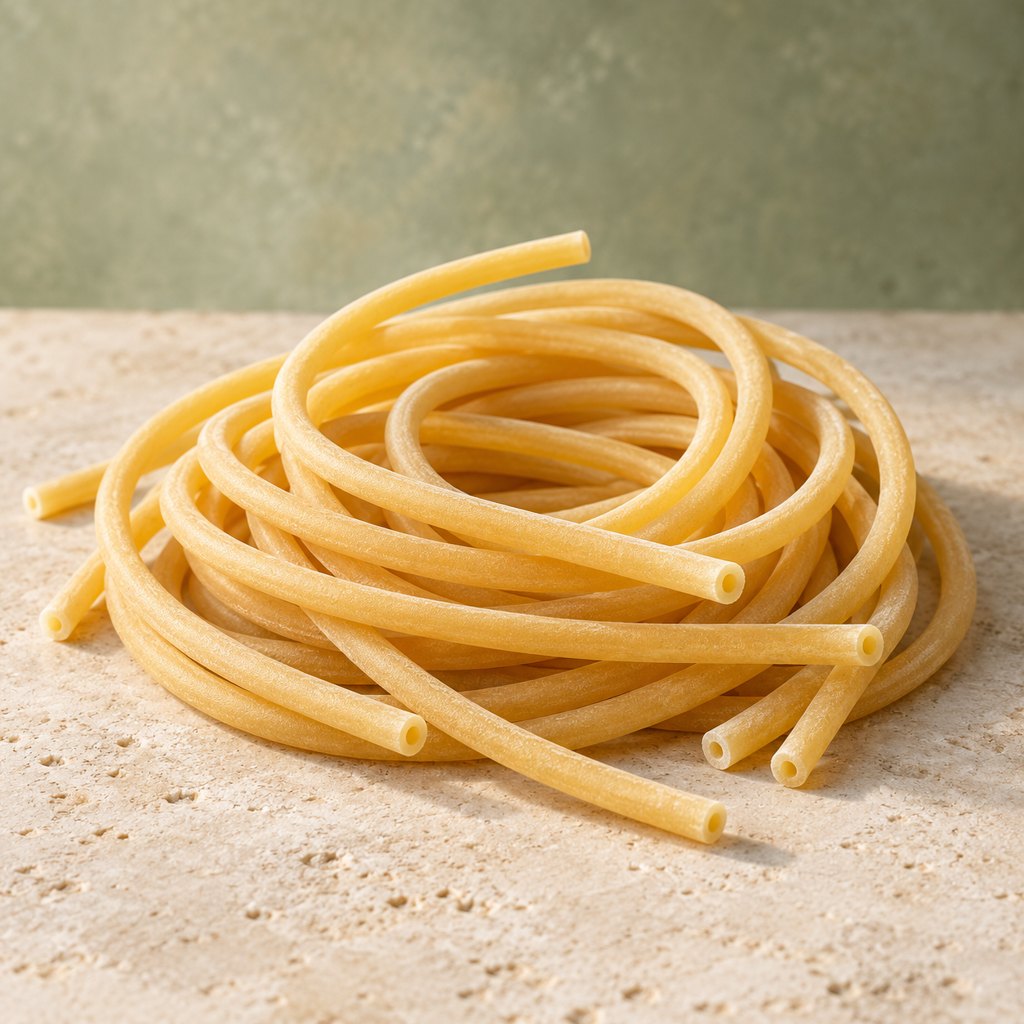
Italy · pasta geometry
From a distance they resemble thick spaghetti. A cut end reveals the secret: a narrow channel runs through each long strand.
Checked fact. Bucatini are long hollow pasta, not simply thick spaghetti.
Source: Source — Bucatini
9. Tagliatelle
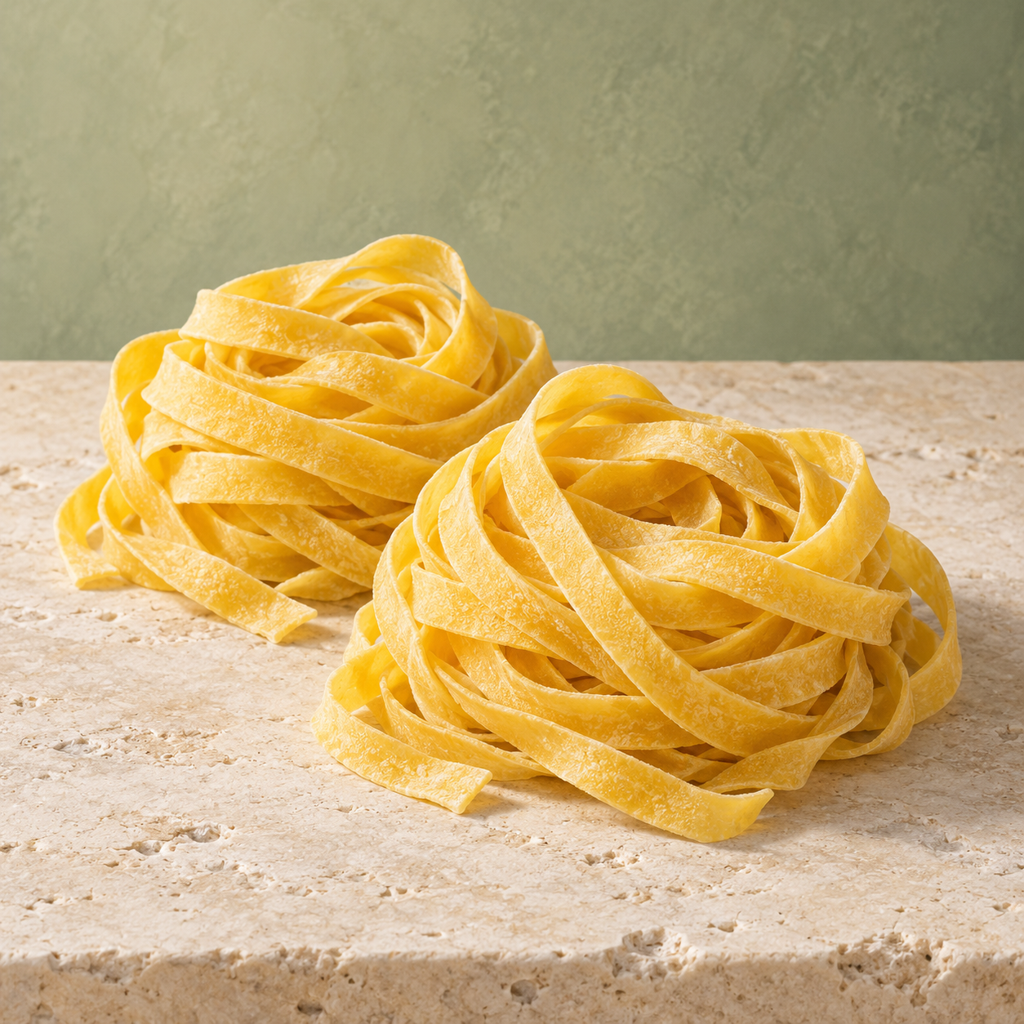
Italy · pasta geometry
Ribbons fall into soft folds and gather into nests. Their interest lies in surface width: sauce coats a flat band rather than a thin strand.
Checked fact. Tagliatelle are long flat pasta; egg versions are available.
Source: Source — Tagliatelle
10. Lasagne sheets
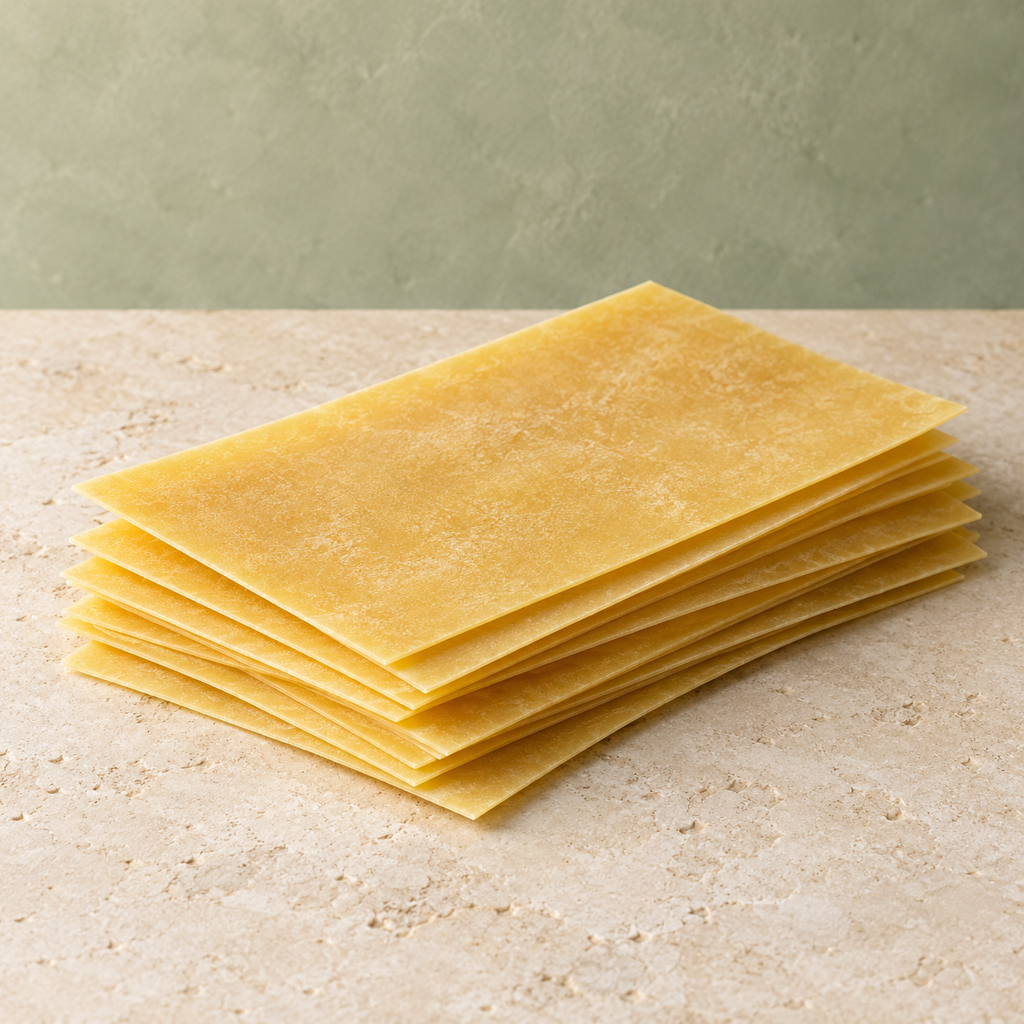
Italy · pasta geometry
Pasta can be an entire floor rather than a strand or tube. Broad sheets build layers whose cut surface reveals alternating pasta and filling.
Checked fact. Lasagne uses broad flat sheets of pasta.
Source: Source — Lasagne sheets