
Thin lavash, porous injera, steamed bao and dense rye loaves: ten illustrated cards exploring bread shapes, preparation and traditions. An introduction, rather than a recipe collection.
The editorial team created these illustrations with AI. They explain the subjects rather than photograph specific museum objects or dishes. Each card links to a source.
1. Lavash
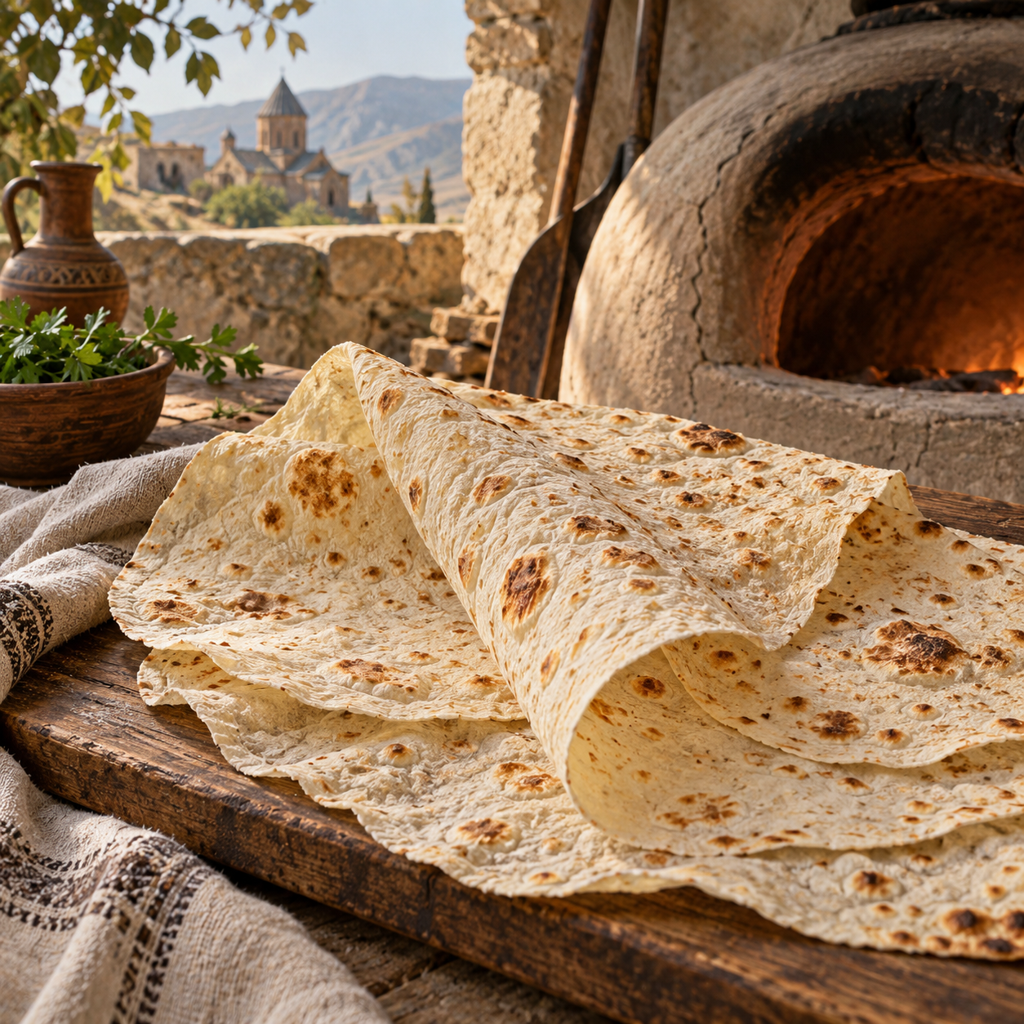
An Armenian thin-bread tradition
A broad, thin sheet folds almost like cloth. In the Armenian tradition, lavash bakes against a tonir’s wall, combining dough-handling skills with the work of several people.
Checked fact. UNESCO lists Armenia’s lavash-making tradition as intangible cultural heritage.
Source: Source — Lavash
2. Injera
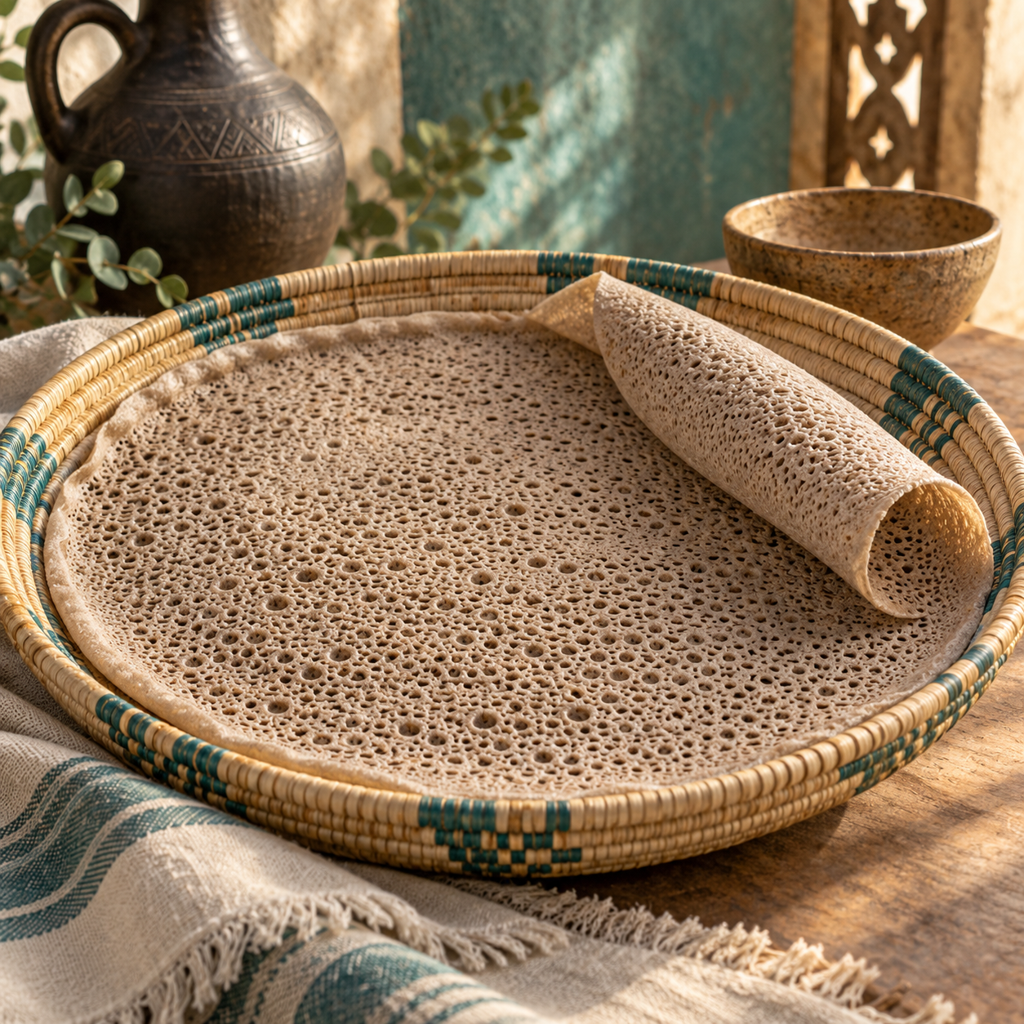
Ethiopia and Eritrea
This soft, porous flatbread resembles an edible tablecloth. Torn pieces pick up food. Teff is an important grain for injera, although the flour mixture varies.
Checked fact. Injera uses fermented batter, giving it a characteristic tang.
Source: Source — Injera
3. Naan
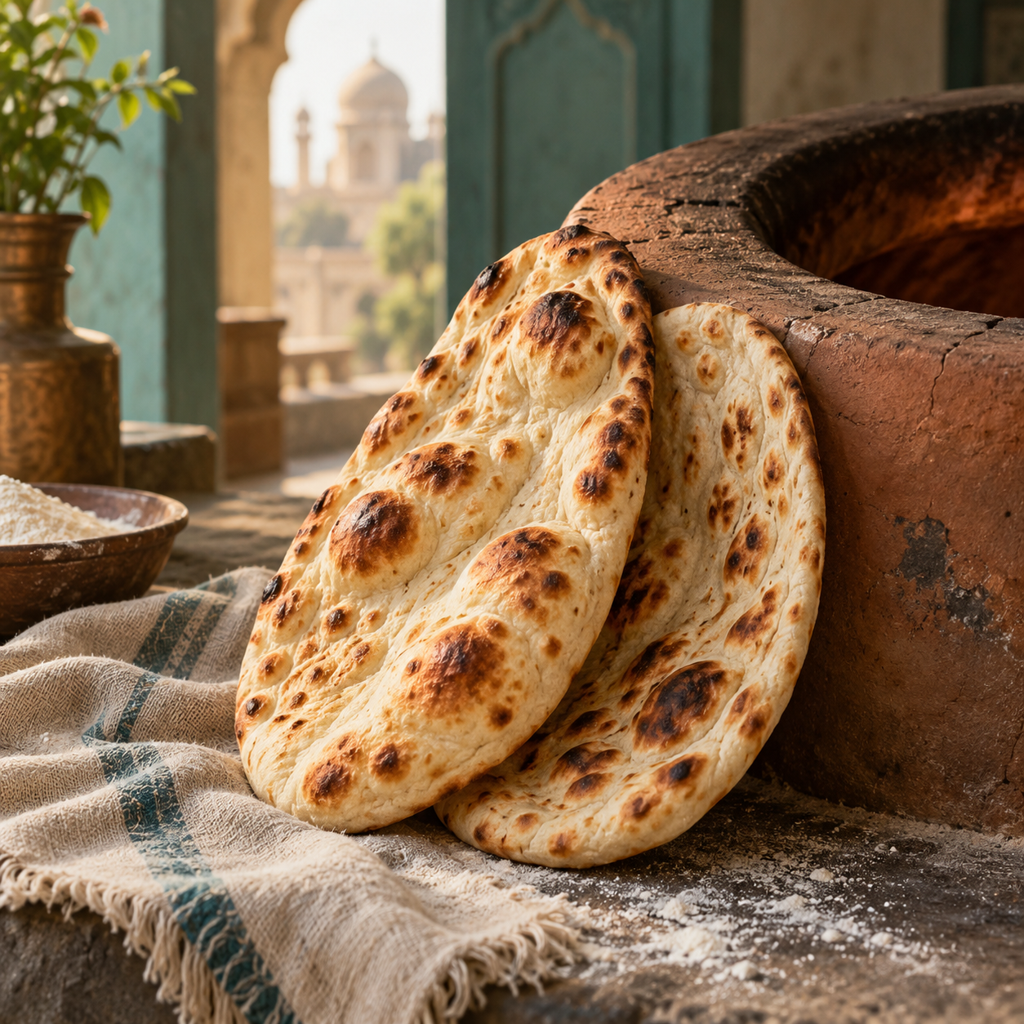
A flatbread with airy blisters
Puffed blisters and toasted spots make each naan slightly different. Often associated with tandoor cooking, it also has home versions adapted to a hot skillet.
Checked fact. Naan is a yeast-raised flatbread; some recipes include yogurt.
Source: Source — Naan
4. Pumpernickel
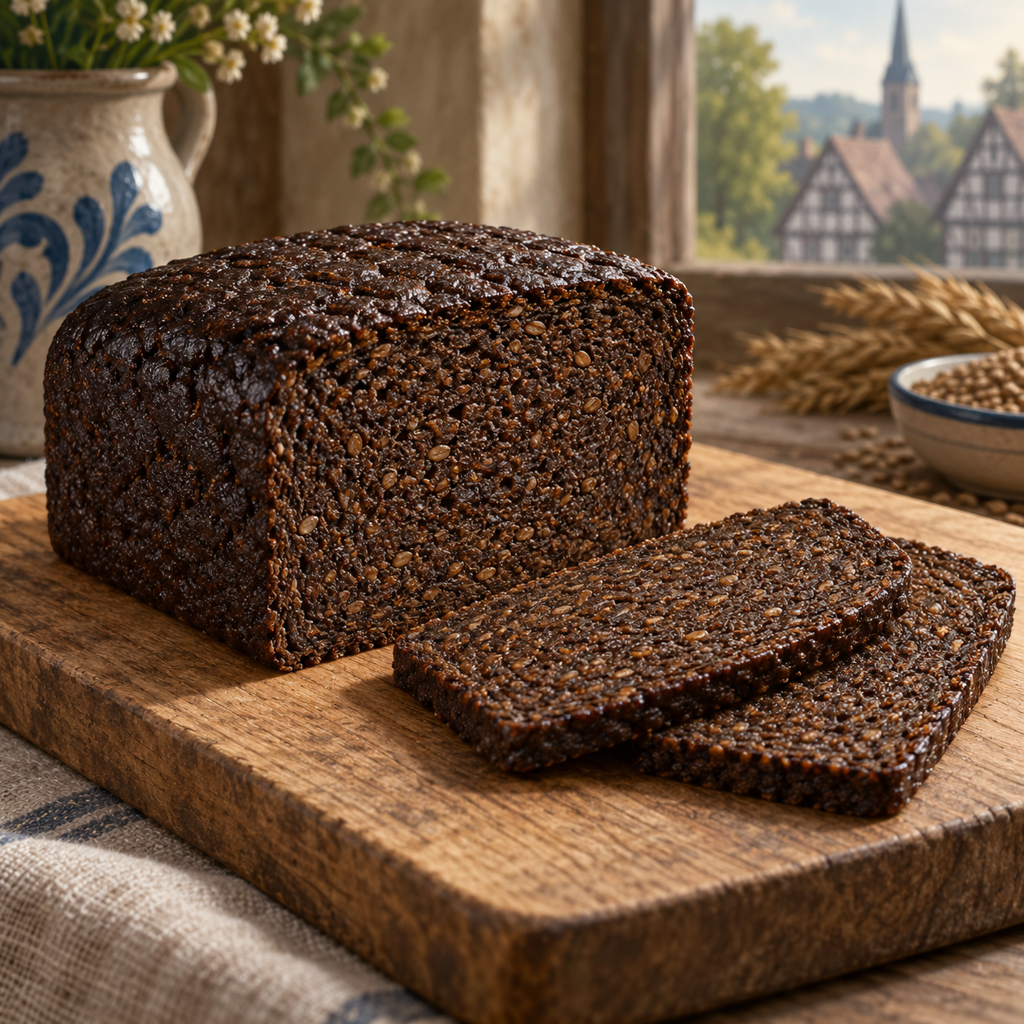
Westphalia: dense rye bread
This nearly black rectangular loaf is cut into thin slices. In the traditional style, lengthy baking develops a deep colour and sweet notes without necessarily adding colouring.
Checked fact. PEMA specifies a 20-hour bake for its pumpernickel, an example rather than a universal rule.
Source: Source — Pumpernickel
5. Bao: steamed buns
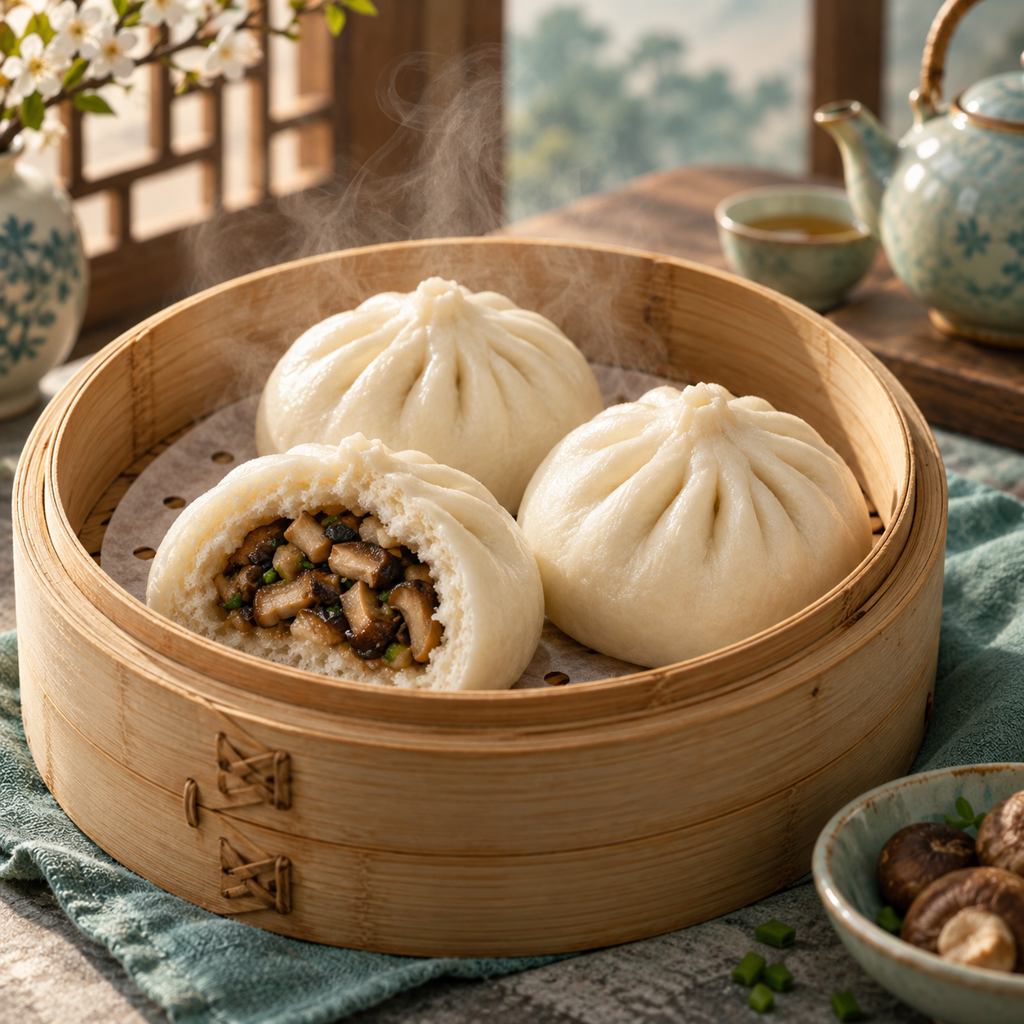
The Chinese baozi tradition
Under a steamer lid, the dough stays pale and soft without an oven-browned crust. Our illustration shows closed, pleated baozi, which can hold many different fillings.
Checked fact. Steamed buns can have savoury or sweet fillings, from meat or mushrooms to custard.
Source: Source — Bao: steamed buns
6. Baguette
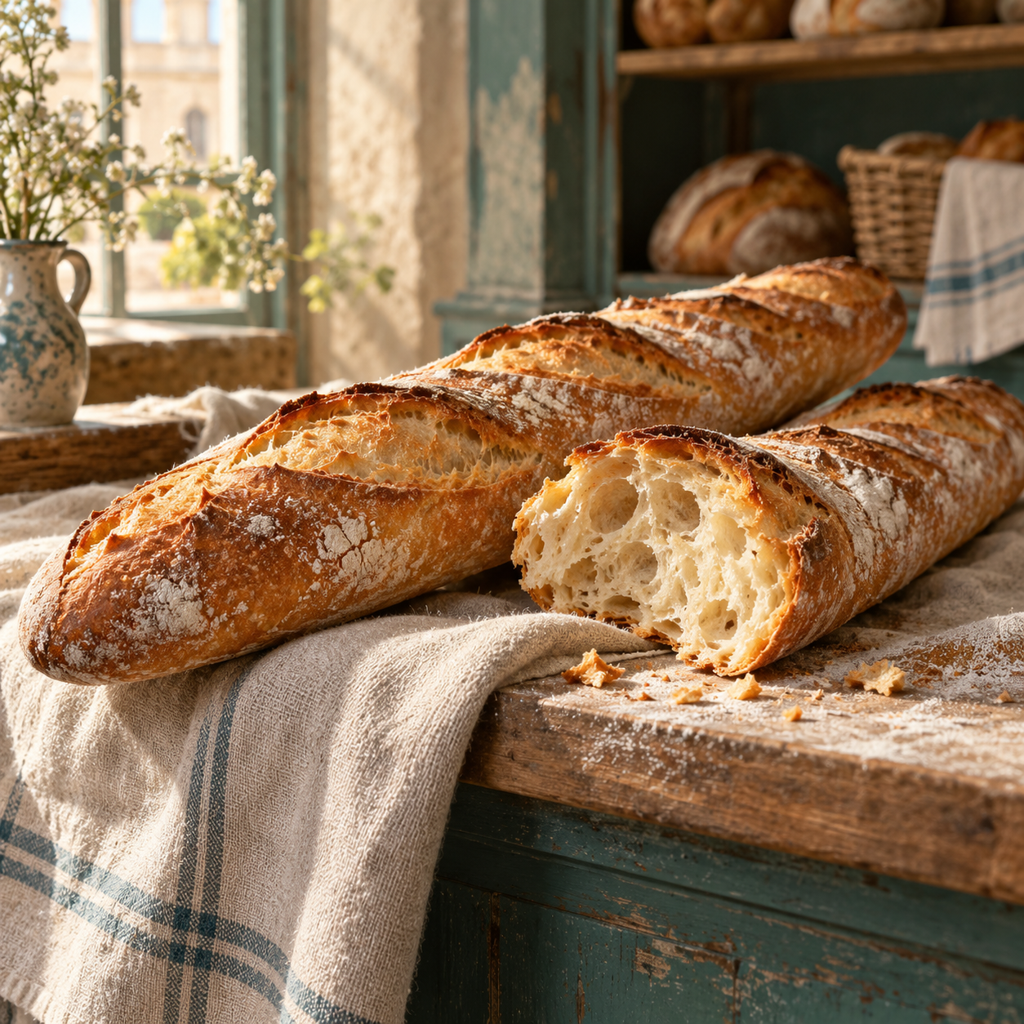
France: a long, crisp classic
Its long shape invites slicing, while the scores open during baking. Behind the familiar outline lies a craft of dough handling, shaping and attention to the oven.
Checked fact. UNESCO recognised baguette craftsmanship and culture as intangible heritage in 2022.
Source: Source — Baguette
7. Corn tortilla
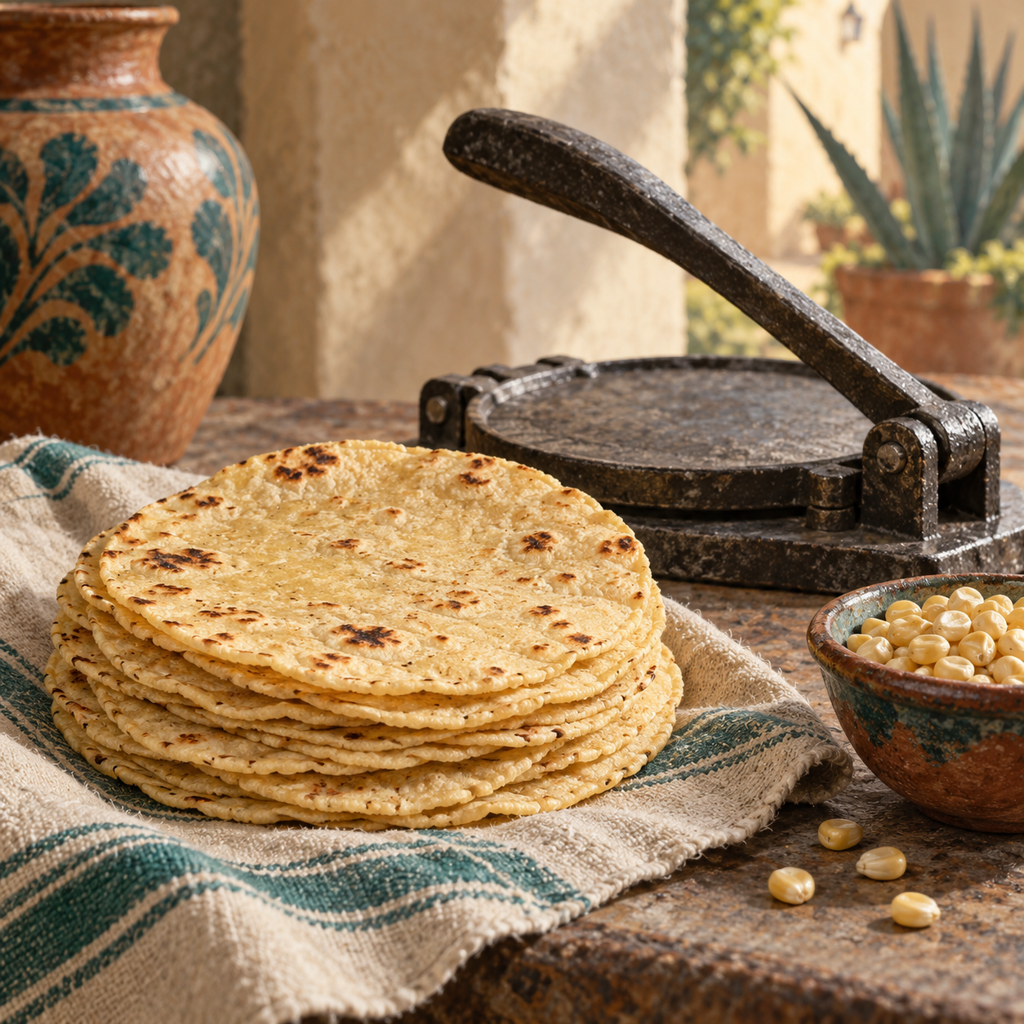
Mexico: a thin circle of masa
A small dough ball is flattened and cooked quickly on a hot surface. A cloth keeps the stack soft. We show the corn version; wheat tortillas also exist.
Checked fact. Tortilla masa harina comes from alkali-treated maize, unlike ordinary corn flour.
Source: Source — Corn tortilla
8. Pita
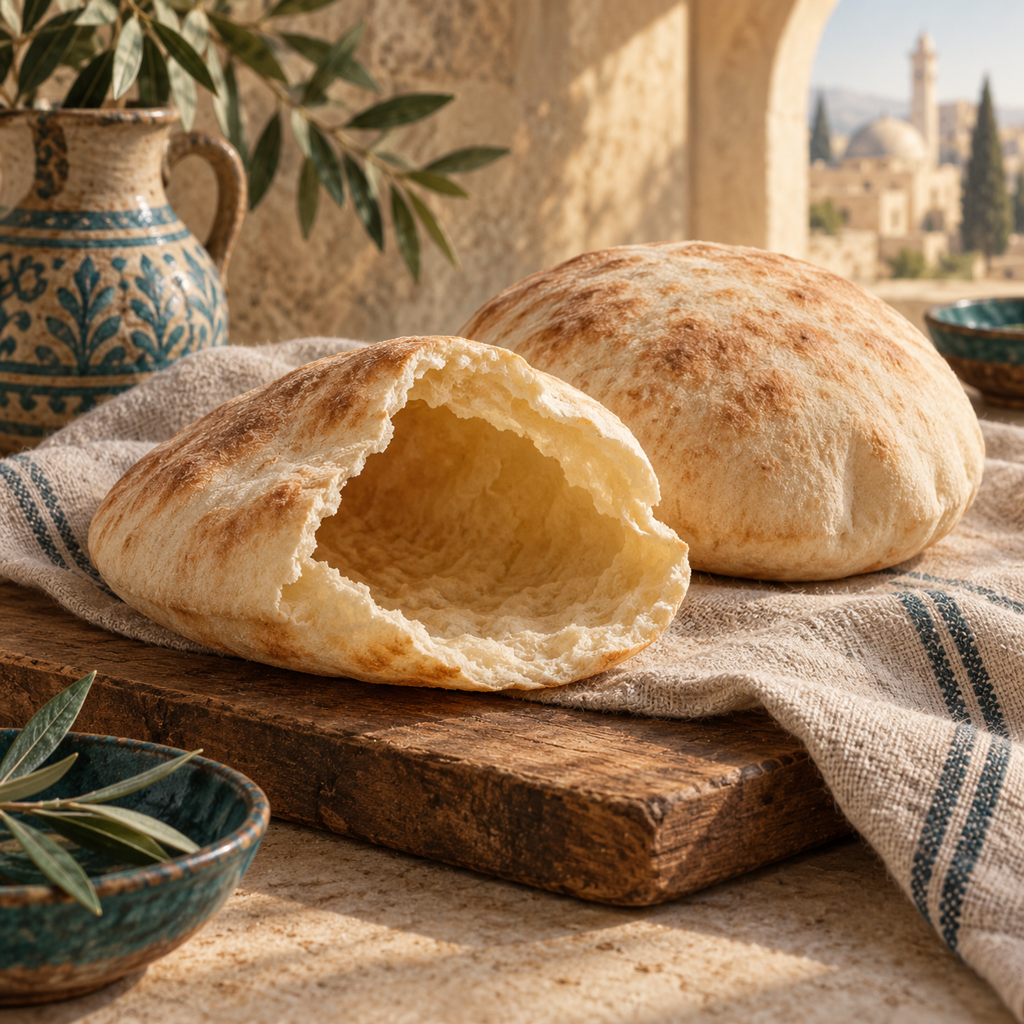
A flatbread with a pocket
In a hot oven, a flat disc suddenly swells like a cushion. It subsides as it cools, leaving space inside: tear it open to reveal the pocket.
Checked fact. Steam separates the layers of pocket pita; not every regional pita has a pocket.
Source: Source — Pita
9. Focaccia
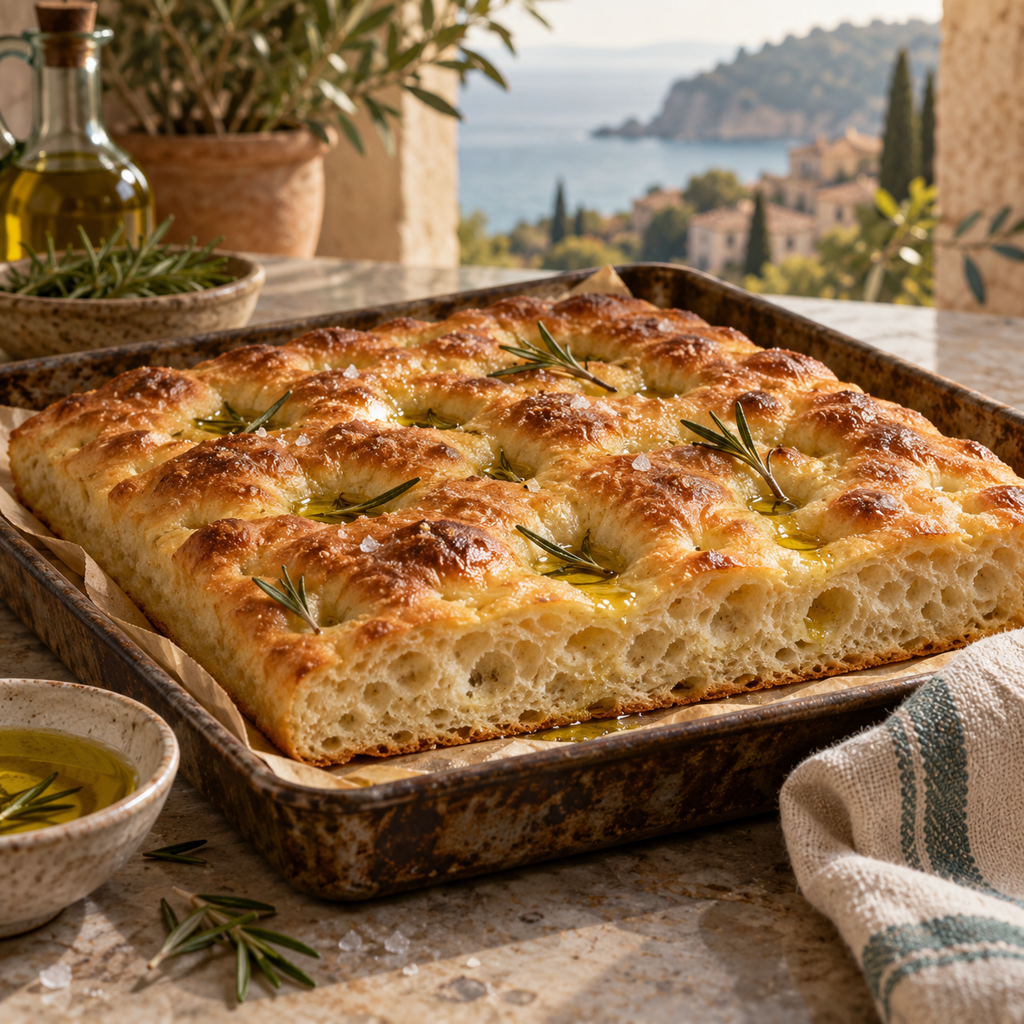
Italy: bread with dimples
Fingertips leave a landscape of dimples in the dough. Olive oil gives the surface a sheen and rosemary adds fragrance: one focaccia variation, not a compulsory formula.
Checked fact. Focaccia can be made with a sourdough starter, without packaged yeast.
Source: Source — Focaccia
10. Rugbrød
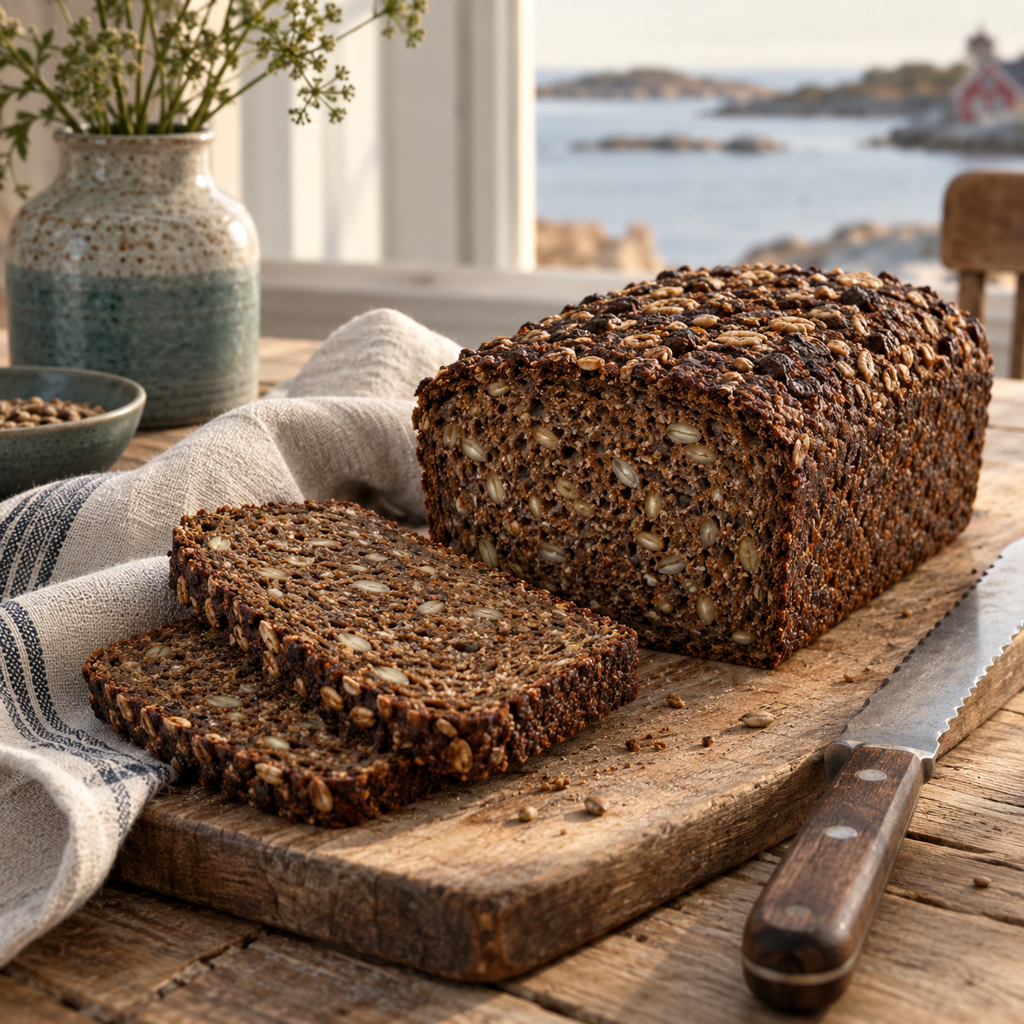
Denmark: grain-filled rye bread
Grains and seeds show in the dense cut surface. A thin slice becomes the foundation of an open sandwich: the bread matters just as much as its toppings.
Checked fact. Rugbrød is a traditional base for Danish smørrebrød, or open sandwiches.
Source: Source — Rugbrød