
Fans, towers, cones and caps: ten shells as a lesson in form. Not every spiral is golden, and not every mollusc has a coiled shell.
The editorial team created these illustrations with AI. They are explanatory images, not photographs of particular specimens, homes or events. Each card includes a checked fact and a source.
1. Scallop
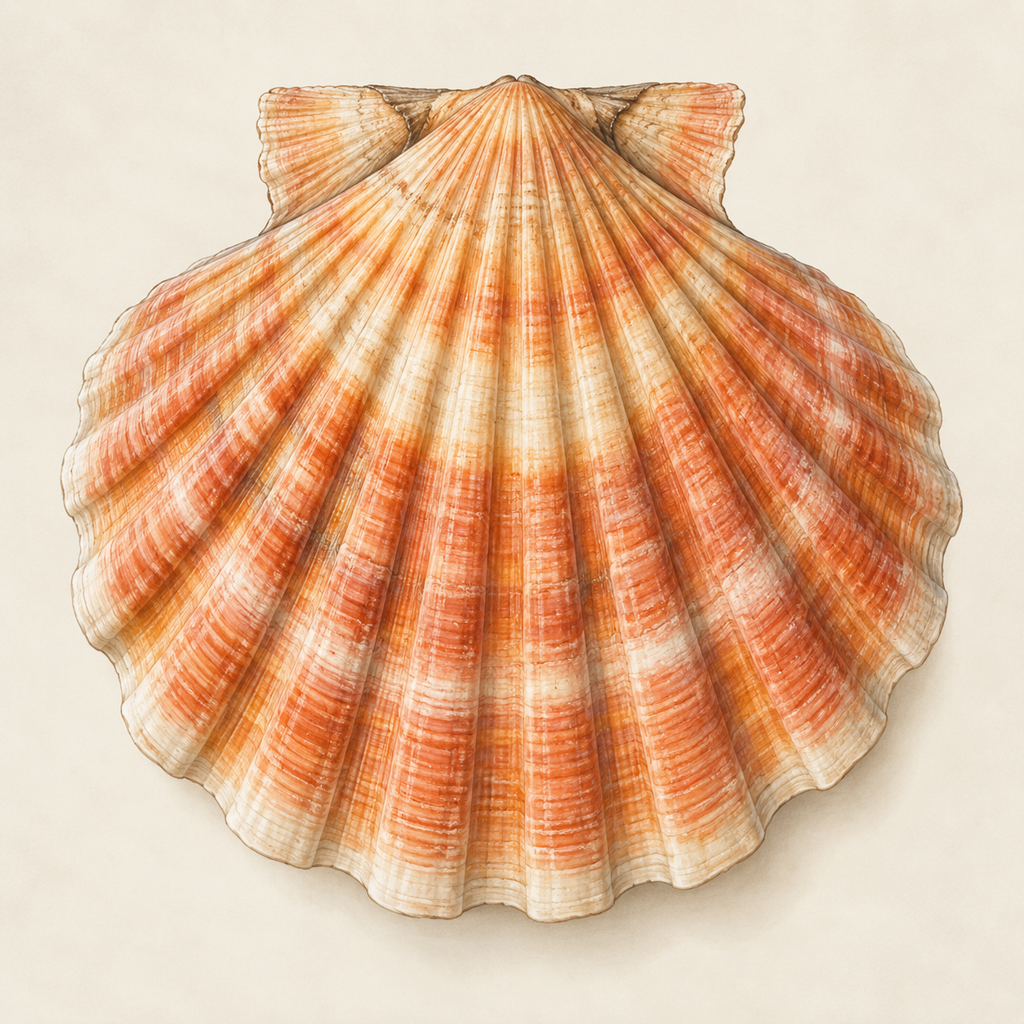
Pecten
Ribs spread from the hinge towards the edge like a fan.
Checked fact. This radial arrangement differs from coiling: a scallop is a bivalve mollusc.
Source: Source — Scallop
2. Turritella tower
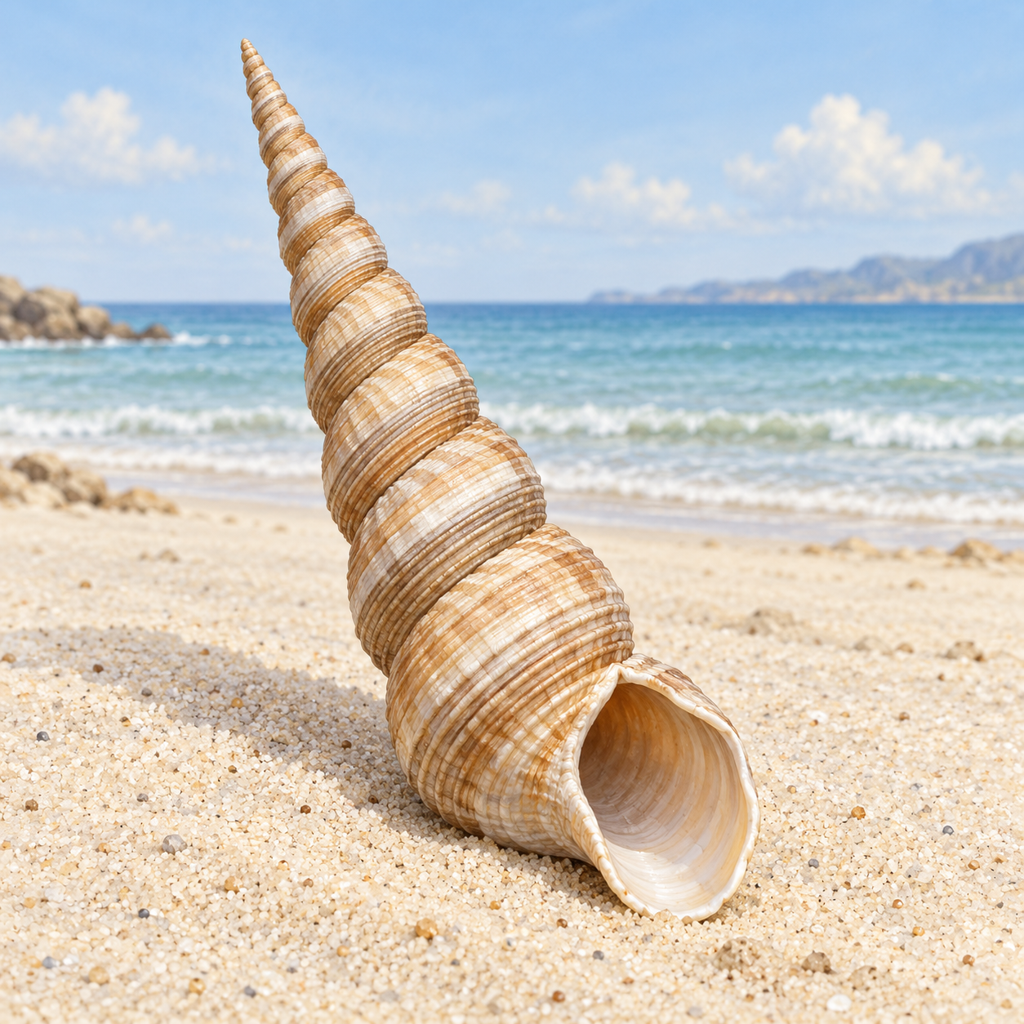
Turritella
Successive whorls form a tall cone.
Checked fact. Geometrical models describe such shells, but a real specimen need not fit one ideal equation exactly.
Source: Source — Turritella tower
3. Wentletrap staircase
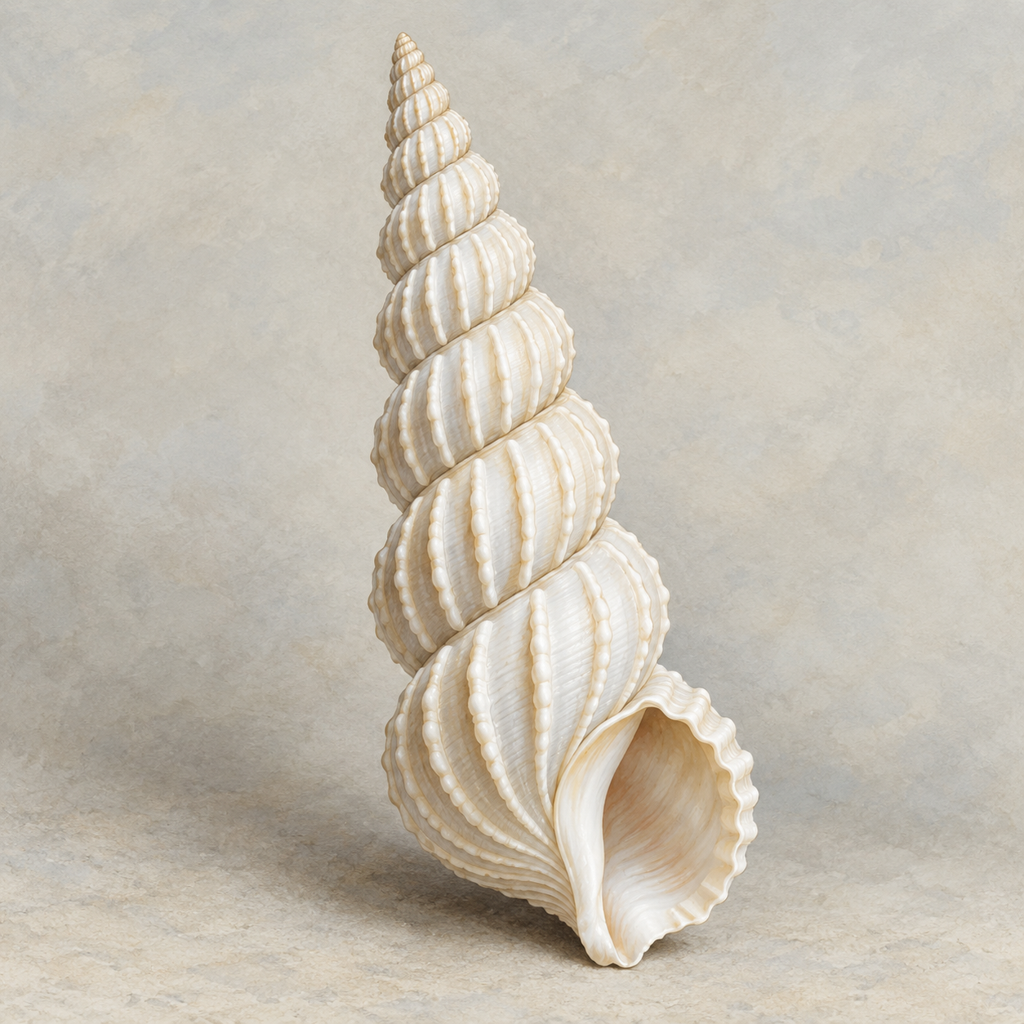
Epitonium
Prominent axial ribs cross the whorls, suggesting a staircase.
Checked fact. Their number and shape differ between Epitonium species.
Source: Source — Wentletrap staircase
4. Spiny murex shell
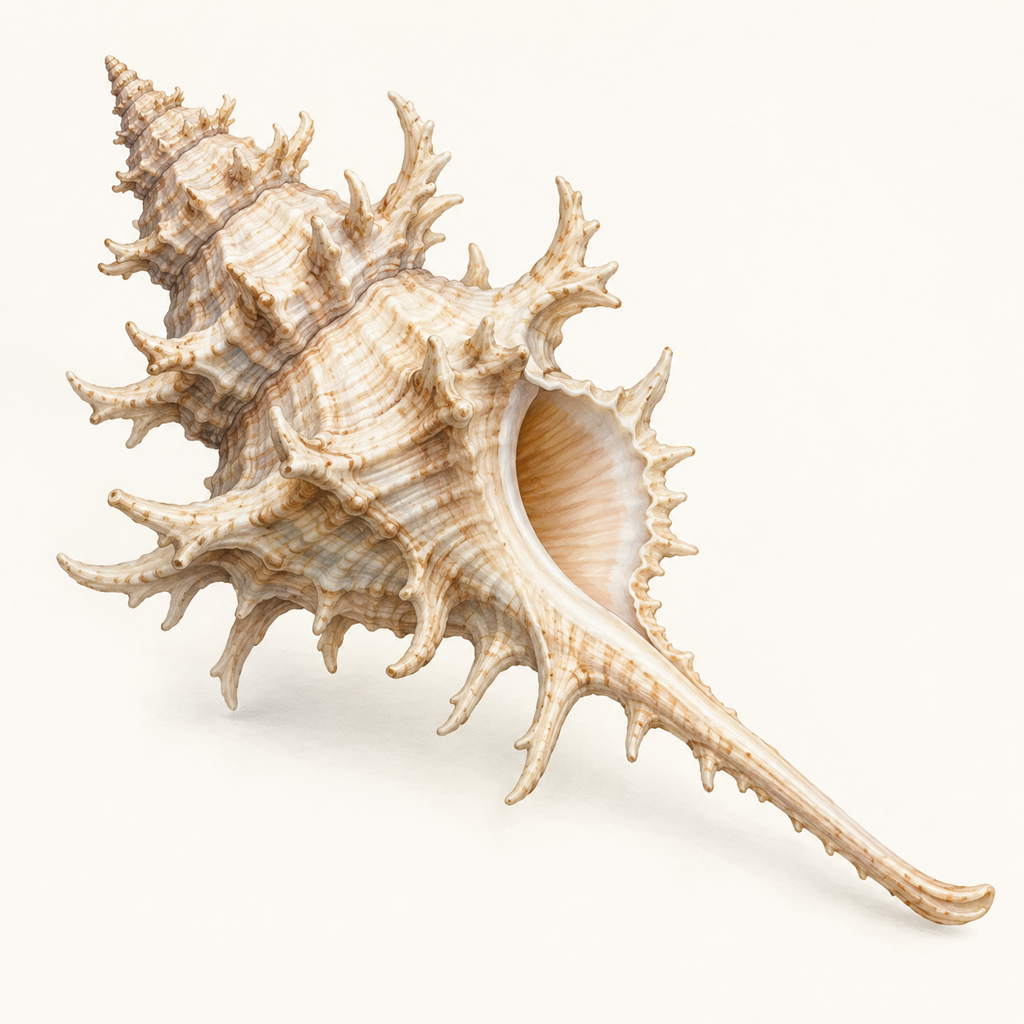
Muricidae
Our portrait shows projecting ornament and an elongated siphonal canal.
Checked fact. These change the outline around the main coil: a shell is more than a smooth cone.
Source: Source — Spiny murex shell
5. Sundial shell
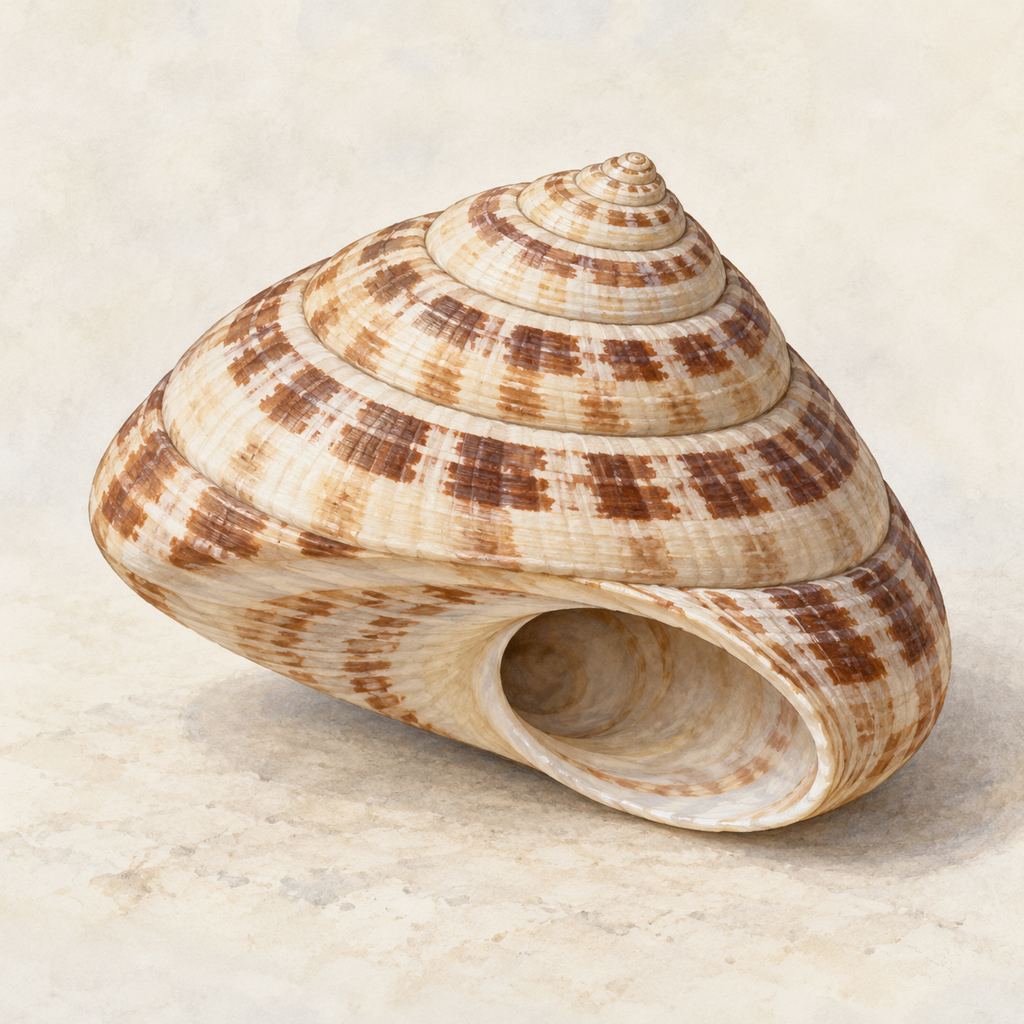
Architectonica
Broad whorls form a low cone.
Checked fact. Viewed from below, the central hollow, or umbilicus, reveals a three-dimensional spiral more complex than a flat drawing.
Source: Source — Sundial shell
6. Violet snail shell
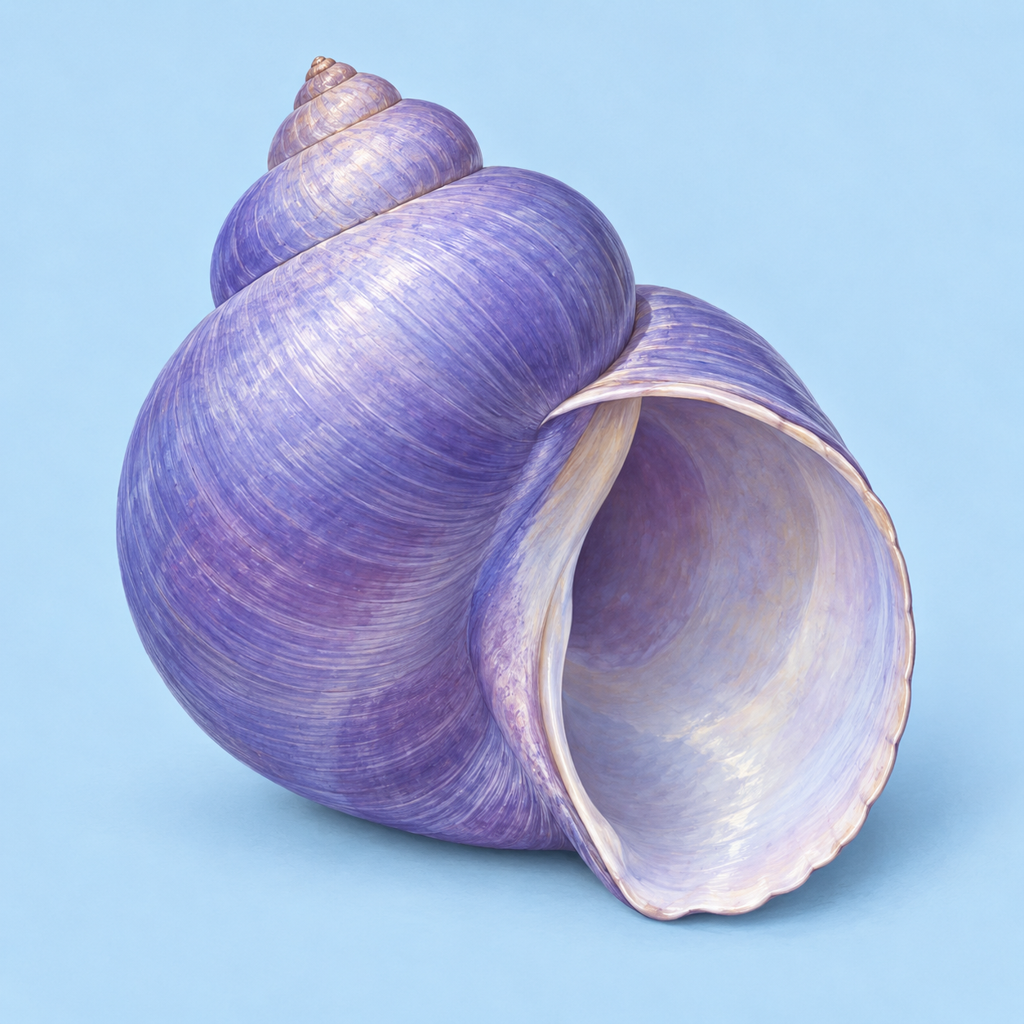
Janthina janthina
A large final whorl and wide aperture create a softly rounded silhouette.
Checked fact. Colour makes the portrait distinctive, while the arrangement of whorls defines its geometry.
Source: Source — Violet snail shell
7. Limpet
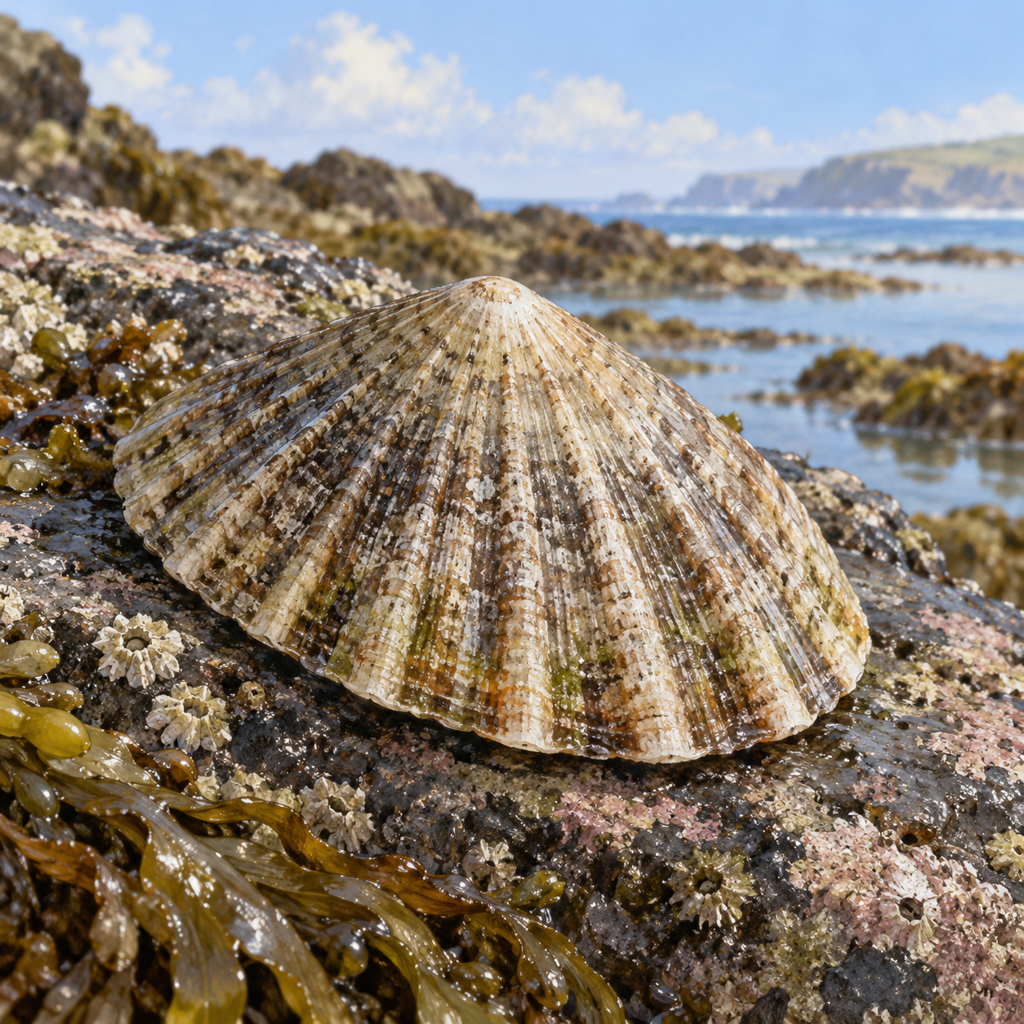
Patella
A limpet has a cap-shaped shell without an obvious adult coil.
Checked fact. Radial ribs and concentric growth lines provide two pattern directions on the same surface.
Source: Source — Limpet
8. Mussel
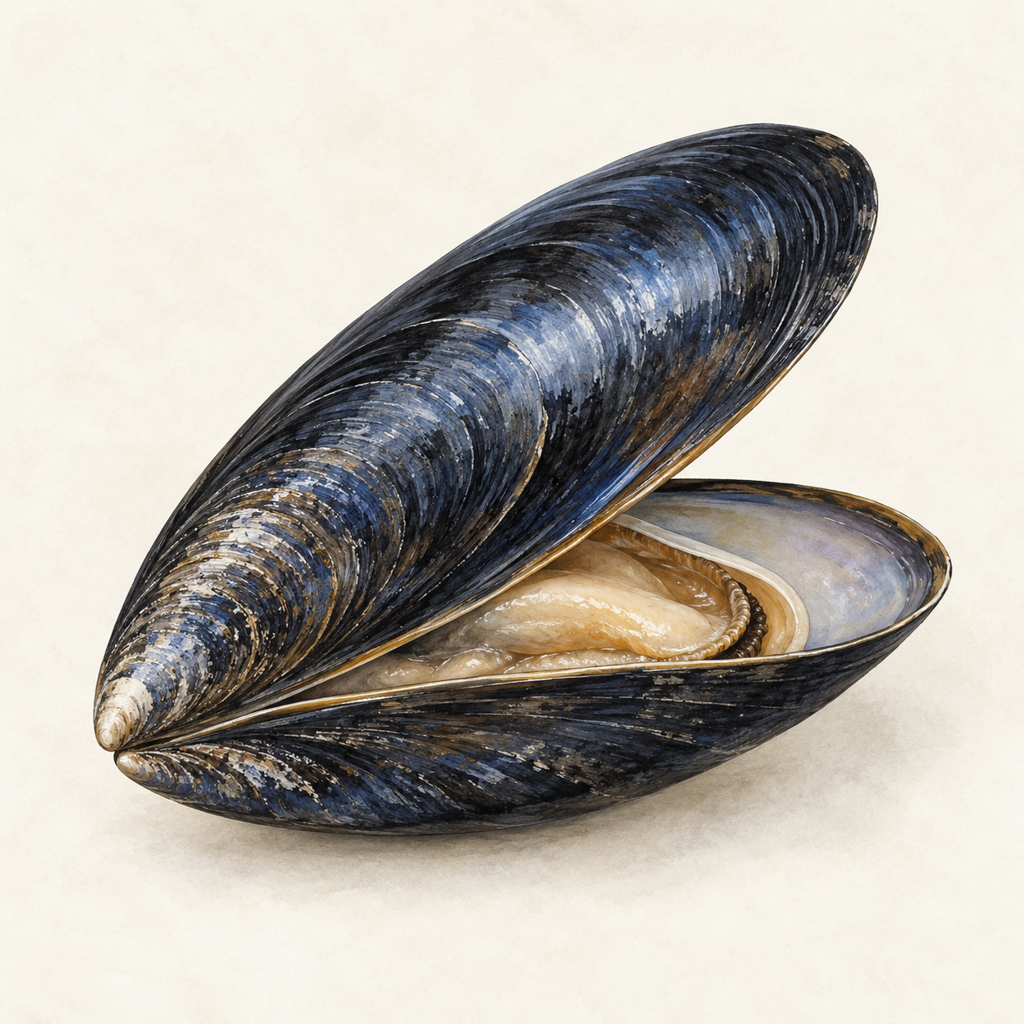
Mytilus
Two elongated valves meet at a hinge; one is opened beside the other in our image.
Checked fact. This construction differs from a single tube coiled into a spiral.
Source: Source — Mussel
9. Auger shell
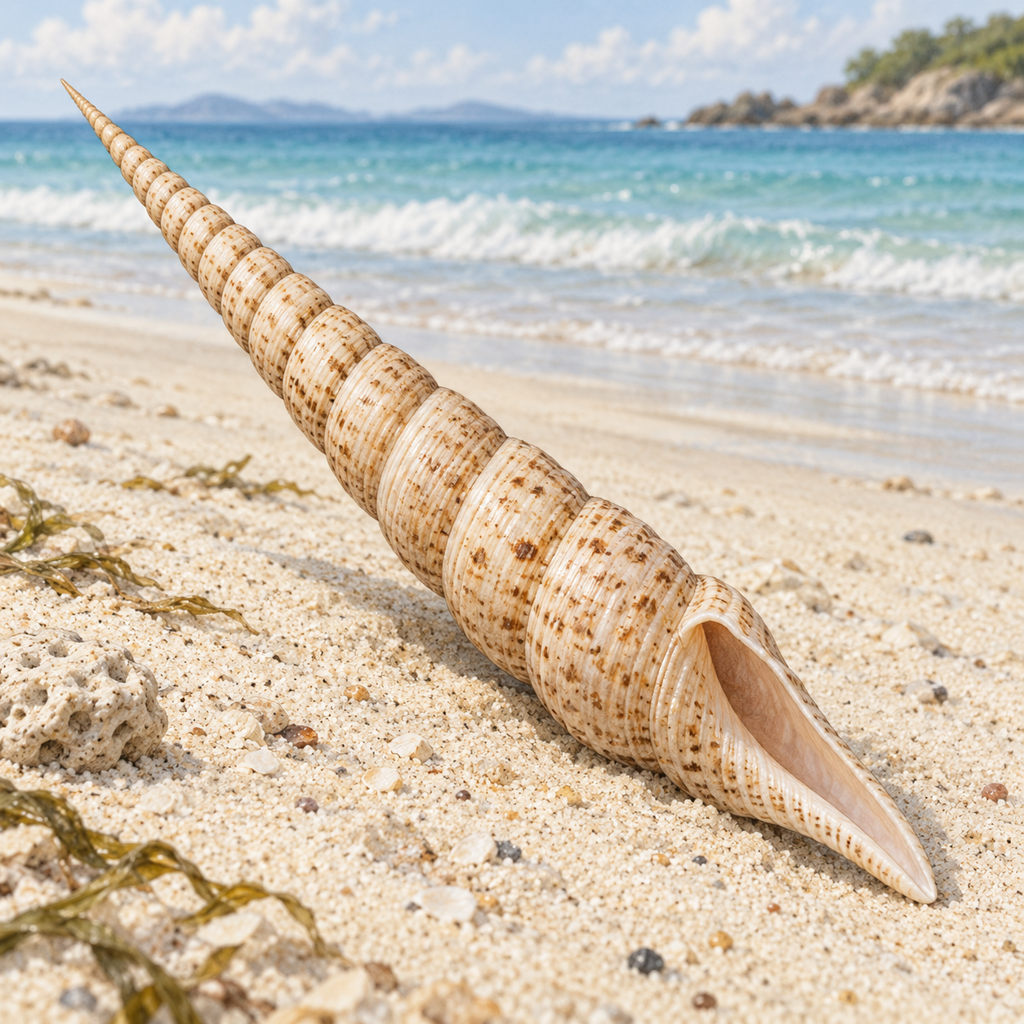
Terebra
A tall narrow coil gradually widens towards its final whorl.
Checked fact. Compare it with low Architectonica: different growth proportions produce remarkably different silhouettes.
Source: Source — Auger shell
10. Cone shell
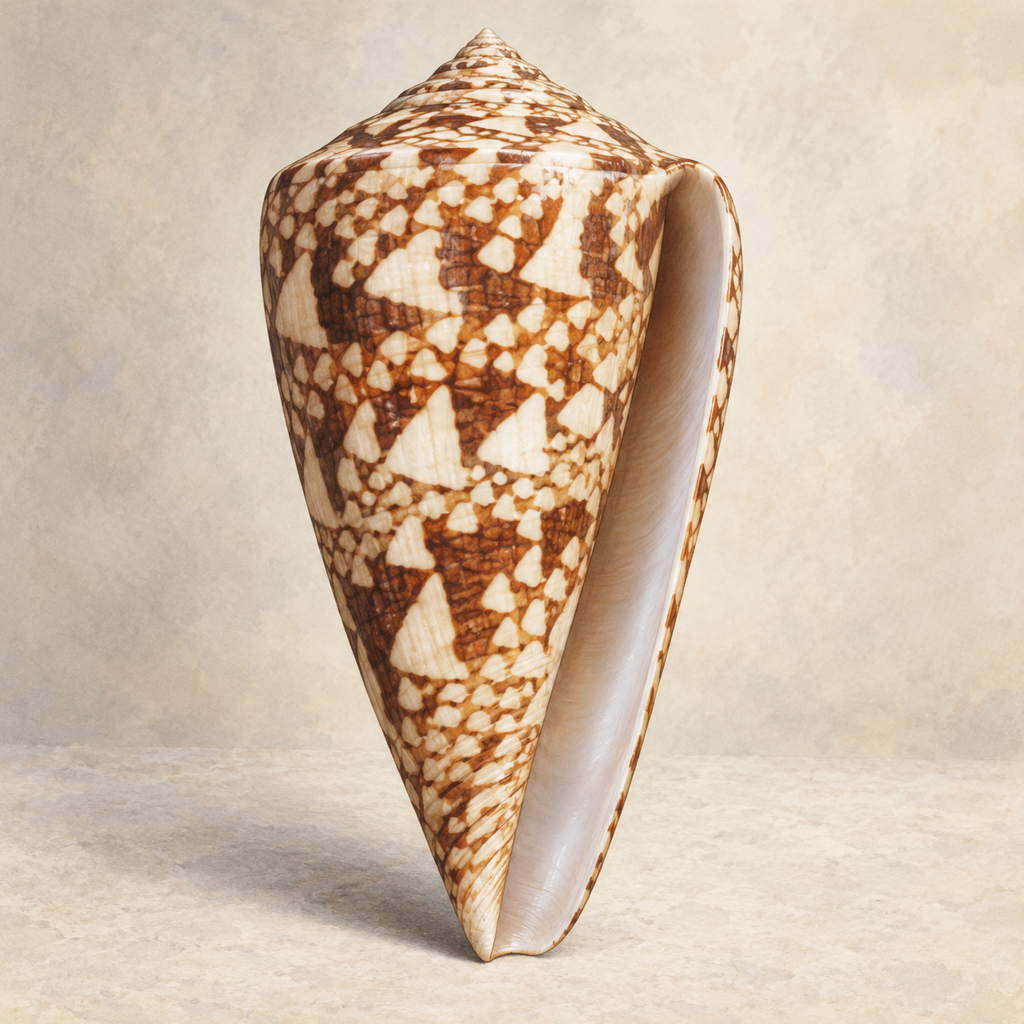
Conus
A broad shoulder narrows towards the base, with a long slit-like aperture along one side.
Checked fact. This is an empty museum-style specimen, not an invitation to handle live snails.
Source: Source — Cone shell