
Medieval faces, porcelain costumes and geometric pieces: ten historical approaches to chess design.
The editorial team created these illustrations with AI. They are explanatory images, not photographs of particular specimens, homes or events. Each card includes a checked fact and a source.
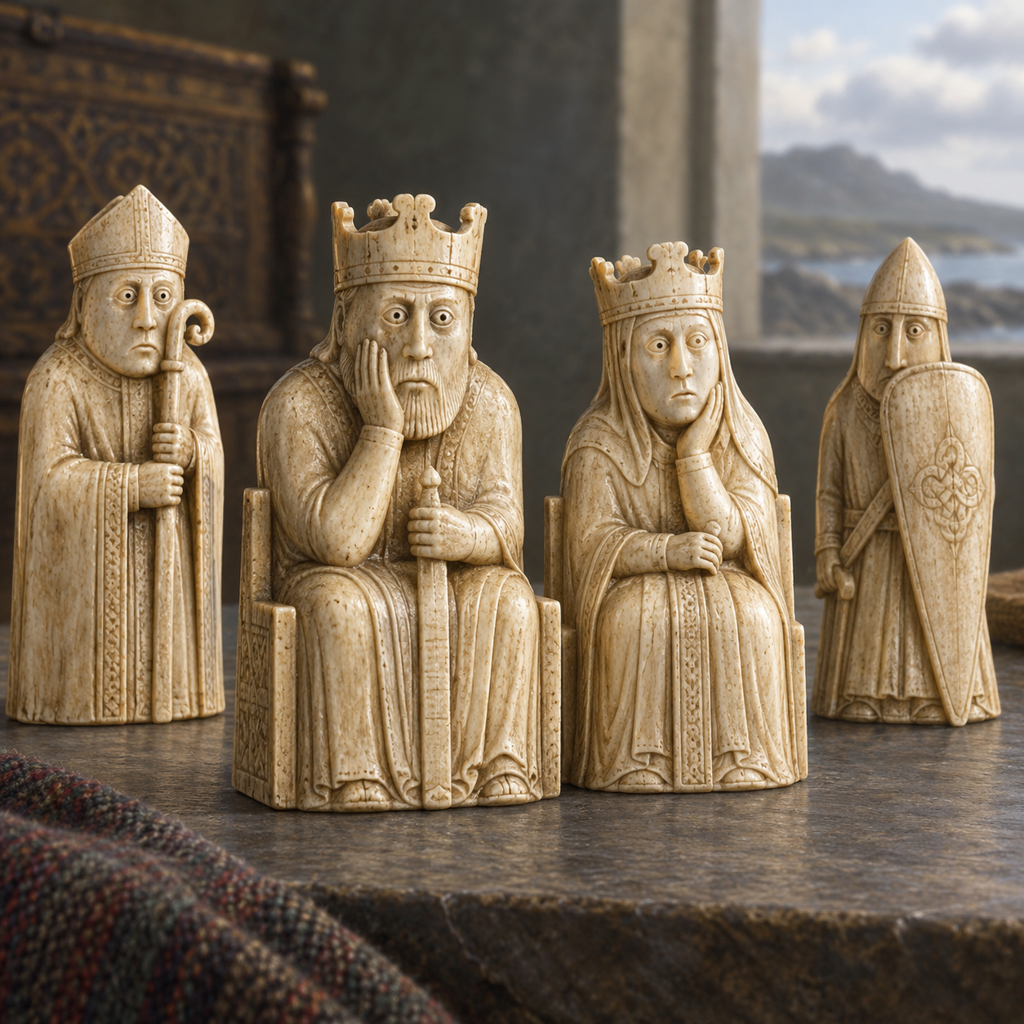
1. Lewis chessmen
Historical design · artistic interpretation
The medieval Lewis pieces depict human characters, including kings, queens and bishops.
Checked fact. Originals were carved from walrus ivory and whale tooth.
Source: Source — Lewis chessmen
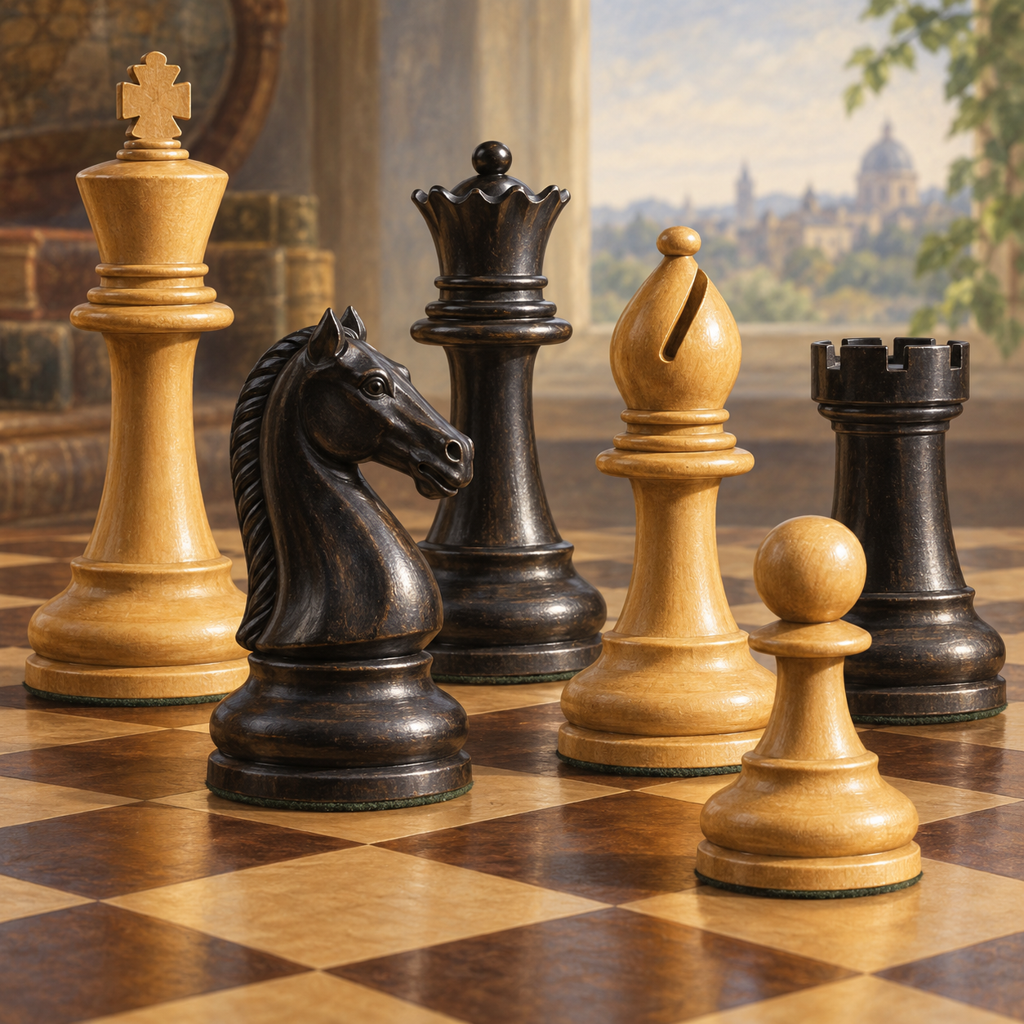
2. Staunton
Historical design · artistic interpretation
The Staunton set appeared in the nineteenth century and bears player Howard Staunton’s name.
Checked fact. Its readily distinguishable silhouettes became an influential chess-design standard.
Source: Source — Staunton
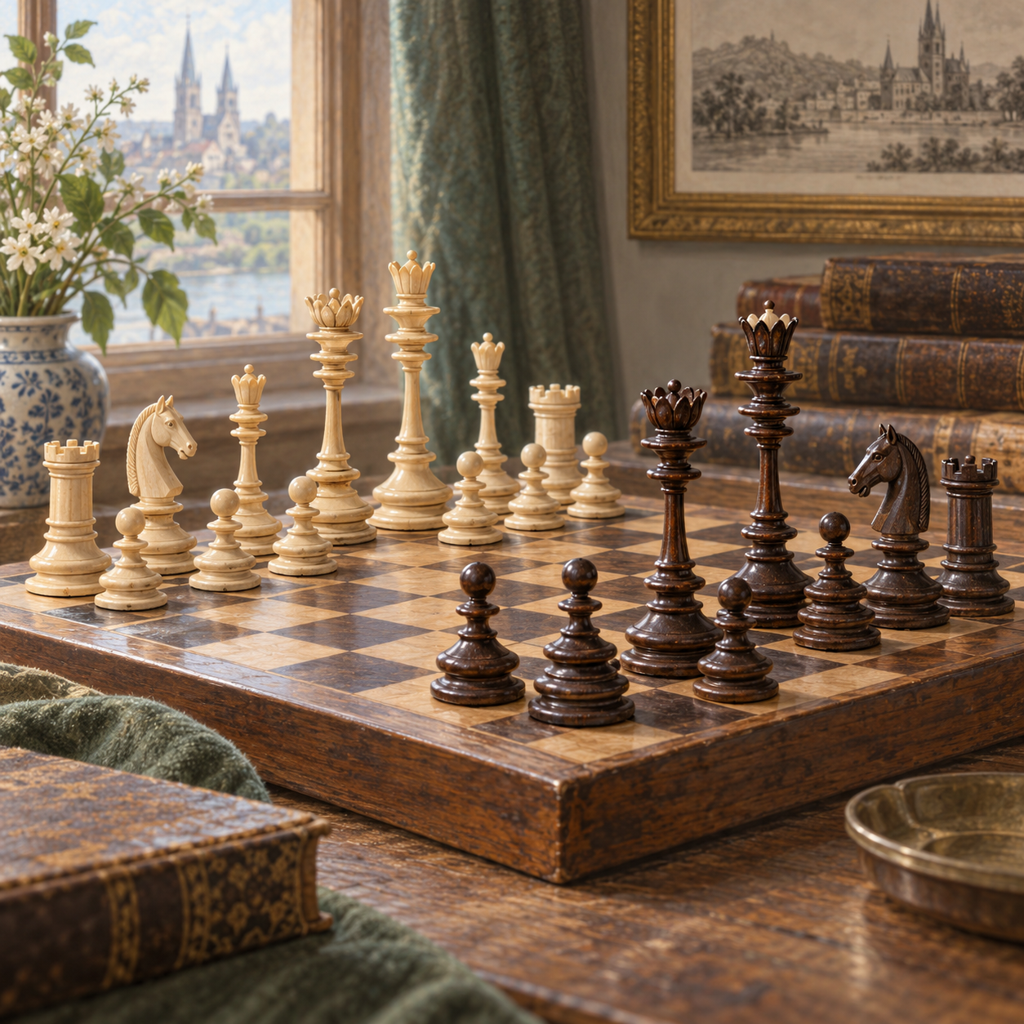
3. Selenus
Historical design · artistic interpretation
The name relates to Gustavus Selenus, the pseudonym used for a 1616 chess book.
Checked fact. Later sets in this style feature slender stems and decorative finials.
Source: Source — Selenus
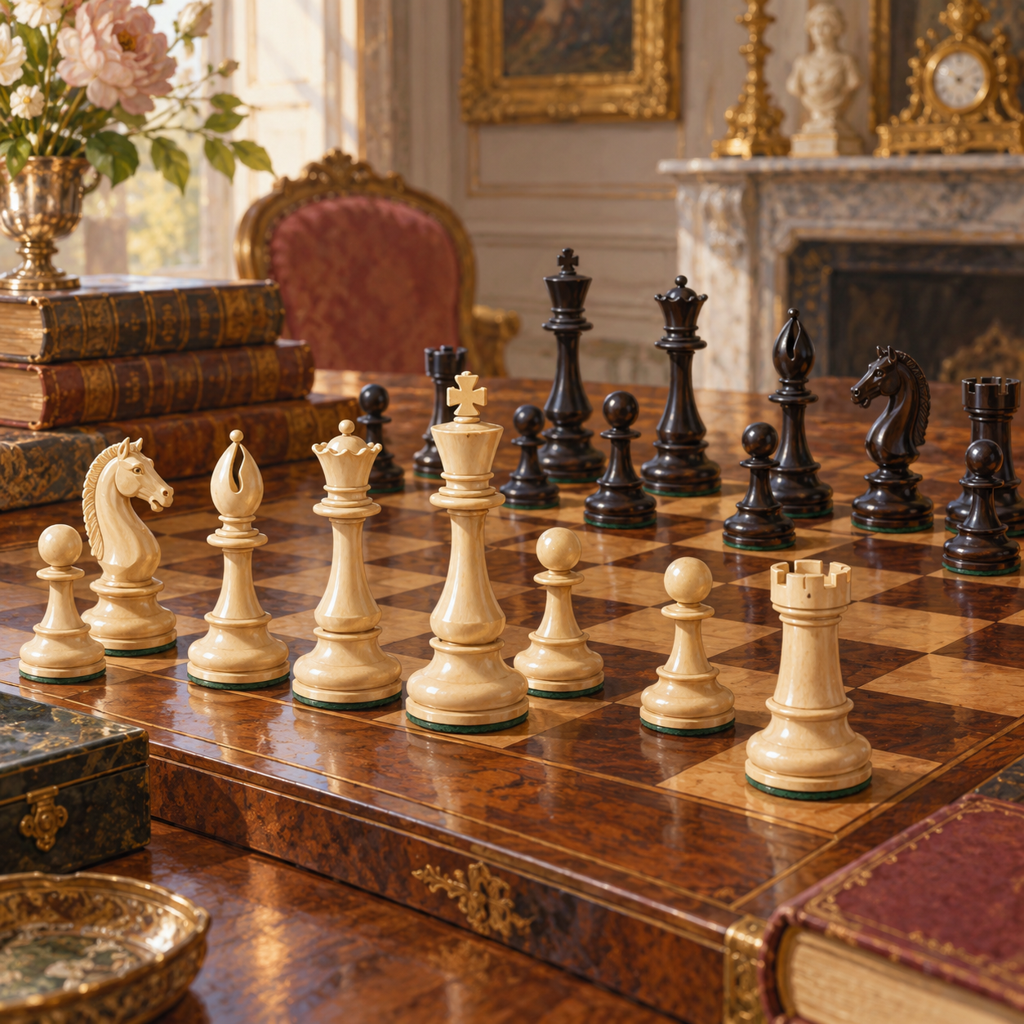
4. French Régence
Historical design · artistic interpretation
Régence is a historical French set pattern.
Checked fact. The FIDE museum holds a set associated with Mikhail Chigorin; our illustration shows the general style, not his own pieces.
Source: Source — French Régence
5. Barleycorn
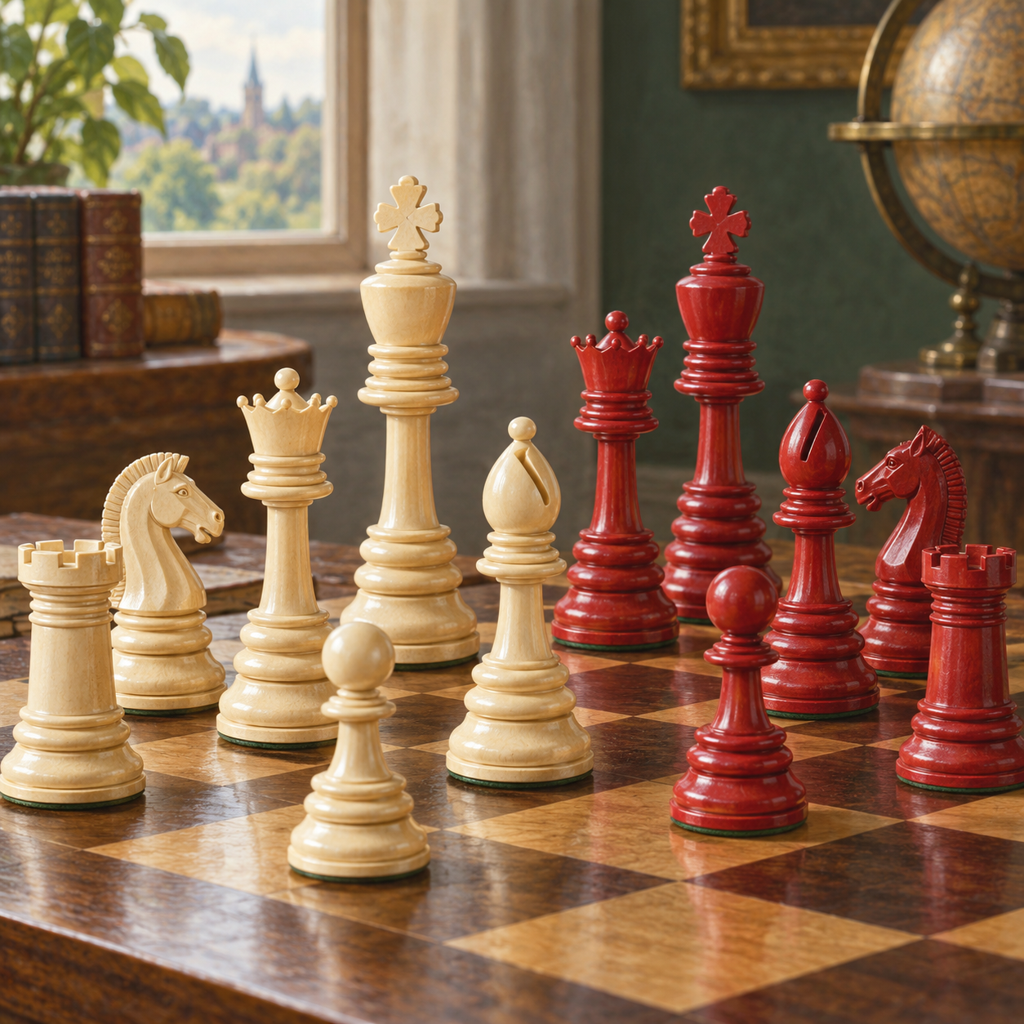
Historical design · artistic interpretation
Barleycorn belongs to historical English styles.
Checked fact. Its name evokes grain-like ornament; antique museum materials do not mean this modern illustration promotes new ivory.
Source: Source — Barleycorn
6. Bauhaus: Josef Hartwig
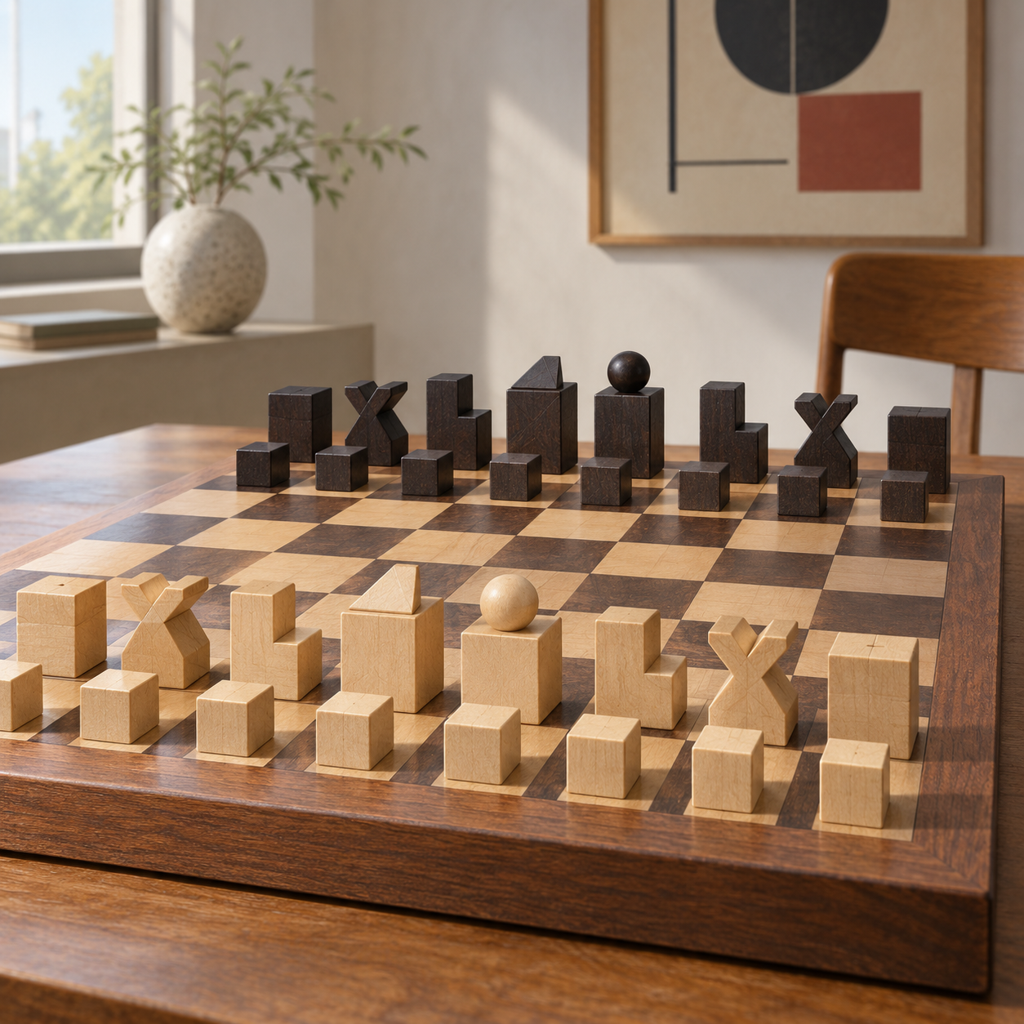
Historical design · artistic interpretation
Hartwig built his chess set from geometric forms.
Checked fact. The Bauhaus design relates a piece’s shape to its movement instead of depicting courtly people or animals.
Source: Source — Bauhaus: Josef Hartwig
7. Man Ray
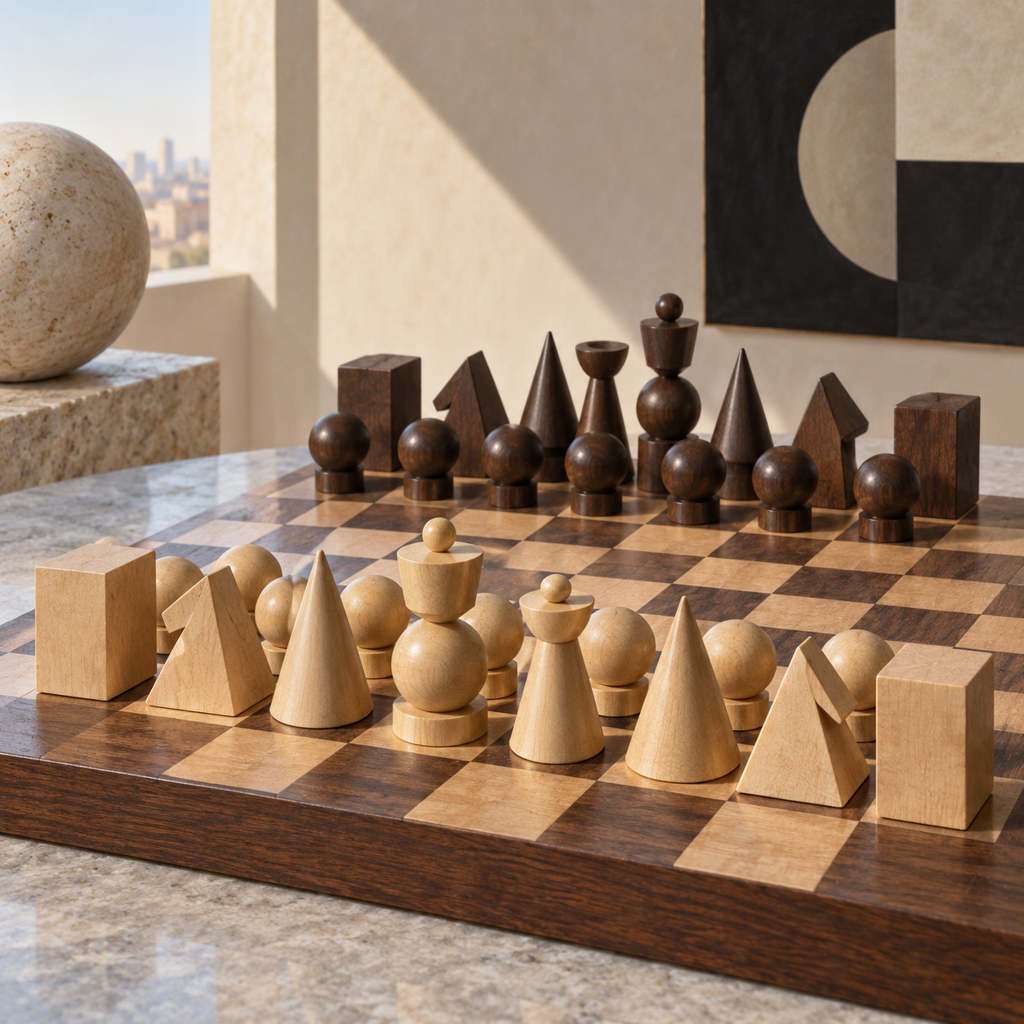
Historical design · artistic interpretation
Man Ray’s set transforms familiar pieces into geometric objects.
Checked fact. MoMA dates the design to 1920–1926.
Source: Source — Man Ray
8. Salvador Dalí
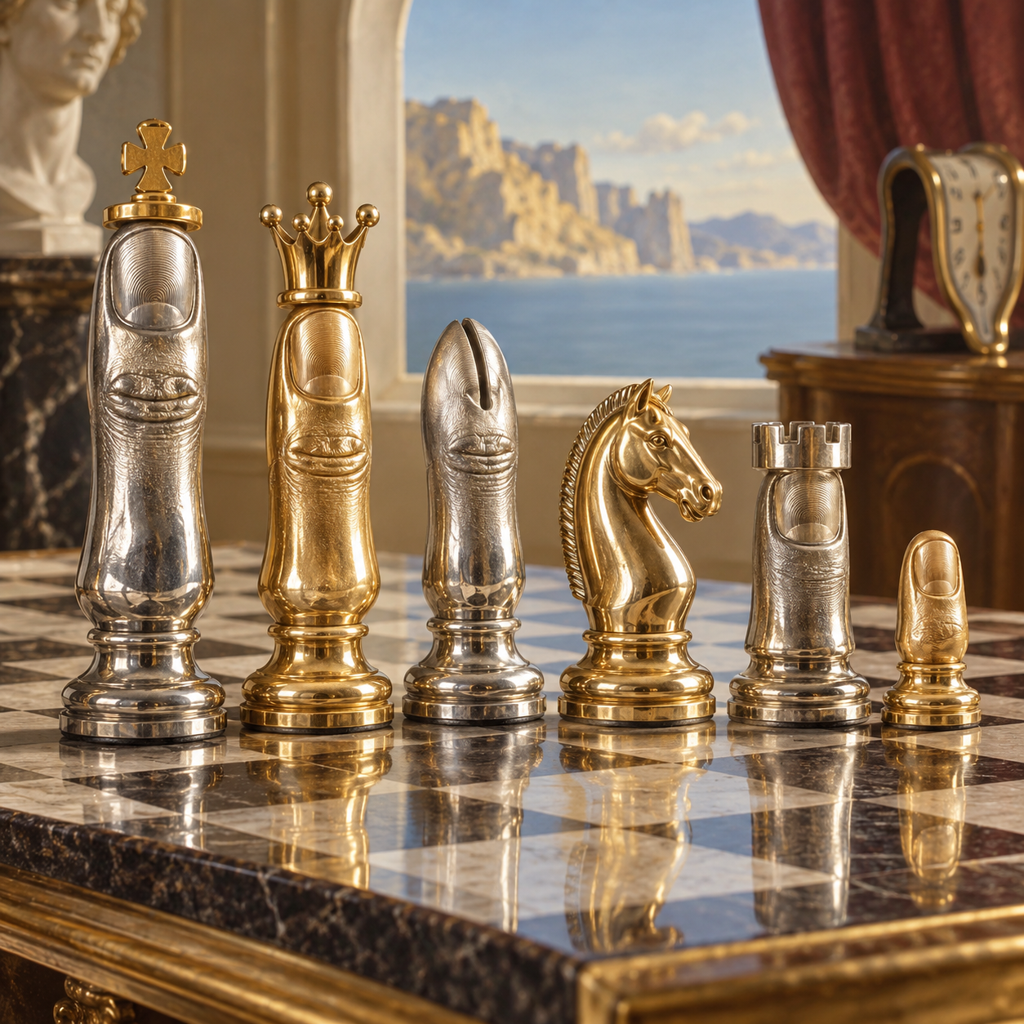
Historical design · artistic interpretation
The Montreal Museum of Fine Arts displays Dalí’s 1964–1971 set in silver and silver gilt.
Checked fact. Our illustration reinterprets its surreal forms.
Source: Source — Salvador Dalí
9. Wedgwood ceramics
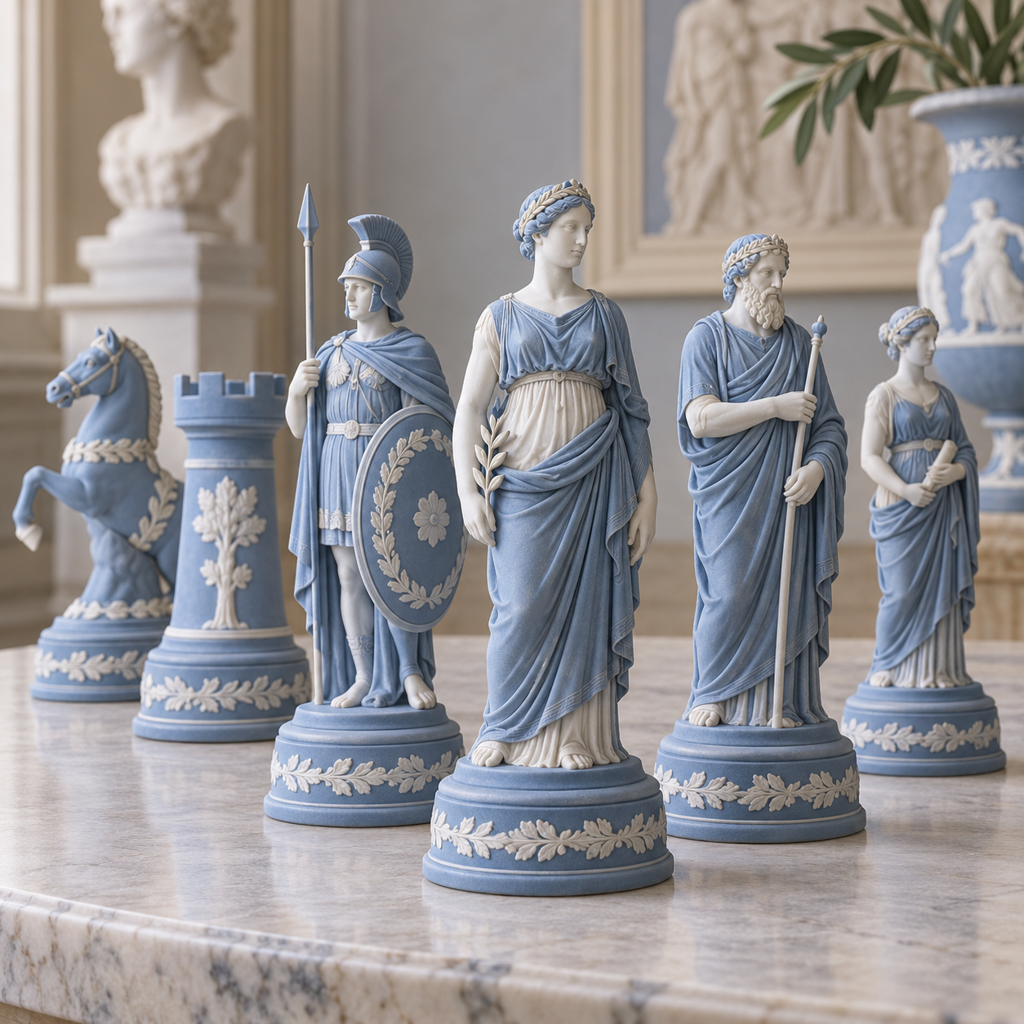
Historical design · artistic interpretation
Chess can be ceramic sculpture.
Checked fact. In the Wedgwood tradition, classical figures and relief decoration make a miniature gallery; blue and white here are an artistic choice.
Source: Source — Wedgwood ceramics
10. Meissen porcelain
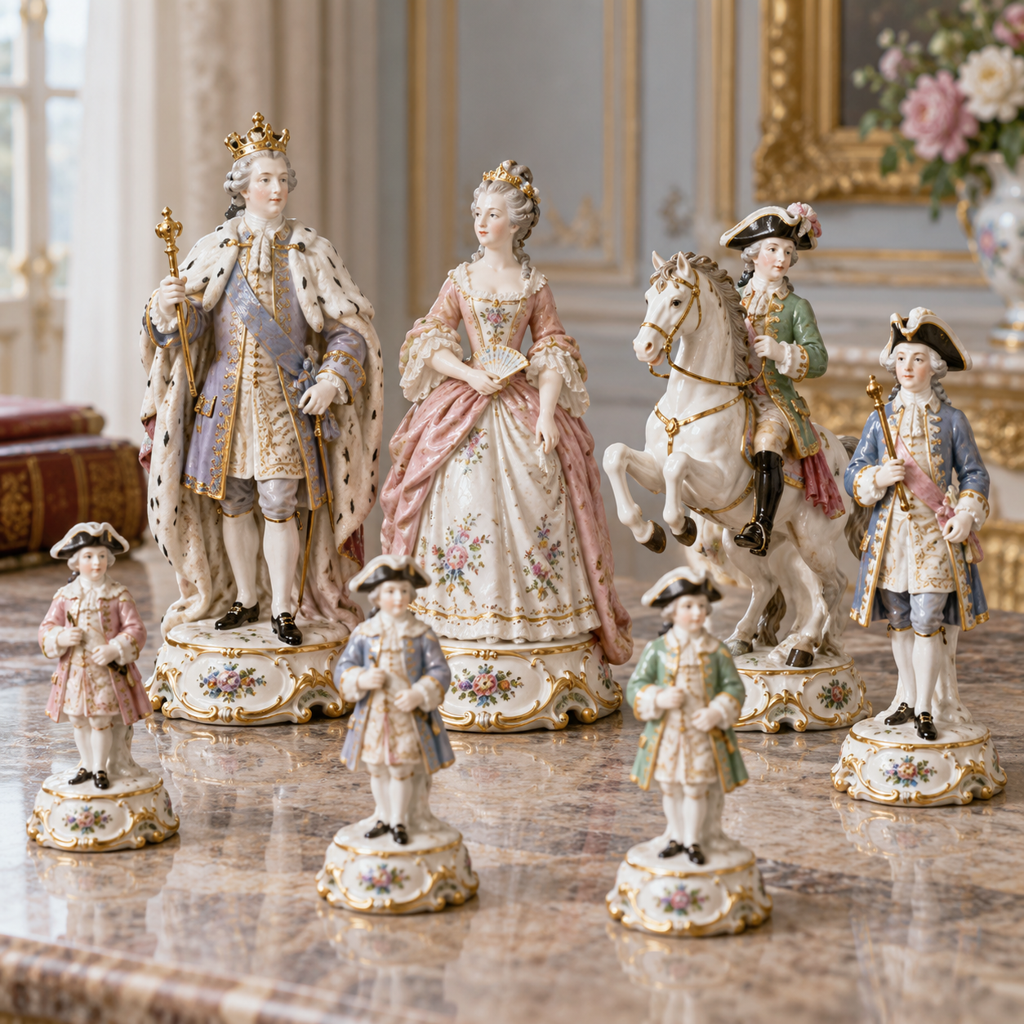
Historical design · artistic interpretation
Meissen produces figurative porcelain chess sets drawing on historical models.
Checked fact. Painted costumes turn each piece into a miniature sculpture.
Source: Source — Meissen porcelain