
Antennas, glass, reeds and strings: ten ways to turn motion into sound.
The editorial team created these illustrations with AI. They are explanatory images, not photographs of particular specimens, homes or events. Each card includes a checked fact and a source.
1. Theremin
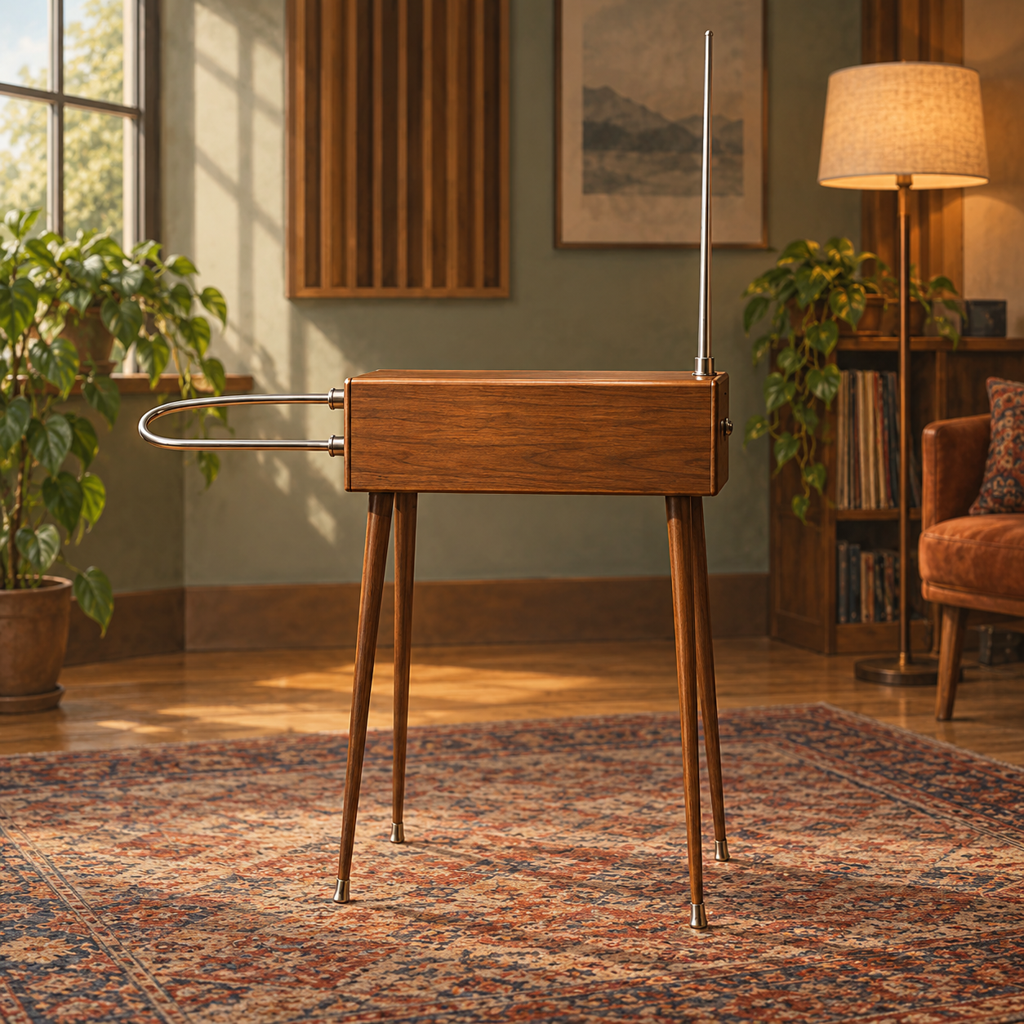
Electronic instrument · Russia
Two antennas and empty space between the hands: the musician plays without touching the instrument. Movement becomes melody, blurring the boundary between gesture and sound.
Checked fact. One antenna controls pitch and the other volume; the instrument was invented by Léon Theremin.
Source: Source — Theremin
2. Hang
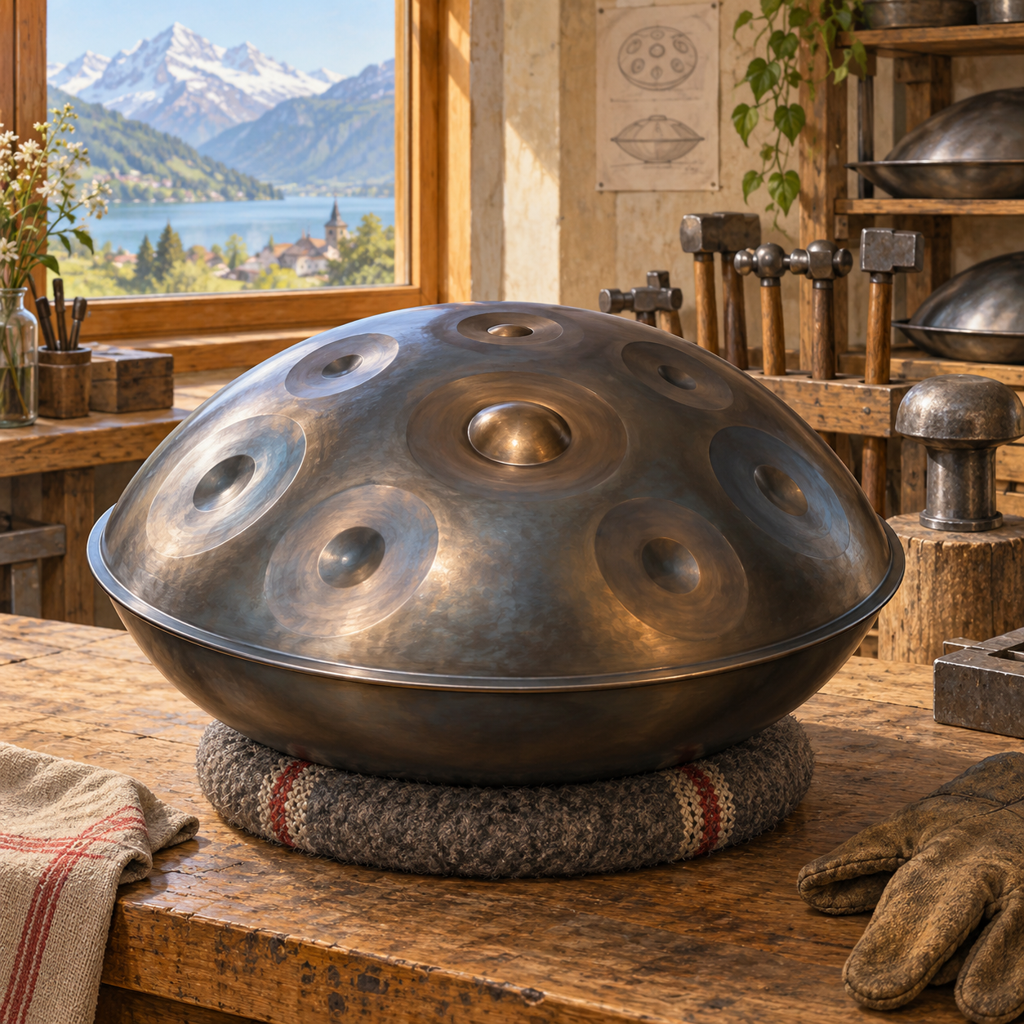
Sounding metal · Switzerland
The metal lens looks futuristic, but hands bring it to life. Tuned fields across the surface turn a simple shell into a small musical landscape.
Checked fact. Felix Rohner and Sabina Schärer developed the Hang at PANArt; it was presented widely in 2001.
Source: Source — Hang
3. Nyckelharpa
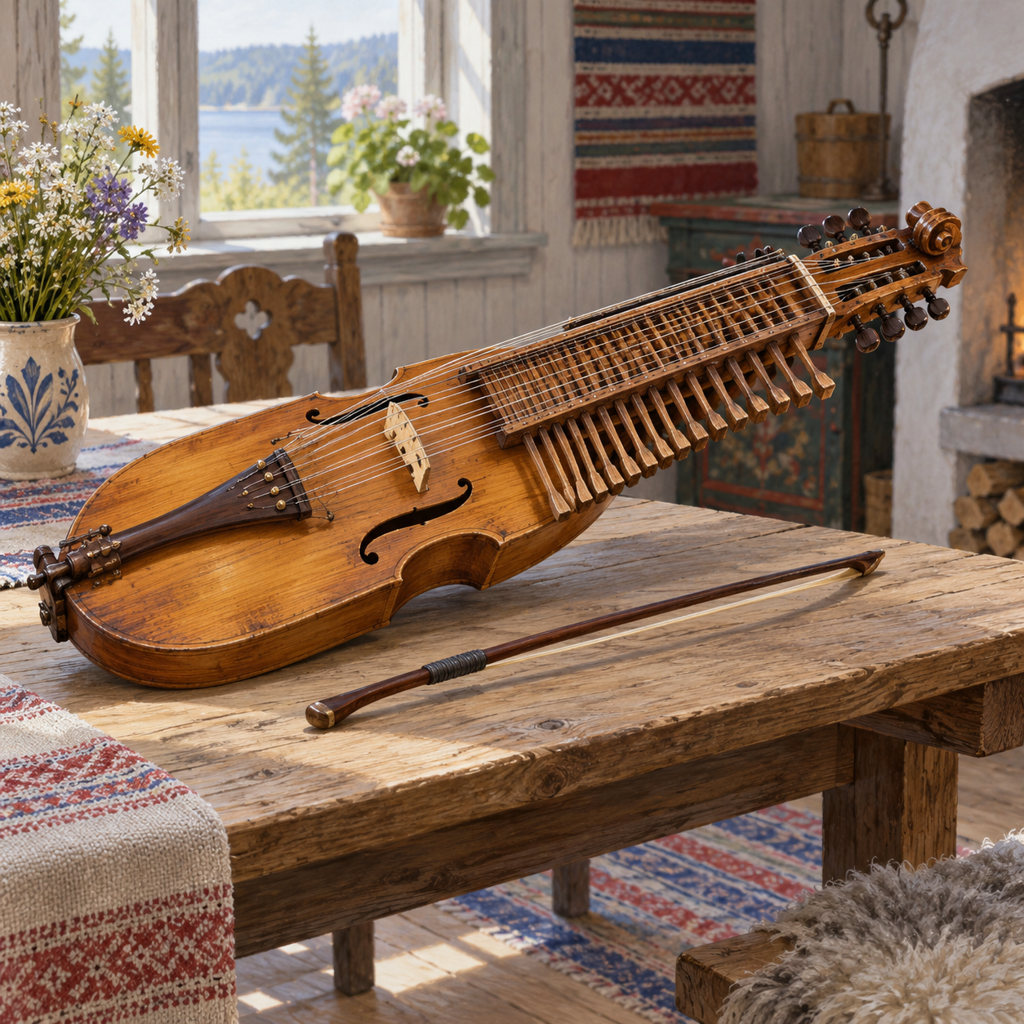
Bow and wooden keys · Sweden
Rows of wooden levers hide beneath the strings. It resembles a fiddle with a small keyboard: the bow drives the sound while keys help select the notes.
Checked fact. Keys move tangents that shorten the vibrating melody string; many models also have sympathetic strings.
Source: Source — Nyckelharpa
4. Kalimba and the lamellophone family
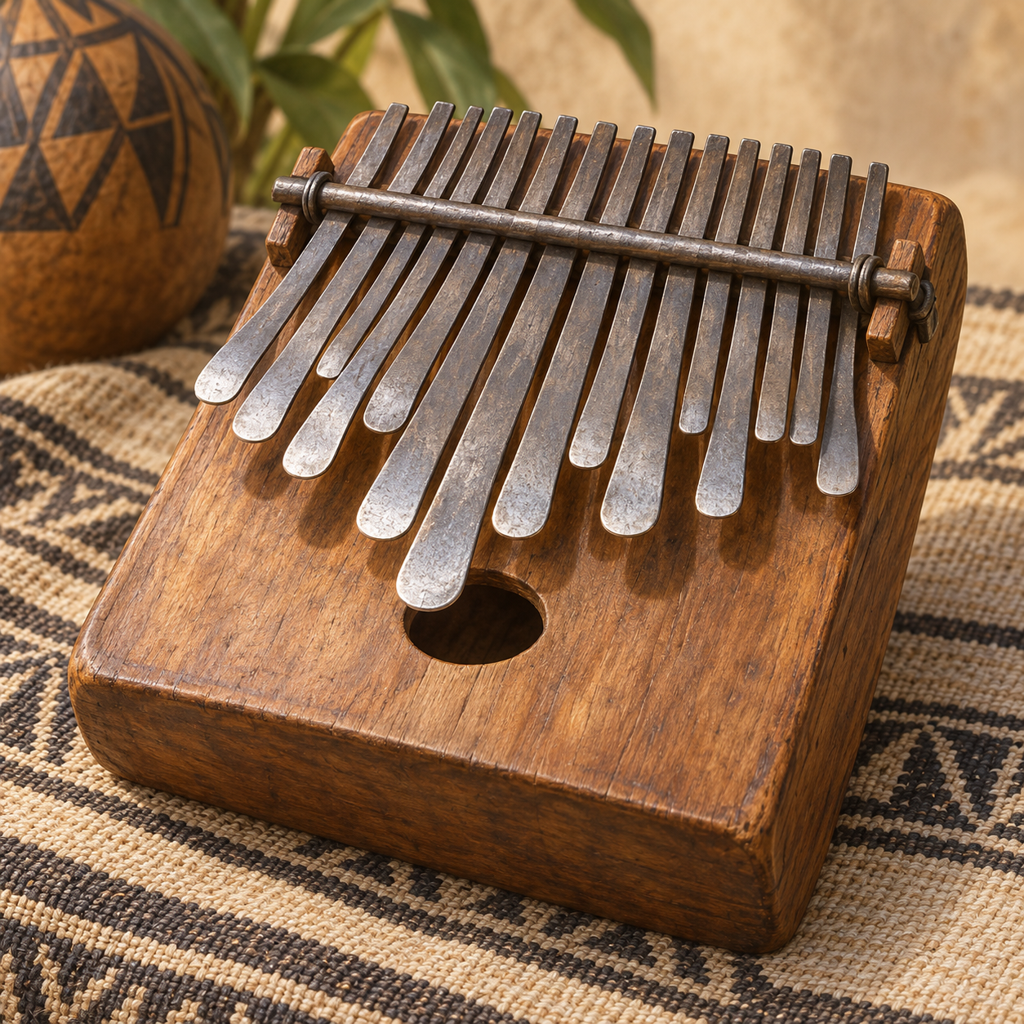
Metal tines · African traditions
A fan of metal tines sits on a wooden body. No strings or bow are needed: a finger starts the vibration. Related instruments vary in names and construction across traditions.
Checked fact. Related mbira/sansi instruments have metal tines on a wooden board, plucked with fingers; kalimba does not replace every local name.
5. Glass armonica
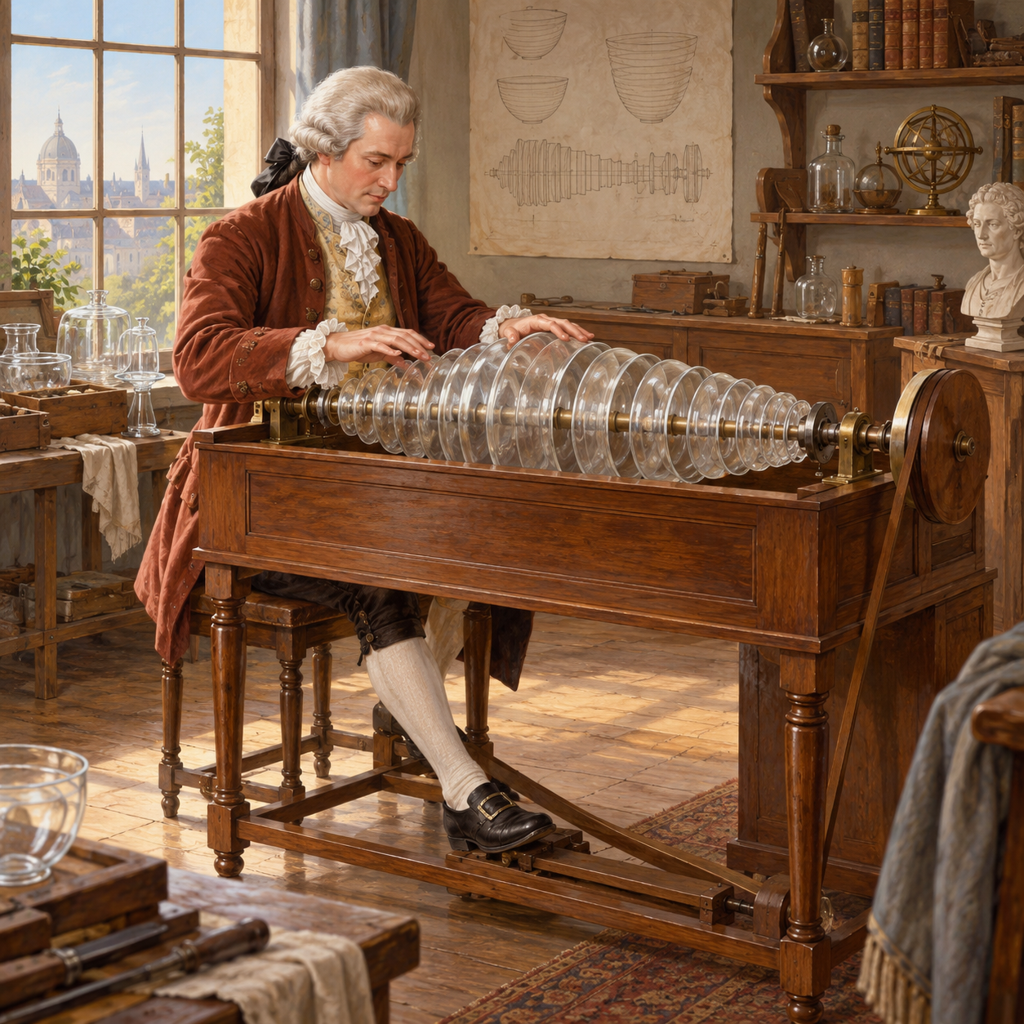
Rotating bowls · eighteenth century
Transparent bowls nest along a shared spindle. These are not upright dinner glasses: rotation lets the player touch their rims and produce a sustained, almost weightless tone.
Checked fact. Benjamin Franklin developed the rotating-bowl instrument; wet fingers rubbing the rims produce sound.
Source: Source — Glass armonica
6. Didgeridoo

Air column · northern Australia
The long hollow tube looks simple, yet its timbre can keep changing. Our illustration avoids invented sacred decoration and focuses on wood, the opening and the air’s path.
Checked fact. Vibrating lips excite the air column; the player’s vocal-tract shape strongly influences the timbre.
Source: Source — Didgeridoo
7. Sheng
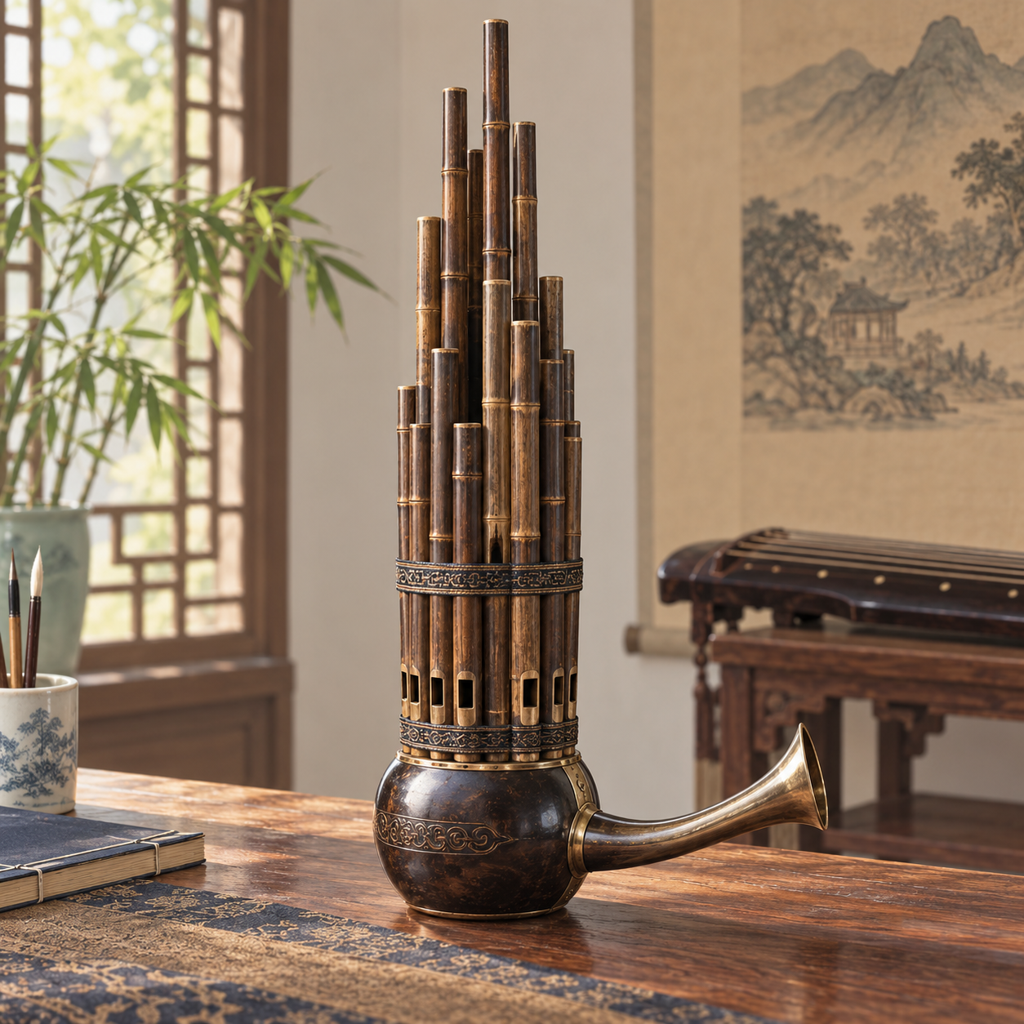
Mouth organ · China
The cluster of pipes resembles a tiny city. Different heights share one base, carrying air toward several voices. Bamboo pipes and metal reeds work together.
Checked fact. The sheng is a free-reed mouth organ, rather than an ordinary whistle-type flute.
Source: Source — Sheng
8. Ondes Martenot
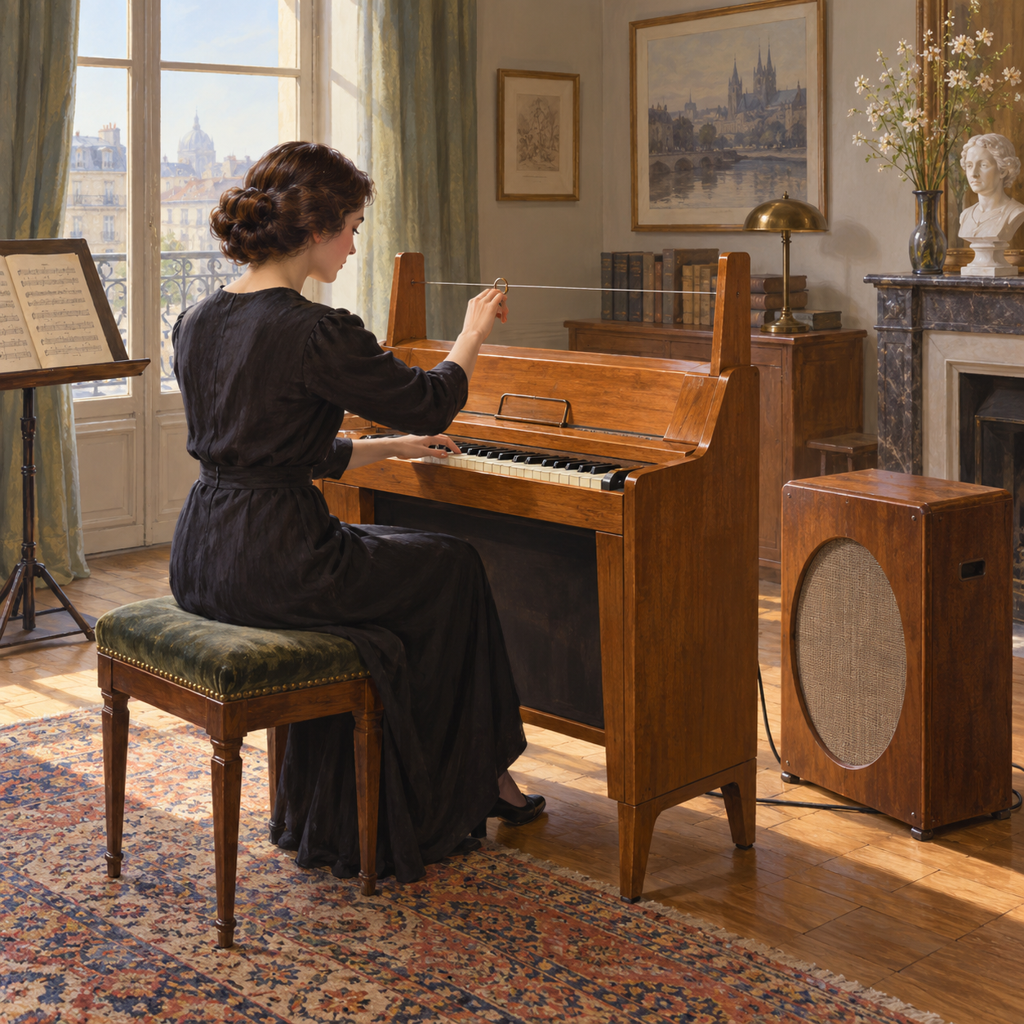
Electronics and a sliding ring · France
The keyboard suggests a familiar piano, but a wire and ring run beside it. A different gesture replaces separate steps with a smooth slide between pitches.
Checked fact. Maurice Martenot presented the instrument in 1928; pitch can be controlled with keys or a ring on a ribbon.
Source: Source — Ondes Martenot
9. Berimbau
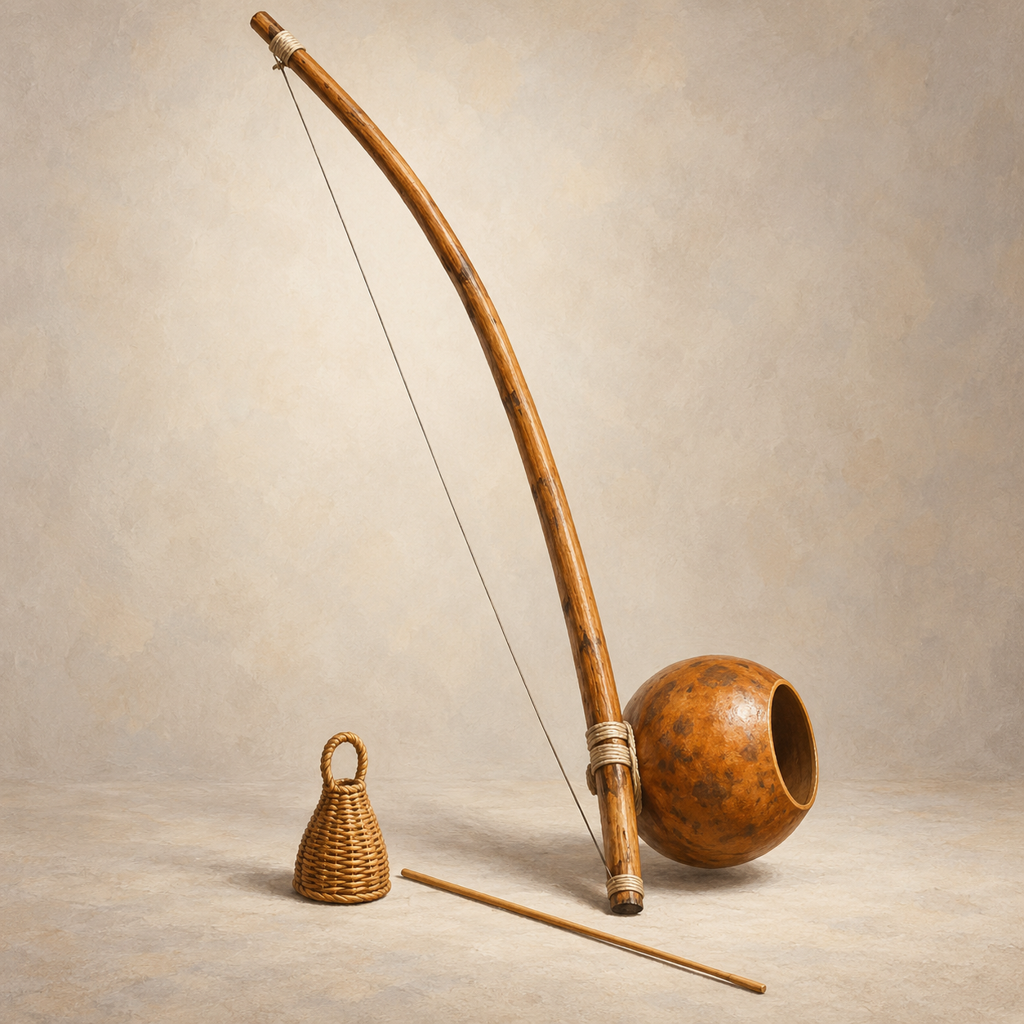
Musical bow · Brazil
One string stretches along a curved wooden stave. The gourd near its base looks decorative but helps the sound project. A stick and small shaker complete the scene.
Checked fact. The berimbau is a single-string musical bow with a gourd resonator; a thin stick strikes the string.
Source: Source — Berimbau
10. Jaw harp
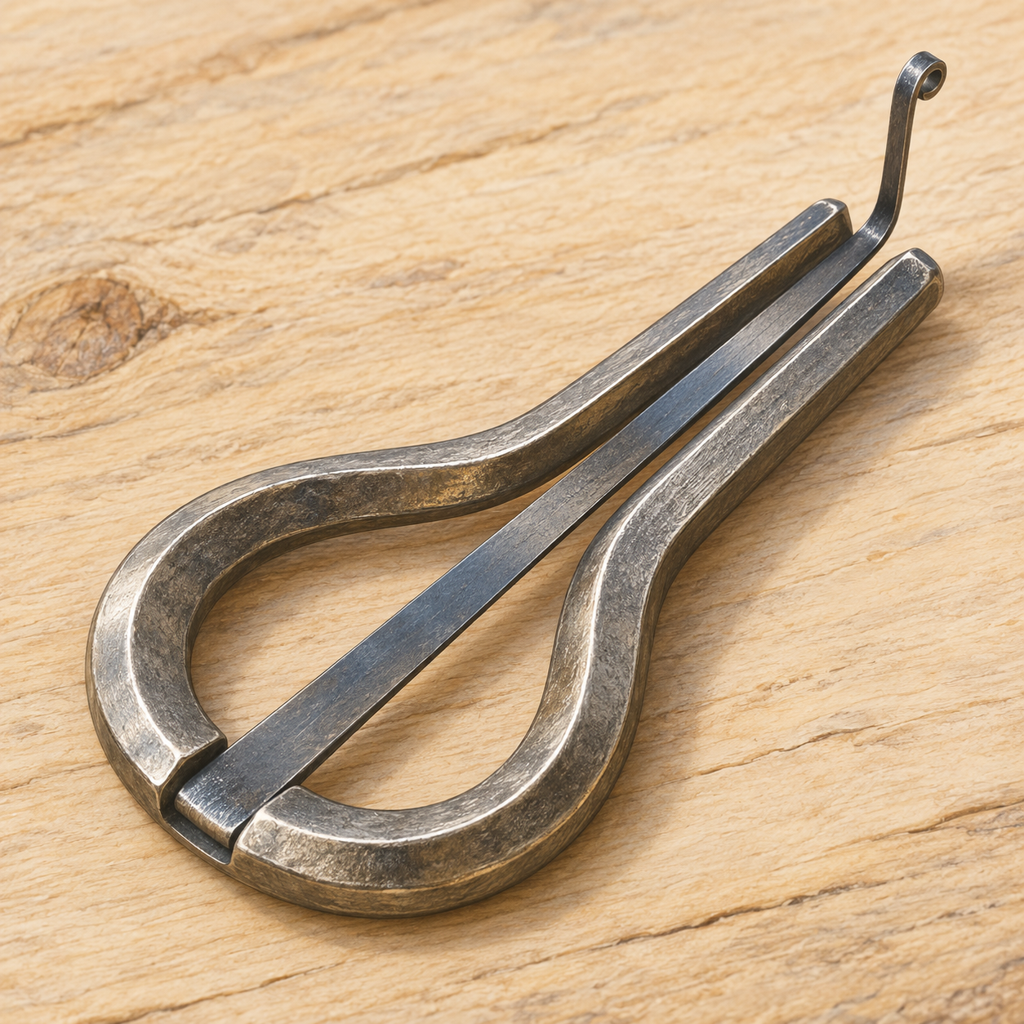
Tongue and resonator · many traditions
The small frame fits in a palm, but its voice has more than one shade. A flexible tongue vibrates while the player’s mouth changes the resonance. Its size is deceptive.
Checked fact. Jaw harps occur in metal, bamboo and other materials across regions; they form a family rather than one local type.
Source: Source — Jaw harp