
Purple crystals, green bands and rainbow steps: ten specimens with explanations of colour and form. Opal is a mineraloid, and our bismuth specimen is laboratory-grown.
The editorial team created these illustrations with AI. They are explanatory images, not photographs of particular specimens, homes or events. Each card includes a checked fact and a source.
1. Amethyst
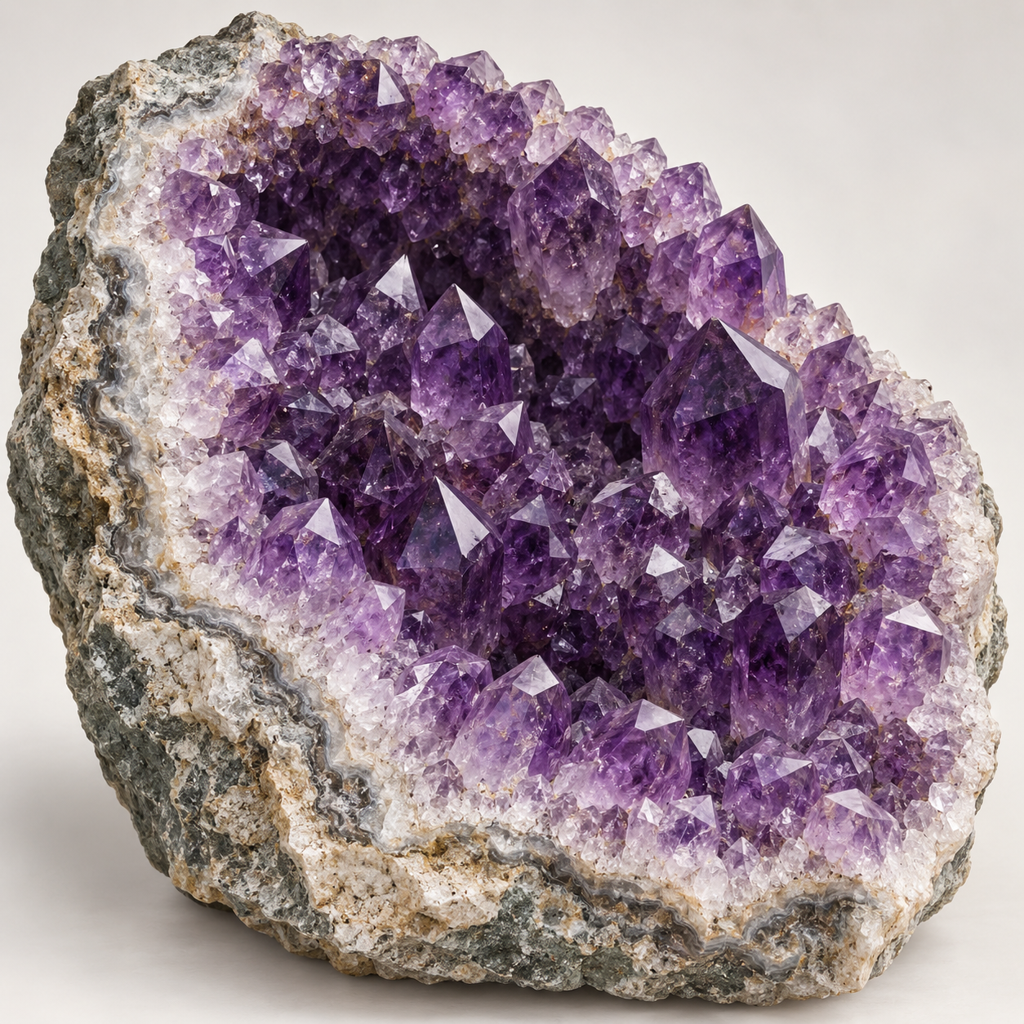
Purple quartz variety
An unassuming shell opens into a purple chamber. Individual crystals face the hollow space, catching light on their facets. Our illustration shows a geode rather than a faceted jewellery stone.
Checked fact. Amethyst is quartz; its purple colour involves iron and irradiation-related changes in its crystal structure.
Source: Source — Amethyst
2. Fluorite
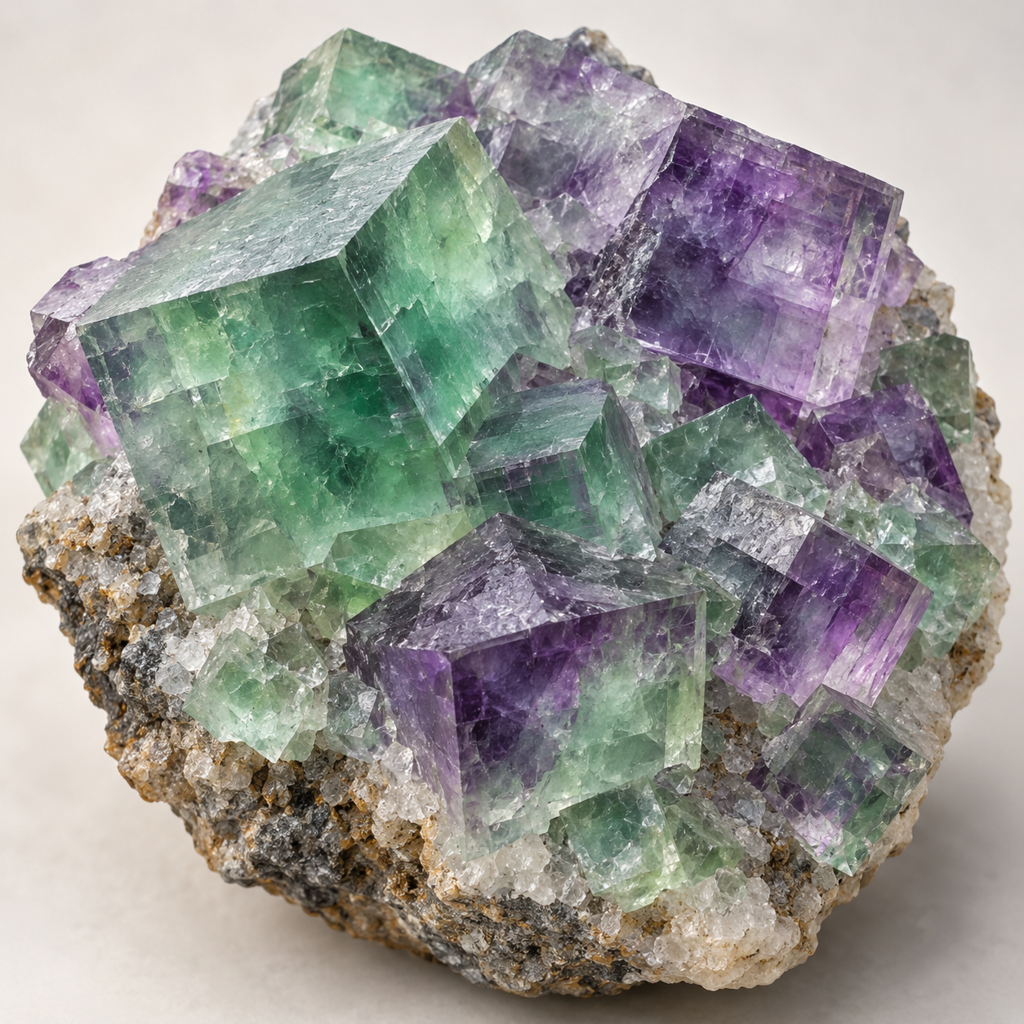
CaF₂ · cubic crystals
It resembles glass cubes left on a rock. Fluorite comes in many colours, so green and purple may appear together. Those orderly faces belong to the crystal itself, not to a jeweller’s cutting tool.
Checked fact. Fluorite is calcium fluoride. Cubes are characteristic, but octahedral crystals also occur.
Source: Source — Fluorite
3. Labradorite
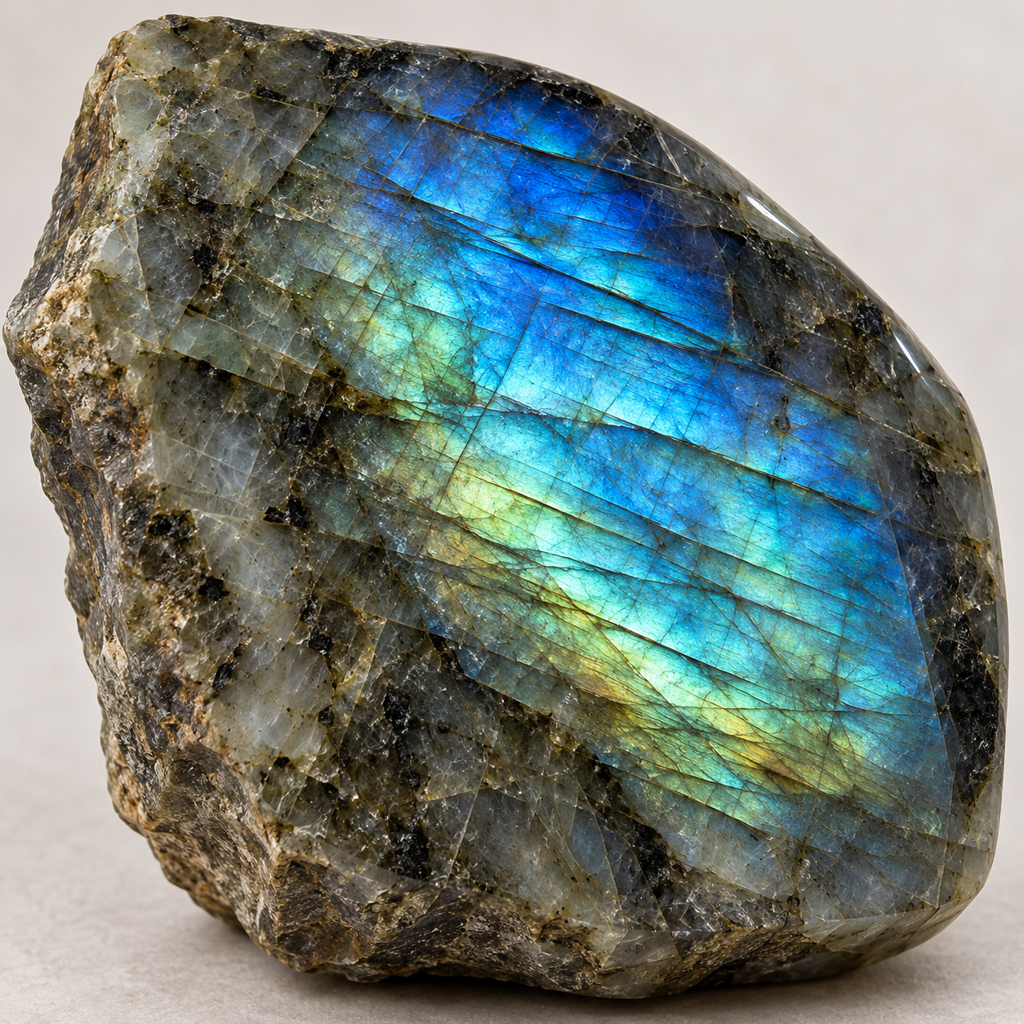
Feldspar · labradorescence
It can look grey until a turn reveals blue and green flashes. Appearance depends on illumination and viewing angle. The stone does not emit its own light: its vivid flash comes from interacting with incoming light.
Checked fact. Labradorescence results from light interacting with thin internal layers of the feldspar.
Source: Source — Labradorite
4. Precious opal
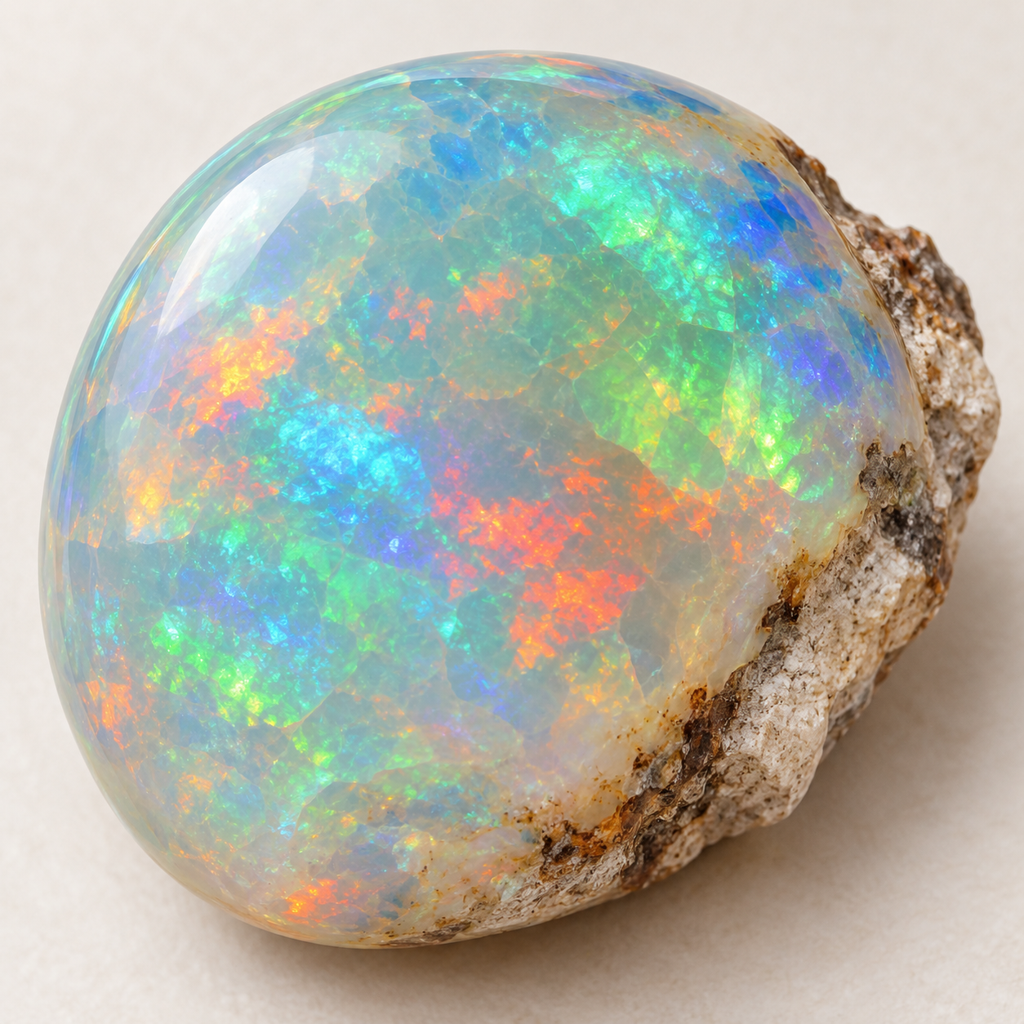
Mineraloid · play-of-colour
A little stone seems to contain coloured windows. The patches shift as it turns, but not every opal has this effect. The illustration depicts precious opal, not a universal portrait of all opal varieties.
Checked fact. Play-of-colour involves microscopic silica spheres. Opal is a mineraloid rather than an ordinary crystalline mineral.
Source: Source — Precious opal
5. A grown bismuth crystal
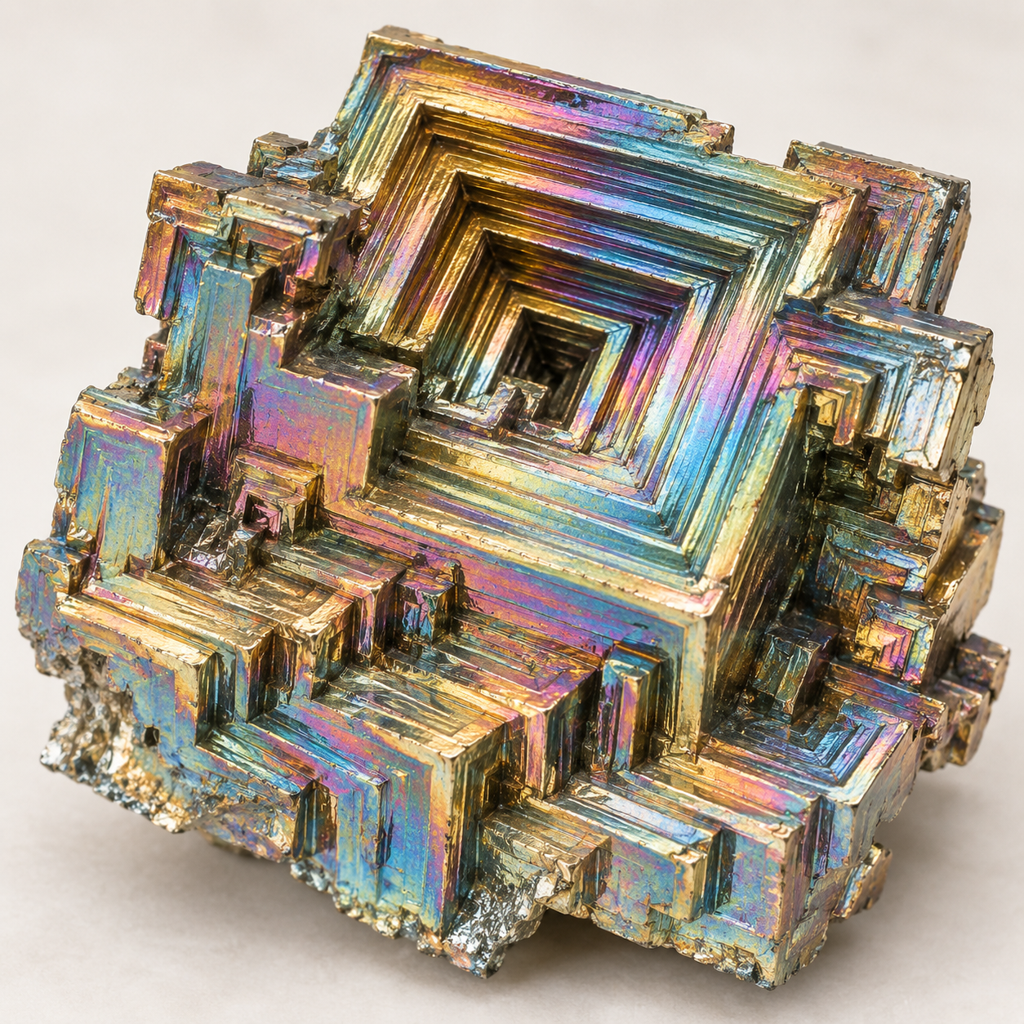
Metal · artificially grown specimen
This staircase resembles a miniature science-fiction city. It is a grown crystal: rainbow stepped specimens should not be presented as ordinary rocks collected in the wild. The geometry is real, but its origin matters too.
Checked fact. Bismuth is a chemical element. Its grown crystals’ rainbow colours arise from a thin surface oxide film.
Source: Source — A grown bismuth crystal
6. Pyrite
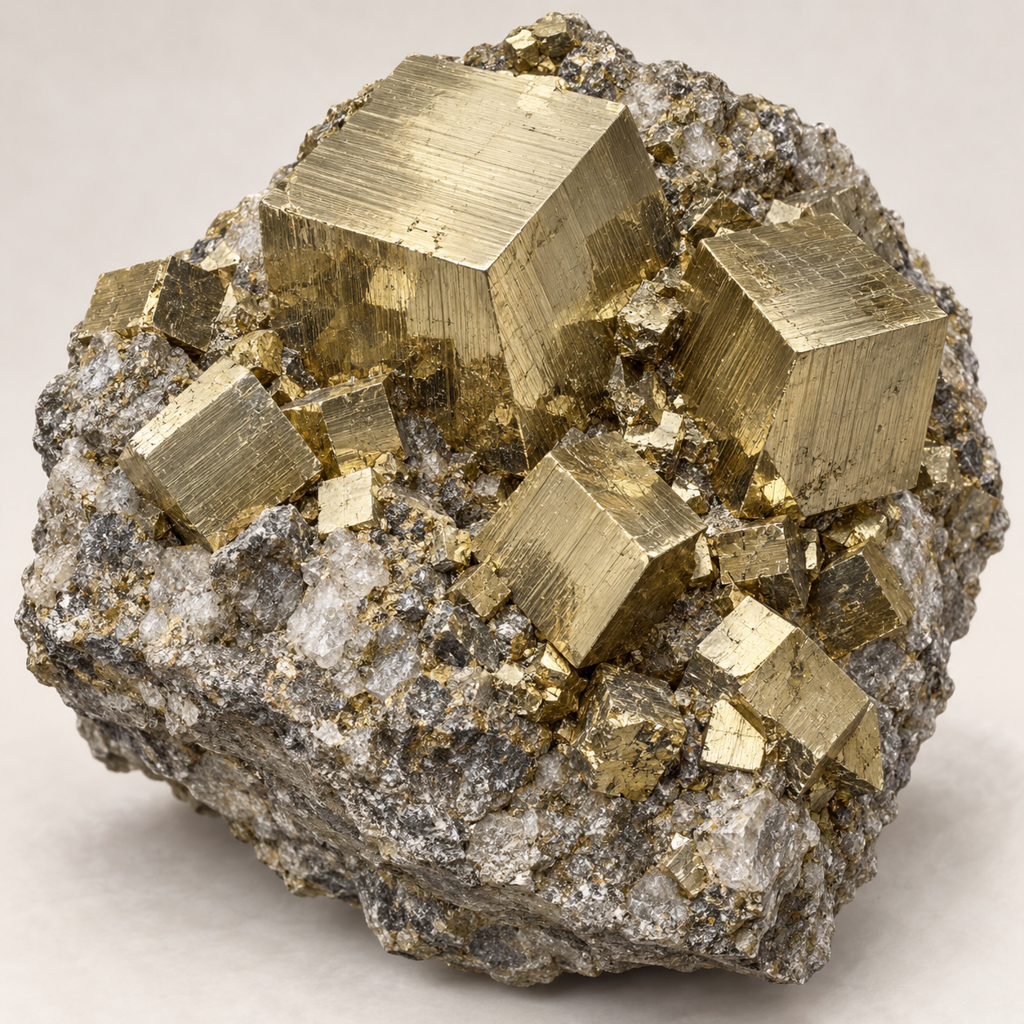
FeS₂ · metallic lustre
Golden cubes look like tiny safes grown inside the rock. Shine alone does not mean gold. Flat faces and fine stripes offer a more useful clue: the specimen carries its own geometric signature.
Checked fact. Pyrite is iron disulfide; its crystals commonly show cubic forms and metallic lustre.
Source: Source — Pyrite
7. Malachite
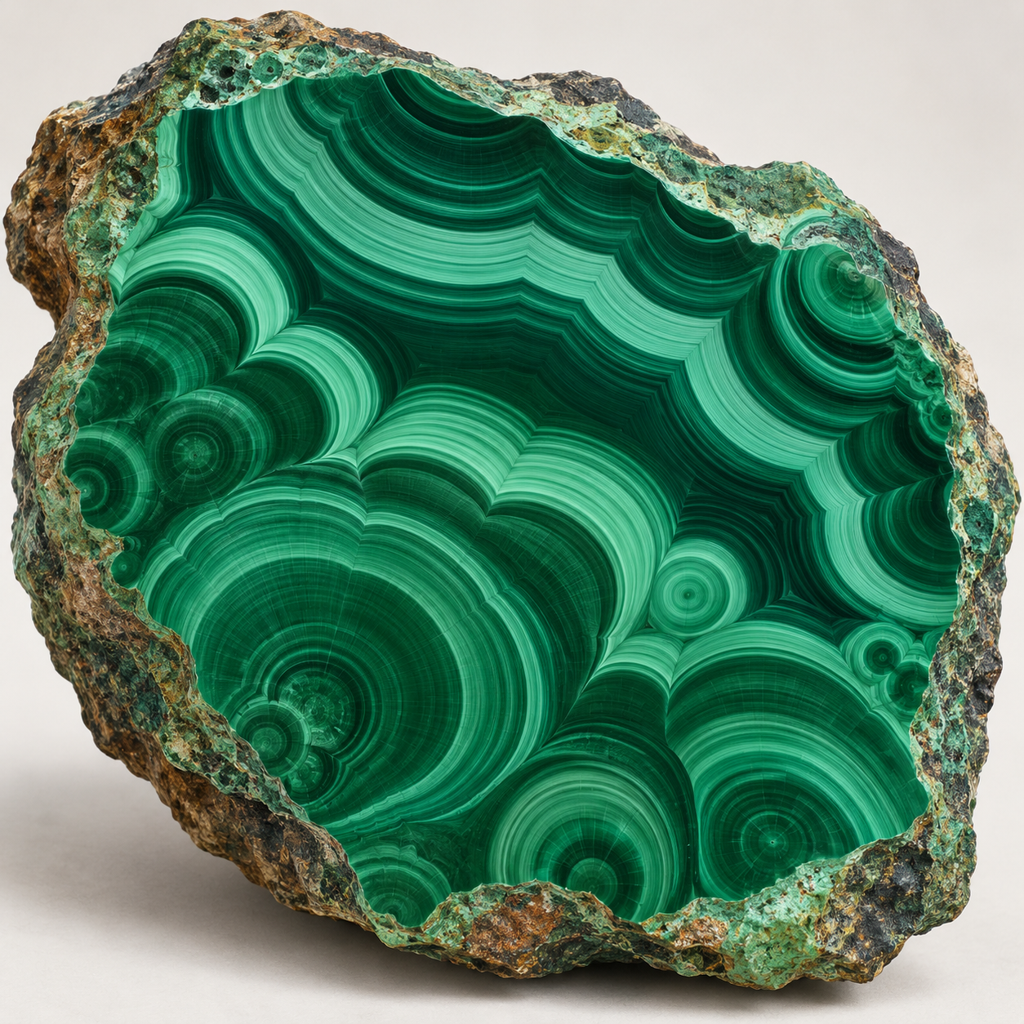
Green copper mineral
A polished section reveals green waves and rings. Crystal faces are not the only attraction: rounded masses can contain layered patterns. Polishing exposes the design, as though a cut were opening a record of growth.
Checked fact. Malachite is a basic copper carbonate, characteristically green with fibrous or rounded aggregates.
Source: Source — Malachite
8. Azurite
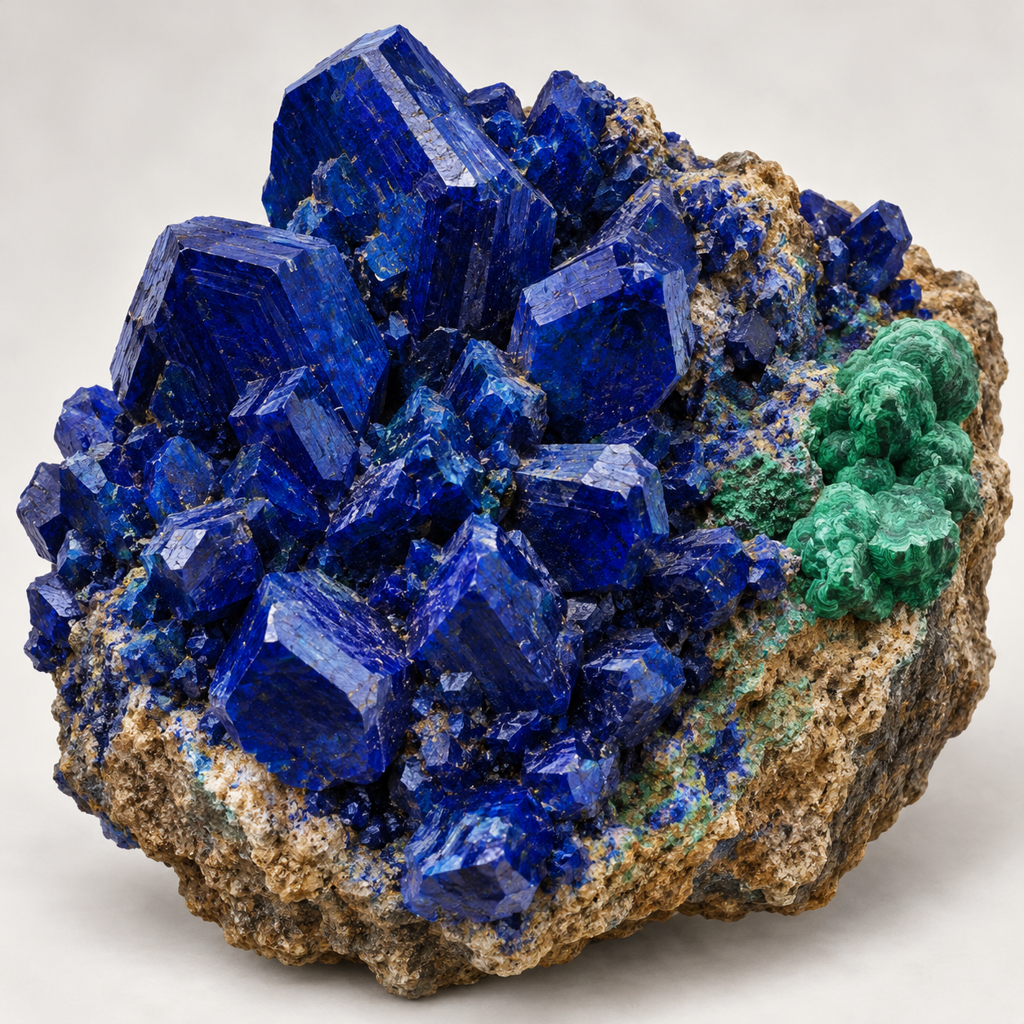
Blue copper mineral
The blue is so deep that the specimen resembles a piece of night sky. Green malachite may appear nearby, turning one rock into a two-colour composition. Nature has already prepared the artist’s palette.
Checked fact. Azurite is a basic copper carbonate distinct from malachite in composition and crystal structure.
Source: Source — Azurite
9. Selenite: clear gypsum
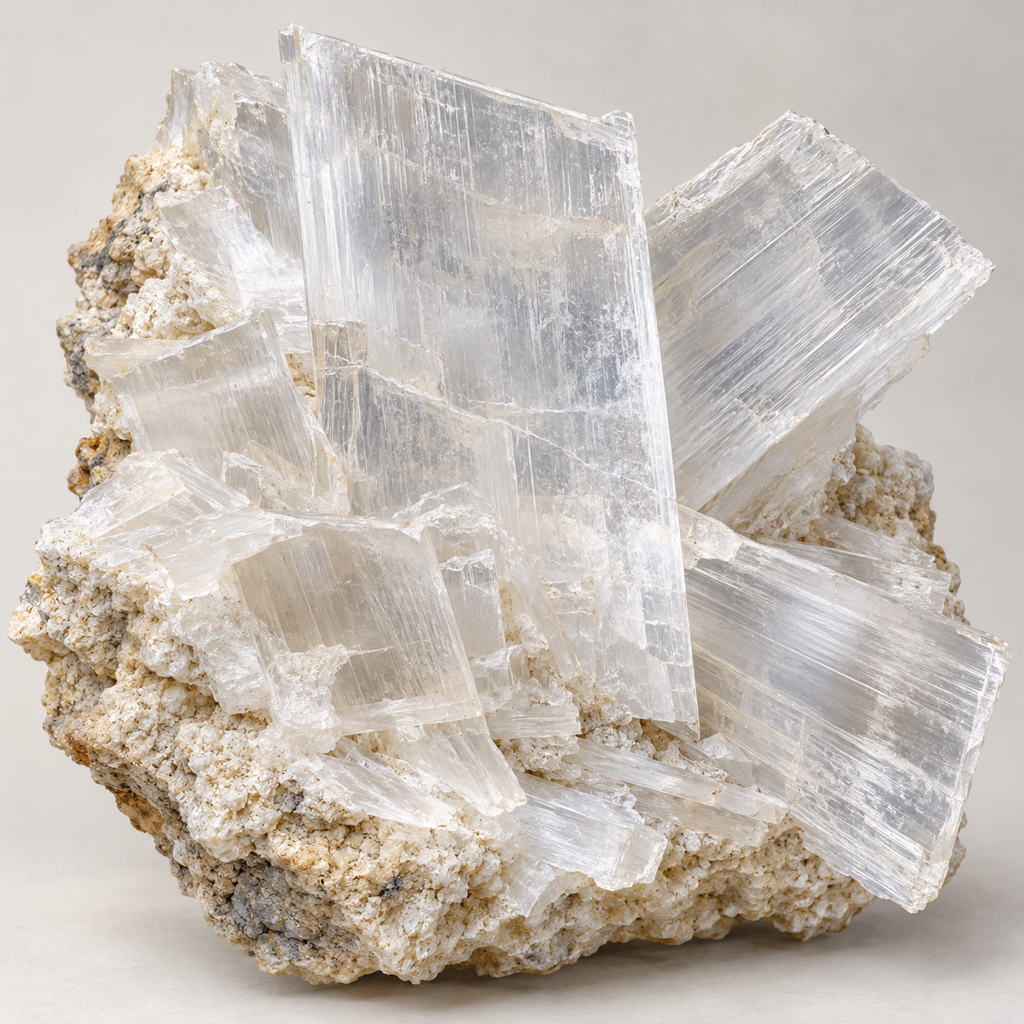
Gypsum · transparent crystalline variety
Clear blades resemble windows made of ice. Trade names can be confusing: here selenite means transparent crystalline gypsum, rather than the silky fibrous material often sold under the same name. The illustration highlights that distinction.
Checked fact. Gypsum contains structural water and has a Mohs hardness of 2.
Source: Source — Selenite: clear gypsum
10. Watermelon tourmaline
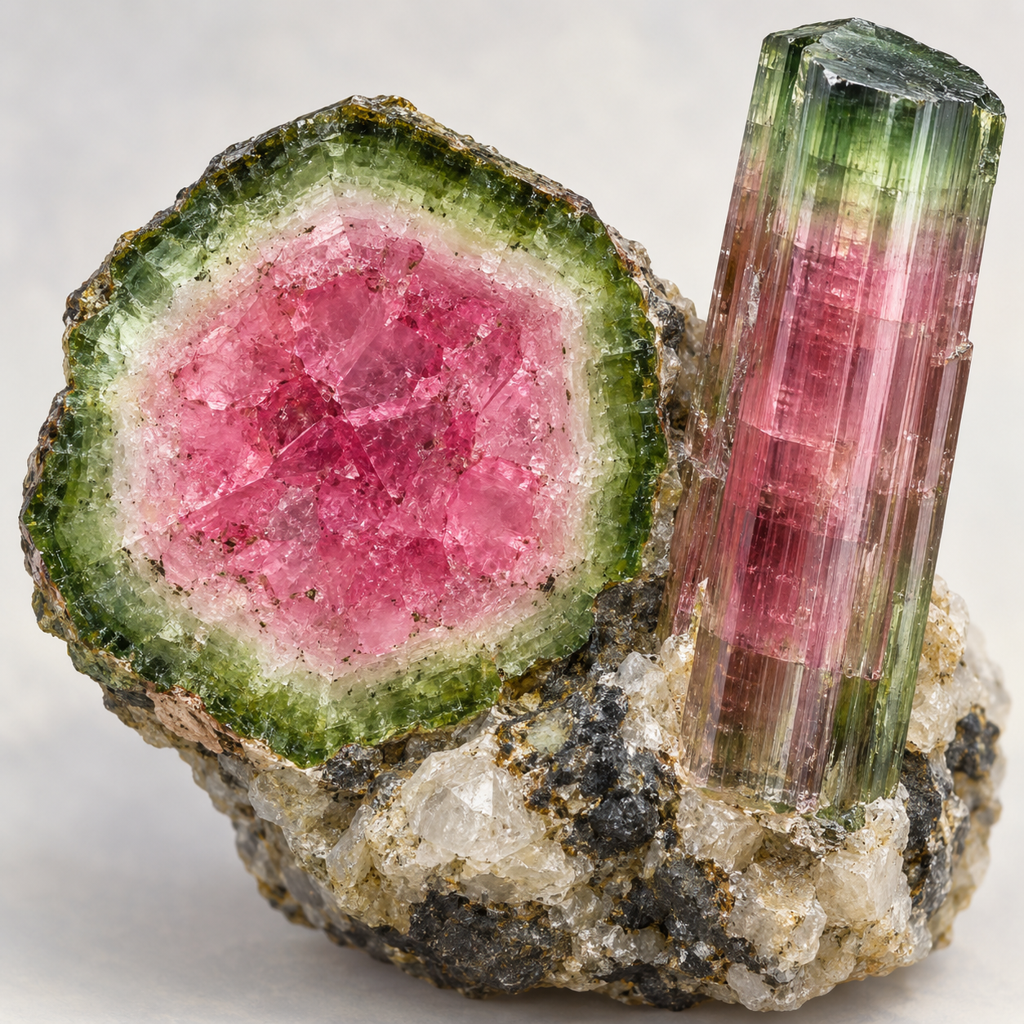
Pink core and green rim
The slice resembles a tiny watermelon, without any seeds to find. A pink centre is surrounded by a green zone. The name describes appearance, not flavour or a separate fruity mineral: this is colour-zoned tourmaline.
Checked fact. A single tourmaline crystal can have different colour zones, recording changes during growth.
Source: Source — Watermelon tourmaline