
Roots, grass ropes, cast iron and stone: ten bridges reveal different ways of joining two banks.
The editorial team created these illustrations with AI. They are explanatory images, not photographs of particular specimens, homes or events. Each card includes a checked fact and a source.
1. A living root bridge
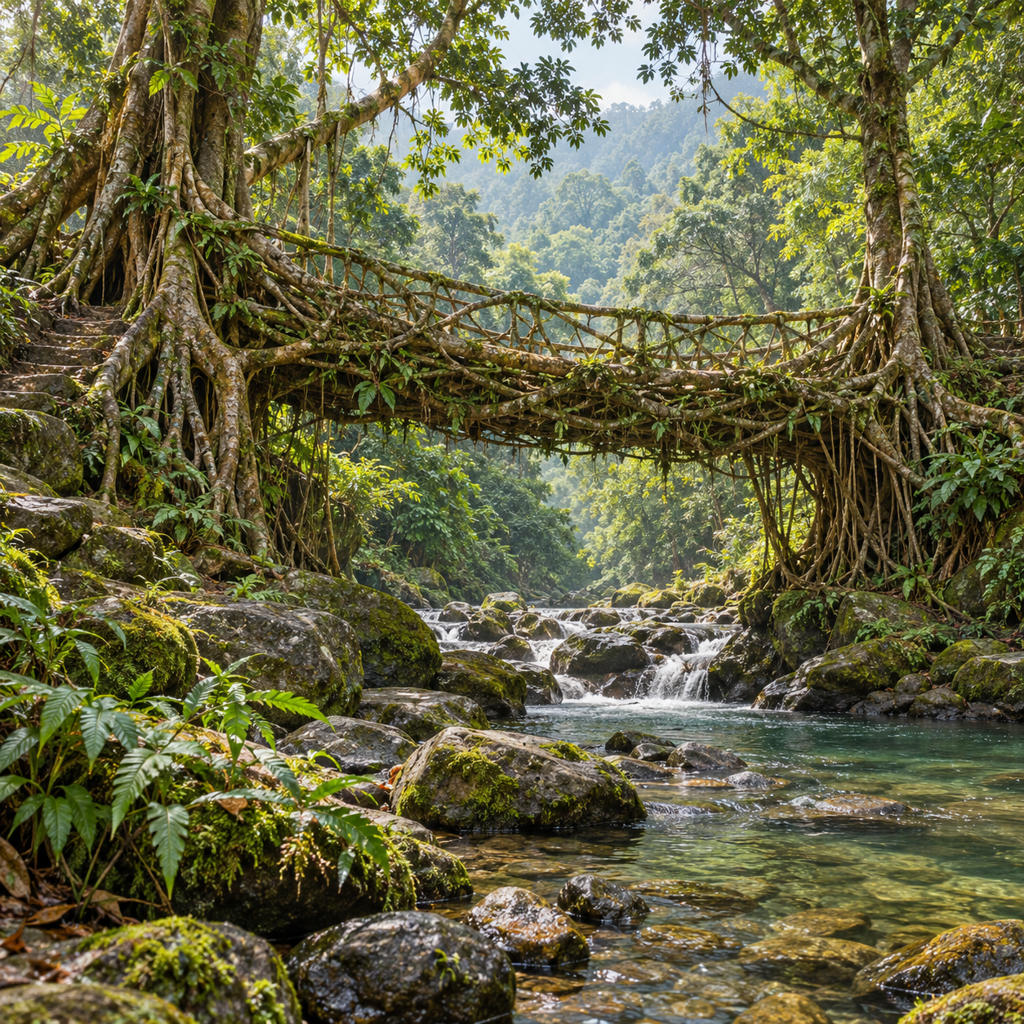
Meghalaya, India
This bridge is guided and grown rather than assembled from finished parts. Roots weave between the banks while the trees remain part of the structure. In our illustration, the crossing seems to extend the forest.
Checked fact. Meghalaya communities train living rubber-tree roots into crossings; the tradition is associated with Khasi and Jaintia communities.
Source: Source — A living root bridge
2. Q’eswachaka
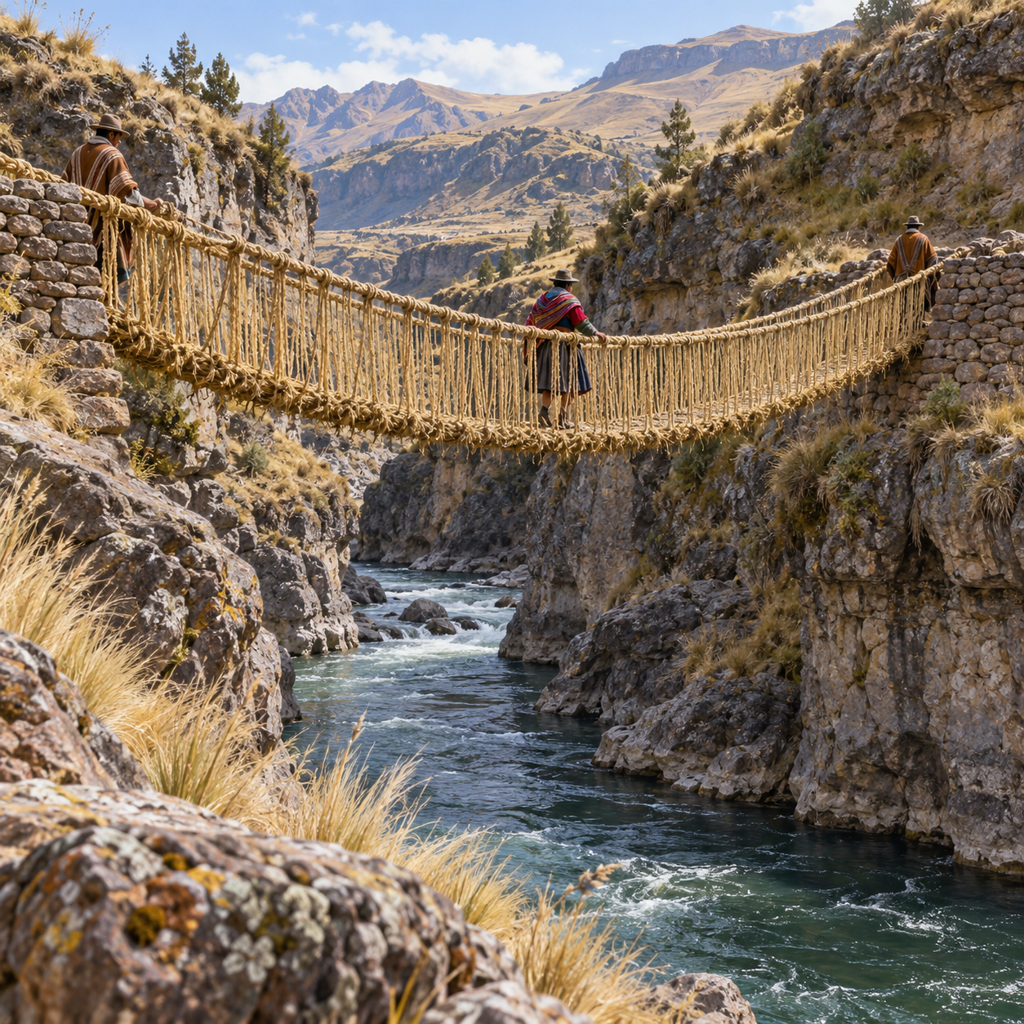
Andes, Peru
It looks like a slender line across a gorge, yet entire communities stand behind it. Grass fibres become ropes and ropes become a crossing. The material matters, but so does passing on the skill.
Checked fact. Four local communities jointly renew the bridge over the Apurímac each year; UNESCO recognises the associated knowledge and rituals.
Source: Source — Q’eswachaka
3. Tower Bridge
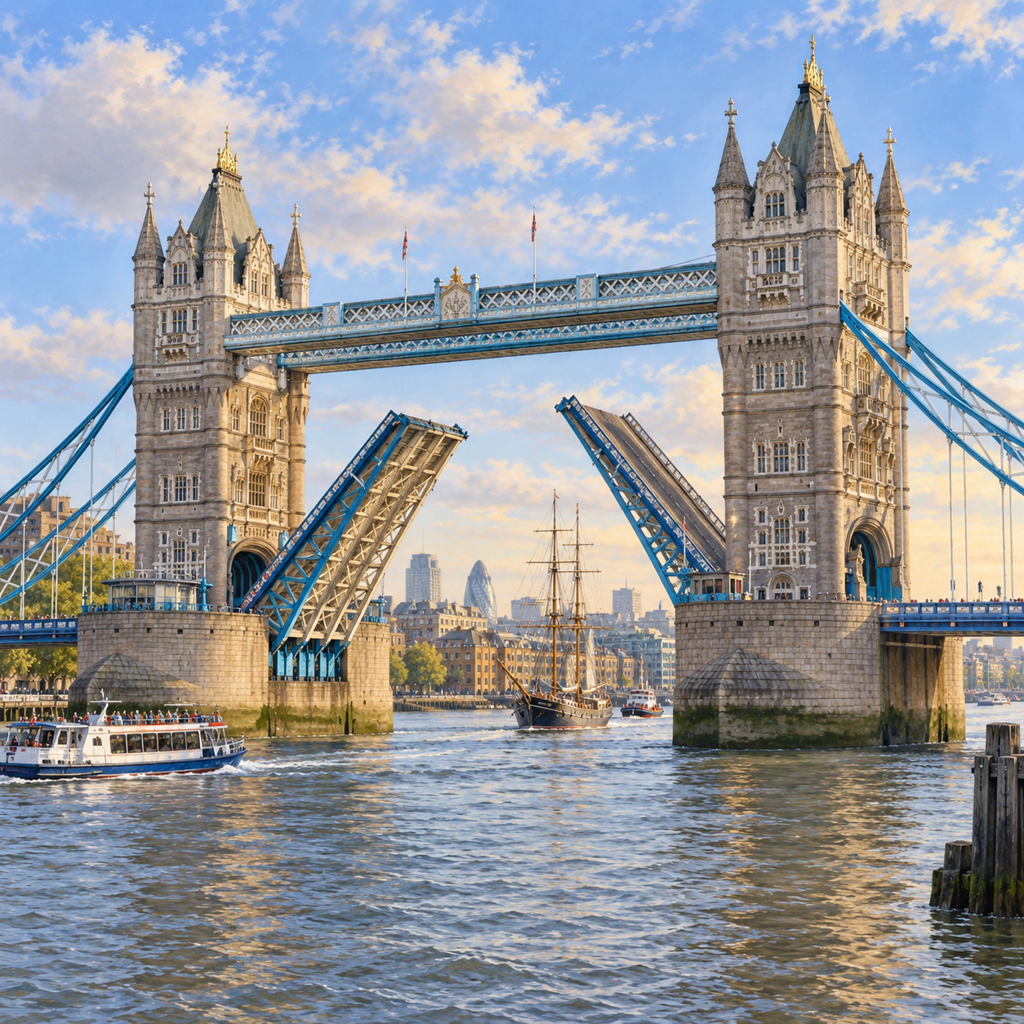
London, United Kingdom
The towers look immovable, but the middle can move. Two roadway leaves rise to let a vessel pass. The illustration makes the distinction clear: the road opens while the high walkways remain in place.
Checked fact. This bascule bridge uses counterweights to help raise the heavy roadway leaves.
Source: Source — Tower Bridge
4. Gateshead Millennium Bridge
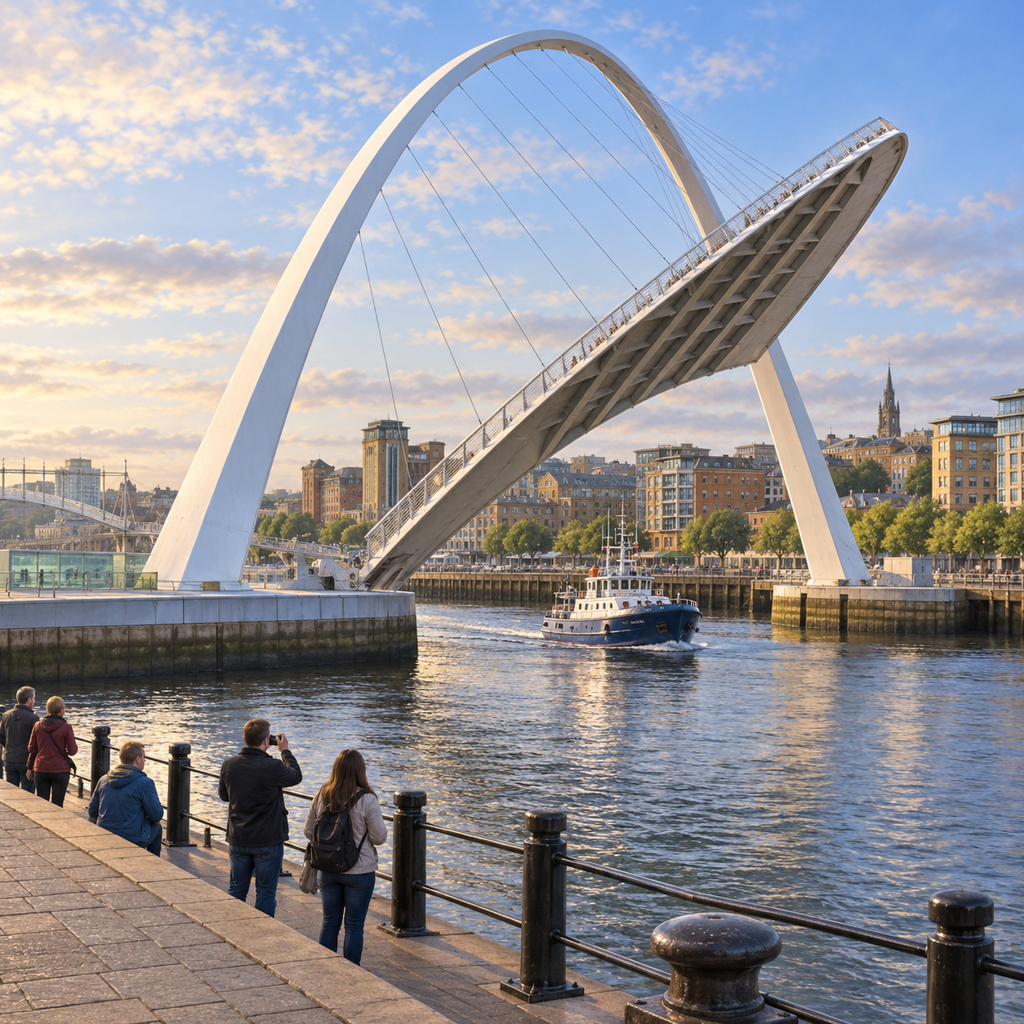
River Tyne, United Kingdom
It resembles a huge arch with cable eyelashes. To make room for boats, the deck does not split in two: the assembly tilts together. Its familiar silhouette changes as though the bridge were slowly blinking.
Checked fact. The pedestrian and cycle bridge rotates to lift its lower curve above the water for vessels.
5. Golden Gate Bridge
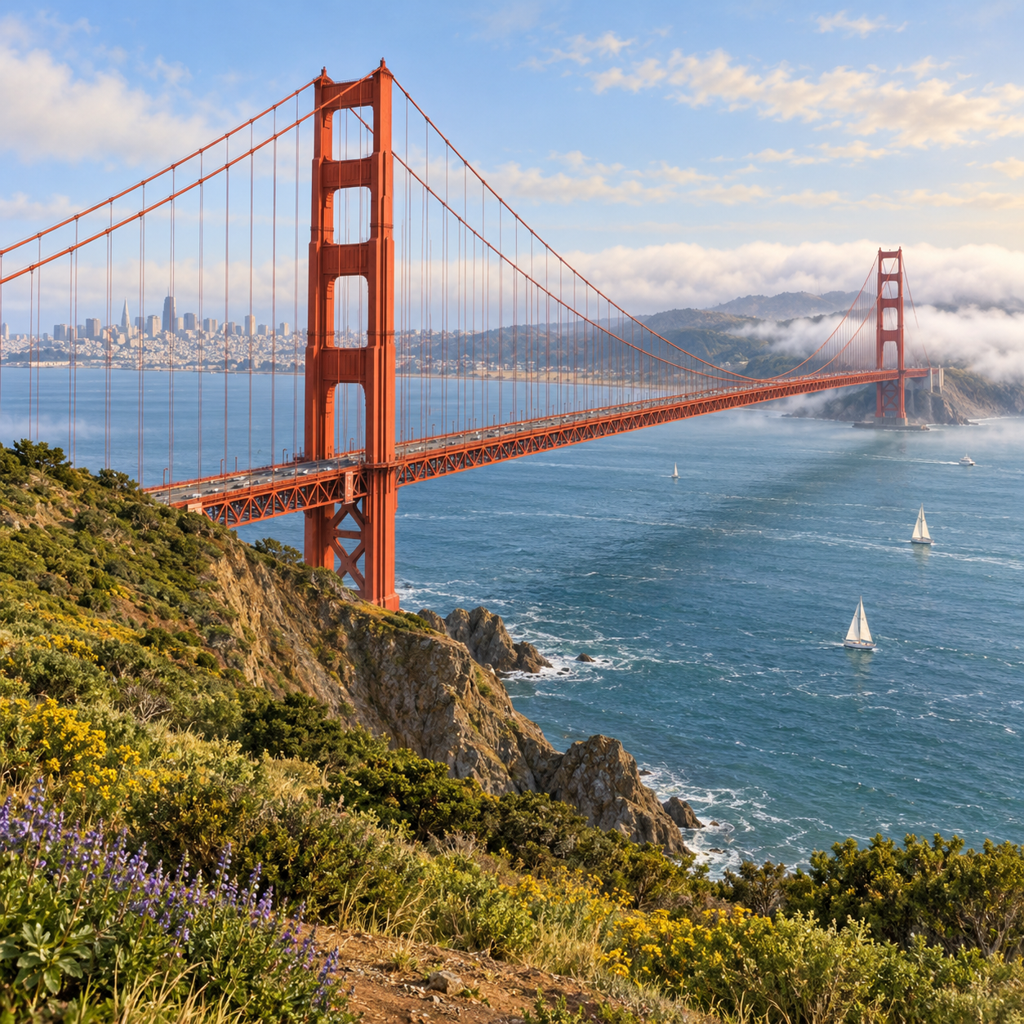
San Francisco, USA
Orange towers emerge from coastal fog. Main cables sag gently between them, while vertical hangers carry the roadway. The graceful silhouette reveals the structure: the deck’s weight is transferred through cables to the supports.
Checked fact. Its colour is International Orange, chosen to distinguish the structure within its strait setting.
Source: Source — Golden Gate Bridge
6. The Iron Bridge
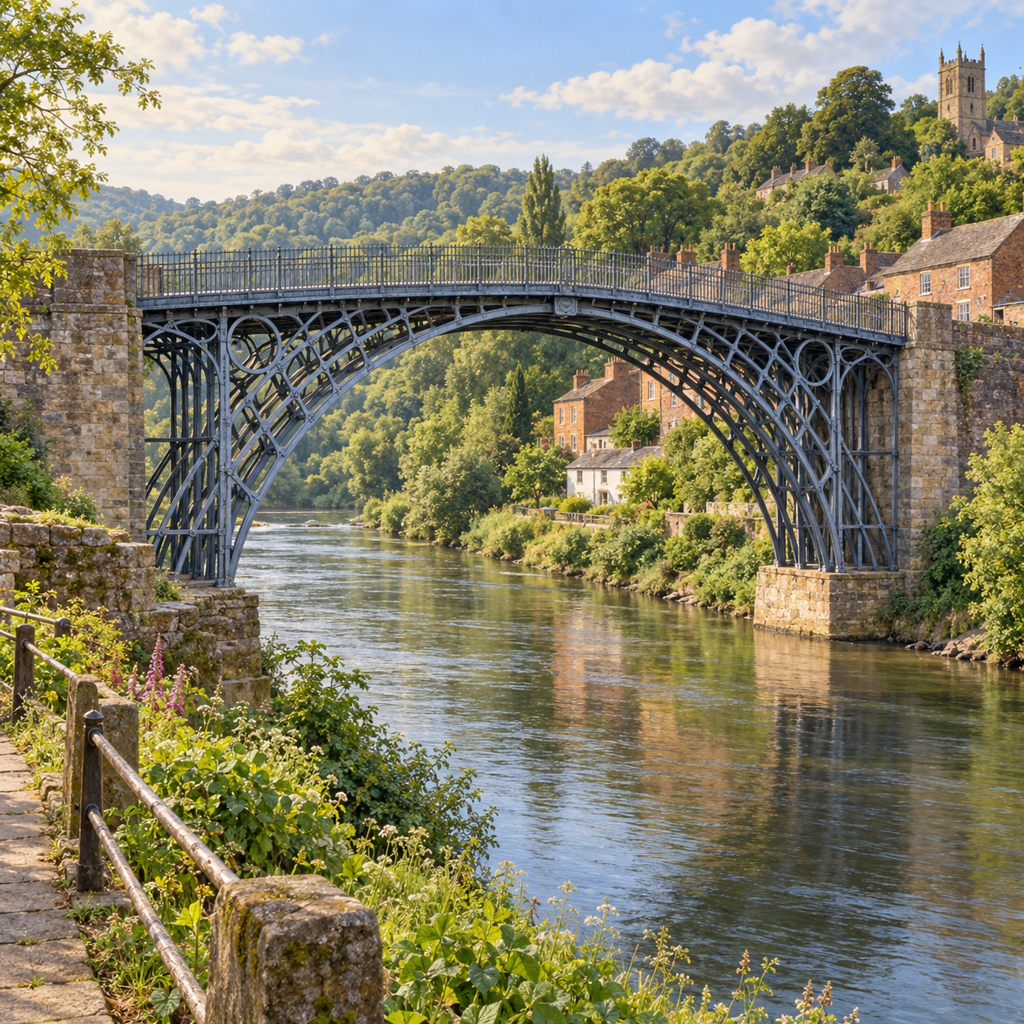
Shropshire, United Kingdom
A stone bridge relies on massive masonry; here a metal fan opens over the river. Slender ribs let us see through the arch. Its silhouette recalls the era when cast iron entered large-scale construction.
Checked fact. The cast-iron bridge over the Severn was erected in 1779 and became a landmark of the Industrial Revolution.
Source: Source — The Iron Bridge
7. Pont du Gard
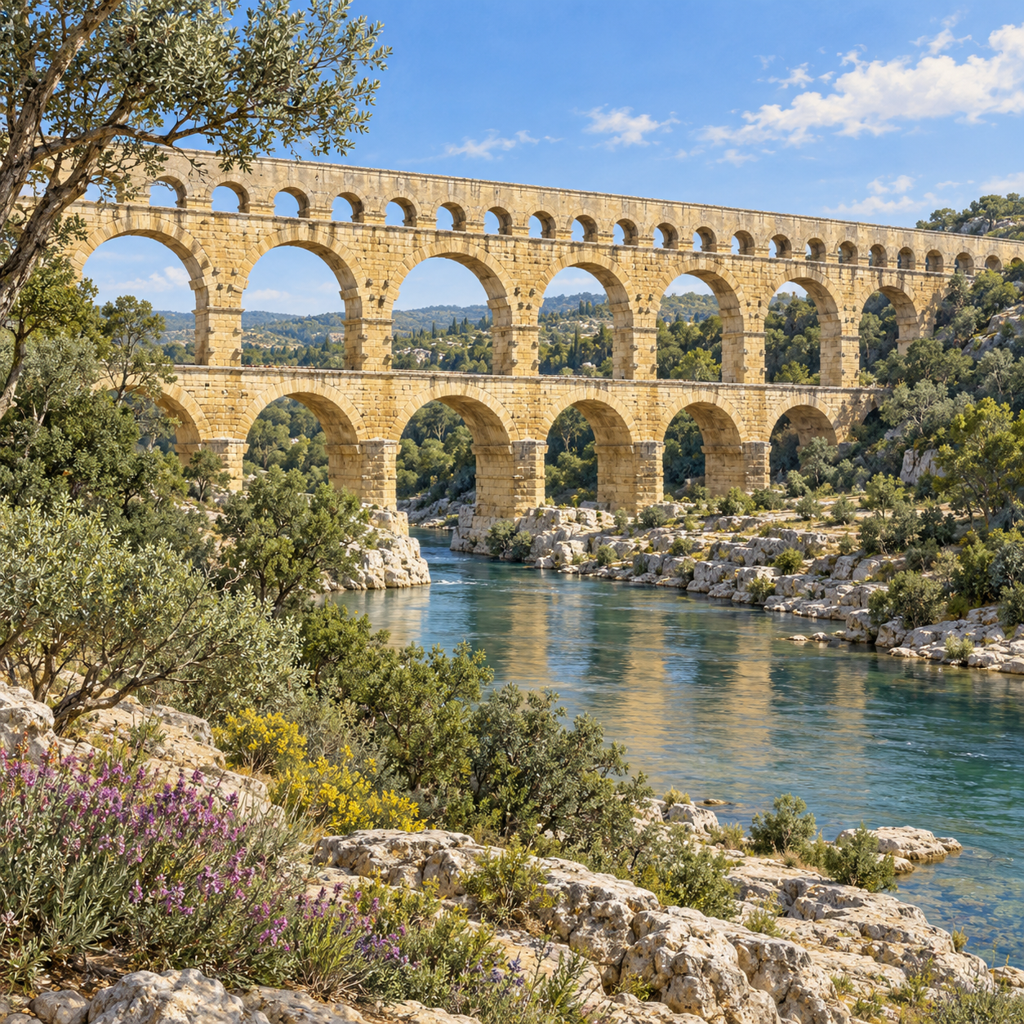
Southern France
Three tiers of arches look like a stone staircase for water. The upper row seems tiny beside the lower supports. Its purpose was practical: carry water across a river valley while preserving the required gradient.
Checked fact. It formed part of the Roman aqueduct supplying Nîmes, with the water channel on the highest tier.
Source: Source — Pont du Gard
8. The Forth Bridge
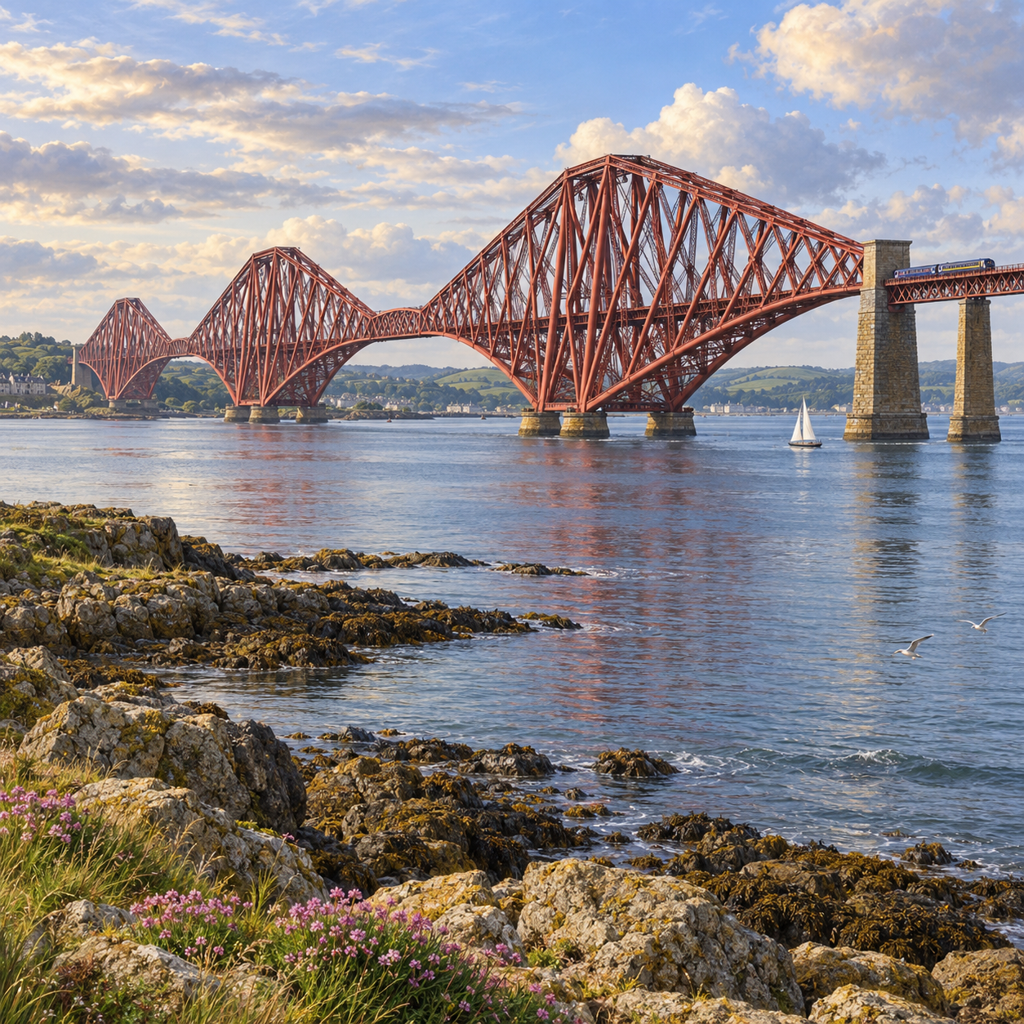
Scotland
Red steel diamonds seem to stride across the estuary. Unlike a suspension bridge, this structure has no great sagging main cable. Rigid members carry the railway, making the steel pattern part of the landscape.
Checked fact. This railway crossing uses a cantilever structure and is a UNESCO World Heritage site.
Source: Source — The Forth Bridge
9. Rialto Bridge
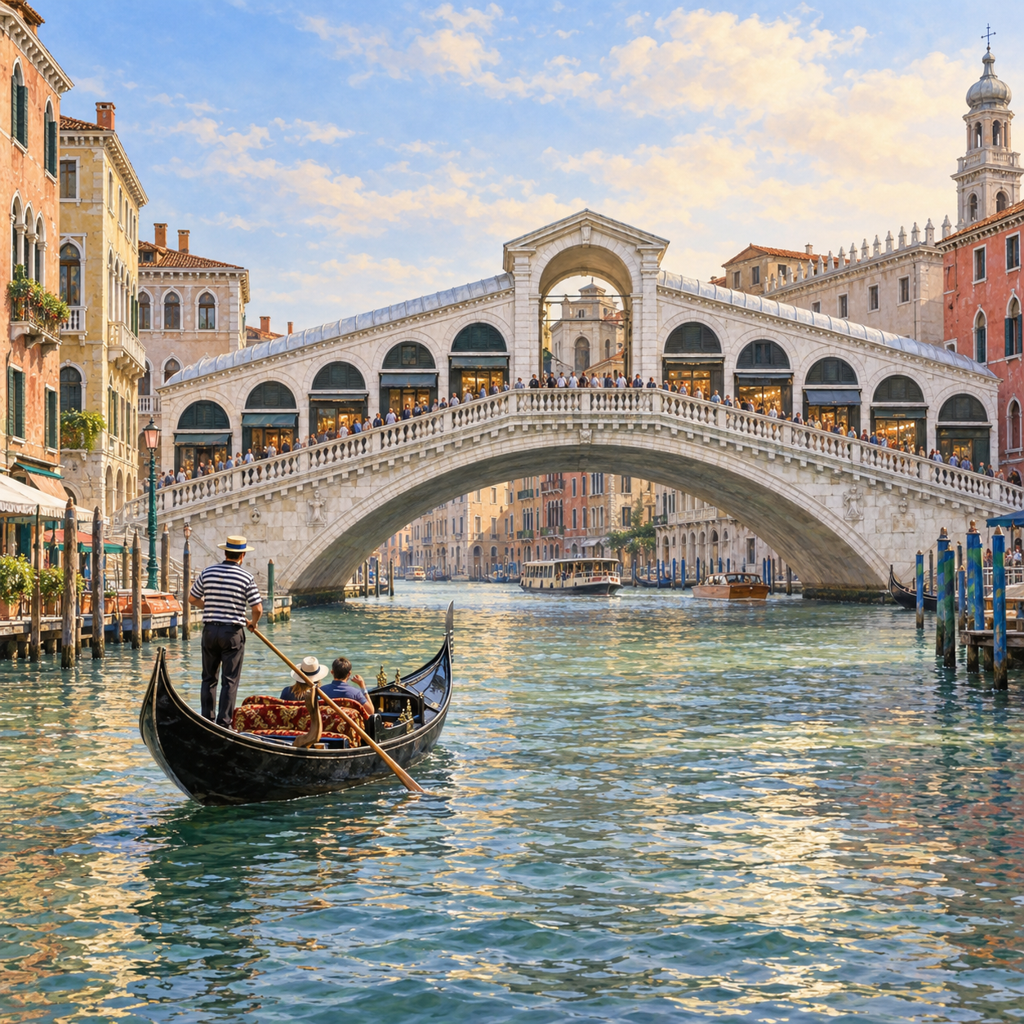
Venice, Italy
Here a crossing resembles a small shopping street. Steps rise towards its centre, while boats glide under a single stone arch. It connects the banks while becoming a place of city life in its own right.
Checked fact. The present stone Rialto has a single span and was designed by Antonio da Ponte.
Source: Source — Rialto Bridge
10. Ponte Vecchio
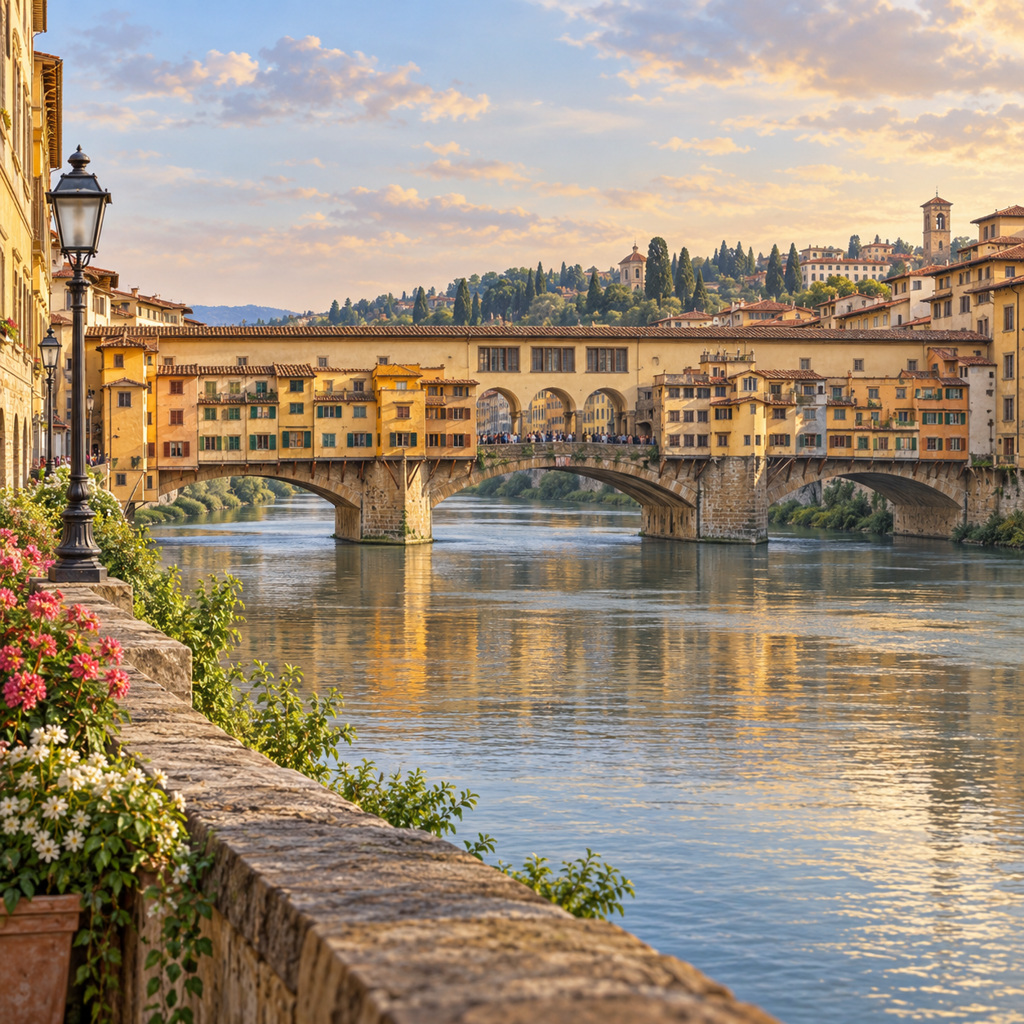
Florence, Italy
Its little shops can make a visitor forget the river below. From the bank, another view appears: arches and rooms projecting over the water. One structure combines a route, a marketplace and an architectural landmark.
Checked fact. The Vasari Corridor runs above the shops, linking palace buildings on opposite sides of the Arno.
Source: Source — Ponte Vecchio