
What can you find on the shore, and what is better to look at underwater? Pearl, mother-of-pearl, white sand dollar skeleton and frosted sea glass coexist here with living corals, mollusks and sea urchins. We drew ten “treasures” and each time we clarify what exactly is depicted.
1. Pearl
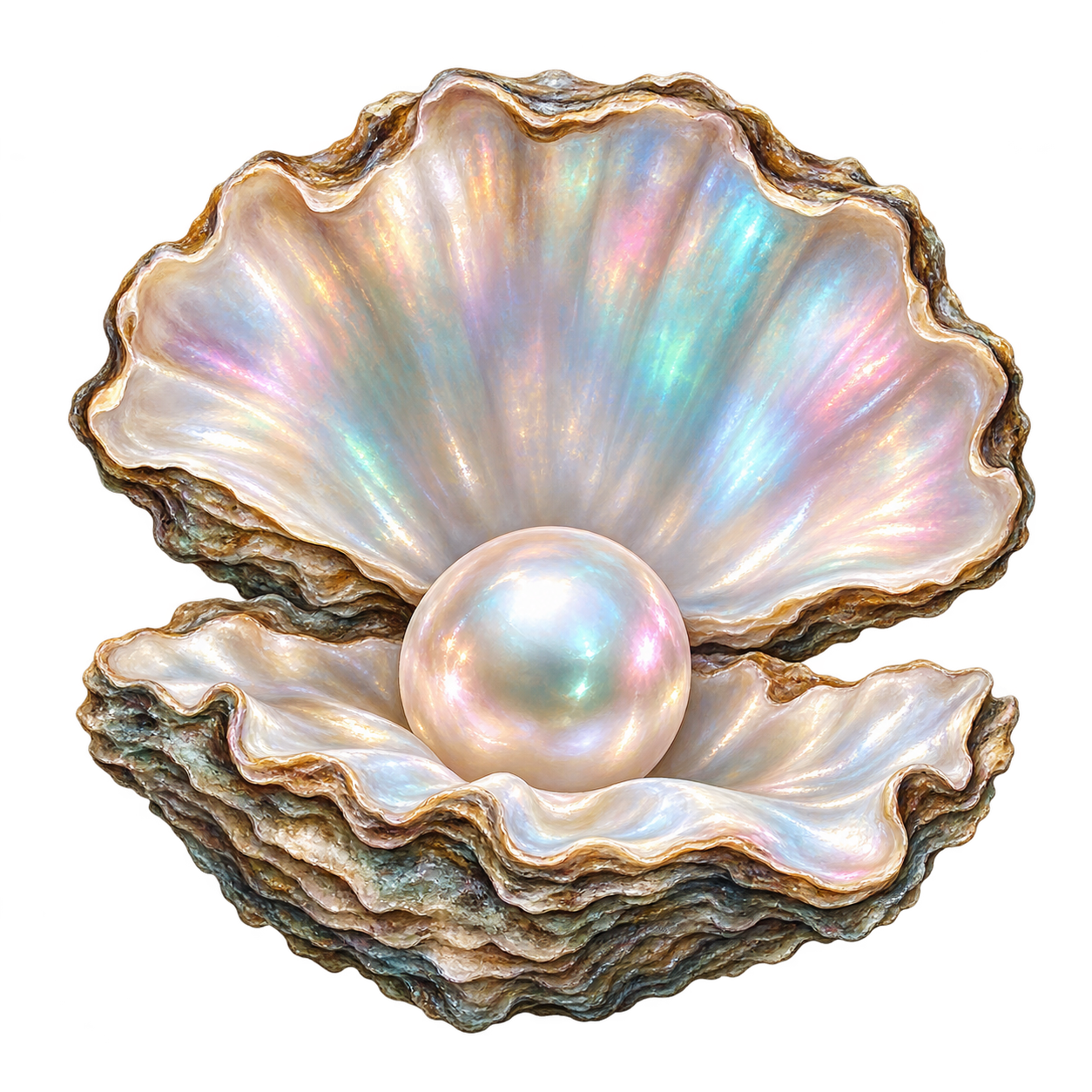
Mother of pearl inside a bivalve shell
The pearl looks like a ready-made decoration, but the mollusk does not think about the display case. It deposits layers of nacre around the irritating tissue inclusion.
Not every shell hides a large, smooth pearl. The picture is a beautiful image of the process, and not a promise to find a jewel when opening each oyster.
Remember. The pearl is formed from layers of substance that the mollusk secretes.
2. Abalone shell
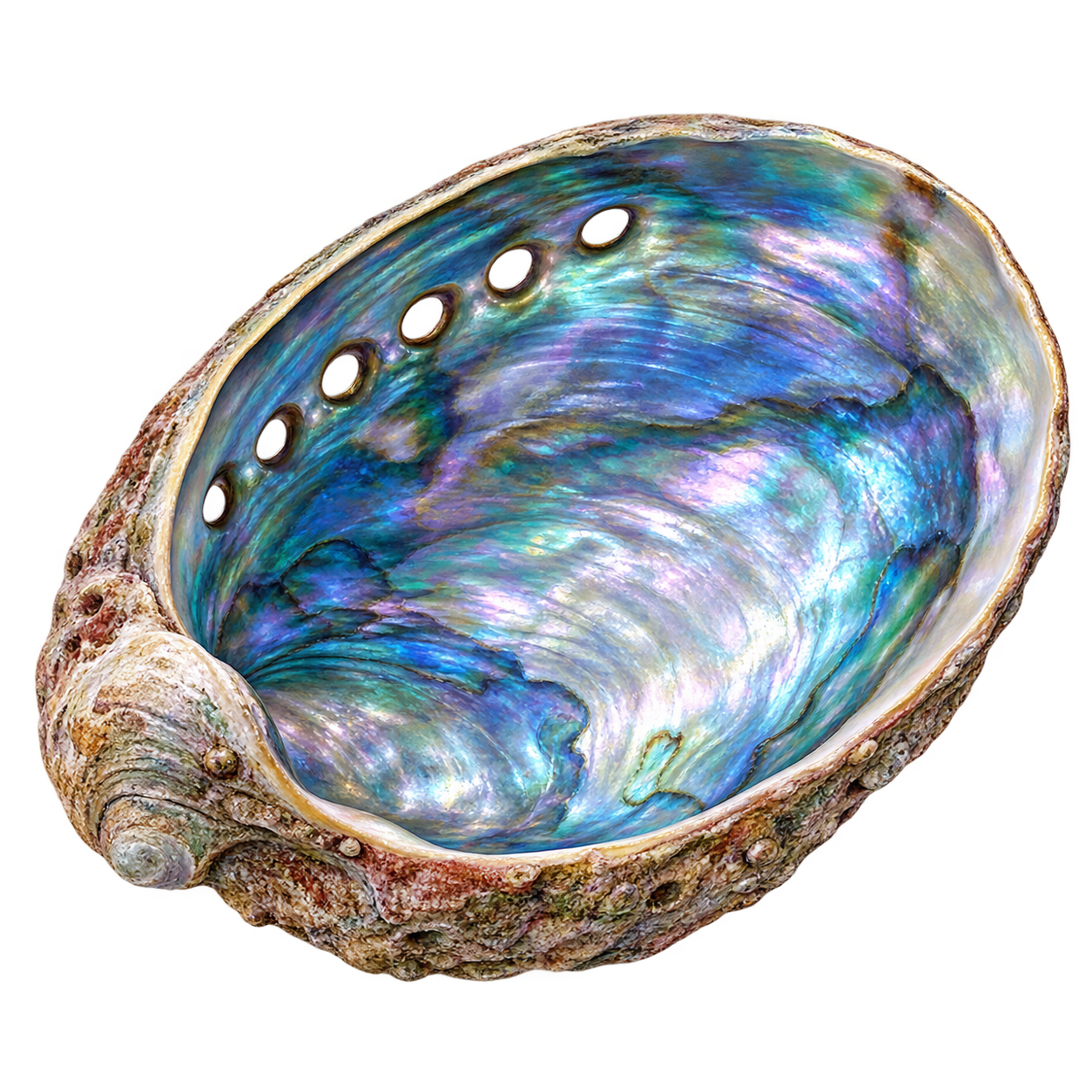
Haliotis · marine gastropod
Inside the abalone's shell, it's as if a small map of the iridescent sea is revealed. Mother of pearl changes color when rotated due to the structure of the layers.
A series of holes along the edge helps identify the shell. Behind the shiny shell in nature there is a living mollusk, and some species of abalone need protection.
Remember. A row of holes and a mother-of-pearl inner surface are characteristic of abalone.
3. Sand dollar
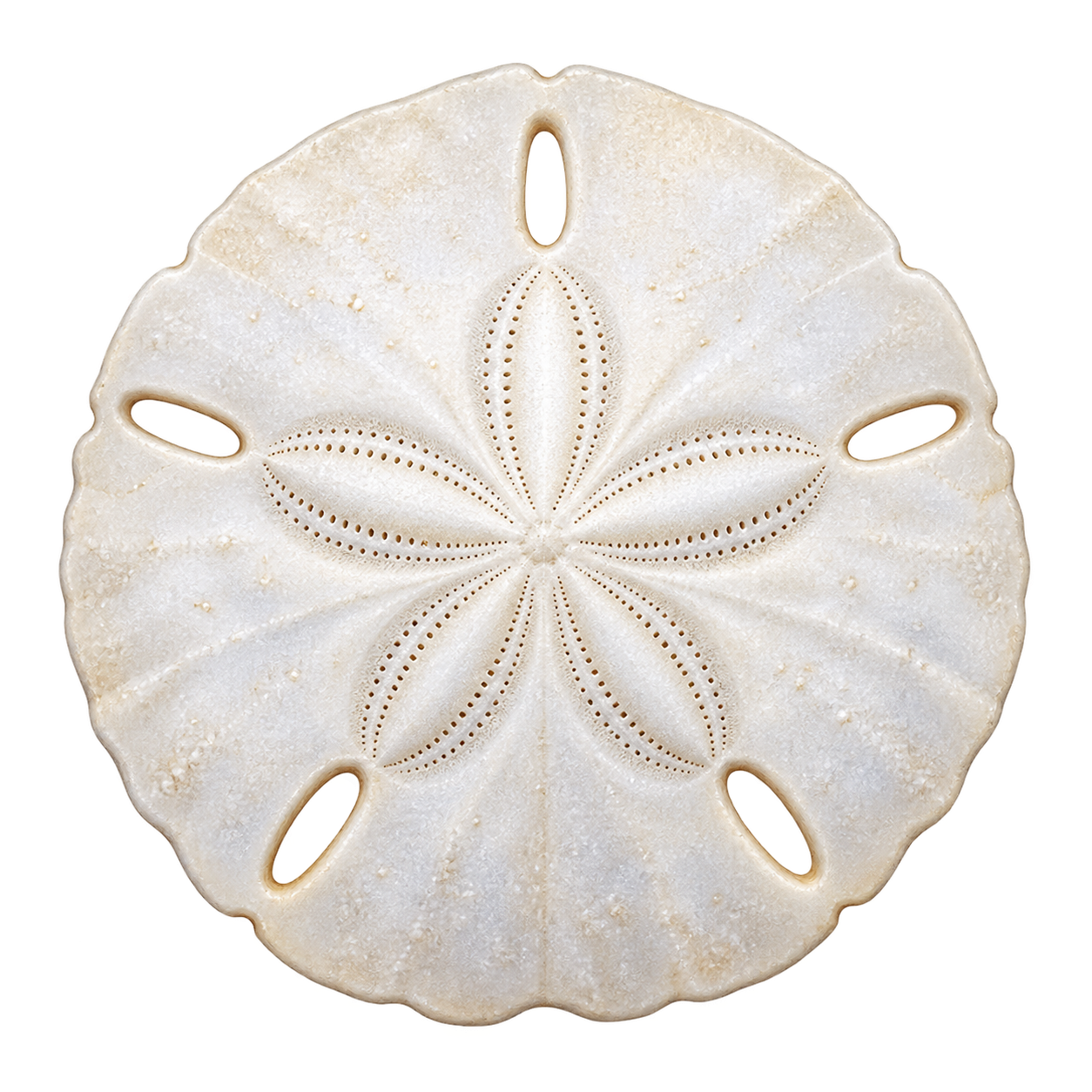
Flat sea urchin · empty skeleton
The white “dollar” with a five-leaf design appears to be a porcelain coin. In fact, this is the skeleton of a dead echinoderm - a durable shell called dough.
Live sand dollars are usually darker and covered in short, moving spines. Our drawing shows an empty shell, not a living inhabitant of the sand.
Remember. The white sand dollar is usually an empty skeleton; a living sand dollar is covered in spines.
4. Sea fan
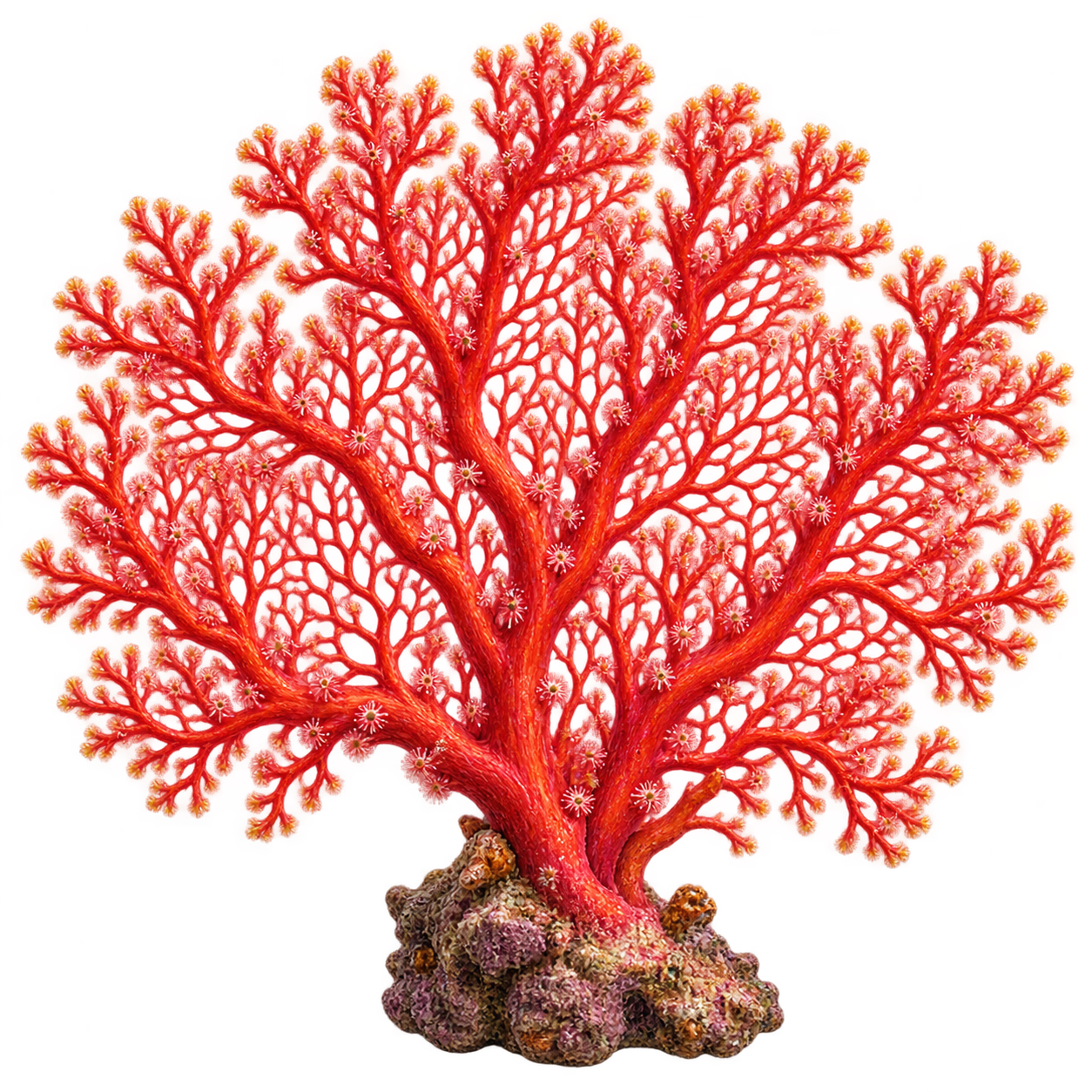
Gorgonian coral polyp colony
The red fan looks like the sea has knitted lace. Each branch is part of a living colony, and tiny polyps catch food from the water.
The sea fan is not a plant or a ready-made dry souvenir. If you break it for the sake of a shelf, the colony will die; It is better to leave beauty in its own home.
Remember. The sea fan is a living colony of coral polyps.
Source:About this species. Gift “Coral Fan” →
5. Chambered Nautilus
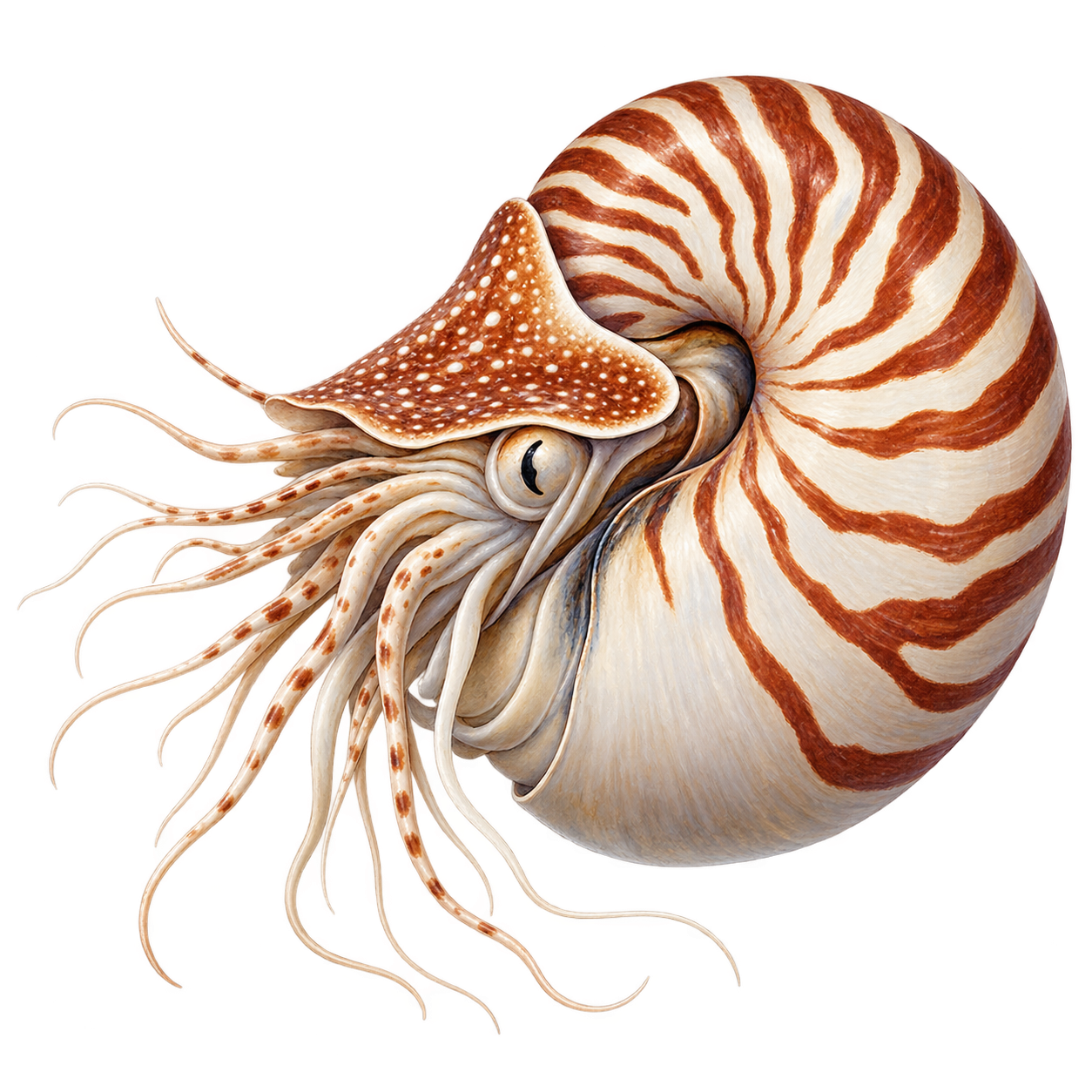
Nautilus pompilius · live cephalopod
The spiral shell of a nautilus looks like a geometric problem that has grown tentacles. Internal chambers help it regulate its buoyancy.
Nautilus is related to other cephalopods, although it is very different from the octopus. In the picture he is alive: it would be wrong to reduce him to an empty, beautiful shell.
Remember. The nautilus shell has chambers that help regulate buoyancy.
6. Cowrie shell
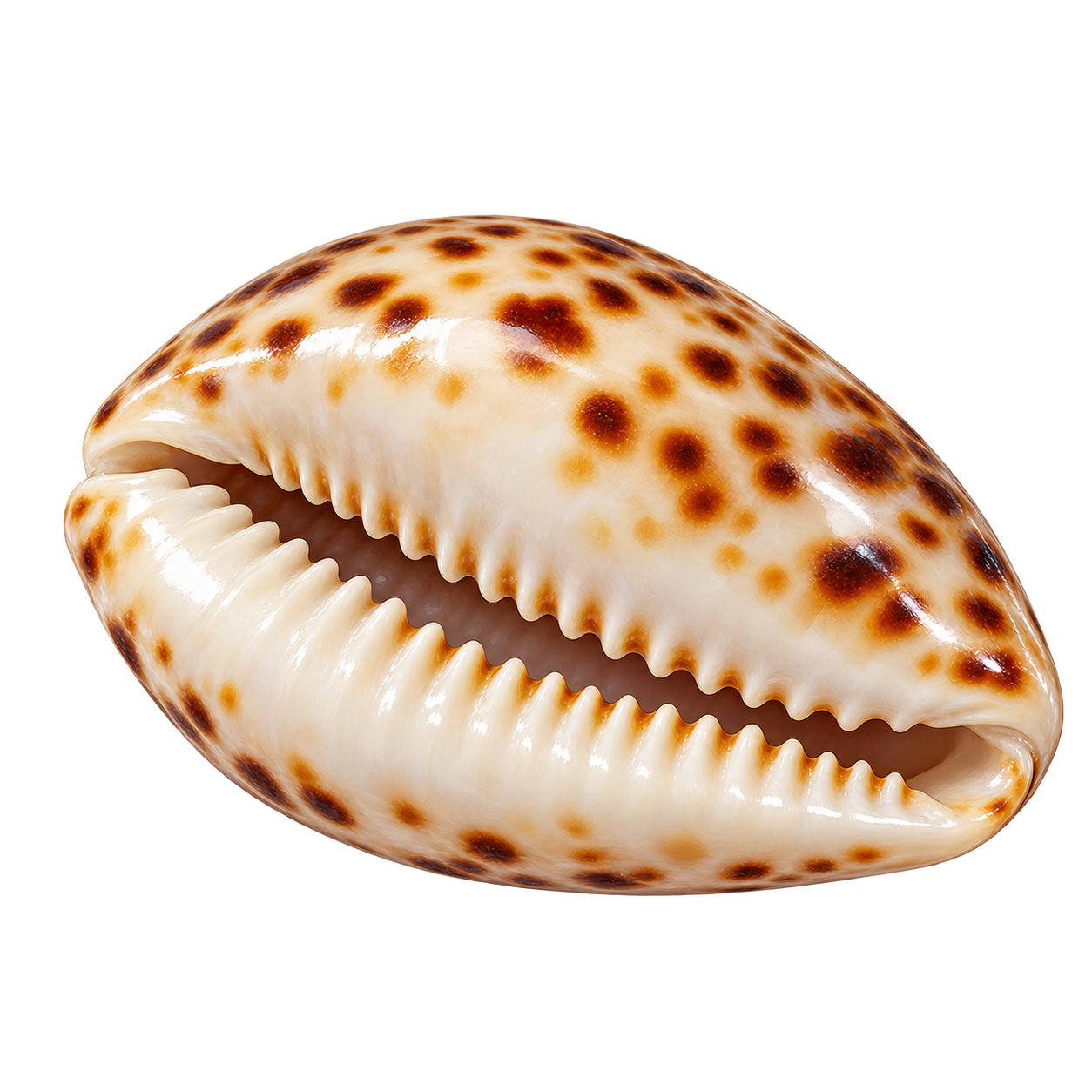
Glossy shell of a marine gastropod
The cowrie appears to have been polished by hand: the oval shell shines and hides a narrow, jagged slit. Its shape is not at all similar to the usual “spiral shell”.
Cowrie shells have also been prominent in human history, being used as jewelry and items of exchange. But it all started with a mollusk that built itself a protective house.
Remember. Cowrie is the shell of a sea mollusk, not a separate stone.
7. Queen conch shell
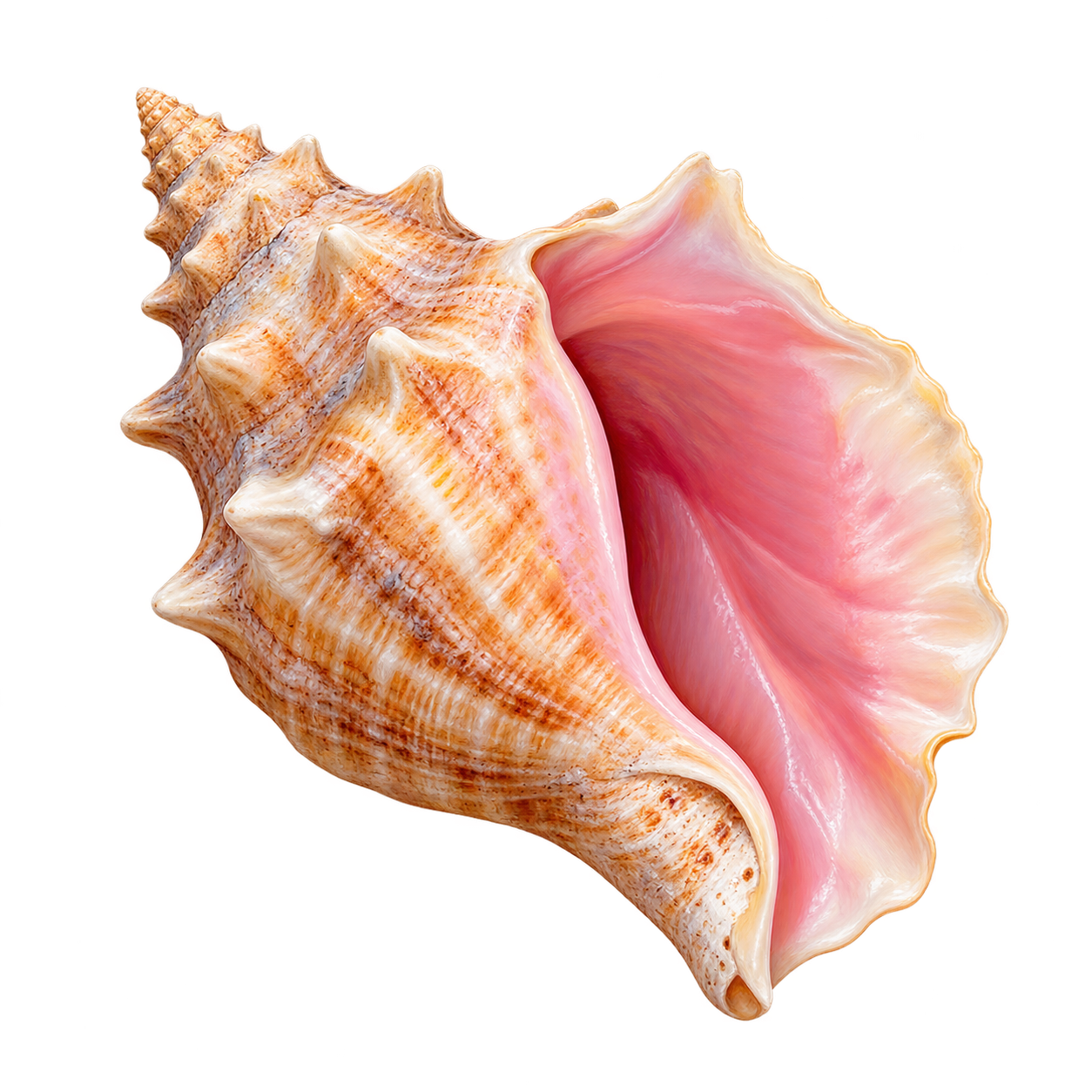
Queen conch · Caribbean sea snail
The pink inner lip of the large shell appears to be a festive frame. This is not a photography prop: the conch is a large sea snail of the Caribbean.
NOAA lists the species as threatened in the United States. Therefore, the image of the shell here is a reason to admire the shape and learn about the species, and not to look for a live mollusk as a souvenir.
Remember. The queen conch is a mollusk with a wide pink inner lip of the shell.
8. Sea glass
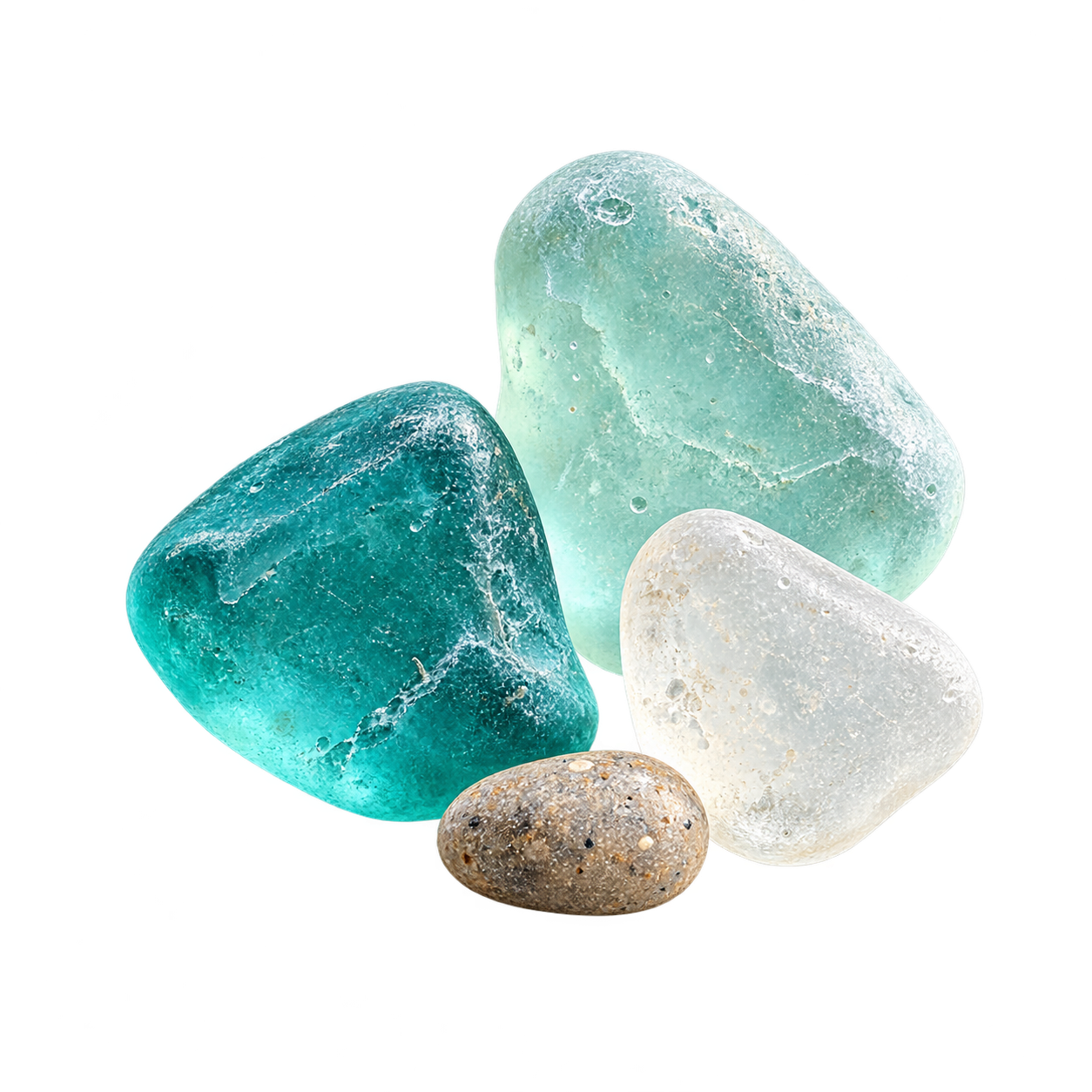
Fragment of glass smoothed by water
A matte turquoise shard can look like a gemstone. Its story has a less romantic beginning: it was once human glass.
Waves and sand smoothed the edges, but the glass did not become a mineral grown by the sea. The pleasant find also reminds us that trash in the ocean does not magically disappear.
Remember. Sea glass is a wave-smoothed fragment of discarded glass, not a natural gem.
9. Purple sea urchin
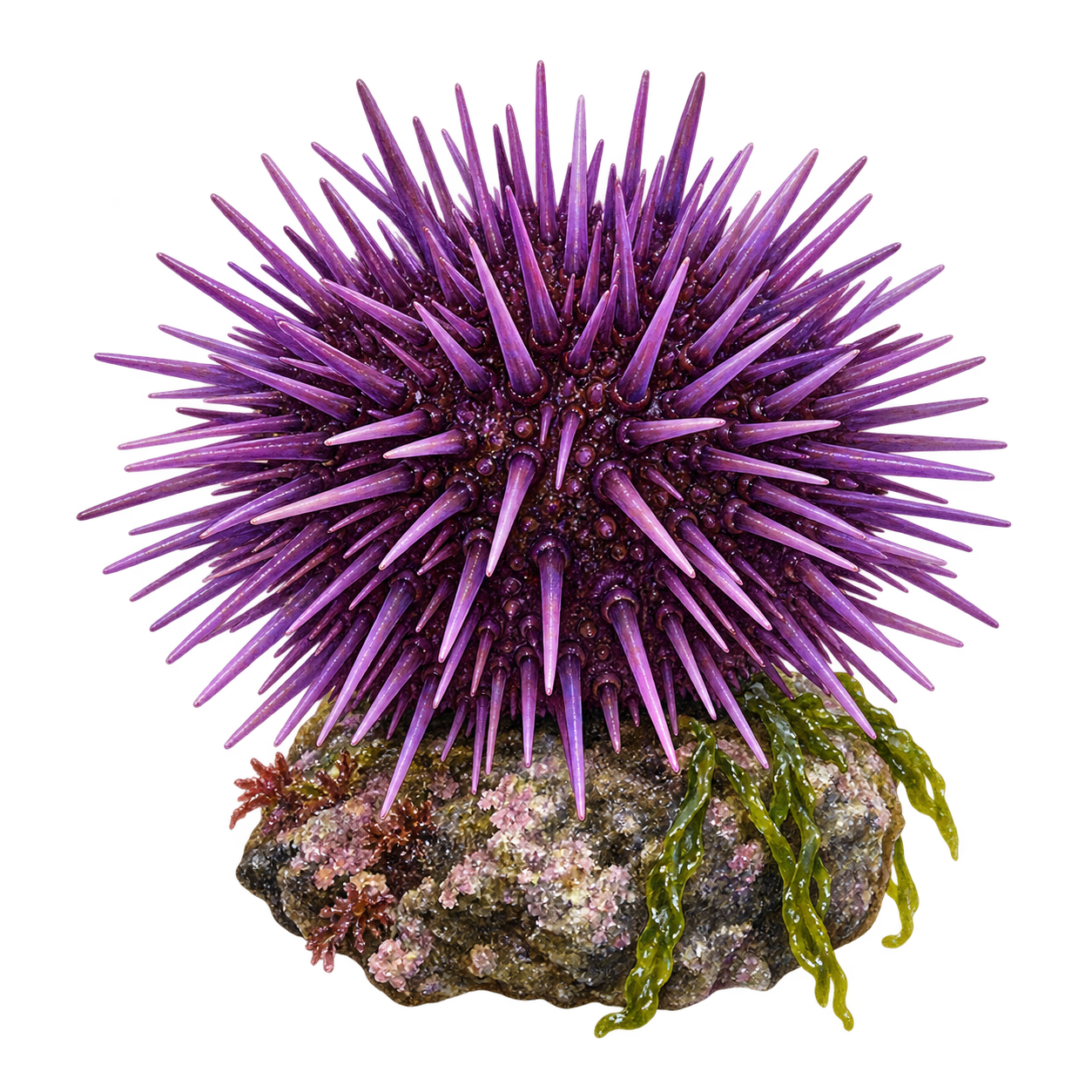
Strongylocentrotus purpuratus · Pacific coast
The purple sea urchin looks like a pincushion that they forgot to close. But each needle belongs to a living echinoderm, which clings to rocks and feeds on algae.
These urchins affect underwater kelp beds. In the picture it is alive and purple; it should not be confused with the empty white skeleton of a sand dollar.
Remember. The purple sea urchin is a living echinoderm with movable spines.
10. Giant clam
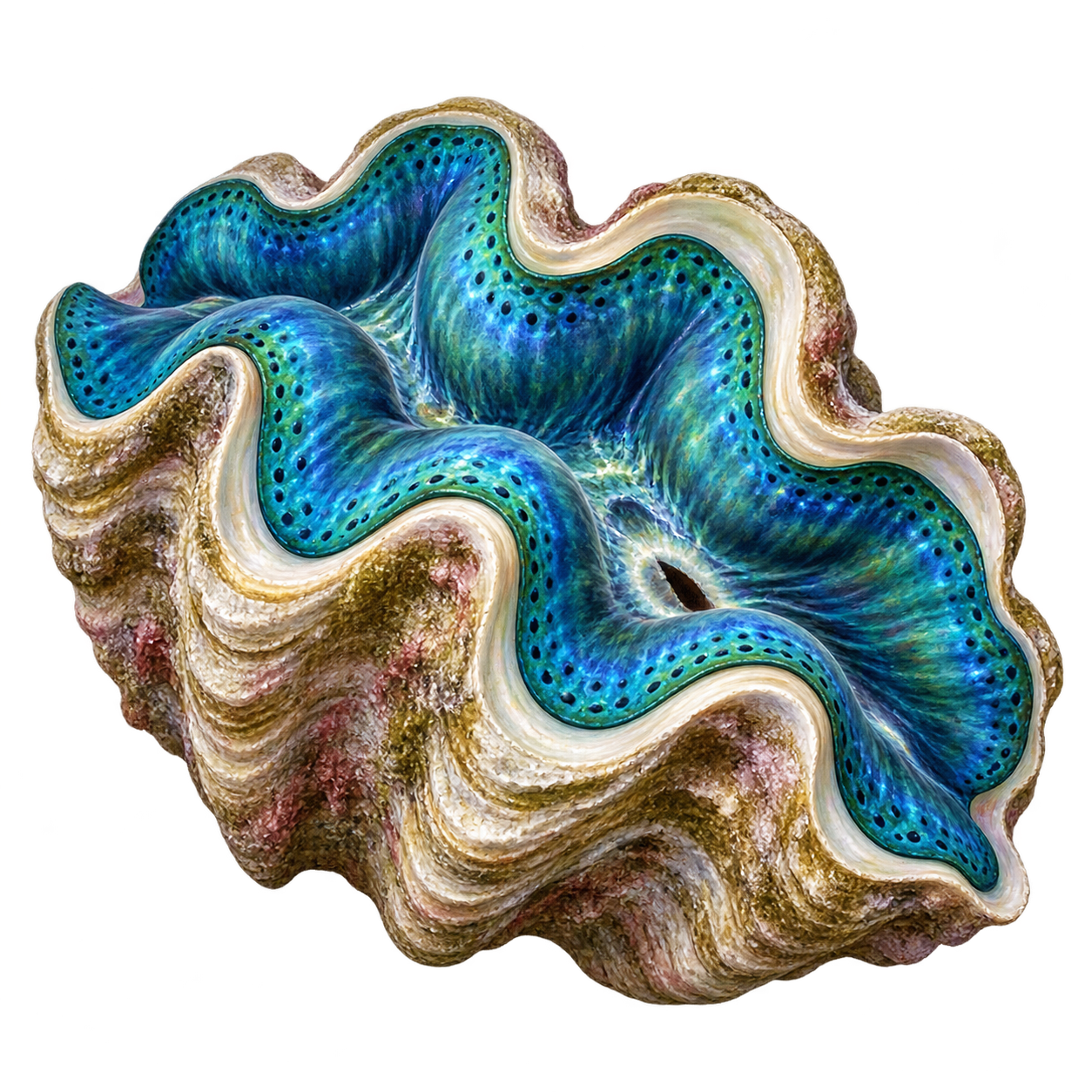
Tridacna derasa · tropical reefs
An open tridacna reveals a bright mantle, as if a piece of living reef lies inside the shell. Microscopic algae live in its tissues.
The mollusk gives them protection and light, and receives part of the products of photosynthesis. A large shell may seem like an ideal trophy, but harvesting threatened such mollusks.
Remember. Tridacna has a symbiosis with photosynthetic algae.
Source:About this species. Gift “Living mother-of-pearl bowl” →
Do not take living organisms or break coral for a souvenir. Even empty shells are protected by local regulations in some places; It’s nicer to leave the beach the way the next person will see it.