
Some fish are rare, others are more common, but each seems to have come up with its own way of surprising: leaves instead of a camouflage net, a transparent head, light on the belly or a pattern of white spots. Here are ten real species and ten separate illustrations. Drawings help to notice the signs, but do not replace an identification guide.
1. Leafy Seadragon
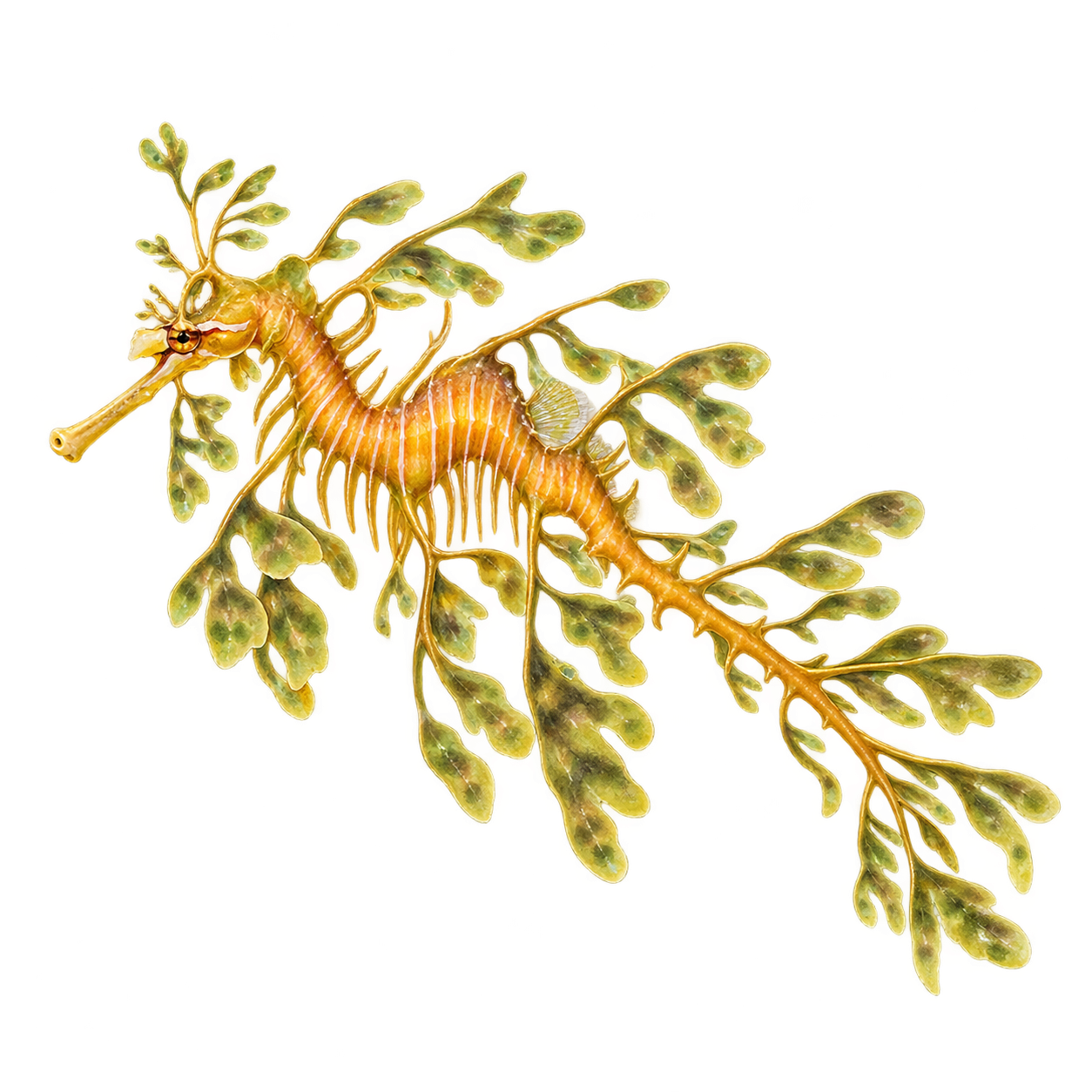
Phycodurus eques · southern Australia
It’s as if the sea is growing its own bouquet: this fish has many leaf-like outgrowths. But they do not move it forward - they act as camouflage among the algae.
The male carries the eggs on the underside of his tail. The leafy seadragon is related to seahorses, although it looks like a separate branch of algae.
Remember. Leaf-like outgrowths camouflage the fish; The male carries the eggs.
2. Red handfish
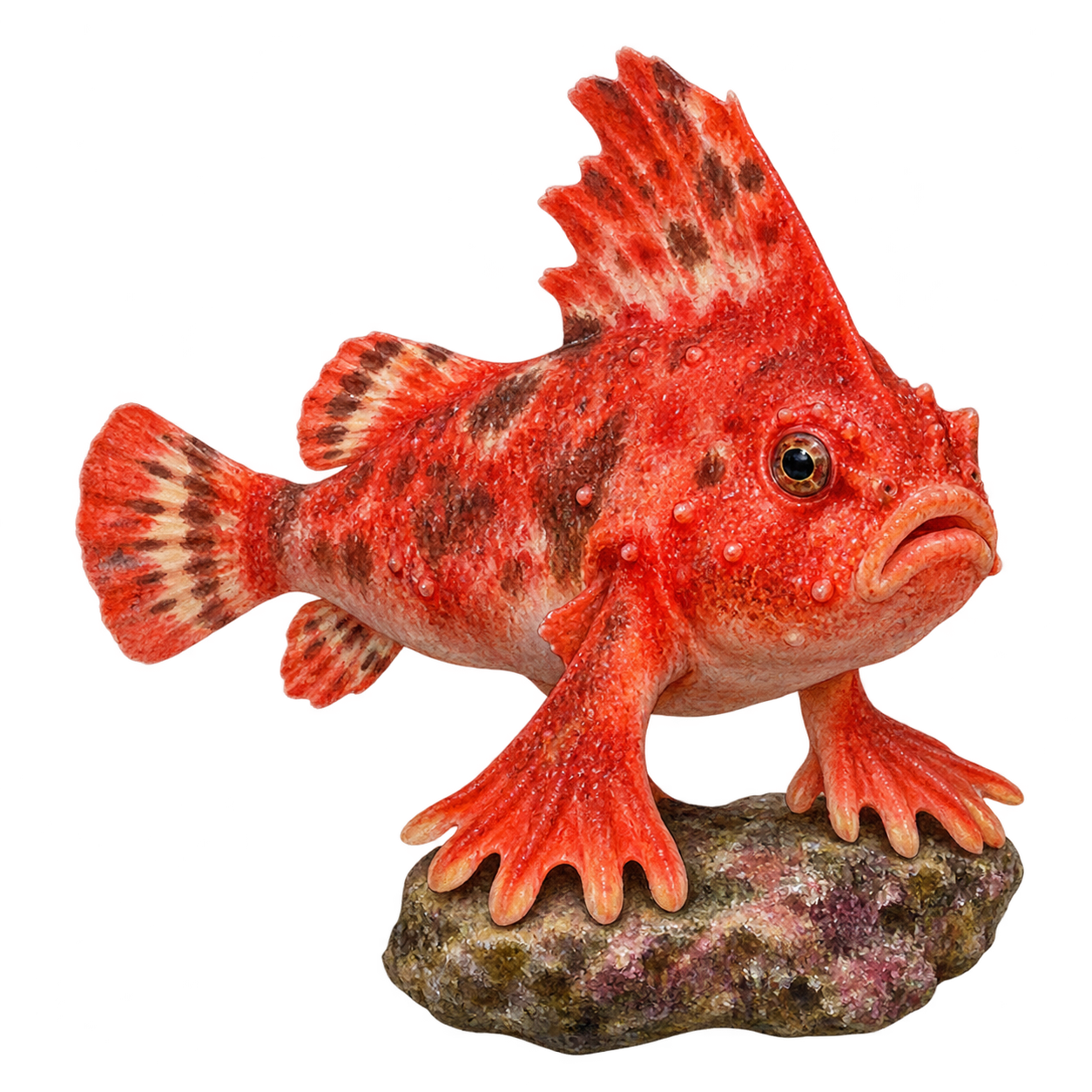
Thymichthys politus Tasmania
The red handfish's fins look like two small palms. He actually “walks” along the bottom more often than he does long swims.
This is not a photography trick: the species is found in very limited areas off Tasmania. Therefore, its bright color is a reason to talk about preserving the environment, and not about a home aquarium.
Remember. Wide pectoral fins help move along the seabed.
Source:About this species. Gift “Red Palms” →
3. Barreleye
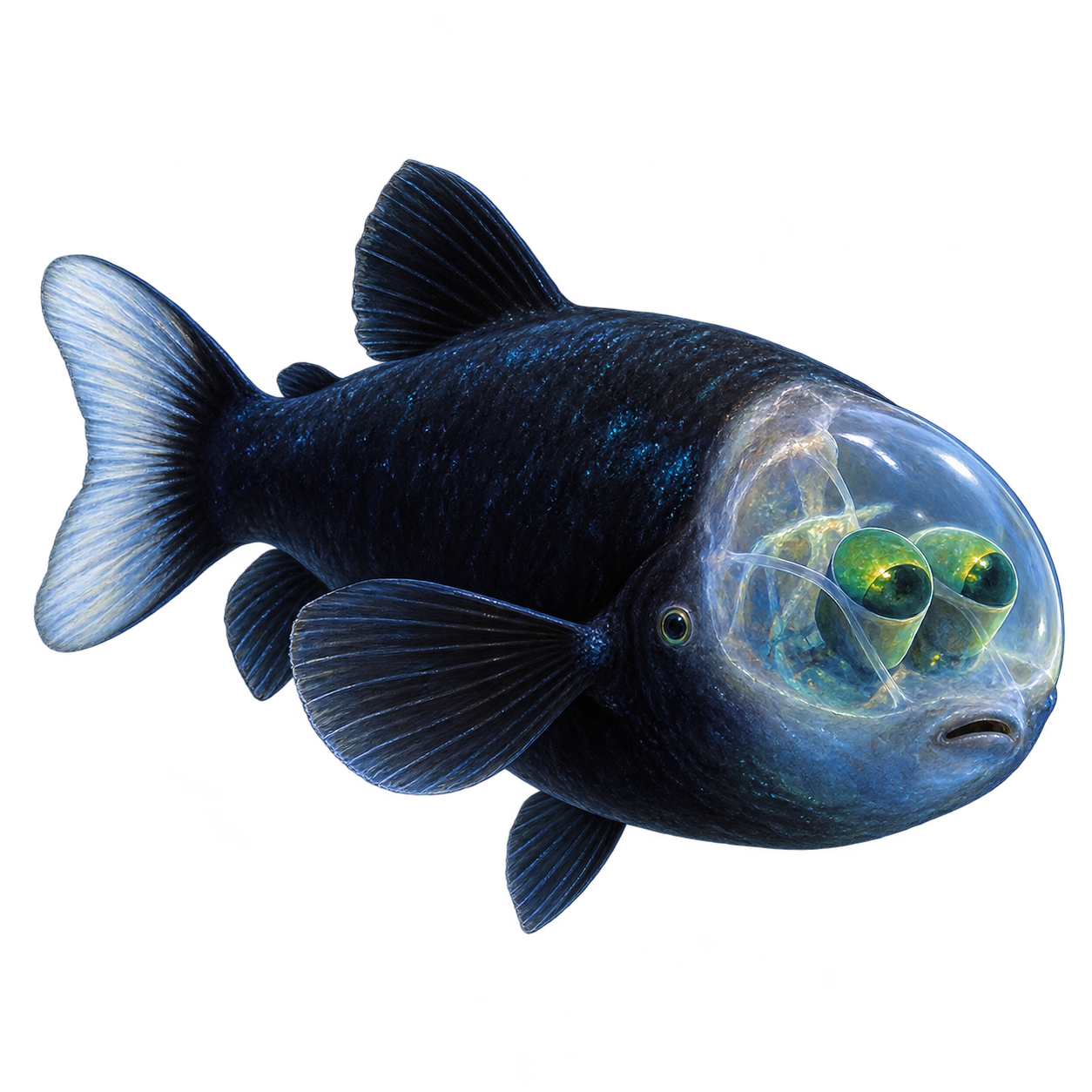
Macropinna microstoma · deep waters of the Pacific Ocean
If a submarine had a panoramic window, it would resemble a transparent dome on the head of a barreleye. Greenish tubular eyes are visible inside.
These eyes can change direction: the fish notices the silhouette of prey from above, and then looks forward. The transparent part is real anatomy, not an artistic effect.
Remember. The tubular eyes are located inside a transparent dome and are capable of rotating.
4. Deep Sea Hatchetfish
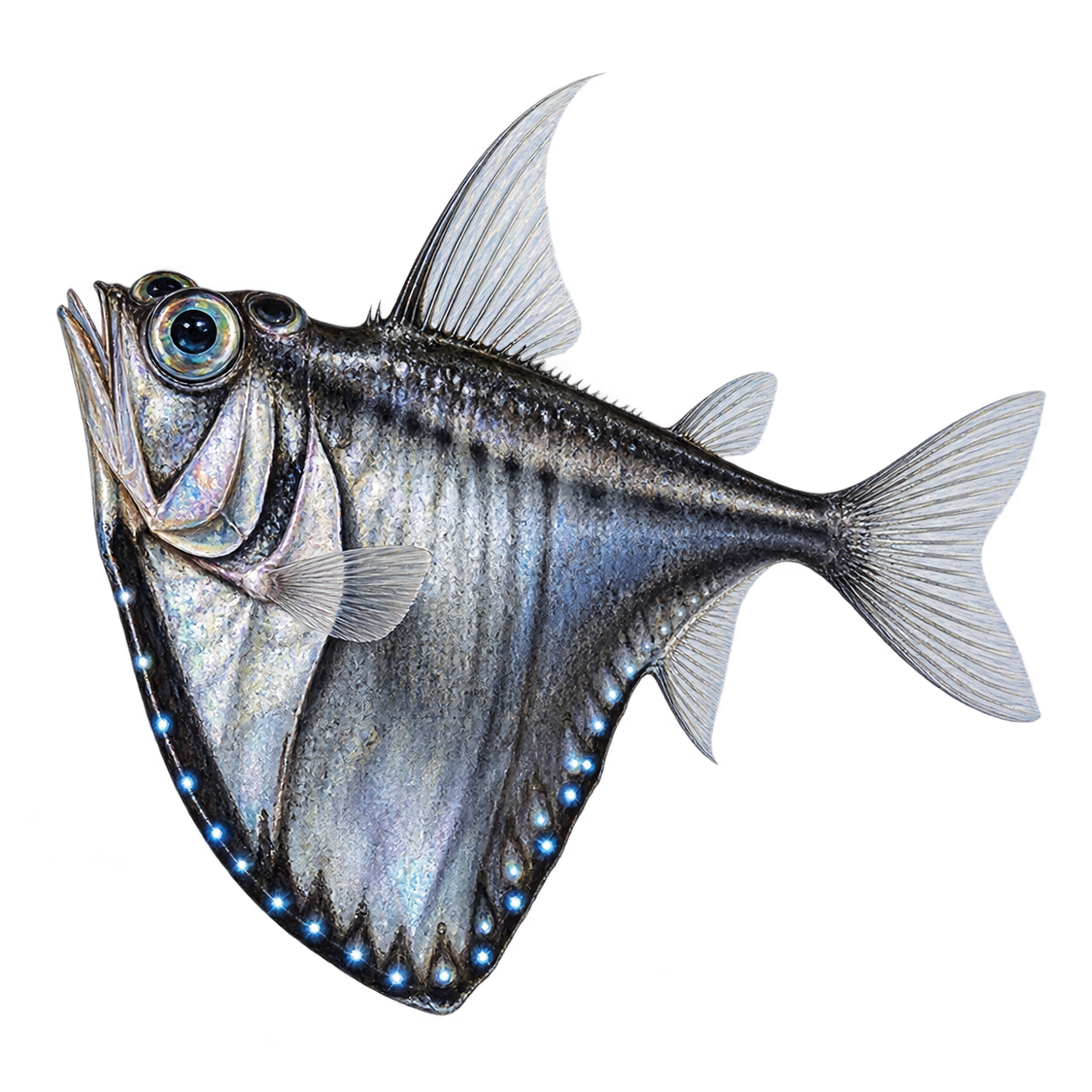
Sternoptyx obscura · twilight ocean
The hatchet fish is small, but its silhouette seems to be forged from silver. On the underside of the body there are luminous organs - photophores.
The light from below helps reduce the dark outline against the weak light from above. For a predator looking up from below, such a silhouette is more difficult to notice.
Remember. Photophores help disguise the dark silhouette of the fish when viewed from below.
5. Dolphinfish
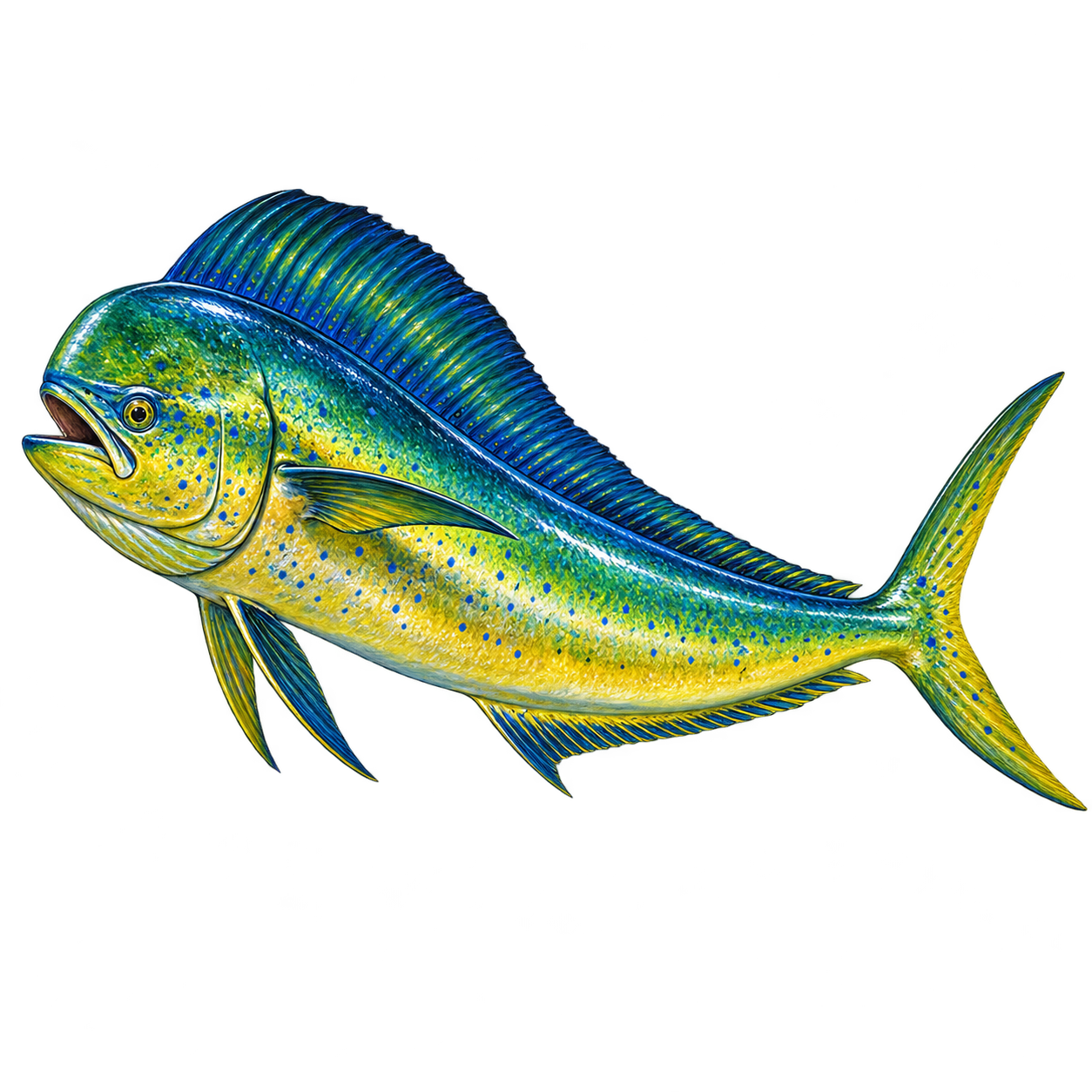
Coryphaena hippurus · open ocean
Blue, green and gold paint seem to compete on the body of the dolphinfish. The English name dolphinfish is confusing: this is a fish, not a dolphin.
It has a long dorsal fin and a fast, open-oceanic lifestyle. Dolphinfish is not an example of a narrowly widespread species - it is here for its expressive color and shape.
Remember. Dolphinfish is a fish with an iridescent color and a long dorsal fin.
6. Mandarinfish
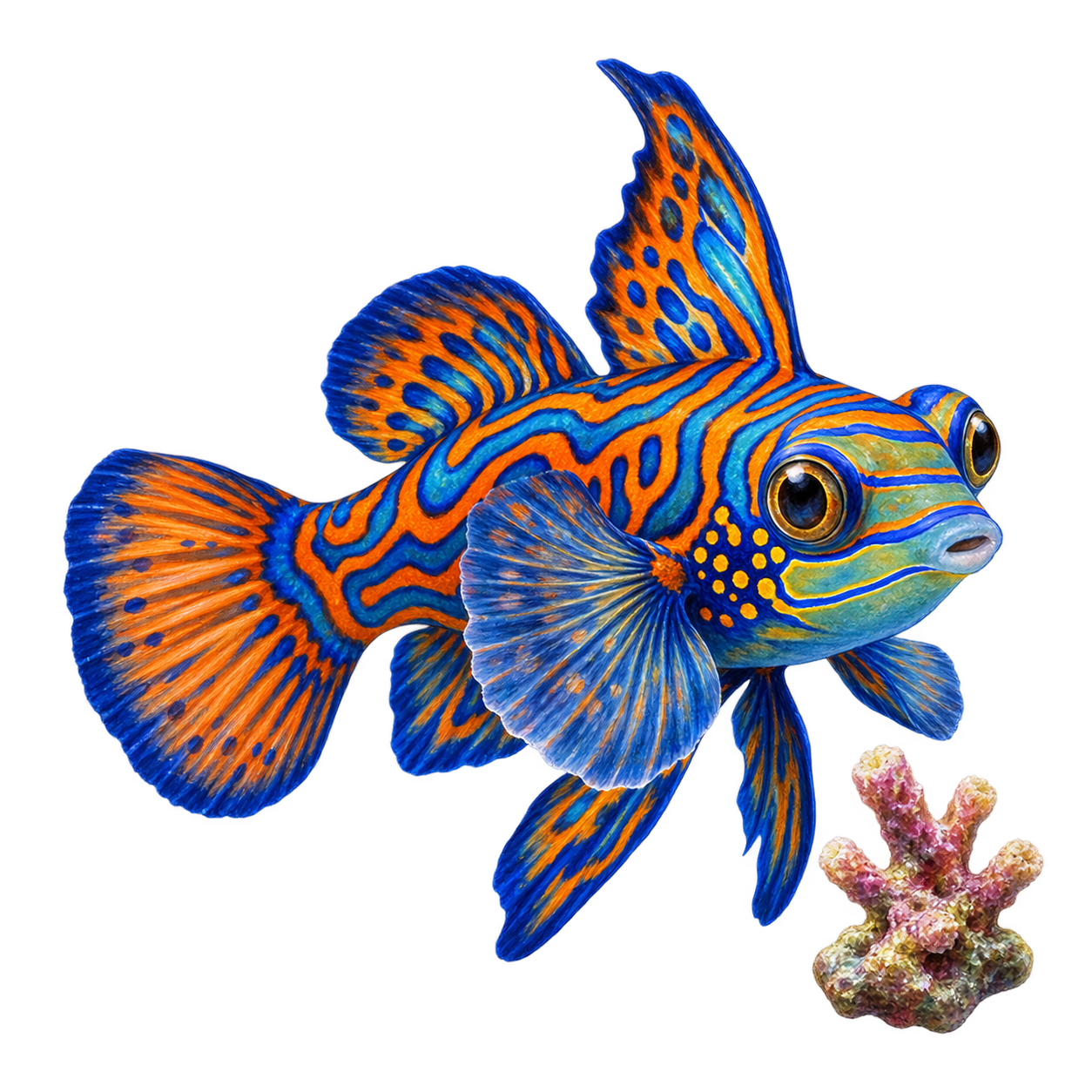
Synchiropus splendidus · western Pacific
It looks like someone painted the little fish with a neon brush. The mandarinfish stays near the reefs and moves with short movements of its fins, as if suspended in the water.
The brightness doesn't make her an easy pet. The California Academy of Sciences notes both its special mucous defense and problems with catching it for the aquarium trade.
Remember. The mandarinfish is a small reef fish with colorful patterns and mucous skin protection.
Source:About this species. Gift “Underwater Mandarin Duck” →
7. Ocean sunfish
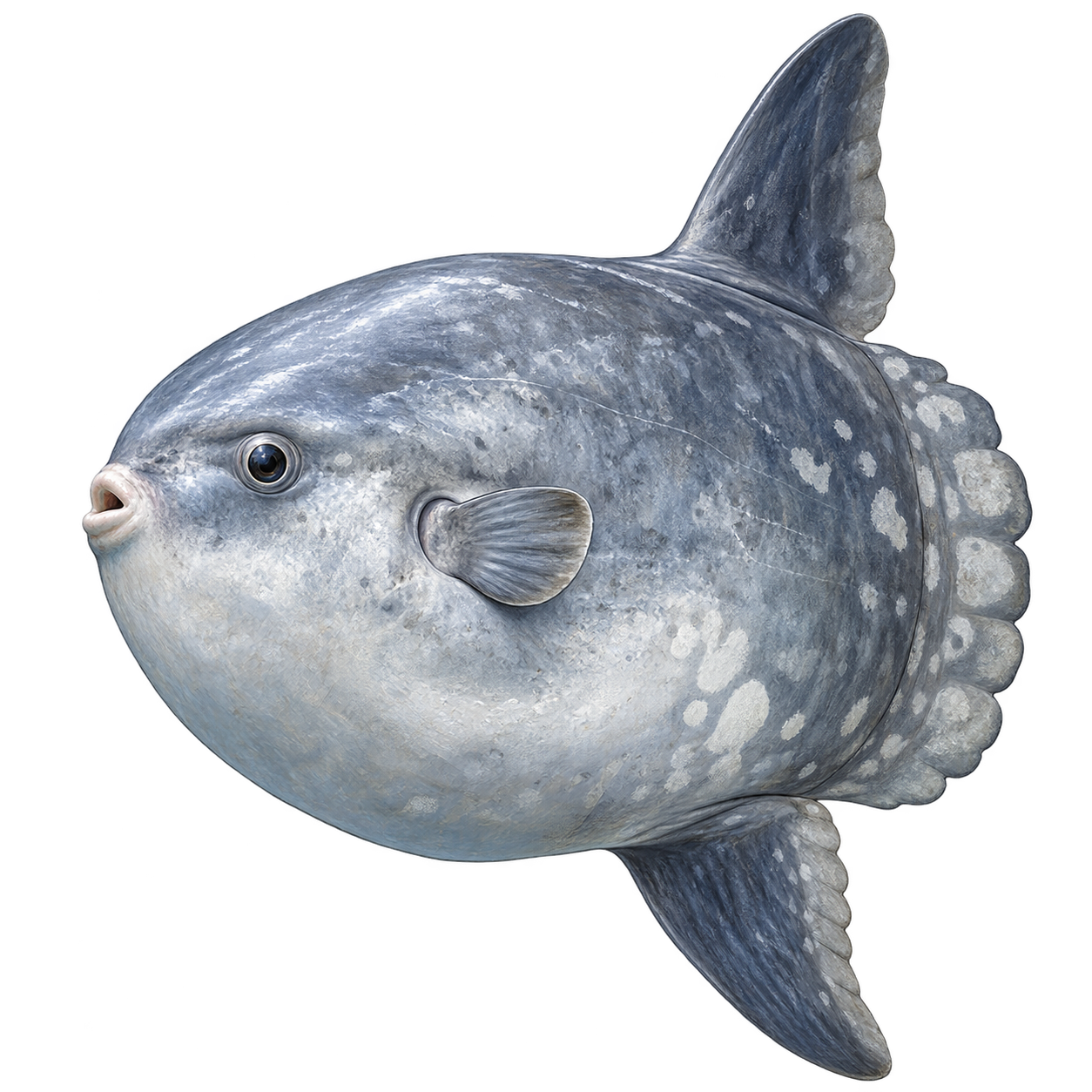
Mola mola · temperate and tropical seas
It’s as if they forgot to finish drawing the tail of the ocean sunfish. In fact, the back of the body ends in a short clavus, and the high dorsal and anal fins help to swim.
It can be huge, yet feeds on jellyfish and other jelly-like plankton. An unusual silhouette is not a sign that the fish is “unfinished”.
Remember. The sunfish does not have a conventional caudal fin; the posterior edge forms the clavus.
8. Weedy Seadragon
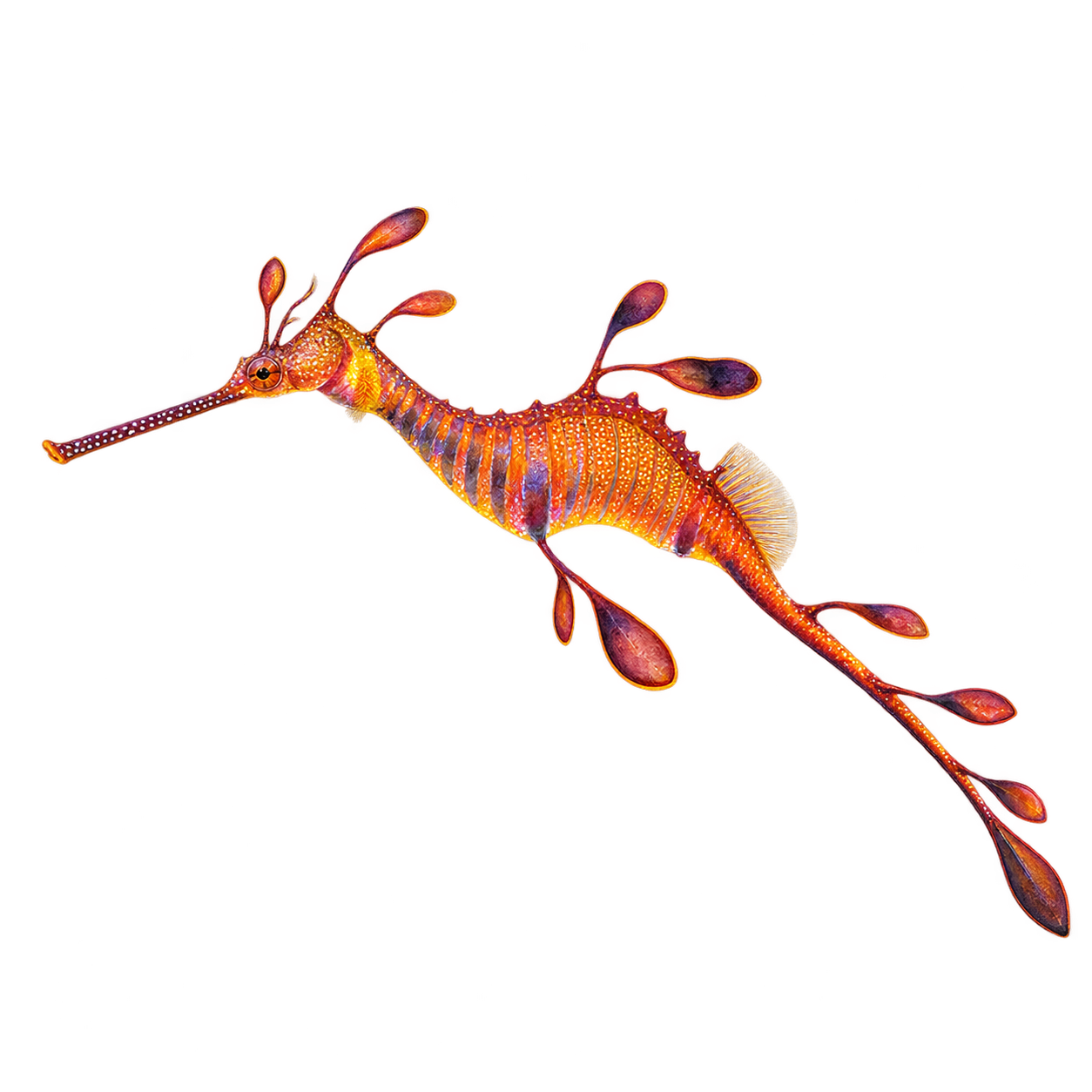
Phyllopteryx taeniolatus · southern Australia
The weedy seadragon has fewer decorations than its leafy relative, but the color can be orange-purple. The thin body helps to dissolve among the algae.
This is also a fish of the seahorse and pipefish family. Small, almost transparent fins work quickly while the outgrowths create the appearance of swaying vegetation.
Remember. The weedy seadragon is a separate species of sea dragon with sparser growths.
9. Twospot lionfish
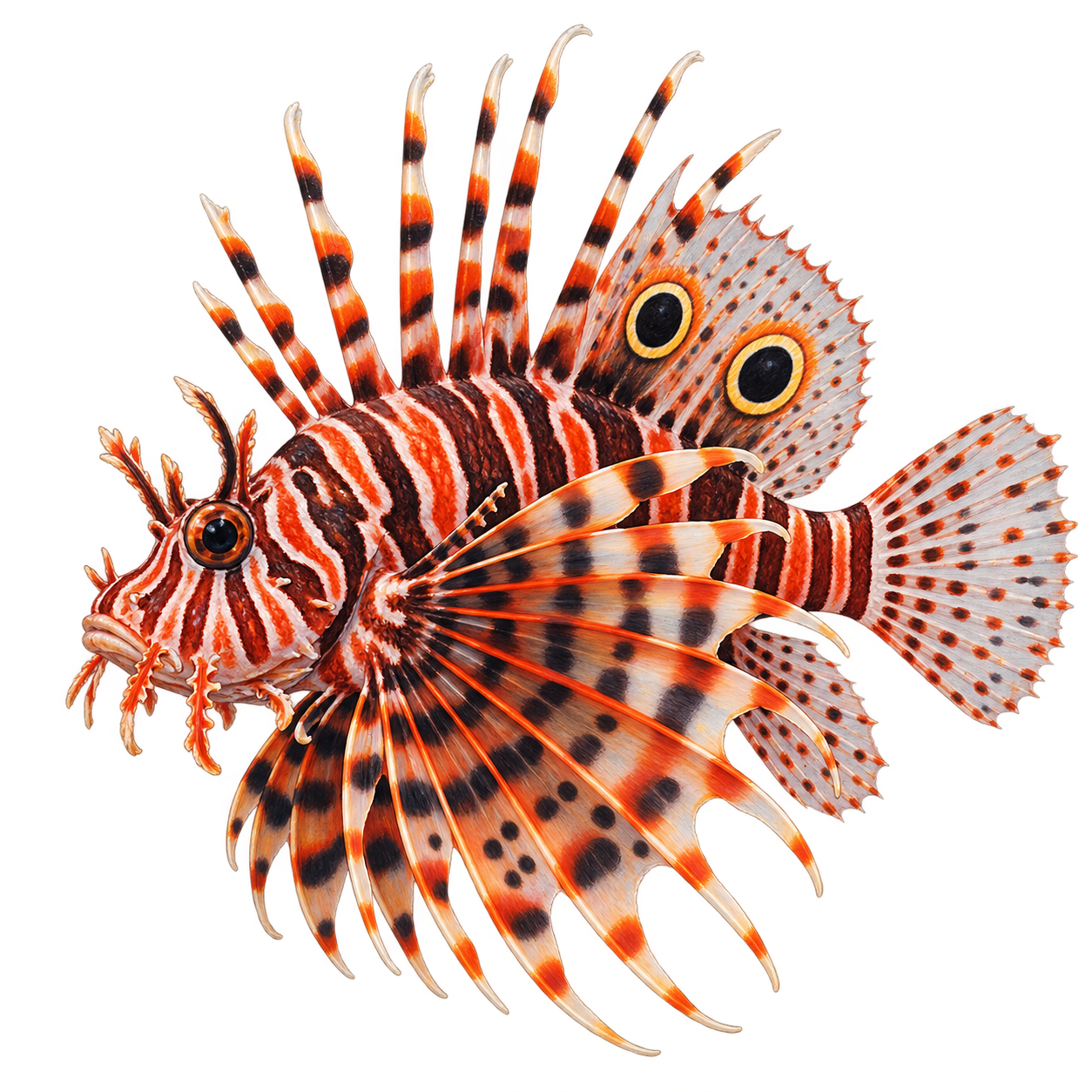
Dendrochirus biocellatus · reefs of the Indo-Pacific region
Large striped fins look like a fan for a grand entrance. The two “eye” spots on the dorsal fin explain the name of the twospot lionfish.
The beauty here warns you to keep your distance: the spines carry venom. It is a small reef predator that feeds on fish and crustaceans.
Remember. The twospot lionfish has two ocellated spots and venomous spines.
Source:About this species. Gift “Reef Fan” →
10. Clown Triggerfish
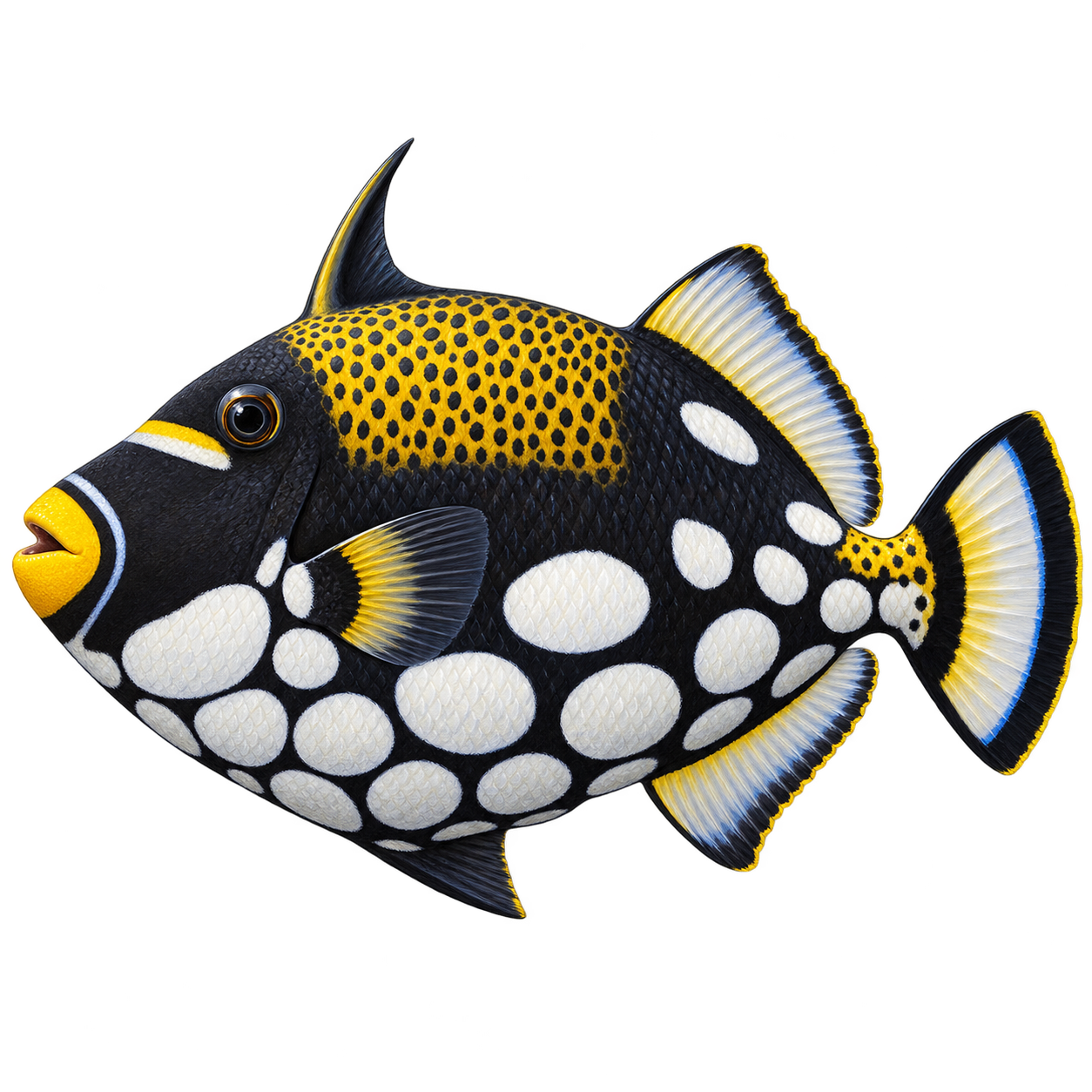
Balistoides conspicillum tropical reefs
The clown triggerfish seems to have two different costumes: large white spots on the bottom and a yellow pattern on top. He can fix the front dorsal spine.
Strong jaws help cope with hard prey. The pattern appears to be decorative, but this species is easily recognized even without the painted red nose.
Remember. The white lower spots and yellow upper zone help identify the clown triggerfish.
Beauty here is not an indicator of numbers: the dolphinfisha is widespread, and the red handfish lives in very limited places. Illustrations are virtual gifts; We leave rare fish in the sea.