
The word “pilaf” unites not one strict recipe, but related ways of preparing rice with other ingredients. The difference is visible even before the first spoon: somewhere the rice is mixed with carrots and meat, somewhere the dishes are assembled in layers, and somewhere the rice and side dish are already on the plate. Below are ten options with a separate illustration for each.
1. Fergana: rice, carrots and cauldron
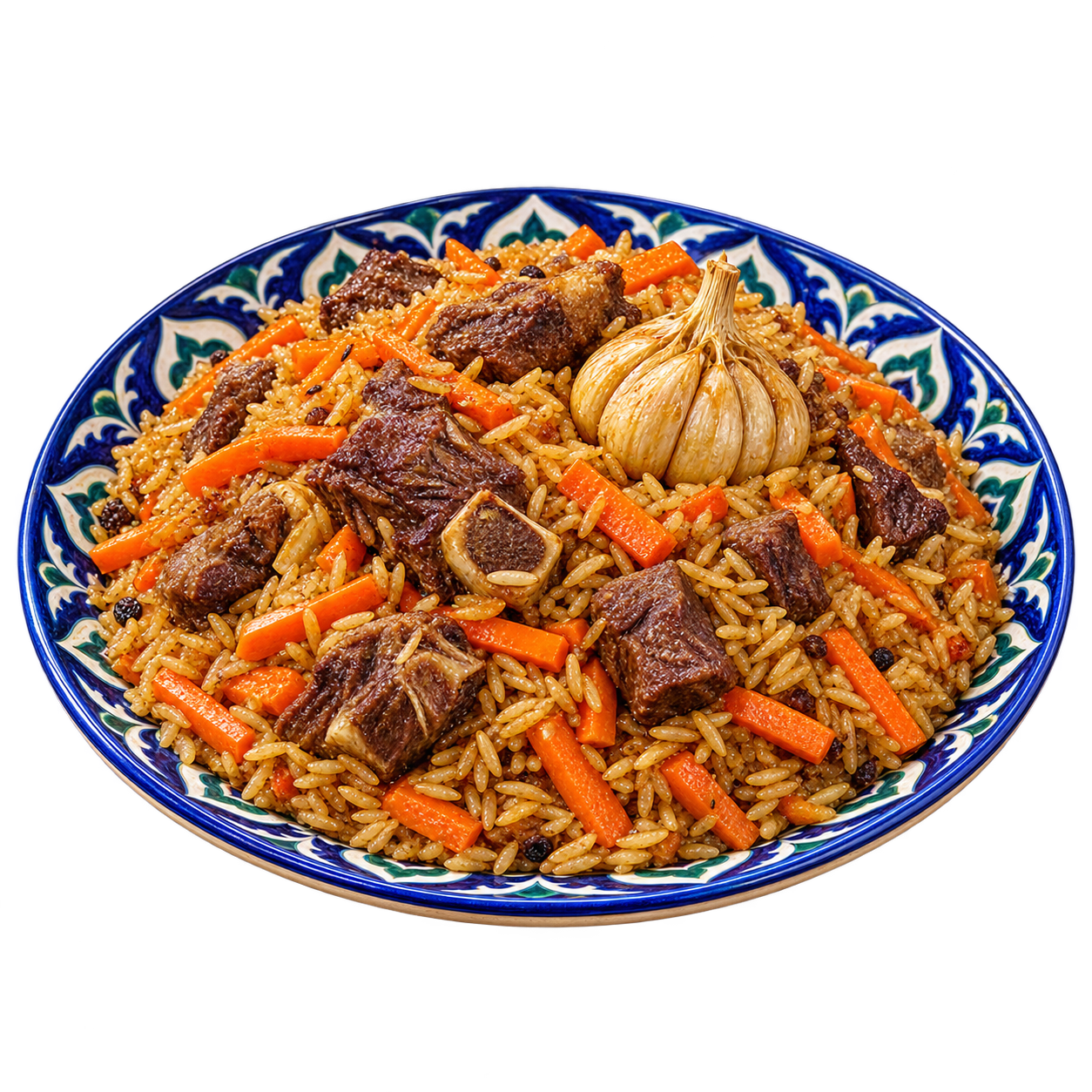
Uzbekistan · Fergana tradition.
In the familiar image of Uzbek pilaf, the grain of rice is colored with zirvak, with carrots and pieces of meat visible nearby. Devzira rice is especially prized in the Fergana Valley. Here you want to pronounce the word “pilaf” before finishing the plate: everything is collected into one rich ensemble.
Regional methods vary even within Uzbekistan, so “Fergana pilaf” should not be turned into the only standard. The illustration shows a typical version with rice, carrots, meat and garlic, but does not exhaust the homemade versions.
Remember. The Ferghana variant is often associated with devzira rice and rich zirvak.
2. Samarkand: layers are in no hurry to mix
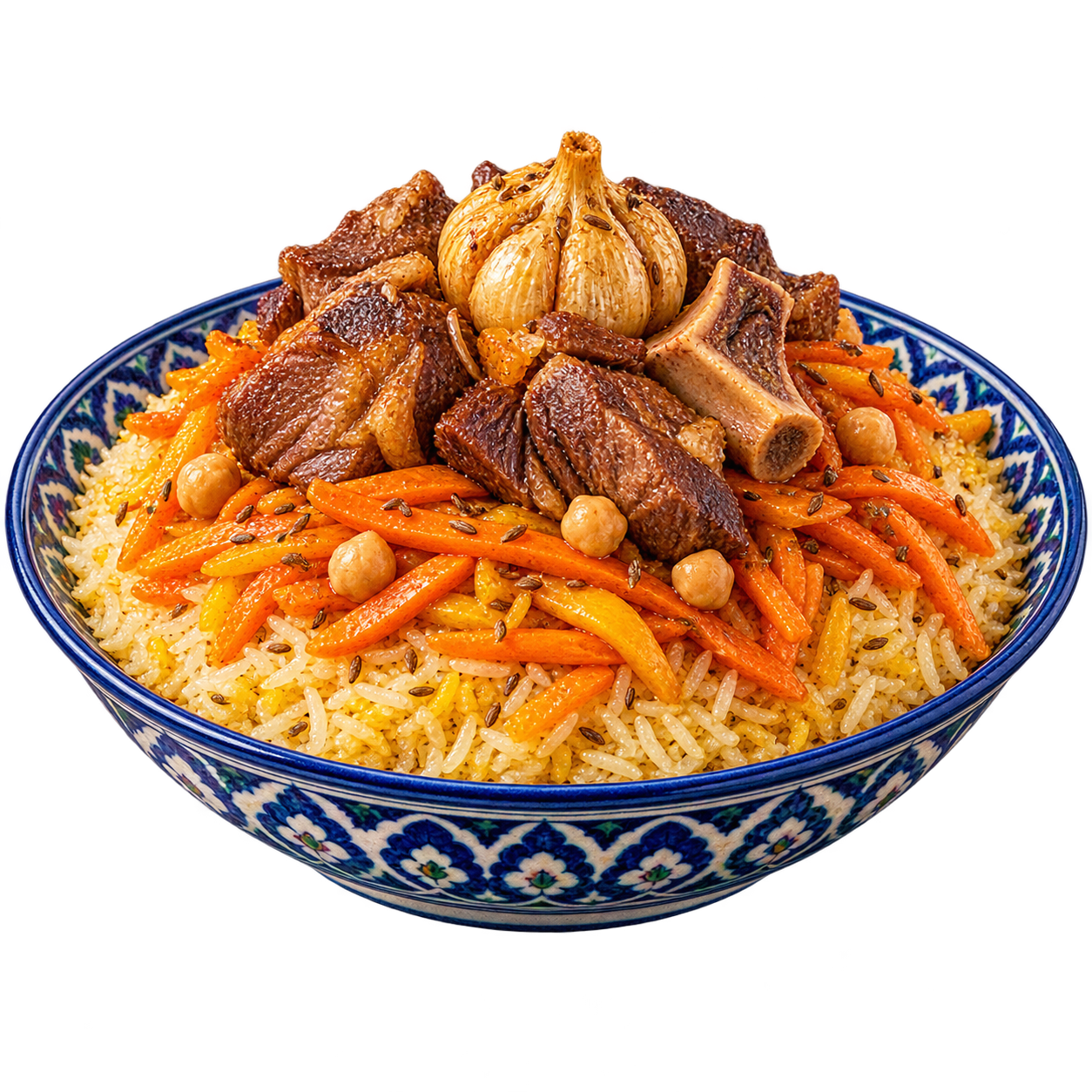
Uzbekistan · Samarkand presentation.
Compared to the usual mixed image of pilaf, the separation here is more expressive: rice, carrots and meat retain their own places. On the dish, you can examine each layer before combining the flavors in one spoon.
Such presentation does not make the dish “unfinished”. It has its own meaning: the layers retain their appearance, and the guest himself chooses the ratio of rice and accompaniments. The exact techniques vary among chefs, but the idea of separateness helps to recognize the Samarkand style.
Remember. Samarkand presentation is often described through noticeable layers of rice, carrots and meat.
3. Azerbaijan: saffron and crispy crust
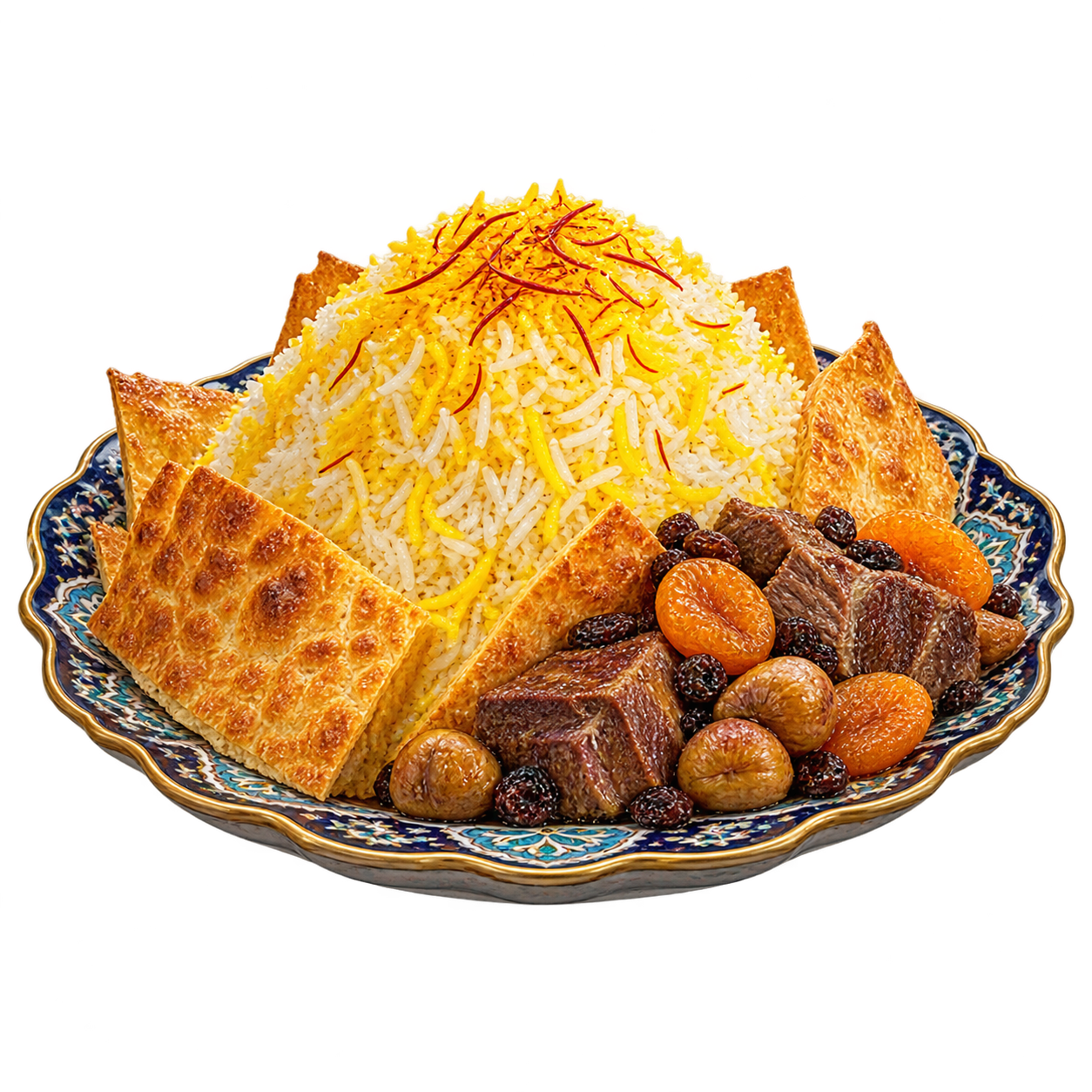
Azerbaijan · rice and accompaniments served separately.
It is easy to notice another principle here. The fluffy rice may remain separate from the meat or fruit addition; saffron colors some of the grains golden. At the bottom of the cauldron, a crispy gazmakh is formed, sometimes from lavash - a real prize for crust lovers.
There are many varieties of pilaf in Azerbaijani cuisine. We show the serving with rice, gazmakh and side dish nearby, and do not claim that any Azerbaijani pilaf looks like this.
Remember. Separately cooked fluffy rice, saffron and gazmakh are important recognizable features of many Azerbaijani pilafs.
4. Kabul: sweet crown over rice
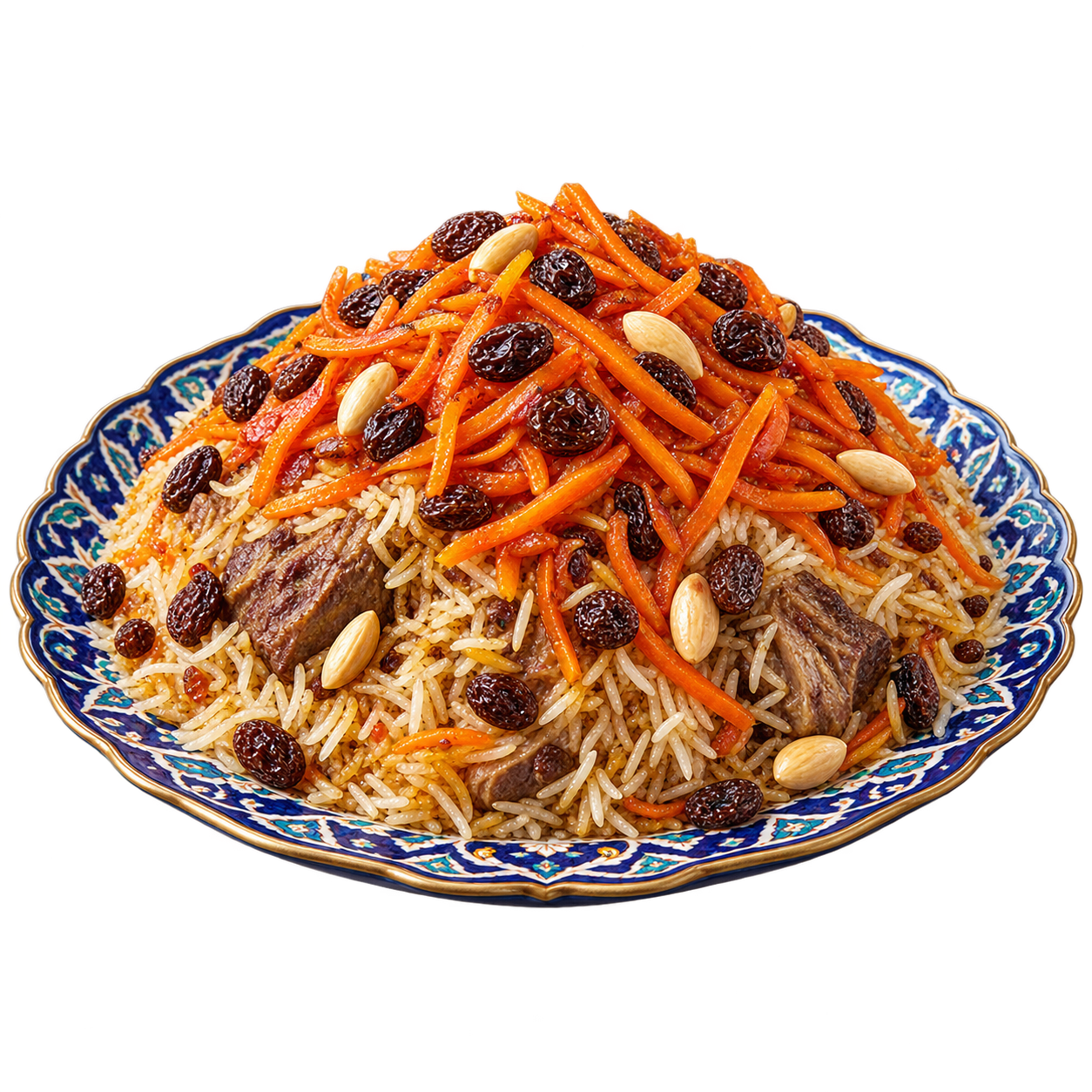
Afghanistan · Kabuli palaw.
Thin strips of carrots and raisins, sometimes nuts, appear on the surface of the rice; meat may be hidden below. Salty, spicy and sweet come together in one spoon. This is not a dessert with meat, but a festive rice pilaf with a characteristic contrast.
The name is found in different transcriptions: kabuli, kabuli, qabili palaw. The composition and proportions vary among families, but carrots with raisins on fluffy rice remain a recognizable image.
Remember. Kabuli palaw is often garnished with carrots, raisins and nuts on top of rice.
Source:Official source. Gift “Carrot Crown” →
5. Tashkent: festive Bayram-Osh
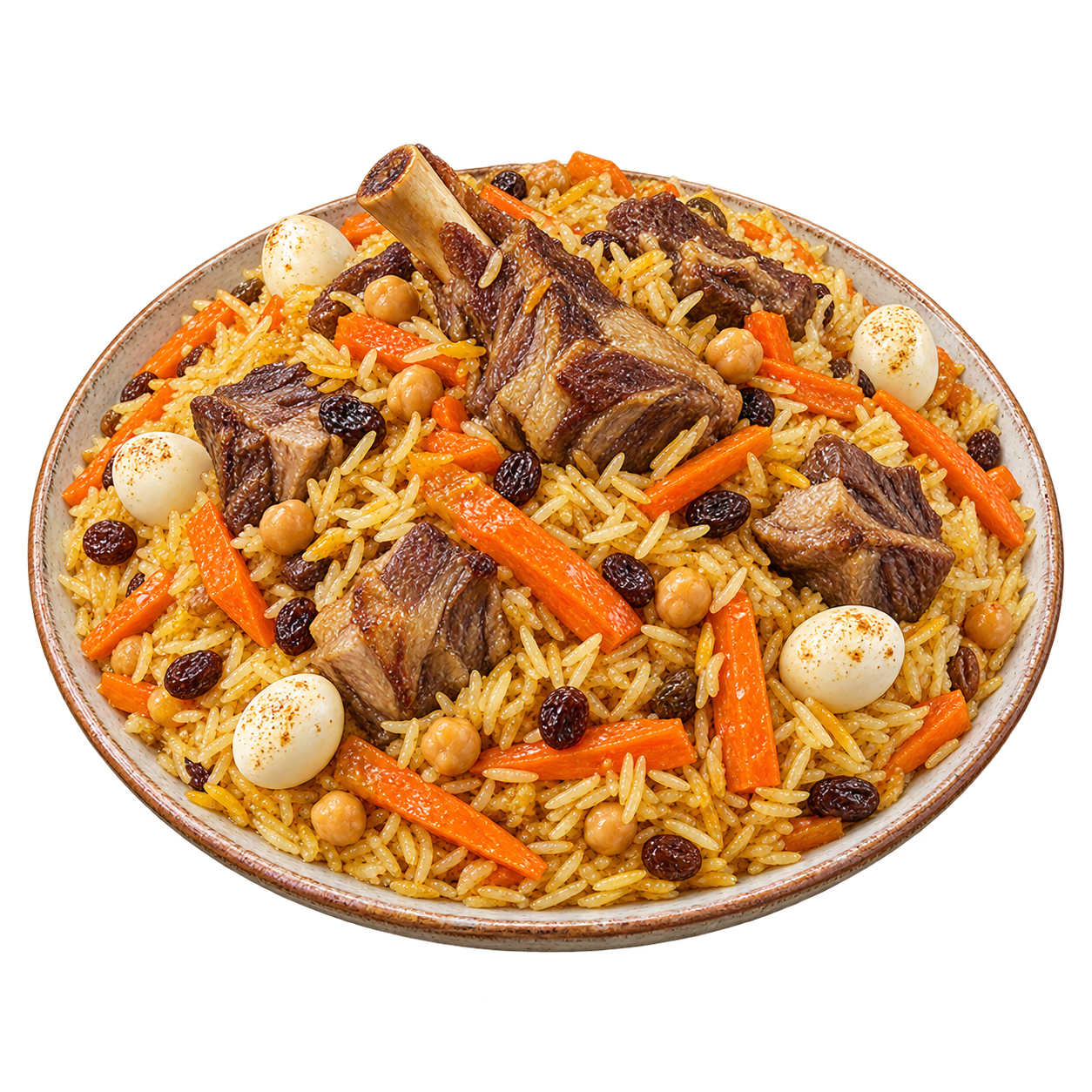
Festive Tashkent pilaf with rice, meat and chickpeas.
The Tashkent holiday version reminds us that pilaf can be both everyday and ritual. The name is tied to the occasion of serving, and not to the single constant proportion of carrots and rice.
Remember. Festive Tashkent pilaf with rice, meat and chickpeas.
6. Andijan: kovatok-palov
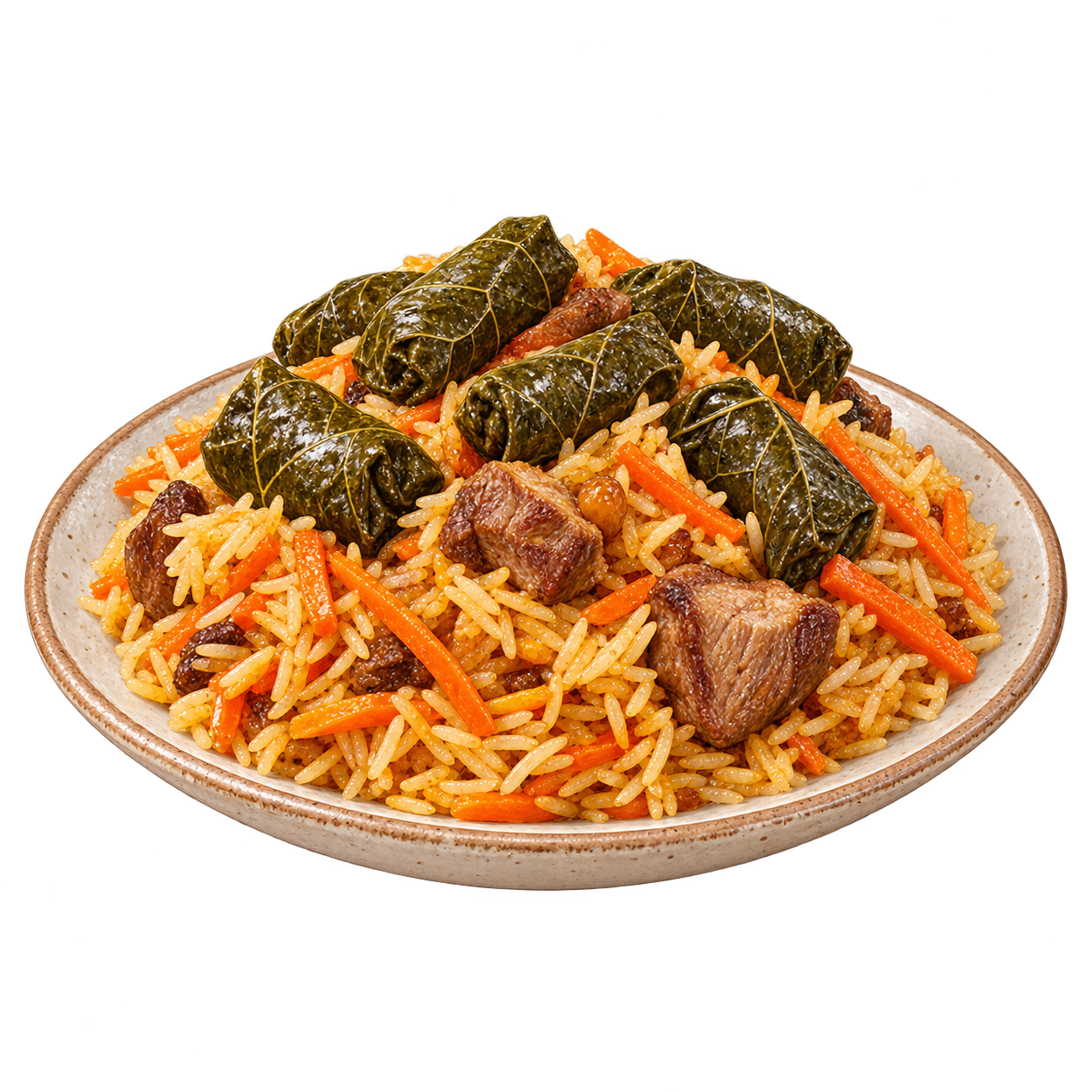
Pilaf with small stuffed grape leaves.
In the Andijan version, small stuffed grape leaves are added to the pilaf. The rice dish takes on another recognizable form inside the same cauldron.
Remember. Pilaf with small stuffed grape leaves.
7. Khorezm: chalov
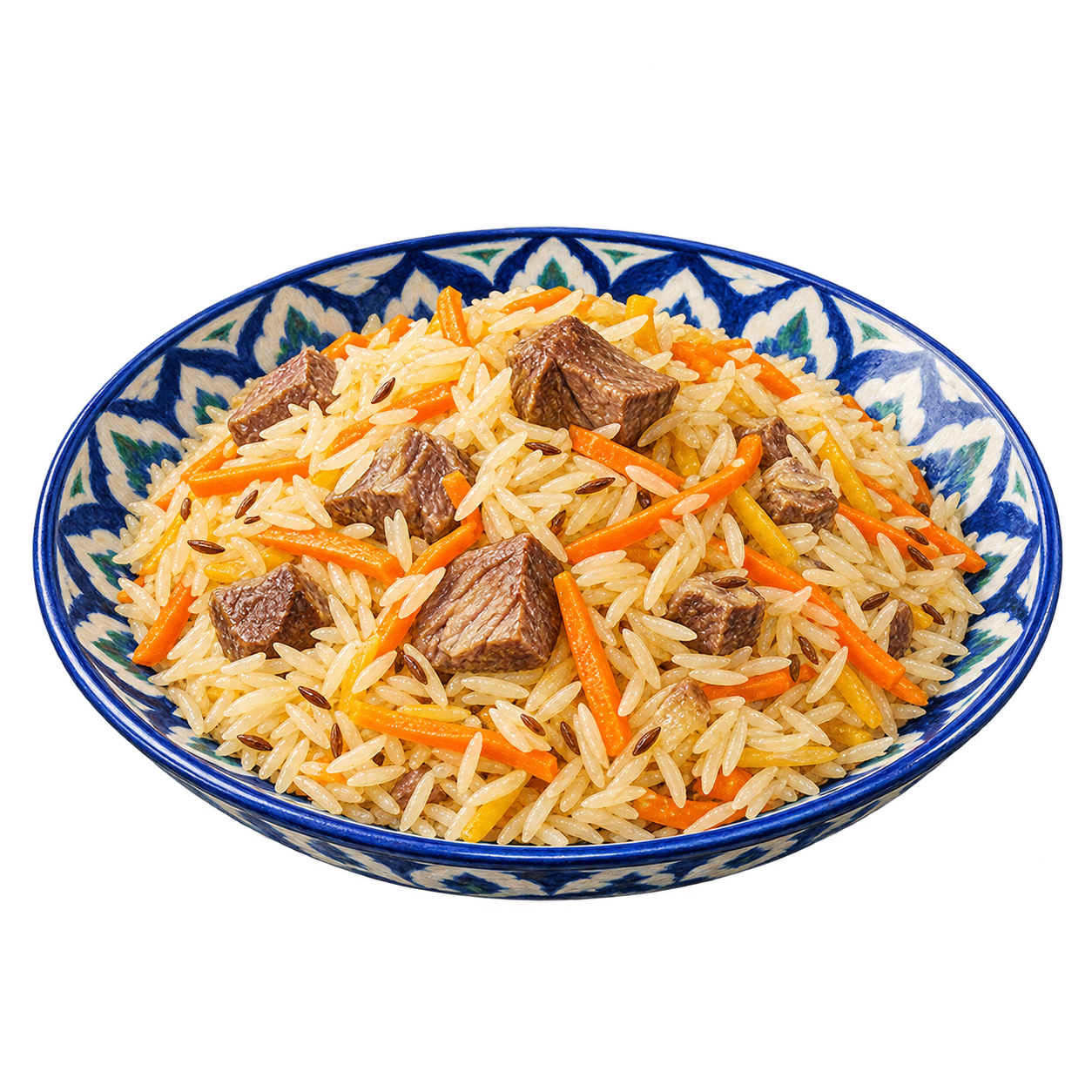
Light rice pilaf with carrots and lean meat.
Uzbekistan Travel calls chalov a local Khorezm version of pilaf and describes it as more dietary. This is enough to differentiate the name, but not to impose one recipe on every family.
Remember. Light rice pilaf with carrots and lean meat.
8. Azerbaijan: dashma pilaf
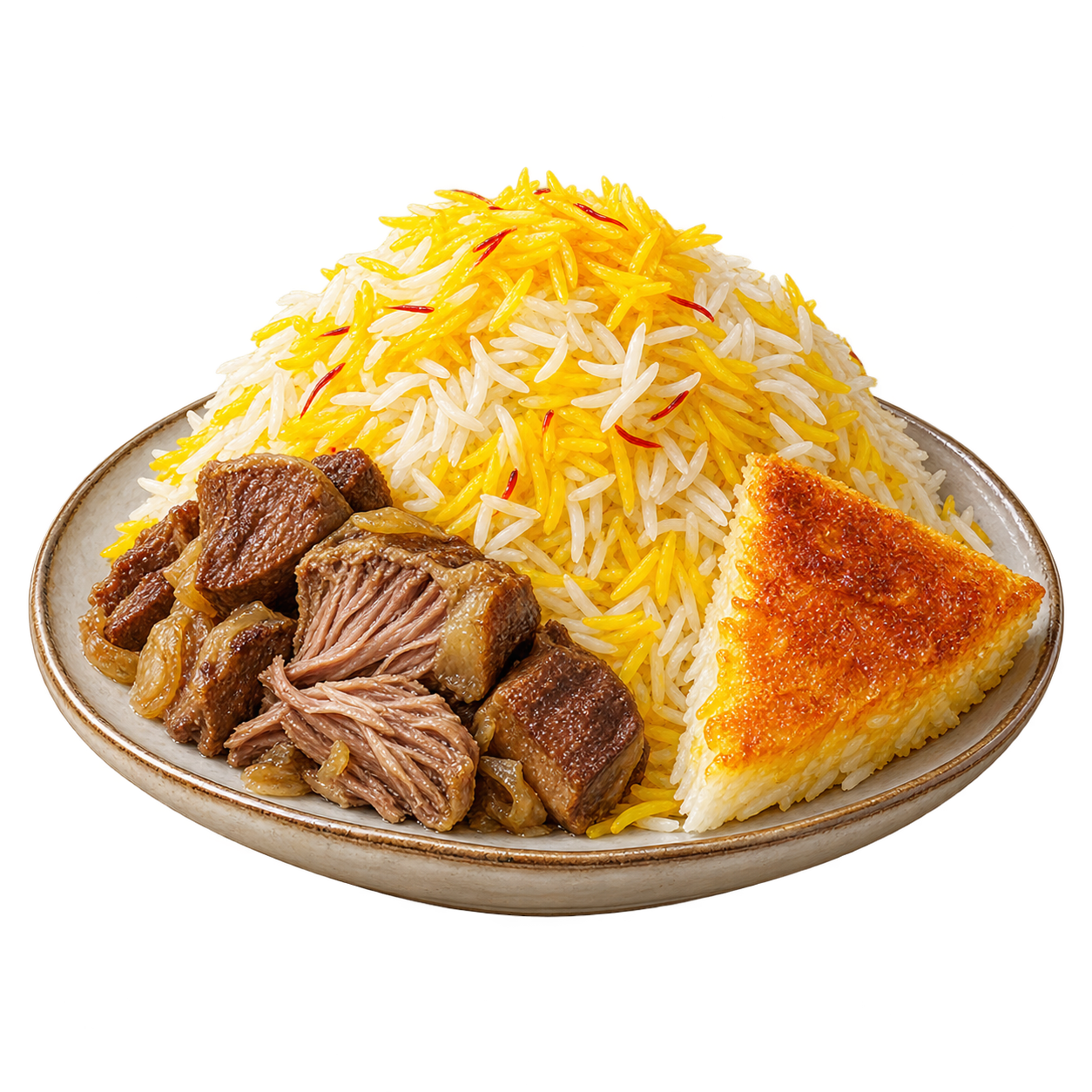
Azerbaijani pilaf with fluffy rice and gazmakh.
The official tourism portal of Azerbaijan highlights dashma as one of the three main methods of preparing pilaf, along with syuzma and dosheme. It is considered a simpler and older type.
Remember. Azerbaijani pilaf with fluffy rice and gazmakh.
9. Azerbaijan: Shah-pilaf
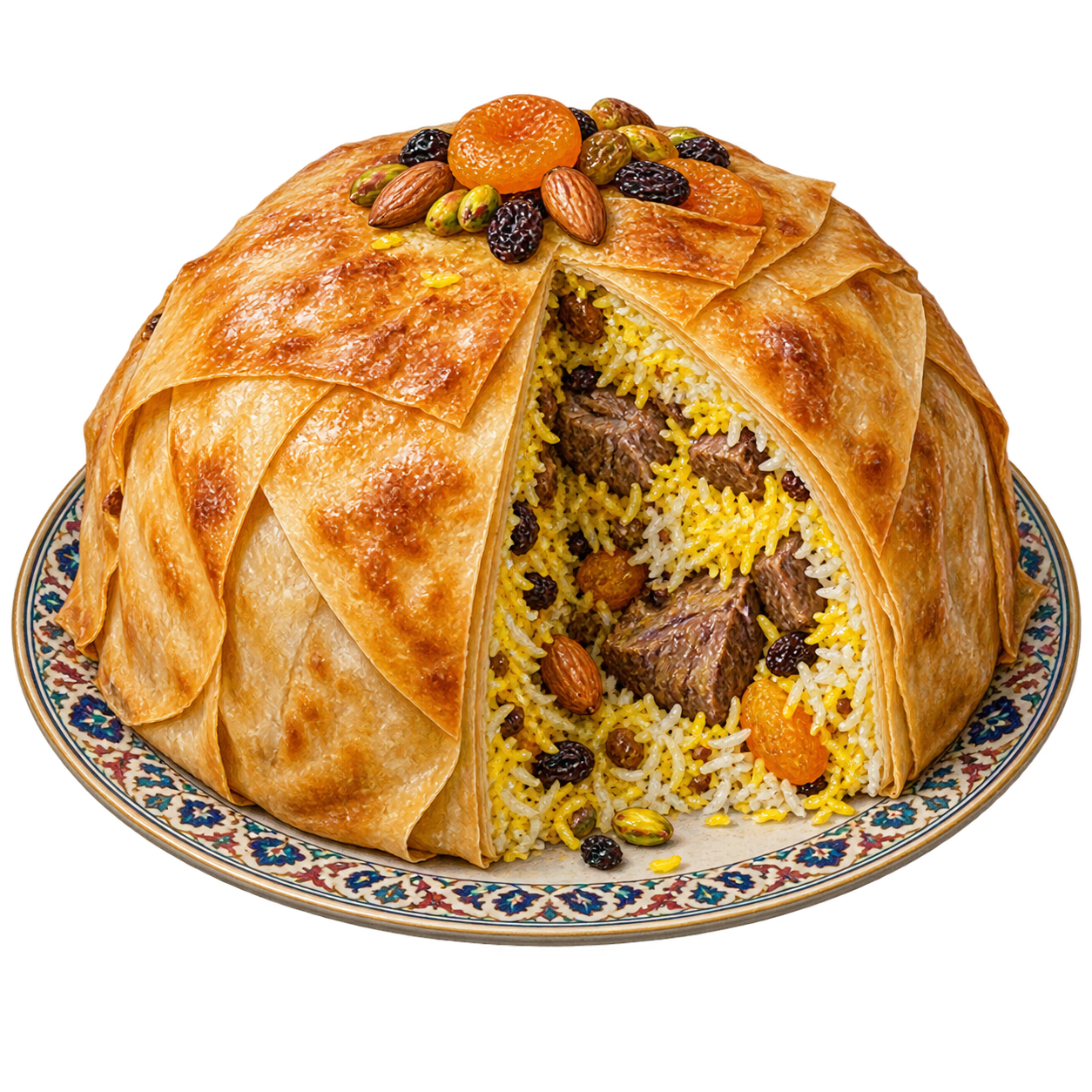
Azerbaijani pilaf in a golden lavash shell.
Rice, meat and dried fruits are hidden under a shell of buttered lavash. After baking, you get a large ruddy “pie”, which is opened when serving.
Remember. Azerbaijani pilaf in a golden lavash shell.
10. Iran: zereshk polo
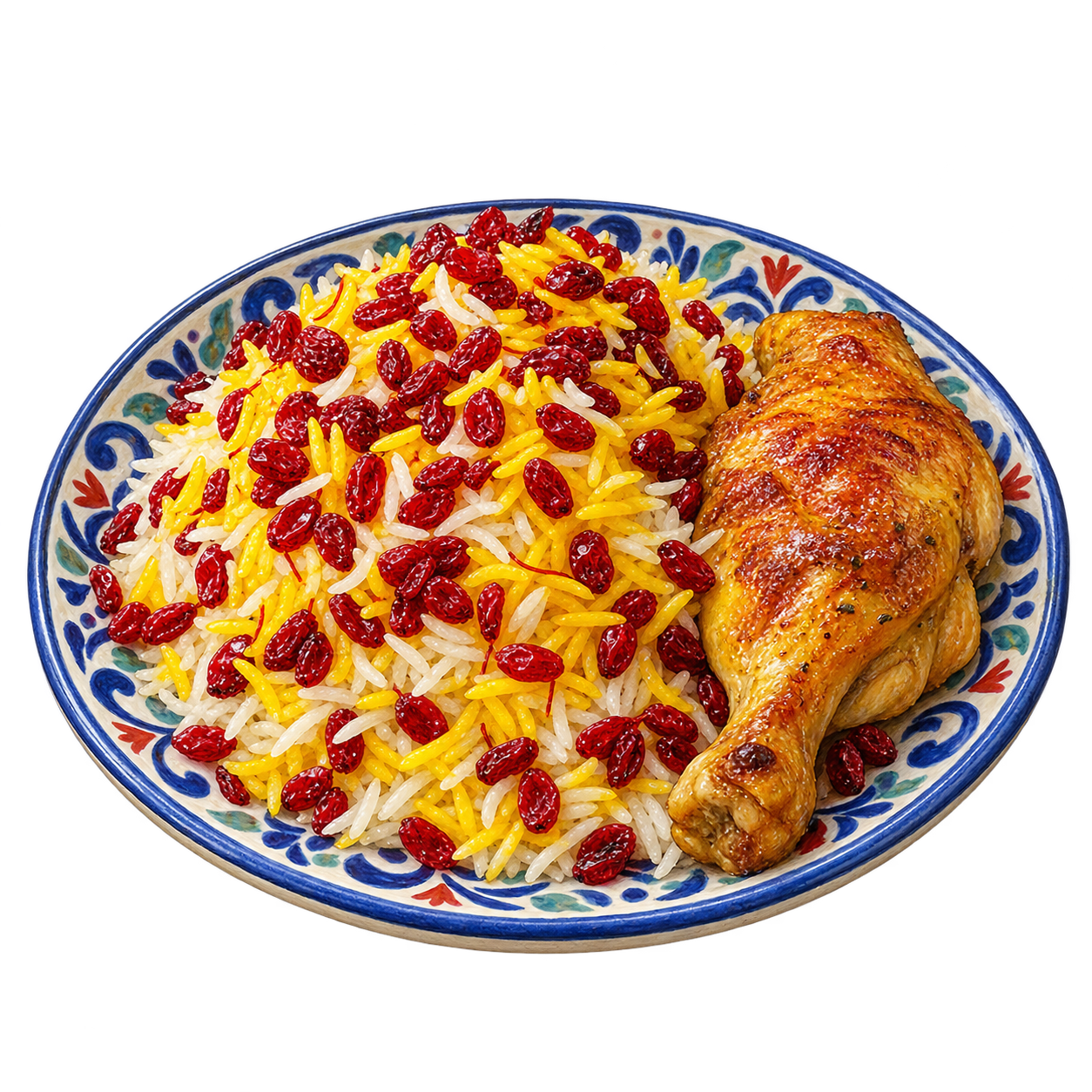
Iranian rice with saffron, barberry and chicken.
The Iranian branch of rice dishes adds barberry to the rice: the sour berry is noticeable both in taste and appearance. Iranian polo is a relative of pilaf, but with its own steaming and layering technique.
Remember. Iranian rice with saffron, barberry and chicken.
If you need a quick reference point: Fergana is a rich zirvak; Samarkand - expressive layers; Azerbaijan - saffron and different ways of working with rice; Kabul - carrots and raisins on top. The remaining examples remind us: even within the same country, pilaf can be different. UNESCO specifically notes the palov culture as part of the intangible heritage of Uzbekistan.
About the palov tradition:UNESCO.