
Desserts dislike passport control. An apple tart turns upside down, ice asks for sweet beans, and biscuits cross an ocean to return with caramel. We have collected ten sweets, each with a little story of its own.
This is neither a ranking of the tastiest desserts nor a recipe book. Each illustration also belongs to our awards and gifts collection. Where the origin is disputed, the story leaves room for uncertainty.
1. Tarte Tatin: the tart that turned the conversation upside down
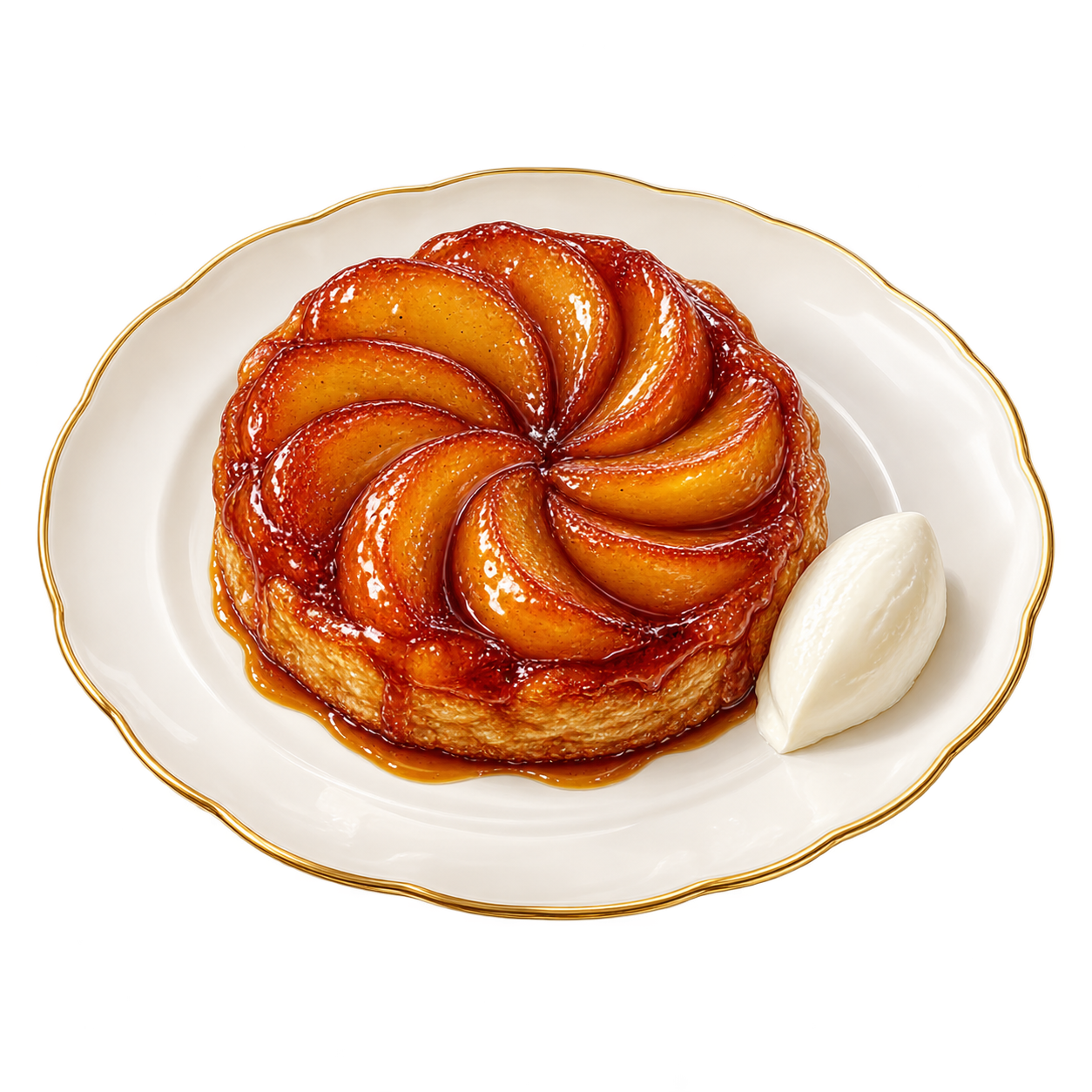
France · caramelised apples and pastry.
Tarte Tatin reverses the usual arrangement: first the apples meet butter and sugar, then pastry goes on top, and the finished tart is turned out. 'I only wanted to show you my best side,' the dessert might explain as it lands apple-side up on the plate.
The story is linked to the Tatin sisters of Lamotte-Beuvron and a hurried kitchen. The appealing tale of an accidental mistake, however, remains a legend rather than a precisely documented account of the tart's birth.
What actually happens. Apples are cooked with sugar and butter, covered with pastry, baked, and inverted before serving. 'Upside down' describes a method of cooking and presentation, rather than just a playful name.
Sources: Source 1
2. Pastéis de Belém: a pastry-sized secret
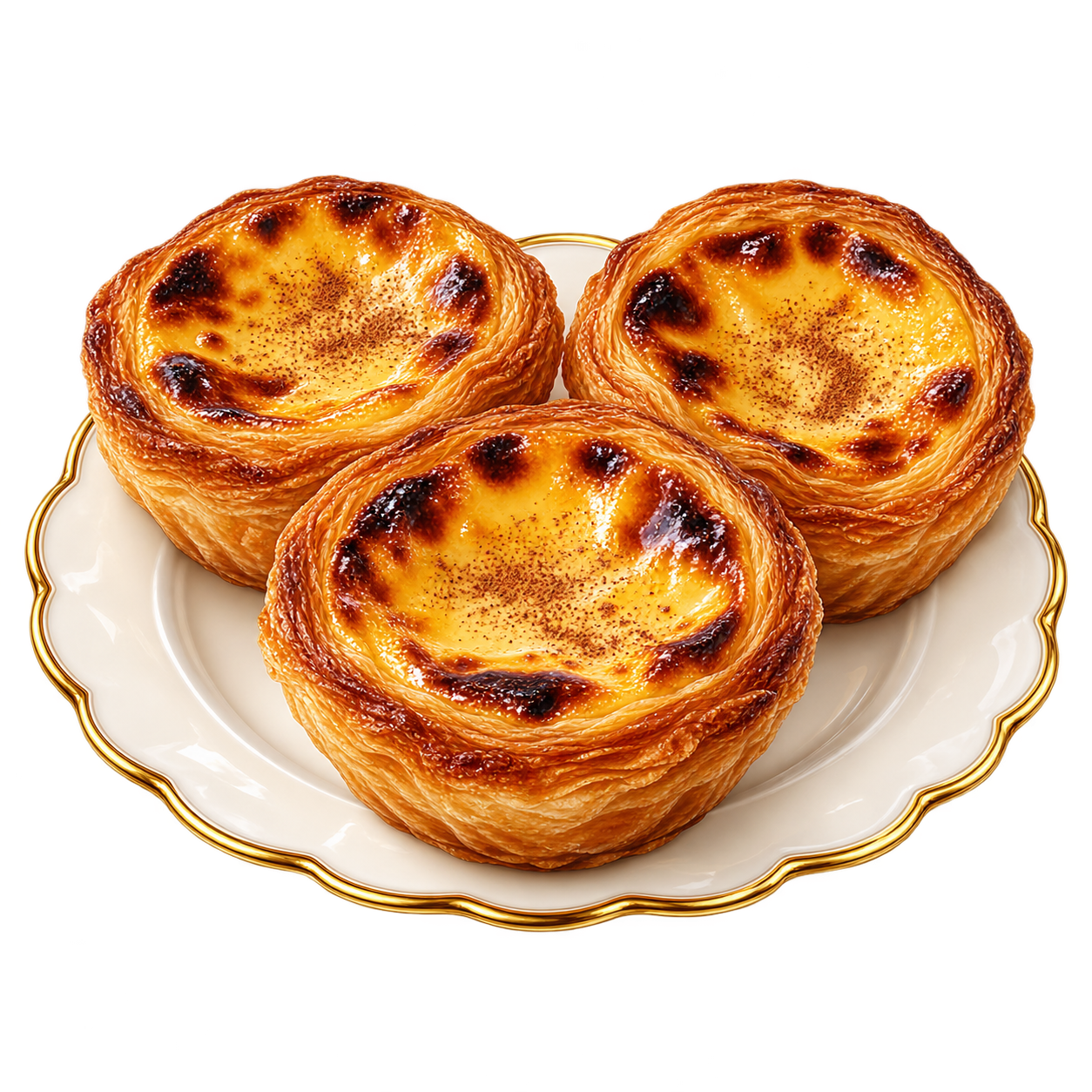
Portugal · crisp pastry and custard.
In Lisbon's Belém district, a tiny pastry has acquired a big biography. Fragile pastry meets warm custard with dark toasted patches. Icing sugar and cinnamon invite visitors to add their own finishing touches.
The Pastéis de Belém bakery says that sweets were sold near the Jerónimos Monastery after the monasteries closed, and production using the monastery recipe began in 1837. It still describes the exact proportions as a secret: an excellent reason to try another pastry in the name of research.
Keep the names straight. Pastéis de Belém names the pastries made by this particular historic bakery. Similar Portuguese custard tarts are generally called pastéis de nata.
Sources: Source 1
3. Pavlova: the cake two neighbours argue about

Australia and New Zealand · meringue, cream, and fruit.
Pavlova is crisp outside, soft inside, and carries a whole basket of fruit on top. Its name recalls the ballerina Anna Pavlova. Australia and New Zealand dispute the right to call it their own with remarkable energy. The cake wisely declines to take sides: it is busy with the cream.
The place where it originated remains disputed. A dessert can have a recognisable structure even when its birth certificate has not been settled.
What holds it together. Its foundation is a large meringue base, usually topped with cream and fruit. Neither a sponge cake nor layers of nut-filled pastry are the defining feature.
Sources: Source 1
4. Strawberry daifuku: a surprise in a rice wrapper
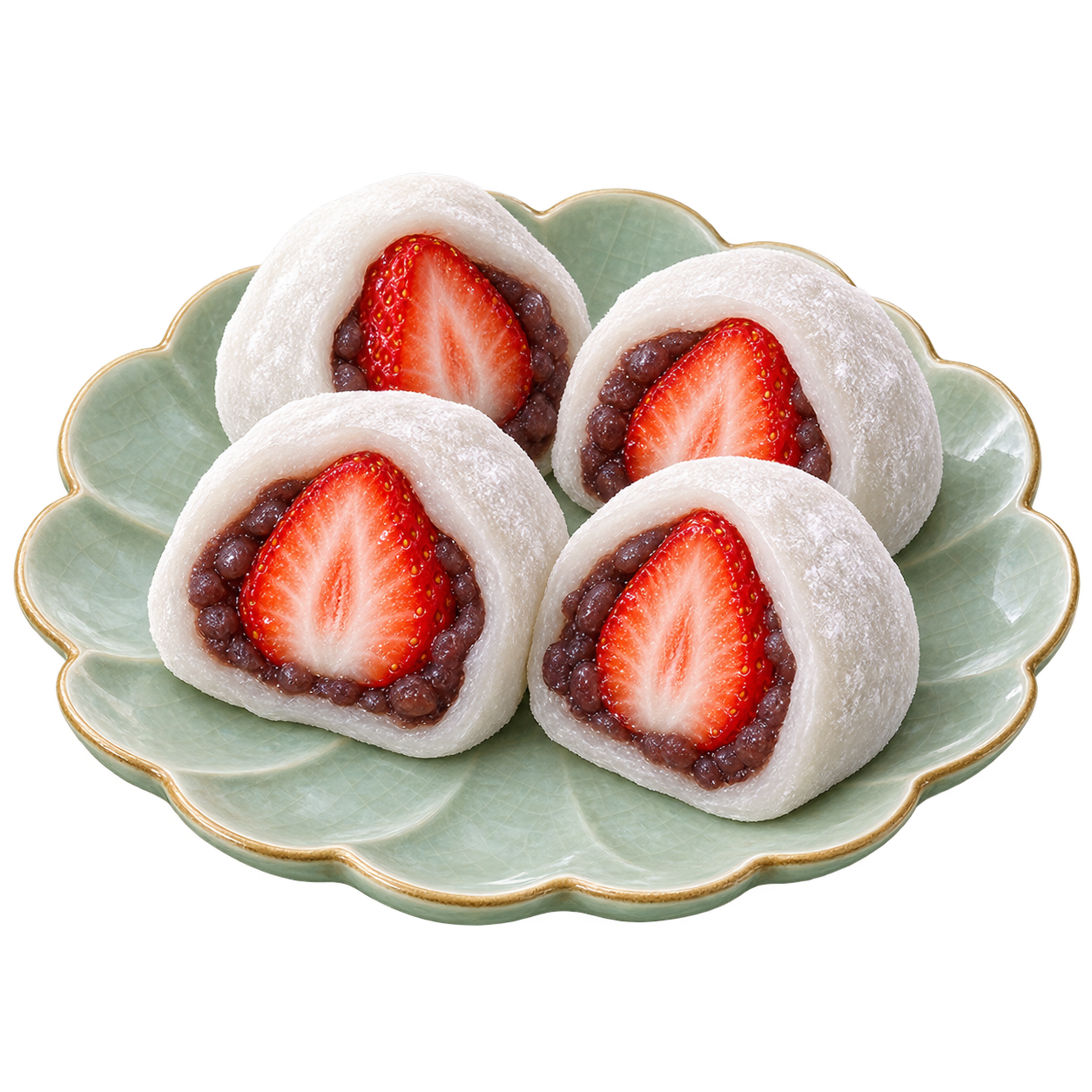
Japan · mochi, sweet bean paste, and a strawberry.
At first, daifuku looks like a small, soft parcel. Cut through it, and a whole strawberry appears inside, surrounded by sweet bean paste. The rice wrapper seems to have taken its wrapping duties very seriously.
Strawberry daifuku is one variation in a much larger family. The picture shows a recognisable combination, rather than a claim that every daifuku must contain fruit.
Three parts to remember. Mochi makes the outer wrapper; anko is sweet bean paste, commonly made from azuki beans; the strawberry is the fresh surprise at the centre.
Sources: Source 1
5. Patbingsu: snow that invited beans to dessert
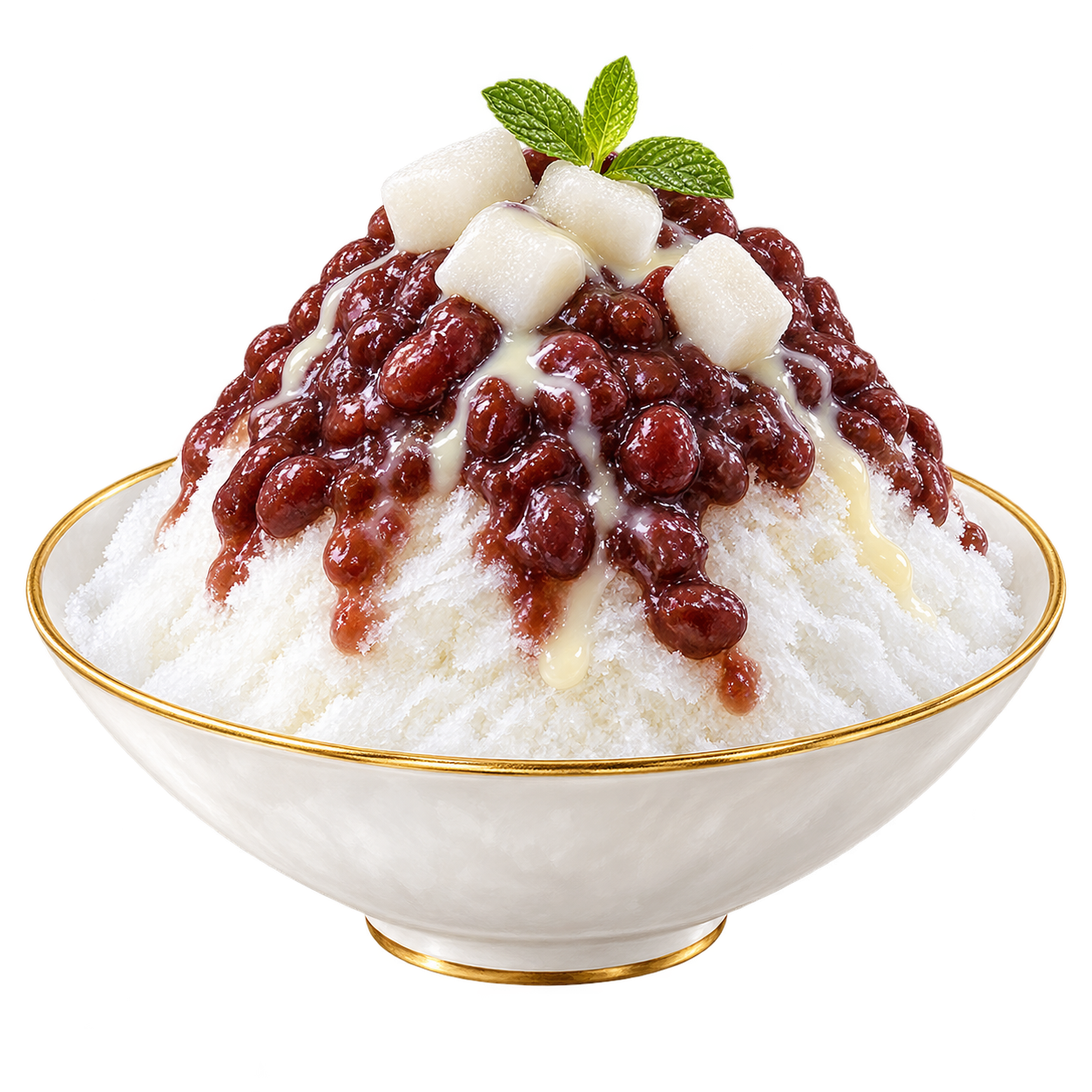
South Korea · shaved ice and sweet red beans.
A bowl of finely shaved ice brings together sweet red beans, pieces of rice cake, and milky sweetness. On a hot day, patbingsu does not so much finish as slowly melt while you decide to have another spoonful.
Modern bingsu has many forms: fruity, milky, or decorated with unexpected toppings. In classic patbingsu, the main clue is already in the name: pat refers to red beans.
The base and its variations. Bingsu is a dessert of finely shaved ice with toppings; patbingsu is the version with sweet red beans. Rice cakes, milk, or fruit may also be added.
6. Baklava: pistachio architecture
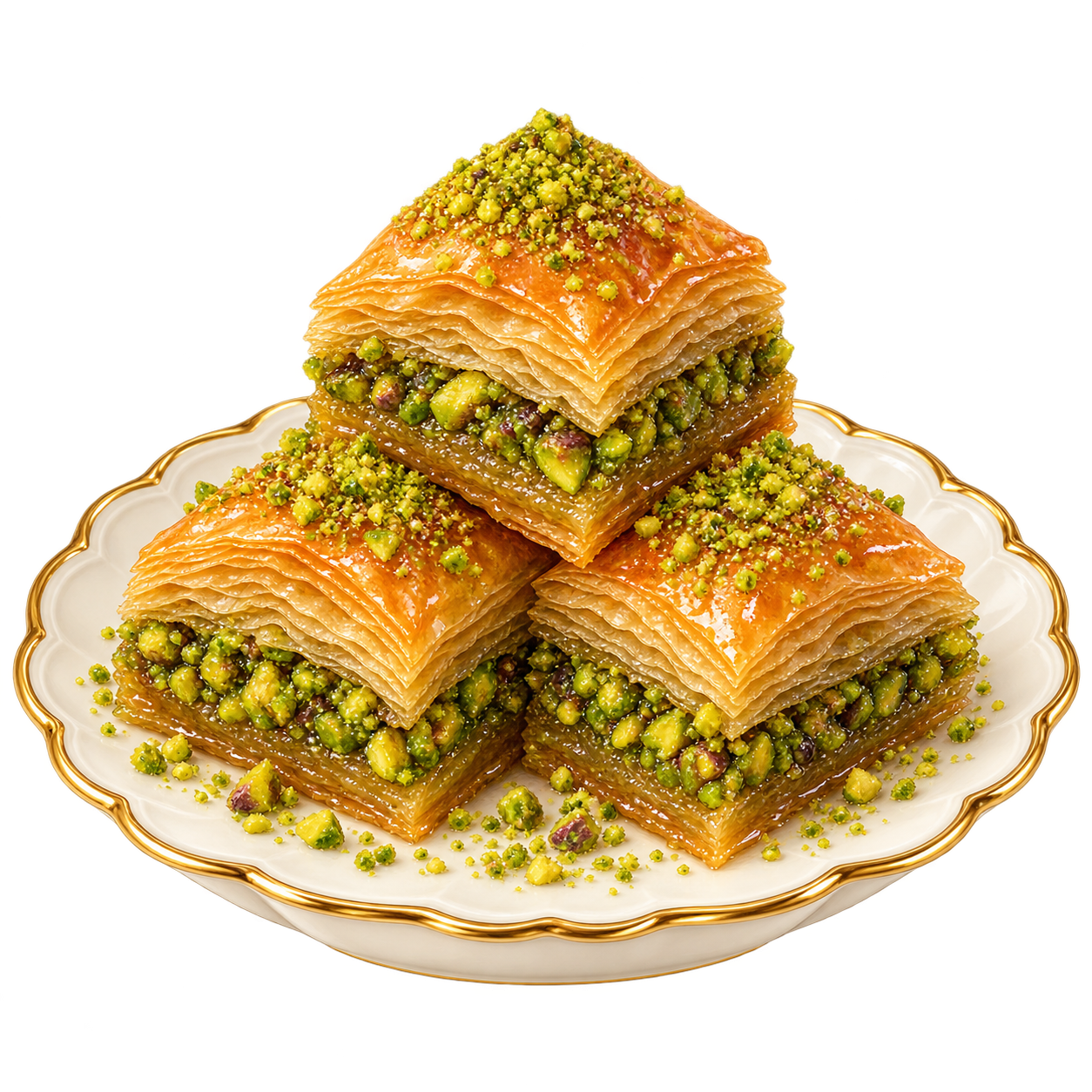
Gaziantep, Türkiye · filo pastry, pistachios, and syrup.
If a pastry applied to architecture school, baklava would submit a cross-section instead of a portfolio. A thin sheet, another, and many more, with bright pistachio green between them. Syrup adds shine, but good baklava still knows how to crunch.
Baklava is made in many countries and many forms. Our picture shows a pistachio version associated with Gaziantep. Calling one city the sole inventor of every kind of baklava would be an unusually ambitious historical dessert.
Its construction. Thin filo sheets alternate with nut filling, are baked, and are soaked with sweet syrup. Pistachios are important in many Gaziantep versions; other nuts appear in other variations.
Sources: Source 1
7. Churros: the sticks that needed chocolate

Spain · fried dough, sugar, and thick chocolate.
Churros emerge from a nozzle in ridged strips, fall into hot oil, and come out golden. A dusting of sugar could end the story. In Spain, however, they are often given a cup of thick chocolate, turning every strip into a convenient handle for dipping.
They are not exclusively an after-dinner dessert: people also eat them for breakfast or as a snack. A dish's name does not dictate its timetable.
How they are made. Dough is piped through a nozzle and fried until golden, then served fresh, often with sugar or chocolate. These are not biscuits baked in an oven.
8. Tiramisu: the coffee that became a cake
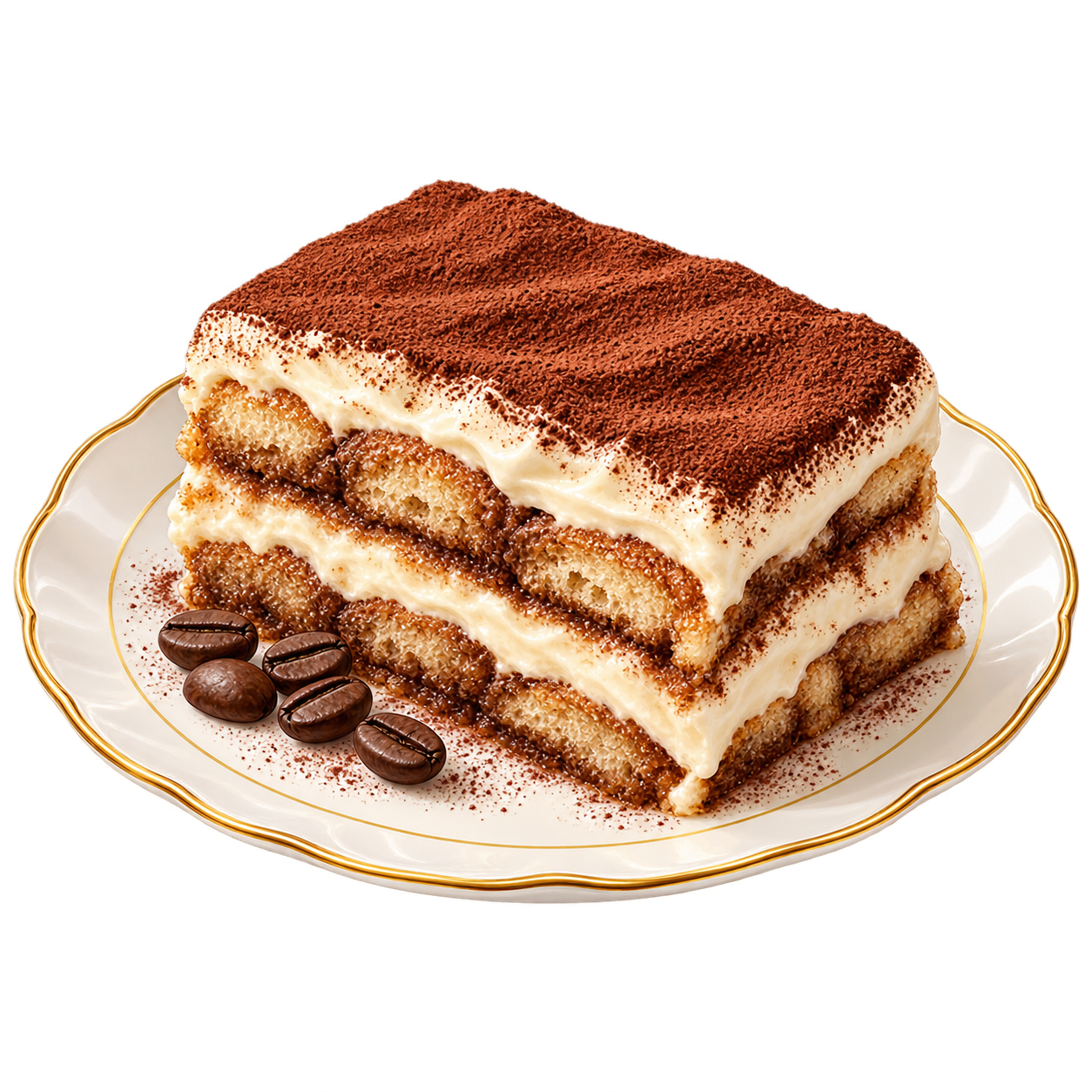
Italy · savoiardi, coffee, mascarpone, and cocoa.
A cup of espresso grew tired of its walls. It moved into savoiardi biscuits, met mascarpone cream, and hid under cocoa. A spoon explains the result best: its layers are soft and soaked rather than crisp.
Tiramisu is particularly associated with Veneto and Treviso, though accounts of the exact birthplace and creator differ. For its texture, another distinction matters more: coffee soaks the biscuits without turning the cream into a drink.
Layers without baking. The familiar structure combines savoiardi, coffee, mascarpone-based cream, and cocoa. It is assembled as a cold dessert rather than baked as an ordinary sponge cake.
Sources: Source 1
9. Jalebi: an orange spiral with a milky cloud
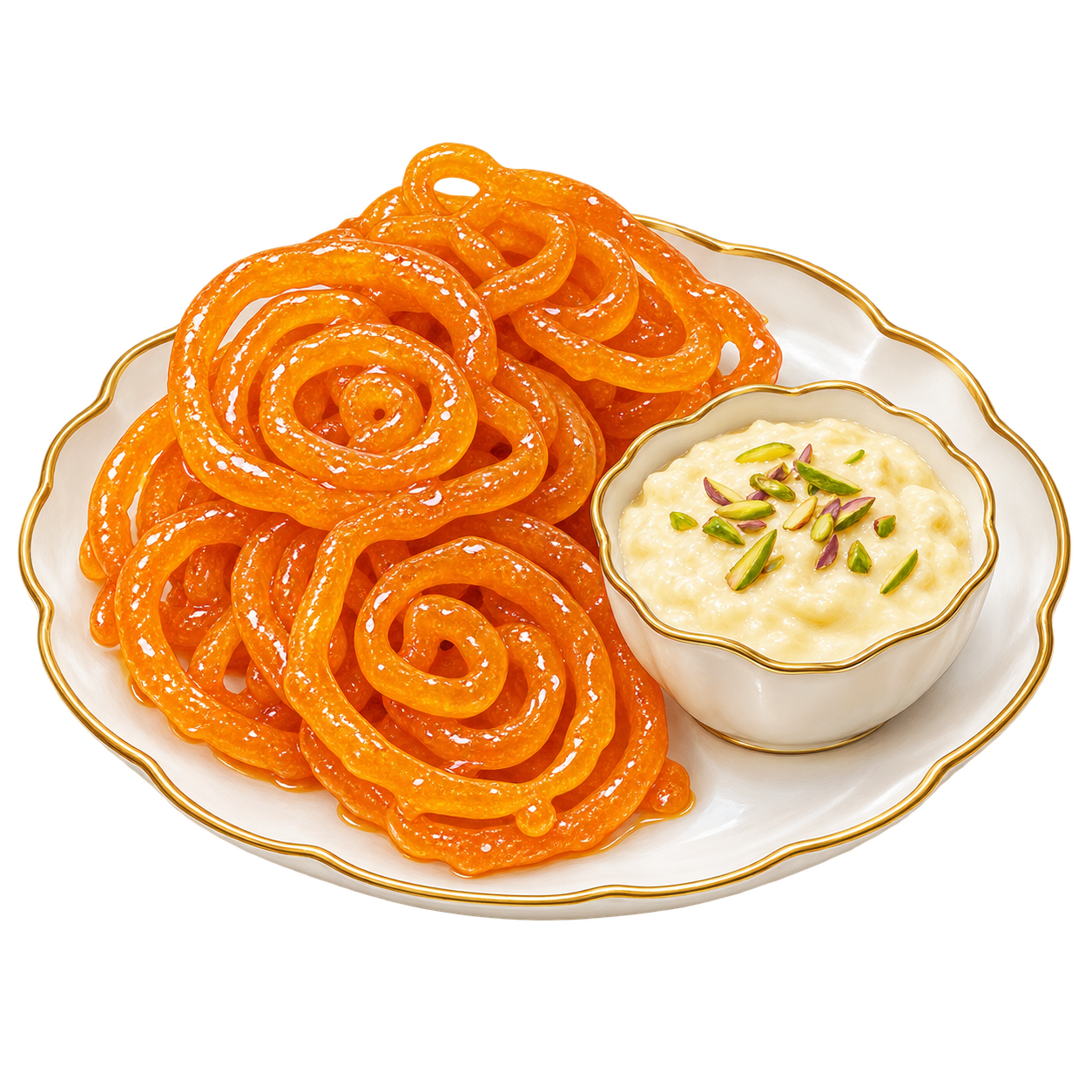
India · syrup-soaked fried spirals and thick rabri.
The cook could have drawn a straight line, but jalebi clearly preferred curls. Batter enters the hot oil in spirals, then takes a bath in sweet syrup. Beside it waits rabri, a thick milk dessert that softens the contrast with the crisp sweetness.
They appear together in our picture, but they are two different dishes. Jalebi can be eaten alone, and rabri can accompany other sweets. Their meeting simply makes an appealing contrast of temperatures and textures.
Two parts of the plate. Jalebi is fried batter soaked in syrup; rabri is made by slowly reducing milk. In some places they are served as a pair, but their ingredients and preparation differ.
10. Alfajores: biscuits that returned changed

Argentina · two biscuits, dulce de leche, and assorted coatings.
The name travelled through cultures, but the Argentine biscuit did not settle for somebody else's biography. It hid dulce de leche between two soft rounds. One alfajor dipped itself in chocolate; another rolled its edges in coconut. Both seem pleased with their choices.
Argentina's regional versions differ widely in dough, filling, and coating. Our plate shows just three members of a large family, rather than the one correct alfajor.
What is inside. A familiar Argentine version sandwiches dulce de leche between two biscuits. Chocolate coating or coconut may finish the outside; other local fillings also exist.
Sources: Source 1
These illustrations show recognisable variations, not the only correct recipes. Choose a gift to suit your mood: there are clearly more than ten sweets in the world.